



ROCURONIO 10 mg /Ml Solución Inyectable Y Para Perfusión

Revisión de receta online
Un médico revisará tu caso y determinará si la prescripción es médicamente apropiada.

Habla con un médico sobre este medicamento
Comenta tus síntomas y las opciones de tratamiento en una consulta online.



Cómo usar ROCURONIO NORIDERM 10 MG/ML SOLUCION INYECTABLE Y PARA PERFUSION EFG
Contenido del prospecto
- Introducción
- Qué es Rocuronio Noridem y para qué se utiliza
- Qué necesita saber antes de empezar a usar Rocuronio Noridem
- Cómo usar Rocuronio Noridem
- Posibles efectos adversos
- Conservación de Rocuronio Noridem
- Contenido del envase e información adicional
Introducción
Prospecto: información para el usuario
Rocuronio Noridem 10mg/ml solución inyectable y para perfusión EFG
Bromuro de rocuronio
Lea todo el prospecto detenidamente antes de empezar a usar este medicamento, porque contiene información importante para usted.
- Conserve este prospecto, ya que puede tener que volver a leerlo.
- Si tiene alguna duda, consulte a su médico, farmacéutico o enfermero.
- Este medicamento se le ha recetado solamente a usted, y no debe dárselo a otras personas aunque tengan los mismos síntomas que usted, ya que puede perjudicarles.
- Si experimenta efectos adversos, consulte a su médico, farmacéutico o enfermero, incluso si se trata de efectos adversos que no aparecen en este prospecto. Ver sección 4.
Contenido del prospecto
- Qué es Rocuronio Noridem y para qué se utiliza
- Qué necesita saber antes de empezar a usar Rocuronio Noridem
- Cómo usar Rocuronio Noridem
- Posibles efectos adversos
- Conservación Rocuronio Noridem
- Contenido del envase e información adicional
1. Qué es Rocuronio Noridem y para qué se utiliza
Este medicamento es un relajante muscular.Los relajantes musculares se utilizan en la anestesia general para operaciones quirúrgicas, para que los músculos se relajen completamente. Esto facilita la operación al cirujano. Normalmente los nervios envían mensajes a los músculos mediante impulsos. Rocuronio Noridem actúa bloqueando estos impulsos temporalmente de forma que los músculos se relajan. Como los músculos necesarios para la respiración también se relajan, necesitará ayuda para respirar (respiración artificial) hasta quepueda respirar por sí mismo. El efecto del relajante muscular se controla regularmente durante la operación y si fuera necesario, se administraría más Rocuronio Noridem. Los efectos del Rocuronio Noridem desaparecen al final de la operación y entonces usted puede empezar a respirar por sí mismo. A veces, se administra otro fármaco para acelerar este proceso. Este medicamento también se puede utilizar en la Unidad de Cuidados Intensivos.

¿No estás seguro de si este medicamento es adecuado para ti?
Comenta tus síntomas y tratamiento con un médico online.
2. Qué necesita saber antes de empezar a usar Rocuronio Noridem
No use Rocuronio Noridem:
- Si es alérgicoal rocuronio o a alguno de los demás componentes de este medicamento (incluidos en la sección 6).
Informe a su médico si este es su caso.
Advertencias y precauciones
- Sus antecedentes médicos pueden influir en la forma en que se le administre Rocuronio Noridem. Informe a su médico si ha tenido o tiene ahora alguna de las siguientes enfermedades:
- alergia a los relajantes musculares
- insuficiencia renal o enfermedades de los riñones
- enfermedades del corazón
- edema (retención de líquidos por ejemplo en los tobillos)
- enfermedad del hígado, de la vesícula biliar o de los conductos biliares, o alteraciones del funcionamiento del hígado
- enfermedades que afecten a los nervios y los músculos
- antecedentes de hipertermia maligna (fiebre repentina con palpitaciones, respiración rápida y rigidez, dolor y/o debilidad muscular).
- Algunas situaciones médicas pueden influir en la forma de actuación del Rocuronio Noridem.
Por ejemplo:
- niveles bajos de potasio en la sangre (hipopotasiemia)
- niveles elevados de magnesio en la sangre (hipermagnesemia), por ejemplo al tratar la toxemia del embarazo con sales de magnesio.
- niveles bajos de calcio en la sangre (hipocalcemia)
- niveles bajos de proteínas en la sangre (hipoproteinemia)
- deshidratación
- demasiados ácidos en la sangre (acidosis)
- demasiado dióxido de carbono en la sangre (hipercapnia)
- estado de salud general frágil
- sobrepeso
- quemaduras,
Si padece alguna de estas afecciones, su médico lo tendrá en cuenta al decidir la dosis correcta de Rocuronio Noridem.
Niños/pacientes de edad avanzada
Rocuronio Noridem puede utilizarse en niños (recién nacidos hasta la pubertad) y pacientes de edad avanzada.
Otros medicamentos y Rocuronio Noridem
Informe a su médico si está utilizando, ha utilizado recientemente o pudiera tener que utilizar cualquier otro medicamento. Esto ayudará a su médico al decidir la dosis correcta de Rocuronio Noridem.
Los siguientes medicamentos pueden influir sobre los efectos del Rocuronio Noridem:
- Medicamentos que pueden aumentar el efecto del Rocuronio Noridem:
- algunos anestésicos
- uso conjunto y prolongado de corticosteroides(antiinflamatorios) con Rocuronio Noridem en la Unidad de Cuidados Intensivos
- algunos medicamentos para tratar las infecciones bacterianas (antibióticos)
- algunos medicamentos contra el trastorno bipolar (por ejemplo el litio)
- algunos medicamentos para las enfermedades del corazón o para la hipertensión (quinidina, antagonistas del calcio, agentes betabloqueantes)
- algunos medicamentos para tratar la malaria (quinina)
- medicamentos que aumentan el volumen de orina (diuréticos)
- sales de magnesio
- anestésicos locales (lidocaína y bupivacaína)
- uso a corto plazo de medicamentos para la epilepsia (fenitoína), p. ej., durante una operación.
- Medicamentos que pueden disminuir el efecto de Rocuronio Noridem:
- uso prolongado de corticosteroides(antiinflamatorios) o medicamentos para el tratamiento de la epilepsia(fenitoína y carbamazepina)
- medicamentos para la inflamación del páncreas, trastorno de la coagulación de la sangre o pérdida aguda de sangre (inhibidores de la proteasa:gabexato, ulinastatina).
- Medicamentos que tienen un efecto variable sobre elRocuronio Noridem:
- otros relajantes musculares.
Rocuronio Noridem puede influir en los efectos de los siguientes medicamentos:
- puede incrementar el efecto de anestésicos locales (como la lidocaína).
Embarazo, lactanciay fertilidad
Si está embarazada o en periodo de lactancia, cree que podría estar embarazada o tiene intención de quedarse embarazada, consulte a su médico antes de que le administren este medicamento.
Embarazo
No se han observado efectos perjudiciales en los estudios con animales, pero no hay datos de estudios clínicos sobre el bromuro
de rocuronio en mujeres embarazadas. Por ello, el bromuro de rocuronio debe ser utilizado con precaución en mujeres embarazadas.
Cesárea
Un médico decidirá si el bromuro de rocuronio se puede utilizar en una cesárea. Se ha demostrado que se puede utilizar con seguridad una dosis de 0,6 mg de bromuro de rocuronio por kilo de peso corporal durante una cesárea y que no tiene efectos perjudiciales para el bebé.
Lactancia
La lactancia se debe posponer durante 6 horas tras administrar este medicamento.
Conducción y uso de máquinas
Su médico le informará sobre cuando puede conducir o utilizar máquinas peligrosas después de la administración de este medicamento.
Rocuronio Noridem contiene sodio
Cada ampolla o vial contiene 8,2 mg (0,36 mmol) de sodio.
Este medicamento contiene menos de 1 mmol de sodio (23 mg) por vial o ampolla; esto es, esencialmente “exento de sodio”.
3. Cómo usar Rocuronio Noridem
Dosis
Su médico decidirá la dosis de Rocuronio Noridem basándose en:
- el tipo de anestésico que se utiliza,
- la duración prevista de la operación,
- otros medicamentos que esté tomando,
- su edad y estado de salud.
Le administrarán Rocuronio Noridem antes o durante la operación. La dosis recomendada es de 0,6 mg de bromuro de rocuronio por kilo de peso corporal y el efecto dura de 30 a 40 minutos. Durante la operación, se comprobará la actividad del Rocuronio Noridem. Si
es necesario, se le administrará más dosis.
Cómo se administraRocuronio Noridem
Rocuronio Noridem no está indicado para la autoadministración. El Rocuronio Noridem se administrará por vía intravenosa (en una vena) con una inyección simple o mediante una perfusión.
Las inyecciones las debe administrar un médico o enfermero.
Si usa más Rocuronio Noridem del que debe
El personal médico estará controlando su estado y no es probable que le administren un exceso de Rocuronio Noridem. Sin embargo, si esto ocurriera, se mantendrá la respiración artificial hasta que sea capaz de respirar por sí mismo. Se pueden contrarrestar los efectos de un exceso de Rocuronio Noridem y acelerar la recuperación administrándole un medicamento que contrarreste los efectos del Rocuronio Noridem.
En caso de sobredosis o ingestión accidental, consultar al Servicio de Información Toxicológica, teléfono 91 562 04 20.

¿Has empezado a tomar el medicamento y tienes preguntas?
Comenta tus síntomas y tratamiento con un médico online.
4. Posibles efectos adversos
Al igual que todos los medicamentos, este medicamento puede producir efectos adversos, aunque no todas las personas los sufran. Si estos efectos adversos ocurren mientras está bajo anestesia, su anestesista los verá y tratará.
Pueden producirse los siguientes efectos adversos:
Frecuentes (pueden afectar hasta 1 de cada 10 personas)
- aumento de la velocidad del latido del corazón (taquicardia) en niños (recién nacidos hasta adolescentes).
Raros o poco frecuentes (pueden afectar hasta 1 de cada 100/1000 personas)
- aumento de la velocidad del latido del corazón (taquicardia) en adultos
- disminución de la presión arterial (hipotensión)
- Rocuronio Noridem no produce ningún efecto, es demasiado eficaz o no es suficientemente eficaz
- dolor en el lugar de la inyección
- eritema o prurito en el lugar de la inyección
- prolongación del efecto relajante muscular del Rocuronio Noridem
- recuperación retardada de la anestesia.
Muy raros(pueden afectar a menos de 1 de cada 10000 personas)
- reacciones alérgicas tales como dificultad para respirar, cambios en la presión arterial y en el ritmo cardíaco, shock (disminución repentina de la presión arterial) debido a la baja circulación sanguínea o cambios en la piel (p. ej., retención de líquidos, eritema o erupción cutánea)
- presión en el pecho por espasmos musculares de las vías aéreas (broncoespasmo)
- debilidad del músculo o parálisis
- alteración crónica de los músculos, observada normalmente tras la administración concomitante de Rocuronio Noridem y corticosteroides (medicamentos antiinflamatorios) en pacientes críticos en la Unidad de Cuidados Intensivos (miopatía esteroidea)
- retención de líquidos repentina en la piel y las mucosas (p. ej., la garganta o la lengua), dificultad para respirar y/o prurito o erupción cutánea, con frecuencia como una reacción alérgica (angioedema)
- retención de líquidos (edema) en la cara
- problemas en las vías respiratorias debido a la anestesia
- erupción cutánea, a veces con prurito intenso y ronchas (urticaria)
- eritema
- rubefacción.
Frecuencia no conocida (no puede estimarse a partir de los datos disponibles)
- espasmo alérgico y grave de los vasos sanguíneos coronarios (síndrome de Kounis) que produce dolor en el pecho (angina) o
ataque al corazón (infarto de miocardio)
- pupilas dilatadas (midriasis) o pupilas fijas que no modifican su tamaño con la luz u otros estímulos.
Comunicación de efectos adversos
Si experimenta cualquier tipo de efecto adverso, consulte a su médico, farmacéutico o enfermero, incluso si se trata de posibles efectos adversos que no aparecen en este prospecto. También puede comunicarlos directamente a través del Sistema Español de Farmacovigilancia de Medicamentos de Uso Humano: www.notificaram.es . Mediante la comunicación de efectos adversos usted puede contribuir a proporcionar más información sobre la seguridad de este medicamento.
5. Conservación de Rocuronio Noridem
Mantener este medicamento fuera de la vista y del alcance de los niños.
Conservar en nevera (entre 2 ?C y 8 ?C).
Después de la apertura del vial o la ampolla, se debe utilizar Rocuronio Noridem inmediatamente.
Se ha demostrado una estabilidad química y física del producto diluido durante 72 horas entre 28 ºC y 32 ºC o durante 72 horas entre 2 ºC y 8 ºC. Desde un punto de vista microbiológico, el producto diluido debe utilizarse inmediatamente. Si no se utiliza inmediatamente, los tiempos de almacenamiento en uso y las condiciones antes del uso son responsabilidad del usuario y normalmente no deberían superar las 24 horas a 2 °C–8 ºC, a menos que la dilución se haya realizado en condiciones asépticas controladas y validadas.
No utilice este medicamento después de la fecha de caducidad que aparece en el envase, la etiqueta de la ampolla y el vial después de CAD. La fecha de caducidad es el último día del mes que se indica.
El medicamento debe inspeccionarse antes de su uso. La solución solo se debe utilizar si es transparente, no tiene prácticamente partículas y el envase no está dañado.
Los medicamentos no se deben tirar por los desagües. Pregunte a su farmacéutico cómo deshacerse de los medicamentos que ya no necesita. De esta forma, ayudará a proteger el medio ambiente.
6. Contenido del envase e información adicional
Composición deRocuronio Noridem
- El principio activo es bromuro de rocuronio.
Cada ml de solución contiene 10 mg de bromuro de rocuronio.
- Los demás componentes son acetato de sodio trihidrato, cloruro de sodio, ácido acético glacial y agua para preparaciones inyectables.
Aspecto del producto y contenido del envase
Rocuronio Noridem es una solución inyectable o para perfusión transparente, de incolora a amarillo pálido, que contiene 10 mg/ml de bromuro de rocuronio.
Rocuronio Noridem está disponible en tres tamaños:
- Viales de vidrio que contienen 50 mg de bromuro de rocuronio (envases de 10 o 50 viales)
- Ampollas de vidrio que contienen 50 mg de bromuro de rocuronio (envases de 10 o 50 ampollas)
- Ampollas de plástico que contienen 50 mg de bromuro de rocuronio (envases de 10 o 50 ampollas)
Puede que solamente estén comercializados algunos tamaños de envases.
Titular de la autorización de comercialización y responsable de la fabricación
Titular de autorización de comercialización
Noridem Enterprises Limited
Evagorou & Makariou
Mitsi Building 3, Office 115
1065 Nicosia, Chipre
Responsable de fabricación
DEMO S.A. PHARMACEUTICAL INDUSTRY
21st Km National Road Athens-Lamia.
14568 Grecia
T:+30 210 8161802, F:+30 210816158
Este medicamento está autorizado en los estados miembros del Espacio Económico Europeo y el Reino Unido (Irlanda del Norte) con los siguientes nombres:
Países Bajos: | Rocuroniumbromide Noridem 10 mg / mL oplossing voor injectie / infusie |
Chipre: | ROCUDEM 10 mg / mL Δι?λυμα για ?νεση / ?γχυση |
Grecia: | ROCUDEM 10 mg / mL Δι?λυμα για ?νεση / ?γχυση |
Alemania: | Rocuroniumbromid Noridem 10 mg / ml Injektions- / Infusionslösung |
Francia: | ROCURONIUM NORIDEM 10 mg / ml, solution injectable / pour perfusion |
Bélgica: | Rocuronium bromide Noridem 10 mg / mL solution injectable / pour perfusion – oplossing voor injectie / infusie – Injektions-/Infusionslösung |
Irlanda: | Rocuronium bromide 10 mg / mL Solution for injection / infusion |
Reino Unido (Irlanda del Norte): | Rocuronium bromide 10 mg / mL Solution for injection / infusion |
Italia: | Rocuronio bromuro Noridem |
República Checa: | Rocuronium bromide Noridem |
Eslovaquia: | Rocuronium bromide Noridem 10 mg/ml injekcný/infúzny roztok |
Suecia: | Rocuronium bromide Noridem |
Dinamarca: | Rocuronium bromide Noridem |
Noruega: | Rocuronium bromide Noridem |
Finlandia: | Rocuronium bromide Noridem |
Hungría: | Rocuronium bromide Noridem 10 mg/ml oldatos injekció/infúzió |
Polonia: | Rocuronium bromide Noridem 10 mg/ml roztwór do wstrzykiwan |
España: | Rocuronio Noridem 10 mg/ml solución inyectable y para perfusión EFG |
Portugal: | Brometo de Rocurónio Noridem |
Austria: | Rocuroniumbromid Noridem 10 mg / ml Injektions- / Infusionslösung |
Fecha de la última revisión de este prospecto:Septiembre 2024
La información detallada de este medicamento está disponible en la página web de la Agencia Española de Medicamentos y Productos Sanitarios (AEMPS) (http://www.aemps.gob.es/)
---------------------------------------------------------------------------------------------------------------------------------------
Esta información está destinada únicamente a profesionales sanitarios:
Preparación y manipulación
Incompatibilidades
Se ha documentado la incompatibilidad física del Rocuronio Noridem cuando se adiciona a soluciones que contienen los siguientes medicamentos: anfotericina, amoxicilina, azatioprina, cefazolina, cloxacilina, dexametasona, diazepam, enoximona, eritromicina, famotidina, furosemida, succinato sódico de hidrocortisona, insulina, metohexital, metilprednisolona, succinato sódico de prednisolona, tiopental, trimetoprim y vancomicina. Rocuronio Noridem también es incompatible con el aceite de soja.
No se recomienda mezclar este medicamento con otros fármacos exceptuando los mencionados en la sección «Forma de administración».
Si se administra Rocuronio Noridem a través de la misma vía de perfusión previamente utilizada con otros fármacos, es importante que ésta se lave adecuadamente (por ejemplo, con NaCl 0,9%) entre la administración de Rocuronio Noridem y fármacos con incompatibilidad demostrada o compatibilidad no establecida con Rocuronio Noridem.
Posología y forma de administración
En pacientes adultos las siguientes recomendaciones de dosificación pueden servir de pauta general para la intubación traqueal y la relajación muscular en intervenciones quirúrgicas de corta a larga duración, así como para su uso en la unidad de cuidados intensivos.
Intervenciones quirúrgicas
Intubación traqueal
La dosis de intubación estándar en anestesia de rutina es de 0,6 mg/kg-1 de bromuro de rocuronio, la cual proporciona condiciones de intubación adecuadas en casi todos los pacientes en 60 segundos. Se recomienda una dosis de 1,0 mg/kg-1 de bromuro de rocuronio para facilitar las condiciones de intubación traqueal durante anestesia de inducción de secuencia rápida, la cual proporciona condiciones de intubación adecuadas en casi todos los pacientes en 60 segundos. Si se administra una dosis de 0,6 mg/kg-1 de bromuro de rocuronio en inducción de anestesia de secuencia rápida se recomienda intubar al paciente 90 segundos después de la administración de bromuro de rocuronio.
Cesárea
Las dosis de 0,6 mg/kg-1 de bromuro de rocuronio no afectan al índice de Apgar, al tono muscular fetal o a la adaptación cardiorrespiratoria. Las muestras de sangre del cordón umbilical han puesto de manifiesto una transferencia placentaria limitada de bromuro de rocuronio con ausencia de efectos adversos sobre el recién nacido.
Se han estudiado dosis de 1,0 mg/kg-1 en la inducción de anestesia de secuencia rápida de la anestesia, pero no en pacientes de cesárea.
Dosis altas
En caso de haber alguna razón para elegir dosis altas en determinados pacientes, se indica que se han utilizado dosis iniciales de hasta 2 mg/kg-1 de bromuro de rocuronio sin que se hayan detectado efectos cardiovasculares adversos. El uso de estas dosis altas disminuye el tiempo de inicio y aumenta la duración de acción.
Dosis de mantenimiento
La dosis de mantenimiento recomendada es de 0,15 mg/kg-1 de bromuro de rocuronio; en el caso de utilización prolongada de anestésicos de inhalación, la dosis debe reducirse a 0,075‑0,1 mg/kg-1 de bromuro de rocuronio. Las dosis de mantenimiento deben administrarse preferentemente cuando la transmisión neuromuscular alcance el 25 % de recuperación, o cuando aparezcan 2 o 3 respuestas a la estimulación en tandas de cuatro.
Perfusión continua
Si se administra bromuro de rocuronio por perfusión continua se recomienda administrar una dosis de carga de 0,6 mg/kg-1 de bromuro de rocuronio y cuando el bloqueo neuromuscular comience a recuperarse, iniciar la administración por perfusión continua. La velocidad de perfusión debe ajustarse para mantener la respuesta de la transmisión neuromuscular al 10 % de la altura de la respuesta control o para mantener 1 o 2 respuestas a la estimulación en tandas de cuatro. En adultos, el índice de perfusión equivale a entre 0,3-0,6 mg/kg-1/h-1 bajo anestesia intravenosa y entre 0,3-0,4 mg/kg-1/h-1 bajo anestesia inhalatoria. Se recomienda la monitorización continua del bloqueo neuromuscular, dado que las velocidades de perfusión requeridas varían de un paciente a otro y con el método anestésico utilizado.
Población pediátrica
La dosis recomendada para intubación en la anestesia de rutina y la dosis de mantenimiento en recién nacidos (0-27 días), lactantes (28 días-23 meses), niños (2-11 años) y adolescentes (12-17 años), es similar a la de los adultos.
Sin embargo, la duración de la acción de la dosis única de intubación será más larga en recién nacidos y lactantes que en niños.
En perfusión continua en pediatría, las velocidades de perfusión son iguales a las de los adultos, excepto en los niños (2–11 años). En niños de entre 2 y 11 años, ambos inclusive, podrían ser necesarias velocidades de perfusión más altas.
De este modo, en niños (2-11 años), se recomienda la misma dosis inicial que para los adultos, y luego debe ajustarse para mantener la respuesta de la transmisión neuromuscular al 10% de la altura de la respuesta control o mantener una o dos respuestas a la estimulación en tandas de cuatro.
La experiencia con bromuro de rocuronio en la inducción de secuencia rápida en pacientes pediátricos es limitada. Por ello, no se recomienda el bromuro de rocuronio para facilitar las condiciones de intubación traqueal durante la inducción de secuencia rápida en pacientes pediátricos.
Pacientes geriátricos y pacientes con enfermedades hepáticas y/o del sistema biliar y/o insuficiencia renal
La dosis de intubación estándar en pacientes geriátricos y en pacientes con enfermedades hepáticas y/o del sistema biliar y/o insuficiencia renal durante la inducción de anestesia de rutina es de 0,6 mg/kg-1 de bromuro de rocuronio. Debe considerarse la utilización de una dosis de 0,6 mg/kg-1 de bromuro de rocuronio en la técnica de inducción de secuencia rápida de la anestesia en aquellos pacientes donde se prevea una prolongación de la duración de acción. Independientemente de la técnica anestésica utilizada, la dosis de mantenimiento recomendada para estos pacientes es 0,075-0,1 mg/kg-1 de bromuro de rocuronio y la velocidad de perfusión recomendada es 0,3-0,4 mg/kg-1/h-1 (ver “Perfusión continua”).
Pacientes obesos y con sobrepeso
Al utilizar bromuro de rocuronio en pacientes con sobrepeso u obesos (definidos como pacientes cuyo peso corporal excede un 30% o más en relación a su peso corporal ideal), las dosis deben reducirse y calcularse en función del peso corporal ideal.
Utilización a corto plazo en cuidados intensivos
Intubación traqueal
Para la intubación traqueal, deben utilizarse las mismas dosis que las descritas para las intervenciones quirúrgicas.
Dosis de mantenimiento
Se recomienda la administración de una dosis de carga inicial de 0,6 mg/kg-1 de bromuro de rocuronio, seguido de una perfusión continua en el momento en el que el nivel de respuesta de la transmisión neuromuscular alcance el 10% de la altura o hasta que aparezcan 1 o 2 respuestas a la estimulación en tandas de cuatro. Las dosis siempre deberán ajustarse en función del efecto observado en cada paciente. La velocidad de perfusión inicial recomendada para lograr un bloqueo neuromuscular del 80-90% (1 o 2 respuestas a la estimulación en tandas de cuatro) en pacientes adultos es de 0,3-0,6 mg/kg-1/h-1 durante la primera hora de administración. Según la respuesta del paciente, la velocidad de perfusión se reducirá en las 6-12 horas siguientes. Después, la dosis individual requerida se mantiene relativamente constante. El uso de Rocuronio Noridem debe ser a corto plazo. Sin embargo, la duración total no debe ser superior a 7 días debido a la falta de información a largo plazo.
Se ha observado una gran variabilidad en cuanto a la velocidad de perfusión en los estudios clínicos. La velocidad de perfusión media oscila entre 0,2-0,5 mg/kg-1/h-1 dependiendo de la naturaleza y grado de insuficiencia orgánica, medicación concomitante y el estado individual del paciente. Para cubrir al máximo las necesidades de cada paciente, se recomienda la monitorización de la transmisión neuromuscular. Se ha estudiado su administración hasta un total de 7 días.
Poblaciones especiales
No disponemos de datos sobre la seguridad y eficacia del uso de Rocuronio Noridem para facilitar las condiciones de ventilación mecánica en pacientes pediátricos ni geriátricos. Por ello, no se recomienda su uso en estos pacientes.
Forma de administración
Rocuronio Noridem se administra por vía intravenosa, tanto mediante inyección en bolo como mediante perfusión continua.
Se han realizado estudios de compatibilidad con las siguientes soluciones de perfusión. A las concentraciones de 0,5 mg/ml y 2,0 mg/ml, Rocuronio Noridem ha demostrado ser compatible con: NaCl al 0,9%, dextrosa al 5%, dextrosa al 5% en NaCl al 0,9%, agua estéril para inyecciones, solución Ringer lactato y Haemaccel. Las soluciones deben administrarse inmediatamente tras la mezcla y completarse durante las 24 horas siguientes.
De un solo uso.
Los viales de vidrio deben estar a temperatura ambiente antes de perforarlos, para reducir la posibilidad de fragmentación. Las soluciones no utilizadas deben desecharse.
Precauciones especiales de conservación
Conservar en nevera (entre 2 ºC y 8 ºC).
Dado que Rocuronio Noridem no contiene conservantes, se debe utilizar inmediatamente una vez abierto el vial o la ampolla.
Se ha demostrado la estabilidad química y física en uso durante 72 horas a 28-32 ºC o durante 72 horas a 2-8 ?C del producto diluido. Desde un punto de vista microbiológico, el producto diluido debe utilizarse inmediatamente. Si no se utiliza inmediatamente, los tiempos de almacenamiento en uso y las condiciones antes del uso son responsabilidad del usuario y normalmente no deberían superar las 24 horas a 2-8 ?C, a menos que la dilución se haya realizado en condiciones asépticas controladas y validadas.
Eliminación y otras manipulaciones
La eliminación del medicamento no utilizado y de todos los materiales que hayan estado en contacto con él, se realizará de acuerdo con la normativa local.
Sobredosis
En caso de sobredosificación y bloqueo neuromuscular prolongado, el paciente debe permanecer bajo ventilación mecánica y sedación. En esta situación hay dos opciones para revertir el bloqueo neuromuscular: (1) En adultos, puede administrarse sugammadex para la reversión de un bloqueo intenso (completo) y profundo. La dosis de sugammadex a administrar dependerá del grado de bloqueo neuromuscular.
(2) Puede administrarse un inhibidor de la acetilcolinesterasa (p. ej., neostigmina, edrofonio, piridostigmina) o sugammadex, a dosis adecuadas, una vez que se ha iniciado la recuperación espontánea. Cuando la administración de un fármaco inhibidor de la acetilcolinesterasa deja de revertir los efectos neuromusculares del bromuro de rocuronio, debe continuarse la ventilación hasta que se restaure la respiración espontánea. La dosificación repetida de un inhibidor de la acetilcolinesterasa puede ser peligrosa.
En estudios con animales, la depresión severa de la función cardiovascular, que finalmente deriva en colapso cardíaco, no se produjo hasta la administración de una dosis acumulativa de 750 x DE90 (135 mg/kg-1 de bromuro de rocuronio).
- País de registro
- Forma farmacéuticaINYECTABLE, 10 mg/ml
- Código ATCM03AC09
- Principio activo
- Requiere recetaSí
- Fabricante
- ComposiciónACETATO DE SODIO TRIHIDRATO (2 mg/ml mg), CLORURO DE SODIO (3,3 mg/ml mg)
- Esta información es de carácter general y no sustituye la consulta con un profesional sanitario.
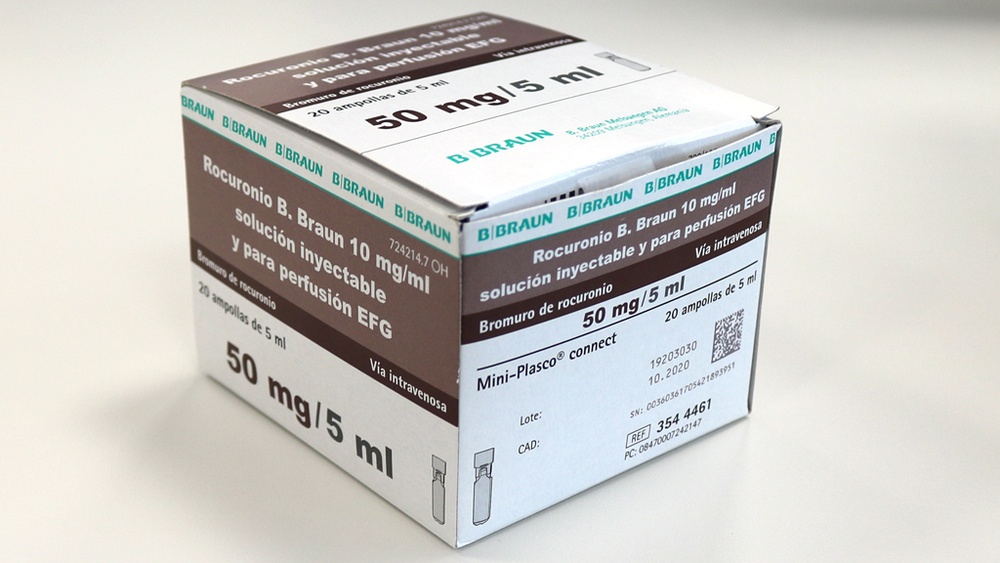
- Alternativas a ROCURONIO NORIDERM 10 MG/ML SOLUCION INYECTABLE Y PARA PERFUSION EFGForma farmacéutica: INYECTABLE, 10 mg bromuro de rocuronio/ mlPrincipio activo: Rocuronio bromuroFabricante: Schering Plough S.A.Requiere recetaForma farmacéutica: INYECTABLE, 10 mg/mlPrincipio activo: Rocuronio bromuroFabricante: Laboratoire AguettantRequiere recetaForma farmacéutica: INYECTABLE, 10 mg/mlPrincipio activo: Rocuronio bromuroFabricante: B. Braun Melsungen AgRequiere receta
Médicos online para ROCURONIO NORIDERM 10 MG/ML SOLUCION INYECTABLE Y PARA PERFUSION EFG
Comenta la dosis, los posibles efectos secundarios, interacciones, contraindicaciones o la revisión de receta de ROCURONIO NORIDERM 10 MG/ML SOLUCION INYECTABLE Y PARA PERFUSION EFG, sujeto a valoración médica y a la normativa local.









Obtén una receta de ROCURONIO NORIDERM 10 MG/ML SOLUCION INYECTABLE Y PARA PERFUSION EFG online
Rellena un formulario de 2 minutos
Cuéntanos tus síntomas, historial y el medicamento que necesitas.
Elige un médico o nosotros te asignamos uno
Escoge un especialista o te conectamos con el próximo médico disponible.
El médico revisa tu caso
Normalmente en 30 minutos. Puede hacerte preguntas adicionales por chat.
Recógela en cualquier farmacia
Receta electrónica enviada a tu correo, válida en toda España.
Preguntas frecuentes
ROCURONIO NORIDERM 10 MG/ML SOLUCION INYECTABLE Y PARA PERFUSION EFG requiere receta en España. Puedes confirmarlo con un médico online según tu caso.
El principio activo de ROCURONIO NORIDERM 10 MG/ML SOLUCION INYECTABLE Y PARA PERFUSION EFG es Rocuronio bromuro. Esta información ayuda a identificar medicamentos con la misma composición pero con diferentes nombres comerciales.
ROCURONIO NORIDERM 10 MG/ML SOLUCION INYECTABLE Y PARA PERFUSION EFG es fabricado por Noridem Enterprises Limited. La marca y el envase pueden variar según el distribuidor.
Los Médicos de familia, Psiquiatras, Dermatólogos, Cardiólogos, Endocrinólogos, Gastroenterólogos, Neumólogos, Nefrólogos, Reumatólogos, Hematólogos, Infectólogos, Alergólogos, Geriatras, Pediatras, Oncólogos pueden valorar la prescripción de ROCURONIO NORIDERM 10 MG/ML SOLUCION INYECTABLE Y PARA PERFUSION EFG cuando esté clínicamente indicado. Puedes reservar una videoconsulta para comentar tu caso y las opciones de tratamiento.
España cuenta con una infraestructura sanitaria bien desarrollada en ciudades principales como Madrid, Barcelona, Valencia y Sevilla. Las farmacias están ampliamente disponibles y operan bajo estrictas regulaciones, garantizando el acceso a medicamentos con receta.
Puedes comprar ROCURONIO NORIDERM 10 MG/ML SOLUCION INYECTABLE Y PARA PERFUSION EFG en Madrid, Barcelona, Sevilla o Valencia en cualquier farmacia local con una receta válida.
Para obtener una receta, puedes utilizar Oladoctor:
Otros medicamentos con el mismo principio activo (Rocuronio bromuro) incluyen ESMERON 10 mg/ml SOLUCION INYECTABLE Y PARA PERFUSION, ROCURONIO AGUETTANT 10 MG/ML SOLUCION INYECTABLE EN JERINGA PRECARGADA, ROCURONIO B. BRAUN 10 mg/ml SOLUCION INYECTABLE Y PARA PERFUSION EFG. Pueden tener diferentes nombres comerciales o formulaciones, pero contienen el mismo componente terapéutico. Consulta siempre con un médico antes de cambiar o iniciar un nuevo medicamento.
