



ROCURONIO 10 mg /Ml Solucion Inyectable

Revisión de receta online
Un médico revisará tu caso y determinará si la prescripción es médicamente apropiada.

Habla con un médico sobre este medicamento
Comenta tus síntomas y las opciones de tratamiento en una consulta online.



Cómo usar ROCURONIO AGUETTANT 10 MG/ML SOLUCION INYECTABLE EN JERINGA PRECARGADA
Contenido del prospecto
- Introducción
- Qué es Rocuronio Aguettant y para qué se utiliza
- Qué necesita saber antes de empezar a usar Rocuronio Aguettant
- Cómo usar Rocuronio Aguettant
- Posibles efectos adversos
- Conservación de Rocuronio Aguettant
- Contenido del envase e información adicional
Introducción
Prospecto:información para el usuario
Rocuronio Aguettant10mg/ml solución inyectable en jeringa precargada
Bromuro de rocuronio
Lea todo el prospecto detenidamente antes de empezar a usar este medicamento,porque contiene información importante para usted.
- Conserve este prospecto, ya que puede tener que volver a leerlo.
- Si tiene alguna duda, consulte a su médico o farmacéutico.
- Si experimenta efectos adversos, consulte a su médico o farmacéutico, incluso si se trata de efectos adversos que no aparecen en este prospecto. Ver sección 4.
Contenido del prospecto
- Qué es Rocuronio Aguettant y para qué se utiliza
- Qué necesita saber antes de empezar a usar Rocuronio Aguettant
- Cómo usar Rocuronio Aguettant
- Posibles efectos adversos
5 Conservación de Rocuronio Aguettant
- Contenido del envase e información adicional
1. Qué es Rocuronio Aguettant y para qué se utiliza
Rocuronio es un relajante musucularutilizado en adultos y niños a partir de 2 años de edad. Los relajantes musculares se utilizan durante una intervención quirúrgica como coadyuvantes durante la anestesia general. Durante una intervención quirúrgica, sus músculos deben estar completamente relajados. Esto facilita al cirujano la ejecución del procedimiento quirúrgico. Normalmente los nervios envían mensajes a sus músculos. Rocuronio actúa bloqueando temporalmente estas señales, provocando así la relajación de los músculos. Como los músculos necesarios para la respiración también se relajan, se le administrará respiración artificial hasta que pueda volver a respirar por sí mismo. Durante la intervención quirúrgica, el efecto del relajante muscular se monitorizará constantemente y, si fuera necesario, se le administraría más medicamento. Al final de la operación, se permitirá que desaparezcan los efectos de rocuronio y podrá empezar a respirar por si mismo. A veces, se le administrará otro fármaco para acelerar este proceso. Rocuronio también se puede utilizar en la Unidad de Cuidados Intensivos.

¿No estás seguro de si este medicamento es adecuado para ti?
Comenta tus síntomas y tratamiento con un médico online.
2. Qué necesita saber antes de empezar a usar Rocuronio Aguettant
No use Rocuronio Aguettant
- si es alérgico al rocuronio o a alguno de los demás componentes de este medicamento (incluidos en la sección 6).
Consulte a su médico si esto le aplica.
Advertencias y precauciones
Sus antecedentes médicos pueden influir en la forma en que se le administre Rocuronio Aguettant. Informe a su médico si tiene o ha tenido alguna de las siguientes enfermedades:
- alergia a los relajantes musculares
- función renal deficiente (insuficiencia renal) o enfermedad renal
- enfermedad cardiovascular
- formación de edemas (retención de líquidos, por ejemplo, en los tobillos)
- enfermedad hepática, de la vesícula biliar o de los conductos biliares, o función hepática deficiente.
- enfermedades que afecten a los nervios y los músculos.
- antecedentes de hipertermia maligna (fiebre repentina que cursa con ritmo cardiaco acelerado, respiración rápida y rigidez, dolor y/o debilidad muscular).
Algunas condiciones médicas pueden influir en la forma de actuación de Rocuronio Aguettant. Por ejemplo:
- niveles bajos de potasio en la sangre (hipopotasemia)
- niveles elevados de magnesio en la sangre (hipermagnesemia), por ejemplo al tratar la toxemia del embarazo con sales de magnesio
- niveles bajos de calcio en la sangre (hipocalcemia)
- niveles bajos de proteínas en la sangre (hipoproteinemia)
- falta de líquidos (deshidratación)
- exceso de ácido en la sangre (acidosis)
- exceso de dióxido de carbono en la sangre (hipercapnia)
- estado de salud general frágil
- sobrepeso
- quemaduras
Si cualquiera de estas condiciones le aplica a usted, su médico lo tendrá en cuenta a la hora de decidir la dosis adecuada de Rocuronio Aguettant para usted.
Niños y adolescentesRocuronio Aguettant puede utilizarse en niños (2 – 11 años) y adolescentes (12 – 17 años). Sin embargo, la dosis de mantenimiento no está indicada en población pediátrica menor de 12 años.
Rocuronio Aguettant no debe administrarse a niños menores de 2 años porque la subgraduación de la jeringa precargada no permite una administración precisa del producto en estas poblaciones.
Otros medicamentos y Rocuronio Aguettant
Informe a su médico si está utilizando, ha utilizado recientemente o pudiera tener que utilizar cualquier otro medicamento. Esto ayudará a su médico a determinar la dosis correcta de Rocuronio Aguettant para usted.
Los siguientes medicamentos pueden influir en el efecto de Rocuronio Aguettant:
Medicamentos que aumentan el efecto de Rocuronio Aguettant:
- ciertos anestésicos
- medicamentos utilizados como relajantes musculares (suxametonio)
- ciertos medicamentos usados para tratar infecciones bacterianas (antibióticos)
- ciertos medicamentos utilizados para la enfermedad maniaco depresiva (litio)
- ciertos medicamentos para las enfermedades cardicacas o la hipertensión arterial (quinidina, antagonistas del calcio, agentes betabloqueantes)
- ciertos medicamentos usados para tratar la malaria (quinina)
- medicamentos que provocan un aumento del volumen de orina (diuréticos)
- sales de magnesio
- anestésicos locales (lidocaína y bupivacaína)
- uso a corto plazo de medicamentos para el tramiento de la epilepsia (fenitoína), como por ejemplo, durante una operación.
Medicamentos que disminuyen el efecto de Rocuronio Aguettant:
- uso prolongado de corticoesterioides (antiinflamatorios) o medicamentos para la epilepsia (fenitoína y carbamazepina)
- medicamentos para la pancreatitis, problemas de coagulación de la sangre y pérdida aguda de sangre (inhibidores de la proteasa: gabexato, ulinastatina)
- Cloruro cálcico, cloruro potásico.
Medicamentos con un efecto variable sobre Rocuronio Aguettant:
- otros medicamentos usados para relajar los músculos.
Rocuronio Aguettant puede influir en los efectos de los siguientes medicamentos:
- Puede incrementar el efecto de anestésicos locales (como la lidocaína).
Embarazo,lactanciay fertilidad
Si está embarazada o en periodo de lactancia, cree que podría estar embarazada o tiene intención de quedarse embarazada, consulte a su médico antes de utilizar este medicamento.
Existen datos muy limitados sobre el uso de bromuro de rocuronio durante el embarazo humano y no existen datos sobre mujeres en periodo de lactancia. Rocuronio Aguettant sólo debe administarrse a mujeres embarazadas y en periodo de lactancia cuando el médico decida que los beneficios son mayores que los riesgos.
Este medicamento puede administarse durante una cesárea.
Conducción y uso de máquinas
Su médico le informará sobre cuando podrá volver a conducir o utilizar máquinas peligrosas después de la administración de Rocuronio Aguettant.
Rocuronio Aguettant contiene sodio
Este medicamento contiene menos de 1 mmol de sodio (23 mg) por jeringa precargada; esto es, esencialmente “exento de sodio”
3. Cómo usar Rocuronio Aguettant
Posología
Su médico determinará la dosis de Rocuronio Aguettant en función de:
- el tipo de anestesia utilizada
- la duración prevista de la intervención quirúrgica
- otros medicamentos que esté utilizando
- su edad y estado de salud.
Un profesional sanitario le administrará Rocuronio Aguettant antes y/o durante la intervención quirúrgica. La dosis normal es de 0,6 mg de bromuro de rocuronio por kilo de peso corporal y el efecto dura de 30 a 40 minutos. Durante el procedimiento, se comprobará si rocuronio sigue haciendo efecto. Si es necesario, se le administrarán dosis adicionales.
Como Rocuronio Aguettant es administrado
Rocuronio no está destinado a la autoadministración. Rocuronio se inyectará en forma de solución en una vena. Se administrará mediante una única inyección o a través de una perfusión.
Si usa más Rocuronio Aguettant del que debe
Dado que el personal médico monitorizará cuidadosamente su estado, es poco probable que le administren un exceso de rocuronio. Sin embargo, si esto ocurriera, se mantendrá la respiración artificial hasta que sea capaz de respirar de nuevo por si mismo. Es posible contrarrestar los efectos de (exceso de) rocuronio y acelerar su recuperación administrándole un medicamento que contrarreste los efectos de rocuronio.

¿Has empezado a tomar el medicamento y tienes preguntas?
Comenta tus síntomas y tratamiento con un médico online.
4. Posibles efectos adversos
Al igual que todos los medicamentos, este medicamento puede producir efectos adversos, aunque no todas las personas los sufran. Si estos efectos adversos ocurren durante la anestesia, estos serán observados y tratados por su doctor.
Los siguientes efectos adversos pueden ocurrir:
Raros o poco frecuentes (pueden afectar a menos de 1 de cada 100/1.000 personas)
- aumento de la velocidad del ritmo cardiaco (taquicardia)
- disminución de la presión arterial (hipotensión)
- ausencia, aumento o disminución del efecto de Rocuronio Aguettant
- dolor en el lugar de la inyección
- enrojecimiento o picor en el lugar de la inyección
- prolongación del efecto relajante muscular de Rocuronio Aguettant
- retraso en la recuperación de la anestesia
Muy raros (pueden afectar a menos de 1de cada 10.000personas)
- reacciones alérgicas tales como dificultad para respirar, cambios en la presión arterial o en la frecuencia cardíaca, shock (descenso brusco de la tensión arterial) debido a la insuficiencia de sangre circulante, o cambios en la piel (por ejemplo, acumulación de líquido, enrojecimiento o erupción cutánea)
- contracción excesiva y prolongada de los músculos de las vías respiratorias que causa dificultad para respirar (broncoespasmo)
- debilidad muscular o parálisis
- acumulación repentina de líquido en la piel y las mucosas (por ejemplo, garganta o lengua), dificultades respiratorias y/o picazón o erupción cutánea, a menudo con reacción alérgica (angioedema)
- acumulación de líquido (edema) en la cara
- dificultades en las vías respiratorias debido a la anestesia
- erupción cutánea, a veces con picazón intensa y habones (ronchas o urticaria)
- enrojecimiento de la piel
- rubor
Desconocidos (la frecuencia no puede estimarse a partir de los datos disponibles)
- espasmo alérgico y grave de los vasos sanguíneos coronarios (síndrome de Kounis) que produce dolor torácico (angina de pecho) o ataque al corazón (infarto de miocardio).
- pupilas dilatadas (midriasis) o pupilas fijas que no modifican su tamaño con la luz u otros estímulos
Comunicación de efectos adversos
Si experimenta cualquier tipo de efecto adverso, consulte a su médico o farmacéutico, incluso si se trata de posibles efectos adversos que no aparecen en este prospecto. También puede comunicarlos directamente a través del Sistema Español de Farmacovigilancia de medicamentos de Uso Humano: www.notificaRAM.es/. Mediante la comunicación de efectos adversos usted puede contribuir a proporcionar más información sobre la seguridad de este medicamento.
5. Conservación de Rocuronio Aguettant
Mantener este medicamento fuera de la vista y del alcance de los niños.
No utilice este medicamento después de la fecha de caducidad que aparece en la etiqueta, el blíster y el cartón.
Conservar en nevera (2 ?C – 8 ?C).
No congelar.
Conservar la jeringa precargada en su blíster sin abrir hasta su uso.
Una vez abierto, el medicamento debe utilizarse inmediatamente.
Este medicamento puede conservarse a una temperatura de hasta 30 °C durante un máximo de 12 semanas. En todos los casos, una vez sacado de la nevera, el medicamento debe desecharse transcurridas 12 semanas.
El producto no debe volver a introducirse en nevera una vez almacenado en el exterior. El periodo de conservación no puede exceder la fecha de caducidad indicada en el envase.
No utilice este medicamento si observa indicios visibles de deterioro.
Cualquier jeringa precargada, incluso parcialmente utilizada, debe desecharse adecuadamente después de su uso.
Los medicamentos no se deben tirar por los desagües. Pregunte a su farmacéutico cómo deshacerse de los medicamentos que ya no necesita. De esta forma, ayudará a proteger el medio ambiente.
6. Contenido del envase e información adicional
Composición de Rocuronio Aguettant
- El principio activo es bromuro de rocuronio.
Cada ml de solución contiene 10 mg de bromuro de rocuronio.
Cada jeringa precargada de 5 ml contiene 50 mg de bromuro de rocuronio (50 mg/ 5 ml).
- Los demás componentes son acetato sódico trihidrato (E 262), cloruro sódico, ácido acético glacial (E260) y agua para preparaciones inyectables.
Aspecto del producto y contenido del envase
Rocuronio Aguettant es una solución inyectable o para perfusión, desde incolora hasta marrón amarillento pálido, en una jeringa precargada de polipropileno de 5 ml, con una etiqueta autoadhesiva graduada transparente (sub- graduaciones de 0,2 ml, desde 0 hasta 5 ml). Cada jeringa precargada está envasada individualmente en un blíster transparente.
Tamaño del envase: Cajas de cartón de 10 jeringas precargadas.
Titular de la autorización de comercialización y responsable de la fabricación
Titular de la autorización de comercialización
Laboratoire Aguettant
1 rue Alexander Fleming,
69007 Lyon
Francia
Responsable de la fabricación
Laboratoire Aguettant
1, rue Alexander Fleming
69007 LYON
Francia
Laboratoire Aguettant
Lieu Dit Chantecaille
07340 Champagne
Francia
Este medicamento está autorizado en los estados miembros del Espacio Económico Europeocon los siguientes nombres:
AT: Rocuroniumbromid Aguettant
FR, DE, IS, PL, RO: Rocuronium Aguettant
BE, DK, FI, LU, NO, SE: Rocuronium bromide Aguettant
IT: Rocuronio bromuro Aguettant
NL: Rocuroniumbromide Aguettant
PT: Brometo de Rocurónio Aguettant
ES: Rocuronio Aguettant 10mg/ml solución inyectable en jeringa precargada
IE: Rocuronium bromide
Fecha de la última revisión de esteprospecto: mayo 2025.
La información detallada de este medicamento está disponible en la página web de la Agencia Española de Medicamentos y Productos Sanitarios (AEMPS) http://www.aemps.gob.es
----------------------------------------------------------------------------------------------------------------------------------
Esta información está destinada únicamente a profesionales del sector sanitario:
La jeringa precargada no es adecuada para la administración precisa del producto en niños menores de 2 años.
La jeringa precargada es para un solo paciente. Desechar la jeringa después de su uso. No reutilizar.
Aspecto de la solución
El producto debe inspeccionarse visualmente en busca de partículas y cambios de coloración antes de su administración. Sólo debe utilizarse una solución transparente de incolora a marrón amarillenta pálida sin partículas ni precipitados.
Incompatibilidades de la solución
El bromuro de rocuronio es físicamente incompatible con soluciones de los siguientes medicamentos: anfotericina, amoxicilina, azatioprina, cefazolina, cloxacilina, dexametasona, diazepam, enoximona, eritromicina, famotidina, furosemida, succinato sódico de hidrocortisona, insulina, metohexital, metilprednisolona, succinato sódico de prednisolona, tiopental, trimetoprima y vancomicina.
El bromuro de rocuronio también es incompatible con el intralípido.
Uso de la jeringa precargada
El contenido de un blíster no abierto ni dañado es estéril, y el blíster no debe abrirse hasta que la jeringa esté lista para su uso.
La jeringa precargada es para un solo paciente. Desechar la jeringa después de su uso. No reutilizar.
La jeringa precargada no es adecuada para la administración precisa del producto en niños menores de 2 años.
El producto no debe utilizarse si el precinto de seguridad de la jeringa está roto.
No utilice este medicamento si observa signos visibles de deterioro.
Por favor, prepare la jeringa cuidadosamente de la siguiente manera
La superficie externa de la jeringa es estéril hasta que se abre el blíster. El blíster no debe abrirse hasta su uso.
Si se manipula con un método aséptico, este medicamento puede colocarse en un campo estéril una vez extraído del blíster.
- Extraiga la jeringa precargada estéril del blíster.
|
|
|
|
|
|
|
|
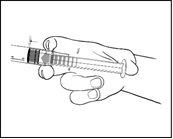
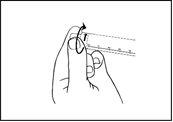
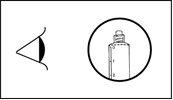
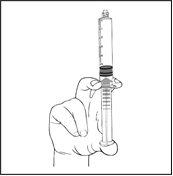
- Conecte la jeringa al dispositivo de acceso vascular mediante un sistema luer/luer lock. Empujar el émbolo lentamente para inyectar el volumen requerido. Administrar el producto por medio de la vía de administración adecuada
La jeringa precargada no es adecuada para los conductores de bombas de jeringa. La jeringa precargada es un producto listo para administrar, no es adecuado para la dilución en una bolsa de infusión.
No debe utilizarse ninguna jeringa que haya sido dañada o manipulada sin respetar las condiciones de esterilidad.
Cualquier producto no utilizado o material de desecho debe eliminarse de acuerdo con las disposiciones locales.
- País de registro
- Forma farmacéuticaINYECTABLE, 10 mg/ml
- Código ATCM03AC09
- Principio activo
- Requiere recetaSí
- Fabricante
- ComposiciónCLORURO DE SODIO (3,20 mg/ml mg), ACETATO DE SODIO TRIHIDRATO (2 mg/ml mg)
- Esta información es de carácter general y no sustituye la consulta con un profesional sanitario.
- Alternativas a ROCURONIO AGUETTANT 10 MG/ML SOLUCION INYECTABLE EN JERINGA PRECARGADAForma farmacéutica: INYECTABLE, 10 mg bromuro de rocuronio/ mlPrincipio activo: Rocuronio bromuroFabricante: Schering Plough S.A.Requiere recetaForma farmacéutica: INYECTABLE, 10 mg/mlPrincipio activo: Rocuronio bromuroFabricante: B. Braun Melsungen AgRequiere recetaForma farmacéutica: INYECTABLE, 10 mg/mlPrincipio activo: Rocuronio bromuroFabricante: Hikma Farmaceutica (Portugal) S.A.Requiere receta
Médicos online para ROCURONIO AGUETTANT 10 MG/ML SOLUCION INYECTABLE EN JERINGA PRECARGADA
Comenta la dosis, los posibles efectos secundarios, interacciones, contraindicaciones o la revisión de receta de ROCURONIO AGUETTANT 10 MG/ML SOLUCION INYECTABLE EN JERINGA PRECARGADA, sujeto a valoración médica y a la normativa local.









Obtén una receta de ROCURONIO AGUETTANT 10 MG/ML SOLUCION INYECTABLE EN JERINGA PRECARGADA online
Rellena un formulario de 2 minutos
Cuéntanos tus síntomas, historial y el medicamento que necesitas.
Elige un médico o nosotros te asignamos uno
Escoge un especialista o te conectamos con el próximo médico disponible.
El médico revisa tu caso
Normalmente en 30 minutos. Puede hacerte preguntas adicionales por chat.
Recógela en cualquier farmacia
Receta electrónica enviada a tu correo, válida en toda España.
Preguntas frecuentes
ROCURONIO AGUETTANT 10 MG/ML SOLUCION INYECTABLE EN JERINGA PRECARGADA requiere receta en España. Puedes confirmarlo con un médico online según tu caso.
El principio activo de ROCURONIO AGUETTANT 10 MG/ML SOLUCION INYECTABLE EN JERINGA PRECARGADA es Rocuronio bromuro. Esta información ayuda a identificar medicamentos con la misma composición pero con diferentes nombres comerciales.
ROCURONIO AGUETTANT 10 MG/ML SOLUCION INYECTABLE EN JERINGA PRECARGADA es fabricado por Laboratoire Aguettant. La marca y el envase pueden variar según el distribuidor.
Los Médicos de familia, Psiquiatras, Dermatólogos, Cardiólogos, Endocrinólogos, Gastroenterólogos, Neumólogos, Nefrólogos, Reumatólogos, Hematólogos, Infectólogos, Alergólogos, Geriatras, Pediatras, Oncólogos pueden valorar la prescripción de ROCURONIO AGUETTANT 10 MG/ML SOLUCION INYECTABLE EN JERINGA PRECARGADA cuando esté clínicamente indicado. Puedes reservar una videoconsulta para comentar tu caso y las opciones de tratamiento.
España cuenta con una infraestructura sanitaria bien desarrollada en ciudades principales como Madrid, Barcelona, Valencia y Sevilla. Las farmacias están ampliamente disponibles y operan bajo estrictas regulaciones, garantizando el acceso a medicamentos con receta.
Puedes comprar ROCURONIO AGUETTANT 10 MG/ML SOLUCION INYECTABLE EN JERINGA PRECARGADA en Madrid, Barcelona, Sevilla o Valencia en cualquier farmacia local con una receta válida.
Para obtener una receta, puedes utilizar Oladoctor:
Otros medicamentos con el mismo principio activo (Rocuronio bromuro) incluyen ESMERON 10 mg/ml SOLUCION INYECTABLE Y PARA PERFUSION, ROCURONIO B. BRAUN 10 mg/ml SOLUCION INYECTABLE Y PARA PERFUSION EFG, ROCURONIO HIKMA 10 MG/ML SOLUCION INYECTABLE Y PARA PERFUSION EFG. Pueden tener diferentes nombres comerciales o formulaciones, pero contienen el mismo componente terapéutico. Consulta siempre con un médico antes de cambiar o iniciar un nuevo medicamento.
