



REPAGLINIDA 1 mg Comprimidos

Revisión de receta online
Un médico revisará tu caso y determinará si la prescripción es médicamente apropiada.

Habla con un médico sobre este medicamento
Comenta tus síntomas y las opciones de tratamiento en una consulta online.



Cómo usar REPAGLINIDA COMBIX 1 mg COMPRIMIDOS EFG
Contenido del prospecto
- Introducción
- Qué es Repaglinida Combix y para qué se utiliza
- Qué necesita saber antes de empezar a tomar Repaglinida Combix
- Cómo tomar Repaglinida Combix
- Posibles efectos adversos
- Conservación de Repaglinida Combix 1 mg comprimidos
- Contenido del envase e información adicional
Introducción
Prospecto: Información para el usuario
Repaglinida Combix 1 mg comprimidos EFG
Lea todo el prospecto detenidamente antes de empezar a tomar el medicamento, porque contiene información importante para usted
- Conserve este prospecto, ya que puede tener que volver a leerlo.
- Si tiene alguna duda, consulte a su médico o farmacéutico.
- Este medicamento se le ha recetado solamente a usted y no debe dárselo a otras personas, aunque tengan los mismos síntomas que usted, ya que puede perjudicarles.
- Si experimenta efectos adversos, consulte a su médico o farmacéutico, incluso si se trata de efectos adversos que no aparecen en este prospecto. Ver sección 4.
Contenido del prospecto:
- Qué es Repaglinida Combix y para qué se utiliza
- Qué necesita saber antes de empezar a tomar Repaglinida Combix
- Cómo tomar Repaglinida Combix
- Posibles efectos adversos
- Conservación de Repaglinida Combix
- Contenido del envase e información adicional
1. Qué es Repaglinida Combix y para qué se utiliza
Repaglinida Combix es un medicamento antidiabético oral que contiene repaglinida, la cual ayuda a su páncreas a producir más insulina y a bajar su azúcar en sangre (glucosa).
La diabetes tipo 2es una enfermedad en la que el páncreas no produce insulina suficiente para controlar el nivel de azúcar en la sangre o en la que el cuerpo no responde normalmente a la insulina que produce.
Repaglinida Combix se utiliza para controlar la diabetes tipo 2 en adultos, como un complemento de la dieta y ejercicio: el tratamiento debe iniciarse si la dieta, el ejercicio físico y la reducción de peso por sí solos no han resultado suficientes para controlar (o disminuir) el nivel de azúcar en la sangre. Repaglinida Combix también puede administrarse junto con metformina, otro medicamento para la diabetes.
Se ha demostrado que Repaglinida Combix reduce el nivel de azúcar en sangre, lo cual contribuye a evitar complicaciones de la diabetes.

¿No estás seguro de si este medicamento es adecuado para ti?
Comenta tus síntomas y tratamiento con un médico online.
2. Qué necesita saber antes de empezar a tomar Repaglinida Combix
No tome Repaglinida Combix
- si es alérgicoa repaglinida o a cualquiera de los demás componentes de este medicamento (incluidos en la sección 6)
- si padece diabetes tipo 1
- si el nivel de ácido en su cuerpo se ha incrementado (cetoacidosis diabética)
- si padece una enfermedad grave del hígado
- si toma gemfibrozilo(un medicamento que disminuye los niveles de grasa en la sangre)
Advertencias y precauciones
Consulte a su médico o farmacéutico antes de empezar a tomar Repaglinida Combix:
- si tiene problemas de hígado. Repaglinida Combix no está recomendado en pacientes con enfermedad moderada del hígado. Repaglinida Combix no debe tomarse si padece una enfermedad grave del hígado (ver No tome Repaglinida Combix)
- si tiene problemas de riñón. Repaglinida Combix debe tomarse con precaución
- si va a someterse a una importante intervención quirúrgicao acaba de sufrir una enfermedado infección grave. En estas circunstancias puede no conseguirse el control diabético
- si es menor de 18 añoso mayor de 75 años. Repaglinida Combix no está recomendado. No se ha estudiado en estos grupos de edad
Consulte con su médico sialguno de los casos mencionados le ocurre. Puede que Repaglinida Combix no esté indicado para usted. Su médico le aconsejará.
Niños y adolescentes
No tome este medicamento si es menor de 18 años.
Si tiene una hipoglucemia (nivel bajo de azúcar en sangre)
Puede sufrir una hipoglucemia si su nivel de azúcar en sangre es demasiado bajo. Esto puede ocurrir si:
- toma demasiado Repaglinida Combix
- hace más ejercicio físico de lo normal
- toma otros medicamentos o tiene problemas de hígado o de riñón (ver otros apartados de la sección 2. Quénecesita saber antes de empezar a tomar Repaglinida Combix)
Los síntomas de aviso de una hipoglucemiapueden aparecer repentinamente y pueden ser: sudor frío, piel fría y pálida, dolor de cabeza, palpitaciones, náuseas, apetito excesivo, trastornos visuales temporales, fatiga, cansancio y debilidad no habituales, nerviosismo o temblor, ansiedad, confusión y dificultad de concentración.
Si su nivel de azúcar en sangre es bajo o siente que va a tener una hipoglucemia: tome comprimidos de glucosa o bien un producto o bebida azucarada y luego descanse.
Cuando los síntomas de hipoglucemia desaparezcan o cuando los niveles de azúcar en sangre se estabilicen, continúe el tratamiento con Repaglinida Combix.
Informe a los demás que es diabético y que si pierde el conocimientodebido a una hipoglucemia, deben recostarle de lado y buscar inmediatamente asistencia médica. No deben darle nada de comer o beber, ya que podría asfixiarse:
- si la hipoglucemia graveno se trata puede causar lesión cerebral (transitoria o permanente) e incluso la muerte.
- si una hipoglucemiale hace perder el conocimiento o si sufre hipoglucemias repetidas, informe a su médico. Quizá tenga que ajustar la cantidad o pauta de administración de Repaglinida Combix, la alimentación o el ejercicio.
Si su nivel de azúcar en sangre es muy alto
Su nivel de azúcar en sangre puede ser muy alto (hiperglucemia). Esto puede ocurrir:
- si toma muy poco Repaglinida Combix
- si tiene una infección o fiebre
- si come más de lo normal
- si hace menos ejercicio de lo normal
Los síntomas de aviso de un nivel de azúcar en sangre demasiado altoaparecen gradualmente. Estos incluyen: orina abundante, sed, piel seca y sensación de sequedad en la boca. Informe a su médico. Puede que tenga que ajustar la cantidad de Repaglinida Combix, la alimentación o el ejercicio.
Toma de Repaglinida Combix con otros medicamentos
Informe a su médico o farmacéutico si está tomando, ha tomado recientemente o podría tener que tomar cualquier otro medicamento.
Si su médico se lo receta puede tomar Repaglinida Combix junto con metformina, otro medicamento para la diabetes.
Si toma gemfibrozilo (utilizado para disminuir los niveles de grasa en la sangre), no debe tomar Repaglinida Combix.
La respuesta de su cuerpo a Repaglinida Combix puede cambiar si toma otros medicamentos, especialmente:
- Inhibidores de la monoamino-oxidasa (IMAO) (para el tratamiento de la depresión)
- Betabloqueantes (para el tratamiento de la hipertensión arterial o enfermedades del corazón)
- Inhibidores-(ECA) (para el tratamiento de enfermedades del corazón)
- Salicilatos (p. ej. aspirina)
- Octreotida (para el tratamiento del cáncer)
- Medicamentos antiinflamatorios no esteroídicos (AINES) (un tipo de analgésico)
- Esteroides (esteroides anabolizantes y corticosteroides - para la anemia o para tratar la inflamación-)
- Anticonceptivos orales (para impedir el embarazo)
- Tiazidas (diuréticos)
- Danazol (para el tratamiento de los quistes mamarios y la endometriosis)
- Medicamentos tiroideos (para el tratamiento de los niveles bajos de hormonas tiroideas)
- Simpaticomiméticos (para el tratamiento del asma)
- Claritromicina, trimetoprim, rifampicina (medicamentos antibióticos)
- Itraconazol, ketoconazol (medicamentos para las infecciones por hongos)
- Gemfibrozilo (para tratar niveles altos de grasa en sangre)
- Ciclosporina (para suprimir el sistema inmune)
- Deferasirox (para reducir la sobrecarga férrica crónica)
- Fenitoína, carbamazepina, fenobarbital (utilizados para tratar la epilepsia)
- Hierba de San Juan (planta medicinal)
- Clopidogrel (para prevenir la formación de coágulos sanguíneos)
Toma de Repaglinida Combix con alcohol
El alcohol puede alterar la capacidad de Repaglinida Combix de reducir el nivel de azúcar en sangre.
Permanezca alerta a los síntomas de una hipoglucemia.
Embarazo y lactancia
Si está embarazada o en período de lactancia, cree que podría estar embarazada o tiene intención de quedarse embarazada, consulte a su médico antes de utilizar este medicamento.
No debe tomar Repaglinida Combix si está embarazada o planea estarlo.
No debe tomar Repaglinida Combix si es madre lactante.
Conducción y uso de máquinas
La capacidad de conducir automóviles y utilizar máquinas puede verse afectada si su nivel de azúcar en sangre es bajo o alto. Tenga en cuenta que podría ponerse en peligro o poner en peligro a otros. Consulte con su médico la posibilidad de conducir un coche, si:
- tiene hipoglucemias frecuentes
tiene pocos, o no tiene, síntomas de hipoglucemia o le resulta difícil reconocerlos.
3. Cómo tomar Repaglinida Combix
Siga exactamente las instrucciones de administración de este medicamento indicadas por su médico. En caso de duda, consulte de nuevo a su médico.
Su médico determinará su dosis.
- Normalmente, La dosis iniciales de 0,5 mg tomada justo antes de cada comida principal. Los comprimidos deben tomarse con un vaso de agua justo antes o en los 30 minutos anteriores a cada comida principal.
- La dosis puede ser ajustada por su médico hasta 4 mg, que debe tomarse justo antes o en los 30 minutos anteriores a cada comida principal. La dosis máxima recomendada es de 16 mg al día.
No tome más Repaglinida Combix del que le haya recomendado su médico.
Si toma más Repaglinida Combix del que debe
Si toma demasiados comprimidos, su azúcar en sangre puede llegar a ser demasiado bajo y producirle una hipoglucemia. Por favor, lea qué es una hipoglucemía y cómo tratarla en la sección Si tiene una hipoglucemia.
En caso de sobredosis o ingestión accidental, consulte inmediatamente a su médico o farmacéutico o llame al Servicio de Información Toxicológica, teléfono: 91 562 04 20, indicando el medicamento y la cantidad ingerida.
Si olvidó tomar Repaglinida Combix
Si olvida tomar una dosis, tome la siguiente dosis cuando le corresponda. No tome una dosis doble para compensar las dosis olvidadas.
Si interrumpe el tratamiento con Repaglinida Combix
Tenga en cuenta que el efecto deseado no se consigue si deja de tomar Repaglinida Combix. Su diabetes puede empeorar. Si es necesario cualquier cambio en su tratamiento, consulte antes con su médico.
Si tiene cualquier duda sobre el uso de este medicamento, pregunte a su médico o farmacéutico.

¿Has empezado a tomar el medicamento y tienes preguntas?
Comenta tus síntomas y tratamiento con un médico online.
4. Posibles efectos adversos
Al igual que todos los medicamentos, este medicamento puede producir efectos adversos, aunque no todas las personas los sufran.
Hipoglucemia
El efecto adverso más frecuente es la hipoglucemia que puede afectar hasta 1 de cada 10 personas (ver Si tiene una hipoglucemiaen la sección 2). Las reacciones hipoglucémicas normalmente son leves o moderadas pero ocasionalmente pueden dar lugar a pérdida de consciencia o coma hipoglucémico. Si esto ocurre, pida asistencia médica inmediatamente.
Alergia
Los casos de alergia son muy raros (puede afectar hasta 1 de cada 10.000 personas). Síntomas como hinchazón, dificultad para respirar, palpitaciones, síntomas de mareo y sudoración, pueden ser signos de una reacción anafiláctica. Contacte con su médico inmediatamente.
Otros efectos adversos
Frecuentes(pueden afectar hasta 1 de cada 10 personas):
- Dolor de estómago
- Diarrea
Raros(pueden afectarhasta 1 de cada 1.000 personas):
- Síndrome coronario agudo (pero puede no ser debido al medicamento)
Muy raros(pueden afectar hasta 1 de cada 10.000 personas):
- Vómitos
- Estreñimiento
- Trastornos visuales
- Problemas graves del hígado, función del hígado anormal como aumento de las enzimas hepáticas en sangre
Frecuencia no conocida(la frecuencia no puede estimarse a partir de los datos disponibles):
- Hipersensibilidad (tales como sarpullido, picores, rojeces e hinchazón)
- Náuseas
Si experimenta efectos adversos, consulte a su médico o farmacéutico, incluso si se trata de efectos adversos que no aparecen en este prospecto.
Comunicación de efectos adversos
Si experimenta cualquier tipo de efecto adverso, consulte a su médico o farmacéutico, incluso si se trata de posibles efectos adversos que no aparecen en este prospecto. También puede comunicarlos directamente a través del Sistema Español de Farmacovigilancia de medicamentos de Uso Humano: https://www.notificaram.es. Mediante la comunicación de efectos adversos usted puede contribuir a proporcionar más información sobre la seguridad de este medicamento.
5. Conservación de Repaglinida Combix 1 mg comprimidos
Mantener este medicamento fuera de la vista y del alcance de los niños.
No requiere condiciones especiales de conservación.
No utilice este medicamento después de la fecha de caducidad que aparece en el estuche y en el blíster después de CAD. La fecha de caducidad es el último día del mes que se indica.
Los medicamentos no se deben tirar por los desagües ni a la basura. Deposite los envases y los medicamentos que no necesita en el Punto SIGRE de la farmacia. En caso de duda pregunte a su farmacéutico cómo deshacerse de los envases y de los medicamentos que no necesita. De esta forma, ayudará a proteger el medio ambiente.
6. Contenido del envase e información adicional
Composición de Repaglinida Combix
- El principio activo es repaglinida. Cada comprimido contiene 1 mg de repaglinida.
- Los demás componentes son: celulosa microcristalina (E460i), hidrógeno fosfato de calcio, almidón de maíz sin gluten, poliacrilina de potasio, povidona K30, glicerol 99,5% (E422), estearato de magnesio (E470b), poloxamer 188, meglumina y óxido de hierro amarillo (E172).
Aspecto del producto y contenido del envase
Los comprimidos son de color amarillo, redondos, biconvexos, con un diámetro de 6 mm aproximadamente y con ranura en una de las caras.
Los comprimidos se pueden dividir en dosis iguales.
Repaglinida Combix se encuentra disponible en envases de 30, 90, 120 y 270 comprimidos en blísteres y en envases de 90 y 270 comprimidos en frascos
Puede que solamente estén comercializados algunos tamaños de envase.
Titular de la autorización de comercialización
Laboratorios Combix, S.L.U.
C/ Badajoz 2, Edificio 2
28223 Pozuelo de Alarcón, Madrid
España
Responsable de la fabricación
PharmaPath S.A.
28is Oktovriou 1,
Agia Varvara, 123 51,
Grecia
Este medicamento está autorizado en los Estados Miembros del Espacio Económico Europeo con los siguientes nombres:
España Repaglinida Combix 1 mg comprimidos EFG
Este prospecto ha sido aprobado en Febrero 2016
La información detallada y actualizada de este medicamento está disponible en la página web de la Agencia Española de Medicamentos y Productos Sanitarios (AEMPS) http://www.aemps.gob.es/
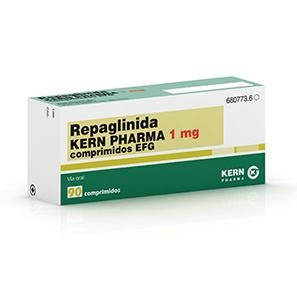
- País de registro
- Forma farmacéuticaCOMPRIMIDO, 1 mg
- Código ATCA10BX02
- Precio medio en farmacia5.59 EUR
- Principio activo
- Requiere recetaSí
- Fabricante
- ComposiciónGLICEROL (E 422) (0,6365 mg mg), POLIACRILIN POTASICO (3,8 mg mg)
- Esta información es de carácter general y no sustituye la consulta con un profesional sanitario.
- Alternativas a REPAGLINIDA COMBIX 1 mg COMPRIMIDOS EFGForma farmacéutica: COMPRIMIDO, 0,5 mgPrincipio activo: repaglinidaFabricante: Krka D.D. Novo MestoRequiere recetaForma farmacéutica: COMPRIMIDO, 1 mgPrincipio activo: repaglinidaFabricante: Krka D.D. Novo MestoRequiere recetaForma farmacéutica: COMPRIMIDO, 2 mgPrincipio activo: repaglinidaFabricante: Krka D.D. Novo MestoRequiere receta
Médicos online para REPAGLINIDA COMBIX 1 mg COMPRIMIDOS EFG
Comenta la dosis, los posibles efectos secundarios, interacciones, contraindicaciones o la revisión de receta de REPAGLINIDA COMBIX 1 mg COMPRIMIDOS EFG, sujeto a valoración médica y a la normativa local.

Obtén una receta de REPAGLINIDA COMBIX 1 mg COMPRIMIDOS EFG online
Rellena un formulario de 2 minutos
Cuéntanos tus síntomas, historial y el medicamento que necesitas.
Elige un médico o nosotros te asignamos uno
Escoge un especialista o te conectamos con el próximo médico disponible.
El médico revisa tu caso
Normalmente en 30 minutos. Puede hacerte preguntas adicionales por chat.
Recógela en cualquier farmacia
Receta electrónica enviada a tu correo, válida en toda España.
Preguntas frecuentes
REPAGLINIDA COMBIX 1 mg COMPRIMIDOS EFG requiere receta en España. Puedes confirmarlo con un médico online según tu caso.
El principio activo de REPAGLINIDA COMBIX 1 mg COMPRIMIDOS EFG es repaglinida. Esta información ayuda a identificar medicamentos con la misma composición pero con diferentes nombres comerciales.
El precio medio en farmacia de REPAGLINIDA COMBIX 1 mg COMPRIMIDOS EFG es de aproximadamente 5.59 EUR. Puede variar según el fabricante y la forma farmacéutica.
REPAGLINIDA COMBIX 1 mg COMPRIMIDOS EFG es fabricado por Laboratorios Combix S.L.U.. La marca y el envase pueden variar según el distribuidor.
Los Médicos de familia, Psiquiatras, Dermatólogos, Cardiólogos, Endocrinólogos, Gastroenterólogos, Neumólogos, Nefrólogos, Reumatólogos, Hematólogos, Infectólogos, Alergólogos, Geriatras, Pediatras, Oncólogos pueden valorar la prescripción de REPAGLINIDA COMBIX 1 mg COMPRIMIDOS EFG cuando esté clínicamente indicado. Puedes reservar una videoconsulta para comentar tu caso y las opciones de tratamiento.
España cuenta con una infraestructura sanitaria bien desarrollada en ciudades principales como Madrid, Barcelona, Valencia y Sevilla. Las farmacias están ampliamente disponibles y operan bajo estrictas regulaciones, garantizando el acceso a medicamentos con receta.
Puedes comprar REPAGLINIDA COMBIX 1 mg COMPRIMIDOS EFG en Madrid, Barcelona, Sevilla o Valencia en cualquier farmacia local con una receta válida.
Para obtener una receta, puedes utilizar Oladoctor:
Otros medicamentos con el mismo principio activo (repaglinida) incluyen Enyglid 0,5 mg comprimidos EFG, Enyglid 1 mg comprimidos EFG, Enyglid 2 mg comprimidos EFG. Pueden tener diferentes nombres comerciales o formulaciones, pero contienen el mismo componente terapéutico. Consulta siempre con un médico antes de cambiar o iniciar un nuevo medicamento.
