



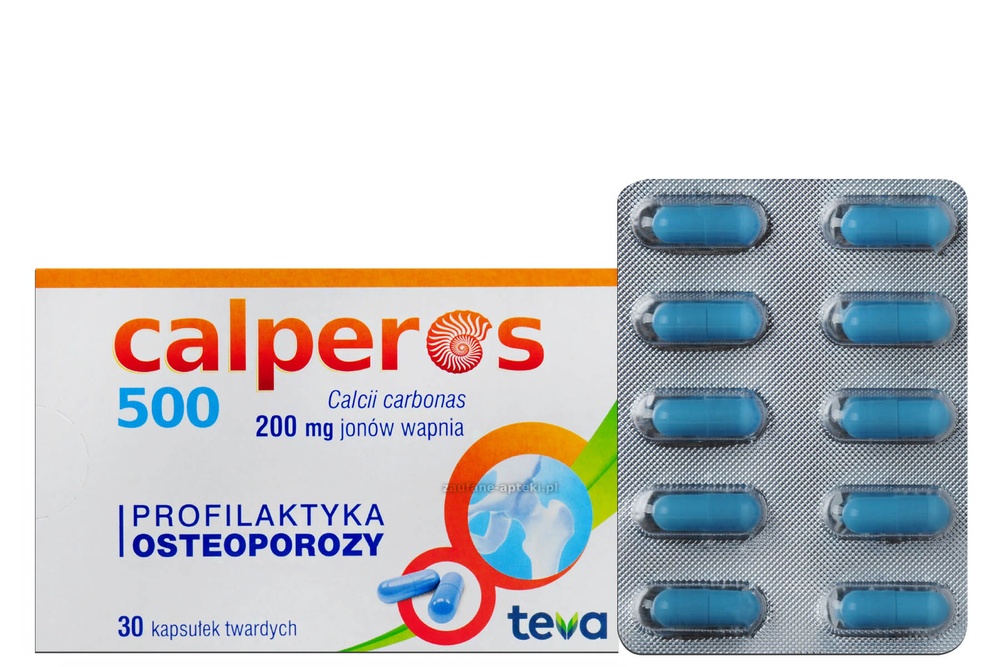
CALPEROS 200 mg Ca2+ Capsules

Prescription review online
A doctor will review your case and decide whether a prescription is medically appropriate.

Talk to a doctor about this medicine
Discuss your symptoms and possible next steps in a quick online consultation.



How to use Calperos 500
Contents of the leaflet
- Package Leaflet: Information for the Patient
- CALPEROS 500
- What is CALPEROS and what is it used for
- Important information before taking CALPEROS
- How to take CALPEROS
- Possible side effects
- How to store CALPEROS
- Contents of the pack and other information
Package Leaflet: Information for the Patient
CALPEROS 500
Calcium Carbonate
200 mg of calcium ions, hard capsules
CALPEROS 1000 Calcium Carbonate
400 mg of calcium ions, hard capsules
Read the package leaflet carefully before taking the medicine, as it contains important information for the patient.
This medicine should always be taken exactly as described in the package leaflet for the patient or as directed by a doctor, pharmacist, or nurse.
- Keep this leaflet, you may need to read it again.
- If you need advice or additional information, consult a pharmacist.
- If the patient experiences any side effects, including any possible side effects not listed in this leaflet, they should inform their doctor, pharmacist, or nurse. See section 4.
- If there is no improvement after 14 days or if the patient feels worse, they should contact their doctor.
Table of Contents of the Leaflet
- 1. What is CALPEROS and what is it used for
- 2. Important information before taking CALPEROS
- 3. How to take CALPEROS
- 4. Possible side effects
- 5. How to store CALPEROS
- 6. Contents of the pack and other information

Not sure if this medicine is right for you?
Discuss your symptoms and treatment with a doctor online.
1. What is CALPEROS and what is it used for
CALPEROS 500 and CALPEROS 1000 contain calcium carbonate, which is a source of ionized calcium for the body.
Calcium is an element involved in the formation and mineralization of bone tissue throughout a person's life. It conditions proper nerve conduction and muscle excitability. It maintains the body's electrolyte balance and also affects the functioning of the heart muscle. It participates in the blood coagulation process. It affects the activity of a series of enzymes and also plays the role of a transmitter, thanks to which chemical, physical, or hormonal stimuli undergo transformation into a specific biological effect. Thanks to its property of reducing the permeability of blood vessel walls, calcium acts anti-inflammatory, anti-edematous, and anti-allergic.
The calcium carbonate contained in the CALPEROS preparations helps to cover the daily demand for calcium, reduces calcium loss from the bone system in women during the peri- and postmenopausal period, as well as in all people in old age. It prevents the occurrence of bone changes in the course of chronic kidney failure. It has a soothing effect on allergic reactions on the skin and mucous membranes.
Indications for use are:
- states of increased demand for calcium: period of intense growth in children and adolescents, as well as during pregnancy and lactation;
- improper nutrition with calcium-poor products;
- disturbances in calcium reabsorption from renal tubules;
- reduced calcium levels in the blood with elevated phosphorus levels in patients with chronic kidney failure undergoing dialysis and prevention of increased neuromuscular excitability;
- prophylactically in the prevention and supplementally in the comprehensive treatment of osteoporosis;
- states after long-term immobilization and the period of convalescence after bone fractures;
- supportively in the treatment of colds and allergic diseases.
2. Important information before taking CALPEROS
When not to take CALPEROS:
- if the patient is allergic to calcium carbonate or any of the other ingredients of this medicine (listed in section 6);
- with increased calcium levels in the blood and excessive excretion of calcium in the urine, e.g., in hyperthyroidism, parathyroidism, overdose of vitamin D, decalcifying tumors, such as multiple myeloma and tumors metastasizing to bone, in severe untreated kidney failure;
- in kidney stones;
- with cardiac glycoside therapy;
- in severe hypercalciuria (urine with an excessive amount of excreted calcium).
Warnings and precautions
In the case of chronic kidney failure, it is necessary to monitor calcium and phosphorus levels in the blood during the use of the medicine.
When using high doses, especially with concurrent administration of vitamin D preparations, the risk of elevated calcium levels in the blood with subsequent kidney damage cannot be excluded, so in such patients, it is necessary to monitor the calcium level in the blood serum and kidney function.
Patients treated with cardiac glycosides should consult a doctor before using calcium preparations, as concurrent administration of both medicines may enhance the effect of glycosides on the heart and cause a risk of rhythm disturbances.
During treatment with high doses, especially when taking vitamin D, thiazide diuretics, and/or calcium-containing drugs or food products (such as milk), there is a risk of hypercalcemia (elevated calcium levels in the blood) with subsequent kidney function impairment or milk-alkali syndrome. This risk also applies to pregnant women taking high doses of calcium and patients with impaired kidney function. In these patients, it is necessary to monitor the calcium level in the serum and monitor kidney function.
Taking CALPEROS with food and drink
It is recommended to take the medicine during a meal.
Pregnancy and breastfeeding
If the patient is pregnant or breastfeeding, thinks she may be pregnant, or plans to have a child, she should consult a doctor or pharmacist before taking this medicine.
Pregnancy
During pregnancy, the demand for calcium increases. When using therapeutic doses, no risk to the fetus has been demonstrated.
Breastfeeding
During breastfeeding, the demand for calcium increases. When using therapeutic doses, no risk to the newborn has been demonstrated.
Driving and using machines
The medicine does not affect the ability to drive and use machines.
CALPEROS and other medicines
Thiazide diuretics increase calcium reabsorption, thereby reducing the amount of calcium ions excreted in the urine and creating a risk of elevated calcium levels in the blood. In cases of concurrent use, it is necessary to monitor the calcium level in the blood serum.
Systemically acting corticosteroids reduce calcium absorption and may require an increase in its dose.
Oral calcium salts reduce the absorption of tetracycline antibiotics and fluorine compounds from the gastrointestinal tract. These drugs should be administered at an interval of 2 hours.
Calcium compounds may also cause reduced absorption of quinolones, some cephalosporin antibiotics, and iron-containing preparations.
Calcium preparations may enhance the effect of and thus increase the toxicity of cardiac glycosides. Therefore, when using these medicines concurrently, it is necessary to monitor heart function (electrocardiogram) and calcium levels in the blood.
Bisphosphonates or sodium fluoride should be administered at least 3 hours before taking calcium, due to reduced absorption from the gastrointestinal tract in the case of concurrent administration.
When using vitamin D or its derivatives in doses above 400 IU/day, calcium absorption from the gastrointestinal tract increases significantly, and hypercalcemia may occur.
When treating with vitamin D and CALPEROS, it is necessary to systematically check the calcium level.
The medicine weakens the effect of verapamil and other calcium channel blockers.
Oxalic acid (found in large quantities in spinach and rhubarb) and phytic acid (found in whole grains) may reduce calcium absorption due to the formation of insoluble calcium salts. Patients should not take calcium preparations within 2 hours of consuming foods with high oxalic acid or phytic acid content.
Thiazide diuretics may increase the risk of hypercalcemia (elevated calcium levels in the blood).
CALPEROS contains indigotine
The medicine may cause allergic reactions.

Started taking the medicine and have questions?
Discuss your symptoms and treatment with a doctor online.
3. How to take CALPEROS
This medicine should always be taken exactly as described in this patient leaflet or as directed by a doctor or pharmacist. In case of doubt, consult a doctor or pharmacist.
The dose is usually determined based on the daily demand, which is presented as follows:
| Age category | Amount in mg (in terms of elemental calcium) |
| Adolescents and adults Pregnant and breastfeeding women Postmenopausal women not receiving hormone replacement therapy (HRT) Postmenopausal women receiving HRT |
|
| All over 65 years old | 1500 |
Usually, the following dosing is used:
CALPEROS 500: 1 to 2 hard capsules (from 200 mg to 400 mg of calcium) 2 to 3 times a day;
CALPEROS 1000: 1 hard capsule (400 mg of calcium) 1 to 3 times a day.
Do not take more than 1200 mg of calcium ions per day, i.e., no more than 6 hard capsules of CALPEROS 500 or 3 hard capsules of CALPEROS 1000.
Use in children and adolescents
Children over 7 years old and adolescents:
1 hard capsule of CALPEROS 500 (200 mg of calcium) up to 3 times a day.
It is recommended to take the medicine during a meal.
Taking a higher dose of CALPEROS than recommended
There are no reports of cases of acute poisoning with the medicine.
Overdosing on the medicine, especially in patients taking higher-than-therapeutic doses of vitamin D or its derivatives, may lead to elevated calcium levels in the blood. The following may occur: loss of appetite, excessive thirst, nausea, vomiting, constipation, muscle weakness, fatigue, impaired consciousness, polyuria, bone pain, kidney calcification, kidney stones, and in severe cases, cardiac arrhythmias.
Milk-alkali syndrome: metastatic calcification may occur.
Treatment of overdose: Calcium administration should be discontinued. Thiazide diuretics, lithium, vitamin A, and cardiac glycosides should not be administered. The patient should consult a doctor. The doctor will perform gastric lavage, hydrate the patient, and depending on the severity of the overdose, will use one or more medicines (loop diuretics, bisphosphonates, calcitonin, corticosteroids). The levels of electrolytes in the blood, kidney function, and urine excretion will be monitored, and in severe cases, heart function will also be monitored.
Missing a dose of CALPEROS:
The next dose should be taken at the scheduled time.
Do not take a double dose to make up for the missed dose.
4. Possible side effects
Like all medicines, this medicine can cause side effects, although not everybody gets them.
The frequency of side effects is defined as follows:
- uncommon: occurring in 1 to 10 out of 1000 patients;
- rare: occurring in 1 to 10 out of 10,000 patients.
Metabolic and nutritional disorders
Uncommon: elevated calcium levels in the blood, excessive excretion of calcium in the urine.
Frequency not known: milk-alkali syndrome, usually observed only in cases of overdose (see section "Taking a higher dose of CALPEROS than recommended"). Milk-alkali syndrome is usually reversible after discontinuation of the medicine and special treatment (diuretic action induced by physiological saline solution, pamidronic acid).
Gastrointestinal disorders
Rare: constipation, bloating with gas, nausea, abdominal pain, diarrhea.
Skin and subcutaneous tissue disorders
Rare: itching, rash, urticaria.
Reporting side effects
If side effects occur, including any possible side effects not listed in this leaflet, the patient should inform their doctor, pharmacist, or nurse. Side effects can be reported directly to the Department of Monitoring of Adverse Reactions to Medicinal Products of the Office for Registration of Medicinal Products, Medical Devices, and Biocidal Products, Al. Jerozolimskie 181C, 02-222 Warsaw, Tel.: +48 22 49 21 301, Fax: +48 22 49 21 309, website: https://smz.ezdrowie.gov.pl
Side effects can also be reported to the marketing authorization holder.
Reporting side effects will allow for the collection of more information on the safety of the medicine.
5. How to store CALPEROS
The medicine should be stored out of sight and reach of children.
Do not store above 25°C, protect from moisture.
Do not use this medicine after the expiry date stated on the packaging after "Expiry date". The expiry date refers to the last day of the specified month.
Medicines should not be disposed of via wastewater or household waste containers. Ask your pharmacist how to dispose of medicines no longer required. This will help protect the environment.
6. Contents of the pack and other information
What CALPEROS contains
One hard capsule of CALPEROS 500 contains 200 mg of calcium ions in the form of 500 mg of calcium carbonate.
One hard capsule of CALPEROS 1000 contains 400 mg of calcium ions in the form of 1000 mg of calcium carbonate.
Excipients: magnesium stearate, talc.
Composition of the gelatin capsule: titanium dioxide (E 171), indigotine (E 132), gelatin.
What CALPEROS looks like and contents of the pack
Available packs
CALPEROS 500:
- 15 hard capsules or 30 hard capsules (blister packs);
- 200 hard capsules (HDPE bottle with PP cap);
CALPEROS 1000:
- 30 hard capsules or 100 hard capsules (blister packs);
- 100 hard capsules (HDPE bottle with PP cap).
Marketing authorization holder and manufacturer
Marketing authorization holder
Teva Pharmaceuticals Polska Sp. z o.o.
ul. Emilii Plater 53
00-113 Warsaw
tel.: (22) 345 93 00
Manufacturer
Teva Operations Poland Sp. z o.o.
ul. Mogilska 80
31-546 Kraków
Date of last revision of the leaflet:June 2025
- Country of registration
- Dosage formCapsules, 200 mg Ca2+
- ATC codeA12AA04
- Active substance
- Prescription requiredNo
- Manufacturer
- ImporterTeva Operations Polska Sp. z o.o.
- This information is for reference only and does not constitute medical advice. Always consult a doctor before taking any medication. Oladoctor is not responsible for medical decisions based on this content.
- Alternatives to Calperos 500Dosage form: Capsules, 400 mg Ca2+Active substance: calcium carbonateManufacturer: Teva Operations Polska Sp. z o.o.Prescription not requiredDosage form: Syrup, 116 mg Ca 2+/5 mlActive substance: calcium (different salts in combination)Manufacturer: Aflofarm Farmacja Polska Sp. z o.o.Prescription not requiredDosage form: Syrup, 116 mg calcium ions/5 mlActive substance: calcium (different salts in combination)Manufacturer: Aflofarm Farmacja Polska Sp. z o.o.Prescription not required
Online doctors for Calperos 500
Discuss questions about Calperos 500, including use, safety considerations and prescription review, subject to medical assessment and local regulations.









Get Calperos 500 Prescription Online
Fill in a 2-min form
Tell us your symptoms, history, and what medicine you're requesting.
Pick a doctor or let us assign
Choose a specialist or we'll match you with the next available doctor.
Doctor reviews your case
Usually within 30 minutes. They may ask follow-up questions via chat.
Collect from any pharmacy
Electronic prescription sent to your email — valid across Spain.
Frequently Asked Questions
Calperos 500 does not require a prescription in Poland. You can check with a doctor online whether this medicine may be appropriate for your situation.
The active ingredient in Calperos 500 is calcium carbonate. This information helps identify medicines with the same composition but different brand names.
Calperos 500 is manufactured by Teva Operations Polska Sp. z o.o.. Pharmacy brands and packaging may differ depending on the distributor.
Doctors such as Family doctors, Psychiatrists, Dermatologists, Cardiologists, Endocrinologists, Gastroenterologists, Pulmonologists, Nephrologists, Rheumatologists, Hematologists, Infectious disease physicians, Allergists, Geriatricians, Paediatricians, Oncologists may assess whether Calperos 500 is appropriate, depending on your situation and local regulations. You can book an online consultation to discuss your symptoms and possible next steps.
Spain has a well-developed healthcare infrastructure across major cities such as Madrid, Barcelona, Valencia, and Seville. Pharmacies are widely available and operate under strict regulations, ensuring access to prescribed medications.
You can buy Calperos 500 in Madrid, Barcelona, Seville, or Valencia at any local pharmacy with a valid prescription.
To obtain a prescription, you can use Oladoctor:
Other medicines with the same active substance (calcium carbonate) include Calperos 1000, Calcium Aflofarm (o smaku bananovim), Calcium Aflofarm (o smaku truskavkovim). These may have different brand names or formulations but contain the same therapeutic ingredient. Always consult a doctor before switching or starting a new medicine.
