






Cómo usar INFANRIX-IPV SUSPENSION INYECTABLE EN JERINGA PRECARGADA
Traducción generada por IA
Este contenido ha sido traducido automáticamente y se ofrece solo con fines informativos. No sustituye la consulta con un profesional sanitario.
Ver originalContenido del prospecto
- Introducción
- Qué es Infanrix-IPV y para qué se utiliza
- Qué necesita saber antes de que su hijo reciba Infanrix-IPV
- Cómo se administra Infanrix-IPV
- Posibles efectos adversos
- Conservación de Infanrix-IPV
- Contenido del envase e información adicional
- GlaxoSmithKline Biologicals S.A.,
- Rue de l' Institut 89
- 1330 Rixensart,Bélgica
Introducción
Prospecto: información para el usuario
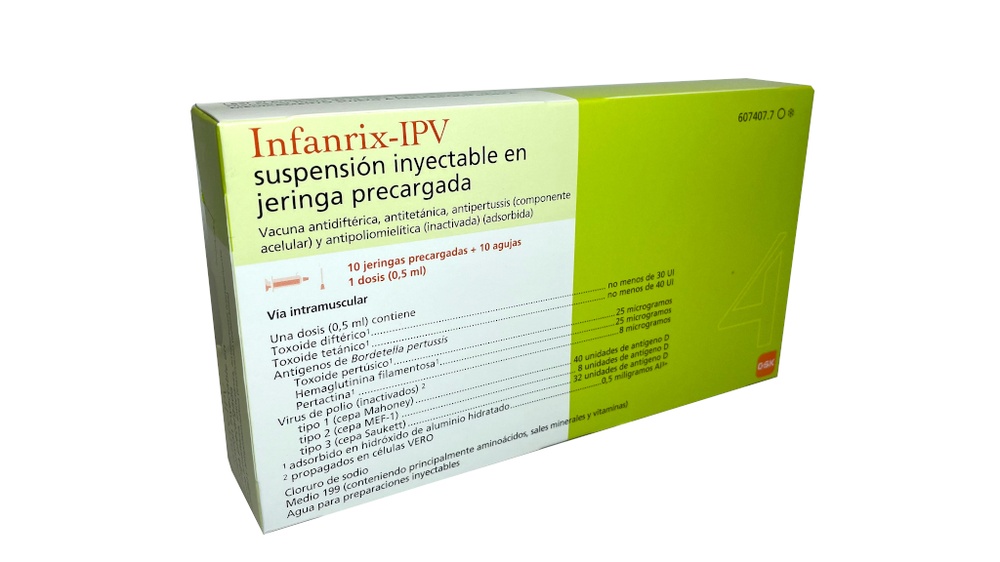
Infanrix-IPV, suspensión inyectable en jeringa precargada
Vacuna antidiftérica, antitetánica, antipertussis (componente acelular) y antipoliomielítica (inactivada) (adsorbida)
Lea todo el prospecto detenidamente antes de que su hijo empiece a recibir esta vacuna, porque contiene información importante para usted.
|
Contenido del prospecto
- Qué es Infanrix-IPV y para qué se utiliza
- Qué necesita saber antes de que su hijo reciba Infanrix-IPV
- Cómo se administra Infanrix-IPV
- Posibles efectos adversos
- Conservación de Infanrix-IPV
- Contenido del envase e información adicional
1. Qué es Infanrix-IPV y para qué se utiliza
Infanrix-IPV es una vacuna que se utiliza como dosis de recuerdo para proteger a su hijo frente a 4 enfermedades:
- Difteria- una infección bacteriana grave que afecta principalmente a las vías respiratorias y, algunas veces, a la piel. Las vías respiratorias se hinchan causando problemas respiratorios graves y, algunas veces, asfixia. La bacteria también libera una toxina que puede causar daños en los nervios, problemas cardiacos e incluso la muerte.
- Tétanos -la bacteria del tétanos penetra en el organismo a través de cortes, arañazos o heridas en la piel. Las heridas con mayor probabilidad de infectarse con tétanos son las quemaduras, fracturas, heridas profundas o las heridas que contienen suciedad, polvo, excrementos de caballo o astillas de madera. La bacteria libera una toxina que puede causar rigidez muscular, espasmos musculares dolorosos, convulsiones e incluso la muerte. Los espasmos musculares pueden ser lo suficientemente fuertes como para causar fracturas óseas de la columna vertebral.
- Tos ferina (pertussis) -una enfermedad altamente contagiosa que afecta a las vías respiratorias. Causa tos grave que puede producir problemas en la respiración. A menudo la tos tiene un sonido similar a un “aullido”. La tos puede durar de uno a dos meses o más. La tos ferina puede también causar infecciones de oído, infecciones de pecho (bronquitis) que pueden prolongarse en el tiempo, infecciones pulmonares (neumonía), convulsiones, lesión cerebral e incluso la muerte.
- Polio- una infección producida por un virus. A menudo la polio sólo es una enfermedad leve, aunque a veces puede ser muy grave y causar daños permanentes o incluso la muerte. La polio puede hacer que los músculos sean incapaces de moverse (parálisis). Esto incluye a los músculos necesarios para respirar y caminar. Los brazos o las piernas afectados por la enfermedad pueden retorcerse (deformarse) de forma dolorosa.
Infanrix-IPV es para niños de 16 meses a 13 años (ambos incluidos). No está indicada para personas mayores de 14 años.
Cómo funciona Infanrix-IPV
- Infanrix-IPV ayuda al organismo a desarrollar su propia protección (anticuerpos). Esto protegerá a su hijo frente a estas enfermedades.
- La vacuna no puede producir las enfermedades de las que protege a su hijo.

2. Qué necesita saber antes de que su hijo reciba Infanrix-IPV
No se debe administrar Infanrix-IPV
- Si su hijo es alérgico a los principios activos o a alguno de los demás componentes de la vacuna (incluidos en la sección 6) o a la neomicina o a la polimixina (tipos de antibióticos)o al formaldehído. Los signos de una reacción alérgica pueden incluir erupción en la piel con picor, dificultad para respirar e hinchazón de la cara o lengua.
- Si su hijo ha tenido cualquier reacción alérgica a vacunas frente a la difteria, tétanos, tos ferina o polio.
- Si su hijo ha tenido problemas del sistema nervioso (encefalopatía) en los 7 días siguientes a la administración de una vacuna frente a la tos ferina.
- Si su hijo tiene una infección grave con fiebre (superior a 38ºC). Una infección leve, como un resfriado no debería ser un problema, pero consulte primero a su médico.
No se debe administrar Infanrix-IPV si cualquiera de las situaciones anteriores afecta a su hijo. Si no está seguro, hable con su médico o farmacéutico antes de que su hijo reciba Infanrix-IPV.
Advertencias y precauciones
Consulte a su médico o farmacéutico antes de que su hijo reciba Infanrix-IPV si:
- tras una administración previa de Infanrix-IPV o de otra vacuna frente a la tos ferina su hijo ha tenido cualquier problema, especialmente:
- fiebre (superior a 40ºC) en las 48 horas posteriores a la vacunación
- colapso o estado similar al “shock” en las 48 horas siguientes a la vacunación
- llanto inconsolable, persistente de 3 horas o más de duración, producido en las 48 horas siguientes a la vacunación
- convulsiones, con o sin fiebre en los 3 días siguientes a la vacunación
- su hijo sufre una enfermedad cerebral no diagnosticada o progresiva o epilepsia no controlada. La vacuna se debe administrar una vez controlada la enfermedad
- su hijo tiene algún problema hemorrágico o le aparecen cardenales con facilidad
- su hijo tiene tendencia a sufrir convulsiones causadas por fiebre o si tiene antecedentes familiares de convulsiones por fiebre
- su hijo tiene problemas con su sistema inmunitario (incluyendo infección por VIH). En este caso su hijo puede ser vacunado con Infanrix-IPV. Sin embargo, la protección obtenida frente a las infecciones puede no ser tan elevada.
Antes o después de cualquier inyección, podría producirse un desmayo (especialmente en los adolescentes), por lo que debe informar a su médico o enfermera si su hijo se ha desmayado en anteriores ocasiones tras la administración de una inyección.
Si alguna de las situaciones anteriores afecta a su hijo (o no está seguro), hable con su médico o farmacéutico antes de que le administren Infanrix-IPV.
Otros medicamentos e Infanrix-IPV
Informe a su médico o farmacéutico si su hijo está utilizando, ha utilizado recientemente o pudiera tener que utilizar cualquier otro medicamento.
En concreto, informe a su médico o farmacéutico si su hijo está utilizando cualquiera de lo siguiente:
- medicamentos u otros tratamientos (como radioterapia) que afecten a su sistema inmunitario. Su hijo puede ser vacunado con Infanrix-IPV. Sin embargo, puede que Infanrix-IPV no funcione igual de bien. Si es posible, se debe administrar la vacuna una vez que haya finalizado este tratamiento.
- Infanrix-IPV puede administrarse al mismo tiempo que otras vacunas. Se utilizarán lugares de inyección distintos para cada vacuna.
Embarazo y lactancia
Es poco probable que Infanrix-IPV se administre a mujeres embarazadas o que estén dando el pecho a sus hijos. Esto es debido a que la vacuna está indicada únicamente en niños de 16 meses a 13 años (ambos incluidos).
No se recomienda la administración de esta vacuna durante el embarazo ni durante la lactancia.
Consulte a su médico o farmacéutico antes de utilizar cualquier medicamento.
Conducción y uso de máquinas
Es poco probable que Infanrix-IPV se administre a personas que conduzcan o utilicen herramientas o máquinas. Esto es debido a que la vacuna está indicada únicamente en niños de 16 meses a 13 años (ambos incluidos).
Su hijo puede sentirse somnoliento después de la vacunación. Si esto ocurre, su hijo no debe conducir, montar en bicicleta o utilizar herramientas o máquinas.
Infanrix-IPV contiene neomicina, polimixina (antibióticos), ácido para-aminobenzoico, fenilalanina, sodio, potasio y formaldehído.No se debe administrar Infanrix-IPV a su hijo si es alérgico a cualquiera de estos componentes. Por favor, consulte a su médico si su hijo ha tenido una reacción alérgica a estos componentes.
Infanrix-IPV contiene ácido para-aminobenzoico. Puede provocar reacciones alérgicas (posiblemente retardadas) y, excepcionalmente broncoespasmo.
Esta vacuna contiene 0,036 microgramos de fenilalanina en cada unidad de dosis. La fenilalanina puede ser perjudicial en caso de padecer fenilcetonuria (FCN), una enfermedad genética rara en la que la fenilalanina se acumula debido a que el organismo no es capaz de eliminarla correctamente.
Esta vacuna contiene menos de 1 mmol de sodio (23 mg) por unidad de dosis; esto es, esencialmente “exento de sodio”.
Esta vacuna contiene potasio, menos de 1 mmol (39 mg) por dosis; esto es, esencialmente “exento de potasio”.
3. Cómo se administra Infanrix-IPV
Cuándo se administra la vacuna
- Su médico o enfermera le informará cuándo su hijo debe recibir esta vacuna. Esto depende de las recomendaciones oficiales.
Cómo se administra Infanrix-IPV
- Su hijo recibirá una única inyección de Infanrix-IPV.
- Infanrix-IPV se inyecta siempre en un músculo.
- La inyección será normalmente en el músculo del hombro. Sin embargo, en niños pequeños se puede administrar en el muslo.
- La vacuna nunca debe administrarse en una vena.
Si tiene cualquier otra duda sobre el uso de este medicamento, pregunte a su médico o farmacéutico.

4. Posibles efectos adversos
Al igual que todos los medicamentos, este medicamento puede producir efectos adversos, aunque no todas las personas los sufran. Con esta vacuna pueden ocurrir los siguientes efectos adversos:
Reacciones alérgicas
Si su hijo tiene una reacción alérgica, acuda a un médico inmediatamente. Los signos pueden incluir:
- erupciones cutáneas con picor o ampollas
- hinchazón de ojos y cara
- dificultad para respirar o tragar
- disminución repentina de la tensión arterial
- pérdida de conciencia.
Estos signos suelen empezar poco después de recibir la inyección. Lleve a su hijo inmediatamente al médico si aparecen después de dejar la clínica. Las reacciones alérgicas son muy raras (menos de 1 de cada 10.000 dosis de vacuna).
Consulte inmediatamente a su médico si su hijo tiene alguno de los siguientes efectos adversos graves:
- colapso
- pérdida de la consciencia
- convulsiones
Consulte inmediatamente con su médico si aprecia cualquiera de las situaciones descritas anteriormente. Estos efectos adversos han ocurrido con otras vacunas frente a la tos ferina. Normalmente aparecen en los 2 o 3 días posteriores a la vacunación.
Otros efectos adversos incluyen:
Muy frecuentes(pueden ocurrir en más de 1 de cada 10 dosis de la vacuna): sensación de somnolencia, dolor de cabeza, pérdida de apetito, temperatura elevada de 38ºC o más, dolor, enrojecimiento e hinchazón en el lugar de la inyección, llanto anormal, sensación de irritabilidad o intranquilidad.
Frecuentes(pueden ocurrir hasta con 1 de cada 10 dosis de la vacuna): diarrea, náuseas, vómitos, temperatura elevada de 39,5ºC o más, sensación de malestar general, erupción nodular en el lugar de la inyección, sensación de debilidad.
Poco frecuentes(pueden ocurrir hasta con 1 de cada 100 dosis de la vacuna): alergias cutáneas o erupciones.
Raros(pueden ocurrir hasta con 1 de cada 1.000 dosis de la vacuna): hinchazón de los ganglios del cuello, axilas e ingle (linfadenopatía), tos o infección de pecho (bronquitis), picor, erupción nodular (urticaria).
Muy raros(pueden ocurrir hasta con 1 de cada 10.000 dosis de la vacuna): sangrado o aparición de cardenales más fácilmente de lo normal (trombocitopenia), parada pasajera de la respiración (apnea), inflamación de la cara, los labios, la boca, la lengua o la garganta, pudiendo causar dificultades para tragar o respirar (edema angioneurótico), ampollas en el lugar de la inyección.
Las dosis de recuerdo de Infanrix-IPV pueden incrementar el riesgo de reacciones en el lugar de la inyección. Algunas de ellas afectan a todo el brazo o la pierna en la que se haya administrado la inyección. Estas reacciones normalmente comienzan a las 48 horas de la inyección y desaparecen a los 4 días.
Comunicación de efectos adversos
Si su hijo experimenta cualquier tipo de efecto adverso, consulte a su médico o farmacéutico, incluso si se trata de posibles efectos adversos que no aparecen en este prospecto. También puede comunicarlos directamente a través del Sistema Español de Farmacovigilancia de Medicamentos de Uso Humano: www.notificaRAM.es. Mediante la comunicación de efectos adversos usted puede contribuir a proporcionar más información sobre la seguridad de este medicamento.
5. Conservación de Infanrix-IPV
- Mantener este medicamento fuera de la vista y del alcance de los niños.
- Conservar en nevera (entre 2ºC y 8ºC).
- Conservar en el embalaje original para protegerla de la luz.
- No congelar. La congelación destruye la vacuna.
- No utilice este medicamento después de la fecha de caducidad que aparece en el envase. La fecha de caducidad es el último día del mes que se indica.
- Los medicamentos no se deben tirar por los desagües ni a la basura. Deposite los envases y los medicamentos que no necesita en el Punto SIGRE de la farmacia. En caso de duda pregunte a su farmacéutico cómo deshacerse de los envases y de los medicamentos que no necesita. De esta forma, ayudará a proteger el medio ambiente.
6. Contenido del envase e información adicional
Composición de Infanrix-IPV
- Los principios activos son:
Toxoide diftérico1 no menos de 30 UI
Toxoide tetánico1 no menos de 40 UI
Antígenos de Bordetella pertussis
Toxoide pertúsico1 25 microgramos
Hemaglutinina filamentosa1 25 microgramos
Pertactina1 8 microgramos
Virus de polio (inactivados)2
tipo 1 (cepa Mahoney) 40 unidades de antígeno D
tipo 2 (cepa MEF-1) 8 unidades de antígeno D
tipo 3 (cepa Saukett) 32 unidades de antígeno D
1 adsorbidos en hidróxido de aluminio hidratado 0,5 miligramos Al3+
2 propagados en células VERO
El hidróxido de aluminio se incluye en esta vacuna como un adyuvante. Los adyuvantes son sustancias presentes en algunas vacunas para acelerar, mejorar y/o prolongar los efectos protectores de la vacuna.
- Los demás componentes son: cloruro de sodio, Medio 199 (conteniendo aminoácidos (incluyendo fenilalanina), sales minerales (incluyendo sodio y potasio) y vitaminas (incluyendo ácido para-aminobenzoico) y otras sustancias), agua para preparaciones inyectables.
Aspecto del producto y contenido del envase
- Infanrix-IPV es una suspensión inyectable en jeringa precargada (0,5 ml).
- La suspensión es blanca y ligeramente lechosa.
- Infanrix-IPV está disponible en jeringa precargada de 1 dosis con o sin agujas separadas; tamaños de envasede 1 y 10.
- Puede que solamente estén comercializados algunos tamaños de envases.
Titular de la autorización de comercialización y responsable de la fabricación
Titular de la autorización de comercialización
GlaxoSmithKline, S.A.
P.T.M. C/ Severo Ochoa, 2
28760 Tres Cantos (Madrid)
España
Tel: +34 900 202 700
Responsable de la fabricación
GlaxoSmithKline Biologicals S.A.,
Rue de l' Institut 89
1330 Rixensart,Bélgica
Este medicamento está autorizado en los Estados miembros del Espacio Económico Europeo con los siguientes nombres:
Grecia, Francia, Portugal, Chipre: InfanrixTetra
República Checa, Estonia, Letonia, Lituania, Noruega, República Eslovaca, Suecia: Infanrix Polio
Finlandia: Infanrix-Polio
Polonia, España: Infanrix-IPV
Hungría: Infanrix IPV
Irlanda: IPV Infanrix
Italia: PolioInfanrix
Fecha de la última revisión de este prospecto:abril 2023
Otras fuentes de información
La información detallada de este medicamento está disponible en la página web de la Agencia Española de Medicamentos y Productos Sanitarios (AEMPS) (http://www.aemps.gob.es/).
---------------------------------------------------------------------------------------------------------------------------
Esta información está destinada únicamente a profesionales del sector sanitario:
Una vez almacenada, se puede observar un depósito blanco y un sobrenadante claro. Esto no constituye un signo de deterioro.
La jeringa debe agitarse bien para obtener una suspensión blanca, turbia y homogénea.
La suspensión debe examinarse visualmente para observar si existe alguna partícula extraña y/o variación del aspecto físico. En caso de apreciarse alguna de estas circunstancias, desechar la vacuna.
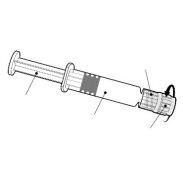
Instrucciones para la jeringa precargada
| Sostenga la jeringa por el cuerpo, no por el émbolo. Desenrosque el tapón de la jeringa girándola en sentido contrario a las agujas del reloj. |
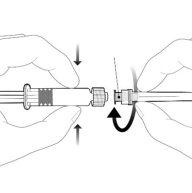
| Para insertar la aguja, conecte la base al adaptador luer-locky gírelo un cuarto de vuelta en el sentido de las agujas del reloj hasta que sienta que se bloquea. No saque el émbolo de la jeringa del cuerpo. Si esto ocurre, no administre la vacuna. |




Eliminación de residuos
La eliminación del medicamento no utilizado y de todos los materiales que hayan estado en contacto con él, se realizará de acuerdo con la normativa local.
-

- País de registro
- Forma farmacéuticaINYECTABLE, 0,5 ml
- Código ATCJ07CA02
- Principio activo
- Requiere recetaSí
- Fabricante
- Esta información es de carácter general y no sustituye la consulta con un profesional sanitario.
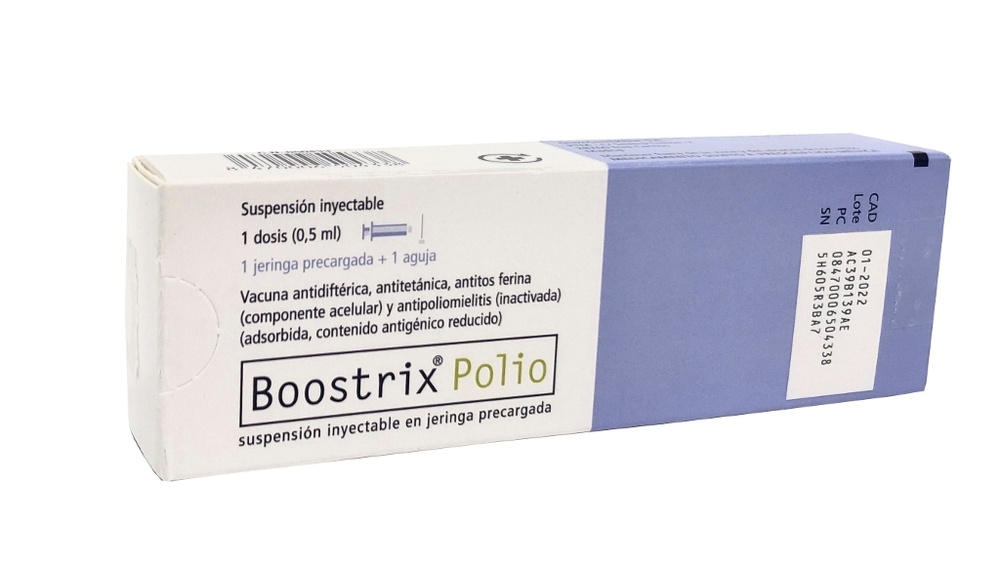
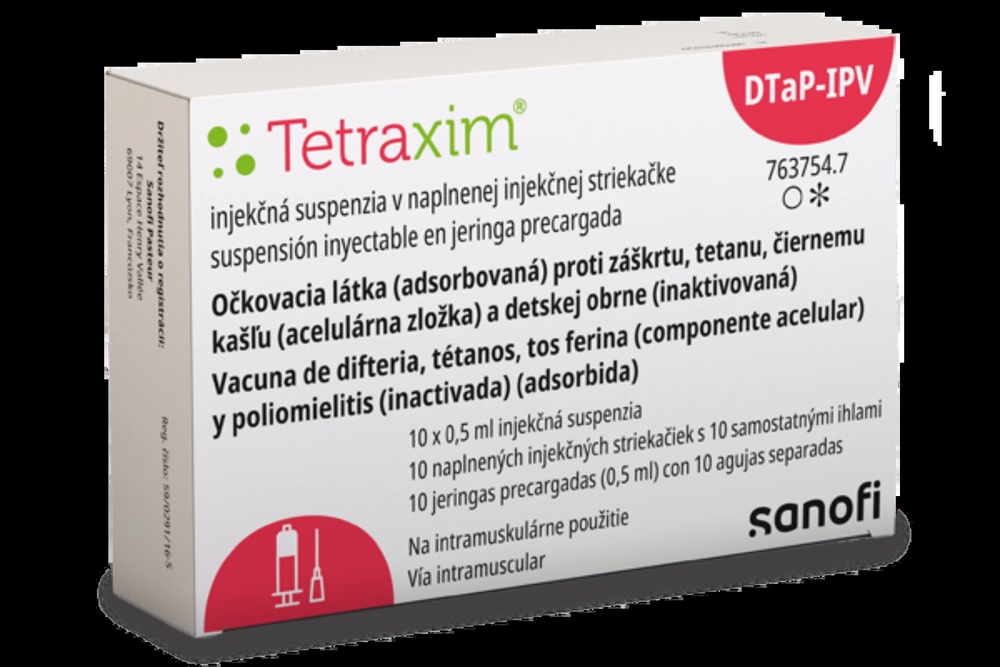
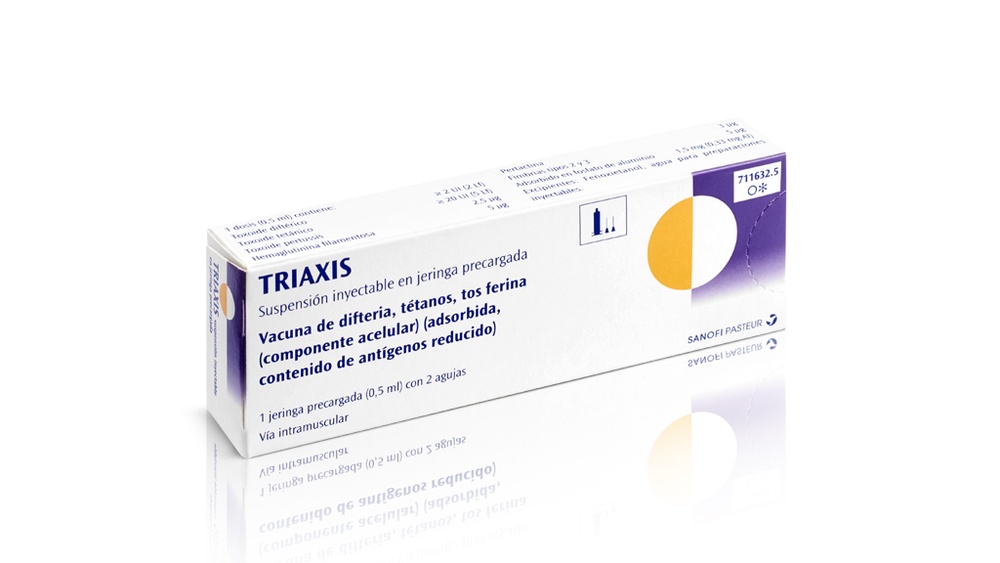
- Alternativas a INFANRIX-IPV SUSPENSION INYECTABLE EN JERINGA PRECARGADAForma farmacéutica: INYECTABLE, 0.5 mlPrincipio activo: diphtheria-pertussis-poliomyelitis-tetanusFabricante: Glaxosmithkline S.A.Requiere recetaForma farmacéutica: INYECTABLE, 0,5 mlPrincipio activo: diphtheria-pertussis-poliomyelitis-tetanusFabricante: Sanofi Winthrop IndustrieRequiere recetaForma farmacéutica: INYECTABLE, 1 dosisPrincipio activo: diphtheria-pertussis-poliomyelitis-tetanusFabricante: Sanofi Winthrop IndustrieRequiere receta
Médicos online para INFANRIX-IPV SUSPENSION INYECTABLE EN JERINGA PRECARGADA
Comenta la dosis, los posibles efectos secundarios, interacciones, contraindicaciones o la revisión de receta de INFANRIX-IPV SUSPENSION INYECTABLE EN JERINGA PRECARGADA, sujeto a valoración médica y a la normativa local.









Obtén una receta de INFANRIX-IPV SUSPENSION INYECTABLE EN JERINGA PRECARGADA online
Rellena un formulario de 2 minutos
Cuéntanos tus síntomas, historial y el medicamento que necesitas.
Elige un médico o nosotros te asignamos uno
Escoge un especialista o te conectamos con el próximo médico disponible.
El médico revisa tu caso
Normalmente en 30 minutos. Puede hacerte preguntas adicionales por chat.
Recógela en cualquier farmacia
Receta electrónica enviada a tu correo, válida en toda España.
Preguntas frecuentes
INFANRIX-IPV SUSPENSION INYECTABLE EN JERINGA PRECARGADA requires receta en España. Puedes confirmarlo con un médico online según tu caso.
El principio activo de INFANRIX-IPV SUSPENSION INYECTABLE EN JERINGA PRECARGADA es diphtheria-pertussis-poliomyelitis-tetanus. Esta información ayuda a identificar medicamentos con la misma composición pero con diferentes nombres comerciales.
INFANRIX-IPV SUSPENSION INYECTABLE EN JERINGA PRECARGADA es fabricado por Glaxosmithkline S.A.. La marca y el envase pueden variar según el distribuidor.
Los Médicos de familia, Psiquiatras, Dermatólogos, Cardiólogos, Endocrinólogos, Gastroenterólogos, Neumólogos, Nefrólogos, Reumatólogos, Hematólogos, Infectólogos, Alergólogos, Geriatras, Pediatras, Oncólogos pueden valorar la prescripción de INFANRIX-IPV SUSPENSION INYECTABLE EN JERINGA PRECARGADA cuando esté clínicamente indicado. Puedes reservar una videoconsulta para comentar tu caso y las opciones de tratamiento.
España cuenta con una infraestructura sanitaria bien desarrollada en ciudades principales como Madrid, Barcelona, Valencia y Sevilla. Las farmacias están ampliamente disponibles y operan bajo estrictas regulaciones, garantizando el acceso a medicamentos con receta.
Puedes comprar INFANRIX-IPV SUSPENSION INYECTABLE EN JERINGA PRECARGADA en Madrid, Barcelona, Sevilla o Valencia en cualquier farmacia local con una receta válida.
Para obtener una receta, puedes utilizar Oladoctor:
Otros medicamentos con el mismo principio activo (diphtheria-pertussis-poliomyelitis-tetanus) incluyen BOOSTRIX POLIO SUSPENSION INYECTABLE EN JERINGA PRECARGADA, TETRAXIM SUSPENSION INYECTABLE EN JERINGA PRECARGADA, TRIAXIS POLIO SUSPENSION INYECTABLE EN JERINGA PRECARGADA. Pueden tener diferentes nombres comerciales o formulaciones, pero contienen el mismo componente terapéutico. Consulta siempre con un médico antes de cambiar o iniciar un nuevo medicamento.
