


CEFEPIMA QILU 2 G POLVO PARA SOLUCION INYECTABLE Y PARA PERFUSION EFG
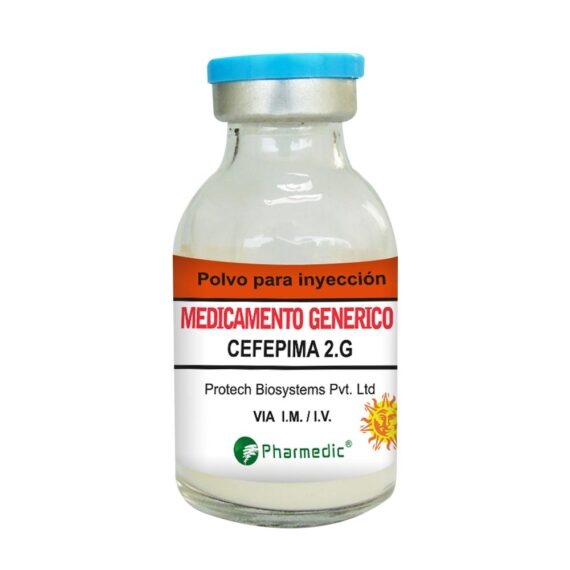



Cómo usar CEFEPIMA QILU 2 G POLVO PARA SOLUCION INYECTABLE Y PARA PERFUSION EFG
Traducción generada por IA
Este contenido ha sido traducido automáticamente y se ofrece solo con fines informativos. No sustituye la consulta con un profesional sanitario.
Ver originalContenido del prospecto
Introducción
Prospecto: información para el paciente
Cefepima Qilu 2 gpolvo para solución inyectable y para perfusión EFG
cefepima
Lea todo el prospecto detenidamente antes de empezar a usar este medicamento, porque contiene información importante para usted.
- Conserve este prospecto, ya que puede tener que volver a leerlo.
- Si tiene alguna duda, consulte a su médico, farmacéutico o enfermero.
- Si experimenta efectos adversos, consulte a su médico, farmacéutico o enfermero, incluso si se trata de efectos adversos que no aparecen en este prospecto. Ver sección 4.
Contenido del prospecto
- Qué es Cefepima Qilu y para qué se utiliza
- Qué necesita saber antes de empezar a usar Cefepima Qilu
- Cómo usar Cefepima Qilu
- Posibles efectos adversos
- Conservación de Cefepima Qilu
- Contenido del envase e información adicional
1. Qué es Cefepima Qilu y para qué se utiliza
Cefepima Qilu contiene el principio activo cefepima (en forma de cefepima dihidrocloruro monohidrato), que es un antibiótico que pertenece al grupo de las cefalosporinas. Este tipo de antibiótico actúa de forma semejante a la penicilina.
Los antibióticos se utilizan para tratar infecciones bacterianas y no sirven para tratar infecciones víricas como la gripe o el catarro.
Es importante que siga las instrucciones relativas a la dosis, el intervalo de administración y la duración del tratamiento indicadas por su médico.
No guarde ni reutilice este medicamento. Si una vez finalizado el tratamiento le sobra antibiótico, devuélvalo a la farmacia para su correcta eliminación. No debe tirar los medicamentos por el desagüe ni a la basura.
Este medicamento se emplea en el tratamiento de las infecciones siguientes provocadas por patógenos sensibles a la cefepima:
Adultos
- Infección de la sangre debida a una de las infecciones mencionadas aquí.
- Neumonía aguda.
- Infecciones complicadas del tracto urinario.
- Infecciones de la cavidad abdominal, lo que incluye peritonitis (infección de la capa que recubre la pared interna del abdomen), en caso necesario, en combinación con otro antibiótico.
- Infecciones de la vesícula biliar y las vías biliares.
- Accesos febriles de origen desconocido en pacientes con unas defensas deficientes contra las infecciones, en caso necesario, en combinación con otro antibiótico.
Niños
- Infección de la sangre debida a una de las infecciones mencionadas aquí.
- Neumonía aguda.
- Infecciones complicadas del tracto urinario.
- Meningitis bacteriana.
- Accesos febriles de origen desconocido en pacientes con unas defensas deficientes contra las infecciones, en caso necesario, en combinación con otro antibiótico.

2. Qué necesita saber antes de empezar a usar Cefepima Qilu
No use CefepimaQilu:
- si es alérgico a la cefepima o a alguno de los demás componentes de este medicamento (incluidos en la sección 6).
- si es alérgico a la clase de antibióticos de las cefalosporinas o a otros antibióticos similares (antibióticos betalactámicos, como las penicilinas, los monobactámicos o los carbapenémicos).
Advertencias y precauciones
Consulte a su médico, farmacéutico o enfermero antes de empezar a usar Cefepima Qilu.
Se debe extremar la precaución especialmente:
- Si padece una insuficiencia renal, ya que esta afectará a la excreción de cefepima.
- Si tiene alguna alergia (p. ej., alergia al polen, habones) y ha tenido alergias previamente a los antibióticos betalactámicos (penicilinas, monobactámicos o carbapenémicos) o a otros medicamentos. Si padece una reacción alérgica durante el tratamiento con cefepima, póngase en contacto con su médico inmediatamente, ya que podría tener consecuencias graves. En este caso, su médico interrumpirá su tratamiento de inmediato.
- Si alguna vez ha padecido asma o tiene tendencia a padecer reacciones alérgicas.
- Si van a realizarle análisis de sangre u orina. Es importante que informe a su médico de que está recibiendo Cefepima Qilu, ya que este medicamento puede afectar a los resultados de algunos análisis.
- Si padece una diarrea persistente mientras le estuvieron administrando Cefepima Qilu o después de ello. Esto se lo debe comunicar a su médico, que estudiará si el tratamiento con el antibiótico ha provocado una inflamación de las paredes del intestino y, en caso necesario, tomará las medidas que sean adecuadas para tratarlo.
El tratamiento con Cefepima Qilu podría causar infecciones secundarias con otros gérmenes (p. ej., infección fúngica de las mucosas, con enrojecimiento y depósitos blanquecinos en las mucosas). Su médico le tratará estas infecciones secundarias como corresponda.
Niños
En el caso de lactantes y niños se deben aplicar guías de administración especiales (ver sección 3).
Pacientes de edad avanzada
En los pacientes de edad avanzada, la pauta posológica se debe elegir con cuidado y teniendo en cuenta la actividad de los riñones, ya que la probabilidad de que se reduzca la actividad renal es más alta (ver sección 3).
Uso de CefepimaQilu con otros medicamentos
Informe a su médico si está tomando, ha tomado recientemente o pudiera tener que tomar cualquier otro medicamento.
Embarazo y lactancia
Si está embarazada o en período de lactancia, cree que podría estar embarazada o tiene intención de quedarse embarazada, consulte a su médico o farmacéutico antes de utilizar este medicamento.
Embarazo
No deben administrarle Cefepima Qilu durante el embarazo, a no ser que sea estrictamente necesario.
Lactancia
Cefepima se excreta en la leche materna, por lo que Cefepima Qilu solo se debe administrar durante la lactancia después de haber revisado cuidadosamente los beneficios y los riesgos.
Conducción y uso de máquinas
No conduzca ni use herramientas ni máquinas, ya que durante el tratamiento con Cefepima Qilu se pueden producir efectos como alteración de la conciencia, mareo, confusión o alucinaciones.
3. Cómo usar Cefepima Qilu
El médico debe usar Cefepima Qilu de acuerdo con la información que se proporciona a continuación o la información contenida en la Ficha técnica o Resumen de las características del producto. Si tiene alguna duda, consulte a su médico o farmacéutico.
Posología en pacientes con una actividad renal normal:
Adultos y niños de más de 40kg de peso corporal (alrededor de 12años):
Dosis única de cefepima e intervalo de administración | |
Infecciones graves:
| Infecciones muy graves:
|
2 g cada 12 horas | 2 g cada 8 horas |
La duración del tratamiento suele ser de 7 a 10 días. Por lo general, Cefepima Qilu se debe emplear durante 7 días como mínimo y 14 días como máximo por tratamiento. Cuando se tratan accesos de fiebre en pacientes con unas defensas deficientes contra las infecciones (neutropenia), la duración habitual del tratamiento es de 7 días o hasta el momento en el que haya mejorado la neutropenia.
Niños de 1mes de edad hasta 40kg de peso corporal (alrededor de 12años):
Dosis única de cefepima (mg/kg de peso corporal)/intervalo de dosis/duración del tratamiento | ||
Infecciones graves:
| Infecciones muy graves:
| |
Niños de 2 meses hasta ≤ 40 kg de peso corporal | 50 mg/kg de peso corporal cada 12 horas Infecciones más graves: 50 mg/kg de peso corporal cada 8 horas Duración: 10 días | 50 mg/kg de peso corporal cada 8 horas Duración: 7-10 días |
Lactantes de 1-2 meses | 30 mg/kg de peso corporal cada 12 horas Infecciones más graves: 30 mg/kg de peso corporal cada 8 horas Duración: 10 días | 30 mg/kg de peso corporal cada 8 horas Duración: 7-10 días |
En el caso de los niños de 1-2 meses de edad, una dosis de 30 mg/kg de peso corporal cada 12 u 8 horas es suficiente. Se debe vigilar cuidadosamente a los niños con esta edad durante la administración.
En el caso de niños con un peso corporal de más de 40 kg, se debe aplicar la recomendación posológica de adultos (ver la tabla anterior). En el caso de niños de 12 años de edad con un peso corporal de menos de 40 kg, se deben aplicar las recomendaciones posológicas para pacientes más jóvenes con un peso corporal de ≤ 40 kg. La dosis en niños no debe sobrepasar la dosis máxima de adultos (2 g cada 8 horas).
Posología en pacientes con insuficiencia renal:
Adultos y niños con un peso corporal de 40kg en adelante (alrededor de 12 años):
Si padece insuficiencia renal, se debe realizar un ajuste de la dosis para contrarrestar la excreción más lenta a través de los riñones. La primera dosis de los pacientes con una insuficiencia renal de leve a moderada es la misma que la de los pacientes con una actividad renal normal, es decir, 2 g de cefepima.
En las tablas siguientes se muestran las pautas posológicas posteriores (dosis de mantenimiento):
Dosis de mantenimiento recomendada: Dosis única de cefepima e intervalo de administración | ||
Aclaramiento de creatinina (ml/min) (medida del funcionamiento de los riñones) | Infecciones graves:
| Infecciones muy graves:
|
> 50 | 2 g cada 12 horas (no es necesario ajustar la dosis) | 2 g cada 8 horas (no es necesario ajustar la dosis) |
30-50 | 2 g cada 24 horas | 2 g cada 12 horas |
11-29 | 1 g cada 24 horas | 2 g cada 24 horas |
≤ 10 | 500 mg cada 24 horas | 1 g cada 24 horas |
Pacientes en diálisis:
Si usted precisa hemodiálisis, recibirá una dosis menor:
- 1 g de cefepima el primer día de tratamiento y, a partir de entonces, 500 mg de cefepima/día los días posteriores en todas las inyecciones, salvo en el caso de los accesos de fiebre en pacientes con unas defensas deficientes contra las infecciones (neutropenia). En este caso, la dosis es de 1 g al día.
Cuando sea posible, cefepima se debe administrar a la misma hora todos los días y, los días de la diálisis, se debe administrar después de finalizar la diálisis.
En pacientes con insuficiencia renal que esté recibiendo diálisis continua a través del peritoneo (diálisis peritoneal), se recomienda la pauta posológica siguiente:
- 1 g de cefepima cada 48 horas en el caso de infecciones graves (infección de la sangre, neumonía, infecciones complicadas de las vías urinarias, infecciones de la vesícula biliar y las vías biliares).
- 2 g de cefepima cada 48 horas en el caso de infecciones muy graves (infecciones de la cavidad abdominal, lo que incluye peritonitis, accesos de fiebre en pacientes con defensas deficientes contra las infecciones (neutropenia).
Niños de 1mes de edad hasta 40kg de peso corporal (alrededor de 12años):
Una dosis de 50 mg/kg de peso corporal en el caso de niños de 2 meses a 12 años de edad o una dosis de 30 mg/kg de peso corporal en el caso de niños de 1-2 meses de edad, que es equivalente a una dosis de 2 g en adultos.
Por ello, se recomienda la misma prolongación del intervalo de dosis o la reducción de la dosis que en adultos, de acuerdo con las tablas siguientes.
Niños de 2meses de edad hasta 40kg de peso corporal (alrededor de 12años):
Dosis única de cefepima (mg/kg de peso corporal)/intervalo de dosis | ||
Aclaramiento de creatinina (ml/min) | Infecciones graves:
| Infecciones muy graves:
|
> 50 | 50 mg/kg de peso corporal cada 12 horas (no es necesario ajustar la dosis) | 50 mg/kg de peso corporal cada 8 horas (no es necesario ajustar la dosis) |
30-50 | 50 mg/kg de peso corporal cada 24 horas | 50 mg/kg de peso corporal cada 12 horas |
11-29 | 25 mg/kg de peso corporal cada 24 horas | 50 mg/kg de peso corporal cada 24 horas |
≤ 10 | 12,5 mg/kg de peso corporal cada 24 horas | 25 mg/kg de peso corporal cada 24 horas |
Lactantes de 1-2meses:
Dosis única de cefepima (mg/kg de peso corporal)/intervalo de dosis | ||
Aclaramiento de creatinina (ml/min) | Infecciones graves:
| Infecciones muy graves:
|
> 50 | 30 mg/kg de peso corporal cada 12 horas (no es necesario ajustar la dosis) | 30 mg/kg de peso corporal cada 8 horas (no es necesario ajustar la dosis) |
30-50 | 30 mg/kg de peso corporal cada 24 horas | 30 mg/kg de peso corporal cada 12 horas |
11-29 | 15 mg/kg de peso corporal cada 24 horas | 30 mg/kg de peso corporal cada 24 horas |
≤ 10 | 7,5 mg/kg de peso corporal cada 24 horas | 15 mg/kg de peso corporal cada 24 horas |
Forma de administración:
Estas soluciones se pueden administrar mediante inyección intravenosa lenta (3-5 minutos) con una jeringa o mediante perfusión intravenosa.
Si desea más información, consulte el apartado Esta información está destinada únicamente a profesionales del sector sanitarioque hay al final de este prospecto.
Si usa más CefepimaQilu del que debe
Póngase en contacto con su médico u otros profesionales sanitarios inmediatamente, ya que podría experimentar efectos adversos más graves en determinadas situaciones.
En caso de sobredosis o ingestión accidental, consulte inmediatamente a su médico o farmacéutico o llame al Servicio de Información Toxicológica, teléfono 915 620 420, indicando el medicamento y la cantidad ingerida.
Si olvidó usar CefepimaQilu
Informe a su médico inmediatamente.
Si interrumpe el tratamiento con Cefepima Qilu
Si deja de recibir Cefepima Qilu demasiado pronto, la enfermedad subyacente que padece podría empeorar.
Si tiene cualquier otra duda sobre el uso de este medicamento, pregunte a su médico, farmacéutico o enfermero.

4. Posibles efectos adversos
Al igual que todos los medicamentos, este medicamento puede producir efectos adversos, aunque no todas las personas los sufran.
En el caso de que padezca los acontecimientos adversos graves siguientes, informe a su médico de inmediato:
- reacción alérgica grave, asociada a dificultad respiratoria repentina y progresiva, hinchazón de la región de la cabeza y el cuerpo, erupción cutánea, trastornos circulatorios, bajada de la tensión arterial
- aparición súbita de erupción, ampollas o descamación de la piel graves, acompañado de fiebre (síndrome de Stevens-Jonhson)
- diarrea persistente de leve a grave, acompañada de dolor abdominal y fiebre, que se puede producir durante el tratamiento con antibióticos o hasta dos meses después de este.
- alteración de la conciencia, acompañada de confusión, alucinaciones, rigidez física, pérdida de consciencia, espasmos musculares y convulsiones
Muy frecuentes(pueden afectar a más de 1 de cada 10 personas)
- resultado positivo en la prueba de Coombs (un método para determinar anticuerpos)
Frecuentes(pueden afectar a hasta 1 de cada 10 personas)
- tiempo de coagulación de la sangre prolongado (prolongación del tiempo de protrombina y del tiempo de tromboplastina parcial)
- anemia
- aumento del recuento de determinadas células de la sangre (eosinofilia)
- inflamación de las paredes de los vasos sanguíneos en el lugar de perfusión
- diarrea
- erupción
- irritación en el lugar de perfusión
- dolor e inflamación en el lugar de inyección
- aumento de determinados valores sanguíneos (alanina-aminotransferasa, aspartato-aminotransferasa, bilirrubina, alcalina fosfatasa)
Poco frecuentes(pueden afectar a hasta 1 de cada 100 personas)
- infección fúngica en la boca, acompañada de depósitos blanquecinos
- inflamación de la vagina
- reducción del número de determinadas células sanguíneas (trombocitopenia, leucopenia, neutropenia)
- cefalea
- inflamación del colon, acompañado de dolor abdominal (colitis)
- náuseas
- vómitos
- enrojecimiento cutáneo (eritema)
- habones (urticaria)
- picor en la piel
- aumento del nitrógeno ureico en sangre
- aumento de creatinina en suero
- fiebre
- inflamación en el lugar de perfusión
Raras(pueden afectar a hasta 1 de cada 1.000 personas)
- infección fúngica inespecífica
- reacción alérgica, convulsiones (crisis)
- sensaciones raras en la piel, como hormigueo o sensación de entumecimiento (parestesia)
- alteraciones del gusto
- mareo
- dilatación de los vasos sanguíneos
- dificultad respiratoria
- dolor abdominal
- estreñimiento
- acumulación de líquidos en los tejidos (edema)
- dolor articular
- picor en los genitales
- escalofríos
- pitidos en los oídos (acúfenos)
Frecuencia no conocida(no puede estimarse a partir de los datos disponibles)
- disminución de determinadas células de la sangre (anemia aplásica), aumento de la ruptura de los glóbulos rojos (anemia hemolítica)
- agranulocitosis (recuento de glóbulos blancos bajo), que tiene como resultado un aumento de la probabilidad de hemorragia, hematomas e infección
- hinchazón (angioedema)
- glucosa en orina falsa positiva
- confusión
- alucinaciones
- coma
- torpor
- enfermedad cerebral no inflamatoria (encefalopatía)
- alteración del conocimiento
- sacudidas musculares
- hemorragia
- trastornos gastrointestinales
- muerte de las células de la piel (necrólisis epidérmica tóxica)
- enrojecimiento inflamatorio de la piel (eritema multiforme)
- fallo renal
- enfermedad renal (nefropatía tóxica)
Comunicación de efectos adversos
Si experimenta cualquier tipo de efecto adverso, consulte a su médico, farmacéutico o enfermero, incluso si se trata de posibles efectos adversos que no aparecen en este prospecto. También puede comunicarlos directamente a través del Sistema Español de Farmacovigilancia de Medicamentos de Uso Humano: www.notificaRAM.es. Mediante la comunicación de efectos adversos usted puede contribuir a proporcionar más información sobre la seguridad de este medicamento.
5. Conservación de Cefepima Qilu
Mantener este medicamento fuera de la vista y del alcance de los niños.
No utilice este medicamento después de la fecha de caducidad que aparece en la caja y el vial después de «CAD». La fecha de caducidad es el último día del mes que se indica.
No conservar a temperatura superior a 25 °C. Conservar en el embalaje original para protegerlo de la luz.
Solución reconstituida
Se ha demostrado la estabilidad física y química en uso durante 2 horas a una temperatura de 25 °C y durante 6 horas a 2-8 °C.
Desde un punto de vista microbiológico, el fármaco se debe utilizar inmediatamente, a menos que el método de apertura y reconstitución evite el riesgo de contaminación microbiológica.
Si no se usa inmediatamente, la observación del tiempo y las condiciones de conservación durante el uso son responsabilidad del profesional sanitario responsable del tratamiento.
Solución diluida
Se ha demostrado la estabilidad física y química en uso durante 2 horas a una temperatura de 25 °C y durante 6 horas a 2-8 °C cuando se mezcla cefepima con soluciones de amicacina, clindamicina, heparina, cloruro potásico, teofilina, para diálisis peritoneal y nutrición parental.
Desde un punto de vista microbiológico, el fármaco se debe utilizar inmediatamente, a menos que el método de apertura y reconstitución evite el riesgo de contaminación microbiológica.
Si no se usa inmediatamente, la observación del tiempo y las condiciones de conservación durante el uso son responsabilidad del profesional sanitario responsable del tratamiento.
Los medicamentos no se deben tirar por los desagües ni a la basura. Deposite los envases y los medicamentos que no necesita en el punto SIGRE de la farmacia o en cualquier otro sistema de recogida de residuos de medicamentos. En caso de duda, pregunte a su farmacéutico como deshacerse de los envases y de los medicamentos que ya no necesita. De esta forma, ayudará a proteger el medio ambiente.
6. Contenido del envase e información adicional
Composición de CefepimaQilu
El principio activo es cefepima.
Cada vial de Cefepima Qilu 2 g contiene 2 g de cefepima (en forma de cefepima dihidrocloruro monohidrato).
Los demás componentes son: arginina.
Aspecto del Cefepima Qilu y contenido del envase
Cefepima Qilu es un polvo para solución inyectable y para perfusión de color de blanco a amarillo claro. Cefepima Qilu se presenta en envases de 1, 10 y 50 viales de vidrio, cerrados con un tapón de goma de butilo recubierto con película de 20 mm y sellado con una tapa combinada de aluminio y plástico.
Titular de la autorización de comercialización
QILU PHARMA SPAIN S.L.
Paseo de la Castellana 40,
planta 8, 28046-Madrid,
España
Representante local
Sun Pharma Laboratorios, S.L.
Rambla de Catalunya, 53-55
08007 – Barcelona, España
Responsable de la fabricación
KYMOS, S.L.
Ronda de Can Fatjó,
7B (Parque Tecnológico del Vallès),
Cerdanyola del Vallès, 08290
Barcelona, España
MIAS Pharma Limited
Suite 2, Stafford House, Strand Road,
Portmarnock, Co. Dublin,
Irlanda
Tillomed Malta Ltd.
Malta Life Sciences Park,
LS2.01.06 Industrial Estate,
San Gwann, SGN 3000,
Malta
Este medicamento está autorizado en los estados miembros del Espacio Económico Europeo con los siguientes nombres:
Estado miembro | Denominación de fantasía propuesto |
Alemania | Cefepim Qilu 2 g Pulver zur Herstellung einer Injektions-/Infusionslösung |
Italia | Cefepime Qilu |
España | Cefepima Qilu 2 g Polvo para solución inyectable y para perfusión EFG |
Fecha de la última revisión de este prospecto: Octubre 2022
La información detallada y actualizada de este medicamento está disponible en la página web de la Agencia Española de Medicamentos y Productos Sanitarios (AEMPS) http://www.aemps.gob.es/
--------------------------------------------------------------------------------------------------------------------
Esta información está destinada únicamente a profesionales del sector sanitario:
Si desea más información referente a los datos de resistenciaa cefepima, consulte la Ficha Técnica o Resumen de las Características del Cefepima Qilu.
Forma de administración:
Preparación y administración de la solución lista para su uso para el uso intravenoso (IV):
El polvo se debe disolver en:
- Agua para preparaciones inyectables o con una de las soluciones siguientes para uso intravenoso que se enumeran en el apartado b):
- Solución de cloruro de sodio al 0,9 % (9 mg/ml).
Solución de cloruro de sodio al 0,9 % (9 mg/ml) con glucosa al 5 % (50 mg/ml).
Solución de glucosa al 5 % (50 mg/ml) o solución de glucosa al 10 % (100 mg/ml).
Solución de lactato sódico compuesta.
Solución de lactato de sodio compuesta con glucosa al 5 % (50 mg/ml).
Solución de lactato de sodio 1/6 M.
El volumen del disolvente que se debe añadir al vial correspondiente y la concentración de cefepima resultante se muestran en la tabla siguiente:
Cantidad de cefepima por vial | Volumen del disolvente añadido (ml) | Volumen final disponible (aproximadamente) (ml) | Concentración de cefepima (aproximadamente) (mg/ml) |
2 g | 10 | 12,84 | 160 |
Estas soluciones se deben usar inmediatamente a modo de inyección intravenosa lenta (3-5 minutos) con una jeringa o vía de perfusión.
Como alternativa, se puede añadir a una de las soluciones para perfusión que se enumeran en el apartado b), administradas a modo de perfusión intravenosa breve, durante un período de alrededor de 30 minutos.
Cefepima no se debe mezclar con otros medicamentos ni soluciones que no sean las enumeradas más arriba en los apartados a) y b).
Compatibilidad (miscibilidad):
Es posible la administración intravenosa simultánea de cefepima con otros antibióticos que no sean amicacina y clindamicina (en los que se ha demostrado la compatibilidad; ver a continuación), pero no se deben administrar mezclados con cefepima ni a través de la misma vía intravenosa (ver sección 6.2).
En la tabla siguiente se muestra con qué medicamentos y soluciones es compatible la cefepima (que se pueden mezclar) y en qué condiciones se puede conservar la solución para perfusión (temperatura, período):
Concentración de cefepima (mg/ml): | Compatible (miscible) con: | Disolvente o agente diluyente | Conservación de la solución para perfusión lista para su uso |
40 | Amicacina 6 mg/ml | Solución de cloruro de sodio al 0,9 % (9 mg/ml) o solución de glucosa al 5 % (50 mg/ml) | un máximo de 6 horas en la nevera (2-8 °C) |
4-40 | Clindamicina 0,25-6 mg/ml | Solución de cloruro de sodio al 0,9 % (9 mg/ml) o solución de glucosa al 5 % (50 mg/ml) | un máximo de 6 horas en la nevera (2-8 °C) |
4 | Heparina 10-50 UI/ml | Solución de cloruro de sodio al 0,9 % (9 mg/ml) o solución de glucosa al 5 % (50 mg/ml) | un máximo de 6 horas en la nevera (2-8 °C) |
4 | Cloruro potásico10-40 mEq/l | Solución de cloruro de sodio al 0,9 % (9 mg/ml) o solución de glucosa al 5 % (50 mg/ml) | un máximo de 6 horas en la nevera (2-8 °C) |
4 | Teofilina 0,8 mg/ml | solución de glucosa al 5 % (50 mg/ml) | un máximo de 6 horas en la nevera (2-8 °C) |
1-4 | Solución de nutrición parenteral | ------ | un máximo de 6 horas en la nevera (2-8 °C) |
0,125-0,25 | Solución para diálisis peritoneal | ------ | un máximo de 6 horas en la nevera (2-8 °C) |
Las mezclas de cefepima con soluciones de amicacina, clindamicina, heparina, cloruro potásico, teofilina, de diálisis peritoneal y de nutrición parental son estables desde el punto de vista físico y químico a temperatura ambiente (25 °C) durante 2 horas y en la nevera (2-8 °C) durante 6 horas.
No obstante, independientemente de la estabilidad física y química mostrada, dada la posible contaminación microbiana de la preparación, la solución en cuestión se debe preparar de nuevo en un plazo breve de tiempo antes de la administración, siempre que sea posible. De no ser posible, la solución lista para su uso se debe conservar en una nevera (2-8 °C) durante 6 horas como máximo.
Información sobre el uso de la solución lista para su uso.
Nota:
Las soluciones listas para su uso que se hayan preparado siguiendo las instrucciones pueden adquirir un color de amarillo claro a amarillo pardo. Esto no es un signo de pérdida de eficacia de cefepima.
El contenido de un vial está indicado para un solo uso. Se debe desechar todo residuo de la solución lista para su uso.
La solución lista para su uso se debe inspeccionar visualmente antes de la administración por si existen partículas sobrenadantes. Si se observan partículas en suspensión, no se debe utilizar la solución.
La eliminación del medicamento no utilizado y de todos los materiales que hayan estado en contacto con él se realizará de acuerdo con la normativa local.
- País de registro
- Forma farmacéuticaINYECTABLE, 2 g
- Código ATCJ01DE01
- Principio activo
- Requiere recetaSí
- Fabricante
- Esta información es de carácter general y no sustituye la consulta con un profesional sanitario.
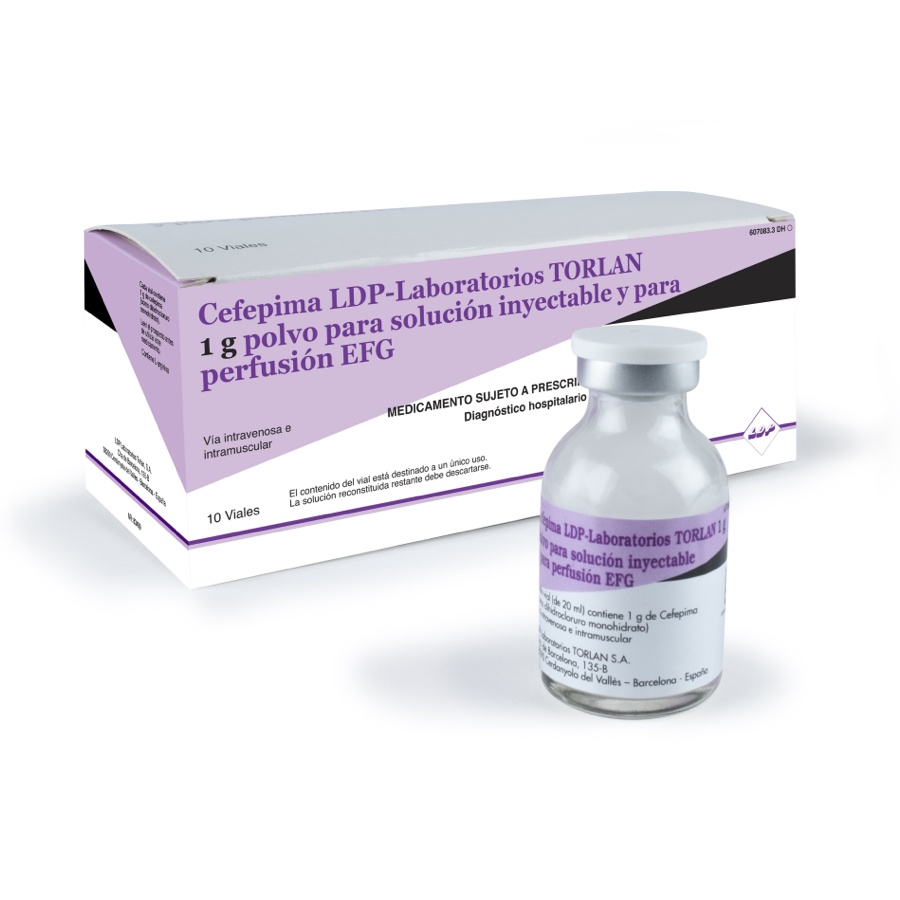
- Alternativas a CEFEPIMA QILU 2 G POLVO PARA SOLUCION INYECTABLE Y PARA PERFUSION EFGForma farmacéutica: INYECTABLE, 1000 mgPrincipio activo: CefepimaFabricante: Fresenius Kabi España, S.A.U.Requiere recetaForma farmacéutica: INYECTABLE, 2000 MGPrincipio activo: CefepimaFabricante: Fresenius Kabi España, S.A.U.Requiere recetaForma farmacéutica: INYECTABLE, 1000 mgPrincipio activo: CefepimaFabricante: Ldp Laboratorios Torlan S.A.Requiere receta
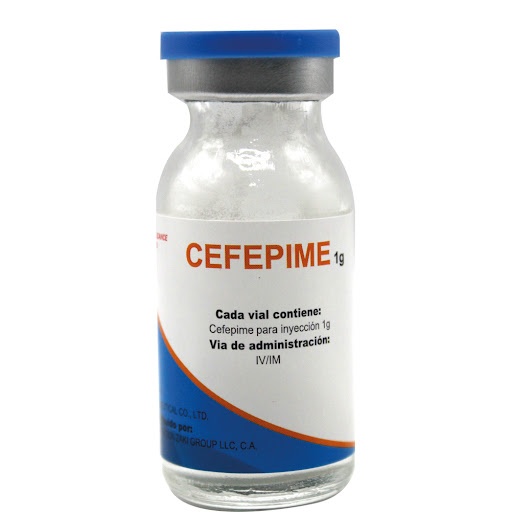
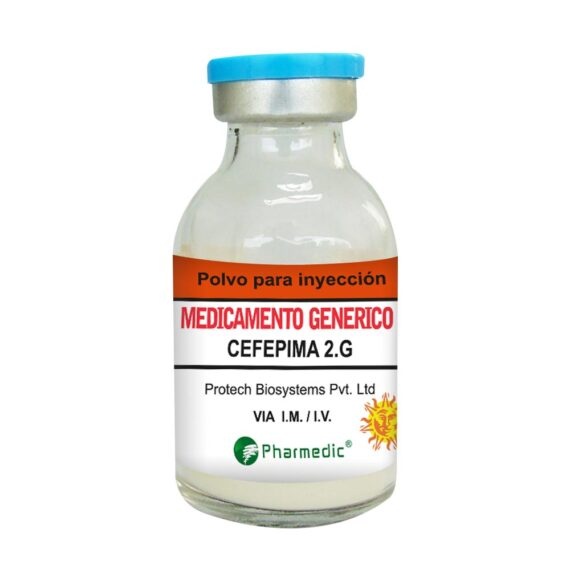
Médicos online para CEFEPIMA QILU 2 G POLVO PARA SOLUCION INYECTABLE Y PARA PERFUSION EFG
Comenta la dosis, los posibles efectos secundarios, interacciones, contraindicaciones o la revisión de receta de CEFEPIMA QILU 2 G POLVO PARA SOLUCION INYECTABLE Y PARA PERFUSION EFG, sujeto a valoración médica y a la normativa local.











Preguntas frecuentes
