



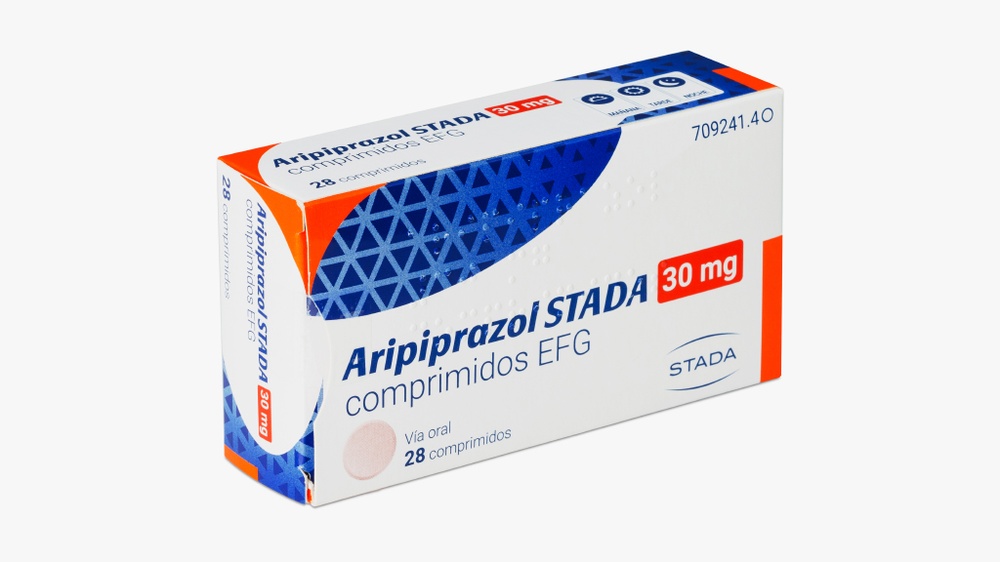
ARIPIPRAZOL 30 mg Comprimidos

Revisión de receta online
Un médico revisará tu caso y determinará si la prescripción es médicamente apropiada.

Habla con un médico sobre este medicamento
Comenta tus síntomas y las opciones de tratamiento en una consulta online.



Cómo usar ARIPIPRAZOL STADA 30 MG COMPRIMIDOS EFG
Contenido del prospecto
- Introducción
- Qué es Aripiprazol Stada y para qué se utiliza
- Qué necesita saber antes de empezar a tomar Aripiprazol Stada
- Cómo tomar Aripiprazol Stada
- Posibles efectos adversos
- Conservación de Aripiprazol Stada
- Contenido del envase e información adicional
Introducción
Prospecto: información para el usuario
Aripiprazol Stada 5 mg comprimidos EFG
Aripiprazol Stada 10 mg comprimidos EFG
Aripiprazol Stada 15 mg comprimidos EFG
Aripiprazol Stada 30 mg comprimidos EFG
Lea todo el prospecto detenidamente antes de empezar a tomar este medicamento, porque contiene información importante para usted.
- Conserve este prospecto, ya que puede tener que volver a leerlo.
- Si tiene alguna duda, consulte a su médico o farmacéutico.
- Este medicamento se le ha recetado solamente a usted, y no debe dárselo a otras personas aunque tengan los mismos síntomas que usted, ya que puede perjudicarles.
- Si experimenta efectos adversos, consulte a su médico o farmacéutico, incluso si se trata de efectos adversos que no aparecen en este prospecto. Ver sección 4.
Contenido del prospecto
- Qué es Aripiprazol Stada y para qué se utiliza
- Qué necesita saber antes de empezar a tomar Aripiprazol Stada
- Cómo tomar Aripiprazol Stada
- Posibles efectos adversos
- Conservación de Aripiprazol Stada
- Contenido del envase e información adicional
1. Qué es Aripiprazol Stada y para qué se utiliza
Aripiprazol Stada contiene la sustancia activa aripiprazol y pertenece a un grupo de medicamentos denominados antipsicóticos.
Se utiliza para tratar adultos y adolescentes de 15 años o más que padecen una enfermedad caracterizada por síntomas tales como oír, ver y sentir cosas que no existen, desconfianza, creencias erróneas, habla incoherente y monotonía emocional y de comportamiento. Las personas en este estado pueden también sentirse deprimidas, culpables, inquietas o tensas.
Aripiprazol Stada se utiliza para tratar adultos y adolescentes de 13 años o más que padecen un trastorno caracterizado por síntomas tales como sentirse eufórico, tener una energía exagerada, necesidad de dormir mucho menos de lo habitual, hablar muy deprisa con fuga de ideas y a veces, una irritabilidad grave. En adultos también previene esta situación en pacientes que han respondido al tratamiento con Aripiprazol Stada.

¿No estás seguro de si este medicamento es adecuado para ti?
Comenta tus síntomas y tratamiento con un médico online.
2. Qué necesita saber antes de empezar a tomar Aripiprazol Stada
NO tome Aripiprazol Stada
- si es alérgico a aripiprazol o a cualquiera de los demás componentes de este medicamento (incluidos en la sección 6).
Advertencias y precauciones
Consulte a su médico antes de empezar a tomar Aripiprazol Stada.
Se han comunicado casos de pacientes que experimentan pensamientos y comportamientos suicidas durante el tratamiento con aripiprazol. Informe a su médico inmediatamente si tiene pensamientos o sentimientos de dañarse a sí mismo.
Antes de empezar el tratamiento con Aripiprazol Stada, dígale a su médico si sufre de
- niveles altos de azúcar en sangre (caracterizado por síntomas como sed excesiva, aumento de la cantidad de orina, aumento de apetito y sensación de debilidad) o historia familiar de diabetes
- convulsiones, ya que su médico puede querer controlarlo más de cerca
- movimientos musculares irregulares e involuntarios, especialmente en la cara
- enfermedades cardiovasculares (enfermedades del corazón y la circulación), historia familiar de enfermedad cardiovascular, ictus o "mini" ictus, presión sanguínea anormal
- coágulos sanguíneos o historia familiar de coágulos sanguíneos, ya que los antipsicóticos han sido asociados con la formación de coágulos sanguíneos
- antecedentes de adicción al juego
Si nota que está ganando peso, desarrolla movimientos inusuales, experimenta somnolencia que interfiere con sus actividades diarias normales, tiene alguna dificultad al tragar o presenta síntomas alérgicos, por favor informe a su médico.
Si es un paciente de edad avanzada y padece demencia (pérdida de memoria y otras capacidades mentales), usted o la persona que le cuida o familiar, deberá informar a su médico si alguna vez ha tenido un ictus o “mini” ictus.
Hable inmediatamente con su médico si tiene pensamientos o sentimientos de dañarse a sí mismo. Se han notificado casos de pacientes que experimentan pensamientos y comportamiento suicida durante el tratamiento con aripiprazol.
Hable inmediatamente con su médico si nota entumecimiento o rigidez de los músculos con fiebre alta, sudores, alteración del estado mental, o latido del corazón muy rápido o irregular.
Informe a su médico si usted, su familia o cuidador notan que está desarrollando impulsos o ansias de comportarse de forma inusual en usted y que no se puede resistir al impulso, instinto o tentación de llevar a cabo ciertas actividades que pueden dañarle a usted o a otros. Esto se denomina trastorno del control de los impulsos y puede incluir comportamientos como adicción al juego, ingesta o gasto excesivo, apetito sexual anormalmente alto o preocupación por un aumento de los pensamientos y sentimientos sexuales.
Su médico puede considerar ajustar o interrumpir la dosis.
Aripiprazol puede causar somnolencia, caída de la tensión arterial al levantarse, mareos y cambios en la capacidad para moverse y mantener el equilibrio, lo que podría provocar caídas. Se debe tener precaución, especialmente si usted es un paciente anciano o padece algo de debilidad.
Niños y adolescentes
No use este medicamento en niños y adolescentes menores de 13 años de edad. Se desconoce si es seguro y efectivo en estos pacientes.
Otros medicamentos y Aripiprazol Stada
Informe a su médico o farmacéutico si está tomando, ha tomado recientemente o podría tener que tomar cualquier otro medicamento.
Medicamentos que bajan la presión sanguínea:
Aripiprazol puede aumentar el efecto de medicamentos utilizados para bajar la presión sanguínea.
Asegúrese de comunicar a su médico si utiliza alguna medicina para controlar la presión sanguínea.
Si está tomando Aripiprazol Stada con algún otro medicamento, puede significar que su médico deba cambiar su dosis de Aripiprazol Stada o la de los otros medicamentos. Es especialmente importante que mencione a su médico si está tomando:
- Medicamentos para corregir el ritmo cardíaco (como quinidina, amiodarona, flecainida);
- Antidepresivos o remedios a base de plantas medicinales utilizados para el tratamiento de la depresión y la ansiedad (como fluoxetina, paroxetina, venlafaxina, hierba de San Juan);
- Medicamentos para tratar infecciones por hongos (antifúngicos) (como ketoconazol, itraconazol);
- Ciertos medicamentos para tratar la infección por VIH (como efavirenz, nevirapina e inhibidores de la proteasa como, por ejemplo, indinavir, ritonavir);
- Anticonvulsivantes utilizados para tratar la epilepsia (como carbamazepina, fenitoína, fenobarbital);
- Ciertos antibióticos utilizados para tratar la tuberculosis (rifabutina, rifampicina).
Estos medicamentos pueden aumentar el riesgo de aparición de efectos adversos o reducir el efecto de Aripiprazol Stada; si usted observa cualquier síntoma poco común al tomar cualquiera de estos medicamentos al mismo tiempo que Aripiprazol Stada, debe comunicárselo a su médico.
Los medicamentos que aumentan los niveles de serotonina se emplean generalmente en enfermedades que incluyen depresión, trastorno de ansiedad generalizada, trastorno obsesivo compulsivo (TOC) y fobia social, así como migraña y dolor:
- triptanes, tramadol y triptófano utilizados para enfermedades como la depresión, el trastorno de ansiedad generalizada, el trastorno obsesivo compulsivo (TOC) y la fobia social, así como la migraña y el dolor;
- inhibidores selectivos de la recaptación de (ISRS) (como paroxetina y fluoxetina) utilizados para la depresión, el TOC, el pánico y la ansiedad;
- otros antidepresivos (como venlafaxina y triptófano) utilizados en la depresión grave;
- antidepresivos tricíclicos (como clomipramina y amitriptilina) utilizados en enfermedades depresivas;
- hierba de San Juan (Hypericum perforatum) utilizada en medicamentos a base de plantas para la depresión leve;
- analgésicos (como tramadol y petidina) utilizados para aliviar el dolor;
- triptanos (como sumatriptán y zolmitriptán) utilizados para tratar la migraña.
Estos medicamentos pueden aumentar el riesgo de la aparición de efectos adversos; si usted observa cualquier síntoma poco común al tomar cualquiera de estos medicamentos al mismo tiempo que Aripiprazol Stada, debe comunicárselo a su médico.
Toma de Aripiprazol Stada con alimentos, bebidas y alcohol
Este medicamento se puede tomar independientemente de las comidas. Se debe evitar el consumo de alcohol mientras está tomando Aripiprazol Stada.
Embarazo, lactancia y fertilidad
Si está embarazada o en periodo de lactancia, cree que podría estar embarazada o tiene intención de tener un bebé, consulte a su médico o farmacéutico antes de utilizar este medicamento.
Se pueden producir los siguientes síntomas en bebés recién nacidos, de madres que han sido tratadas con Aripiprazol Stada en el último trimestre de embarazo (últimos tres meses de su embarazo): temblor, rigidez y/o debilidad muscular, somnolencia, agitación, problemas al respirar, y dificultad en la alimentación. Si su bebé desarrolla cualquiera de estos síntomas se debe poner en contacto con su médico.
Si está tomando Aripiprazol Stada, su médico discutirá con usted sobre si debe dar el pecho a su bebé considerando el beneficio para usted de su tratamiento y el beneficio para su bebé de darle el pecho. Si está siendo tratada con Aripiprazol Stada no debe dar el pecho. Hable con su médico sobre el mejor modo de alimentar a su bebé si está tomando este medicamento.
Conducción y uso de máquinas
Durante el tratamiento con este medicamento pueden aparecer mareos y problemas de visión (ver sección 4). Esto debe tenerse en cuenta cuando se requiera una atención máxima, por ejemplo, cuando conduzca o maneje maquinaria.
Aripiprazol Stada contiene lactosa y sodio
Si su médico le ha indicado que padece una intolerancia a ciertos azúcares, consulte con él antes de tomar este medicamento.
Este medicamento contiene menos de 1 mmol de sodio (23 mg) por comprimido; esto es, esencialmente “exento de sodio”.
3. Cómo tomar Aripiprazol Stada
Siga exactamente las instrucciones de administración de este medicamento indicadas por su médico o farmacéutico. En caso de duda, consulte de nuevo a su médico o farmacéutico.
La dosis recomendada para adultos es 15 mg una vez al día.Sin embargo su médico puede prescribirle dosis menores y mayores hasta un máximo de 30 mg, una vez al día.
Uso en niños y adolescentes
Aripiprazol Stada debe iniciarse con una solución oral (líquida) a una dosis baja. Si se necesita una solución oral, su médico le prescribirá otro producto de aripiprazol. Gradualmente la dosis puede ser aumentada a la dosis recomendada para adolescentes de 10 mg una vez al día. Sin embargo, su médico puede prescribirle dosis menores o mayores hasta un máximo de 30 mg una vez al día.
Si estima que la acción de Aripiprazol Stada es demasiado fuerte o débil, comuníqueselo a su médico o farmacéutico.
Método de administración
Trate de tomar Aripiprazol Stada a la misma hora cada día.No importa si lo toma con o sin alimentos.
Tome siempre el comprimido con agua y tráguelo entero.
Incluso si se siente mejor, no altere o interrumpa la dosis diaria de Aripiprazol Stada sin consultar primero a su médico.
Si toma más Aripiprazol Stada del que debe
Si se da cuenta de que ha tomado más comprimidos de Aripiprazol Stada de los que le ha recomendado su médico (o si alguien más ha tomado algunos de sus comprimidos de Aripiprazol Stada), consulte inmediatamente a su médico o farmacéutico, llame al Servicio de Información Toxicológica, teléfono: 91.562.04.20 indicando el medicamento y la cantidad ingerida o diríjase al hospital más cercano llevando consigo el envase.
Los pacientes que han tomado demasiado aripiprazol han experimentado los siguientes síntomas:
- latidos rápidos del corazón, agitación/agresividad, problemas con el lenguaje;
- movimientos inusuales (especialmente de la cara o la lengua) y nivel de conciencia disminuido.
Otros síntomas pueden incluir:
- confusión aguda, convulsiones (epilepsia), coma, una combinación de fiebre, respiración acelerada, sudoración;
- rigidez muscular y somnolencia, respiración más lenta, ahogo, presión sanguínea alta o baja, ritmos anómalos del corazón.
Contacte con su médico u hospital más cercano inmediatamente si experimenta cualquiera de los síntomas anteriores.
Si olvidó tomar Aripiprazol Stada
Si olvida una dosis, tome la dosis olvidada tan pronto como lo recuerde, pero no tome dos dosis en un mismo día. No tome una dosis doble para compensar la dosis olvidada.
Si interrumpe el tratamiento con Aripiprazol Stada
No interrumpa su tratamiento solo porque se sienta mejor. Es importante que siga tomando Aripiprazol Stada durante el tiempo que su médico le haya indicado.
Si tiene cualquier otra duda sobre el uso de este medicamento, pregunte a su médico o farmacéutico.

¿Has empezado a tomar el medicamento y tienes preguntas?
Comenta tus síntomas y tratamiento con un médico online.
4. Posibles efectos adversos
Al igual que todos los medicamentos, este medicamento puede producir efectos adversos, aunque no todas las personas los sufran.
Efectos adversos frecuentes (pueden afectar hasta 1 de cada 10 personas):
- diabetes mellitus;
- problemas para dormir;
- ansiedad;
- sensación de inquietud e incapacidad para quedarse quieto, dificultad para permanecer sentado;
- acatisia (una sensación incómoda de inquietud interior y una necesidad apremiante de moverse constantemente);
- movimientos de torsión, contorsión o espasmódicos incontrolables, piernas inquietas;
- temblor;
- dolor de cabeza;
- cansancio;
- somnolencia;
- mareo;
- estremecimiento y visión borrosa;
- dificultad para evacuar o disminución de la frecuencia de las deposiciones (estreñimiento);
- indigestión;
- náuseas;
- mayor producción de saliva;
- vómitos;
- sensación de cansancio.
Efectos adversos poco frecuentes (pueden afectar hasta 1 de cada 100 personas):
- incremento o disminución de los niveles en sangre de hormona prolactina
- demasiado azúcar en sangre;
- depresión;
- interés sexual alterado o elevado;
- movimientos incontrolables de la boca, la lengua y las extremidades (discinesia tardía);
- trastorno muscular que provoca movimientos de torsión (distonía);
- piernas inquietas;
- visión doble;
- sensibilidad ocular a la luz;
- latido cardiaco acelerado;
- bajada de la presión sanguínea al ponerse de pie que provoca mareo, aturdimiento o desmayo;
- hipo.
Los siguientes efectos adversos han sido comunicados durante la comercialización de aripiprazol pero se desconoce la frecuencia de aparición(la frecuencia no puede estimarse a partir de los datos disponibles):
- niveles bajos de glóbulos blancos;
- niveles bajos de plaquetas;
- reacción alérgica (p.ej., hinchazón en la boca, lengua, cara y garganta, picores y enrojecimiento);
- aparición o empeoramiento de diabetes, cetoacidosis (cetonas en sangre y orina) o coma;
- azúcar elevado en sangre,
- niveles insuficientes de sodio en sangre;
- pérdida del apetito (anorexia);
- pérdida de peso;
- aumento de peso;
- pensamientos suicidas, intento de suicidio y suicidio;
- agresividad;
- agitación;
- nerviosismo;
- combinación de fiebre, rigidez muscular, respiración acelerada, sudores, disminución de la consciencia, cambios bruscos de la tensión arterial y del ritmo cardiaco, y desmayos (síndrome neuroléptico maligno);
- convulsiones;
- síndrome serotoninérgico (una reacción que puede causar sensación de intensa felicidad, somnolencia, torpeza, inquietud, sensación de estar bebido, fiebre, sudoración o rigidez muscular);
- trastorno del habla;
- fijación de los globos oculares en una posición;
- muerte súbita inexplicada;
- latido cardiaco irregular potencialmente mortal;
- ataque al corazón;
- latido cardiaco más lento;
- coágulos sanguíneos en las venas especialmente de las piernas (los síntomas incluyen hinchazón, dolor, y enrojecimiento de la pierna), que pueden trasladarse a través de los vasos sanguíneos a los pulmones causando dolor en el pecho y dificultad al respirar (si usted nota cualquiera de estos síntomas, acuda inmediatamente a su médico);
- presión sanguínea elevada;
- desmayos;
- inhalación accidental de comida con riesgo de neumonía (infección pulmonar);
- espasmos de los músculos alrededor de la glotis (una parte de la laringe);
- inflamación del páncreas;
- dificultad para tragar;
- diarrea;
- molestias abdominales;
- malestar de estómago;
- fallo hepático;
- inflamación del hígado;
- coloración amarillenta de la piel y de la parte blanca de los ojos;
- análisis con valores hepáticos anormales;
- sarpullido;
- sensibilidad tópica a la luz;
- calvicie;
- sudoración excesiva;
- reacciones alérgicas graves como Reacción Medicamentosa con Eosinofilia y Síntomas Sistémicos (DRESS). DRESS aparece inicialmente como síntomas similares a los de la gripe con una erupción en la cara y luego con una erupción extendida, temperatura alta, ganglios linfáticos agrandados, niveles elevados de enzimas hepáticas que se observan en los análisis de sangre y aumento en un tipo de glóbulos blancos (eosinofilia);
- degradación anormal de los músculos que puede provocar problemas renales;
- dolor muscular;
- rigidez;
- pérdida involuntaria de orina (incontinencia);
- dificultad para orinar;
- síntomas de abstinencia en los recién nacidos por exposición a fármacos durante el embarazo;
- erección prolongada y/o dolorosa;
- dificultad para controlar la temperatura central corporal o recalentamiento;
- dolor de pecho;
- manos, tobillos o pies hinchados;
- en los análisis de sangre: aumento o fluctuación de los niveles de azúcar en sangre, aumento de la hemoglobina glucosilada.
- incapacidad de resistir el impulso, instinto o tentación de realizar una acción que puede ser dañina para usted o para otros, pudiendo incluir:
- fuerte impulso de jugar excesivamente a pesar de las serias consecuencias personales o familiares;
- interés sexual alterado o aumentado y comportamiento preocupante para usted o para otros, por ejemplo, aumento del apetito sexual;
- compra excesiva incontrolable;
- atracón (ingesta de grandes cantidades de comida en un corto periodo de tiempo) o ingesta compulsiva (ingesta de más comida de lo normal y más de la necesaria para satisfacer el hambre);
- tendencia a deambular.
Informe a su médico si presenta alguno de estos comportamientos; él le explicará la manera de manejar o reducir los síntomas.
En pacientes de edad avanzada con demencia, se han comunicado mayor número de casos fatales mientras tomaban aripiprazol. Además, se han comunicado casos de ictus o "mini" ictus.
Otros efectos adversos en niños y adolescentes
Adolescentes de 13 años o más experimentaron efectos adversos similares en frecuencia y tipo a los de los adultos excepto en somnolencia, espasmos o contracciones incontrolables, inquietud, y cansancio que fueron muy frecuentes (afecta a más de 1 de cada 10 pacientes) y dolor abdominal superior, sequedad de boca, aumento de la frecuencia cardíaca, ganancia de peso, aumento del apetito, fasciculaciones musculares, movimientos involuntarios de las extremidades, y mareos, especialmente cuando se levantaron tras estar tumbados o sentados, que fueron frecuentes (afecta hasta 1 de cada 10 pacientes).
Comunicación de efectos adversos
Si experimenta cualquier tipo de efecto adverso, consulte a su médico o farmacéutico, incluso si se trata de posibles efectos adversos que no aparecen en este prospecto. También puede comunicarlos a través del Sistema Español de Farmacovigilancia de Medicamentos de Uso Humano: https://www.notificaram.es. Mediante la comunicación de efectos adversos usted puede contribuir a proporcionar más información sobre la seguridad de este medicamento.
5. Conservación de Aripiprazol Stada
Mantener este medicamento fuera de la vista y del alcance de los niños.
No utilice este medicamento después de la fecha de caducidad que aparece en el envase después de CAD. La fecha de caducidad es el último día del mes que se indica.
Este medicamento no requiere ninguna temperatura especial de conservación. Conservar en el embalaje original para protegerlo de la humedad.
Los medicamentos no se deben tirar por los desagües ni a la basura. Deposite los envases y los medicamentos que no necesita en el Punto SIGRE de la farmacia. En caso de duda pregunte a su farmacéutico cómo deshacerse de los envases y de los medicamentos que no necesita. De esta forma, ayudará a proteger el medio ambiente.
6. Contenido del envase e información adicional
Composición de Aripiprazol Stada
El principio activo es aripiprazol.
Aripiprazol Stada 5 mg comprimidos EFG: cada comprimido contiene 5 mg de aripiprazol.
Aripiprazol Stada 10 mg comprimidos EFG: cada comprimido contiene 10 mg de aripiprazol.
Aripiprazol Stada 15 mg comprimidos EFG: cada comprimido contiene 15 mg de aripiprazol.
Aripiprazol Stada 30 mg comprimidos EFG: cada comprimido contiene 30 mg de aripiprazol.
Los demás componentes (excipientes) son: manitol, maltodextrina, celulosa microcristalina, crospovidona Tipo B (Ph.Eur.), hidrogenocarbonato de sodio, ácido tartárico, sílice coloidal anhidra, sacarina sódica (E954), sabor a crema de vainilla (sustancias aromatizantes, sustancias aromatizantes naturales, lactosa, hidróxido de carbonato de magnesio), estearato de magnesio (Ph.Eur.), laca de aluminio carmín índigo (E132) (solo en la dosis de 5 mg), óxido de hierro rojo (E172) (solo en las dosis de 10 mg y 30 mg) y óxido de hierro amarillo (E172) (solo en la dosis de 15 mg).
Aspecto del producto y contenido del envase
Aripiprazol Stada 5 mg comprimidos EFG son comprimidos redondos, planos, de color azul pálido con manchas dispersas y 6 mm de diámetro.
Aripiprazol Stada 10 mg comprimidos EFG son comprimidos redondos, planos, de color rosa pálido con manchas dispersas y 8 mm de diámetro.
Aripiprazol Stada 15 mg comprimidos EFG son comprimidos redondos, planos, de color amarillo pálido con manchas dispersas y 10 mm de diámetro.
Aripiprazol Stada 30 mg comprimidos EFG son comprimidos redondos, planos, de color rosa pálido con manchas dispersas y 13 mm de diámetro.
Aripiprazol Stada está disponible en los siguientes formatos:
Aripiprazol Stada 5 mg comprimidos EFG
Se presenta en blísteres envasados en una caja de cartón conteniendo 14, 28, 30, 49, 50, 56 o 98 comprimidos o 14x1, 28x1, 30x1, 49x1, 50x1, 56x1 o 98x1 comprimidos.
Aripiprazol Stada 10 mg comprimidos EFG
Se presenta en blísteres envasados en una caja de cartón conteniendo 7, 14, 28, 30, 49, 50, 56, 60, 84, 90, 98 o 100 comprimidos o 7x1, 14x1, 28x1, 30x1, 49x1, 50x1, 56x1, 60x1, 84x1, 90x1, 98x1 o 100x1 comprimidos.
Aripiprazol Stada 15 mg comprimidos EFG
Se presenta en blísteres envasados en una caja de cartón conteniendo 7, 14, 28, 30, 49, 50, 56, 60, 84, 90, 98 o 100 comprimidos o 7x1, 14x1, 28x1, 30x1, 49x1, 50x1, 56x1, 60x1, 84x1, 90x1, 98x1 o 100x1 comprimidos
Aripiprazol Stada 30 mg comprimidos EFG
Se presenta en blísteres envasados en una caja de cartón conteniendo 7, 14, 28, 30, 49, 56, 60, 84, 90 o 98 comprimidos o 7x1, 14x1, 28x1, 30x1, 49x1, 56x1, 60x1, 84x1, 90x1 o 98x1 comprimidos.
Puede que solamente estén comercializados algunos tamaños de envases.
Titular de la autorización de comercialización y responsable de la fabricación
Titular de la autorización de comercialización
Laboratorio STADA, S.L.
Frederic Mompou, 5
08960 - Sant Just Desvern
(Barcelona)
Responsable de la fabricación
STADA Arzneimittel AG
Stadastrasse 2 – 18
61118 Bad Vilbel
Alemania
o
Centrafarm Services B.V.
Van de Reijtstraat 31-E
4814 NE Breda
Holanda
o
STADA Arzneimittel GmbH
Muthgasse 36
1190 Wien
Austria
o
STADA M&D SRL?
Str. Trascaului nr. 10,?
Municipiul Turda,
Judet Cluj 401135,
Rumanía?
Este medicamento está autorizado en los Estados Miembros del Espacio Económico Europeo con los siguientes nombres:
Austria: Aripiprazol STADA 5 mg Tabletten
Aripiprazol STADA 10 mg Tabletten
Aripiprazol STADA 15 mg Tabletten
Aripiprazol STADA 30 mg Tabletten
Alemania: Aripiprazol STADA 5 mg Tabletten
Aripiprazol STADA 10 mg Tabletten
Aripiprazol STADA 15 mg Tabletten
Aripiprazol STADA 30 mg Tabletten
Bélgica Aripiprazole EG 10 mg tabletten
Aripiprazole EG 15 mg tabletten
Aripiprazole EG 30 mg tabletten
Croacia Aripiprazol STADA 10 mg tablete
Aripiprazol STADA 15 mg tablete
Aripiprazol STADA 30 mg tablete
Dinamarca: Aripiprazol STADA
Eslovenia Aripiprazol STADA 10 mg tablete
Aripiprazol STADA 15 mg tablete
Eslovaquia Aripiprazol STADA 15mg tablety
España: Aripiprazol Stada 5 mg comprimidos EFG
Aripiprazol STADA 10 mg comprimidos EFG
Aripiprazol STADA 15 mg comprimidos EFG
Aripiprazol STADA 30 mg comprimidos EFG
Finlandia: Aripiprazol STADA
Francia: Aripiprazole EG 5 mg comprimé
Aripiprazole EG 10 mg comprimé
Aripiprazole EG 15 mg comprimé
Países Bajos Aripiprazol CF 5 mg tabletten
Hungría Aripiprazol STADA 15 mg tabletta
Aripiprazol STADA 30 mg tabletta
Luxemburgo Aripiprazole EG 10 mg comprimés
Aripiprazole EG 15 mg comprimés
Aripiprazole EG 30 mg comprimés
Portugal Aripiprazol Ciclum
Rumanía Aripiprazol STADA 10 mg comprimate
Aripiprazol STADA 15 mg comprimate
Suecia: Aripiprazol STADA
Fecha de la última revisión de este prospecto:Noviembre 2022
La información detallada y actualizada de este medicamento está disponible en la página web de la Agencia Española de Medicamentos y Productos Sanitarios (AEMPS) http://www.aemps.gob.es/
- País de registro
- Forma farmacéuticaCOMPRIMIDO, 30 mg
- Código ATCN05AX12
- Precio medio en farmacia141.53 EUR
- Principio activo
- Requiere recetaSí
- Fabricante
- ComposiciónMANITOL (E-421) (2019.90 mg mg), HIDROGENOCARBONATO DE SODIO (5.04 mg mg), SACARINA SODICA (0.84 mg mg)
- Esta información es de carácter general y no sustituye la consulta con un profesional sanitario.
- Alternativas a ARIPIPRAZOL STADA 30 MG COMPRIMIDOS EFGForma farmacéutica: SOLUCIÓN/SUSPENSIÓN ORAL, 1 mg/mlPrincipio activo: AripiprazolFabricante: Kern Pharma S.L.Requiere recetaForma farmacéutica: COMPRIMIDO BUCODISPERSABLE/LIOTAB, 10 mgPrincipio activo: AripiprazolFabricante: Kern Pharma S.L.Requiere recetaForma farmacéutica: COMPRIMIDO, 10 mgPrincipio activo: AripiprazolFabricante: Kern Pharma S.L.Requiere receta
Médicos online para ARIPIPRAZOL STADA 30 MG COMPRIMIDOS EFG
Comenta la dosis, los posibles efectos secundarios, interacciones, contraindicaciones o la revisión de receta de ARIPIPRAZOL STADA 30 MG COMPRIMIDOS EFG, sujeto a valoración médica y a la normativa local.







Obtén una receta de ARIPIPRAZOL STADA 30 MG COMPRIMIDOS EFG online
Rellena un formulario de 2 minutos
Cuéntanos tus síntomas, historial y el medicamento que necesitas.
Elige un médico o nosotros te asignamos uno
Escoge un especialista o te conectamos con el próximo médico disponible.
El médico revisa tu caso
Normalmente en 30 minutos. Puede hacerte preguntas adicionales por chat.
Recógela en cualquier farmacia
Receta electrónica enviada a tu correo, válida en toda España.
Preguntas frecuentes
ARIPIPRAZOL STADA 30 MG COMPRIMIDOS EFG requiere receta en España. Puedes confirmarlo con un médico online según tu caso.
El principio activo de ARIPIPRAZOL STADA 30 MG COMPRIMIDOS EFG es Aripiprazol. Esta información ayuda a identificar medicamentos con la misma composición pero con diferentes nombres comerciales.
El precio medio en farmacia de ARIPIPRAZOL STADA 30 MG COMPRIMIDOS EFG es de aproximadamente 141.53 EUR. Puede variar según el fabricante y la forma farmacéutica.
ARIPIPRAZOL STADA 30 MG COMPRIMIDOS EFG es fabricado por Laboratorio Stada S.L.. La marca y el envase pueden variar según el distribuidor.
Los Médicos de familia, Psiquiatras, Dermatólogos, Cardiólogos, Endocrinólogos, Gastroenterólogos, Neumólogos, Nefrólogos, Reumatólogos, Hematólogos, Infectólogos, Alergólogos, Geriatras, Pediatras, Oncólogos pueden valorar la prescripción de ARIPIPRAZOL STADA 30 MG COMPRIMIDOS EFG cuando esté clínicamente indicado. Puedes reservar una videoconsulta para comentar tu caso y las opciones de tratamiento.
España cuenta con una infraestructura sanitaria bien desarrollada en ciudades principales como Madrid, Barcelona, Valencia y Sevilla. Las farmacias están ampliamente disponibles y operan bajo estrictas regulaciones, garantizando el acceso a medicamentos con receta.
Puedes comprar ARIPIPRAZOL STADA 30 MG COMPRIMIDOS EFG en Madrid, Barcelona, Sevilla o Valencia en cualquier farmacia local con una receta válida.
Para obtener una receta, puedes utilizar Oladoctor:
Otros medicamentos con el mismo principio activo (Aripiprazol) incluyen ABIK 1 MG/ML SOLUCION ORAL EFG, ABIK 10 MG COMPRIMIDOS BUCODISPERSABLES EFG, ABIK 10 MG COMPRIMIDOS EFG. Pueden tener diferentes nombres comerciales o formulaciones, pero contienen el mismo componente terapéutico. Consulta siempre con un médico antes de cambiar o iniciar un nuevo medicamento.
