






Cómo usar A.A.S. 100 mg COMPRIMIDOS
Traducción generada por IA
Este contenido ha sido traducido automáticamente y se ofrece solo con fines informativos. No sustituye la consulta con un profesional sanitario.
Ver originalContenido del prospecto
Introducción
Prospecto: información para el usuario
A.A.S. 100 mg comprimidos
Ácido acetilsalicílico
Lea todo el prospecto detenidamente antes de empezar a tomar este medicamento, porque contiene información importante para usted.
|
Contenido del prospecto
- Qué es A.A.S. 100 mg y para qué se utiliza
- Qué necesita saber antes de empezar a tomar A.A.S. 100 mg
- Cómo tomar A.A.S. 100 mg
- Posibles efectos adversos
- Conservación de A.A.S. 100 mg
- Contenido del envase e información adicional
1. Qué es A.A.S. 100 mg y para qué se utiliza
A.A.S. 100 mg está indicado para prevenir la formación de trombos y reducir el riesgo de obstrucción de sus arterias, ya que:
- ha sufrido previamente un infarto de miocardio o una angina de pecho.
- ha sufrido un accidente cerebrovascular no hemorrágico transitorio o permanente.
- ha sido sometido a una intervención quirúrgica, del tipo angioplastia coronaria o by-pass coronario.

2. Qué necesita saber antes de empezar a tomar A.A.S. 100 mg
No tome A.A.S. 100 mg:
- Si es alérgico al ácido acetilsalicílico o a alguno de los demás componentes de este medicamento (incluidos en la sección 6).
- Si ha padecido mastocitosis (generalmente caracterizada por urticaria) ya que pueden aparecer reacciones graves de hipersensibilidad (reacción alérgica exagerada y grave con rubor, hipotensión, taquicardia y vómitos).
- Si padece o ha padecido úlcera gástrica, duodenal o molestias gástricas de repetición.
- Si ha presentado reacciones alérgicas de tipo asmático (dificultad para respirar, ahogo, espasmo bronquial y en algunos casos tos o silbidos al respirar) al tomar medicamentos para disminuir la inflamación, ácido acetilsalicílico, otros analgésicos, así como al tomar colorante tartrazina.
- Si padece o ha padecido asma o con pólipos nasales asociados con asma que sean producidos o aumentados por el ácido acetilsalicílico, rinitis o urticaria.
- Si padece hemofilia u otros problemas de coagulación sanguínea que le predispongan a padecer hemorragias internas, tiene alguna otra enfermedad hemorrágica o riesgo de sangrado.
- Si está en tratamiento con medicamentos para favorecer la circulación sanguínea (anticoagulantes orales) (ver “Toma de A.A.S 100 mg con otros medicamentos”).
- Si está en tratamiento con metotrexato utilizado a dosis superiores a 20 mg/semana (ver “Toma de A.A.S 100 mg con otros medicamentos”).
- Si padece insuficiencia hepática grave.
- Si padece insuficiencia renal grave.
- Si padece insuficiencia cardíaca grave e incontrolada.
- Si tiene menos de 16 años, salvo expresa indicación médica, ya que el uso de ácido acetilsalicílico se ha relacionado con el Síndrome de Reye, enfermedad poco frecuente pero grave.
- Si se encuentra en su tercer trimestre de embarazo (más de 24 semanas de gestación), a dosis superiores a 100 mg/día (ver “Embarazo, lactancia y fertilidad”).
Advertencias y precauciones
Consulte a su médico o farmacéutico antes de empezar a tomar A.A.S. 100 mg si usted se encuentra en algunos de estos casos:
- Padece alguna enfermedad del riñón (en caso de insuficiencia renal grave está contraindicado, ver “No tome A.A.S 100 mg”), corazón o hígado.
- Padece insuficiencia hepática leve o moderada (en caso de insuficiencia hepática grave está contraindicado, ver “No tome A.A.S 100 mg”).
- Presenta alteraciones en la coagulación sanguínea o está en tratamiento con anticoagulantes.
- Padece gota. El ácido acetilsalicílico modifica el ácido úrico sérico a dosis analgésicas.
- Padece hemorragia del útero fuera del periodo menstrual o metrorragias o menorragias (hemorragia menstrual prolongada y aumentada).
- Debe someterse a intervención quirúrgica, incluyendo cirugía dental. En ese caso, deberá informar a su médico o dentista.
- Si usted ha sido vacunado recientemente.
- Si padece rinitis y/o urticaria.
- A altas dosis, (dosis antiinflamatorias), consulte con su médico si aparecen zumbidos o ruidos en los oidos, audición reducida o mareos.
- Si tiene una deficiencia de glucosa-6-fosfato deshidrogenasa debido al riesgo de hemólisis (ver “Posibles efectos adversos”).
- Debe evitarse el tratamiento conjunto de levotiroxina (para tratar el hipotiroidismo) y salicilatos (ver “Toma de A.A.S. 100 mg otros medicamentos”).
- Si está tomando antiinflamatorios u otro tipo de medicamentos ya que ciertos medicamentos pueden interaccionar con A.A.S. 100 mg y producir efectos no deseados (ver “Toma de A.A.S. 100 mg con otros medicamentos”).
- Padece hipertensión.
- En tratamientos con dosis ≥ 500 mg/día se puede ver alterada la fertilidad femenina por efecto sobre la ovulación, siendo reversible con la retirada del tratamiento.
- No debe tomar alcohol debido a que incrementa los efectos adversos gastrointestinales del ácido acetilsalicílico, y es un factor desencadenante de la irritación crónica producida por el ácido acetilsalicílico (ver “Toma de A.A.S. 100 mg con los alimentos, bebidas y alcohol ”).
- En pacientes en tratamiento con nicorandil y ácido acetilsalicílico existe mayor riesgo de complicaciones graves como úlcera gastrointestinal, perforación y hemorragia (ver “Toma de A.A.S. 100 mg con otros medicamentos”).
- Antecedentes de úlcera gastroduodenal, hemorragia gastrointestinal o gastritis. Evitar tomar conjuntamente con otros medicamentos que puedan aumentar el riesgo de hemorragias. Consulte con su médico.
- Pacientes con asma: la aparición de ataques de asma puede estar relacionada con una alergia a los medicamentos antiinflamatorios no esteroideos o al ácido acetilsalicílico. En este caso, este medicamento está contraindicado.
- El síndrome de Reye, una enfermedad muy rara pero potencialmente mortal, se ha observado en niños y adolescentes con infecciones virales (especialmente varicela y gripe) y que están tomando ácido acetilsalicílico. En consecuencia, el ácido acetilsalicílico debe administrarse a estos niños y adolescentes solo bajo recomendación médica, cuando otras medidas han fallado. En caso de vómitos persistentes, pérdida del conocimiento o comportamiento anormal, debe interrumpirse el tratamiento con ácido acetilsalicílico.
- Este medicamento contiene ácido acetilsalicílico. Otros medicamentos también lo contienen, no los tome a la vez para no exceder la dosis diaria recomendada.
- El uso regular de analgésicos, especialmente cuando se combinan analgésicos, puede causar daño renal persistente con riesgo de fallo renal.
- No se recomienda usar este medicamento durante la lactancia (ver “Embarazo, lactancia y fertilidad”).
Consulte a su médico, incluso si cualquiera de las circunstancias anteriormente mencionadas le hubiera ocurrido alguna vez.
Toma de A.A.S. 100 mg con otros medicamentos
Informe a su médico o farmacéutico si está utilizando, ha utilizado recientemente o pudiera tener que utilizar cualquier otro medicamento, incluso los adquiridos sin receta médica, homeopáticos, plantas medicinales y otros productos relacionados con la salud ya que puede ser necesario interrumpir el tratamiento o ajustar la dosis de alguno de ellos.
Esto es especialmente importante en el caso de:
- Medicamentos utilizados para evitar el rechazo de los trasplantes (ciclosporina y tacrolimus).
- Presión arterial alta (diuréticos, antagonistas de los receptores de la angiotensina II e inhibidores de ECA).
- Metotrexato (medicamento utilizado para el tratamiento del cáncer y artritis reumatoide).
- Otros analgésicos o antiinflamatorios no esteroideos (medicamentos que se utilizan para tratar el dolor y/o inflamación muscular).
- Anticoagulantes (medicamentos que se utilizan para fluidificar la sangre y evitar la aparición de coágulos), trombolíticos (para disolver coágulos), antiagregantes plaquetarios y otros medicamentos asociados con el riesgo de hemorragia.
- Medicamentos que disminuyen el nivel de azúcar en sangre (antidiabéticos orales e insulina).
- Barbitúricos (medicamentos utilizados para combatir trastornos del sueño, como sedantes y anticonvulsivantes).
- Corticoides (excepto hidrocortisona), ya que pueden potenciar el riesgo de hemorragia digestiva.
- Cimetidina y ranitidina (utilizados para disminuir la acidez de estómago).
- Digoxina (medicamento utilizado para tratar enfermedades del corazón).
- Fenitoína y ácido valproico (fármacos antiepilépticos).
- Litio e inhibidores del receptor de serotonina (utilizados en el tratamiento de las depresiones).
- Probenecid y sulfinpirazona (utilizados en el tratamiento de la gota).
- El antibiótico vancomicina y las sulfamidas (utilizados en el tratamiento de infecciones).
- Interferón alfa.
- Zidovudina (utilizado en el tratamiento del SIDA).
- Metamizol (otro medicamento analgésico/antipirético).
- Acetazolamida (diurético).
- Vacuna de la varicela (no tomar salicilatos las 6 semanas posteriores a la vacunación).
- Levotiroxina (hormona tiroidea).
- Tenofovir (utilizado en el tratamiento del SIDA).
- Nicorandil (utilizado en el tratamiento de enfermedades cardiacas) (ver “Advertencias y precauciones”).
- Pemetrexed: riesgo de incremento de la toxicidad por pemetrexed.
- Alcohol: el alcohol puede incrementar el riesgo de daño gastrointestinal cuando se toma junto con ácido acetilsalicílico (ver “Advertencias y precauciones”).
Interferencias con pruebas de diagnóstico
Si le van a realizar alguna prueba diagnóstica (incluidos análisis de sangre, orina, etc.), informe a su médico que está tomando este medicamento, ya que A.A.S. 100 mg puede alterar los resultados.
Toma de A.A.S. 100 mg con los alimentos, bebidas y alcohol
Tome este medicamento después de las comidas o con algún alimento.
Si consume habitualmente alcohol (tres o más bebidas alcohólicas -cerveza, vino, licor,…- al día), tomar A.A.S. 100 mg le puede provocar una hemorragia de estómago.
Embarazo, lactancia y fertilidad
Embarazo
Si está embarazada o en periodo de lactancia, cree que podría estar embarazada o tiene intención de quedarse embarazada, consulte a su médico o farmacéutico antes de utilizar este medicamento.
El consumo de este medicamento durante el primer y segundo trimestre del embarazo puede ser peligroso para el embrión o el feto y debe ser vigilado por su médico.
Si se administra ácido acetilsalicílico a una mujer que desea quedarse embarazada o está embarazada de menos de seis meses, la dosis debería ser lo más baja posible y la duración del tratamiento la más corta posible. Se desaconseja el uso prolongado.
No tome este medicamento si se encuentra en su tercer trimestre de embarazo (ver “No tome A.A.S 100 mg”).
Lactancia
Las mujeres en periodo de lactancia deben consultar al médico antes de utilizar este medicamento, ya que el ácido acetilsalicílico pasa a la leche materna. No se recomienda su utilización durante el período de lactancia debido al riesgo de que se produzcan en el niño efectos adversos.
Fertilidad
El acido acetilsalicílico puede alterar la fertilidad por un efecto en la ovulación. El efecto es reversible tras la retirada del medicamento.
Conducción y uso de máquinas
A.A.S. 100 mg no parece tener ningún efecto sobre la capacidad para conducir vehículos y utilizar máquinas.
A.A.S. 100 mg contiene colorante amarillo anaranjado S
Este medicamento puede producir reacciones alérgicas porque contiene colorante amarillo anaranjado S (E-110). Puede provocar asma, especialmente en pacientes alérgicos al ácido acetilsalicílico
A.A.S. 100 mg contiene sodio
Este medicamento contiene menos de 1 mmol de sodio (23 mg) por comprimido; esto es, esencialmente “exento de sodio”.
3. Cómo tomar A.A.S. 100 mg
Siga exactamente las instrucciones de administración de este medicamento indicadas por su médico o farmacéutico. En caso de duda, consulte de nuevo a su médico o farmacéutico.
La vía de administración de A.A.S. 100 mg es la vía oral.
- En la prevención de la embolia provocada por un coágulo de sangre (infarto, angina de pecho, prótesis de válvulas biológicas, bypass, inflamación de un vaso sanguíneo provocado por un coágulo de sangre y riesgo de formación de coágulos en el sistema circulatorio), la dosis media recomendada es de 1 a 3 comprimidos de A.A.S. 100 mg al día, es decir, de 100 mg a 300 mg al día.
- Aquellos pacientes que presenten problemas de hígado o de riñón deberán consultar al médico ya que puede ser necesario reducir la dosis de ácido acetilsalicílico.
Su médico le indicará la duración de su tratamiento con A.A.S. 100 mg. No suspenda el tratamiento antes. Bajo ninguna circunstancia deberá modificar o suspender el tratamiento prescrito sin consultar con su médico.
Uso en niños y adolescentes
A.A.S. 100 mg no debe administrarse a menores de 16 años.
Uso en pacientes de edad avanzada
Las personas de edad avanzada no deben tomar este medicamento sin consultar a su médico, ya que son más propensas a padecer sus efectos adversos.
Si toma más A.A.S. 100 mg del que debe
Los principales síntomas de la sobredosificación moderada son: dolor de cabeza, confusión, mareos, zumbido de oídos, sensación de sordera, visión borrosa, sudoración, náuseas, vómitos y ocasionalmente diarrea. Pueden controlarse mediante la reducción de la dosis.
Los síntomas de intoxicación grave incluyen fiebre, hiperventilacion, cetosis, alcalosis respiratoria, acidosis metabólica, coma, colapso cardiorrespiratorio, fallo respiratorio.
Puede aparecer edema pulmonar no cardiogénico con sobredosis aguda y crónica de ácido acetil salicílico (ver ”Posibles efectos adversos”).
La sobredosis con salicilatos, es importante en pacientes de edad avanzada y, particularmente en niños pequeños, y puede dar lugar a hipoglucemia grave e intoxicación potencialmente mortal.
En caso de sobredosis o ingestión accidental, consulte inmediatamente a su médico o farmacéutico o acuda a un centro médico inmediatamente o llame al Servicio de Información Toxicológica, teléfono: 91 562 04 20, indicando el medicamento y la cantidad ingerida.
Si olvidó tomar A.A.S. 100 mg
No tome una dosis doble para compensar las dosis olvidadas.
Si tiene cualquier otra duda sobre el uso de este medicamento, pregunte a su médico o farmacéutico.

4. Posibles efectos adversos
Al igual que todos los medicamentos, este medicamento puede producir efectos adversos, aunque no todas las personas los sufran.
Frecuentes (pueden afectar hasta 1 de cada 10 pacientes):
Trastornos de la sangre:
- Alteración de la coagulación cuando se administra a dosis altas (hipoprotrombinemia).
Trastornos del sistema respiratorio:
- Rinitis, dificultad para respirar.
- Sensación de falta de aire.
Trastornos gastrointestinales: náuseas y vómitos.
Poco frecuentes (pueden afectar hasta 1 de cada 100 pacientes):
Trastornos de la sangre:
- Anemia.
Trastornos del hígado:
- Toxicidad del hígado.
Trastornos generales:
- En pacientes con alergia al ácido acetilsalicílico y/o a otros antiinflamatorios no esteroideos, pueden producirse reacciones alérgicas generalizadas. Este efecto adverso también puede producirse en personas que no han presentado previamente problemas de alergia a ácido acetilsalicílico.
Después de tratamientos prolongados con ácido acetilsalicílico se han observado los siguientes efectos adversos cuya frecuencia no se ha podido establecer con exactitud:
- Síndromes hemorrágicos: hematomas, hemorragia urogenital, sangrado de la nariz, encías, aparición de manchas rojas en la piel. Si se produce alguna herida o corte, es posible que la hemorragia tarde un poco más de lo normal en detenerse.
- Erupción fija, picor, acumulación de líquido en piel y mucosas, reacciones cutáneas.
- Edema pulmonar no cardiogénico (acumulación de líquido en los pulmones sin afección cardiaca) con el uso crónico y asociado a una reacción alérgica debida al ácido acetil- salicílico, broncoespasmo, asma.
- Confusión.
- Hemorragia intracraneal que puede ser fatal especialmente en pacientes de edad avanzada.
- Zumbidos en los oídos, sordera (ver “Si toma más A.A.S. 100 mg del que debe”).
- Trastornos gastrointestinales:
- Inflamación del esófago, del duodeno y de la mucosa del estómago, úlcera en el esófago, úlceras intestinales, colitis y perforación. Estas reacciones pueden estar asociadas o no a hemorragia.
- Pancreatitis aguda (inflamación del páncreas).
- Dolor en el abdomen, dispepsia, úlcera gástrica y úlcera duodenal.
- Sangrado del estómago, que puede observarse en las heces o producir vómitos con sangre.
- Trastornos de la sangre: trombocitopenia (disminución de los niveles de plaquetas), pancitopenia (disminución de glóbulos blancos, glóbulos rojos y plaquetas), bicitopenia (disminución de dos tipos de células en sangre), anemia aplásica, insuficiencia de médula ósea, agranulocitosis (disminución de granulocitos: un tipo de glóbulos blancos), neutropenia (disminución de neutrófilos: un tipo de glóbulos blancos) y leucopenia (disminución de glóbulos blancos). Anemia hemolítica en pacientes con déficit de glucosa-6-fosfato deshidrogenasa (ver “ Advertencias y precauciones”).
- Incremento de enzimas hepáticas y daño hepático. Hepatitis crónica. Síndrome de Reye (en niños con procesos febriles, gripe o varicela) (ver “Advertencias y precauciones”).
- Inflamación del riñón y otros problemas renales.
- Hematospermia (presencia de sangre en semen).
- Sudoración, dolor de cabeza, mareos y confusión pueden aparecer con dosis elevadas prolongadas.
- Hemorragia que puede ser mortal, vasculitis incluyendo púrpura de Henoch-Schönlein.
- Aparición simultánea de acontecimientos cardiacos y reacciones alérgicas (Síndrome Kounis).
- Edema (acumulación de líquidos) con dosis elevadas (antiinflamatorias) de ácido acetilsalicílico.
- Reacciones de hipersensibilidad, reacciones anafilácticas (reacción alérgica grave que cursa con dificultad respiratoria e incluso pérdida de conocimiento).
Si observa la aparición de:
- Malestar o dolor de estómago, hemorragia de estómago o intestino, o deposiciones negras.
- Trastornos de la piel, tales como erupciones o enrojecimiento.
- Dificultad para respirar.
- Cambio imprevisto de la cantidad o el aspecto de la orina.
- Hinchazón de la cara, de los pies o de las piernas.
- Sordera, zumbidos de oídos o mareos.
Deje de tomar el medicamento y consulte inmediatamente a su médico, ya que pueden indicar la aparición de efectos secundarios que necesitan atención médica urgente.
Comunicación de efectos adversos
Si experimenta cualquier tipo de efecto adverso, consulte a su médico o farmacéutico, incluso si se trata de posibles efectos adversos que no aparecen en este prospecto. También puede comunicarlos directamente a través del Sistema Español de Farmacovigilancia de medicamentos de Uso Humano: https://www.notificaram.es. Mediante la comunicación de efectos adversos usted puede contribuir a proporcionar más información sobre la seguridad de este medicamento.
5. Conservación de A.A.S. 100 mg
Conservar por debajo de 25ºC.
Mantener este medicamento fuera de la vista y del alcance de los niños.
No utilice este medicamento después de la fecha de caducidad que aparece en el envase. La fecha de caducidad es el último día del mes que se indica.
Los medicamentos no se deben tirar por los desagües ni a la basura. Deposite los envases y los medicamentos que no necesita en el Punto SIGRE de la farmacia. En caso de duda pregunte a su farmacéutico cómo deshacerse de los envases y de los medicamentos que no necesita. De esta forma, ayudará a proteger el medio ambiente.
6. Contenido del envase e información adicional
Composición de A.A.S. 100 mg
- El principio activo es ácido acetilsalicílico. Cada comprimido contiene 100 mg de ácido acetilsalicílico.
- Los demás componentes (excipientes) son: sacarina de sodio, manitol (E 421), almidón de maíz, goma arábiga, sabor naranja y colorante amarillo nº 10 (E 104) y colorante amarillo anaranjado S (E 110).
Aspecto del producto y contenido del envase
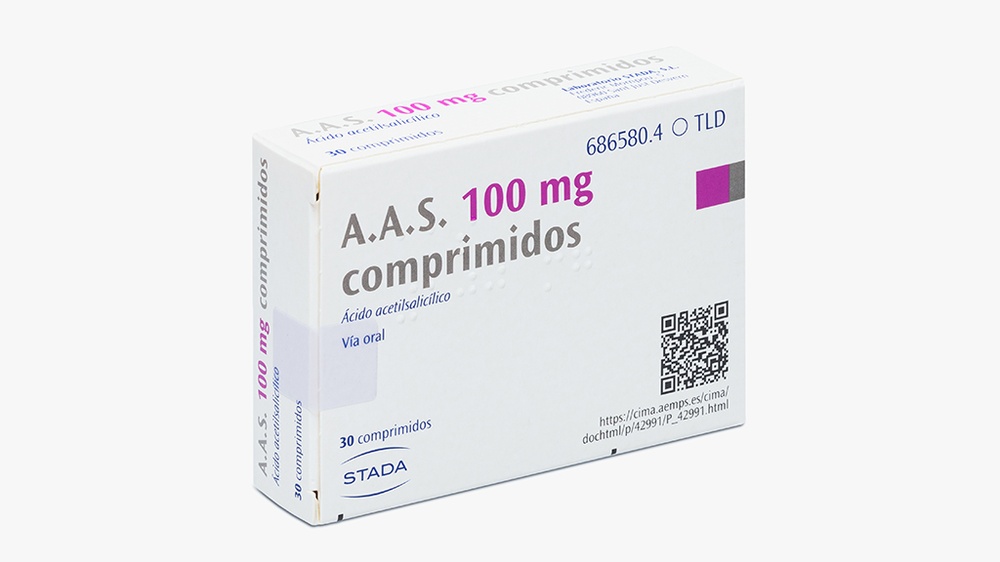
A.A.S. 100 mg se presenta como comprimidos redondos, biconvexos, ranurados, de color amarillo a naranja. Cada envase contiene 30 comprimidos.
Titular de la autorización de comercialización
Laboratorio STADA, S.L.
Frederic Mompou, 5
08960 Sant Just Desvern
España
Responsable de la fabricación
sanofi-aventis, S.A
Ctra. C35 La Batlloria a Hostalrich, Km. 63,09
17404 - Riells i Viabrea (Gerona)
España
Fecha de la última revisión de este prospecto: Octubre 2022
Otras fuentes de información
La información detallada y actualizada de este medicamento está disponible en la página Web de la Agencia Española de Medicamentos y Productos Sanitarios (AEMPS) http://www.aemps.gob.es/
-

- País de registro
- Forma farmacéuticaCOMPRIMIDO, 100 mg
- Código ATCB01AC06
- Precio medio en farmacia1.45 EUR
- Principio activo
- Requiere recetaSí
- Fabricante
- Esta información es de carácter general y no sustituye la consulta con un profesional sanitario.
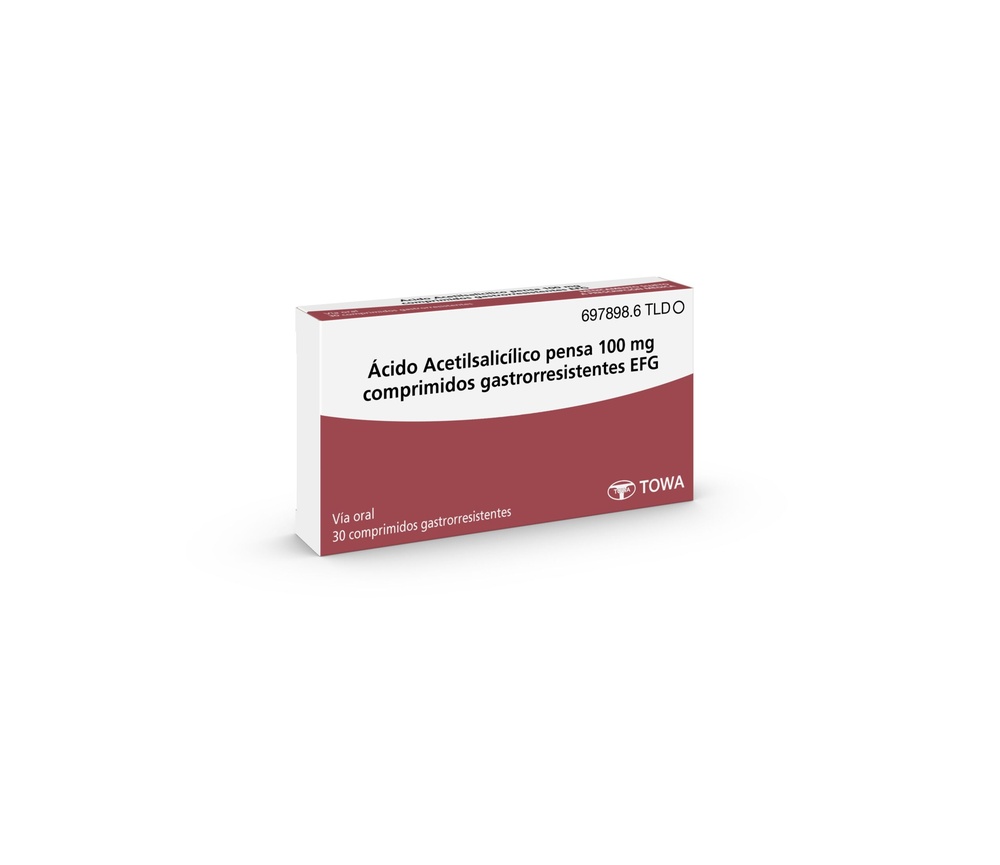
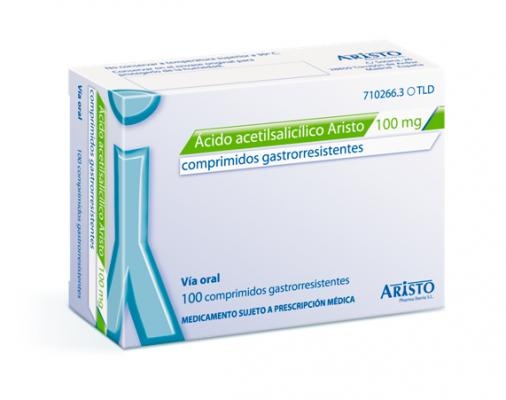
- Alternativas a A.A.S. 100 mg COMPRIMIDOSForma farmacéutica: COMPRIMIDO, 100 mgPrincipio activo: Acetilsalicilico acidoFabricante: Laboratorios Alter S.A.Requiere recetaForma farmacéutica: COMPRIMIDO, 100 mgPrincipio activo: Acetilsalicilico acidoFabricante: Aristo Pharma Iberia S.L.Requiere recetaForma farmacéutica: COMPRIMIDO, 100 mgPrincipio activo: Acetilsalicilico acidoFabricante: Aurovitas Spain, S.A.U.Requiere receta
Médicos online para A.A.S. 100 mg COMPRIMIDOS
Comenta la dosis, los posibles efectos secundarios, interacciones, contraindicaciones o la revisión de receta de A.A.S. 100 mg COMPRIMIDOS, sujeto a valoración médica y a la normativa local.







Obtén una receta de A.A.S. 100 mg COMPRIMIDOS online
Rellena un formulario de 2 minutos
Cuéntanos tus síntomas, historial y el medicamento que necesitas.
Elige un médico o nosotros te asignamos uno
Escoge un especialista o te conectamos con el próximo médico disponible.
El médico revisa tu caso
Normalmente en 30 minutos. Puede hacerte preguntas adicionales por chat.
Recógela en cualquier farmacia
Receta electrónica enviada a tu correo, válida en toda España.
Preguntas frecuentes
A.A.S. 100 mg COMPRIMIDOS requires receta en España. Puedes confirmarlo con un médico online según tu caso.
El principio activo de A.A.S. 100 mg COMPRIMIDOS es Acetilsalicilico acido. Esta información ayuda a identificar medicamentos con la misma composición pero con diferentes nombres comerciales.
El precio medio en farmacia de A.A.S. 100 mg COMPRIMIDOS es de aproximadamente 1.45 EUR. Puede variar según el fabricante y la forma farmacéutica.
A.A.S. 100 mg COMPRIMIDOS es fabricado por Laboratorio Stada S.L.. La marca y el envase pueden variar según el distribuidor.
Los Médicos de familia, Psiquiatras, Dermatólogos, Cardiólogos, Endocrinólogos, Gastroenterólogos, Neumólogos, Nefrólogos, Reumatólogos, Hematólogos, Infectólogos, Alergólogos, Geriatras, Pediatras, Oncólogos pueden valorar la prescripción de A.A.S. 100 mg COMPRIMIDOS cuando esté clínicamente indicado. Puedes reservar una videoconsulta para comentar tu caso y las opciones de tratamiento.
España cuenta con una infraestructura sanitaria bien desarrollada en ciudades principales como Madrid, Barcelona, Valencia y Sevilla. Las farmacias están ampliamente disponibles y operan bajo estrictas regulaciones, garantizando el acceso a medicamentos con receta.
Puedes comprar A.A.S. 100 mg COMPRIMIDOS en Madrid, Barcelona, Sevilla o Valencia en cualquier farmacia local con una receta válida.
Para obtener una receta, puedes utilizar Oladoctor:
Otros medicamentos con el mismo principio activo (Acetilsalicilico acido) incluyen ACIDO ACETILSALICILICO ALTER 100 MG COMPRIMIDOS GASTRORRESISTENTES EFG, ACIDO ACETILSALICILICO ARISTO 100 MG COMPRIMIDOS GASTRORRESISTENTES, ACIDO ACETILSALICILICO AUROVITAS SPAIN 100 mg COMPRIMIDOS GASTRORRESISTENTES. Pueden tener diferentes nombres comerciales o formulaciones, pero contienen el mismo componente terapéutico. Consulta siempre con un médico antes de cambiar o iniciar un nuevo medicamento.
