Background pattern
Emla

Emla

Ask a doctor about a prescription for Emla
5.0(7)
Doctor

Tarek Agami

General medicine10 years of experience

Dr. Tarek Agami is a general practitioner registered in both Portugal and Israel, with broad experience in family and preventive medicine. He offers online consultations for adults and children, providing personalised support for primary care needs, chronic disease management, and everyday health concerns.

Dr. Agami received clinical training and worked in leading medical institutions in Israel (Kaplan Medical Center, Barzilai Medical Center, Wolfson Medical Center) and Portugal (European Healthcare City, Viscura Internacional, Hospital Dr. José Maria Grande, Hospital Vila Franca de Xira). His approach combines international medical standards with individualised attention to each patient.

Main areas of consultation:

  • Diagnosis and treatment of acute and chronic conditions (high blood pressure, diabetes, respiratory infections, cardiovascular symptoms)
  • Evaluation of symptoms and guidance on further diagnostic testing
  • Preventive check-ups and regular health monitoring
  • Medical support during travel or after relocation
  • Treatment adjustments and lifestyle recommendations based on your personal history
Dr. Agami provides medical support for patients using GLP-1 medications (such as Ozempic or Mounjaro) as part of a weight loss strategy. He offers individualised treatment planning, regular follow-up, dose adjustment, and advice on combining medication with sustainable lifestyle changes. Consultations follow the medical standards accepted in Portugal and Israel.

Dr. Agami is committed to evidence-based, patient-centred care, ensuring that each person receives trusted medical support tailored to their health goals.

CameraBook a video appointment
€69
Today14:35
Today15:00
Today15:25
Today15:50
Today16:15
More times
This page is for general information. Consult a doctor for personal advice. Call emergency services if symptoms are severe.
About the medicine

How to use Emla

Leaflet attached to the packaging: information for the user

Warning! Keep the leaflet! Information on the immediate packaging in a foreign language.

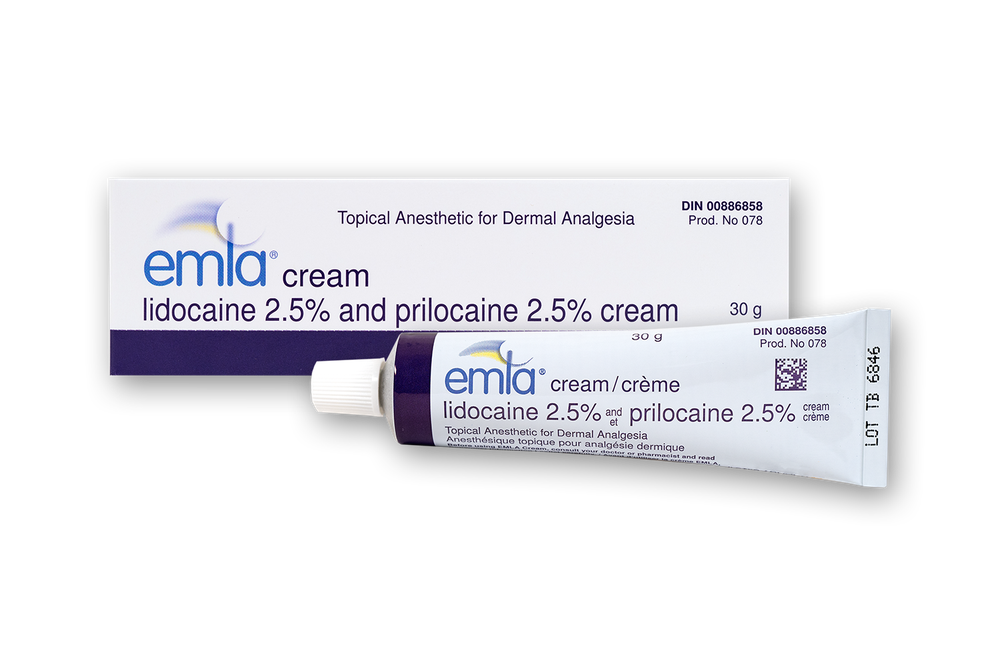
EMLA, 25 mg/g + 25 mg/g, cream

Lidocaine + Prilocaine

You should carefully read the contents of the leaflet before using the medicine, as it contains important information for the patient.

  • You should keep this leaflet, so that you can read it again if you need to.
  • If you have any doubts, you should consult a doctor or pharmacist.
  • This medicine has been prescribed specifically for you. Do not pass it on to others. The medicine may harm another person, even if their symptoms are the same.
  • If the patient experiences any side effects, including any not listed in this leaflet, they should tell their doctor or pharmacist. See section 4.

Table of contents of the leaflet

  • 1. What is EMLA and what is it used for
  • 2. Important information before using EMLA
  • 3. How to use EMLA
  • 4. Possible side effects
  • 5. How to store EMLA
  • 6. Contents of the packaging and other information

1. What is EMLA and what is it used for

EMLA contains two active substances - lidocaine and prilocaine. They belong to a group of medicines called local anesthetics.
The action of EMLA is to temporarily remove the sensation from the surface layers of the skin. The cream is applied to the skin before performing certain procedures and medical procedures.
This helps to remove pain from the skin; however, the patient may still feel pressure and touch.

Adults, adolescents, and children

EMLA can be used to anesthetize the skin before:

  • injecting a needle into the skin (e.g., when giving an injection or taking blood for tests),
  • minor surgical procedures on the skin.

Adults and adolescents

EMLA can also be used:

  • to anesthetize the genital area before: performing an injection, performing medical procedures such as removing warts. The application of EMLA cream to the genital area should be performed under the supervision of a doctor or nurse.

Adults

EMLA can also be used to anesthetize the skin before:

  • debridement or removal of damaged skin on lower limbs with ulcers.

2. Important information before using EMLA

When not to use EMLA:

    • 6).

Warnings and precautions

Before starting to use EMLA, you should discuss it with your doctor or pharmacist:

  • EMLA should not be used on areas of skin with a rash, cuts, scratches, or other open wounds, except for ulcers on the lower limbs. If the patient has any of these changes, before using the cream, they should contact their doctor or pharmacist,

Due to the possibility of increased absorption from freshly shaved skin, it is essential to follow the recommended dosage, area of application, and time of application on the skin.
One should avoid contact between EMLA and the eyes, as it may cause irritation and chemical burns to the eyes. If the EMLA cream accidentally gets into the eye, it should be rinsed immediately with lukewarm water or a physiological saline solution (0.9% NaCl solution).
One should be careful not to get anything into the eye until the sensation returns.
Children should be closely monitored when using EMLA on any part of the body to prevent them from transferring EMLA to the eye (eyes).
EMLA should not be used on a diseased eardrum.
When EMLA is used in a patient before administering a live vaccine (e.g., a vaccine against tuberculosis), one should remember to report to the doctor at the appointed time for a follow-up visit to assess the effectiveness of the vaccination.

Children and adolescents

In infants and newborns under 3 months of age, a transient, clinically insignificant increase in methemoglobin concentration in the blood (a form of hemoglobin, i.e., a blood pigment) is commonly observed within 12 hours of using EMLA.
The efficacy of EMLA during blood sampling from the heel in newborns or to ensure adequate pain relief during circumcision has not been confirmed in clinical trials.
EMLA should not be used on the mucous membrane of the genital organs (e.g., vagina) in children (under 12 years of age) due to insufficient data on the absorption of active substances.
EMLA should not be used in children under 12 months of age who are being treated with other medications that affect the blood pigment and may cause methemoglobinemia (e.g., sulfonamides; see also section 2 "EMLA and other medications").
EMLA should not be used in premature newborns.

EMLA and other medications

You should inform your doctor or pharmacist about any other medications you are currently taking or have recently taken or may take. This includes medications that can be purchased without a prescription and herbal remedies. This is important because the ingredients of EMLA may affect the action of some other medications, and some other medications may affect the action of EMLA.
In particular, the patient should inform their doctor or pharmacist if they have used or taken any of the following medications recently:

  • Medications used to treat infections called sulfonamides and nitrofurantoin.
  • Medications used to treat epilepsy: phenytoin and phenobarbital.
  • Other local anesthetics.
  • Medications used to treat irregular heart rhythm, such as amiodarone.
  • Cimetidine or beta-adrenergic blockers, which may increase the concentration of lidocaine in the blood. This interaction is not clinically significant in short-term use of EMLA in recommended doses.

Pregnancy, breastfeeding, and fertility

If the patient is pregnant or breastfeeding, thinks they may be pregnant, or plans to have a child, they should consult their doctor or pharmacist before using this medicine.
Occasional use of EMLA during pregnancy is not associated with any risk of side effects in the fetus.
The active substances of EMLA (lidocaine and prilocaine) are excreted into breast milk. However, the amount that passes into the milk is so small that there is essentially no risk to the breastfed child.
In animal studies, no fertility disorders were found in males or females treated with the active ingredients of EMLA.

Driving and using machines

EMLA has no effect or insignificant effect on the ability to drive vehicles and operate machines when used in recommended doses.

EMLA contains macrogolglycerol hydroxystearate

Macrogolglycerol hydroxystearate may cause skin reactions.

3. How to use EMLA

EMLA should always be used as directed by a doctor, pharmacist, or nurse.
If you have any doubts, you should consult a doctor, pharmacist, or nurse.

Using EMLA

  • The site of application, amount of cream, and time of application depend on the purpose for which it is used.
  • The doctor, pharmacist, or nurse will apply the cream to the appropriate area or show the patient how to do it themselves.
  • When EMLA is used on the genital area, the doctor or nurse should supervise its use.

EMLA should not be used in the following areas:

  • Areas of cuts, scratches, or open wounds, except for ulcers on the lower limbs.
  • Areas with skin rash or eczema.
  • Eyes or near the eyes.
  • Inside the nose, ears, or mouth.
  • Rectum.
  • Genital area in children.

People who frequently apply or remove the cream from the patient's body should ensure that they effectively avoid contact with the cream to prevent the development of hypersensitivity.
The protective membrane of the tube is pierced with the tube cap.

Application to the skin before minor procedures (such as needle insertion or minor surgical procedures on the skin):

  • The cream is applied to the skin in a thick layer. The doctor, pharmacist, or nurse will tell the patient where to apply the cream.
  • Then, the layer of cream is covered with a dressing (plastic foil). The dressing is removed immediately before the procedure starts. If the patient applies the cream themselves, they should ensure that they have received dressings from their doctor, pharmacist, or nurse.
  • Usually, the dose used in adults and adolescents over 12 years old is 2 g (grams).
  • In adults and adolescents over 12 years old, the cream should be applied at least 60 minutes before the planned procedure time (except when the cream is to be applied to the genital area). However, the cream should not be applied more than 5 hours before the procedure or earlier.
  • In children, the amount of EMLA cream used and the time of application depend on the child's age. The doctor, nurse, or pharmacist will inform the patient about the amount of cream to be used and when to apply it.

When applying the EMLA cream, it is very important to follow the following instructions carefully:

  • 1. Squeeze out a portion of the cream from the tube to form a mound at the site where it is needed on the skin (e.g., where the needle is to be inserted). Half of the contents of the 5 g tube corresponds to about 2 g of EMLA cream. Do not rub the cream into the skin.
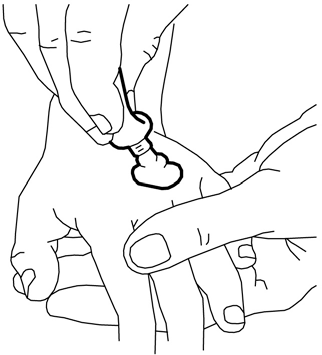
Hands applying a dressing to a mound of cream on the skin with visible application
  • 2. Peel off the paper layer from the middle window of the non-adhesive side of the dressing (leaving the paper frame).
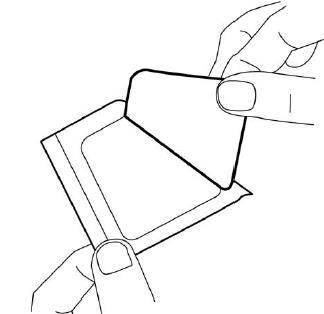
Two hands peeling off the paper layer from the dressing
  • 3. Remove the top layer of the adhesive dressing.

Hand removing the top layer of the adhesive dressing
  • 4. Carefully place the dressing over the mound of cream. Do not spread the cream under the dressing.
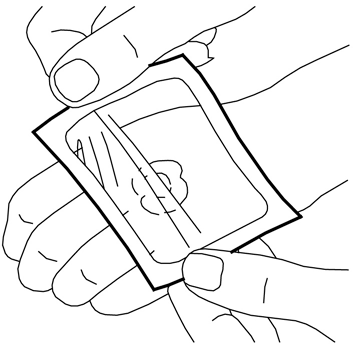
Hands placing the dressing over the mound of cream on the skin
  • 5. Remove the paper stiffener. Carefully smooth the edges of the dressing. Then, leave the dressing on for at least 60 minutes if the skin is not damaged. The cream should not be left on for more than 60 minutes in children under 3 months of age or more than 30 minutes in children with atopic dermatitis. When applying the cream to the genital area or ulcers, shorter application times can be used as described below.
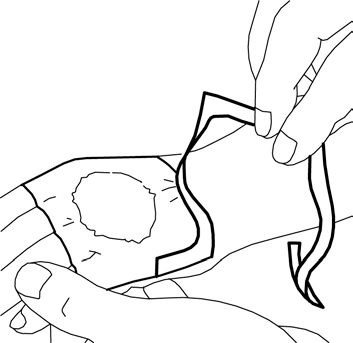
Hand removing the paper stiffener from the dressing attached to the skin
  • 6. The doctor or nurse will remove the dressing and remove the cream immediately before the medical procedure (e.g., before inserting the needle).
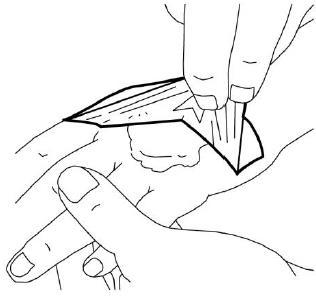
Hand removing the corner of the dressing from the application site on the skin

Using EMLA on larger areas of freshly shaved skin before procedures in outpatient settings (such as hair removal):

Usually, the dose of EMLA used is 1 g of cream per 10 cm² (10 square centimeters) of skin surface, applied for 1 to 5 hours under a dressing. EMLA should not be used on an area of freshly shaved skin larger than 600 cm² (600 square centimeters, e.g., 30 cm x 20 cm). The maximum dose is 60 g.

Using EMLA on the skin before procedures in a hospital setting (e.g., before a skin transplant of intermediate thickness), which require deeper skin anesthesia:

  • EMLA can be used in this way in adults and adolescents over 12 years old.
  • Usually, the dose used is 1.5 g to 2 g of cream per 10 cm² (10 square centimeters) of skin surface.
  • The cream is applied and covered with a dressing for 2 to 5 hours.

Using EMLA on the skin before removing wart-like lesions

  • EMLA can be used in children and adolescents with atopic dermatitis.
  • Usually, the dose used depends on the child's age and is applied for 30 to 60 minutes (30 minutes in patients with atopic dermatitis). The doctor, nurse, or pharmacist will inform the patient about the amount of cream to be used.

Using EMLA on the genital skin before injecting local anesthetics

  • EMLA can be used in this way only in adults and adolescents over 12 years old.
  • Usually, the dose used is 1 g of cream (1 g to 2 g in the case of genital skin in women) per 10 cm² (10 square centimeters) of skin surface.
  • The cream is applied and covered with a dressing. The dressing is left on for 15 minutes in men and 60 minutes in women.

on the genital skin.

Using EMLA on the genital skin before minor surgical procedures on the skin (such as removing warts)

  • EMLA can be used in this way only in adults and adolescents over 12 years old.
  • Usually, the dose used is 5 g to 10 g of cream for 10 minutes. No dressing is used. The procedure should be started immediately after.

Using EMLA on ulcers on the lower limbs before debridement or removal of damaged skin

  • Usually, the dose used is 1 g to 2 g of cream per 10 cm² (10 square centimeters) of skin surface and no more than 10 g.
  • The cream is applied and covered with a tight dressing, e.g., plastic foil. The cream and dressing are applied 30 to 60 minutes before the debridement procedure. The cream should be removed with a cotton swab and the debridement started immediately.
  • EMLA can be used before debridement of ulcers on the lower limbs up to 15 times over a period of 1-2 months.
  • When using the cream on ulcers on the lower limbs, the EMLA tube should be used as a single-use product: after each use of the cream in the patient, the tube with the remaining amount of cream should be discarded.

Using a larger dose of EMLA than recommended

If a larger amount of EMLA than recommended by the doctor, pharmacist, or nurse is used, they should be contacted immediately, even if the patient does not feel any discomfort.
Problems and discomfort that may occur after using too much EMLA are listed below. These discomforts should not occur when using EMLA as directed.

  • Feeling of "emptiness" in the head or dizziness.
  • Numbness or tingling of the skin around the mouth and tongue.
  • Disturbed sense of taste.
  • Blurred vision.
  • Ringing in the ears.
  • There is also a risk of methemoglobinemia (a problem with the concentration of a blood pigment). This is more likely if the patient is taking certain other medications. In this case, the skin becomes blue-gray due to insufficient oxygen in the blood.

In severe cases of overdose, symptoms such as seizures, decreased blood pressure, decreased breathing rate, respiratory arrest, and abnormal heart rhythm may occur. These problems can be life-threatening.
If you have any further doubts about using this medicine, you should consult your doctor, pharmacist, or nurse.

4. Possible side effects

Like all medicines, EMLA can cause side effects, although not everybody gets them.
If the patient experiences any side effects, including any not listed in this leaflet, they should tell their doctor or pharmacist. See section 4.

  • Local reactions (pallor or redness of the skin, slight swelling, initial burning or itching sensation) are common reactions to the cream and anesthetics, which disappear after a short time without the need for any medical intervention.

If the patient experiences any worrying or unusual reactions or effects while using EMLA, they should stop using it and contact their doctor or pharmacist as soon as possible.
Common(may affect up to 1 in 10 people)

  • Transient local skin reactions (pallor, redness, swelling) at the site of application during use on the skin, mucous membrane of the genital organs, or ulcers on the lower limbs.
  • Initial mild burning sensation, itching, or warmth at the site of application during use on the mucous membrane of the genital organs or ulcers on the lower limbs.

Uncommon(may affect up to 1 in 100 people)

  • Initial mild burning sensation, itching, or warmth at the site of application during use on the skin.
  • Numbness (tingling) at the site of application during use on the mucous membrane of the genital organs.
  • Irritation of the skin at the site of application during use on ulcers on the lower limbs.

Rare(may affect up to 1 in 1,000 people)

  • Allergic reactions, which in rare cases can lead to anaphylactic shock (skin rash, swelling, fever, difficulty breathing, and fainting) during use on the skin, mucous membrane of the genital organs, or ulcers on the lower limbs.
  • Methemoglobinemia (a blood disorder) during use on the skin.
  • Minor pinpoint bleeding (petechiae) at the site of application (especially in children with eczema after longer application time) during use on the skin.
  • Irritation of the eyes if the cream accidentally comes into contact with the eyes during use on the skin.

Frequency not known(cannot be estimated from the available data):

  • Chemical burns to the eyes if the cream accidentally comes into contact with the eyes during treatment.

Additional side effects in children

Methemoglobinemia, a blood disorder, which is more often observed in children, often in connection with overdose in newborns and infants from 0 to 12 months of age.

Reporting side effects

If side effects occur, including any not listed in this leaflet, the patient should tell their doctor or pharmacist. Side effects can be reported directly to the Department of Monitoring of Adverse Reactions to Medicinal Products, Office for Registration of Medicinal Products, Medical Devices, and Biocidal Products, Al. Jerozolimskie 181C, 02-222 Warsaw, tel.: +48 22 49 21 301, fax: +48 22 49 21 309, website: https://smz.ezdrowie.gov.pl.
By reporting side effects, more information can be collected on the safety of the medicine.

5. How to store EMLA

The medicine should be stored out of sight and reach of children.
Do not freeze. Store the tube tightly closed.
Do not use this medicine after the expiry date stated on the packaging. The expiry date refers to the last day of the month.
Medicines should not be disposed of via wastewater or household waste. You should ask your pharmacist how to dispose of medicines that are no longer needed. This will help protect the environment.

6. Contents of the packaging and other information

What EMLA contains

  • The active substances of EMLA are lidocaine and prilocaine. 1 g of cream contains 25 mg of lidocaine and 25 mg of prilocaine.
  • EMLA also contains macrogolglycerol hydroxystearate, carbomers, sodium hydroxide (to adjust pH), and purified water.

What EMLA looks like and what the pack contains

White, homogeneous cream.
EMLA is packaged in an aluminum tube with a membrane coated with a protective epoxy lacquer and a polypropylene cap with a piercer, in a cardboard box.
EMLA is available in packaging:
1 tube containing 5 g of cream and 2 dressings in a cardboard box.
For more detailed information, you should contact the marketing authorization holder or parallel importer.

Marketing authorization holder in Belgium, the country of export:

Aspen Pharma Trading Limited
3016 Lake Drive
Citywest Business Campus
Dublin 24, Ireland

Manufacturer:

Aspen Bad Oldesloe GmbH
32-36 Industriestrasse, 23843 Bad Oldesloe, Germany
AstraZeneca AB
Astraallén, Gärtunaporten (B 674:5), SE-151 85 Södertälje, Sweden
Recipharm Karlskoga AB
Bjorkbornsvagen 5, SE-691 33 Karlskoga, Sweden
AstraZeneca UK Limited
Silk Road Business Park, Macclesfield, Cheshire, SK10 2NA, United Kingdom
AstraZeneca GmbH
Tinsdaler Weg 183, DE-22880, Germany

Parallel importer:

InPharm Sp. z o.o.
ul. Strumykowa 28/11
03-138 Warsaw

Repackaged by:

InPharm Sp. z o.o. Services sp. k.
ul. Chełmżyńska 249
04-458 Warsaw
Marketing authorization number in Belgium, the country of export:BE177055

Parallel import authorization number: 125/24

This medicinal product is authorized in the Member States of the European Economic Area under the following names:

Austria
Emla 5% - Creme
Belgium
Emla 25mg/25mg crème
Cyprus
Emla Cream 5%
Finland
EMLA
France
EMLA 5 POUR CENT, crème
Greece
EMLA
Iceland
Emla
Ireland
EMLA 5% w/w Cream
Italy
EMLA
Luxembourg
Emla 25mg/25mg crème
Malta
EMLA 5% w/w Cream
Norway
Emla
Poland
EMLA
Spain
EMLA 25 mg/g + 25 mg/g crema
Sweden
EMLA
Netherlands
Emla

Date of approval of the leaflet: 20.03.2024

[Information about the trademark]

  • Country of registration
  • Active substance
  • Prescription required
    Yes
  • Marketing authorisation holder (MAH)
    Aspen Pharma Trading Limited
  • Alternatives to Emla
    Dosage form: Plaster, 25 mg + 25 mg
    Active substance: combinations
    Prescription not required
    Dosage form: Plaster, 25 mg + 25 mg
    Active substance: combinations
    Prescription not required
    Dosage form: Plaster, 25 mg + 25 mg
    Active substance: combinations
    Prescription not required

Alternatives to Emla in other countries

The best alternatives with the same active ingredient and therapeutic effect.

Alternative to Emla in Spain

Dosage form: TOPICAL SOLUTION, 150 mg/ml + 50 mg/ml
Active substance: combinations
Prescription not required
Dosage form: TOPICAL ORAL PRODUCT, 2.5% lidocaine; 2.5% prilocaine
Active substance: combinations
Manufacturer: Dentsply De Trey Gmbh
Prescription required
Dosage form: CREAM, Lidocaine 25 mg/g + Prilocaine 25 mg/g
Active substance: combinations
Prescription required
Dosage form: CREAM, 25 mg/g + 25 mg/g
Active substance: combinations
Manufacturer: Galenicum Derma S.L.U.
Prescription required
Dosage form: CREAM, 25 mg lidocaine; 25 mg prilocaine/ g
Active substance: combinations
Prescription required
Dosage form: CREAM, 25 mg/g + 25 mg/g
Active substance: combinations
Prescription required

Alternative to Emla in Ukraine

Dosage form: cream, 5 g in a tube
Active substance: combinations

Online doctors for Emla

Discuss dosage, side effects, interactions, contraindications, and prescription renewal for Emla – subject to medical assessment and local rules.


5.0(7)
Doctor

Tarek Agami

General medicine10 years of experience

Dr. Tarek Agami is a general practitioner registered in both Portugal and Israel, with broad experience in family and preventive medicine. He offers online consultations for adults and children, providing personalised support for primary care needs, chronic disease management, and everyday health concerns.

Dr. Agami received clinical training and worked in leading medical institutions in Israel (Kaplan Medical Center, Barzilai Medical Center, Wolfson Medical Center) and Portugal (European Healthcare City, Viscura Internacional, Hospital Dr. José Maria Grande, Hospital Vila Franca de Xira). His approach combines international medical standards with individualised attention to each patient.

Main areas of consultation:

  • Diagnosis and treatment of acute and chronic conditions (high blood pressure, diabetes, respiratory infections, cardiovascular symptoms)
  • Evaluation of symptoms and guidance on further diagnostic testing
  • Preventive check-ups and regular health monitoring
  • Medical support during travel or after relocation
  • Treatment adjustments and lifestyle recommendations based on your personal history
Dr. Agami provides medical support for patients using GLP-1 medications (such as Ozempic or Mounjaro) as part of a weight loss strategy. He offers individualised treatment planning, regular follow-up, dose adjustment, and advice on combining medication with sustainable lifestyle changes. Consultations follow the medical standards accepted in Portugal and Israel.

Dr. Agami is committed to evidence-based, patient-centred care, ensuring that each person receives trusted medical support tailored to their health goals.

CameraBook a video appointment
€69
Today14:35
Today15:00
Today15:25
Today15:50
Today16:15
More times
0.0(0)
Doctor

Abdullah Alhasan

General medicine10 years of experience

Dr. Abdullah Alhasan is a physician specialising in cardiology and general medicine, with international clinical experience and a commitment to evidence-based care. He offers online consultations for adults, focusing on both acute symptoms and long-term health management.

Main areas of consultation:

  • Chest pain, shortness of breath, heart palpitations, high blood pressure
  • Hypertension control and cardiovascular disease prevention
  • Interpretation of ECG, blood tests, and Holter monitor results
  • Management of heart failure and coronary artery disease
  • General medical issues: infections, fever, fatigue, gastrointestinal symptoms
  • Guidance on diagnostics, treatment plans, and medication adjustments
Dr. Alhasan’s approach is based on thorough assessment, clear communication, and personalised care – helping patients understand their health and make informed decisions about their treatment.
CameraBook a video appointment
€69
Today14:35
Today14:50
Today15:05
Today15:20
Today15:35
More times
5.0(11)
Doctor

Duarte Meneses

Family medicine4 years of experience

Dr. Duarte Meneses is a licensed family medicine and general practice doctor based in Portugal, with additional expertise in occupational health. He provides online consultations for adults, offering medical support for both acute symptoms and chronic health conditions.

  • Common symptoms such as fever, sore throat, cough, fatigue, or digestive issues
  • Chronic conditions including hypertension, diabetes, high cholesterol, and thyroid problems
  • Mental health concerns such as stress, sleep issues, anxiety, and burnout
  • Preventive care: health check-ups, lifestyle advice, and follow-up for existing conditions
  • Work-related health questions, sick leave documentation, and medical guidance for returning to work
Dr. Meneses graduated from the University of Beira Interior and has years of experience working with diverse patient populations. He is fluent in Portuguese, English, Spanish, and French.

His approach is friendly, clear, and focused on delivering practical medical advice tailored to each patient’s needs.

CameraBook a video appointment
€65
Today14:35
Today15:00
Today15:25
Today15:50
Today16:15
More times
5.0(2)
Doctor

Ngozi Precious Okwuosa

General medicine5 years of experience

Dr. Ngozi Precious Okwuosa is a Primary Care Physician with over 5 years of clinical experience in Hungary, Sweden, and Nigeria. A graduate of the University of Szeged (cum laude), she offers online consultations for adults in the areas of internal medicine, women’s health, and postoperative care.

Key areas of consultation:

  • Preventive and family medicine
  • Women’s health, including gynaecology and obstetrics
  • Chronic disease management: hypertension, diabetes, and more
  • Mental health support, anxiety, and counselling
  • Postoperative care and lab test interpretation
She has conducted research on the genetic background of stroke and is skilled in communicating with patients from diverse cultural backgrounds. Her approach combines clinical expertise with empathy and clear communication.
CameraBook a video appointment
€50
Today14:35
Today15:25
Today16:15
Today17:05
Today17:55
More times
5.0(30)
Doctor

Sergio Correa

General medicine7 years of experience

Dr. Sergio Correa is a licensed general practitioner, aesthetic medicine specialist, and trichologist with experience in emergency care and preventive health. He offers online consultations in English and Spanish, supporting adult patients with a wide range of medical concerns – from acute symptoms to chronic condition management.

His areas of focus include:

  • General and urgent care: fever, fatigue, infections, digestive issues, respiratory symptoms, and other common concerns
  • Chronic condition support: hypertension, high cholesterol, diabetes, thyroid issues
  • Aesthetic medicine and dermatology: acne, skin ageing, hyperpigmentation, personalised skincare guidance
  • Trichology: hair loss, scalp conditions, treatment strategies for men and women
  • Preventive care: health check-ups, lifestyle advice, second opinions

Dr. Correa combines medical knowledge with an aesthetic and holistic approach to help patients improve both health and quality of life.

CameraBook a video appointment
€40
Today14:50
Today15:50
Today16:50
Today17:50
Today18:50
More times
0.0(0)
Doctor

Tomasz Grzelewski

Dermatology20 years of experience

Dr Tomasz Grzelewski is an MD, PhD specialist in allergy, paediatrics, general practice and sports medicine, with a clinical focus on dermatology, endocrinology, allergology and sports-related health. He has more than 20 years of clinical experience and completed his medical training at the Medical University of Łódź, where he defended his PhD thesis with distinction. His doctoral research was recognised by the Polish Society of Allergology for its innovative contribution to the field. Throughout his career, he has gained extensive expertise in diagnosing and managing a wide range of allergic and paediatric conditions, including modern allergen desensitisation techniques.

For five years, Dr Grzelewski served as the Head of two paediatric departments in Poland, managing complex clinical cases and leading multidisciplinary teams. He also worked in medical centres in the United Kingdom, gaining experience across both primary care and specialist environments. With over a decade of telemedicine experience, he has provided online consultations across Europe and is valued for his clear, structured and evidence-based medical guidance.

Dr Grzelewski is actively involved in clinical programmes focused on modern anti-allergic therapies. As a Principal Investigator, he leads research projects on sublingual and oral allergen desensitisation, supporting evidence-based progress in allergy treatment for both children and adults.

In addition to his background in allergology and paediatrics, he completed dermatology studies through the Cambridge Education Group (Royal College of Physicians of Ireland) and a Clinical Endocrinology course at Harvard Medical School. This advanced training enhances his ability to manage skin manifestations of allergies, atopic conditions, urticaria, endocrine-related symptoms and complex immunological reactions.

Patients commonly seek his care for:

  • seasonal and perennial allergies
  • allergic rhinitis and chronic nasal symptoms
  • asthma and breathing difficulties
  • food and medication allergies
  • urticaria, atopic dermatitis and skin reactions
  • recurrent infections in children
  • sports-related health questions
  • general family medicine concerns
Dr Tomasz Grzelewski is known for his clear communication style, structured medical approach and ability to explain treatment options in a concise and accessible way. His multidisciplinary background across allergy, paediatrics, dermatology and endocrinology allows him to provide safe, up-to-date and comprehensive care for patients of all ages.
CameraBook a video appointment
€80
Today14:50
Today15:15
Today15:40
Today16:05
Today16:30
More times
0.0(0)
Doctor

Hocine Lokchiri

General medicine20 years of experience

Dr. Hocine Lokchiri is a French consultant with over 20 years of experience in General and Emergency Medicine. He works with adults and children, helping patients with urgent symptoms, infections, sudden health changes and everyday medical concerns that require timely evaluation. His background includes clinical practice in France, Switzerland and the United Arab Emirates, which allows him to navigate different healthcare systems and manage a wide range of conditions with confidence. Patients value his calm, structured approach, clear explanations and evidence-based decision-making.

Online consultations with Dr. Lokchiri are suitable for many situations when someone needs quick medical guidance, reassurance or a clear next step. Common reasons for booking include:

  • fever, chills, fatigue and viral symptoms
  • cough, sore throat, nasal congestion, breathing discomfort
  • bronchitis and mild asthma flare-ups
  • nausea, diarrhoea, abdominal pain, digestive infections
  • rashes, allergic reactions, redness, insect bites
  • muscle or joint pain, mild injuries, sprains
  • headache, dizziness, migraine symptoms
  • stress-related symptoms, sleep disturbances
  • questions about test results and treatment plans
  • management of chronic conditions in stable phases
Many patients reach out when symptoms appear suddenly and cause concern, when a child becomes unwell unexpectedly, when a rash changes or spreads, or when it’s unclear whether an in-person examination is necessary. His emergency medicine background is particularly valuable online, helping patients understand risk levels, identify warning signs and choose safe next steps.

Some situations are not suitable for online care. If a patient has loss of consciousness, severe chest pain, uncontrolled bleeding, seizures, major trauma or symptoms suggesting a stroke or heart attack, he will advise seeking immediate local emergency services. This improves safety and ensures patients receive the right level of care.

Dr. Lokchiri’s professional training includes:

  • Advanced Trauma Life Support (ATLS)
  • Basic and Advanced Cardiac Life Support (BLS/ACLS)
  • Pediatric Advanced Life Support (PALS)
  • Prehospital Trauma Life Support (PHTLS)
  • eFAST and critical care transthoracic echocardiography
  • aviation medicine
He is an active member of several professional organisations, including the French Society of Emergency Medicine (SFMU), the French Association for Emergency Physicians (AMUF) and the Swiss Society of Emergency and Rescue Medicine (SGNOR). In consultations, he works with clarity and precision, helping patients understand their symptoms, possible risks and the safest treatment options.
CameraBook a video appointment
€58
Today15:45
Today17:00
Today18:15
Today19:00
December 1909:30
More times
5.0(142)
Doctor

Andrei Popov

General medicine6 years of experience

Dr. Andrei Popov is a licensed pain management specialist and general practitioner based in Spain. He provides expert online care for adults dealing with both chronic and acute pain, as well as a wide range of everyday health concerns.

He specialises in diagnosing and treating pain conditions that affect quality of life, including:

  • Chronic pain lasting more than 3 months.
  • Migraines and recurring headaches.
  • Neck, back, lower back, and joint pain.
  • Post-traumatic pain following injury or surgery.
  • Nerve-related pain, fibromyalgia, and neuralgia.
In addition to pain management, Dr. Popov helps patients with:
  • Respiratory infections (colds, bronchitis, pneumonia).
  • High blood pressure and metabolic conditions such as diabetes.
  • Preventive care and routine health check-ups.

Online consultations last up to 30 minutes and include a detailed symptom review, personalised treatment planning, and medical follow-up when needed.

Dr. Popov’s approach is rooted in evidence-based medicine, combined with individualised care tailored to each patient’s history, lifestyle, and clinical needs.

CameraBook a video appointment
€80
Today16:00
Today16:30
Today17:00
Today17:30
Today18:00
More times
5.0(17)
Doctor

Jonathan Marshall Ben Ami

Family medicine8 years of experience

Dr. Jonathan Marshall Ben Ami is a licensed family medicine doctor in Spain. He provides comprehensive care for adults and children, combining general medicine with emergency care expertise to address both acute and chronic health concerns.

Dr. Ben Ami offers expert diagnosis, treatment, and follow-up for:

  • Respiratory infections (cold, flu, bronchitis, pneumonia).
  • ENT conditions such as sinusitis, ear infections, and tonsillitis.
  • Digestive issues including gastritis, acid reflux, and irritable bowel syndrome (IBS).
  • Urinary tract infections and other common infections.
  • Management of chronic diseases: high blood pressure, diabetes, thyroid disorders.
  • Acute conditions requiring urgent medical attention.
  • Headaches, migraines, and minor injuries.
  • Wound care, health check-ups, and ongoing prescriptions.

With a patient-focused and evidence-based approach, Dr. Ben Ami supports individuals at all stages of life — offering clear medical guidance, timely interventions, and continuity of care.

CameraBook a video appointment
€55
Today16:20
Today17:05
Today17:50
December 1915:30
December 1916:15
More times
5.0(39)
Doctor

Yevgen Yakovenko

General surgery11 years of experience

Dr. Yevgen Yakovenko is a licensed surgeon and general practitioner in Spain and Germany. He specialises in general, paediatric, and oncological surgery, internal medicine, and pain management. He offers online consultations for adults and children, combining surgical precision with therapeutic support. Dr Yakovenko works with patients across different countries and provides care in Ukrainian, Russian, English, and Spanish.

Areas of medical expertise:

  • Acute and chronic pain: headaches, muscle and joint pain, back pain, abdominal pain, postoperative pain. Identifying the cause, selecting treatment, and creating a care plan.
  • Internal medicine: heart, lungs, gastrointestinal tract, urinary system. Management of chronic conditions, symptom control, second opinions.
  • Pre- and postoperative care: risk assessment, decision-making support, follow-up after surgery, rehabilitation strategies.
  • General and paediatric surgery: hernias, appendicitis, congenital conditions, both planned and urgent surgeries.
  • Injuries and trauma: bruises, fractures, sprains, soft tissue damage, wound care, dressing, referral when in-person care is required.
  • Oncological surgery: diagnosis review, treatment planning, and long-term follow-up.
  • Obesity treatment and weight management: a medical approach to weight loss, including assessment of underlying causes, evaluation of comorbidities, development of a personalised plan (nutrition, physical activity, pharmacotherapy if needed), and ongoing progress monitoring.
  • Imaging interpretation: analysis of ultrasound, CT, MRI, and X-ray results, surgical planning based on imaging data.
  • Second opinions and medical navigation: clarifying diagnoses, reviewing current treatment plans, helping patients choose the best course of action.

Experience and qualifications:

  • 12+ years of clinical experience in university hospitals in Germany and Spain.
  • International education: Ukraine – Germany – Spain.
  • Member of the German Society of Surgeons (BDC).
  • Certified in radiological diagnostics and robotic surgery.
  • Active participant in international medical conferences and research.

Dr Yakovenko explains complex topics in a clear, accessible way. He works collaboratively with patients to analyse health issues and make evidence-based decisions. His approach is grounded in clinical excellence, scientific accuracy, and respect for each individual.

If you are unsure about a diagnosis, preparing for surgery, or want to discuss your test results – Dr Yakovenko will help you evaluate your options and move forward with confidence.

CameraBook a video appointment
€50
Today16:20
Today17:00
Today17:40
Today18:20
Today19:00
More times

Get updates and exclusive offers

Be the first to know about new services, marketplace updates, and subscriber-only promos.

Follow us on social media
FacebookInstagram
Logo
Oladoctor
Find a doctor
Doctors by specialty
Services
Choose language
© 2025 Oladoctor. All rights reserved.
VisaMastercardStripe