


FIRAZYR 30 mg SOLUTION FOR INJECTION IN PRE-FILLED SYRINGE
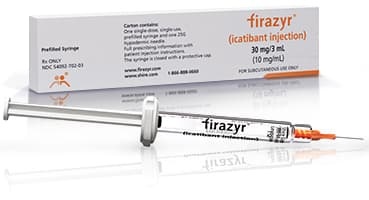



How to use FIRAZYR 30 mg SOLUTION FOR INJECTION IN PRE-FILLED SYRINGE
Translated with AI
This page provides general information and does not replace a doctor’s consultation. Always consult a doctor before taking any medication. Seek urgent medical care if symptoms are severe.
Show originalContents of the leaflet
Introduction
Package Leaflet: Information for the User
Firazyr 30 mg solution for injection in pre-filled syringe
Icatibant
Read all of this leaflet carefully before you start using this medicine because it contains important information for you.
- Keep this leaflet, you may need to read it again.
- If you have any further questions, ask your doctor or pharmacist.
- This medicine has been prescribed for you only. Do not pass it on to others. It may harm them, even if their signs of illness are the same as yours.
- If you get any side effects, talk to your doctor or pharmacist. This includes any possible side effects not listed in this leaflet. See section 4.
Contents of the pack and other information
- What is Firazyr and what is it used for
- What you need to know before you use Firazyr
- How to use Firazyr
- Possible side effects
- Storage of Firazyr
- Contents of the pack and other information

1. What is Firazyr and what is it used for
Firazyr contains the active substance icatibant.
Firazyr is used to treat the symptoms of hereditary angioedema (HAE) in adults, adolescents and children aged 2 years and above.
In HAE, the levels of a substance in the blood called bradykinin increase, leading to symptoms such as swelling, pain, nausea and diarrhoea.
Firazyr blocks the action of bradykinin and therefore slows down the progression of the symptoms of an HAE attack.
2. What you need to know before you use Firazyr
Do not use Firazyr
- If you are allergic to icatibant or any of the other ingredients of this medicine (listed in section 6).
Warnings and precautions
Consult your doctor before starting treatment with Firazyr:
- If you have coronary heart disease (reduced blood flow to the heart).
- If you have recently had a stroke.
The side effects related to Firazyr are similar to the symptoms of your own illness.
Consult your doctor immediately if you notice that the symptoms of the attack worsen after you have been given Firazyr.
Also:
- You or your carer must learn the technique of administering subcutaneous injections (under the skin) before you self-administer or your carer administers Firazyr to you.
- Immediately after self-administering Firazyr or after your carer has administered it to you while you are experiencing a laryngeal attack (obstruction of the upper airway), you should seek medical attention at a medical institution.
- If your symptoms do not resolve after a self-administered injection of Firazyr or after an injection administered by your carer, you should consult your doctor about the administration of additional injections of Firazyr. In adult patients, up to 2 additional injections can be administered within 24 hours.
Children and adolescents
Firazyr is not recommended for use in children below 2 years of age or weighing less than 12 kg because it has not been studied in these patients.
Other medicines and Firazyr
Tell your doctor if you are taking, have recently taken or might take any other medicines.
No interactions of Firazyr with other medicines are known. If you are taking a medicine that is an angiotensin-converting enzyme inhibitor (e.g. captopril, enalapril, ramipril, quinapril, lisinopril) to lower your blood pressure or for any other reason, inform your doctor before using Firazyr.
Pregnancy and breast-feeding
If you are pregnant or breast-feeding, think you may be pregnant or are planning to have a baby, ask your doctor for advice before taking this medicine.
If you are breast-feeding, you should not breast-feed your child for 12 hours after the last administration of Firazyr.
Driving and using machines
Do not drive or use machines if you feel tired or dizzy as a result of the HAE attack or after using Firazyr.
Firazyr contains a small amount of sodium
This medicine contains less than 23 milligrams (1 mmol) of sodium per syringe, and is therefore essentially ‘sodium-free’.

3. How to use Firazyr
Follow the instructions for administration of this medicine exactly as told by your doctor. If you are not sure, ask your doctor again.
If you have never been administered Firazyr before, the first dose must always be injected by medical or nursing staff. Your doctor will discharge you when they consider it safe for you to go home. After discussing with your doctor or nurse and learning the technique for subcutaneous injections (under the skin), you or your carer can administer Firazyr to you if you have an HAE attack. It is important to inject Firazyr subcutaneously (under the skin) as soon as you notice an angioedema attack. The healthcare staff will teach you and your carer how to inject Firazyr safely, following the instructions in the leaflet.
When and how often should you use Firazyr?
Your doctor has determined the exact dose of Firazyr and will tell you how often to use it.
Adults
- The recommended dose of Firazyr is one injection (3 ml, 30 mg) administered subcutaneously (under the skin) as soon as you notice the angioedema attack (e.g. with increased skin swelling, especially on the face and neck, or increased abdominal pain).
- If you do not notice an improvement in symptoms after 6 hours, you should seek medical advice about the administration of additional injections of Firazyr. In adults, up to 2 additional injections can be administered within 24 hours.
- You should not receive more than 3 injections in a 24-hour period and if you need more than 8 injections in a month, you should seek medical advice.
Children and adolescents from 2 to 17 years
- The recommended dose of Firazyr is an injection of 1 ml up to a maximum of 3 ml based on body weight, administered subcutaneously (under the skin) as soon as symptoms of an angioedema attack appear (e.g. increased skin swelling, especially on the face and neck, or increased abdominal pain).
- Refer to the section on instructions for use to see the dose you should inject.
- If you are unsure about the dose to inject, consult your doctor, pharmacist or nurse.
- If your symptoms worsen or do not improve, you should seek medical advice immediately.
How should Firazyr be administered?
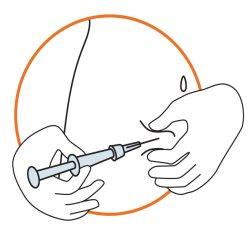
Firazyr is administered by subcutaneous injection (under the skin). Each syringe should only be used once.
Firazyr is injected with a short needle into the fatty tissue under the skin of the abdomen (tummy).
If you have any other questions about the use of this medicine, ask your doctor or pharmacist.
The following step-by-step instructions are intended for:
- self-administration (adults)
- administration by a carer or healthcare professional for adults, adolescents or children over 2 years (weighing at least 12 kg).
The instructions include the following main steps:
- General information
2a) Preparation of the syringe for children and adolescents (2-17 years) weighing 65 kg or less
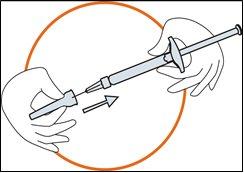
2b) Preparation of the syringe and needle for injection (all patients)
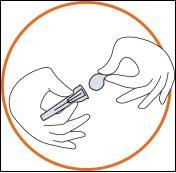
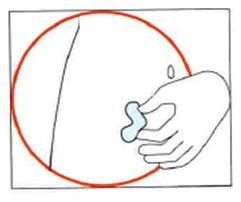
- Preparation of the injection site
- Injection of the solution
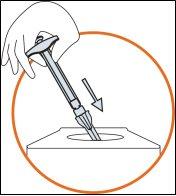
- Disposal of the injection materials
Step-by-step instructions for injection
- General information
- Clean the work surface (area) before you start the process.
- Wash your hands with water and soap
- Open the tray by removing the seal
- Remove the pre-filled syringe from the tray
- Unscrew and remove the cap from the end of the pre-filled syringe
- Leave the pre-filled syringe once the cap has been unscrewed
2a) Preparation of the syringe for children and adolescents (2-17 years) weighing 65 kg or less: | ||||||||||||
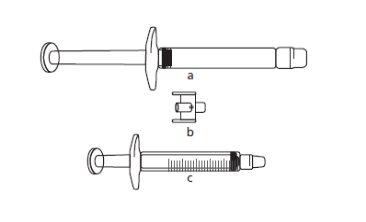
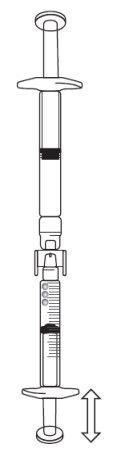
Important information for healthcare professionals and carers: When the dose is less than 30 mg (3 ml), the following equipment is needed to extract the correct dose (see information below):
The required injection volume in ml should be prepared in an empty 3 ml graduated syringe (see table below). Table 1: Dosage schedule for children and adolescents
Patients weighing more than 65 kgwill use the entire contents of the pre-filled syringe (3 ml). If you are unsure about the volume of solution to extract, consult your doctor, pharmacist or nurse
Avoid touching the ends of the connector and the tips of the syringes to prevent contamination
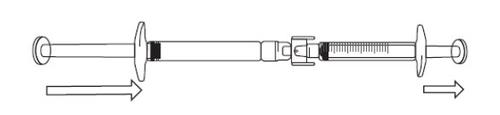
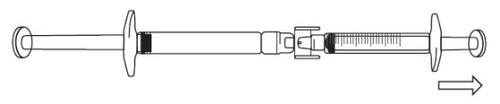
Transfer the icatibant solution to the graduated syringe:
If there is air in the graduated syringe:
| ||||||||||||
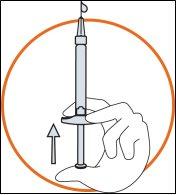
2b) Preparation of the syringe and needle for injection: All patients (adults, adolescents and children) | ||||||||||||
|

|
|
|
|
|
|
|
4. Possible side effects
Like all medicines, Firazyr can cause side effects, although not everybody gets them. Almost all patients who receive Firazyr notice a reaction at the injection site (such as skin irritation, inflammation, pain, itching, redness of the skin and burning). These effects are usually mild and improve without the need for any additional treatment.
Very common (may affect more than 1 in 10 people) are:
Additional reactions at the injection site (feeling of pressure, bruising, decreased sensitivity and/or numbness, increased skin rash with itching and heat).
Common (may affect up to 1 in 10 people) are:
Nausea
Headache
Dizziness
Fever
Itching
Rash
Redness of the skin
Abnormal liver function tests
Frequency not known (cannot be estimated from the available data):
Hives (urticaria)
Tell your doctor immediately if you notice that the symptoms of the attack worsen after you have been given Firazyr.
If you experience side effects, talk to your doctor or pharmacist. This includes any possible side effects not listed in this leaflet.
Reporting of side effects
If you get any side effects, talk to your doctor or pharmacist. This includes any possible side effects not listed in this leaflet. You can also report side effects directly via the national reporting system listed in Appendix V. By reporting side effects, you can help provide more information on the safety of this medicine.
5. Storage of Firazyr
Keep this medicine out of the sight and reach of children.
Do not use this medicine after the expiry date which is stated on the carton after “EXP”. The expiry date refers to the last day of that month.
Do not store above 25°C. Do not freeze.
Do not use this medicine if you notice that the syringe or needle packaging is damaged or if you notice visible signs of deterioration, e.g. if the solution is cloudy, contains particles or has changed colour.
Medicines should not be disposed of via wastewater or household waste. Ask your pharmacist how to dispose of medicines no longer required. This will help protect the environment.
6. Package Contents and Additional Information
Composition of Firazyr
The active ingredient is icatibant. Each pre-filled syringe contains 30 milligrams of icatibant (as acetate). The other components are sodium chloride, glacial acetic acid, sodium hydroxide, and water for injectable preparations.
Appearance of Firazyr and Package Contents
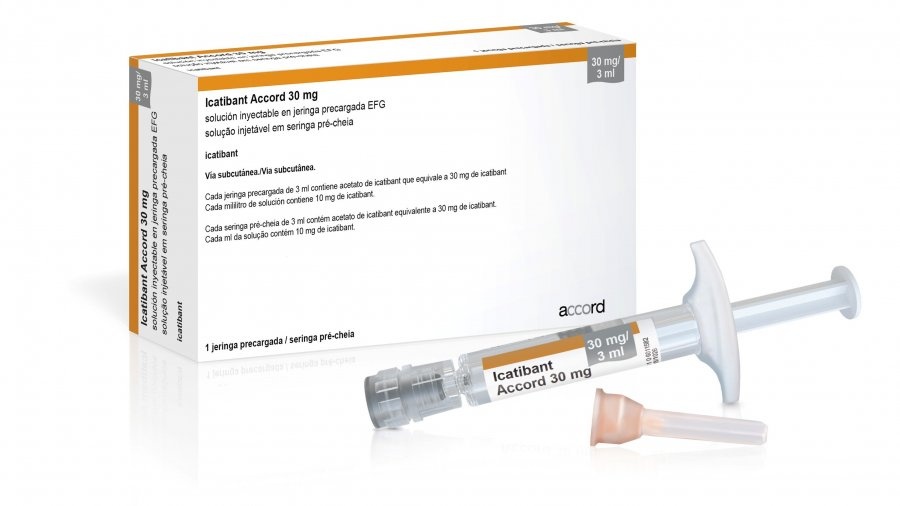
Firazyr is presented as a clear and colorless injectable solution in a 3 ml pre-filled glass syringe.
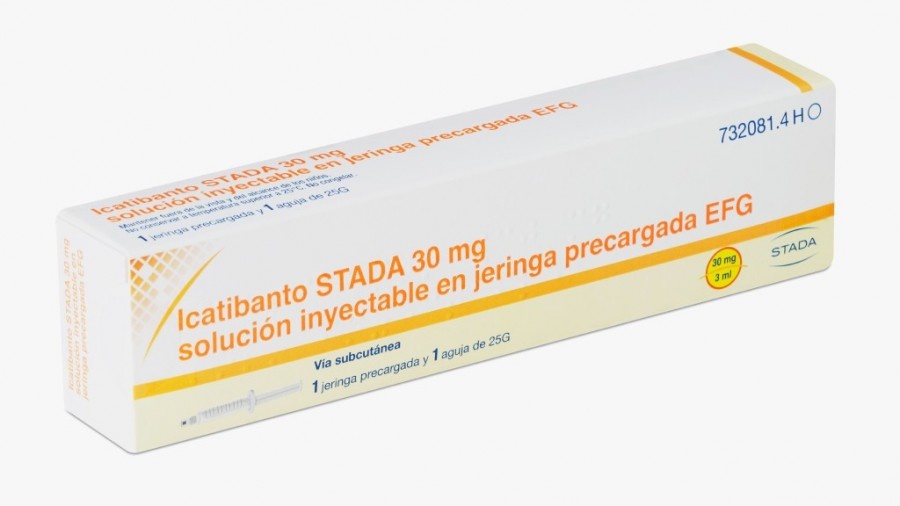
The package contains a hypodermic needle.
Firazyr is available in a single-pack unit of one pre-filled syringe with one needle or in a multi-pack unit of three pre-filled syringes with three needles.
Only some pack sizes may be marketed.
Marketing Authorization Holder
Shire Pharmaceutical Ireland Limited
Block 2 & 3 Miesian Plaza
50 – 58 Baggot Street Lower
Dublin 2
D02 Y754, Ireland
Tel: +44(0)1256 894 959 E-mail: [email protected]
Date of the Last Revision of this Leaflet:
Other Sources of Information
Detailed information on this medicinal product is available on the European Medicines Agency website: http://www.ema.europa.eu. It also provides links to other websites on rare diseases and orphan medicines.
- Country of registration
- Dosage formINJECTABLE, 30 mg
- ATC codeB06AC02
- Active substance
- Prescription requiredYes
- Manufacturer
- This information is for reference only and does not constitute medical advice. Always consult a doctor before taking any medication. Oladoctor is not responsible for medical decisions based on this content.
- Alternatives to FIRAZYR 30 mg SOLUTION FOR INJECTION IN PRE-FILLED SYRINGEDosage form: INJECTABLE, 30 mgActive substance: icatibantManufacturer: Accord Healthcare S.L.U.Prescription requiredDosage form: INJECTABLE, 30 mgActive substance: icatibantManufacturer: Laboratoire AguettantPrescription requiredDosage form: INJECTABLE, 30 mgActive substance: icatibantManufacturer: Cipla EuropePrescription required

Online doctors for FIRAZYR 30 mg SOLUTION FOR INJECTION IN PRE-FILLED SYRINGE
Discuss questions about FIRAZYR 30 mg SOLUTION FOR INJECTION IN PRE-FILLED SYRINGE, including use, safety considerations and prescription review, subject to medical assessment and local regulations.







.jpg)



Frequently Asked Questions
