



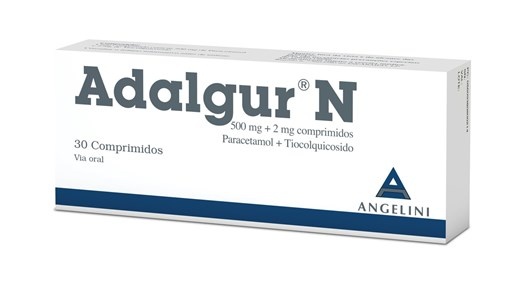
ADALGUR 500 mg/2 mg Tablets

Prescription review online
A doctor will review your case and decide whether a prescription is medically appropriate.

Talk to a doctor about this medicine
Discuss your symptoms and possible next steps in a quick online consultation.



How to use ADALGUR 500 mg/2 mg TABLETS
Contents of the leaflet
- Introduction
- What Adalgur is and what it is used for
- What you need to know before you take Adalgur
- How to take Adalgur
- Possible side effects
- Storage of Adalgur
- Contents of the pack and other information
Introduction
PACKAGE LEAFLET: INFORMATION FOR THE USER
Adalgur500 mg/2 mg tablets
Paracetamol / Tiocolchicoside
Read all of this leaflet carefully before you start taking this medicine, because it contains important information for you.
- Keep this leaflet, as you may need to read it again.
- If you have any further questions, ask your doctor or pharmacist.
- This medicine has been prescribed for you only. Do not pass it on to others. It may harm them, even if their symptoms are the same as yours.
- If you get any side effects, talk to your doctor or pharmacist. This includes any possible side effects not listed in this leaflet. See section 4.
Contents of the pack
- What Adalgur is and what it is used for
- What you need to know before you take Adalgur
- How to take Adalgur
- Possible side effects
- Storage of Adalgur
- Contents of the pack and other information
1. What Adalgur is and what it is used for
Adalgur is an association of an analgesic (to reduce pain) and a muscle relaxant. It is used in adults and adolescents over 16 years of age as an adjunctive treatment for painful muscle contractions. It should be used for acute conditions related to the spine.

Not sure if this medicine is right for you?
Discuss your symptoms and treatment with a doctor online.
2. What you need to know before you take Adalgur
Do not take Adalgur:
- if you are allergic to paracetamol, tiocolchicoside, or any of the other ingredients of this medicine (listed in section 6).
- if you have severe liver disease.
- in case of paralysis or muscle weakness.
- if you have a blood disease called severe hemolytic anemia.
- if you are pregnant, may become pregnant, or think you may be pregnant (see section 2 "Pregnancy, breastfeeding, and fertility").
- if you are breastfeeding (see section 2 "Pregnancy, breastfeeding, and fertility").
- if you are a woman of childbearing age who is not using effective contraceptive methods (during treatment and for one month after stopping treatment).
- if you are a man who does not use effective contraceptive measures (during treatment and for three months after stopping treatment).
Warnings and precautions
Strictly follow the dosage and treatment duration indicated in section 3. Do not take this medicine at high doses or for more than 7 days. This is because one of the products formed in your body when taking tiocolchicoside at high doses can damage some cells (abnormal number of chromosomes). This has been demonstrated in animal studies and laboratory studies. In humans, this type of cellular damage is a risk factor for cancer, fetal damage, and reduced male fertility. Consult your doctor if you have any questions.
Your doctor will inform you about all measures related to effective contraceptive methods and the potential risk of pregnancy.
During treatment with Adalgur, immediately inform your doctor if:
- you have epilepsy or are at risk of seizures, as seizures can occur with the use of this medicine.
- you have chronic alcoholism, as you should be careful not to take more than 2 g/day of paracetamol.
- you have liver or kidney problems, including Gilbert's syndrome (mild jaundice),
- you suffer from chronic malnutrition or are dehydrated
- you have any heart or lung disease or suffer from anemia (reduced hemoglobin levels in the blood, due to or not due to a reduction in red blood cells) or have low levels of an enzyme in the blood called glucose-6-phosphate dehydrogenase.
- you have asthma or have a history of asthma, and/or are sensitive to acetylsalicylic acid.
If you have severe diseases, such as severe renal failure or sepsis (when bacteria and their toxins circulate in the blood, causing damage to organs), or if you suffer from malnutrition, chronic alcoholism, or are also taking flucloxacillin (an antibiotic). A serious disease called metabolic acidosis (an anomaly in the blood and fluids) has been reported in patients in these situations when using paracetamol at regular doses for a prolonged period or when taking paracetamol with flucloxacillin. The symptoms of metabolic acidosis may include: severe breathing difficulties with deep and rapid breathing, drowsiness, feeling unwell (nausea) and vomiting.
Consuming alcoholic beverages can cause paracetamol to damage the liver.
If the pain persists for more than 3 days or worsens or other symptoms appear, treatment should be discontinued and a doctor consulted.
Children and adolescents
This medicine should not be given to children and adolescents under 16 years of age for safety reasons.
Using Adalgur with other medicines
Tell your doctor or pharmacist if you are using, have recently used, or might use any other medicines.
Other medicines and paracetamol
Tell your doctor or pharmacist if you are taking:
- Oral anticoagulants (used to treat thromboembolic diseases)
- Antiepileptics (used to treat epileptic seizures)
- Antibiotics (chloramphenicol)
- Oral contraceptives
- Activated charcoal (used for diarrhea or gas treatment)
- Metoclopramide and domperidone (used to prevent nausea and vomiting)
- Diuretics (used to increase urine elimination)
- Isoniazid (used to treat tuberculosis)
- Lamotrigine (used to treat epilepsy)
- Probenecid (used to treat gout)
- Propranolol (used to treat hypertension, cardiac arrhythmias)
- Rifampicin (used to treat tuberculosis)
- Anticholinergics (used to relieve spasms or contractions of the intestine and bladder)
- Zidovudine (used to treat HIV infections)
- Colestyramine (used to decrease blood cholesterol levels)
- Flucloxacillin (antibiotic), due to a serious risk of blood and fluid anomalies (called metabolic acidosis) that requires urgent treatment (see section 2).
Do not use with other analgesics (pain-relieving medicines) without consulting your doctor.
Interference with laboratory tests
If you are going to have any laboratory tests (including blood tests, urine tests, skin tests using allergens, etc.), inform your doctor that you are taking this medicine, as it may alter the results of these tests.
Taking Adalgur with food, drinks, and alcohol
Consuming alcohol can increase the liver toxicity of paracetamol.
Pregnancy, breastfeeding, and fertility
Do not take this medicine if:
- you are pregnant, may become pregnant, or think you may be pregnant (see section 2 "Do not take Adalgur").
- you are a woman of childbearing age who is not using adequate contraceptive methods (see section 2 "Do not take Adalgur").
This is because this medicine can harm the fetus.
Do not take this medicine if you are breastfeeding. This is because the medicine is excreted in breast milk (see section 2 "Do not take Adalgur").
Do not take this medicine if:
- you are a man who does not use effective contraceptive methods (see section 2 "Do not take Adalgur").
This medicine may cause problems with male fertility, due to potential damage to sperm (abnormal number of chromosomes). These data are based on laboratory studies (see section 2 "Warnings and precautions").
Contraception in women and men
Women who may become pregnant should use an effective contraceptive method while taking Adalgur and for one month after stopping treatment.
Adalgur and its metabolites can cause harm to the fetus if used by pregnant women. If you are pregnant or become pregnant during treatment with Adalgur, consult a doctor immediately.
Men should use effective contraceptive methods and should be advised not to conceive children while taking Adalgur and for three months after stopping treatment (see section 2 "Do not take Adalgur").
Driving and using machines
You may feel drowsy with this medicine, so it is recommended that you do not drive or operate machinery until you have checked that this medicine does not affect you.
3. How to take Adalgur
Follow exactly the administration instructions of this medicine indicated by your doctor or pharmacist. In case of doubt, consult your doctor or pharmacist again.
Adults and adolescents over 16 years of age:
The recommended dose is 1 or 2 tablets per intake. Intakes can be repeated 2 to 4 times a day.
The maximum recommended single dose is 2 tablets per intake, and the minimum interval between each administration is 6 hours.
The recommended and maximum dose of tiocolchicoside is 4 mg every 6 hours (i.e., 16 mg per day). The duration of treatment is limited to 7 consecutive days.
Do not exceed the recommended dose or treatment duration.
This medicine should not be used as prolonged treatment (see section 2 "Warnings and precautions").
If the pain persists for more than 3 days, or worsens, or other symptoms appear, consult a doctor.
Use in children and adolescents
This medicine should not be administered to children and adolescents under 16 years of age for safety reasons.
Patient with liver or kidney disease: before taking the medicine, consult your doctor.
Elderly patients: consult your doctor.
If you take more Adalgur than you should
If you accidentally take more Adalgur than you should, consult your doctor or pharmacist immediately or go to the nearest hospital, taking the remaining tablets with you to inform the doctor. You can also call the Toxicology Information Service. Phone: 91 562 04 20.
If you have taken an overdose, you should go to a medical center immediately, even if you do not have symptoms, as they often do not appear until three days after taking the overdose, even in cases of severe poisoning. The symptoms of an overdose may be: dizziness, vomiting, loss of appetite, yellowing of the skin and eyes (jaundice), and abdominal pain.
Treatment of the overdose is most effective if started within 4 hours of ingestion of the medicine.
Patient taking barbiturates or chronic alcoholics may be more susceptible to the toxicity of a paracetamol overdose.
If you forget to take Adalgur
Do not take a double dose to make up for forgotten doses. If you forget to take a dose of Adalgur when it was due, take it as soon as you remember and then wait the indicated time between intakes (at least 4 to 6 hours, depending on the dose) to take the next one.
If you have any other questions about the use of this medicine, ask your doctor, pharmacist, or nurse.

Started taking the medicine and have questions?
Discuss your symptoms and treatment with a doctor online.
4. Possible side effects
Like all medicines, this medicine can cause side effects, although not everybody gets them.
Rare side effects (may affect up to 1 in 1,000 people)
- Discomfort
- Agitation, fainting
- Allergic reactions on the skin
- Increased levels of liver transaminases (liver enzymes),
- Stomach pain or burning, diarrhea, nausea, vomiting
- Hypotension (low blood pressure).
Very rare side effects (may affect up to 1 in 10,000 people)
- Allergic reactions (hypersensitivity) ranging from a simple skin rash (redness or inflammation of the skin) or hives and anaphylactic shock (a type of severe allergic reaction). In this case, treatment should be discontinued immediately and a doctor consulted.
- Drowsiness
- Hepatotoxicity (liver toxicity) and jaundice (yellowing of the skin and mucous membranes).
- Hypoglycemia (low blood sugar levels).
- Thrombocytopenia (reduced platelet count in the blood), agranulocytosis, leukopenia, neutropenia (alterations of white blood cells in the blood), hemolytic anemia (reduced red blood cell count in the blood).
- Pyuria (cloudy urine), kidney side effects.
- Very rare cases of severe skin reactions have been reported.
Frequency not known (cannot be estimated from the available data): A serious disease called metabolic acidosis (an anomaly in the blood and fluids) in patients with severe disease using paracetamol (see section 2).
Reporting of side effects
If you experience any side effects, talk to your doctor or pharmacist, even if it is possible side effects not listed in this leaflet. You can also report side effects directly through the Spanish Pharmacovigilance System for Human Use Medicines: https://www.notificaram.es. By reporting side effects, you can help provide more information on the safety of this medicine.
5. Storage of Adalgur
Keep this medicine out of the sight and reach of children.
No special storage conditions are required.
Do not use this medicine after the expiry date stated on the packaging after EXP. The expiry date is the last day of the month indicated.
Medicines should not be disposed of via wastewater or household waste. Place the packaging and any unused medicine in the SIGRE collection point at your pharmacy. If in doubt, ask your pharmacist how to dispose of the packaging and any unused medicine. This will help protect the environment.
6. Contents of the pack and other information
Composition of Adalgur tablets
- The active ingredients are paracetamol and tiocolchicoside. Each tablet contains 500 mg of paracetamol and 2 mg of tiocolchicoside.
- The other ingredients are: cornstarch, sodium potato carboxymethylcellulose, magnesium stearate (E572), hydroxypropylcellulose (E463), talc (E553b).
Appearance of the product and pack contents
Adalgur are round, flat, yellowish-colored tablets, scored on one side. The score line is only to facilitate breaking the tablet if you have difficulty swallowing it whole, but not to divide it into equal doses.
They are available in packs of 30 tablets.
Marketing authorization holder and manufacturer
Teofarma S.r.l.
Via F.lli Cervi, 8
27010 Valle Salimbene (PV) - Italy
Date of last revision of this leaflet:August 2025
Detailed and updated information on this medicine is available on the website of the Spanish Agency for Medicines and Health Products (AEMPS) http://www.aemps.gob.es/.
----------------------------------------------------------------------------------------------------------------
PATIENT CARD FOR TREATMENT WITH ADALGUR (PARACETAMOL AND TIOCOLCHICOSIDE)
Adalgur can cause harm to the fetus. Your doctor will inform you about all measures related to effective contraceptive methods and the potential risk of pregnancy.
Do not take this medicine if:
- You are pregnant or think you may be pregnant.
- You are breastfeeding.
- You are a woman of childbearing age who is not using effective contraceptive methods (during treatment and for one month after stopping treatment).
- You are a man who does not use effective contraceptive methods (during treatment and for three months after stopping treatment).
If you are pregnant, become pregnant during treatment with Adalgur, or suspect you may be pregnant, contact your doctor immediately.
For more information, read the leaflet included in the packaging, also available at https://cima.aemps.es/.
Information on risk prevention agreed with the Spanish Agency for Medicines and Health Products (AEMPS). April 2025.
Available on the AEMPS website www.aemps.gob.es.
- Country of registration
- Dosage formTABLET, 500 mg/2 mg
- ATC codeM03BX55
- Active substance
- Prescription requiredYes
- Manufacturer
- CompositionCARBOXIMETILALMIDON SODICO (23 mg mg)
- This information is for reference only and does not constitute medical advice. Always consult a doctor before taking any medication. Oladoctor is not responsible for medical decisions based on this content.
- Alternatives to ADALGUR 500 mg/2 mg TABLETSDosage form: TABLET, 10 mgActive substance: baclofenManufacturer: Laboratorios Combix S.L.U.Prescription requiredDosage form: INJECTABLE, 0.05 mgActive substance: baclofenManufacturer: Novartis Farmaceutica S.A.Prescription requiredDosage form: INJECTABLE PERFUSION, 10 mgActive substance: baclofenManufacturer: Novartis Farmaceutica S.A.Prescription required
Online doctors for ADALGUR 500 mg/2 mg TABLETS
Discuss questions about ADALGUR 500 mg/2 mg TABLETS, including use, safety considerations and prescription review, subject to medical assessment and local regulations.









Get ADALGUR 500 mg/2 mg TABLETS Prescription Online
Fill in a 2-min form
Tell us your symptoms, history, and what medicine you're requesting.
Pick a doctor or let us assign
Choose a specialist or we'll match you with the next available doctor.
Doctor reviews your case
Usually within 30 minutes. They may ask follow-up questions via chat.
Collect from any pharmacy
Electronic prescription sent to your email — valid across Spain.
Frequently Asked Questions
ADALGUR 500 mg/2 mg TABLETS requires a prescription in Spain. You can check with a doctor online whether this medicine may be appropriate for your situation.
The active ingredient in ADALGUR 500 mg/2 mg TABLETS is thiocolchicoside, combinations. This information helps identify medicines with the same composition but different brand names.
ADALGUR 500 mg/2 mg TABLETS is manufactured by Teofarma S.R.L.. Pharmacy brands and packaging may differ depending on the distributor.
Doctors such as Family doctors, Psychiatrists, Dermatologists, Cardiologists, Endocrinologists, Gastroenterologists, Pulmonologists, Nephrologists, Rheumatologists, Hematologists, Infectious disease physicians, Allergists, Geriatricians, Paediatricians, Oncologists may assess whether ADALGUR 500 mg/2 mg TABLETS is appropriate, depending on your situation and local regulations. You can book an online consultation to discuss your symptoms and possible next steps.
Spain has a well-developed healthcare infrastructure across major cities such as Madrid, Barcelona, Valencia, and Seville. Pharmacies are widely available and operate under strict regulations, ensuring access to prescribed medications.
You can buy ADALGUR 500 mg/2 mg TABLETS in Madrid, Barcelona, Seville, or Valencia at any local pharmacy with a valid prescription.
To obtain a prescription, you can use Oladoctor:
Other medicines with the same active substance (thiocolchicoside, combinations) include BACLOFEN COMBIX 10 mg TABLETS, LIORESAL 0.05 mg/mL Injectable Solution, LIORESAL 0.5 mg/mL SOLUTION FOR INFUSION. These may have different brand names or formulations but contain the same therapeutic ingredient. Always consult a doctor before switching or starting a new medicine.
