


ZITROMAX 500 mg POLVO PARA SOLUCION PARA PERFUSION
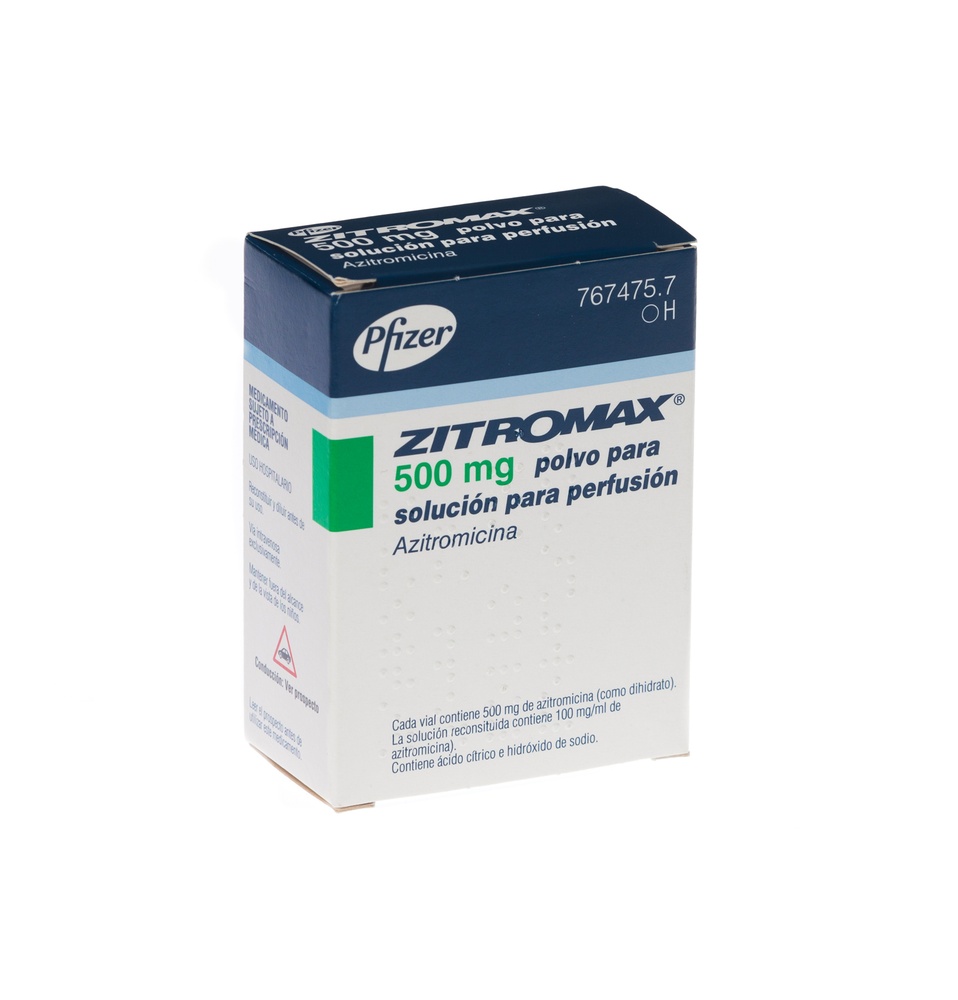



Cómo usar ZITROMAX 500 mg POLVO PARA SOLUCION PARA PERFUSION
Traducción generada por IA
Este contenido ha sido traducido automáticamente y se ofrece solo con fines informativos. No sustituye la consulta con un profesional sanitario.
Ver originalContenido del prospecto
Introducción
PROSPECTO: INFORMACIÓN PARA EL USUARIO
Zitromax 500 mg polvo para solución para perfusión
Azitromicina
Lea todo el prospecto detenidamente antes de empezar a tomar el medicamento
- Conserve este prospecto ya que puede tener que volver a leerlo.
- Si tiene alguna duda, consulte a su médico o farmacéutico.
- Este medicamento se le ha recetado a usted personalmente y no debe darlo a otras personas, aunque tenga los mismos síntomas, ya que puede perjudicarles.
- Si considera que alguno de los efectos adversos que sufre es grave o si aprecia cualquier efecto adverso no mencionado en este prospecto, informe a su médico o farmacéutico.
Contenido del prospecto:
- Qué es Zitromax 500 mg polvo y para qué se utiliza
- Qué necesita saber antes de empezar a usar Zitromax 500 mg polvo
- Cómo usar Zitromax 500 mg polvo
- Posibles efectos adversos
- Conservación de Zitromax 500 mg polvo
- Información adicional
1. Qué es Zitromax 500 mg polvo y para qué se utiliza
Azitromicina pertenece a un grupo de antibióticos denominados antibióticos macrólidos. Elimina bacterias causantes de infecciones.
Los antibióticos se utilizan para tratar infecciones bacterianas y no sirven para tratar infecciones víricas como la gripe o el catarro.
Es importante que siga las instrucciones relativas a la dosis, el intervalo de administración y la duración del tratamiento indicadas por su médico.
No guarde ni reutilice este medicamento. Si una vez finalizado el tratamiento le sobra antibiótico, devuélvalo a la farmacia para su correcta eliminación. No debe tirar los medicamentos por el desagüe ni a la basura.
Se utiliza para el tratamiento en las infecciones producidas en los pulmones (neumonía) o infecciones producidas en el tracto genital superior femenino (enfermedad inflamatoria pélvica)

2. Antes de usar Zitromax 500 mg polvo
No tome Zitromax polvo
- sí es alérgico a azitromicina, a eritromicina, a otro antibiótico macrólido o ketólido o a cualquiera de los demás componentes de este medicamento (incluidos en la sección 6).
Advertencias y precauciones
Consulte a su médico o farmacéutico antes de empezar a tomar este medicamento
- Durante el tratamiento con Zitromax, pueden aparecer reacciones de tipo alérgico (picor, enrojecimiento, erupción de la piel, hinchazón o dificultad al respirar o una reacción alérgica al medicamento caracterizada por aumentar los glóbulos blancos en sangre y síntomas generalizados) que podrían ser graves. Informe a su médico quien puede decidir interrumpir el tratamiento e instaurar el tratamiento adecuado.
- Si padece problemas hepáticos o durante el tratamiento su piel y/o el blanco de sus ojos se vuelve de color amarillento, coméntelo con su médico para que le confirme si debe interrumpir el tratamiento o si tiene que realizarle pruebas de la función hepática.
- Si está en tratamiento con derivados ergotamínicos (utilizados para tratar la migraña), informe a su médico ya que el tratamiento conjunto con azitromicina puede producir una reacción adversa denominada ergotismo.
- Durante el tratamiento con este medicamento existe la posibilidad de que se produzca una sobreinfección por gérmenes resistentes, incluidos los hongos. En este caso, informe a su médico.
- Durante o después del tratamiento con Zitromax, pueden aparecer síntomas que sugieran colitis (diarrea) asociada a antibióticos. Si es así, el tratamiento debe suspenderse y su médico le pondrá el tratamiento que considere más adecuado.
- Si padece alguna alteración de la función de los riñones, adviértaselo a su médico.
- Si padece alteraciones del ritmo de los latidos del corazón (arritmias) o factores que le predispongan a padecerlas (ciertas enfermedades del corazón, alteraciones del nivel de electrolitos en la sangre o ciertos medicamentos) informe a su médico, ya que este medicamento puede contribuir a agravar o desencadenar estas alteraciones.
- Si padece una enfermedad llamada miastenia gravis o si aparece debilidad y fatiga muscular durante el tratamiento, informe a su médico, ya que Zitromax puede desencadenar o agravar los síntomas de esta enfermedad.
Niños y adolescentes
No está indicado el uso de Zitromax 500 mg polvo para solución para perfusión en niños.
Uso de Zitromax 500 mg polvo con otros medicamentos
Informe a su médico o farmacéutico si está utilizando, ha utilizado recientemente o pudiera tener que tomar cualquier otro medicamento.
Especialmente debe avisar a su médico o farmacéutico si está en tratamiento con alguno de los siguientes medicamentos:
- Antiácidos (medicamentos que se utilizan en problemas digestivos). Se recomienda evitar la administración simultánea de ambos fármacos a la misma hora del día.
- Derivados ergotamínicos (como ergotamina, que se usa para el tratamiento de la migraña), ya que la administración simultánea con azitromicina puede originar ergotismo (efecto adverso potencialmente grave con adormecimiento o sensación de hormigueo en las extremidades, calambres musculares, dolores de cabeza, convulsiones o dolor abdominal o de pecho).
- Digoxina (un medicamento utilizado para tratar arritmias del corazón) ya que azitromicina puede elevar los niveles de digoxina en sangre y sus niveles deben monitorizarse.
- Colchicina (utilizada para la gota y la fiebre mediterránea familiar).
- Ciclosporina (un medicamento usado en pacientes trasplantados) ya que azitromicina puede elevar los niveles de ciclosporina en sangre y sus niveles deben monitorizarse.
- Anticoagulantes dicumarínicos (medicamentos utilizados para prevenir la aparición de coágulos de sangre) ya que azitromicina puede potenciar el efecto de dichos anticoagulantes. Su médico deberá controlar los parámetros de la coagulación (tiempo de protrombina).
- Nelfinavir, zidovudina (medicamentos para el tratamiento de infecciones causadas por el virus de la inmunodeficiencia humana), ya que pueden verse aumentados los niveles de azitromicina en sangre.
- Fluconazol (medicamentos para tratar infecciones por hongos), ya que pueden verse aumentados los niveles de azitromicina en sangre.
- Terfenadina (un medicamento que se usa para tratar alergias) ya que la combinación de ambos puede producir problemas del corazón.
- Rifabutina (un medicamento para el tratamiento de la tuberculosis pulmonar y de infecciones no pulmonares producidas por micobacterias) ya que puede producir un descenso del número de glóbulos blancos en sangre.
- Medicamentos con sustancias activas que prolonguen el intervalo QT, tales como antiarrítmicos de clase IA (quinidina y procainamida) y clase III (dofetilida, amiodarona y sotalol), cisaprida, terfenadina, agentes antipsicóticos (como pimozida), antidepresivos (como citalopram) y antiinfecciosos (fluoroquinolonas como moxifloxacino o levofloxacino y cloroquina), ya que puede producir alteraciones graves del ritmo cardíaco e incluso producir paradas cardiacas.
No se han observado interacciones entre azitromicina y cetirizina (para tratar las reacciones alérgicas); didanosina, efavirenz, indinavir (para tratar la infección por VIH); atorvastatina (para tratar el colesterol elevado y problemas de corazón); carbamazepina (para tratar la epilepsia), cimetidina (para tratar el exceso de ácido en el estómago); metilprednisolona (para suprimir el sistema inmune); teofilina (para problemas respiratorios); midazolam, triazolam (para producir sedación); sildenafilo (para tratar la impotencia) y trimetoprima/sulfametoxazol (para tratar las infecciones).
Embarazo, lactancia y fertilidad
Si está embarazada o en período de lactancia, cree que podría estar embarazada o tiene intención de quedarse embarazada o está en período de lactancia, comuníqueselo a su médico o farmacéutico antes de utilizar este medicamento.
Su médico valorará si deben administrarle este medicamento durante el embarazo, si el beneficio del tratamiento supera los posibles riesgos.
Azitromicina se excreta en la leche materna. Debido a las potenciales reacciones adversas en el lactante, no se recomienda el uso de azitromicina durante la lactancia, si bien puede continuar la lactancia dos días después de finalizar el tratamiento con Zitromax.
Conducción y uso de máquinas
La influencia de este medicamento sobre la capacidad de conducir o utilizar máquinas es nula o insignificante.
Zitromax 500 mg polvo contiene sodio
Este medicamento contiene 114 mg de sodio (componente principal de la sal de mesa/para cocinar) en cada vial. Esto equivale a un 5 % de la ingesta máxima diaria de sodio recomendada para un adulto.
3. Cómo usar Zitromax 500 mg polvo
Su médico establecerá la dosis y duración del tratamiento más adecuada para usted, de acuerdo con su estado y a la respuesta al tratamiento.
Como norma general, la dosis recomendada de medicamento y la frecuencia de administración es la siguiente:
Adultos (incluyendo pacientes de edad avanzada):
Neumonía (infección en los pulmones)
Administrar 500 mg al día en una perfusión única diaria durante al menos 1 o 2 días consecutivos. A continuación, administrar 500 mg al día en una dosis única diaria por vía oral durante al menos 5 días consecutivos.
La duración total del tratamiento es de 7 a 10 días.
Enfermedad inflamatoria pélvica (infección en el tracto genital femenino)
Administrar 500 mg al día en una perfusión única diaria durante 1 o 2 días consecutivos. A continuación, administrar 250 mg al día en una dosis única diaria por vía oral durante al menos 5 días consecutivos.
La duración total del tratamiento es de 7 días.
Forma de administración
Se le administrará , mediante perfusión intravenosa durante al menos 60 minutos.
Uso en pacientes con insuficiencia hepática
Informe a su médico si padece problemas graves de hígado, ya que podría ser necesario ajustar la dosis normal.
Uso en pacientes con insuficiencia renal
Informe a su médico si padece problemas de riñón, ya que podría ser necesario ajustar la dosis normal.
Si le administran más Zitromax 500 mg polvo del que debe
En caso de sobredosis, podría experimentar pérdida reversible de la audición, náusea intensa, vómitos y diarrea.
Información para el prescriptor
En caso de sobredosis, está indicada la administración de carbón activo, y se deben aplicar las medidas generales sintomáticas y de soporte general de las funciones vitales.
En caso de sobredosis o de ingestión accidental, consulte inmediatamente a su médico o farmacéutico o llame al Servicio de Información Toxicológica en el 91 562 04 20 indicando el medicamento y la cantidad ingerida.
Si olvidó usar Zitromax 500 mg polvo
Teniendo en cuenta que recibirá este medicamento bajo estrecha supervisión médica, es poco probable que olvide una dosis. No obstante, comunique a su médico o farmacéutico si piensa que se ha olvidado una dosis.
Si interrumpe el tratamiento con Zitromax 500 mg polvo
Si abandona el tratamiento con Zitromax antes de lo que su médico le ha recomendado, los síntomas pueden empeorar o reaparecer.
Si tiene cualquier otra duda sobre el uso de este medicamento, pregunte a su médico o farmacéutico.

4. Posibles efectos adversos
Al igual que todos los medicamentos, Zitromax puede producir efectos adversos, aunque no todas las personas los sufran.
Los efectos adversos notificados durante los ensayos clínicos y después de la comercialización clasificados por frecuencia son:
Los efectos adversos muy frecuentes (al menos 1 de cada 10 personas)son:
- Diarrea.
Los efectos adversos frecuentes (al menos 1 de cada 100 personas)son:
- Dolor de cabeza.
- Vómitos, dolor abdominal, náusea.
- Alteración del número de algunos tipos de glóbulos blancos (linfocitos, eosinófilos, basófilos, monocitos y neutrófilos), disminución del bicarbonato).
Los efectos adversos poco frecuentes (al menos 1 de cada 1.000 personas)son:
- Infección por el hongo Candida en la boca o generalizada, infección de la vagina, neumonía, infección por hongos o bacterias, faringitis, gastroenteritis, alteración de la respiración, rinitis.
- Disminución del número de algunos tipos de glóbulos blancos (leucocitos, neutrófilos y eosinófilos).
- Reacción alérgica, incluyendo un proceso inflamatorio de la zona profunda de la piel (angioedema).
- Alteración de la conducta alimentaria (anorexia).
- Nerviosismo, insomnio.
- Somnolencia, mareo, alteración del gusto, pérdida de la sensación táctil.
- Alteración de la visión.
- Alteración de la audición, vértigo.
- Palpitaciones.
- Sofocos.
- Alteración de la respiración, hemorragia de la nariz.
- Estreñimiento, flatulencia, indigestión, gastritis, dificultad para tragar, distensión abdominal, boca seca, eructos, ulceras en la boca, aumento de la salivación.
- Erupción, prurito, aparición de ronchas rojizas elevadas, dermatitis, piel seca, sudoración excesiva, enrojecimiento.
- Inflamación de las articulaciones, dolor muscular, dolor de espalda, dolor de cuello.
- Dificultad al orinar, dolor en los riñones.
- Hemorragia vaginal, alteración en los testículos.
- Dolor o hinchazón en el lugar de inyección, hinchazón generalizada, debilidad, malestar, cansancio, edema en la cara, dolor de pecho, fiebre, dolor e hinchazón de las extremidades.
- Alteración de las pruebas de función hepática (aumento de las enzimas hepáticas got, gpt y fosfatasa alcalina) y aumento de la bilirrubina, urea, creatinina, cloruro, glucosa, bicarbonato y plaquetas en sangre, alteración de los niveles de sodio y potasio, disminución del hematocrito.
- Complicaciones tras intervención quirúrgica.
Los efectos adversos raros(al menos 1 de cada 10.000 personas)son:
- Agitación.
- Alteración de la función hepática, coloración amarillenta de la piel.
- Sensibilidad a la exposición solar (fotosensibilidad), reacción al medicamento con aumento de un tipo de glóbulos blancos (eosinofilia) y síntomas generalizados (compromiso multiorgánico) (síndrome DRESS).
- erupción cutánea que se caracteriza por la rápida aparición de zonas de piel roja salpicadas de pequeñas pústulas (pequeñas ampollas llenas de un líquido blanco/amarillo).
Los efectos adversos de frecuencia no conocida(no se puede estimar la frecuencia a partir de los datos disponibles) son:
- Diarrea producida por el Clostridium difficile.
- Disminución del número de plaquetas en sangre, anemia.
- Reacción alérgica severa
- Reacciones de agresividad, ansiedad, delirio, alucinaciones.
- Pérdida de consciencia, convulsiones, disminución de la sensibilidad, hiperactividad, alteración y/o pérdida del olfato, pérdida del gusto, debilidad y fatiga muscular (miastenia gravis).
- Alteración de la audición incluyendo sordera y pitidos.
- Torsade de pointes alteraciones del ritmo cardiaco, prolongación del intervalo QTc en el electrocardiograma.
- Disminución de la tensión arterial.
- Inflamación del páncreas, cambio de color de la lengua.
- Lesiones graves del hígado y fallo hepático que raramente pueden ser mortales, muerte del tejido hepático, hepatitis fulminante.
- Aparición de ronchas rojizas elevadas, erupción generalizada con ampollas y piel descamada, que ocurre especialmente alrededor de la boca, nariz, ojos y genitales (Síndrome de Stevens Johnson), reacciones cutáneas graves como eritema multiforme, necrólisis tóxica epidérmica.
- Dolor en las articulaciones.
- Fallo agudo de los riñones e inflamación del tejido entre los túbulos renales (nefritis intersticial).
Comunicación de efectos adversos:
Si experimenta cualquier tipo de efecto adverso, consulte a su médico, farmacéutico o enfermero, incluso si se trata de efectos adversos que no aparecen en este prospecto. También puede comunicarlos directamente a través del Sistema Español de Farmacovigilancia de Medicamentos de Uso Humano: www.notificaRAM.es.
Mediante la comunicación de efectos adversos usted puede contribuir a proporcionar más información sobre la seguridad de este medicamento.
5. Conservación de Zitromax 500 mg polvo
Antes de la reconstitución: Conservar por debajo de 30ºC.
Tras la reconstitución: La solución concentrada debe ser utilizada en las siguientes 8 horas tras la reconstitución conservada a temperatura ambiente o 24 horas tras la reconstitución cuando se conserva entre 2 y 8ºC.
Mantener este medicamento fuera de la vista y del alcance de los niños.
No utilice este medicamento después de la fecha de caducidad que aparece en el envase después de CAD. La fecha de caducidad es el último día del mes que se indica.
Los medicamentos no se deben tirar por los desagües ni a la basura. Pregunte a su farmacéutico cómo deshacerse de los envases y de los medicamentos que no necesita. De esta forma ayudará a proteger el medio ambiente.
6. Información adicional
Composición de Zitromax polvo
- El principio activo es azitromicina. Cada vial contiene 500 mg de azitromicina (como dihidrato). Cada ml de solución reconstituida contiene 100 mg de azitromicina.
- Los demás componentes (excipientes) son: ácido cítrico e hidróxido de sodio.
Aspecto del producto y contenido del envase
Se presenta como polvo liofilizado en 1vial de vidrio neutro tipo I con una capacidad de 10 ml, provisto de un tapón de goma de butilo de color gris y cerrado con una cápsula de aluminio. Cada envase contiene 1 vial.
Titular de la autorización de comercialización y responsable de la fabricación
Titular de la autorización de comercialización:
Pfizer, S.L.
Avda. de Europa, 20 B
Parque Empresarial La Moraleja.
28108 Alcobendas. España.
Responsable de la fabricación:
Fareva Amboise.
Zone industrielle. 29 Route des Industries.
37530, Poce-sur -Cisse. Francia
Fecha de la última revisión de este prospecto:junio 2023.
La información detallada y actualizada de este medicamento está disponible en la página Web de la Agencia Española de Medicamentos y Productos Sanitarios (AEMPS) http://www.aemps.gob.es/.
Información destinada a profesionales sanitarios:
Para un solo uso. Desechar solución sobrante. Se administra mediante perfusión intravenosa durante al menos 60 minutos una vez reconstituido. Para ello, se deben seguir las siguientes instrucciones:
Reconstitución: prepare la solución inicial de Zitromax500 mg polvo para solución para perfusión añadiendo 4,8 ml de agua esterilizada para preparaciones inyectables al vial de 500 mg y agite el vial hasta que todo el polvo se disuelva. Se recomienda el uso de una jeringa estándar de 5 ml (no automática) para asegurar que se introduce la cantidad exacta de 4,8 ml de agua esterilizada para preparaciones inyectables. Cada ml de solución reconstituida contiene 100 mg de azitromicina.
Los productos de administración parenteral deben ser inspeccionados visualmente antes de su administración por si hubiese partículas extrañas; en caso de que esto sucediese, siendo evidente en el fluido reconstituido, debe desecharse la solución.
Diluir la solución antes de su administración como se indica a continuación.
Dilución: para conseguir una concentración de 1,0 o 2,0 mg/ml de azitromicina, transferir 5 ml de la solución de azitromicina de 100 mg/ml a las respectivas cantidades de diluyente indicadas a continuación:
Concentración final de la solución para perfusión (mg/ml) | Cantidad de diluyente(ml) | Tiempo recomendado de perfusión |
1,0 mg/ml | 500 ml | 3 horas |
2,0 mg/ml | 250 ml | 1 hora |
Respetar el tiempo recomendado de perfusión. La solución reconstituida puede diluirse en:
Cloruro de sodio al 0,9%
Cloruro de sodio al 0,45%
Glucosa al 5%, en agua
Solución de Ringer lactato
Glucosa al 5% en cloruro de sodio al 0,45% con 20 mEq de KCl
Glucosa al 5% en solución de Ringer lactato
Glucosa al 5% en cloruro de sodio al 0,3%
Glucosa al 5% en cloruro de sodio al 0,45%.
Tras la dilución, la solución no utilizada debe desecharse. Para un solo uso
No debe ser administrado en forma de bolo ni en inyección intramuscular.
- País de registro
- Forma farmacéuticaINYECTABLE PERFUSION, 500 mg azitromicina
- Código ATCJ01FA10
- Principio activo
- Requiere recetaSí
- Fabricante
- Esta información es de carácter general y no sustituye la consulta con un profesional sanitario.
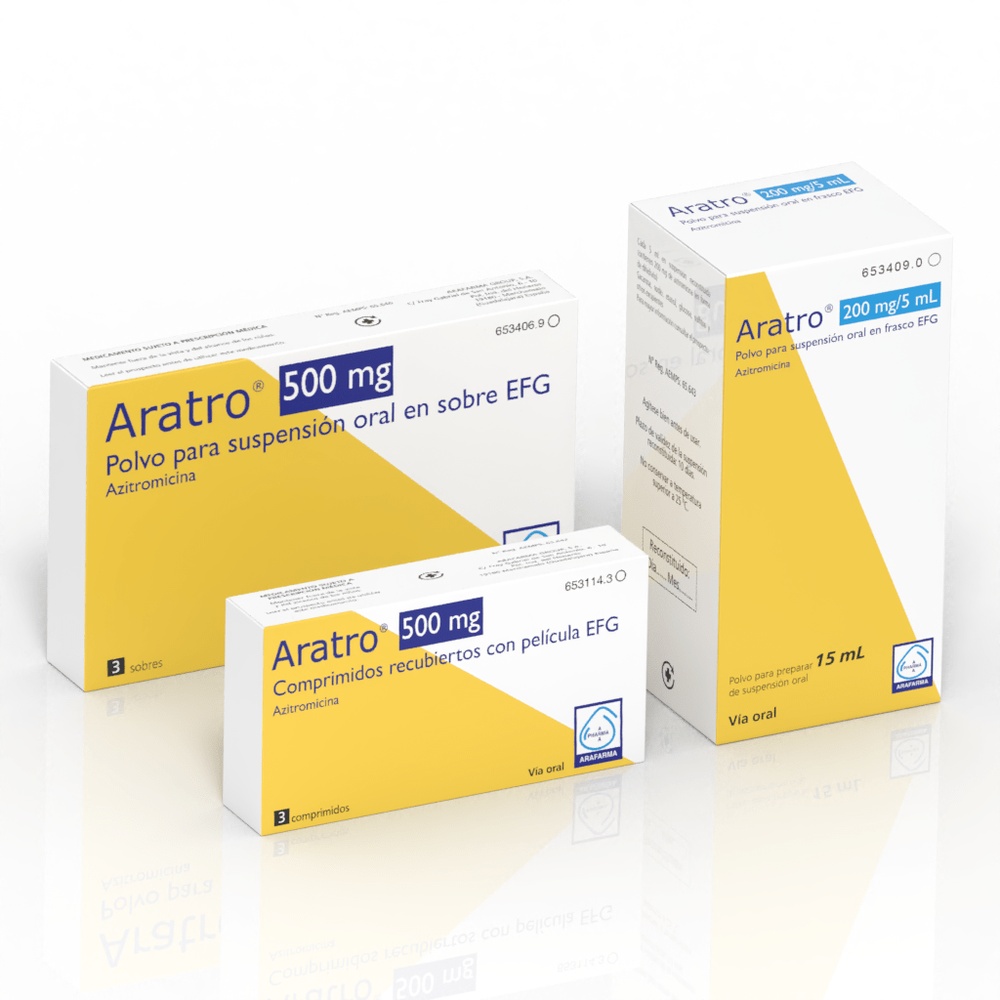
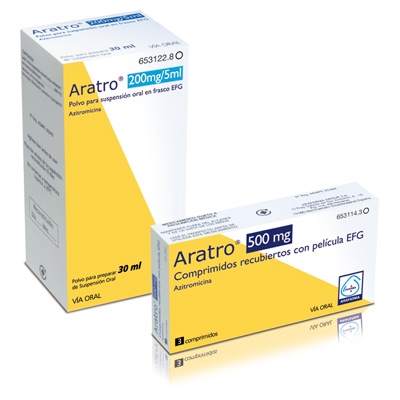
- Alternativas a ZITROMAX 500 mg POLVO PARA SOLUCION PARA PERFUSIONForma farmacéutica: SOLUCIÓN/SUSPENSIÓN ORAL, 200 mg azitromicina / 5 mlPrincipio activo: AzitromicinaFabricante: Arafarma Group S.A.Requiere recetaForma farmacéutica: COMPRIMIDO, 500 mgPrincipio activo: AzitromicinaFabricante: Arafarma Group S.A.Requiere recetaForma farmacéutica: SOLUCIÓN/SUSPENSIÓN ORAL, 500 mgPrincipio activo: AzitromicinaFabricante: Arafarma Group S.A.Requiere receta
Médicos online para ZITROMAX 500 mg POLVO PARA SOLUCION PARA PERFUSION
Comenta la dosis, los posibles efectos secundarios, interacciones, contraindicaciones o la revisión de receta de ZITROMAX 500 mg POLVO PARA SOLUCION PARA PERFUSION, sujeto a valoración médica y a la normativa local.











Preguntas frecuentes
