



ZEBINIX 50 mg /Ml Oral Suspension

Prescription review online
A doctor will review your case and decide whether a prescription is medically appropriate.

Talk to a doctor about this medicine
Discuss your symptoms and possible next steps in a quick online consultation.



How to use ZEBINIX 50 mg/ml ORAL SUSPENSION
Contents of the leaflet
- Introduction
- What is Zebinix and what is it used for
- What you need to know before you take Zebinix
- How to take Zebinix
- Possible Adverse Effects
- Storage of Zebinix
- Package Contents and Additional Information
Introduction
Package Leaflet: Information for the User
Zebinix 50 mg/ml Oral Suspension
eslicarbazepine acetate
Read all of this leaflet carefully before you start taking this medicine because it contains important information for you.
- Keep this leaflet, you may need to read it again.
- If you have any further questions, ask your doctor or pharmacist.
- This medicine has been prescribed for you only. Do not pass it on to others. It may harm them, even if their signs of illness are the same as yours.
- If you get any side effects, talk to your doctor or pharmacist. This includes any possible side effects not listed in this leaflet. See section 4.
Contents of the pack and other information
- What is Zebinix and what is it used for
- What you need to know before you take Zebinix
- How to take Zebinix
- Possible side effects
- Storing Zebinix
- Contents of the pack and other information
1. What is Zebinix and what is it used for
Zebinix contains the active substance eslicarbazepine acetate.
Zebinix belongs to a group of medicines called antiepileptics, used to treat epilepsy, a condition where the person has repeated seizures or fits.
Zebinix is used:
- as the only medicine (monotherapy) in adult patients with newly diagnosed epilepsy;
- with other antiepileptic medicines (adjunctive therapy) in adult, adolescent and child patients above 6 years of age who suffer from partial seizures (seizures that affect only a part of the brain). These seizures may or may not be followed by a seizure that affects the whole brain (secondary generalisation).
Your doctor has prescribed Zebinix to reduce the number of seizures.

Not sure if this medicine is right for you?
Discuss your symptoms and treatment with a doctor online.
2. What you need to know before you take Zebinix
Do not take Zebinix:
- if you are allergic to eslicarbazepine acetate, to other carbamazepine-related compounds (e.g. carbamazepine or oxcarbazepine, medicines used to treat epilepsy), or to any of the other ingredients of this medicine (listed in section 6);
- if you have a certain type of heart rhythm disorder (second or third degree atrioventricular (AV) block).
Warnings and precautions
Talk to your doctor or pharmacist before taking Zebinix.
Tell your doctor immediately:
- if you have blisters or peeling of the skin and/or mucous membranes, rash, problems with swallowing or breathing, swelling of the lips, face, eyelids, throat or tongue. These could be signs of an allergic reaction;
- if you become confused, your seizures get worse or you lose consciousness, which could be signs of low blood levels of salts.
Tell your doctor:
- if you have kidney problems. Your doctor may need to adjust your dose. Zebinix is not recommended in patients with severe kidney disease;
- if you have liver problems. Zebinix is not recommended in patients with severe liver problems;
- if you are taking any medicine that may cause an abnormality in the ECG (electrocardiogram) called prolonged PR interval. If you are not sure if the medicines you are taking may cause this effect, discuss this with your doctor;
- if you have any heart disease such as heart failure or heart attack, or have any heart rhythm disorder;
- if you have seizures that start with a widespread electrical discharge that affects both sides of the brain.
A small number of people taking antiepileptics have had thoughts of harming or killing themselves. If at any time you have these thoughts, contact your doctor immediately.
Zebinix may make you feel dizzy and/or drowsy, particularly at the start of treatment. Be extra careful when taking Zebinix to avoid accidental injury, such as falls.
Be extra careful with Zebinix.
In post-marketing experience, in patients treated with Zebinix, serious and potentially life-threatening skin reactions, including Stevens-Johnson Syndrome/toxic epidermal necrolysis, drug reaction with eosinophilia and systemic symptoms (DRESS) have been reported.
If you develop a severe rash or other sign of skin reaction (see section 4), stop taking Zebinix and contact your doctor or seek medical attention immediately.
In Thai and Chinese Han ethnicity patients, the risk of serious skin reactions associated with carbamazepine or chemically-related compounds can be predicted by testing the patient’s blood. Your doctor will be able to advise whether such a blood test is necessary before taking Zebinix.
Children
Zebinix must not be given to children under 6 years of age.
Taking Zebinix with other medicines
Tell your doctor or pharmacist if you are taking, have recently taken or might take any other medicines. This is because some medicines may affect the way Zebinix works, or Zebinix may affect the way other medicines work. Tell your doctor if you are taking:
- phenytoin (a medicine used to treat epilepsy), as you may need to have your dose adjusted;
- carbamazepine (a medicine used to treat epilepsy), as you may need to have your dose adjusted, and the following side effects of Zebinix may occur more frequently: double vision, abnormal coordination and dizziness;
- hormonal contraceptives (such as the pill) as Zebinix may reduce their effectiveness;
- simvastatin (a medicine used to lower cholesterol levels), as you may need to have your dose adjusted;
- rosuvastatin, a medicine used to lower cholesterol levels;
- the anticoagulant warfarin;
- monoamine oxidase inhibitors (MAOIs), antidepressants;
- do not take oxcarbazepine (a medicine used to treat epilepsy) with Zebinix, as it is not known if it is safe to take these two medicines together.
See the section “Pregnancy and breast-feeding” for advice on contraception.
Pregnancy and breast-feeding
Zebinix should not be used during pregnancy, as its effects on pregnancy and the unborn child are not known.
If you are planning to become pregnant, talk to your doctor before stopping your contraceptive and before becoming pregnant. Your doctor may decide to change your treatment.
There is limited data on the use of eslicarbazepine acetate in pregnant women.
Studies have shown an increased risk of congenital malformations and neurodevelopmental problems (brain development problems) in the children of women who take antiepileptic medicines, particularly when more than one antiepileptic medicine is taken at the same time.
If you are pregnant or think you may be pregnant, tell your doctor immediately. Do not stop taking your medicine until you have talked to your doctor. Stopping your medicine suddenly may cause seizures, which could be harmful for you and your unborn child. Your doctor may decide to change your treatment.
If you are a woman of childbearing age and not planning to become pregnant, you must use an effective method of contraception during treatment with Zebinix. Zebinix may affect the way hormonal contraceptives work, making them less effective in preventing pregnancy. You are advised to use other forms of safe and effective contraception while taking Zebinix. Talk to your doctor, who will discuss with you the most suitable type of contraception to use while taking Zebinix. If treatment with Zebinix is stopped, you should continue to use an effective method of contraception until the end of your current menstrual cycle. If you take Zebinix during pregnancy, your baby is at risk of having bleeding problems immediately after birth. Your doctor may give you and your baby a medicine to prevent this.
Do not breast-feed while taking Zebinix. It is not known if Zebinix passes into breast milk.
Driving and using machines
Zebinix may cause dizziness, drowsiness and affect your vision, particularly at the start of treatment. If this happens to you, do not drive or use any tools or machines.
Zebinix contains methyl parahydroxybenzoate (E218) and sulfites
Zebinix oral suspension contains methyl parahydroxybenzoate (E218) which may cause allergic reactions (possibly delayed) and sulfites which can rarely cause severe allergic reactions and bronchospasm (sudden wheezing).
3. How to take Zebinix
Always take this medicine exactly as your doctor has told you. Check with your doctor or pharmacist if you are not sure.
Adults
Dose at the start of treatment
400 mg once a day for one or two weeks, before increasing to the maintenance dose. Your doctor will decide whether you should take this dose for one or two weeks.
Maintenance dose
The usual maintenance dose is 800 mg once a day.
Depending on how you respond to Zebinix, the dose may be increased to 1,200 mg once a day. If you are taking Zebinix alone (monotherapy), your doctor may consider increasing your dose to 1,600 mg once a day.
Patient with kidney problems
If you have kidney problems, you will usually be given a lower dose of Zebinix. Your doctor will determine the correct dose for you. Zebinix is not recommended if you have severe kidney disease.
Elderly patients (above 65 years of age)
If you are an elderly patient and are taking Zebinix alone, the dose of 1,600 mg is not suitable for you.
Children over 6 years of age
Dose at the start of treatment
The starting dose is 10 mg per kilogram of body weight once a day for one or two weeks, before increasing to the maintenance dose.
Maintenance dose
Depending on the response to Zebinix, the dose may be increased by 10 mg per kilogram of body weight, at intervals of one or two weeks, up to 30 mg per kilogram of body weight. The maximum dose is 1,200 mg once a day.
Children ≥ 60 kg
Children with a body weight of 60 kg or more should take the same dose as adults.
The oral suspension, another form of the medicine, may be more suitable for administration in children. Talk to your doctor or pharmacist.
Form and route of administration
Zebinix is taken by mouth.
Zebinix oral suspension can be taken with or without food.
Shake well before use.
Always use the oral syringe provided to take your medicine.
Instructions for use:
Step 1. Remove the bottle, oral syringe and bottle adaptor from the carton.
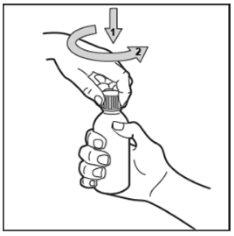
Step 2. Shake the bottle for at least 10 seconds and remove the child-resistant cap by pushing it down and twisting it counterclockwise (to the left).
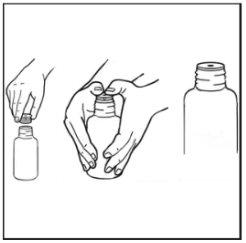
Step 3. Insert the adaptor into the neck of the opened bottle. You may need to apply some pressure to insert it securely. Once inserted, the adaptor should not be removed from the bottle. The bottle can be closed with the cap still fitted with the adaptor.
Step 4. To make the process easier, mark the desired volume on the syringe by moving the plunger. Insert the tip of the oral syringe into the bottle adaptor, keeping it upright. Push the plunger all the way down. This will create pressure inside the bottle that will help the suspension to be drawn into the syringe.
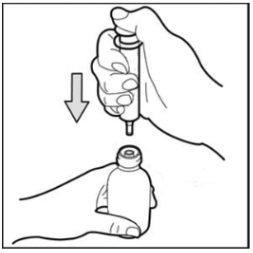
Step 5: Hold the syringe in place and turn the bottle upside down.
Gently pull the plunger down to the desired volume.
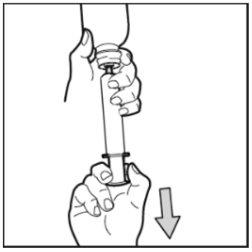
Step 6: If you see any air bubbles in the syringe, push the plunger up enough to expel large air bubbles. Gently pull the plunger down to the prescribed dose.
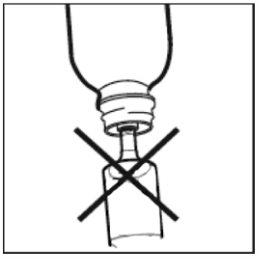
Step 7. Turn the bottle right side up and remove the syringe from the bottle. Be careful, do not push the plunger down while removing the syringe from the bottle.
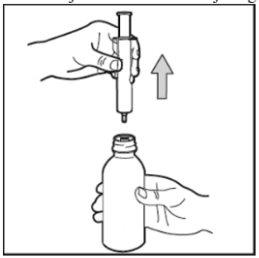
Step 8. Replace the bottle cap by twisting it clockwise (to the right).
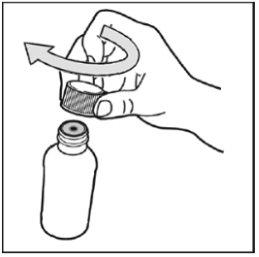
Step 9. Place the syringe in your mouth against the inside of your cheek. Slowly press the plunger down to release the Zebinix into your mouth.
Step 10: Rinse the syringe after each use in a glass of clean water. Repeat this cleaning process three times.
Store, in the carton, the bottle and oral syringe together, until next use.
If you take more Zebinix than you should
If you accidentally take more Zebinix than you should, you are at risk of having more seizures; or you may feel that your heart is beating irregularly or faster. Contact your doctor or go immediately to a hospital if you experience any of these symptoms. Take the medicine package with you, so that the doctor knows what you have taken.
If you forget to take Zebinix
If you forget to take a dose, take it as soon as you remember and then continue as normal. Do not take a double dose to make up for forgotten doses.
If you stop taking Zebinix
Do not stop taking Zebinix suddenly. If you do, you may have more seizures. Your doctor will decide how long you need to take Zebinix. If your doctor decides to stop your treatment with Zebinix, your dose will usually be reduced gradually. It is important that you complete the treatment as your doctor tells you; otherwise, your symptoms may get worse.
If you have any further questions on the use of this medicine, ask your doctor or pharmacist.

Started taking the medicine and have questions?
Discuss your symptoms and treatment with a doctor online.
4. Possible Adverse Effects
Like all medicines, this medicine can cause adverse effects, although not all people suffer from them.
The following adverse effects may be very serious. If they appear, discontinue the administration of Zebinix and inform a doctor or go to a hospital immediately, as urgent medical treatment may be needed:
- blisters or peeling of the skin and/or mucous membranes, rash, swallowing or breathing problems, swelling of the lips, face, eyelids, throat or tongue. These could be signs of an allergic reaction.
The very commonadverse effects (may affect more than 1 in 10 people) are:
- dizziness or drowsiness.
The commonadverse effects (may affect up to 1 in 10 people) are:
- feeling of instability, or spinning or floating;
- nausea or vomiting;
- headache;
- diarrhea;
- double vision or blurred vision;
- difficulty concentrating;
- feeling of fatigue or decreased energy;
- tremors;
- skin rash;
- blood tests showing low sodium levels;
- decreased appetite;
- difficulty sleeping;
- difficulty in movement coordination (ataxia);
- weight gain.
The uncommonadverse effects (may affect up to 1 in 100 people) are:
- clumsiness;
- allergy;
- constipation;
- seizures;
- underactive thyroid gland. Symptoms include decreased thyroid hormone levels (detected in blood tests), intolerance to cold, enlarged tongue, fine and brittle nails and hair, and low body temperature;
- liver problems (such as increased liver enzymes);
- high blood pressure or intense increase in blood pressure;
- low blood pressure, or decreased blood pressure when standing up;
- blood tests showing low levels of salts (including chloride), or a reduction in the number of red blood cells;
- dehydration;
- changes in eye movements, blurred vision or red eyes;
- suffering from falls;
- thermal burn;
- poor memory or forgetfulness;
- crying, feeling of depression, nervousness or confusion, lack of interest or emotions;
- inability to speak, write or understand spoken or written language;
- agitation;
- attention deficit/hyperactivity disorder;
- irritability;
- mood changes or hallucinations;
- difficulty speaking;
- nasal bleeding;
- chest pain;
- tingling or numbness in any part of the body;
- migraine;
- burning sensation;
- abnormal sensation to touch;
- alterations in smell;
- ringing in the ears;
- difficulty hearing;
- swelling of legs and arms;
- acidity, stomach discomfort, abdominal pain, bloating and abdominal discomfort or dry mouth;
- black stools;
- gum inflammation or tooth pain;
- sweating or dry skin;
- itching;
- skin changes (e.g., skin redness);
- hair loss;
- urinary tract infection;
- general malaise, weakness or chills;
- weight loss;
- muscle pain, pain in limbs, muscle weakness;
- bone metabolism disorder;
- increased bone proteins;
- flushing (redness), coldness in the extremities;
- slower or irregular heartbeats;
- extreme drowsiness;
- sedation;
- neuromotor alteration where muscles contract, causing twisting and repetitive movements or abnormal postures. Symptoms include tremors, pain and cramps;
- drug toxicity;
- anxiety.
The adverse effects of unknown frequency(cannot be estimated from the available data) are:
- Reduction of platelets that increases the risk of bleeding or bruising;
- Severe back or stomach pain (caused by pancreas inflammation);
- Reduction of white blood cells that makes infections more likely;
- Reddish spots or circular patches often with central blisters on the trunk, skin peeling, ulcers in the mouth, throat, nose, genitals and eyes, red and inflamed eyes, and may be preceded by fever and/or flu-like symptoms (Stevens-Johnson Syndrome/toxic epidermal necrolysis);
- Initially flu-like symptoms, rash on the face, generalized rash, elevated body temperature, elevated liver enzymes, blood abnormalities (eosinophilia), enlarged lymph nodes and other body conditions (drug reaction with eosinophilia and systemic symptoms, also known as DRESS or drug hypersensitivity syndrome);
- Severe allergic reaction that causes swelling of the face, throat, hands, feet, ankles or lower legs;
- Urticaria (itchy skin rash);
- Lethargy, confusion, muscle spasms or significant worsening of seizures (possible symptoms of low sodium levels in the blood due to inadequate secretion of antidiuretic hormone (ADH)).
The use of Zebinix is associated with an ECG (electrocardiogram) anomaly called increased PR interval. Adverse effects associated with this ECG anomaly (e.g., fainting and slowing of heartbeats) may occur.
Bone disorders, including osteopenia and osteoporosis (thinning of the bones) and fractures, have been reported with structurally related antiepileptic medications, such as carbamazepine and oxcarbazepine. Talk to your doctor or pharmacist if you are on long-term treatment with antiepileptics, have a history of osteoporosis, or are taking steroids.
Reporting of Adverse Effects
If you experience any adverse effects, consult your doctor or pharmacist, even if it is a possible adverse effect not listed in this leaflet. You can also report them directly through the national reporting system included in Appendix V. By reporting adverse effects, you can help provide more information on the safety of this medicine.
5. Storage of Zebinix
Keep this medicine out of the sight and reach of children.
Do not use this medicine after the expiration date stated on the bottle and carton after the letters EXP. The expiration date is the last day of the month indicated.
Once you have opened the bottle, do not use it for more than 2 months.
No special storage conditions are required.
Medicines should not be disposed of via wastewater or household waste. Ask your pharmacist how to dispose of the packaging and any unused medicine. This will help protect the environment.
6. Package Contents and Additional Information
Zebinix Composition
- The active ingredient is eslicarbazepine acetate. Each ml of oral suspension contains 50 mg of eslicarbazepine acetate.
- The other ingredients are xanthan gum (E415), macrogol stearate 100, methyl parahydroxybenzoate (E218), sodium saccharin (E954), artificial Tutti-Frutti flavor (contains maltodextrin, propylene glycol, natural and artificial flavor, and gum arabic (E414)), taste masking (contains propylene glycol, water, and natural and artificial flavor), and purified water.
Product Appearance and Package Contents
Zebinix 50 mg/ml is a white to off-white suspension.
The oral suspension is packaged in amber glass bottles with a child-resistant HDPE closure, containing 200 ml of oral suspension, packed in cardboard boxes. Each cardboard box contains a 10 ml graduated polypropylene syringe with 0.2 ml graduations and a copolymer adapter for the bottle.
Marketing Authorization Holder and Manufacturer
BIAL - Portela & Cª, S.A.,
À Av. da Siderurgia Nacional,
4745-457 S. Mamede do Coronado
Portugal
phone: +351 22 986 61 00
fax: +351 22 986 61 99
email: [email protected]
You can request more information about this medicine by contacting the local representative of the marketing authorization holder:
België/Belgique/Belgien BIAL-Portela & Cª., S.A. Tél/Tel: + 351 22 986 61 0 (Portugal) | Luxembourg/Luxemburg BIAL-Portela & Cª., S.A. Tél/Tel: + 351 22 986 61 00 (Portugal) |
???????? BIAL-Portela & Cª., S.A. Te?.: + 351 22 986 61 00 (??????????) | Magyarország BIAL-Portela & Cª., S.A. Tel.: + 351 22 986 61 0 (Portugália) |
Ceská republika BIAL-Portela & Cª., S.A. Tel: + 351 22 986 61 00 (Portogallo) | Malta BIAL-Portela & Cª., S.A. Tel: + 351 22 986 61 00 (Il-Portugall) |
Danmark Nordicinfu Care AB Tlf: +45 (0) 70 28 10 24 | Nederland BIAL-Portela & Cª., S.A. Tél/Tel: + 351 22 986 61 00 (Portugal) |
Deutschland BIAL-Portela & Cª., S.A. Tel: + 351 22 986 61 00 (Portugal) | Norge Nordicinfu Care AB Tlf: +47 (0) 22 20 60 00 |
Eesti BIAL-Portela & Cª, S.A. Tel: +351 22 986 61 00 (Portugal) | Österreich BIAL-Portela & Cª., S.A. Tel: + 351 22 986 61 00 (Portugal) |
Ελλ?δα ΑΡΡΙΑΝΙ ΦΑΡΜΑΚΕΥΤΙΚΗ Α.Ε. Τηλ: + 30 210 668 3000 | Polska BIAL-Portela & Cª, S.A. Tel.: + 351 22 986 61 00 (Portugália) |
España Laboratorios BIAL, S.A. Tel: + 34 91 562 41 96 | Portugal BIAL-Portela & Cª., S.A. Tel.: + 351 22 986 61 00 |
France BIAL-Portela & Cª., S.A. Tél: + 351 22 986 61 00 (Portugal) | România BIAL-Portela & Cª, S.A. Tel: + 351 22 986 61 00 (Portugalia) |
Hrvatska BIAL-Portela & Cª, S.A. Tel: + 351 22 986 61 00 (Portugal) | Slovenija BIAL-Portela & Cª, S.A. Tel: + 351 22 986 61 00 (Portugalska) |
Ireland BIAL-Portela & Cª., S.A. Tel: + 351 22 986 61 00 (Portugal) | Slovenská republika BIAL-Portela & Cª., S.A. Tel: + 351 22 986 61 00 (Portugalsko) |
Ísland Nordicinfu Care AB Sími: +46 (0) 8 601 24 40 | Suomi/Finland Nordicinfu Care AB Puh/Tel: +358 (0) 207 348 760 |
Italia BIAL-Portela & Cª., S.A. Tel: + 351 22 986 61 00 (Portogallo) | Sverige Nordicinfu Care AB Tel: +46 (0) 8 601 24 40 |
Κ?προς BIAL-Portela & Cª, S.A. Τηλ: + 351 22 986 61 00 (Πορτογαλ?α) | United Kingdom BIAL-Portela & Cª., S.A. Tel: + 351 22 986 61 00 (Portugal) |
Latvija BIAL-Portela & Cª, S.A. Tel: + 351 22 986 61 00 (Portugale) | |
Lietuva BIAL-Portela & Cª, S.A. Tel: + 351 22 986 61 00 (Portugalija) |
Date of the Last Revision of this Leaflet: <{MM YYYY}>
Detailed information about this medicine is available on the European Medicines Agency website http://www.ema.europa.eu.
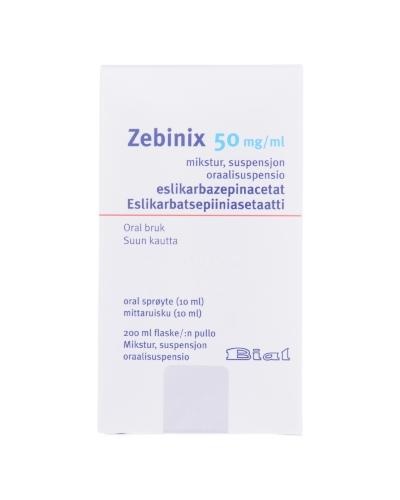
- Country of registration
- Dosage formORAL SOLUTION/SUSPENSION, 50 mg/ml
- ATC codeN03AF04
- Average pharmacy price38.36 EUR
- Active substance
- Prescription requiredYes
- Manufacturer
- CompositionSACARINA SODICA (2.40 mg mg)
- This information is for reference only and does not constitute medical advice. Always consult a doctor before taking any medication. Oladoctor is not responsible for medical decisions based on this content.
- Alternatives to ZEBINIX 50 mg/ml ORAL SUSPENSIONDosage form: TABLET, 200 mgActive substance: eslicarbazepineManufacturer: Accord Healthcare S.L.U.Prescription requiredDosage form: TABLET, 800 mgActive substance: eslicarbazepineManufacturer: Accord Healthcare S.L.U.Prescription requiredDosage form: TABLET, 600 mgActive substance: eslicarbazepineManufacturer: Laboratorios Alter S.A.Prescription required
Online doctors for ZEBINIX 50 mg/ml ORAL SUSPENSION
Discuss questions about ZEBINIX 50 mg/ml ORAL SUSPENSION, including use, safety considerations and prescription review, subject to medical assessment and local regulations.



Get ZEBINIX 50 mg/ml ORAL SUSPENSION Prescription Online
Fill in a 2-min form
Tell us your symptoms, history, and what medicine you're requesting.
Pick a doctor or let us assign
Choose a specialist or we'll match you with the next available doctor.
Doctor reviews your case
Usually within 30 minutes. They may ask follow-up questions via chat.
Collect from any pharmacy
Electronic prescription sent to your email — valid across Spain.
Frequently Asked Questions
ZEBINIX 50 mg/ml ORAL SUSPENSION requires a prescription in Spain. You can check with a doctor online whether this medicine may be appropriate for your situation.
The active ingredient in ZEBINIX 50 mg/ml ORAL SUSPENSION is eslicarbazepine. This information helps identify medicines with the same composition but different brand names.
The average pharmacy price for ZEBINIX 50 mg/ml ORAL SUSPENSION is around 38.36 EUR. Prices may vary depending on the manufacturer and dosage form.
ZEBINIX 50 mg/ml ORAL SUSPENSION is manufactured by Bial Portela & Ca S.A.. Pharmacy brands and packaging may differ depending on the distributor.
Doctors such as Family doctors, Psychiatrists, Dermatologists, Cardiologists, Endocrinologists, Gastroenterologists, Pulmonologists, Nephrologists, Rheumatologists, Hematologists, Infectious disease physicians, Allergists, Geriatricians, Paediatricians, Oncologists may assess whether ZEBINIX 50 mg/ml ORAL SUSPENSION is appropriate, depending on your situation and local regulations. You can book an online consultation to discuss your symptoms and possible next steps.
Spain has a well-developed healthcare infrastructure across major cities such as Madrid, Barcelona, Valencia, and Seville. Pharmacies are widely available and operate under strict regulations, ensuring access to prescribed medications.
You can buy ZEBINIX 50 mg/ml ORAL SUSPENSION in Madrid, Barcelona, Seville, or Valencia at any local pharmacy with a valid prescription.
To obtain a prescription, you can use Oladoctor:
Other medicines with the same active substance (eslicarbazepine) include ARUPSAN 200 mg TABLETS, ARUPSAN 800 mg TABLETS, BIXCAR 600 mg TABLETS. These may have different brand names or formulations but contain the same therapeutic ingredient. Always consult a doctor before switching or starting a new medicine.
