






Cómo usar XENETIX 350 mg Iodo/ml SOLUCION INYECTABLE
Traducción generada por IA
Este contenido ha sido traducido automáticamente y se ofrece solo con fines informativos. No sustituye la consulta con un profesional sanitario.
Ver originalContenido del prospecto
Introducción
Prospecto: información para usuario
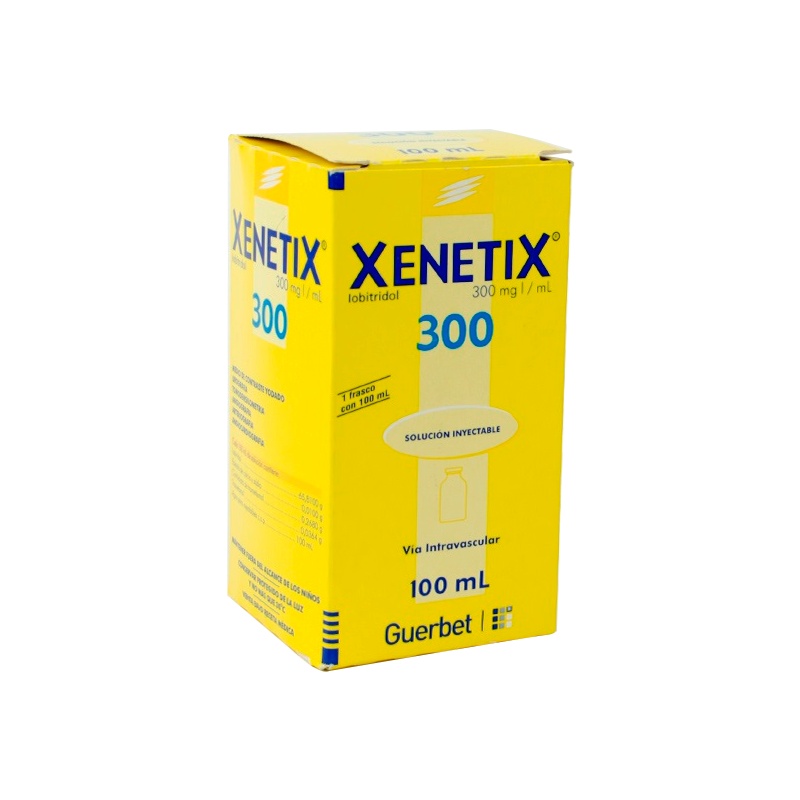
XENETIX 300 mg Iodo/ ml solución inyectable
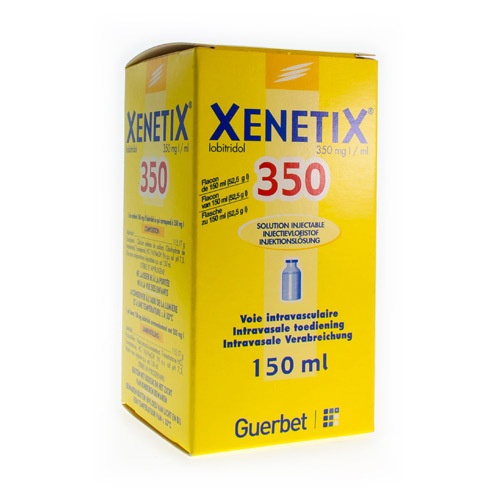
XENETIX 350 mg Iodo/ml solución inyectable
Iobitridol
Lea todo el prospecto detenidamente antes de empezar a usar este medicamento, porque contiene información importante para usted.
- Conserve este prospecto, ya que puede tener que volver a leerlo.
Si tiene alguna duda, consulte a su médico o farmacéutico.
- Si experimenta efectos adversos, consulte a su médico o farmacéutico, incluso si se trata de efectos adversos que no aparecen en este prospecto. Ver sección 4.
Contenido del prospecto
- Qué es XENETIX y para qué se utiliza
- Qué necesita saber antes de empezar a usar XENETIX
- Cómo usar XENETIX
- Posibles efectos adversos
- Conservación de XENETIX
Contenido del envase e información adicional
1. Qué es XENETIX y para qué se utiliza
XENETIX es un medio de contraste radiológico iodado (propiedades opacificantes), hidrosoluble, no iónico, de baja osmolalidad, para exámenes radiológicos de los riñones y vias renales (urografía), del cuerpo entero y cerebro (tomografía), del corazón (angiocardiografía), de los vasos sanguíneos venosos (angiografía) o arteriales (arteriografía) y de las mamas (mamografía con contraste).
Este medicamento es únicamente para uso diagnóstico.

2. Qué necesita saber antes de usar XENETIX
No use Xenetix:
- Si ha sufrido previamente una erupción grave en la piel o descamación de la piel, ampollas y/o llagas en la boca después de la administración de Xenetix.
- Si es alérgico al principio activo (iobitridol) o a cualquiera de los demás componentes de este medicamento (incluidos en la sección 6).
- Si ha tenido una reacción alérgica cutánea importante, inmediata o tardía, cuando se le ha administrado XENETIX en exploraciones anteriores (ver apartado 4. Posibles Efectos Adversos)
- Si tiene exceso de hormonas tiroideas (tirotoxicosis manifiesta).
Advertencias y precauciones
Consulte a su médico o farmacéutico antes de empezar a usar XENETIX.
Como ocurre con todos los medios de contraste de iodo independientemente de la vía de administración y la dosis, todos los medios de contraste iodados pueden inducir reacciones leves, graves o incluso fatales. Estas reacciones pueden ocurrir en la primera hora o, más raramente, en los 7 días posteriores a la administración. Estas reacciones son imprevisibles y más frecuentes si ya ha experimentado una reacción después de que le administraran un medio de contraste iodado (Ver apartado 4. Posibles efectos adversos). Por lo tanto, debe comunicar al radiólogo que realiza la exploración si ya ha tenido una reacción alérgica durante una exploración anterior con un medio de contraste iodado.
Informe al médico que realiza la exploración si Vd. padece alguna enfermedad para que pueda tomar todas las precauciones necesarias, especialmente:
- Si ha tenido reacciones previas a un medio de contraste iodado durante una exploración.
- Si ha tenido previamente una erupción grave o descamación de la piel, ampollas y/o llagas en la boca después de la administración de Xenetix u otro medio de contraste iodado.
- Si padece insuficiencia renal (alteración del funcionamiento de los riñones) o diabetes o si está siendo sometido a diálisis, pues los medios de contraste iodados pueden inducir una alteración transitoria de la función renal o empeorar una insuficiencia renal preexistente.
- Si presenta a la vez insuficiencia renal y hepática (alteraciones del funcionamiento del riñón y del hígado), ya que aumenta el riesgo de retención de contraste.
- Si es asmático y/o ha sufrido un ataque de asma durante los 8 días anteriores a la exploración, porque aumenta el riesgo de que aparezca broncoespasmo (contracción involuntaria de la musculatura bronquial).
- Si tiene un trastorno del tiroides o si presenta historial de enfermedad tiroidea, porque puede exacerbarse el hipertiroidismo o desarrollarse hipotiroidismo. Infórmele igualmente si va a someterse a una próxima exploración del tiroides o tratamiento con iodo radiactivo.
- Si padece insuficiencia cardiaca (alteración del funcionamiento del corazón), insuficiencia coronaria o cualquier otro tipo de enfermedad cardiovascular grave, porque el riesgo de aparición de ciertas reacciones adversas se incrementa.
- Si padece trastornos neurológicos, edema cerebral, historial reciente de hemorragia intracraneal, infarto cerebral agudo, ataques isquémicos transitorios, epilepsia o si es adicto al alcohol o a medicamentos, pues el beneficio / riesgo de someterle a la prueba debe ser evaluado.
- Si presenta feocromocitoma (secreción hormonal elevada que causa hipertensión grave) pues debe ser monitorizado para prevenir el desarrollo de una crisis hipertensiva.
- Si presenta miastenia gravis (enfermedad autoinmune de los músculos), porque se podrían agravar los síntomas.
- Si se siente ansioso, agitado o tiene miedo a la exploración, no dude en comunicárselo a su médico pues en estas situaciones los posibles efectos adversos se pueden intensificar.
- Si padece enfermedad pancreática (pancreatitis aguda).
- Si padece enfermedad de la médula ósea (gammapatía monoclonal, mieloma múltiple o macroglobulemia de Waldenstrom)
Tenga especial cuidado con Xenetix
Se han notificado casos de reacciones cutáneas graves, incluyendo reacción a farmaco con eosinofilia y síntomas sistémicos (DRESS), síndrome de Stevens-Johnson (SJS), necrólisis epidérmica tóxica (síndrome de Lyell o NET) y pustulosis exantémica aguda (PEGA) que pueden ser mortales, con el uso de Xenetix.
Durante el procedimiento de adquisición de imágenes o poco después de este, podría experimentar un trastorno cerebral de corta duración denominado encefalopatía. Busque atención médica de inmediato si experimenta cualquiera de los síntomas relacionados con esta afección descritos en la sección 4.
Niños
Pueden observarse trastornos tiroideos tras la administración de Xenetix. Debe prestarse especial atención a los recién nacidos, incluidos aquellos cuya madre recibió Xenetix durante el embarazo, y a los niños prematuros y de corta edad. Los médicos deben comprobar el funcionamiento de la glándula tiroides del niño.
Uso de XENETIX con otros medicamentos
Por favor informe a su médico o farmacéutico si padece cualquier otra enfermedad o:
- Si está tomando Metformina (fármaco para el tratamiento de la diabetes), pues puede aparecer acidosis láctica.
- Si está tomando fármacos betabloqueantes, vasoactivos, inhibidores del ECA (enzima convertidor de angiotensina) o antagonistas del receptor de angiotensina, pues estos fármacos reducen el mecanismo de compensación cardiovascular que se activa cuando se produce un trastorno hemodinámico.
- Si está en tratamiento con diuréticos, pues existe riesgo de deshidratación y el médico debe proceder a una rehidratación salina antes de la administración del contraste.
- Si le han administrado recientemente interleuquina-2 por vía intravenosa, pues aumenta el riesgo de desarrollar una reacción a los medios de contraste.
- Si le van a practicar pruebas con radiofármacos en los que el iodo podría interferir.
- Si le van a realizar un análisis de sangre u orina.
- Si está tomando o ha tomado recientemente o podría tener que tomar otros medicamentos, aunque no necesiten receta médica, informe a su médico o farmacéutico.
Uso de XENETIX con los alimentos, bebidas y alcohol
Pregunte a su médico o farmacéutico si tiene que abstenerse de comer o beber antes de la exploración.
Informe a su médico si consume grandes cantidades de alcohol (ver sección 2. Advertencias y precauciones).
Embarazo y lactancia
Embarazo
Si esta embarazada o si padece retrasos en su periodo menstrual debe comunicárselo a su médico antes de la exploración radiológica.
La exposición a rayos X durante el embarazo debe evitarse, aunque puede estar justificada después de una cuidadosa valoración del médico considerando el beneficio que se piensa obtener de la exploración frente al riesgo que implica.
Consulte a su médico o farmacéutico antes de tomar un medicamento.
Si este medicamento se administra a una mujer durante el embarazo, o a un recién nacido, el médico debe comprobar la función de la glándula tiroidea del recién nacido, ya que éstos pueden tener temporalmente una actividad más baja de esta glándula (hipotiroidismo).
Lactancia
Se recomienda suspender la lactancia materna durante al menos 24 horas después de la administración del agente de contraste iodado.
Consulte a su médico o farmacéutico antes de tomar un medicamento.
Conducción y uso de máquinas
No se conoce el efecto de este medicamento sobre la capacidad de conducir vehículos y utilizar máquinas.
Si no se siente bien después de la exploración no debe conducir ni usar máquinas.
XENETIX contiene sodio
Este medicamento contiene menos de 1mmol de sodio (23 mg) por 100 ml, por lo que se considera esencialmente “ exento de sodio”.

3. Cómo usar XENETIX
Siga exactamente las instrucciones de administración de este medicamento indicadas por su médico. En caso de duda, consulte de nuevo a su médico.
Las dosis recomendadas deben adaptarse al examen y a los territorios que se pretende opacificar, así como al peso y a la función renal del paciente, especialmente en el niño.
Su médico determinará la dosis inyectada, que puede variar dependiendo del tipo de exploración, la técnica utilizada, su peso, su rendimiento cardiaco y su salud en general.
Xenetix es una solución inyectable. El producto debe ser administrado por vía intravenosa, o intraarterial.
Si se usa más Xenetix del que debe
Iobitridol se elimina principalmente por vía renal, sin modificarse. Iobitridol es dializable.
En caso de sobredosis o ingestión accidental, consultar al Servicio de Información Toxicológica. Teléfono: 91 562 04 20.
4. Posibles efectos adversos
Al igual que todos los medicamentos XENETIX puede producir efectos adversos, aunque no todas las personas los sufran.
La mayoría de los efectos adversos ocurren durante la inyección o en la primera hora después de la administración. Algunos efectos pueden ocurrir después de varios días de la inyección de Xenetix.
Los efectos adversos de Xenetix generalmente son leves o moderados y temporales.
Hay un pequeño riesgo de que puedan producirse reacciones alérgicas (raras) que en ocasiones son graves y excepcionalmente producen un shock (En casos muy raros una reacción alérgica puede poner su vida en peligro).
Cualquiera de los síntomas de la siguiente lista pueden ser los primeros signos de shock. Informe inmediatamente a su médico o profesional sanitario si usted tiene cualquiera de ellos:
- hinchazón de la cara, la boca o la garganta que puede causarle dificultades en tragar o respirar
- presión arterial baja (hipotensión)
- Dificultad para respirar
- Respiración jadeante
- Tos
- Picor
- Inflamación de las fosas nasales ( rinitis)
- Estornudo
- Enrojecimiento de la piel
- Picor (urticaria localizada o extensa)
- Urticaria
- Trastornos graves e intensos con ampollas por todo el cuerpo (síndrome de Lyell o Stevens-Johnson ), erupción roja, escamosa y generalizada con bultos bajo la piel y ampollas acompañada de fiebre al comienzo del tratamiento (pustulosis exantémica generalizada aguda) o erupción generalizada, temperatura corporal alta, elevación de las enzimas hepáticas, anomalías en la sangre (eosinofilia), aumento del tamaño de las ganglios linfáticos y alteración de otros órganos del cuerpo (reacción medicamentosa con eosinofilia y síntomas sistémicos, que también se conoce como síndrome DRESS o síndrome de hipersensibilidad a medicamentos). Ver también la sección 2).
- Efectos en el corazón y los vasos sanguíneos: presión arterial baja (hipotensión), vértigos, mareos, malestar, trastornos del ritmo cardíaco, coloración azul de la piel debido a valores bajos de oxígenos en la sangre (cianosis), paro cardíaco.
Los efectos adversos que se han descrito con Xenetix son los siguientes:
- Poco frecuentes (pueden afectar hasta 1 de cada 100 personas): náuseas y sensación de calor
- Raros (pueden afectar hasta 1 de cada 1.000 personas) hinchazón de varias partes del cuerpo incluida la cara, la garganta, presión arterial baja (hipotensión), presión arterial alta, dificultad para respirar, respiración jadeante, tos, estornudos, irritación de ojos, vértigo ( sensación de mareo o vértigos) malestar ( sensación de incomodidad o indisposición) vómitos, trastornos del ritmo cardiaco (taquicardia), urticaria( enrojecimiento de la piel y picor intenso) otras reacciones de la piel, dolor en el lugar de la inyección, escalofríos, temblor, presíncope (mareo), parestesia (sensación de pinchazos y hormigueo en un miembro).
- Muy raros (pueden afectar hasta 1 de cada 10.000 personas): trastornos de tiroides, coma* convulsiones* confusión*, trastornos visuales* pérdida de memoria* fotofobia* ( miedo a la luz), ceguera transitoria*, somnolencia*, agitación*, sensación de agitación*, dolor de cabeza, dificultades para oír, paro cardiaco, aumento de la creatinina en sangre, transtornos del ritmo cardiaco, angina o paro cardiaco ( fuerte dolor en el pecho que se irradia al brazo izquierdo), fallo del funcionamiento adecuado del corazón y de los vasos sanguíneos, infarto, dolor abdominal, alteración renal, dificultad para respirar causada por opresión de los músculos de las vías aéreas o pulmones encharcados, hinchazón de garganta, eczema, reacción alérgica en la piel grave incluyendo ampollas. Si Xenetix se inyecta accidentalmente fuera de la vena se puede producir dolor en el lugar de la inyección con hinchazón, inflamación y enrojecimiento local o necrosis (degeneración del tejido), latidos anómalos del corazón (torsades de pointes), malestar transitorio o dolor causado por el espasmo (contracción) transitorio de una o más arterias coronarias del corazón.
*Si existe una concentración alta del medio de contraste iodado en sangre
Frecuencia no conocida (no puede estimarse a partir de los datos disponibles): hipotiroidismo transitorio neonatal, hipotiroidismo*, mareos en casos de hipersensibilidad, coloración azul de la piel debido a valores bajos de oxígeno en la sangre (cianosis), trastornos cerebrales de corta duración (encefalopatía) que pueden causar dolor de cabeza, confusión, alteraciones visuales, pérdida de visión, convulsiones, pérdida de coordinación, debilidad en un lado del cuerpo, alteraciones del habla y pérdida del conocimiento.
Efectos secundarios adicionales en niños
- Se han descrito casos de una actividad baja de la glándula tiroides a corto plazo (hipotiroidismo transitorio) en niños pequeños tras la exposición a medios de contraste yodados similares.
Comunicación de efectos adversos
Si experimenta cualquier tipo de efecto adverso, consulte a su médico o enfermero, incluso si se trata de posibles efectos adversos que no aparecen en este prospecto. También puede comunicarlos directamente a través del Sistema Español de Farmacovigilancia de Medicamentos de Uso Humano:
www.notificaRAM.es. Mediante la comunicación de efectos adversos usted puede contribuir a proporcionar más información sobre la seguridad de este medicamento.
5. Conservación de XENETIX
Mantener este medicamento fuera de la vista y del alcance de los niños.
No utilice este medicamento después de la fecha de caducidad que aparece en el frasco o la bolsa después de CAD. La fecha de caducidad es el último día del mes que se indica.
Conservar protegido de la luz.
Para la presentación en frascos, no conservar a una temperatura superior a 30 ºC. No obstante, las pruebas de estabilidad han mostrado que el producto puede conservarse a temperaturas inferiores a los 35 ºC.
No utilizar Xenetix después de la fecha de caducidad indicada en el envase.
No utilice este medicamento si observa indicios visibles de deterioro.
Los medicamentos no se deben tirar por los desagües ni a la basura. Pregunte a su farmacéutico cómo deshacerse de los envases y de los medios que ya no necesita. De esta forma, ayudará a proteger el medio ambiente.
6. Contenido del envase e información adicional
Composición de XENETIX
- El principio activo es: iobitridol
XENETIX 300 mg Iodo/ml solución inyectable
1 ml de solución inyectable contiene 658,1 mg de iobitridol/ml, que equivale a 300 mg de iodo.
100 ml de solución inyectable contiene 65,81 g de iobitridol, que equivale a 30 g de iodo
XENETIX 350 mg Iodo/ml solución inyectable
1 ml de solución inyectable contiene 767,8 mg de iobitridol/ml, que equivale a 350 mg de iodo.
100 ml de solución inyectable contiene 76,78 g de iobitridol, que equivale a 35 g de iodo
- Los demás componentes son: edetato de calcio y sodio, trometamol, clorhidrato de trometamol, hidróxido de sodio o ácido clorhídrico (para ajustar el pH), nitrógeno y agua para inyectables.
Aspecto del producto y contenido del envase
XENETIX es un medio de contraste radiológico iodado (propiedades opacificantes), hidrosoluble, no iónico, de baja osmolalidad, para exámenes radiológicos.
XENETIX solución inyectable es una solución límpida, incolora o de color amarillo claro, que contiene iodo.
Tamaño de los envases :
XENETIX 300 mg Iodo/ml solución inyectable se presenta en viales de 50, 100 (monodosis) y 500 ml (multidosis) o bolsas de polipropileno de 100, 150, 200 (monodosis) y 500 ml (multidosis).
XENETIX 350 mg Iodo/ml solución inyectable se presenta en viales de 50, 100, 150, 200 (monodosis) y 500 ml (multidosis) o bolsas de polipropileno 100, 150, 200 (monodosis) y 500 ml (multidosis).
Puede que solamente estén comercializados algunos tamaños de envases.
Titular de la autorización de comercialización y responsable de la fabricación
Guerbet
BP 57400
95943 ROISSY CDG Cedex - Francia
Representante local del titular:
Laboratorios Farmacéuticos Guerbet, S.A.
Pº de la Castellana, 91, 3ª planta
28046 Madrid
+ (34) 91 504 50 00
Fecha de la ultima revisión de este prospecto: Mayo 2025
Otras fuentes de información
La información detallada y actualizada de este medicamento está disponible en la página Web de la Agencia Española de Medicamentos y Productos Sanitarios (AEMPS) http://www.aemps.gob.es/ .
-------------------------------------------------------------------------------------------------
Esta información está destinada únicamente a profesionales del sector sanitario:
Instrucciones para el llenado de las jeringas del inyector: Se debe utilizar un equipo de transferencia o de llenado específico para ese uso, así como un material fungible adecuado y desecharlo cuando proceda siguiendo estrictamente las instrucciones de su fabricante.
Precauciones específicas para el uso de envases de 500 ml: Se recomienda que el medio de contraste se extraiga después de punzar el tapón con un dispositivo apropiado. Se deben seguir las instrucciones de uso proporcionadas por el fabricante de todos los materiales fungibles. Al final del día, cualquier producto no usado o producto sobrante deberían ser eliminados conforme a la legislación local.
Instrucciones para la administración si se utilizan frascos monodosis:
- El producto se debe introducir en la jeringa inmediatamente antes de usarse.
- Tras desinfectarse el tapón, la solución debe extraerse a través del tapón utilizando una jeringa
de un solo uso y agujas estériles de un solo uso.
- Cualquier cantidad del medio de contraste no utilizada que quede en el frasco monodosis debe
desecharse después de cada exploración.
Instrucciones para la administración si se utilizan frascos multidosis:
- Los frascos multidosis solo deben utilizarse conectados a autoinyectores/bombas.
- Los autoinyectores/bombas no deben utilizarse en niños pequeños.
- Debe realizarse una única perforación.
- Sólo se podrá mantener la vía de conexión una jornada de trabajo ( 8 horas) si las instrucciones de uso así lo permiten y después de cada paciente se cambie el tramo de conexión al paciente siguiendo las instrucciones de uso del frabricante .
- La solución sobrante del medio de contraste que permanezca en el frasco, así como los tubos de
conexión y todos los elementos fungibles del sistema de inyección, deben ser desechados al finalizar la jornada de trabajo.
- Es imprescindible seguir estrictamente las instrucciones adicionales facilitadas por el fabricante
del autoinyector/bomba así como de los elementos fungibles.
-

- País de registro
- Forma farmacéuticaINYECTABLE, 350 mg Iobitridol/ml
- Código ATCV08AB11
- Principio activo
- Requiere recetaSí
- Fabricante
- Esta información es de carácter general y no sustituye la consulta con un profesional sanitario.
- Alternativas a XENETIX 350 mg Iodo/ml SOLUCION INYECTABLEForma farmacéutica: INYECTABLE, 300 mg Iobitridol/mlPrincipio activo: IobitridolFabricante: GuerbetRequiere recetaForma farmacéutica: INYECTABLE, 30,62 g/100 mlPrincipio activo: IomeprolFabricante: Bracco Imaging S.P.A.Requiere recetaForma farmacéutica: INYECTABLE, 40,82 g/100 mlPrincipio activo: IomeprolFabricante: Bracco Imaging S.P.A.Requiere receta

Médicos online para XENETIX 350 mg Iodo/ml SOLUCION INYECTABLE
Comenta la dosis, los posibles efectos secundarios, interacciones, contraindicaciones o la revisión de receta de XENETIX 350 mg Iodo/ml SOLUCION INYECTABLE, sujeto a valoración médica y a la normativa local.









Obtén una receta de XENETIX 350 mg Iodo/ml SOLUCION INYECTABLE online
Rellena un formulario de 2 minutos
Cuéntanos tus síntomas, historial y el medicamento que necesitas.
Elige un médico o nosotros te asignamos uno
Escoge un especialista o te conectamos con el próximo médico disponible.
El médico revisa tu caso
Normalmente en 30 minutos. Puede hacerte preguntas adicionales por chat.
Recógela en cualquier farmacia
Receta electrónica enviada a tu correo, válida en toda España.
Preguntas frecuentes
XENETIX 350 mg Iodo/ml SOLUCION INYECTABLE requires receta en España. Puedes confirmarlo con un médico online según tu caso.
El principio activo de XENETIX 350 mg Iodo/ml SOLUCION INYECTABLE es Iobitridol. Esta información ayuda a identificar medicamentos con la misma composición pero con diferentes nombres comerciales.
XENETIX 350 mg Iodo/ml SOLUCION INYECTABLE es fabricado por Guerbet. La marca y el envase pueden variar según el distribuidor.
Los Médicos de familia, Psiquiatras, Dermatólogos, Cardiólogos, Endocrinólogos, Gastroenterólogos, Neumólogos, Nefrólogos, Reumatólogos, Hematólogos, Infectólogos, Alergólogos, Geriatras, Pediatras, Oncólogos pueden valorar la prescripción de XENETIX 350 mg Iodo/ml SOLUCION INYECTABLE cuando esté clínicamente indicado. Puedes reservar una videoconsulta para comentar tu caso y las opciones de tratamiento.
España cuenta con una infraestructura sanitaria bien desarrollada en ciudades principales como Madrid, Barcelona, Valencia y Sevilla. Las farmacias están ampliamente disponibles y operan bajo estrictas regulaciones, garantizando el acceso a medicamentos con receta.
Puedes comprar XENETIX 350 mg Iodo/ml SOLUCION INYECTABLE en Madrid, Barcelona, Sevilla o Valencia en cualquier farmacia local con una receta válida.
Para obtener una receta, puedes utilizar Oladoctor:
Otros medicamentos con el mismo principio activo (Iobitridol) incluyen XENETIX 300 mg Iodo/ml SOLUCION INYECTABLE, IOMERON 150 MG IODO/ML SOLUCIÓN INYECTABLE, IOMERON 200 MG IODO/ML SOLUCIÓN INYECTABLE. Pueden tener diferentes nombres comerciales o formulaciones, pero contienen el mismo componente terapéutico. Consulta siempre con un médico antes de cambiar o iniciar un nuevo medicamento.
