


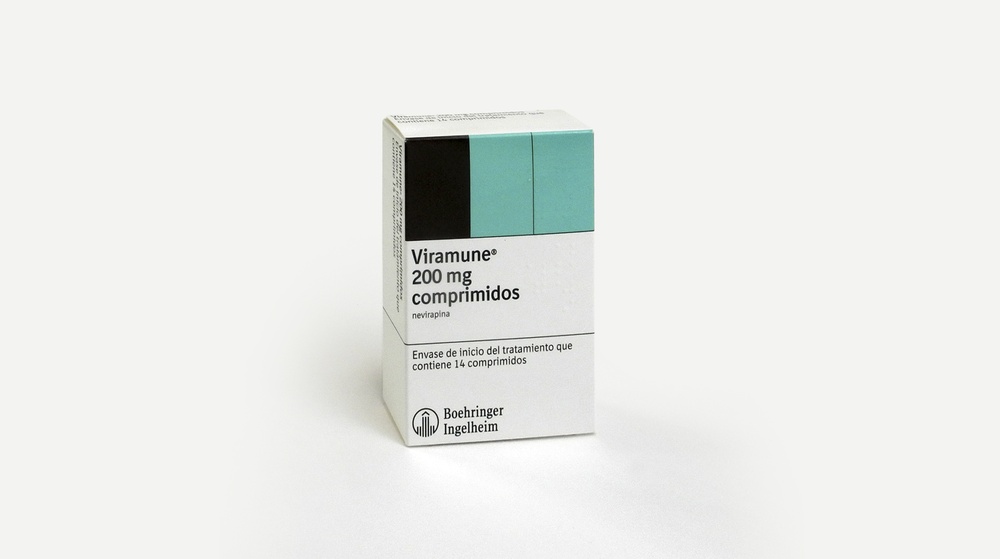
VIRAMUNE 200 mg COMPRIMIDOS



Cómo usar VIRAMUNE 200 mg COMPRIMIDOS
Traducción generada por IA
Este contenido ha sido traducido automáticamente y se ofrece solo con fines informativos. No sustituye la consulta con un profesional sanitario.
Ver originalContenido del prospecto
Introducción
Prospecto: información para el usuario
Viramune 200mg comprimidos
nevirapina
Lea todo el prospecto detenidamente antes de empezar a tomar este medicamento, porque contiene información importante para usted.
- Conserve este prospecto, ya que puede tener que volver a leerlo.
- Si tiene alguna duda, consulte a su médico o farmacéutico.
- Este medicamento se le ha recetado solamente a usted, y no debe dárselo a otras personas aunque tengan los mismos síntomas que usted, ya que puede perjudicarles.
- Si experimenta efectos adversos, consulte a su médico o farmacéutico, incluso si se trata de efectos adversos que no aparecen en este prospecto. Ver sección 4.
Contenido del prospecto
- Qué es Viramune y para qué se utiliza
- Qué necesita saber antes de empezar a tomar Viramune
- Cómo tomar Viramune
- Posibles efectos adversos
- Conservación de Viramune
- Contenido del envase e información adicional
1. Qué es Viramune y para qué se utiliza
Viramune pertenece a un grupo de medicamentos denominados antirretrovirales, que se utilizan en el tratamiento de la infección por el Virus de la Inmunodeficiencia Humana (VIH).
El principio activo de este medicamento se llama nevirapina. Nevirapina pertenece a una clase de medicamentos anti‑VIH llamados inhibidores no nucleósidos de la transcriptasa inversa (INNTIs). La transcriptasa inversa es un enzima que el VIH necesita para multiplicarse. Nevirapina impide el funcionamiento de la transcriptasa inversa. Impidiendo el funcionamiento de la transcriptasa inversa, Viramune ayuda a controlar la infección por VIH‑1.
Viramune está indicado en el tratamiento de adultos, adolescentes y niños de cualquier edad infectados por VIH‑1. Debe tomar Viramune junto con otros medicamentos antirretrovirales. Su médico le indicará los medicamentos adecuados para usted.
Si se le ha recetado Viramune a su hijo, tenga en cuenta que toda la información de este prospecto está dirigida a su hijo (en este caso, cuando lea “usted” sustitúyalo por “su hijo”).

2. Qué necesita saber antes de empezar a tomar Viramune
No tome Viramune
si es alérgico a nevirapina o a alguno de los demás componentes de este medicamento (incluidos en la sección 6)
- si ha tomado Viramune con anterioridad y tuvo que interrumpir el tratamiento porque padeció:
- erupción grave en la piel
- erupción en la piel con otros síntomas como por ejemplo:
- fiebre
- formación de ampollas
- llagas en la boca
- inflamación del ojo
- hinchazón de la cara
- hinchazón general
- dificultad para respirar
- dolor muscular o de las articulaciones
- malestar general
- dolor abdominal
- reacciones de hipersensibilidad (alergia)
- inflamación del hígado (hepatitis)
- si padece enfermedad grave del hígado
- si ha tenido que interrumpir el tratamiento con Viramune en el pasado debido a cambios en la función de su hígado
- si está utilizando algún medicamento que contenga hipérico o hierba de San Juan (Hypericum perforatum). Este producto puede producir que Viramune deje de funcionar adecuadamente.
Advertencias y precauciones
Consulte a su médico o farmacéutico antes de empezar a tomar Viramune.
Durante las primeras18semanasde tratamiento con Viramune es muy importante que usted y su médico vigilen la aparición de reacciones hepáticas o cutáneas.Estas reacciones pueden llegar a ser graves e incluso suponer un riesgo para la vida.El riesgo de padecer estas reacciones es mayor durante las primeras 6semanas de tratamiento.
Si experimenta erupción grave o hipersensibilidad (reacciones alérgicas que pueden aparecer en forma de erupción) junto con otros efectos adversos como
DEBE DEJAR DE TOMAR VIRAMUNE Y PONERSE EN CONTACTO con su médico INMEDIATAMENTE, ya que estas reacciones pueden suponer un riesgo para la vida o producir la muerte. Si alguna vez experimenta solamente síntomas de erupción leve sin ninguna otra reacción, informe a su médico inmediatamente, quien le indicará si debe dejar de tomar Viramune. Si experimenta síntomas que sugieran daño en el hígado, tales como
debe dejar de tomar Viramune y debe contactar con su médico inmediatamente. Si padece reacciones hepáticas, cutáneas o de hipersensibilidad graves mientras está tomando Viramune, NO VUELVA A TOMAR VIRAMUNE sin antes haber consultado a su médico. Debe tomar su dosis de Viramune tal y como le ha indicado su médico. Esto es especialmente importante durante los primeros 14 días de tratamiento (ver más información en “Cómo tomar Viramune”). |
Los siguientes pacientes presentan mayor riesgo de desarrollar problemas en el hígado:
- mujeres
- pacientes infectados de hepatitis B o C
- anomalías en las pruebas de función hepática
- pacientes naïve con mayores contajes de células CD4+ al principio del tratamiento con Viramune (mujeres con más de 250 células/mm³, hombres con más de 400 células/mm³)
pacientes pretratados con carga viral de VIH-1
- detectable en plasma y contajes de células CD4+ mayores al inicio del tratamiento con Viramune (mujeres con más de 250 células/mm³, hombres con más de 400 células/mm³)
En algunos pacientes con infección por VIH (SIDA) avanzada y antecedentes de infección oportunista (enfermedad definitoria de SIDA) pueden aparecer signos y síntomas de inflamación de infecciones previas poco después de iniciar el tratamiento anti-VIH. Se cree que estos síntomas son debidos a una mejoría en la respuesta inmune del organismo, permitiéndole combatir infecciones que estaban presentes sin ningún síntoma aparente. Si usted observa cualquier síntoma de infección, por favor informe a su médico inmediatamente.
Además de las infecciones oportunistas, también pueden aparecer trastornos autoinmunitarios (una afección que ocurre cuando el sistema inmunitario ataca tejido corporal sano) después de que usted haya empezado a tomar medicamentos para el tratamiento de su infección por VIH. Los trastornos autoinmunitarios pueden aparecer muchos meses después del inicio del tratamiento. Si observa cualquier síntoma de infección u otros síntomas como por ejemplo debilidad muscular, debilidad que empieza en las manos y pies y que asciende hacia el tronco del cuerpo, palpitaciones, temblor o hiperactividad, informe a su médico inmediatamente para recibir el tratamiento necesario.
Se pueden producir cambios en la grasa corporal en pacientes que están recibiendo tratamiento antirretroviral combinado. Consulte a su médico si observa cambios en la grasa corporal (ver sección 4 “Posibles efectos adversos”).
En algunos pacientes que reciben tratamiento antirretroviral combinado se puede desarrollar una enfermedad de los huesos llamada osteonecrosis (la muerte de tejido óseo causada por la pérdida de aporte de sangre en el hueso). La duración del tratamiento antirretroviral combinado, el uso de corticosteroides, el consumo de alcohol, la debilidad grave del sistema inmune y el índice de masa corporal elevado pueden ser algunos de los numerosos factores de riesgo para desarrollar esta enfermedad. Los síntomas de la osteonecrosis son: rigidez en las articulaciones, dolor y molestias especialmente en cadera, rodilla y hombro, y dificultad de movimiento. Si usted nota cualquiera de estos síntomas, comuníqueselo a su médico.
Si está tomando nevirapina y zidovudina de forma conjunta, informe a su médico porque puede que deba comprobar sus glóbulos blancos.
No tome Viramune después de una exposición a VIH a menos que se le haya diagnosticado VIH y su médico le haya indicado hacerlo.
No se debe utilizar prednisona para tratar erupciones asociadas a Viramune.
Si está tomando anticonceptivos orales (p. ej. “la píldora”) u otros métodos hormonales de control de la natalidad mientras está en tratamiento con Viramune, debe utilizar adicionalmente un método anticonceptivo de barrera (p. ej. preservativos) para prevenir el embarazo y la transmisión del VIH.
Si está recibiendo terapia hormonal posmenopáusica, consulte a su médico antes de tomar este medicamento.
Si está tomando o si se le receta rifampicina para tratar la tuberculosis, informe a su médico antes de tomar este medicamento con Viramune.
Niños y adolescentes
Viramune comprimidos se puede utilizar en:
- niños de 16 años de edad o mayores
- niños menores de 16 años:
- de peso igual o superior a 50 kg
- o cuya superficie corporal sea superior a 1,25 m2.
Para niños más pequeños está disponible una forma líquida en suspensión oral.
Otros medicamentos y Viramune
Informe a su médico o farmacéutico si está tomando, ha tomado recientemente o pudiera tener que tomar cualquier otro medicamento. Antes de empezar a tomar Viramune, informe a su médico de todos los demás medicamentos que esté tomando. Es posible que su médico necesite controlar si sus otros medicamentos todavía funcionan y realizar ajustes de dosis. Lea atentamente el prospecto de todos los otros medicamentos anti-VIH que toma en combinación con Viramune.
Es especialmente importante que informe a su médico si está tomando o ha tomado recientemente:
- hipérico o hierba de San Juan (Hypericum perforatum, planta medicinal para el tratamiento de la depresión)
- rifampicina (medicamento para el tratamiento de la tuberculosis)
- rifabutina (medicamento para el tratamiento de la tuberculosis)
- macrólidos p.ej. claritromicina (medicamento para el tratamiento de infecciones bacterianas)
- fluconazol (medicamento para el tratamiento de infecciones por hongos)
- ketoconazol (medicamento para el tratamiento de infecciones por hongos)
- itraconazol (medicamento para el tratamiento de infecciones por hongos)
- metadona (medicamento utilizado para el tratamiento de la adicción a los opiáceos)
- warfarina (medicamento para reducir la formación de coágulos en sangre)
- anticonceptivos hormonales (p. ej. “la píldora”)
- atazanavir (otro medicamento para el tratamiento de la infección por VIH)
- lopinavir/ritonavir (otro medicamento para el tratamiento de la infección por VIH)
- fosamprenavir (otro medicamento para el tratamiento de la infección por VIH)
- efavirenz (otro medicamento para el tratamiento de la infección por VIH)
- etravirina (otro medicamento para el tratamiento de la infección por VIH)
- rilpivirina (otro medicamento para el tratamiento de la infección por VIH)
- zidovudina (otro medicamento para el tratamiento de la infección por VIH)
- elvitegravir/cobicistat (otro medicamento para el tratamiento de la infección por VIH)
Su médico controlará cuidadosamente el efecto de Viramune y de cualquiera de estos medicamentos si los está utilizando a la vez.
Si está siendo sometido a diálisis de riñón, su médico puede considerar necesario ajustar la dosis de Viramune, porque Viramune puede ser parcialmente eliminado de la sangre mediante la diálisis.
Toma de Viramune con alimentos y bebidas
No existen restricciones para la toma de Viramune con los alimentos y bebidas.
Embarazo y lactancia
Si está embarazada, cree que podría estar embarazada o tiene intención de quedarse embarazada, consulte a su médico o farmacéutico antes de utilizar este medicamento.
No se recomiendaque las mujeres que conviven con el VIH den el pecho porque la infección por VIH se puede transmitir al bebé a través de la leche materna.
Si está dando el pecho o piensa en dar el pecho, debe consultarconsu médico lo antes posible.
Conducción y uso de máquinas
Mientras esté tomando Viramune puede experimentar cansancio. Debe tener precaución cuando realice actividades como conducir o utilizar máquinas. Si experimenta cansancio, debe evitar realizar tareas potencialmente peligrosas tales como conducir o utilizar máquinas.
Viramune contiene lactosa y sodio
Los comprimidos de Viramune contienen lactosa (azúcar de la leche).
Si su médico le ha indicado que padece una intolerancia a ciertos azúcares, consulte con él antes de tomar este medicamento.
Los comprimidos de Viramune contienen menos de 1 mmol de sodio (23 mg) por comprimido; esto es, esencialmente “exento de sodio”.
3. Cómo tomar Viramune
No debe utilizar Viramune por su cuenta. Debe utilizarlo con al menos otros dos medicamentos antirretrovirales. Su médico le recomendará los medicamentos adecuados para usted.
Siga exactamente las instrucciones de administración de este medicamento indicadas por su médico. En caso de duda, consulte de nuevo a su médico o farmacéutico.
Dosis:
La dosis es de un comprimido de 200 mg al día durante los primeros 14 días de tratamiento (periodo “inicial”). Después de 14 días, la dosis habitual es de un comprimido de 200 mg dos veces al día.
Es muy importante que tome solamente un comprimido al día de Viramune durante los primeros 14 días (periodo “inicial”). Si tiene alguna erupción durante este periodo, no aumente la dosis y consulte a su médico.
Se ha demostrado que el periodo “inicial” de 14 días disminuye el riesgo de padecer erupción en la piel.
Como Viramune siempre se debe tomar en combinación con otros medicamentos antirretrovirales, debe seguir las instrucciones de sus otros medicamentos cuidadosamente. Estas se proporcionan en los prospectos de estos medicamentos.
Viramune está también disponible en una forma líquida en suspensión oral. Es particularmente adecuada si:
- tiene problemas para tragar comprimidos
- en niños de peso inferior a 50 kg
- en niños cuya superficie corporal sea inferior a 1,25 m2 (su médico determinará la superficie corporal)
Debe seguir tomando Viramune todo el tiempo que le indique su médico.
Como se ha explicado anteriormente, en la sección ‘Advertencias y precauciones’, su médico le controlará con pruebas hepáticas y vigilando la aparición de efectos adversos como erupción. Es posible que dependiendo de los resultados, su médico decida interrumpir o suprimir el tratamiento con Viramune. Asimismo, su médico podría decidir reiniciar el tratamiento a dosis inferiores.
Viramune solo se debe tomar por vía oral. No mastique el comprimido. Puede tomar Viramune con o sin alimentos.
Si toma más Viramune del que debe
No tome más Viramune del prescrito por su médico y del que está descrito en este prospecto. Actualmente hay poca información sobre los efectos de una sobredosis de Viramune. Consulte a su médico si ha tomado más Viramune del que debe.
Si olvidó tomar Viramune
Procure no olvidar ninguna dosis. Si se da cuenta de que ha olvidado tomar una dosis dentro de las 8 horas posteriores a la hora programada, tome la dosis siguiente lo antes posible. Si han pasado más de 8 horas de la hora programada, solamente tome la siguiente dosis a la hora habitual.
Si interrumpe el tratamiento con Viramune
Tomar las dosis a las horas indicadas:
- aumenta en gran manera la eficacia de su combinación de medicamentos antirretrovirales
- disminuye las posibilidades de que la infección por VIH se vuelva resistente a los medicamentos antirretrovirales
Es importante que continúe tomando Viramune de forma correcta, tal como se ha descrito anteriormente salvo que su médico le indique que debe interrumpir el tratamiento.
Si interrumpe la administración de Viramune durante más de 7 días, su médico le indicará que comience otra vez con el periodo “inicial” de 14 días (como se ha descrito anteriormente), antes de volver a la toma de dos dosis diarias.
Si tiene cualquier otra duda sobre el uso de este medicamento, pregunte a su médico o farmacéutico.

4. Posibles efectos adversos
Durante el tratamiento del VIH puede haber un aumento en el peso corporal y en los niveles de glucosa y lípidos en la sangre. Esto puede estar en parte relacionado con la recuperación de la salud y con el estilo de vida y en el caso del aumento de los lípidos en la sangre, algunas veces puede ser debido a los medicamentos para el VIH por sí mismos. Su médico le controlará estos cambios.
Al igual que todos los medicamentos, este medicamento puede producir efectos adversos, aunque no todas las personas los sufran.
Como se ha mencionado ya en ‘Advertencias y precauciones’,los efectos adversos más importantes de Viramune son reacciones cutáneas graves y que suponen un riesgo para la vida y daños graves del hígado. Estas reacciones se producen principalmente durante las primeras 18 semanas de tratamiento con Viramune. Este es, por lo tanto, un periodo importante que requiere la estrecha monitorización de su médico.
Si observa algún síntoma de erupción, informe a su médico inmediatamente.
Cuando la erupción se produce, normalmente es de leve a moderada. Sin embargo, en algunos pacientes aparece una erupción en forma de reacción cutánea vesicular que puede ser grave o suponer un riesgo para la vida (síndrome de Stevens-Johnson y necrólisis epidérmica tóxica), habiéndose registrado víctimas mortales. La mayoría de los casos de erupción tanto grave como leve/moderada, se producen durante las primeras seis semanas de tratamiento.
Si aparece la erupción y además siente malestar general, debe interrumpir el tratamiento y acudir inmediatamente a su médico.
Se pueden producir reacciones de hipersensibilidad (alergia). Tales reacciones pueden aparecer en forma de anafilaxis (un tipo grave de reacción alérgica) con síntomas como:
- erupción
- hinchazón de la cara
- dificultad para respirar (espasmo bronquial)
- shock anafiláctico
Las reacciones de hipersensibilidad también se pueden presentar como una erupción con otros efectos adversos como:
- fiebre
- formación de ampollas en la piel
- llagas en la boca
- inflamación del ojo
- hinchazón de la cara
- hinchazón general
- dificultad para respirar
- dolor muscular o de las articulaciones
- disminución del número de glóbulos blancos de la sangre (granulocitopenia)
- malestar general
- problemas graves del hígado o los riñones (fallo del hígado o los riñones)
Si experimenta erupción y cualquiera de los demás efectos adversos de una reacción de hipersensibilidad (alergia), informe a su médico inmediatamente. Estas reacciones pueden producir la muerte.
Se han descrito anomalías de la función hepática con el uso de Viramune. Esto incluye algunos casos de inflamación del hígado (hepatitis), que puede ser repentina e intensa (hepatitis fulminante) y fallo hepático, pudiendo ambas ser mortales.
Informe a su médico si experimenta cualquiera de los siguientes síntomas clínicos de daño en el hígado:
- pérdida de apetito
- malestar general (náuseas)
- vómitos
- coloración amarilla de la piel (ictericia)
- dolor abdominal
Los efectos adversos descritos a continuación se han presentado en pacientes a los que se administró Viramune:
Muy frecuentes (pueden afectar a más de 1 de cada 10 personas):
- erupción
Frecuentes (pueden afectar hasta 1 de cada 10 personas):
- disminución del número de células blancas de la sangre (granulocitopenia)
- reacciones alérgicas (hipersensibilidad)
- dolor de cabeza
- malestar general (náuseas)
- vómitos
- dolor abdominal
- diarrea
- inflamación del hígado (hepatitis)
- sensación de cansancio (fatiga)
- fiebre
- anomalías en las pruebas de función del hígado
Poco frecuentes (pueden afectar hasta 1 de cada 100 personas):
- reacciones alérgicas caracterizadas por erupción, inflamación de la cara, dificultad para respirar (espasmo bronquial) o shock anafiláctico
- disminución del número de células rojas de la sangre (anemia)
- coloración amarilla de la piel (ictericia)
- erupciones de la piel graves y potencialmente mortales (Síndrome de Stevens-Johnson /necrólisis epidérmica tóxica)
- urticaria
- líquido bajo la piel (angioedema)
- dolor articular (artralgia)
- dolor muscular (mialgia)
- disminución del fósforo en sangre
- aumento de la presión arterial
Raros (pueden afectar hasta 1 de cada 1.000 personas):
- inflamación del hígado intensa y repentina (hepatitis fulminante)
- reacción medicamentosa con síntomas sistémicos (reacción medicamentosa con eosinofilia y síntomas sistémicos)
Cuando se ha utilizado Viramune en asociación con otros medicamentos antirretrovirales, se han registrado también los siguientes acontecimientos:
- disminución del número de glóbulos rojos o plaquetas
- inflamación del páncreas
- disminución o anomalías en las sensaciones cutáneas
Estos efectos están generalmente asociados con otros agentes antirretrovirales y se pueden producir cuando Viramune se usa en asociación con otros agentes; sin embargo, es poco probable que estos efectos se deban al tratamiento con Viramune.
Otros efectos adversos en niños y adolescentes
Se puede producir una disminución de los glóbulos blancos (granulocitopenia), más frecuentemente en niños. La disminución de los glóbulos rojos (anemia), que puede estar relacionada con el tratamiento con nevirapina, también es más frecuente en niños. Al igual que ocurre con los síntomas de erupción, informe a su médico de cualquier efecto adverso.
Comunicación de efectos adversos
Si experimenta cualquier tipo de efecto adverso, consulte a su médico o farmacéutico, incluso si se trata de posibles efectos adversos que no aparecen en este prospecto. También puede comunicarlos directamente a través del sistema nacional de notificación incluido en el Apéndice V. Mediante la comunicación de efectos adversos usted puede contribuir a proporcionar más información sobre la seguridad de este medicamento.
5. Conservación de Viramune
Mantener este medicamento fuera de la vista y del alcance de los niños.
No utilice este medicamento después de la fecha de caducidad que aparece en el envase y en el blíster después de “CAD”. La fecha de caducidad es el último día del mes que se indica.
Este medicamento no requiere condiciones especiales de conservación.
Los medicamentos no se deben tirar por los desagües ni a la basura. Pregunte a su farmacéutico cómo deshacerse de los envases y de los medicamentos que ya no necesita. De esta forma, ayudará a proteger el medio ambiente.
6. Contenido del envase e información adicional
Composición de Viramune
- El principio activo es nevirapina. Cada comprimido contiene 200 mg de nevirapina.
- Los demás componentes son:
- celulosa microcristalina,
- lactosa (en forma de monohidrato),
- povidona K25,
- carboximetilalmidón de sódico,
- dióxido de sílice coloidal y
- estearato de magnesio.
Aspecto del producto y contenido del envase
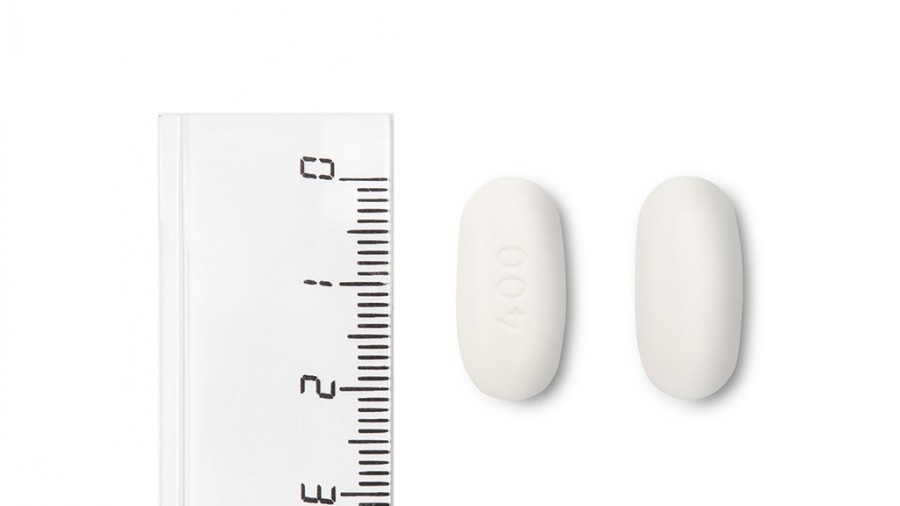
Comprimidos blancos, ovalados, biconvexos. Una cara está marcada con el código “54 193”, con una única ranura que separa el “54” del “193”. La cara opuesta está marcada con el símbolo de la compañía. La ranura no se debe utilizar para partir el comprimido.
Viramune comprimidos se presenta en blísteres con 14, 60 ó 120 comprimidos por caja. Puede que solamente estén comercializados algunos tamaños de envases.
Viramune también está disponible en forma de suspensión oral.
Titular de la autorización de comercialización
Boehringer Ingelheim International GmbH
Binger Strasse 173
55216 Ingelheim am Rhein
Alemania
Responsable de la fabricación
Boehringer Ingelheim Pharma GmbH & Co. KG
Binger Strasse 173
55216 Ingelheim am Rhein
Alemania
o
Boehringer Ingelheim Hellas Single Member S.A.
5th km Paiania – Markopoulo
Koropi Attiki, 19441
Grecia
o
Boehringer Ingelheim France
100-104 avenue de France
75013 Paris
Francia
Pueden solicitar más información respecto a este medicamento dirigiéndose al representante local del titular de la autorización de comercialización:
België/Belgique/Belgien Boehringer Ingelheim Scomm Tél/Tel: +32 2 773 33 11 | Lietuva Boehringer Ingelheim RCV GmbH & Co KG Lietuvos filialas Tel.: +370 5 2595942 |
| Luxembourg/Luxemburg Boehringer Ingelheim Scomm Tél/Tel: +32 2 773 33 11 |
Ceská republika Boehringer Ingelheim spol. s r.o. Tel: +420 234 655 111 | Magyarország Boehringer Ingelheim RCV GmbH & Co KG Magyarországi Fióktelepe Tel.: +36 1 299 8900 |
Danmark Boehringer Ingelheim Danmark A/S Tlf: +45 39 15 88 88 | Malta Boehringer Ingelheim Ireland Ltd. Tel: +35 31 295 9620 |
Deutschland Boehringer Ingelheim Pharma GmbH & Co. KG Tel: +49 (0) 800 77 90 900 | Nederland Boehringer Ingelheim B.V. Tel: +31 (0) 800 22 55 889 |
Eesti Boehringer Ingelheim RCV GmbH & Co KG Eesti filiaal Tel: +372 612 8000 | Norge Boehringer Ingelheim Danmark Norwegian branch Tlf: +47 66 76 13 00 |
Ελλáδα Boehringer Ingelheim Ελλáς Μονοπρóσωπη Α.Ε. Tηλ: +30 2 10 89 06 300 | Österreich Boehringer Ingelheim RCV GmbH & Co KG Tel: +43 1 80 105-7870 |
España Boehringer Ingelheim España, S.A. Tel: +34 93 404 51 00 | Polska Boehringer Ingelheim Sp. z o.o. Tel.: +48 22 699 0 699 |
France Boehringer Ingelheim France S.A.S. Tél: +33 3 26 50 45 33 | Portugal Boehringer Ingelheim Portugal, Lda. Tel: +351 21 313 53 00 |
Hrvatska Boehringer Ingelheim Zagreb d.o.o. Tel: +385 1 2444 600 | România Boehringer Ingelheim RCV GmbH & Co KG Viena - Sucursala Bucuresti Tel: +40 21 302 2800 |
Ireland Boehringer Ingelheim Ireland Ltd. Tel: +353 1 295 9620 | Slovenija Boehringer Ingelheim RCV GmbH & Co KG Podružnica Ljubljana Tel: +386 1 586 40 00 |
Ísland Vistor hf. Tel: +354 535 7000 | Slovenská republika Boehringer Ingelheim RCV GmbH & Co KG organizacná zložka Tel: +421 2 5810 1211 |
Italia Boehringer Ingelheim Italia S.p.A. Tel: +39 02 5355 1 | Suomi/Finland Boehringer Ingelheim Finland Ky Puh/Tel: +358 10 3102 800 |
Κúπρος Boehringer Ingelheim Ελλáς Μονοπρóσωπη Α.Ε. Tηλ: +30 2 10 89 06 300 | Sverige Boehringer Ingelheim AB Tel: +46 8 721 21 00 |
Latvija Boehringer Ingelheim RCV GmbH & Co KG Latvijas filiale Tel: +371 67 240 011 | United Kingdom (Northern Ireland) Boehringer Ingelheim Ireland Ltd. Tel: +353 1 295 9620 |

Fecha de la última revisión de este prospecto:{MM/AAAA}
Otras fuentes de información
La información detallada de este medicamento está disponible en la página web de la Agencia Europea de Medicamentos: http://www.ema.europa.eu.
- País de registro
- Forma farmacéuticaCOMPRIMIDO, 200mg
- Código ATCJ05AG01
- Principio activo
- Requiere recetaSí
- Fabricante
- Esta información es de carácter general y no sustituye la consulta con un profesional sanitario.
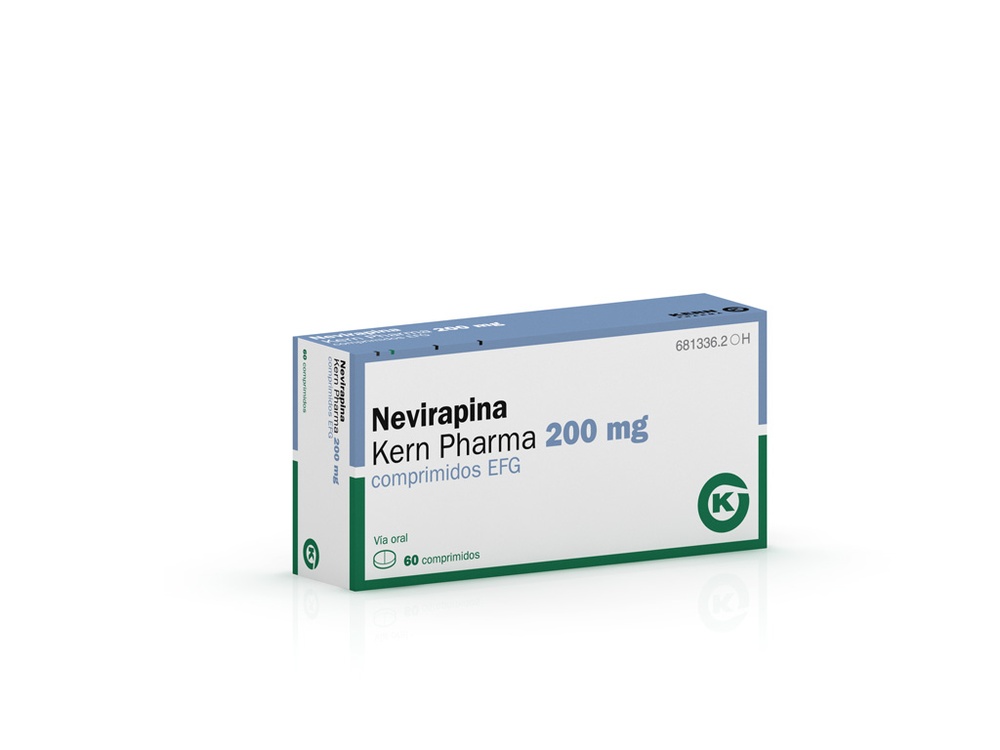
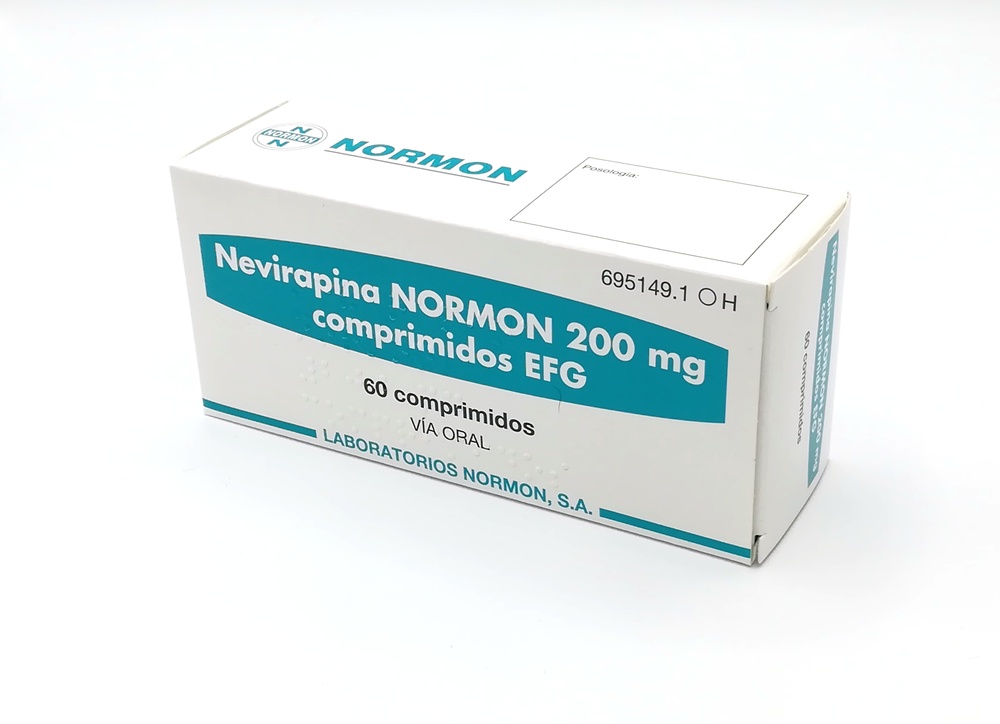
- Alternativas a VIRAMUNE 200 mg COMPRIMIDOSForma farmacéutica: COMPRIMIDO LIBERACION MODIFICADA, 400 mgPrincipio activo: NevirapinaFabricante: Aurovitas Spain, S.A.U.Requiere recetaForma farmacéutica: COMPRIMIDO, 200 mgPrincipio activo: NevirapinaFabricante: Kern Pharma S.L.Requiere recetaForma farmacéutica: COMPRIMIDO, 200 mgPrincipio activo: NevirapinaFabricante: Laboratorios Normon S.A.Requiere receta
Médicos online para VIRAMUNE 200 mg COMPRIMIDOS
Comenta la dosis, los posibles efectos secundarios, interacciones, contraindicaciones o la revisión de receta de VIRAMUNE 200 mg COMPRIMIDOS, sujeto a valoración médica y a la normativa local.











Preguntas frecuentes
