

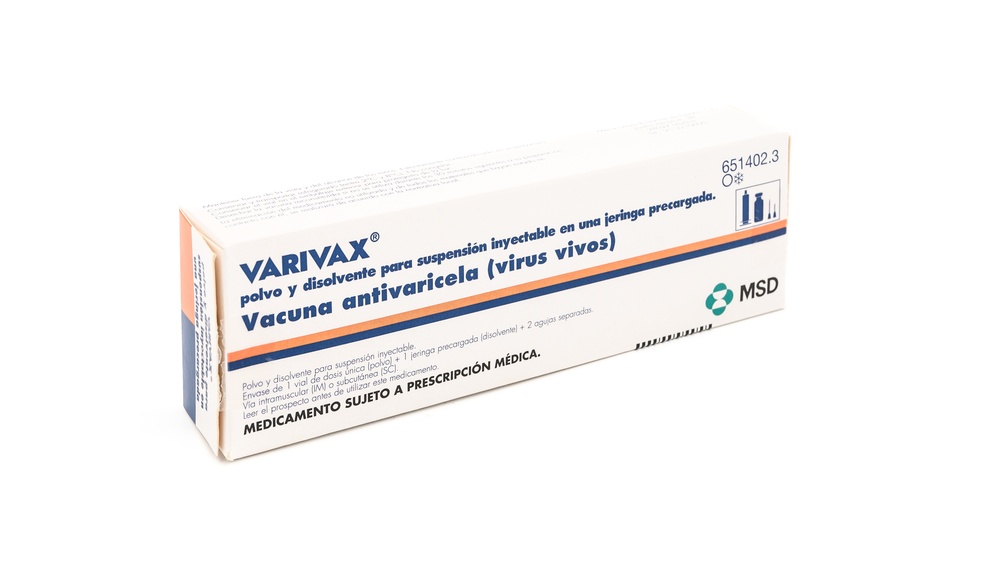
VARIVAX 1350 UFP/0.5 ml Inyectable





Cómo usar VARIVAX POLVO Y DISOLVENTE PARA SUSPENSION INYECTABLE EN JERINGA PRECARGADA
Traducción generada por IA
Este contenido ha sido traducido automáticamente y se ofrece solo con fines informativos. No sustituye la consulta con un profesional sanitario.
Ver originalContenido del prospecto
Introducción
Prospecto: información para el usuario
VARIVAX polvo y disolvente para suspensión inyectableen jeringa precargada
vacuna antivaricela (virus vivos)
Lea todo el prospecto detenidamente antes de que usted o su hijo sean vacunados, porque contiene información importante para usted.
- Conserve este prospecto, ya que puede tener que volver a leerlo.
- Si tiene alguna duda, consulte a su médico o farmacéutico.
- Esta vacuna se le ha recetado a usted o a su hijo y no debe dársela a otras personas.
- Si experimenta efectos adversos, consulte a su médico o farmacéutico, incluso si se trata de efectos adversos que no aparecen en este prospecto. Ver sección 4.
Contenido del prospecto:
- Qué es VARIVAX y para qué se utiliza
- Qué necesita saber antes de que usted o su hijo reciban VARIVAX
- Cómo administrar VARIVAX
- Posibles efectos adversos
- Conservación de VARIVAX
- Contenido del envase e información adicional
1. Qué es VARIVAX y para qué se utiliza
VARIVAX es una vacuna que ayuda a proteger a adultos y niños frente a la varicela. Las vacunas se utilizan para protegerle a usted o a su hijo frente a enfermedades infecciosas.
VARIVAX puede administrarse a personas de edad igual o superior a 12 meses.
VARIVAX se puede administrar a niños a partir de 9 meses de edad bajo circunstancias especiales, como para cumplir con los calendarios nacionales de vacunación o en situaciones de brote epidémico.
También puede administrarse a personas que no tienen historial de varicela, pero que han estado expuestos a alguien que la padece.
La vacunación dentro de los 3 días tras la exposición puede ayudar a prevenir la varicela o reducir la gravedad de la enfermedad, de modo que se produzcan menos lesiones de la piel y se reduzca la duración de la enfermedad. Además, existe información limitada que indica que la vacunación hasta 5 días después de la exposición puede reducir la gravedad de la enfermedad.
Como sucede con otras vacunas, VARIVAX no protege completamente a todos los individuos frente a la varicela adquirida de modo natural.

2. Qué necesita saber antes de que usted o su hijo reciban VARIVAX
No use VARIVAX si:
- usted o su hijo es alérgico a cualquier vacuna de varicela, o a alguno de los demás componentes de esta vacuna (incluidos en la sección 6) o neomicina (que puede estar presente como residuo en cantidades de trazas).
- usted o su hijo tiene alguna alteración de la sangre o cualquier tipo de cáncer maligno, incluyendo leucemia y linfomas que afectan al sistema inmune.
- usted o su hijo está recibiendo terapia inmunosupresora (incluyendo altas dosis de corticoesteroides).
- usted o su hijo padece alguna enfermedad (como Virus de la Inmunodeficiencia Humana (VIH) o Síndrome de Inmunodeficiencia adquirida (SIDA)) o está tomando algún medicamento que pueda debilitar el sistema inmune. Que usted o su hijo reciban la vacuna dependerá del nivel de sus defensas.
- usted o su hijo tiene un familiar que ha nacido con inmunodeficiencia, o existe un antecedente familiar de inmunodeficiencia.
- usted o su hijo presenta tuberculosis activa no tratada.
- usted o su hijo presenta fiebre >38,5ºC; sin embargo, una fiebre inferior no es una razón por sí misma para no vacunarse.
- usted está embarazada. Además, se debe evitar el embarazo durante 1 mes después de la vacunación.
Advertencias y precauciones:
En raras circunstancias, es posible contraer varicela, incluyendo varicela grave, de una persona que ha sido vacunada con VARIVAX. Esto puede ocurrir en personas que no hayan sido vacunados previamente o que no hayan tenido varicela, así como en personas que se encuentran en una de las siguientes categorías:
- individuos con un sistema inmunitario debilitado.
- mujeres embarazadas que nunca han padecido varicela.
- recién nacidos cuyas madres nunca han padecido varicela.
Siempre que sea posible, las personas que han sido vacunadas con VARIVAX deben intentar evitar el contacto estrecho, hasta 6 semanas después de la vacunación, con cualquier persona que se encuentre en una de las categorías anteriores. Informe a su médico si alguien se encuentra entre las categorías anteriormente indicadas y se espera que esté en contacto estrecho con la persona que está siendo vacunada.
Consulte a su médico o farmacéutico antes de que usted o su hijo sea vacunado con VARIVAX:
- si usted o su hijo tiene un sistema inmunitario debilitado (ej: Infección por el VIH). Usted o su hijo debe ser vigilado estrechamente ya que la respuesta a la vacunación puede no ser suficiente para asegurar una protección frente a la enfermedad (ver sección 2 “No use VARIVAX si”)
Uso de VARIVAX con otros medicamentos (u otras vacunas):
Informe a su médico o farmacéutico si usted o su hijo está utilizando o ha utilizado recientemente otros medicamentos (u otras vacunas).
Si cualquier tipo de vacuna se tuviera que administrar al mismo tiempo que VARIVAX, su médico o profesional sanitario podrá aconsejarle si se puede administrar o no. VARIVAX puede administrarse al mismo tiempo que las siguientes vacunaciones rutinarias en la infancia: vacuna frente al sarampión, parotiditis y rubéola (MMR), vacunas frente a Haemophilus influenzaetipo b, hepatitis B, difteria, tétanos, pertussis (tos ferina) y vacuna de polio administrada por boca.
VARIVAX se puede administrar con una vacuna antineumocócica conjugada, al mismo tiempo en distintos lugares de inyección.
Se deberá retrasar la vacunación al menos 5 meses después de transfusiones de sangre o plasma o la administración de inmunoglobulina normal humana (una solución estéril de anticuerpos producidos naturalmente a partir de sangre humana de donantes) o de inmunoglobulina de varicela-zóster (IGVZ).
Después de la vacunación con VARIVAX, usted o su hijo no deben recibir ninguna inmunoglobulina, incluida la IGVZ, durante el mes siguiente, a menos que su médico decida que es necesario.
Los receptores de la vacuna deberán evitar los productos que contengan aspirina (salicilatos) durante las 6 semanas siguientes a la vacunación con VARIVAX, ya que puede causar una grave enfermedad llamada síndrome de Reye que puede afectar a todos los órganos del cuerpo.
Embarazo y lactancia
VARIVAX no se debe administrar a mujeres embarazadas.
Si usted está embarazada o en periodo de lactancia, cree que podría estar embarazada o tiene intención de quedarse embarazada, consulte a su médico o farmacéutico antes de que se le administre la vacuna. También es importante que usted no se quede embarazada durante un mes después de la vacunación. Durante este tiempo, se debe utilizar un método anticonceptivo efectivo para evitar el embarazo.
Informe a su médico si está usted en periodo de lactancia o piensa dar el pecho. Su médico decidirá si debe usted recibir VARIVAX.
Conducción y uso de máquinas
No hay información que sugiera que VARIVAX pueda afectar su capacidad para conducir o utilizar máquinas.
VARIVAX contiene sodio
Este medicamento contiene menos de 1 mmol de sodio (23 mg) por dosis; esto es, esencialmente “exento de sodio”.
VARIVAXcontiene potasio
Este medicamento contiene potasio, menos de 1 mmol (39 mg) por dosis; esto es, esencialmente “exento de potasio”.
3. Cómo administrar VARIVAX
VARIVAX debe administrarse por su médico o profesional sanitario.
VARIVAX debe administrarse mediante inyección como se detalla a continuación:
- Bebés de 9 a 12 meses de edad:
En circunstancias especiales (para cumplir con los calendarios nacionales de vacunación o en situaciones de brote epidémico de varicela), VARIVAX se puede administrar entre los 9 y 12 meses de edad. Para asegurar una óptima protección frente a la varicela se necesitan dos dosis de VARIVAX que deben ser administradas después de un intervalo mínimo de 3 meses.
- Niños de 12 meses a 12 años de edad:
Para asegurar una óptima protección frente a la varicela, se deben administrar dos dosis de VARIVAX con un intervalo mínimo de 1 mes.
- Niños de 12 meses a 12 años de edad con VIH asintomático:
VARIVAX debe administrarse en dos dosis mediante inyección con un intervalo de 12 semanas. Pregunte a su médico para más información.
- Adolescentes a partir de 13 años de edad y adultos:
VARIVAX se administra en dos dosis mediante inyección. La segunda dosis deberá administrarse de 4 a 8 semanas después de la primera dosis.
El número de dosis y el momento en que deben ser administradas será determinado por su médico en base a las recomendaciones oficiales.
VARIVAX no debe administrarse a niños menores de 9 meses de edad.
VARIVAX debe inyectarse en el músculo o bajo la piel, bien en la región externa del muslo o en la parte superior del brazo. Habitualmente para inyecciones en el músculo, se prefiere la región del muslo en niños pequeños mientras que para individuos más mayores el lugar de inyección preferido es la región superior del brazo.
Si usted tiene algún trastorno de la coagulación de la sangre o niveles bajos de plaquetas en sangre, la inyección se realizará bajo la piel.
Su médico o profesional sanitario deberán asegurarse de que VARIVAX no se inyecta en el torrente sanguíneo.
Si usa más VARIVAX del que debiera
La sobredosis es muy improbable debido a que la vacuna se presenta en viales de dosis única y se administra por un médico o profesional sanitario.
Si piensa que ha olvidado una dosis de VARIVAX
Contacte con su médico, quien decidirá si se requiere una dosis y cuando administrarla.

4. Posibles efectos adversos
Al igual que todas las vacunas y medicamentos, esta vacuna puede producir efectos adversos, aunque no todas las personas los sufran.
Muy raramente (notificados en menos de 1 de cada 10.000 individuos), podría ocurrir una reacción alérgica grave que puede incluir hinchazón facial, presión sanguínea baja y dificultad para respirar con o sin erupción. Habitualmente estas reacciones se producen muy pronto tras la inyección. Si observa alguno de estos síntomas u otros síntomas graves tras la vacunación, debe buscar atención médica de manera inmediata.
Informe a su médico si observa cualquiera de los siguientes efectos adversos raros o muy raros:
- cardenales o facilidad para sangrar mayor de la normal; manchas del tamaño de la cabeza de un alfiler bajo la piel, planas, de color rojo o púrpura; palidez intensa
- erupción intensa en la piel (úlceras y ampollas que pueden afectar a los ojos, la boca y/o los genitales; manchas rojizas que frecuentemente pican, que empiezan a aparecer en las extremidades y, en algunas ocasiones, en la cara y en el resto del cuerpo) (Síndrome de Stevens-Johnson; eritema multiforme)
- debilidad muscular, sensaciones anómalas, hormigueo en los brazos, piernas y parte alta del cuerpo (Síndrome de Guillain-Barré)
- fiebre, mareos, vómitos, dolor de cabeza, tortícolis y sensibilidad a la luz (meningitis)
- accidente cerebro vascular
- ataques (convulsiones) con o sin fiebre
Se han observado los siguientes efectos adversos:
Reacciones muy frecuentes (notificadas en más de 1 de cada 10individuos):
- fiebre
- enrojecimiento de la piel en el lugar de la inyección, dolor/sensibilidad al tacto/molestias e hinchazón
Reacciones frecuentes (notificadas en menos de 1 de cada 10 pero más de 1 de cada 100individuos):
- infección del tracto respiratorio superior (nariz, garganta y vías respiratorias)
- irritabilidad
- erupción, erupción con manchas planas rojas en la piel y pequeños bultos confluentes, erupción tipo varicela
- erupción en el lugar de la inyección, picor en el lugar de la inyección
Reacciones poco frecuentes (notificadas en menos de 1 de cada 100 pero más de 1 de cada 1.000individuos):
- dolor de cabeza, somnolencia
- secreción y picor en los ojos con costras en los párpados (conjuntivitis)
- tos, congestión nasal, congestión en el pecho, goteo de nariz, pérdida de apetito
- dolor en el estómago con vómitos, calambres, diarrea causada por un virus
- diarrea, vómitos (gastroenteritis)
- infección en el oído, dolor de garganta
- llanto, incapacidad para dormir, alteraciones del sueño
- erupción tipo varicelosa causada por un virus (varicela), enfermedad causada por un virus, inflamación de la piel, enrojecimiento de la piel, ronchas
- debilidad/fatiga, sensación general de malestar, reacción en el lugar de la inyección incluyendo entumecimiento, sangrado, cardenales, endurecimiento de una pequeña área de la piel, sensación de calor, calor al tacto
Reacciones raras (notificadas en menos de 1 de cada 1.000 pero más de 1 de cada 10.000individuos):
- glándulas inflamadas, cardenales o facilidad para sangrar mayor de la normal
- agitación, aumento de las horas de sueño, alteraciones en la marcha, convulsiones con fiebre, temblores
- hinchazón del párpado, irritación del ojo
- dolor de oído
- sensación de congestión nasal a veces con dolor punzante y presión facial o dolor (sinusitis), estornudos, congestión en el pulmón, goteo de nariz (rinitis), respiración sibilante, hinchazón de los bronquios (bronquitis), infección pulmonar, infección pulmonar grave con fiebre, escalofríos, tos, congestión y falta de respiración (neumonía)
- enfermedad tipo gripal
- dolor de estómago, malestar en el estómago y sensación de enfermedad, sangre en las heces, úlceras bucales
- rubor, vesículas, alteraciones en la piel (incluyendo cardenales y ronchas)
- dolor osteomuscular, dolor muscular, rigidez
- reacciones en el lugar de la inyección incluyendo cambio en el color de la piel y erupción en forma de ronchas
Los efectos adversos que han sido notificados durante la comercialización de VARIVAX incluyen:
- enfermedades que afectan al sistema nervioso (cerebro y/o médula espinal) como músculos faciales caídos y párpado caído en un lado de la cara (parálisis de Bell), alteraciones en la marcha, mareos, hormigueo o entumecimiento en manos y pies, inflamación del cerebro (encefalitis), inflamación de las membranas que cubren el cerebro y la médula espinal no provocada por una infección bacteriana (meningitis aséptica), desmayo
- herpes zóster, dolor de garganta (faringitis), manchas de color morado o rojo-marrón visibles a lo largo de la piel (púrpura de Henoch-Schönlein), infecciones bacterianas secundarias de la piel y tejidos blandos (incluida celulitis), varicela, anemia aplásica, que puede incluir cardenales o sangrado con más facilidad de lo normal; manchas del tamaño de la cabeza de un alfiler bajo la piel, planas, de color rojo o púrpura; palidez intensa
Comunicación de efectos adversos
Si experimenta cualquier tipo de efecto adverso, consulte a su médico o farmacéutico, incluso si se trata de posibles efectos adversos que no aparecen en este prospecto. También puede comunicarlos directamente a través del Sistema Español de Farmacovigilancia de medicamentos de Uso Humano: https://www.notificaram.es. Mediante la comunicación de efectos adversos usted puede contribuir a proporcionar más información sobre la seguridad de este medicamento.
5. Conservación de VARIVAX
Mantener esta vacuna fuera de la vista y del alcance de los niños.
No utilice esta vacuna después de la fecha de caducidad que aparece en el envase después de CAD.
La fecha de caducidad es el último día del mes que se indica.
Conservar y transportar refrigerado (entre 2 ºC y 8 ºC). No congelar. Conservar el vial en el embalaje exterior para protegerlo de la luz.
Después de la reconstitución, se deberá utilizar la vacuna inmediatamente. Sin embargo, se ha demostrado la estabilidad de la preparación durante 30 minutos entre +20 ºC y +25 ºC.
Los medicamentos no se deben tirar por los desagües ni a la basura. Pregunte a su farmacéutico cómo deshacerse de los envases y de los medicamentos que ya no necesita. De esta forma, ayudará a proteger el medio ambiente.
6. Contenido del envase e información adicional
Composición de VARIVAX
El principio activo es:virus vivos atenuados de la varicela (cepa Oka/Merck) (producidos en células diploides humanas MRC-5).
Cada dosis de 0,5 ml de la vacuna reconstituida contiene: un mínimo de 1.350 UFP (unidades formadoras de placa) del virus de la varicela (cepa Oka/Merck).
Los demás excipientes son:
Polvo:
Sacarosa, gelatina hidrolizada, urea, cloruro de sodio, L-glutamato monosódico, fosfato de disodio anhidro, fosfato dihidrógeno de potasio y cloruro de potasio.
Trazas de componentes residuales: neomicina
Disolvente:
Agua para preparaciones inyectables.
Aspecto del producto y contenido del envase
Forma farmacéutica: polvo y disolvente para suspensión inyectable.
La vacuna consiste en un polvo blanco a blanquecino en un vial y un disolvente líquido transparente e incoloro en una jeringa precargada. El producto está disponible en envases de 1 ó 10 dosis.
El disolvente se presenta como una jeringa precargada de agua para preparaciones inyectables. El acondicionamiento secundario puede contener además 2 agujas separadas.
Puede que no estén comercializados todos los tamaños de envases
Titular de la autorización de comercialización y responsable de la fabricación
Titular de la autorización de comercialización
Schering-Plough, S.A.
Josefa Valcárcel, 42
28027 Madrid, España
Tel.: 91 3210600
Responsable de la fabricación
Merck Sharp & Dohme BV
Waaderweg 39
2031 BN Haarlem
Países Bajos
Representante local:
Merck Sharp & Dohme de España, S.A.
Josefa Valcárcel, 42
28027 Madrid, España
Tel.: 91 3210600
Este medicamento está autorizado en los estados miembros del Espacio Económico Europeo con los siguientes nombres:
VARIVAX
Bélgica; Bulgaria; República Checa; Dinamarca; Alemania; Estonia; Grecia; España; Francia; Croacia; Irlanda; Islandia; Italia; Chipre; Letonia; Lituania; Luxemburgo; Hungría; Malta; Noruega; Austria; Polonia; Portugal; Rumania, Eslovenia; Eslovaquia; Finlandia; Suecia
PROVARIVAX
Países Bajos
Fecha de la última revisión de este prospecto:01/2025.
La información detallada y actualizada de este medicamento está disponible en la página web de la Agencia Española de Medicamentos y Productos Sanitarios (AEMPS) http://www.aemps.gob.es/
----------------------------------------------------------------------------------------------------------
Esta información está destinada únicamente a profesionales sanitarios:
Instrucciones
Antes de la reconstitución, el vial contiene un polvo blanco a blanquecino y la jeringa precargada contiene un disolvente líquido transparente e incoloro.La vacuna reconstituída es un líquido transparente, de incoloro a amarillo pálido.
Evitar el contacto con desinfectantes.
Para reconstituir la vacuna, utilizar solamente el disovente que se incluye en la jeringa precargada.
Es importante la utilización de una nueva jeringa y nueva aguja estériles para cada individuo con el fin de prevenir la transmisión de agentes infecciosos de una persona a otra.
Se debe utilizar una aguja para la reconstitución y otra aguja distinta para la inyección.
Instrucciones para la preparación de la vacuna
Para colocar la aguja, se debe colocar firmemente en el extremo de la jeringa y asegurarla mediante un giro.
Inyectar el contenido completo de la jeringa precargada en el vial que contiene el polvo. Agitar suavemente para mezclarlo totalmente.
Se deberá inspeccionar visualmente la vacuna reconstituida para detectar cualquier partícula extraña y/o variación en su apariencia física. La vacuna no se debe utilizar si se detecta cualquier partícula extraña o si la apariencia no es un líquido transparente, de incoloro a amarillo pálido después de la reconstitución.
Se recomienda que la vacuna sea administrada inmediatamente después de la reconstitución, para minimizar la pérdida de potencia. Desechar la vacuna reconstituida si no se utiliza durante los 30minutos siguientes a su preparación.
No congelar la vacuna reconstituida.
Extraer el contenido completo del vial en una jeringa, cambiar la aguja e inyectar la vacuna por vía subcutánea o intramuscular.
La eliminación del medicamento no utilizado y de todos los materiales que hayan estado en contacto con él, se realizará de acuerdo con la normativa local.
Ver también la sección 3 Cómo administrar VARIVAX
-

- País de registro
- Forma farmacéuticaINYECTABLE, mínimo de 1350 UFP/0.5 ml dosis
- Código ATCJ07BK01
- Principio activo
- Requiere recetaSí
- Fabricante
- ComposiciónCLORURO DE SODIO (2.1 mg mg), GLUTAMATO SODICO (0.33 mg mg), FOSFATO SODICO DIBASICO (0.30 mg mg), CLORURO POTASICO (53 µg mg), SACAROSA (17 mg mg), FOSFATO POTASICO MONOBASICO (53 µg mg)
- Esta información es de carácter general y no sustituye la consulta con un profesional sanitario.
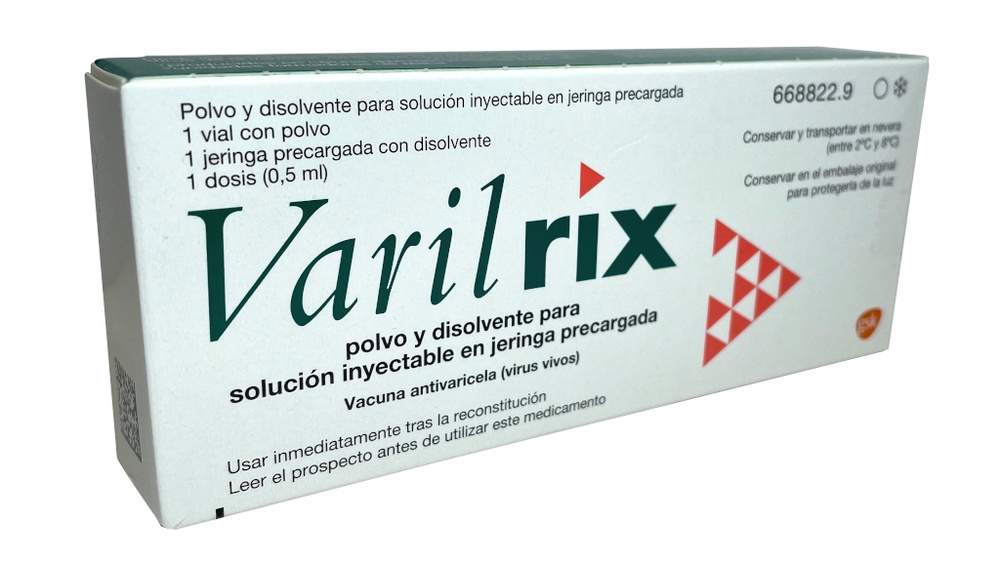
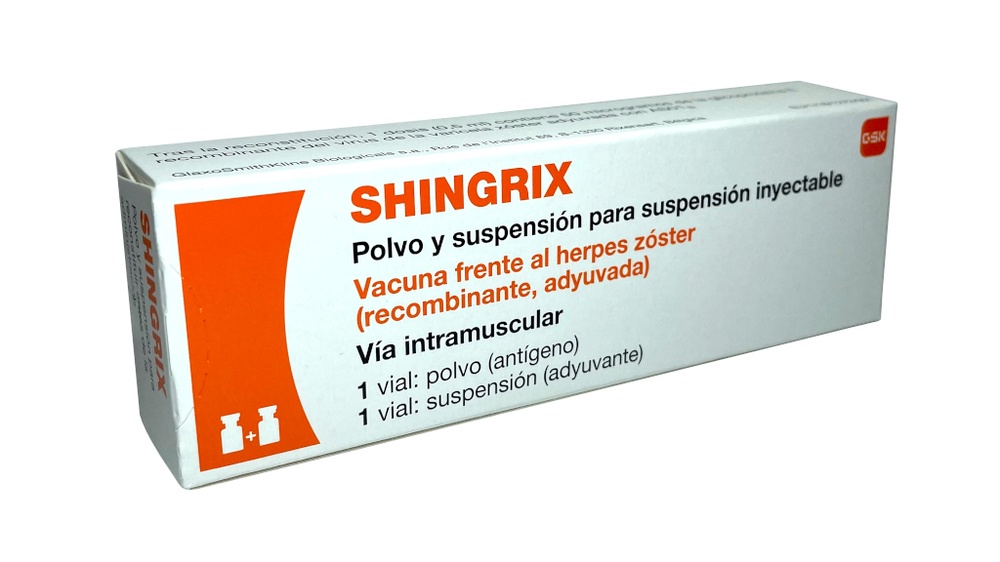
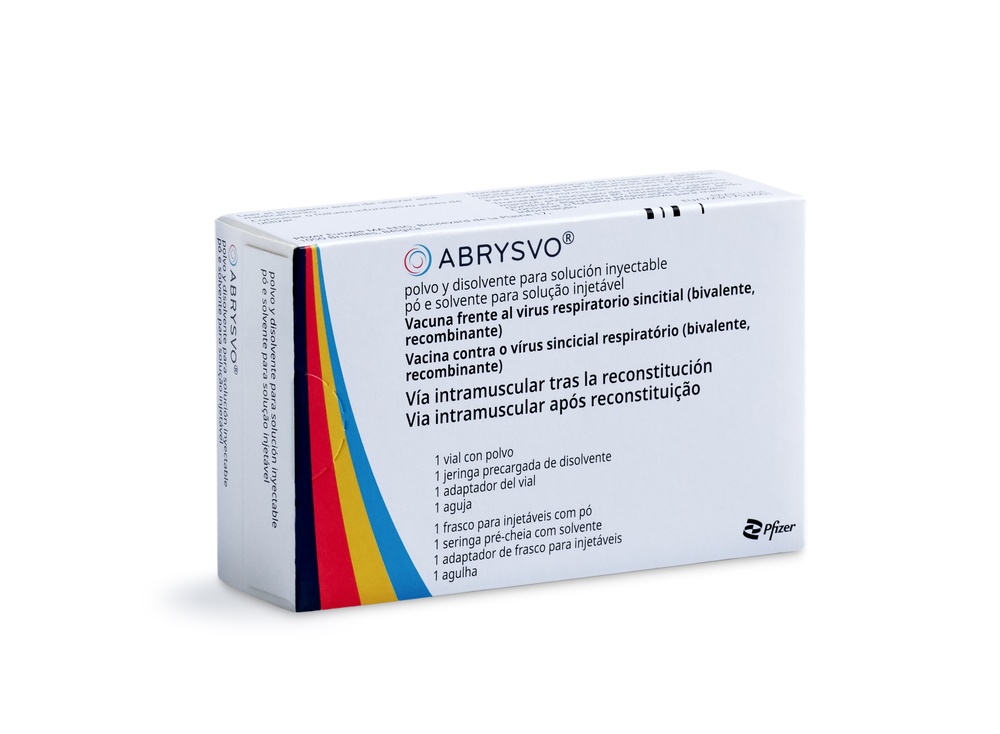
- Alternativas a VARIVAX POLVO Y DISOLVENTE PARA SUSPENSION INYECTABLE EN JERINGA PRECARGADAForma farmacéutica: INYECTABLE, -Principio activo: varicella, live attenuatedFabricante: Glaxosmithkline S.A.Requiere recetaForma farmacéutica: INYECTABLE, 50 microgramosPrincipio activo: zoster, purified antigenFabricante: Glaxosmithkline BiologicalsRequiere recetaForma farmacéutica: INYECTABLE, 60 microgramos/dosis + 60 microgramos/dosisPrincipio activo: respiratory syncytial virus vaccinesFabricante: Pfizer Europe Ma EeigRequiere receta
Médicos online para VARIVAX POLVO Y DISOLVENTE PARA SUSPENSION INYECTABLE EN JERINGA PRECARGADA
Comenta la dosis, los posibles efectos secundarios, interacciones, contraindicaciones o la revisión de receta de VARIVAX POLVO Y DISOLVENTE PARA SUSPENSION INYECTABLE EN JERINGA PRECARGADA, sujeto a valoración médica y a la normativa local.









Obtén una receta de VARIVAX POLVO Y DISOLVENTE PARA SUSPENSION INYECTABLE EN JERINGA PRECARGADA online
Rellena un formulario de 2 minutos
Cuéntanos tus síntomas, historial y el medicamento que necesitas.
Elige un médico o nosotros te asignamos uno
Escoge un especialista o te conectamos con el próximo médico disponible.
El médico revisa tu caso
Normalmente en 30 minutos. Puede hacerte preguntas adicionales por chat.
Recógela en cualquier farmacia
Receta electrónica enviada a tu correo, válida en toda España.
Preguntas frecuentes
¿Se requiere receta para VARIVAX POLVO Y DISOLVENTE PARA SUSPENSION INYECTABLE EN JERINGA PRECARGADA?
VARIVAX POLVO Y DISOLVENTE PARA SUSPENSION INYECTABLE EN JERINGA PRECARGADA requires receta en España. Puedes confirmarlo con un médico online según tu caso.
¿Cuál es el principio activo de VARIVAX POLVO Y DISOLVENTE PARA SUSPENSION INYECTABLE EN JERINGA PRECARGADA?
El principio activo de VARIVAX POLVO Y DISOLVENTE PARA SUSPENSION INYECTABLE EN JERINGA PRECARGADA es varicella, live attenuated. Esta información ayuda a identificar medicamentos con la misma composición pero con diferentes nombres comerciales.
¿Quién fabrica VARIVAX POLVO Y DISOLVENTE PARA SUSPENSION INYECTABLE EN JERINGA PRECARGADA?
VARIVAX POLVO Y DISOLVENTE PARA SUSPENSION INYECTABLE EN JERINGA PRECARGADA es fabricado por Schering Plough S.A.. La marca y el envase pueden variar según el distribuidor.
¿Qué médicos pueden recetar VARIVAX POLVO Y DISOLVENTE PARA SUSPENSION INYECTABLE EN JERINGA PRECARGADA online?
Los Médicos de familia, Psiquiatras, Dermatólogos, Cardiólogos, Endocrinólogos, Gastroenterólogos, Neumólogos, Nefrólogos, Reumatólogos, Hematólogos, Infectólogos, Alergólogos, Geriatras, Pediatras, Oncólogos pueden valorar la prescripción de VARIVAX POLVO Y DISOLVENTE PARA SUSPENSION INYECTABLE EN JERINGA PRECARGADA cuando esté clínicamente indicado. Puedes reservar una videoconsulta para comentar tu caso y las opciones de tratamiento.
¿Cómo comprar VARIVAX POLVO Y DISOLVENTE PARA SUSPENSION INYECTABLE EN JERINGA PRECARGADA en España?
España cuenta con una infraestructura sanitaria bien desarrollada en ciudades principales como Madrid, Barcelona, Valencia y Sevilla. Las farmacias están ampliamente disponibles y operan bajo estrictas regulaciones, garantizando el acceso a medicamentos con receta.
Puedes comprar VARIVAX POLVO Y DISOLVENTE PARA SUSPENSION INYECTABLE EN JERINGA PRECARGADA en Madrid, Barcelona, Sevilla o Valencia en cualquier farmacia local con una receta válida.
Para obtener una receta, puedes utilizar Oladoctor:
¿Cuáles son las alternativas a VARIVAX POLVO Y DISOLVENTE PARA SUSPENSION INYECTABLE EN JERINGA PRECARGADA?
Otros medicamentos con el mismo principio activo (varicella, live attenuated) incluyen VARILRIX POLVO Y DISOLVENTE PARA SOLUCIÓN INYECTABLE EN JERINGA PRECARGADA, SHINGRIX POLVO Y SUSPENSION PARA SUSPENSION INYECTABLE, ABRYSVO POLVO Y DISOLVENTE PARA SOLUCION INYECTABLE. Pueden tener diferentes nombres comerciales o formulaciones, pero contienen el mismo componente terapéutico. Consulta siempre con un médico antes de cambiar o iniciar un nuevo medicamento.
