


Tranxilium 15 mg cápsulas duras

Solicitud de receta online
Un médico revisará tu caso y determinará si la prescripción es médicamente apropiada.

Habla con un médico sobre este medicamento
Comenta tus síntomas y las opciones de tratamiento en una consulta online.



Cómo usar TRANXILIUM 15 mg CAPSULAS DURAS
Contenido del prospecto
- Introducción
- Qué es Tranxilium y para qué se utiliza
- Qué necesita saber antes de empezar a tomar Tranxilium
- Cómo tomar Tranxilium
- Posibles efectos adversos
- Conservación de Tranxilium
- Contenido del envase e información adicional
Introducción
Prospecto: información para el usuario
Tranxilium15 mg cápsulas duras
Clorazepato de dipotasio
Lea todo el prospecto detenidamente antes de empezar a tomar este medicamento, porque contiene información importante para usted.
|
Contenido del prospecto:
- Qué es Tranxilium y para qué se utiliza
- Qué necesita saber antes de empezar a tomar Tranxilium
- Cómo tomar Tranxilium
- Posibles efectos adversos
- Conservación de Tranxilium
- Contenido del envase e información adicional
1. Qué es Tranxilium y para qué se utiliza
Tranxilium es un medicamento que pertenece al grupo de los tranquilizantes, ansiolíticos, derivados de las benzodiazepinas.
Está indicado en todas las manifestaciones de la ansiedad que puedan presentarse en los trastornos psicológicos cotidianos y cuya intensidad no alcance una dimensión psiquiátrica:
- Estados de ansiedad, aislados o asociados a una enfermedad (afección orgánica), con o sin insomnio.
- Estados depresivos con un componente de ansiedad, desde la inquietud a la angustia.
- Trastornos del comportamiento debidos a la ansiedad: irritabilidad y trastornos del carácter, hiperemotividad (se reacciona vivamente a las emociones) y conflictos afectivos.
- Trastornos del sueño: insomnio, ansiedad nocturna, ansiedad del despertar.
- Distonías neurovegetativas (alteración de los centros nerviosos vegetativos) de localización diversa e intensidad moderada.
- Ansiedad en personas mayores (senil) y del enfermo grave.
- Ansiedad de la mujer menopáusica.
- Ansiedad ligada a la prescripción de una intervención quirúrgica.
- Síndrome secundario postraumático (problemas de ansiedad debidos a un trauma pasado).
En general, ansiedad o angustia aisladas o asociadas a estados depresivos.

¿No estás seguro de si este medicamento es adecuado para ti?
Comenta tus síntomas y tratamiento con un médico online.
2. Qué necesita saber antes de empezar a tomar Tranxilium
Antes de la toma de este medicamento, debe estar seguro de que podrá dormir ininterrumpidamente durante 7-8 horas.
En caso de levantarse por la noche, después de la toma de un hipnótico (medicamento que produce sueño), podría aparecer una respuesta lenta a los estímulos con el consiguiente riesgo de caídas y sensación de mareo.
No tome Tranxilium
- si es alérgico al principio activo (clorazepato de dipotasio) o a cualquiera de los demás componentes de este medicamento (incluidos en la sección 6),
- si es alérgico a un grupo de medicamentos denominados benzodiazepinas,
- si padece miastenia gravis (problema muscular caracterizado por una debilidad anormal de los músculos voluntarios),
- si padece insuficiencia hepática severa (alteración grave del hígado),
- si padece insuficiencia respiratoria (dificultad para respirar) severa,
- si padece insuficiencia respiratoria descompensada (aumento de su dificultad habitual para respirar),
- si padece el síndrome de apnea del sueño (trastorno caracterizado por episodios de suspensión de la respiración durante el sueño),
- administración a niños: las cápsulas de 15 mg no se deben administrar a los niños.
Advertencias y precauciones
Consulte a su médico o farmacéutico antes de empezar a tomar Tranxilium.
El uso de este tipo de medicamentos puede conducir al desarrollo de dependencia física y psíquica. El riesgo de dependencia aumenta con la dosis, la duración del tratamiento, la combinación con alcohol o con algunos medicamentos (ansiolíticos, hipnóticos, psicótropos), o si tiene antecedentes de dependencias (a medicamentos u otros productos).
En caso de desarrollarse dependencia física, la interrupción brusca del tratamiento puede producir un síndrome de retirada que se manifiesta por dolor de cabeza o muscular, ansiedad acusada, tensión muscular, inquietud, agitación, confusión, insomnio e irritabilidad. En casos graves se han descrito los siguientes síntomas: despersonalización, hiperacusia, hormigueo y calambres en las extremidades, intolerancia a la luz, a los sonidos y al contacto físico, temblor, alucinaciones o convulsiones.
Consulte a su médico o farmacéutico si aparecen tales síntomas. Su médico le indicará la duración de su tratamiento (que no debe exceder de 4 a 12 semanas) y la manera precisa en la que deberá reducir la dosis de forma progresiva hasta interrumpir el tratamiento.
Se puede desarrollar cierta tolerancia tras el uso prolongado de este medicamento.
Este medicamento puede inducir amnesia anterógrada, especialmente si se usa a la hora de acostarse y cuando la duración del sueño es corta. Para disminuir este riesgo, se debe asegurar que va a poder dormir de forma ininterrumpida durante 7-8 horas.
Con la suspensión del tratamiento pueden reaparecer los síntomas que hicieron necesario el mismo (insomnio de rebote y ansiedad). Éste es un fenómeno transitorio que puede acompañarse de cambios de humor, ansiedad, intranquilidad o trastornos del sueño. Es más probable que aparezca si se interrumpe el tratamiento de forma brusca, por lo que éste se debe disminuir gradualmente.
Las personas de edad avanzada presentan una mayor susceptibilidad a las reacciones adversas tales como somnolencia, mareo, debilidad muscular, que pueden provocar caídas y por lo tanto lesiones graves (ver sección “4. Posibles efectos adversos”). En estos casos, se recomienda la reducción de la dosis.
Pueden aparecer reacciones psiquiátricas y paradójicas tales como intranquilidad, agitación, irritabilidad, agresividad, delirios, ataques de ira, pesadillas, alucinaciones, psicosis, comportamiento inadecuado y otros efectos adversos sobre la conducta. En este caso, deberá consultar con su médico la interrupción del tratamiento. Estas reacciones son más frecuentes en niños y pacientes de edad avanzada.
Debe evitar el uso de forma conjunta de este medicamento y oxibato de sodio, por el riesgo de problemas respiratorios (depresión respiratoria).
No tome Tranxilium a la vez que opioides (medicamentos utilizados para aliviar el dolor intenso, como por ejemplo la morfina o la codeína) a menos que su médico así lo prescriba, debido al posible riesgo de sufrir sedación, depresión respiratoria, coma o incluso muerte (ver “Uso de Tranxilium con otros medicamentos”).
Si padece tendencias suicidas y depresión, se debe utilizar con extrema precaución. Consulte a su médico antes de usar este medicamento, ya que puede desenmascarar una depresión ya existente. Algunos estudios han mostrado un aumento del riesgo de ideación suicida, intento de suicidio y suicidio en pacientes que toman ciertos sedantes e hipnóticos, incluyendo este medicamento. Sin embargo, no se ha establecido si esto es causado por el medicamento o si puede haber otras razones. Si tiene pensamientos suicidas, contacte con su médico lo antes posible para consejo médico adicional.
Consulte también a su médico en caso de que usted padezca alguna de las siguientes situaciones:
- depresión o ansiedad asociada a la depresión (se podría precipitar el suicidio en estos pacientes),
- trastornos psicóticos,
- problemas respiratorios,
- enfermedades del hígado, el uso de benzodiazepinas puede causar encefalopatía,
- antecedentes de abuso de alcohol o drogas, dado que no se aconseja el consumo de bebidas alcohólicas durante el tratamiento,
- problemas que afectan a los riñones, puede ser necesaria la reducción de la dosis,
- debilidad muscular.
Uso de Tranxilium con otros medicamentos
Comunique a su médico o farmacéutico si está utilizando, ha utilizado recientemente o podría tener que utilizar cualquier otro medicamento.
Debe tener especial cuidado con aquellos medicamentos que actúan sobre el sistema nervioso central dado que estos medicamentos pueden aumentar la depresión central y esto podría tener consecuencias sobre su capacidad para conducir o utilizar máquinas.
Debe tener especial cuidado si está en tratamiento con los medicamentos indicados a continuación:
- alcohol: se deben evitar los medicamentos que contengan alcohol dado que se puede potenciar el efecto sedante, lo que puede afectar a la capacidad de conducir o utilizar máquinas,
- hipnóticos: medicamentos para inducir el sueño,
- ansiolíticos/sedantes: medicamentos para tratar la ansiedad,
- tranquilizantes que no sean benzodiazepinas,
- antidepresivos: medicamentos para tratar la depresión,
- antipsicóticos: medicamentos para el tratamiento de las psicosis,
- analgésicos narcóticos: medicamentos para el tratamiento del dolor,
- antiepilépticos: medicamentos para tratar la epilepsia,
- anestésicos,
- antihistamínicos sedantes H1: medicamentos para tratar las alergias,
- derivados de la morfina: utilizados para el tratamiento del dolor y de la tos,
- barbitúricos: medicamentos que producen sedación del sistema nervioso central,
- clonidina: medicamento que disminuye la presión arterial, y sustancias relacionadas,
- cisaprida: medicamento para tratar el reflujo gastroesofágico,
- clozapina: medicamento para tratar las psicosis,
- medicamentos que inhiben ciertos enzimas hepáticos (citocromo P450),
- medicamentos opioides: el uso de Tranxilium a la vez que opioides (medicamentos utilizados para aliviar el dolor intenso, como por ejemplo la morfina o la codeína) puede aumentar el riesgo de sufrir sedación, depresión respiratoria, coma e incluso muerte. Su médico decidirá si puede utilizarlos o no a la vez (ver sección “Advertencias y precauciones”),
- depresores neuromusculares como relajantes musculares, curarizantes.
El riesgo de desarrollar un síndrome de retirada se incrementa al asociar Tranxilium con benzodiazepinas que se hayan prescrito como ansiolíticas o hipnóticas.
Uso de Tranxilium con alimentos, bebidas y alcohol
Debe evitarse la ingesta de alcohol mientras esté tomando este medicamento. Ver sección “Uso de Tranxilium con otros medicamentos: alcohol”.
Embarazo, lactancia y fertilidad
Si está embarazada o en periodo de lactancia, cree que podría estar embarazada o tiene intención de quedarse embarazada, consulte a su médico o farmacéutico antes de utilizar este medicamento.
Embarazo
Hay datos limitados relativos al uso de Tranxilium en mujeres embarazadas. Por lo tanto, no se recomienda el uso de este medicamento durante el embarazo y en mujeres en edad fértil que no usan anticonceptivos.
Si descubre que está embarazada o está planeando tener un bebé, consulte a su médico inmediatamente para reevaluar la necesidad de tratamiento.
Si toma Tranxilium durante los tres últimos meses de embarazo o durante el parto a altas dosis, pueden aparecer somnolencia (sedación), problemas respiratorios (depresión respiratoria), debilidad muscular (hipotonía), disminución de la temperatura corporal (hipotermia) y dificultad para alimentarse (problemas en la lactancia causando una ganancia de peso escasa) en el recién nacido.
Si se toma regularmente al final del embarazo, su bebé puede presentar síntomas de retirada.
En este caso, se debe monitorizar de cerca al recién nacido durante el periodo postnatal.
Lactancia
No se debe tomar este medicamento durante la lactancia, ya que pasa a la leche materna.
Conducción y uso de máquinas
Clorazepato de dipotasio puede alterar su capacidad para conducir o manejar maquinaria, ya que puede producir somnolencia, disminuir su atención o disminuir su capacidad de reacción. La aparición de estos efectos es más probable al inicio del tratamiento o cuando se aumenta la dosis. No conduzca ni utilice máquinas si experimenta alguno de estos efectos.
Debe prestar atención en especial para conducir y usar máquinas por el riesgo de somnolencia, amnesia, alteración de la concentración y de la función muscular, asociado al uso de este medicamento. La combinación con otros medicamentos puede potenciar su efecto sedante.
Además, los periodos de sueño insuficientes pueden incrementar el deterioro del estado de alerta (ver sección “Uso de Tranxilium con otros medicamentos”).
3. Cómo tomar Tranxilium
Siga exactamente las instrucciones de administración de este medicamento indicadas por su médico. En caso de duda, consulte de nuevo a su médico o farmacéutico.
La duración de este tratamiento es limitada. Su médico le indicará la duración de su tratamiento con Tranxilium. No suspenda el tratamiento antes, ni lo interrumpa de forma brusca, a fin de evitar la posibilidad de aparición de un síndrome de abstinencia o insomnio de rebote (ver sección “Advertencias y precauciones”).
La vía de administración de Tranxilium es la vía oral.
- Adultos: la dosis habitual oscila entre 5 y 30 mg de clorazepato de dipotasio por día, lo que significa un máximo diario de 2 cápsulas (30 mg de clorazepato de dipotasio).
Puede administrarse en dosis fraccionadas o en una sola toma, preferentemente antes de acostarse.
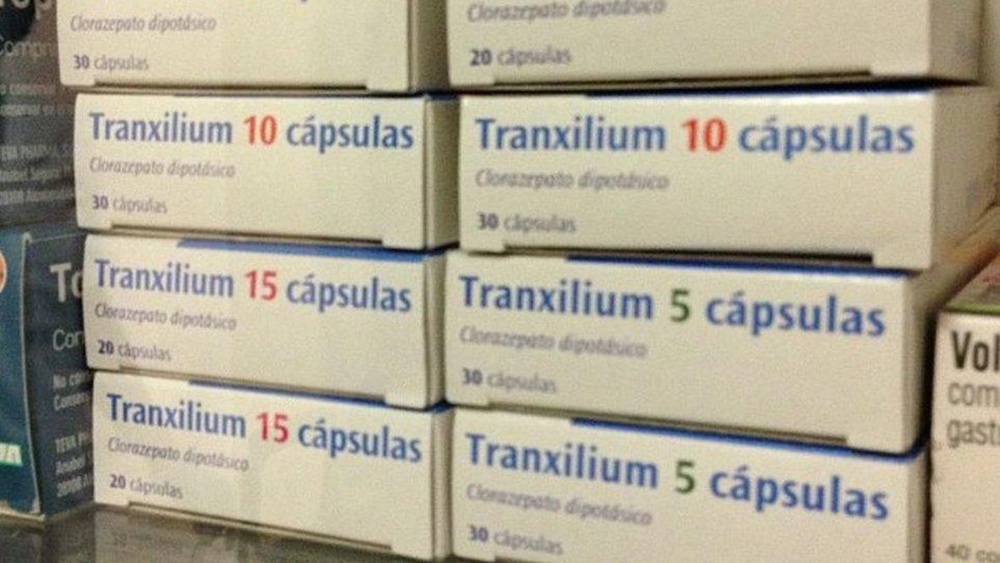
Se puede utilizar la presentación que más se ajuste a la dosis recetada (Tranxilium 5 mg cápsulas duras, Tranxilium 10 mg cápsulas duras, Tranxilium 15 mg cápsulas duras).
- En pacientes de edad avanzada y en pacientes con problemas de hígado (insuficiencia hepática) y/o riñón (insuficiencia renal), se recomienda disminuir la dosis: por ejemplo, la mitad de la dosis media puede ser suficiente.
Si toma más Tranxilium del que debe
La sobredosis se manifiesta habitualmente por diferentes grados de depresión del sistema nervioso central que van desde la somnolencia (sensación de sueño) hasta el coma.
El sueño profundo es el signo principal de una sobredosis que puede incluso convertirse en coma, en función de la dosis ingerida.
En casos moderados, los síntomas incluyen somnolencia, confusión y letargia; en casos más serios, pueden aparecer ataxia (pérdida de coordinación de los movimientos), hipotonía, hipotensión (disminución de la tensión arterial), depresión respiratoria, raramente coma y muy raramente muerte.
El pronóstico es positivo, la sobredosis no representa una amenaza vital, al menos en ausencia de combinación con otros depresores centrales (agentes psicotrópicos, alcohol) y siempre y cuando el sujeto esté tratado.
En caso de sobredosis, se debe trasladar al paciente a un centro especializado y tomar las medidas habituales de precaución: inducción del vómito, lavado gástrico y vigilancia de los parámetros respiratorios y cardiovasculares. Si no se produce mejoría con el vaciado del estómago, se administrará carbón activo para reducir la absorción.
Puede usarse flumazenilo para el diagnóstico y/o para el tratamiento de la sobredosis como antídoto.
Si usted ha tomado más Tranxilium del que debe, consulte inmediatamente a su médico, farmacéutico o llame al Servicio de Información Toxicológica, teléfono: 91 562 04 20, indicando el medicamento y la cantidad tomada.
Si olvidó tomar Tranxilium
No tome una dosis doble para compensar las dosis olvidadas.
Si interrumpe el tratamiento con Tranxilium
La interrupción brusca del tratamiento puede producir síndrome de abstinencia que se manifiesta por dolor de cabeza o muscular, ansiedad, tensión muscular, inquietud, confusión, insomnio e irritabilidad (ver sección “Advertencias y precauciones”).
Si tiene cualquier otra duda sobre el uso de este medicamento, pregunte a su médico o farmacéutico.

¿Has empezado a tomar el medicamento y tienes preguntas?
Comenta tus síntomas y tratamiento con un médico online.
4. Posibles efectos adversos
Al igual que todos los medicamentos, este medicamento puede producir efectos adversos, aunque no todas las personas los sufran.
Los efectos adversos se presentan agrupados según la clasificación de órganos y sistemas y según su frecuencia:
Muy frecuentes: pueden afectar a más de 1 de cada 10 pacientes
Frecuentes: pueden afectar hasta 1 de cada 10 pacientes
Poco frecuentes: pueden afectar hasta 1 de cada 100 pacientes
Raros: pueden afectar hasta 1 de cada 1.000 pacientes
Muy raros: pueden afectar hasta 1 de cada 10.000 pacientes
Frecuencia no conocida: no puede estimarse a partir de los datos disponibles.
Los efectos adversos están relacionados con la dosis y con la sensibilidad individual del paciente.
Trastornos del sistema inmunológico:
- Poco frecuentes: reacciones de hipersensibilidad.
Trastornos psiquiátricos:
- Frecuencia no conocida: pensamiento lento, reducción de reflejos mentales (bradifrenia).
- En algunos pacientes (en particular niños y pacientes de edad avanzada) pueden observarse reacciones paradójicas (ver también la sección “Advertencias y precauciones”):
Poco frecuentes: irritabilidad, agitación, confusión.
Frecuencia no conocida: agresión, alucinación.
- Frecuencia no conocida: puede aparecer síndrome de rebote con agravación de la ansiedad que motivó este tratamiento.
- Frecuencia no conocida: el uso prolongado (especialmente, a dosis elevadas) puede conducir al desarrollo de dependencia física, y al retirar el tratamiento conduce al síndrome de retirada (ver sección “Advertencias y precauciones”). Esto ocurre más rápidamente con benzodiazepinas de vida media corta que con benzodiazepinas de vida media larga (varios días).
Trastornos del sistema nervioso:
- Muy frecuentes: somnolencia (particularmente en pacientes de edad avanzada y sobre todo durante el día si se utiliza como hipnótico).
- Frecuentes: mareos.
- Poco frecuentes: disminución del tono muscular (hipotonía muscular).
- Frecuencia no conocida: trastornos cognitivos tales como alteración de la memoria (amnesia anterógrada). Puede desarrollarse una amnesia anterógrada al utilizar dosis terapéuticas, siendo mayor el riesgo al incrementar la dosis. Los efectos amnésicos pueden asociarse a conductas inadecuadas (ver sección “Advertencias y precauciones”), alteración de la atención y trastornos del habla.
Trastornos oculares:
- Frecuencia no conocida: visión doble (diplopía).
Trastornos de la piel y del tejido subcutáneo:
- Poco frecuentes: erupción cutánea con picor, manchas y pápulas (rash cutáneo prurítico y maculopapular).
Trastornos generales y alteraciones en el lugar de administración:
- Frecuentes: astenia.
- Frecuencia no conocida: caída (ver sección “Advertencias y precauciones”).
Además se han notificado los siguientes efectos adversos con benzodiazepinas: embotamiento afectivo, reducción del estado de alerta, dolor de cabeza, pérdida de coordinación de los movimientos (ataxia), alteraciones gastrointestinales, cambios en el apetito sexual (cambios en la libido) y efectos amnésicos que pueden estar asociados con comportamientos inadecuados.
Reacciones psiquiátricas o paradójicas con intranquilidad, delirios, ataques de ira, pesadillas, psicosis y comportamientos inadecuados y otros efectos adversos en el comportamiento.
Depresión: la utilización de benzodiazepinas puede desenmascarar una depresión preexistente.
Dependencia: la administración del producto (incluso a dosis terapéuticas) puede conducir al desarrollo de dependencia física: la supresión del tratamiento puede conducir al desarrollo de fenómenos de retirada o rebote (ver sección “Advertencias y precauciones”).
Puede producirse dependencia psíquica. Se han comunicado casos de abuso de benzodiazepinas.
Comunicación de efectos adversos
Si experimenta cualquier tipo de efecto adverso, consulte a su médico o farmacéutico, incluso si se trata de posibles efectos adversos que no aparecen en este prospecto. También puede comunicarlos directamente a través del Sistema Español de Farmacovigilancia de medicamentos de Uso Humano: https://www.notificaram.es. Mediante la comunicación de efectos adversos usted puede contribuir a proporcionar más información sobre la seguridad de este medicamento.
5. Conservación de Tranxilium
Mantener fuera de la vista y del alcance de los niños.
Conservar por debajo de 30°C. Conservar en el embalaje original para protegerlo de la luz y de la humedad.
No utilice Tranxilium después de la fecha de caducidad que aparece en el envase después de CAD. La fecha de caducidad es el último día del mes que se indica.
Los medicamentos no se deben tirar por los desagües ni a la basura. Deposite los envases y los medicamentos que no necesita en el Punto SIGRE de la farmacia. En caso de duda pregunte a su farmacéutico cómo deshacerse de los envases y de los medicamentos que no necesita. De esta forma ayudará a proteger el medio ambiente.
6. Contenido del envase e información adicional
Composición de Tranxilium 5 mg cápsulas duras
- El principio activo es clorazepato de dipotasio. Cada cápsula contiene 5 mg de clorazepato de dipotasio.
- Los demás componentes son:
- carbonato de potasio, talco
- cápsula: eritrosina (E-127), dióxido de titanio (E-171), gelatina.
Aspecto del producto y contenido del envase
Cápsulas de color rosa y blanco.
Cada envase contiene 30 cápsulas duras.
Otras presentaciones:
- Tranxilium 10 mg cápsulas duras, envase con 30 cápsulas.
- Tranxilium 15 mg cápsulas duras, envase con 20 cápsulas.
- Tranxilium 50 mg comprimidos recubiertos con película, envase con 20 comprimidos recubiertos con película.
- Tranxilium 20 mg polvo y disolvente para solución inyectable, envase con 1 vial y 1 ampolla.
Titular de la autorización de comercialización y responsable de la fabricación
Titular:
Neuraxpharm Spain, S.L.U.
Avda. Barcelona, 69,
08970 Sant Joan Despí (Barcelona)
España
Responsable de la fabricación:
sanofi-aventis, S.A.
Crta. C35 La Batlloria a Hostalric, km. 63,09
Riells i Viabrea (Gerona)
España
Famar Italia S.p.A.
Via Zambeletti 25, Baranzate
20021, Italia
Fecha de la última revisión de este prospecto:
La información detallada y actualizada de este medicamento está disponible en la página web de la Agencia Española de Medicamentos y Productos Sanitarios (AEMPS) http://www.aemps.gob.es/
- País de registro
- Forma farmacéuticaCAPSULA, 15 mg
- Código ATCN05BA05
- Precio medio en farmacia1.47 EUR
- Disponibilidad en farmaciasProblema de suministro reportado
- Principio activo
- Requiere recetaSí
- Fabricante
- ComposiciónCARBONATO POTASICO ANHIDRO (10,0 mg mg)
- Esta información es de carácter general y no sustituye la consulta con un profesional sanitario.
- Alternativas a TRANXILIUM 15 mg CAPSULAS DURASForma farmacéutica: CAPSULA, 10 mgPrincipio activo: potassium clorazepateFabricante: Laboratorios Normon S.A.Requiere recetaForma farmacéutica: CAPSULA, 15 mgPrincipio activo: potassium clorazepateFabricante: Laboratorios Normon S.A.Requiere recetaForma farmacéutica: CAPSULA, 5 mgPrincipio activo: potassium clorazepateFabricante: Laboratorios Normon S.A.Requiere receta
Médicos online para TRANXILIUM 15 mg CAPSULAS DURAS
Comenta la dosis, los posibles efectos secundarios, interacciones, contraindicaciones o si una receta es apropiada para TRANXILIUM 15 mg CAPSULAS DURAS, sujeto a valoración médica y a la normativa local.







Preguntas frecuentes
TRANXILIUM 15 mg CAPSULAS DURAS requiere receta en España. Puedes confirmarlo con un médico online según tu caso.
El principio activo de TRANXILIUM 15 mg CAPSULAS DURAS es potassium clorazepate. Esta información ayuda a identificar medicamentos con la misma composición pero con diferentes nombres comerciales.
El precio medio en farmacia de TRANXILIUM 15 mg CAPSULAS DURAS es de aproximadamente 1.47 EUR. Puede variar según el fabricante y la forma farmacéutica.
TRANXILIUM 15 mg CAPSULAS DURAS es fabricado por Neuraxpharm Spain S.L.. La marca y el envase pueden variar según el distribuidor.
Los Médicos de familia, Psiquiatras, Dermatólogos, Cardiólogos, Endocrinólogos, Gastroenterólogos, Neumólogos, Nefrólogos, Reumatólogos, Hematólogos, Infectólogos, Alergólogos, Geriatras, Pediatras, Oncólogos pueden valorar la prescripción de TRANXILIUM 15 mg CAPSULAS DURAS cuando esté clínicamente indicado. Puedes reservar una videoconsulta para comentar tu caso y las opciones de tratamiento.
La receta la emite un médico tras valorar tu estado de salud. En España, TRANXILIUM 15 mg CAPSULAS DURAS se dispensa en las farmacias con esa receta médica. Una consulta online no garantiza su emisión: la decisión corresponde siempre al médico.
Para solicitar una valoración puedes usar Oladoctor:
Otros medicamentos con el mismo principio activo (potassium clorazepate) incluyen CLORAZEPATO NORMON 10 mg CAPSULAS DURAS EFG, CLORAZEPATO NORMON 15 mg CAPSULAS DURAS EFG, CLORAZEPATO NORMON 5 mg CAPSULAS DURAS EFG. Pueden tener diferentes nombres comerciales o formulaciones, pero contienen el mismo componente terapéutico. Consulta siempre con un médico antes de cambiar o iniciar un nuevo medicamento.
