



TRACTOCILE 7,5 mg/ml, SOLUCIÓN INYECTABLE

Revisión de receta online
Un médico revisará tu caso y determinará si la prescripción es médicamente apropiada.

Habla con un médico sobre este medicamento
Comenta tus síntomas y las opciones de tratamiento en una consulta online.



Cómo usar TRACTOCILE 7,5 mg/ml, SOLUCION INYECTABLE
Contenido del prospecto
- Introducción
- Qué es Tractocile y para qué se utiliza
- Qué necesita saber antes de que le administren Tractocile
- Cómo le administrarán Tractocile
- Posibles efectos adversos
- Conservación de Tractocile
- Contenido del envase e información adicional
Introducción
Prospecto: información para el usuario
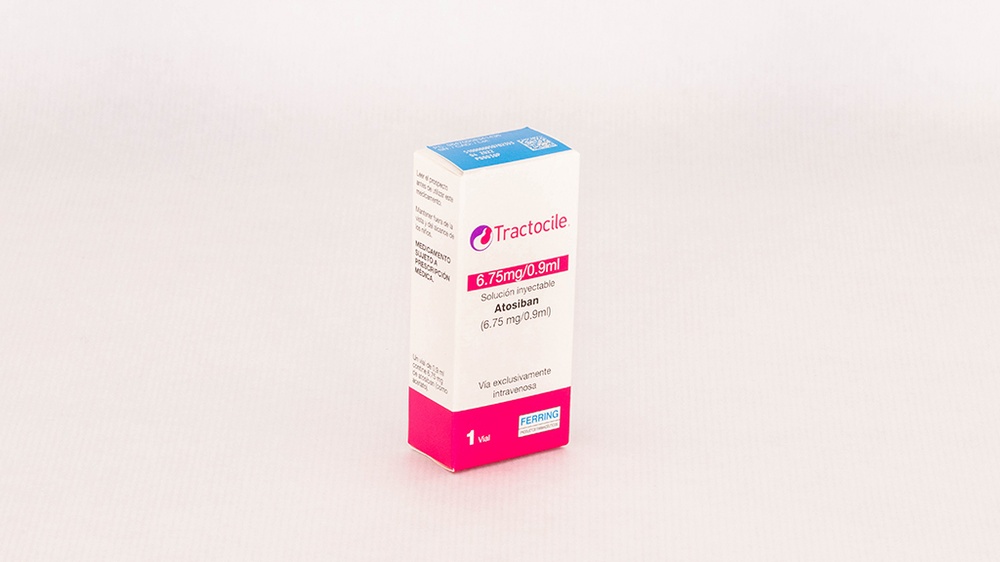
Tractocile 6,75 mg/0,9 ml solución inyectable
atosiban
Lea todo el prospecto detenidamente antes de que le administren el medicamento, porque contiene información importante para usted.
- Conserve este prospecto, ya que puede tener que volver a leerlo.
- Si tiene alguna duda, consulte a su médico o farmacéutico.
- Si experimenta efectos adversos, consulte a su médico, o farmacéutico, incluso si se trata de efectos adversos que no aparecen en este prospecto. Ver sección 4.
Contenido del prospecto
- Qué es Tractocile y para qué se utiliza
- Qué necesita saber antes de que le administren Tractocile
- Cómo le administrarán Tractocile
- Posibles efectos adversos
- Conservación de Tractocile
- Contenido del envase e información adicional
1. Qué es Tractocile y para qué se utiliza
Tractocile contiene atosiban. Tractocile puede usarse para retrasar el parto prematuro de su bebé. Tractocile se usa en mujeres adultas embarazadas, desde la semana 24 hasta la semana 33 del embarazo.
Tractocile actúa haciendo que las contracciones de su útero (matriz) sean menos fuertes. También hace que las contracciones ocurran con menos frecuencia. Esto ocurre, porque se evita que la hormona natural llamada “oxitocina”, hormona que contrae el útero (matriz), actúe.

¿No estás seguro de si este medicamento es adecuado para ti?
Comenta tus síntomas y tratamiento con un médico online.
2. Qué necesita saber antes de que le administren Tractocile
No use Tractocile
- Si está embarazada de menos de 24 semanas.
- Si está embarazada de más de 33 semanas.
- Si ha roto aguas (rotura prematura de sus membranas) y ha completado 30 semanas de embarazo o más.
- Si su bebé (feto) tiene un latido del corazón anormal.
- Si sangra por la vagina y su médico quiere que comience el parto para que su bebé nazca inmediatamente.
- Si tiene algo llamado “preeclampsia grave” y su médico quiere que comience el parto para que su bebé nazca inmediatamente. Preeclampsia grave es cuando tiene la presión sanguínea muy elevada, retención de líquidos y/o proteínas en la orina.
- Si tiene algo llamado “eclampsia” que es similar a la “preeclampsia grave” pero además tendrá convulsiones. Esto significará que el parto debe comenzar para que su bebé nazca inmediatamente.
- Si su bebé ha muerto.
- Si tiene o pudiera tener infección en la matriz (útero).
- Si su placenta tapona el canal del parto.
- Si su placenta se está separando de la pared de su matriz.
- Si usted o su bebé presentan otras condiciones que pudieran ser peligrosas para continuar con el embarazo.
- Si es alérgico a atosiban o a cualquiera de los demás componentes de este medicamento (incluidos en la sección 6).
No use Tractocile si se ve afectado por cualquiera de estas situaciones. Si no está seguro, informe a su médico, comadrona o farmacéutico antes de que le administren Tractocile.
Advertencias y precauciones
Consulte con su médico, comadrona o farmacéutico antes de que le administren Tractocile:
- Si piensa que ha roto aguas (rotura prematura de sus membranas).
- Si tiene problemas de riñón o de hígado.
- Si está entre las 24 y las 27 semanas de embarazo.
- Si está embarazada de más de un bebé.
- Si vuelve a tener contracciones, el tratamiento con Tractocile se puede repetir hasta tres veces más.
- Si su bebé es pequeño para la duración del embarazo.
- Si su útero, una vez que el bebé ha nacido, no es capaz de contraerse. Esto puede ocasionar hemorragias.
- Si está embarazada de más de un bebé y/o está tomando medicamentos que puedan retrasar el nacimiento de su bebé, como medicamentos usados para la presión sanguínea alta. Esto puede incrementar el riesgo de edema en el pulmón (acumulación de líquido en los pulmones).
Si padece cualquiera de estas situaciones (o no está seguro), informe a su médico, comadrona o farmacéutico antes de que le administren Tractocile.
Niños y adolescentes
Tractocile no ha sido estudiado en mujeres embarazadas menores de 18 años.
Uso de Tractocile con otros medicamentos:
Informe a su médico, comadrona o farmacéutico si está tomando, ha tomado recientemente o podría tener que tomar cualquier otro medicamento.
Embarazo ylactancia
Si está embarazada y dando de mamar a un bebé, se debe interrumpir la lactancia durante el tratamiento con Tractocile.
3. Cómo le administrarán Tractocile
Tractocile se le administrará en un hospital por un médico, enfermera o comadrona. Ellos decidirán cuánta cantidad necesita. También se asegurarán, que la solución está clara y libre de partículas.
Tractocile se administrará en vena (vía intravenosa) en tres etapas:
- Se administrará una primera inyección intravenosa de 6,75 mg en 0,9 ml en su vena lentamente durante un minuto.
- Después se le administrará durante 3 horas una perfusión continua (gotero) de una dosis de 18 mg por hora .
- Después se le administrará durante un máximo de 45 horas, o hasta que sus contracciones uterinas hayan parado, otra perfusión continua (gotero) de una dosis de 6 mg por hora .
La duración total del tratamiento no deberá ser superior a 48 horas.
Se pueden administrar más tratamientos con Tractocile si vuelve a tener contracciones. El tratamiento con Tractocile se puede repetir hasta tres veces más.
Durante el tratamiento con Tractocile, se pueden controlar sus contracciones y la frecuencia cardiaca del bebé.
Se recomienda no repetir el tratamiento más de tres veces durante un embarazo.

¿Has empezado a tomar el medicamento y tienes preguntas?
Comenta tus síntomas y tratamiento con un médico online.
4. Posibles efectos adversos
Al igual que todos los medicamentos, este medicamento puede producir efectos adversos, aunque no todas las personas los sufran.
Los efectos adversos observados en las madres fueron en general de intensidad leve. No existen efectos adversos conocidos sobre el feto o el recién nacido.
Pueden ocurrir los siguientes efectos adversos con este medicamento:
Muy frecuentes(afectan a más de 1 de cada 10 personas)
- Sensación de malestar (nausea).
Frecuentes(afectan a menos de 1 de cada 10 personas)
- Dolor de cabeza.
- Tener mareos.
- Rubor.
- Estar enfermo (vómitos).
- Latido rápido del corazón.
- Tensión baja. Los signos pueden incluir tener vértigos o estar mareado.
- Reacción en el lugar donde se administra la inyección.
- Aumento del azúcar en la sangre.
Poco frecuentes(afectan a menos de 1 de cada 100 personas)
- Aumento de la temperatura (fiebre).
- Dificultad para dormir (insomnio).
- Picor.
- Erupción.
Raros(afectan a menos de 1 de cada 1.000 personas)
- Su útero no es capaz de contraerse tras el nacimiento del bebé. Esto puede causar hemorragia.
- Reacciones alérgicas.
Puede experimentar dificultad para respirar o edema en el pulmón (acumulación de líquido en el pulmón), particularmente si está embarazada de más de un bebé y/o está en tratamiento con otros medicamentos que puedan retrasar el nacimiento de su bebé, como medicamentos usados para presión sanguínea alta.
Comunicación de efectos adversos:
Si experimenta cualquier tipo de efecto adverso, consulte a su médico o farmacéutico, incluso si se trata de posibles efectos adversos que no aparecen en este prospecto. También puede comunicarlos directamente a través del Sistema Español de Farmacovigilancia de Medicamentos de Uso Humano: http;//www.notificaram.es. Mediante la comunicación de efectos adversos usted puede contribuir a proporcionar más información sobre la seguridad de este medicamento.
5. Conservación de Tractocile
Mantener este medicamento fuera de la vista y del alcance de los niños.
No utilice este medicamento después de la fecha de caducidad que aparece en la etiqueta después de CAD. La fecha de caducidad es el último día del mes que se indica.
Conservar en nevera (2° C – 8° C).
Conservar en el embalaje original para protegerlo de la luz.
Una vez abierto el vial, el producto debe utilizarse inmediatamente.
No utilice este medicamento si observa partículas o decoloración del contenido antes de su administración.
6. Contenido del envase e información adicional
Composición de Tractocile
- El principio activo es atosiban.
- Cada vial de Tractocile 6,75 mg/0,9 ml solución inyectable contiene atosiban acetato equivalente a 6,75 mg de atosiban en 0,9 ml.
- Los demás componentes son manitol, ácido clorhídrico y agua para preparaciones inyectables.
Aspecto de Tractocile y contenido del envase
Tractocile 6,75 mg/0,9 ml solución inyectable es una solución transparente, incolora sin partículas. Un envase contiene un vial que contiene 0,9 ml de solución.
Titular de la autorización de comercialización y responsable de la fabricación
Titular de la autorización de comercialización:
Ferring Pharmaceuticals A/S
Amager Strandvej 4052770 KastrupDinamarca
Tel: +45 88 33 88 34
Responsable de la fabricación:
Ferring GmbH
Wittland 11
D-24109 Kiel
Alemania
Pueden solicitar más información respecto a este medicamento dirigiéndose al representante local del titular de la autorización de comercialización.
België/Belgique/Belgien Ferring N.V. Tel/Tél: +32 53 72 92 00 | Lietuva CentralPharma Communication UAB Tel: +370 5 243 0444 |
???????? ??????? ???? ???: +359 2 807 5022 | Luxembourg/Luxemburg Ferring N.V. Belgique/Belgien Tel/Tél: +32 53 72 92 00 |
Ceská republika Ferring Pharmaceuticals CZ s.r.o. Tel: +420 234 701 333 | Magyarország Ferring Magyarország Gyógyszerkereskedelmi Kft. Tel: +36 1 236 3800 |
Danmark Ferring Lægemidler A/S Tlf: +45 88 16 88 17 | Malta E.J. Busuttil Ltd. Tel: +356 21447184 |
Deutschland Ferring Arzneimittel GmbH Tel: +49 431 5852 0 | Nederland Ferring B.V. Tel: +31 235680300 |
Eesti CentralPharma Communication OÜ Tel: +372 601 5540 | Norge Ferring Legemidler AS Tlf: +47 22 02 08 80 |
Ελλ?δα Ferring Ελλ?ς ΜΕΠΕ Τηλ: +30 210 68 43 449 | Österreich Ferring Arzneimittel Ges.m.b.H Tel: +43 1 60 808 0 |
España Ferring S.A.U. Tel: +34 91 387 70 00 | Polska Ferring Pharmaceuticals Poland Sp. z o.o. Tel: +48 22 246 06 80 |
France Ferring S.A.S. Tél: +33 1 49 08 91 23 | Portugal Ferring Portuguesa – Produtos Farmacêuticos, Sociedade Unipessoal, Lda. Tel: +351 21 940 51 90 |
Hrvatska Clinres farmacija d.o.o. Tel: +385 1 2396 900 | România Ferring Pharmaceuticals Romania SRL Tel: +40 356 113 270 |
Ireland Ferring Ireland Ltd. Tel: +353 1 4637355 | Slovenija SALUS, Veletrgovina, d.o.o. Tel: +386 1 5899 179 |
Ísland Vistor hf. Sími: +354 535 70 00 | Slovenská republika Ferring Slovakia s.r.o. Tel: +421 2 54 416 010 |
Italia Ferring S.p.A. Tel: +39 02 640 00 11 | Suomi/Finland Ferring Lääkkeet Oy Puh/Tel: +358 207 401 440 |
Κ?προς
Τηλ: +357 22583333 | Sverige Ferring Läkemedel AB Tel: +46 40 691 69 00 |
Latvija CentralPharma Communication SIA Talr: +371 674 50497 | United Kingdom(Northern Ireland) Ferring Ireland Ltd. Tel: +353 1 4637355 |
Fecha de la última revisión de esteprospecto:
La información detallada de este medicamento está disponible en la página web de la Agencia Europea de Medicamentos: http://www.ema.europa.eu.
---------------------------------------------------------------------------------------------------------------------------
Esta información está destinada únicamente a profesionales del sector sanitario:
(Ver también la sección 3).
Instrucciones de uso:
Antes de usar Tractocile, se debe examinar la solución para asegurar que está clara y libre de partículas.
Tractocile se administra por vía intravenosa en tres etapas sucesivas:
- Se administra una inyección inicial de 6,75 mg en 0,9 ml en vena lentamente, durante un minuto.
- Se administra durante 3 horas, una perfusión continua a una velocidad de 24 ml/hora.
- Se administra durante un máximo de 45 horas, o hasta que las contracciones uterinas hayan disminuido, una perfusión continua a una velocidad de 8 ml/hora.
La duración total del tratamiento no deberá ser superior a 48 horas. Se pueden administrar nuevos ciclos de tratamiento con Tractocile, en caso de que vuelvan a producirse contracciones. Se recomienda no repetir el tratamiento más de tres veces durante un embarazo.
- País de registro
- Forma farmacéuticaINYECTABLE, Desconocida
- Código ATCG02CX01
- Principio activo
- Requiere recetaSí
- Fabricante
- ComposiciónMANITOL (E-421) (0 - mg)
- Esta información es de carácter general y no sustituye la consulta con un profesional sanitario.
- Alternativas a TRACTOCILE 7,5 mg/ml, SOLUCION INYECTABLEForma farmacéutica: INYECTABLE PERFUSION, 7,5 mg/mlPrincipio activo: AtosibanFabricante: Altan Pharmaceuticals SaRequiere recetaForma farmacéutica: INYECTABLE, 7,5 mg/mlPrincipio activo: AtosibanFabricante: Altan Pharmaceuticals SaRequiere recetaForma farmacéutica: INYECTABLE PERFUSION, 7,5 mg/mlPrincipio activo: AtosibanFabricante: Ever Valinject GmbhRequiere receta
Médicos online para TRACTOCILE 7,5 mg/ml, SOLUCION INYECTABLE
Comenta la dosis, los posibles efectos secundarios, interacciones, contraindicaciones o la revisión de receta de TRACTOCILE 7,5 mg/ml, SOLUCION INYECTABLE, sujeto a valoración médica y a la normativa local.
Obtén una receta de TRACTOCILE 7,5 mg/ml, SOLUCION INYECTABLE online
Rellena un formulario de 2 minutos
Cuéntanos tus síntomas, historial y el medicamento que necesitas.
Elige un médico o nosotros te asignamos uno
Escoge un especialista o te conectamos con el próximo médico disponible.
El médico revisa tu caso
Normalmente en 30 minutos. Puede hacerte preguntas adicionales por chat.
Recógela en cualquier farmacia
Receta electrónica enviada a tu correo, válida en toda España.
Preguntas frecuentes
TRACTOCILE 7,5 mg/ml, SOLUCION INYECTABLE requiere receta en España. Puedes confirmarlo con un médico online según tu caso.
El principio activo de TRACTOCILE 7,5 mg/ml, SOLUCION INYECTABLE es Atosiban. Esta información ayuda a identificar medicamentos con la misma composición pero con diferentes nombres comerciales.
TRACTOCILE 7,5 mg/ml, SOLUCION INYECTABLE es fabricado por Ferring Pharmaceuticals A/S. La marca y el envase pueden variar según el distribuidor.
Los Médicos de familia, Psiquiatras, Dermatólogos, Cardiólogos, Endocrinólogos, Gastroenterólogos, Neumólogos, Nefrólogos, Reumatólogos, Hematólogos, Infectólogos, Alergólogos, Geriatras, Pediatras, Oncólogos pueden valorar la prescripción de TRACTOCILE 7,5 mg/ml, SOLUCION INYECTABLE cuando esté clínicamente indicado. Puedes reservar una videoconsulta para comentar tu caso y las opciones de tratamiento.
España cuenta con una infraestructura sanitaria bien desarrollada en ciudades principales como Madrid, Barcelona, Valencia y Sevilla. Las farmacias están ampliamente disponibles y operan bajo estrictas regulaciones, garantizando el acceso a medicamentos con receta.
Puedes comprar TRACTOCILE 7,5 mg/ml, SOLUCION INYECTABLE en Madrid, Barcelona, Sevilla o Valencia en cualquier farmacia local con una receta válida.
Para obtener una receta, puedes utilizar Oladoctor:
Otros medicamentos con el mismo principio activo (Atosiban) incluyen ATOSIBAN ALTAN 37,5 MG/5 ML CONCENTRADO PARA SOLUCIÓN PARA PERFUSIÓN EFG, ATOSIBAN ALTAN 6.75 MG/0.9 ML SOLUCION INYECTABLE EFG, ATOSIBAN EVER PHARMA 37,5 MG/5 ML CONCENTRADO PARA SOLUCION PARA PERFUSION EFG. Pueden tener diferentes nombres comerciales o formulaciones, pero contienen el mismo componente terapéutico. Consulta siempre con un médico antes de cambiar o iniciar un nuevo medicamento.
