


Theo-Dur 200 mg comprimidos de liberación prolongada

Revisión de receta online
Un médico revisará tu caso y determinará si la prescripción es médicamente apropiada.

Habla con un médico sobre este medicamento
Comenta tus síntomas y las opciones de tratamiento en una consulta online.



Cómo usar THEO-DUR 200 mg COMPRIMIDOS DE LIBERACION PROLONGADA
Contenido del prospecto
- Introducción
- Qué es Theo-Dur y para qué se utiliza
- Qué necesita saber antes de empezar a tomar Theo-Dur
- Cómo tomar Theo-Dur
- Posibles efectos adversos
- Conservación de Theo-Dur
- Contenido del envase e información adicional
Introducción
Prospecto: información para el usuario
THEO-DUR 200mg comprimidos de liberación prolongada
Teofilina
Lea todo el prospecto detenidamente antes de empezar a tomar este medicamento, porque contiene información importante para usted.
- Conserve este prospecto, ya que puede tener que volver a leerlo.
- Si tiene alguna duda, consulte a su médico o farmacéutico.
- Este medicamento se le ha recetado solamente a usted y no debe dárselo a otras personas aunque tengan los mismos síntomas que usted, ya que puede perjudicarles.
- Si experimenta efectos adversos, consulte a su médico o farmacéutico, incluso si se trata de efectos adversos que no aparecen en este prospecto. Ver sección 4.
Contenido del prospecto
- Qué es Theo-Dur y para qué se utiliza
- Qué necesita saber antes de empezar a tomar Theo-Dur
- Cómo tomar Theo-Dur
- Posibles efectos adversos
- Conservación de Theo-Dur
- Contenido del envase e información adicional
1. Qué es Theo-Dur y para qué se utiliza
Este medicamento pertenece al grupo de medicamentos denominados broncodilatadores, es decir, que dilata los bronquios y facilita la respiración.
Está indicado en la prevención y el tratamiento del asma o espasmo bronquial asociado a enfermedades pulmonares como la bronquitis crónica o el enfisema.

¿No estás seguro de si este medicamento es adecuado para ti?
Comenta tus síntomas y tratamiento con un médico online.
2. Qué necesita saber antes de empezar a tomar Theo-Dur
No tome Theo-Dur
- Si es alérgico al principio activo o a otro fármaco del mismo grupo o a cualquiera de los demás componentes de este medicamento (incluidos en la sección 6).
- Si tiene alteración de los latidos cardíacos (taquiarritmia aguda).
- Si recientemente ha tenido un infarto de miocardio.
Advertencias y precauciones
Consulte a su médico o farmacéutico antes de empezar a tomar Theo-Dur si:
- padece cualquier enfermedad del corazón,
- tiene la presión sanguínea alta (hipertensión),
- tiene un exceso de función de la glándula tiroides (hipertiroidismo),
- padece trastornos convulsivos (epilepsia),
- padece úlcera de estómago (gástrica y/o duodenal),
- tiene deficiencias en la producción de hemoglobina (porfiria),
- tiene problemas de hígado y/o riñón (insuficiencia hepática y/o renal),
- tiene conocimiento que no elimina correctamente la teofilina.
Niños
No se recomienda el uso de teofilina en niños menores de un año.
Toma de Theo-Dur con otros medicamentos
Informe a su médico o farmacéutico si está tomando, ha tomado recientemente o podría tener que tomar cualquier otro medicamento.
La teofilina puede disminuir o aumentar el efecto de otros fármacos, y a su vez, el efecto de la teofilina puede verse disminuido o aumentado por otros fármacos, si se toman de forma conjunta. Por esta razón es necesario que informe a su médico si está tomando:
- otros preparados que contienen teofilina u otras xantinas (como cafeína y sustancias similares),
- inductores de los receptores beta2 adrenérgicos (beta2-agonistas, generalmente usado para tratar el asma),
- barbitúricos, especialmente fenobarbital, pentobarbital y primidona (utilizados para producir sedación, relajación),
- carbamazepina (anticonvulsivo utilizado para epilepsia),
- fenitoína y fosfenitoína (utilizado para la epilepsia),
- rifampicina y rifapentina (antibióticos),
- sulfinpirazona (utilizado para tratar la gota),
- productos que contengan hipérico (Hierba de San Juan),
- anticonceptivos orales,
- antibióticos macrólidos (especialmente eritromicina, troleandomicina, claritromicina, josamicina, y espiramicina),
- antibióticos del tipo de las quinolonas (inhibidores de la girasa, especialmente ciprofloxacino, enoxacino y pefloxacino; ver a continuación),
- el antibiótico imipenem (especialmente efectos adversos del sistema nervioso central como convulsiones),
- isoniazida (tratamiento de la tuberculosis),
- tiabendazol (tratamiento de los hongos),
- antagonistas del calcio (ej.: verapamilo y diltiazem) utilizados para enfermedades del corazón,
- propranolol (tratamiento de la hipertensión o tensión alta),
- mexiletina (tratamiento de problemas del corazón),
- propafenona (tratamiento de problemas del corazón),
- ticlopidina (prevención de la coagulación de la sangre),
- cimetidina, ranitidina, etintidina (evitan la producción de ácido en el estómago),
- alopurinol, febuxostat (tratamiento de la gota),
- fluvoxamina (tratamiento de enfermedades mentales),
- interferon alfa y peginterferon alfa-2 (tratamiento de trastornos inmunológicos),
- zafirlukast (tratamiento del asma),
- vacunas antigripales,
- idrocilamida (tratamientos musculares),
- zileutón (tratamiento del asma),
- diuréticos (furosemida),
- halotano (anestésico general),
- digitálicos (tratamiento de problemas de corazón),
- benzodiazepinas (utilizados para producir sedación, relajación).
Si es usted fumador, coméntelo a su médico ya que puede ser necesario cambiarle la dosis.
Interacción con pruebas diagnósticas
Si le van a realizar alguna prueba diagnóstica (incluidos análisis de sangre, orina, pruebas cutáneas que utilizan alergenos) comunique al médico que está tomando este medicamento ya que puede alterar los resultados.
Toma de Theo-Dur con alimentos y bebidas
Debe evitarse la ingestión en cantidades altas de bebidas con cafeína tales como: té, café, cacao, cola y grandes cantidades de chocolate. Estos productos pueden aumentar los efectos secundarios de este medicamento.
Embarazo y lactancia
Si está embarazada o en periodo de lactancia, cree que podría estar embarazada o tiene intención de quedarse embarazada, consulte a su médico antes de utilizar este medicamento.
Embarazo
No se recomienda el uso de teofilina durante el embarazo.
Lactancia
No se recomienda el uso de teofilina durante la lactancia.
Personas de edad avanzada
No utilizar en mayores de 65 años sin consultar al médico.
Conducción y uso de máquinas
Este tipo de medicamento puede alterar la velocidad de reacción, por lo que debe tener precaución si va a conducir y/o utilizar máquinas, especialmente al inicio del tratamiento, al modificar la dosis o si lo toma junto con otros medicamentos.
Theo-Dur contiene lactosa
Si su médico le ha indicado que padece una intolerancia a ciertos azúcares, consulte con él antes de tomar este medicamento.
Theo-Dur contiene sacarosa
Si su médico le ha indicado que padece una intolerancia a ciertos azúcares, consulte con él antes de tomar este medicamento.
3. Cómo tomar Theo-Dur
Siga exactamente las instrucciones de administración de este medicamento indicadas por su médico o farmacéutico. En caso de duda, consulte de nuevo a su médico o farmacéutico.
Su médico le indicará la dosis exacta que debe tomar. Las tomas se realizarán con intervalos regulares de 12 horas. Es importante el estricto cumplimiento de la pauta posológica, especialmente en lo referente al espaciamiento de las dosis.
Como dosis orientativa se puede seguir la siguiente, pero recuerde que la dosis debe ser la recomendada por el médico.
Adultos y adolescentes de más de 16 años
La dosis recomendada para adultos es de 200 mg (1 comprimido) cada 12 horas. Su médico puede incrementar la dosis dependiendo de cómo responde al tratamiento.
Población pediátrica (entre 1 y 16 años)
La dosis recomendada es de 4 mg por cada kg de peso al día. Esta cantidad se dividirá en dos tomas cada 12 horas cada una.
Pacientes de edad avanzada
En caso de pacientes de edad avanzada, su médico evaluará la dosis que se le debe administrar.
Forma de administración
Los comprimidos deben tomarse sin disolver, sin masticar ni morder, tragándolos con suficiente líquido.
Se aconseja tomar por la noche, antes de acostarse.
Si toma más Theo-Dur del que debe
Consulte inmediatamente con su médico o servicio de urgencias más cercano o llame al Servicio de Información Toxicológica, Teléfono 915 620 420, indicando el medicamento y la cantidad tomada. Lleve consigo el envase y los comprimidos sobrantes del mismo.
Si olvidó tomar Theo-Dur
No tome una dosis doble para compensar las dosis olvidadas. Tome la siguiente dosis como le ha indicado el médico, a la hora que habitualmente lo hace.
Si interrumpe el tratamiento con Theo-Dur
Si deja su tratamiento con Theo-Dur, su enfermedad puede empeorar. No deje de tomar el medicamento a menos que se lo indique su médico.
Si tiene cualquier otra duda sobre el uso de este medicamento, pregunte a su médico o farmacéutico.

¿Has empezado a tomar el medicamento y tienes preguntas?
Comenta tus síntomas y tratamiento con un médico online.
4. Posibles efectos adversos
Al igual que todos los medicamentos, este medicamento puede producir efectos adversos, aunque no todas las personas los sufran.
Los posibles efectos adversos se listan a continuación:
- Taquicardia y arritmia (cambios en los latidos del corazón), palpitaciones, caída de la presión sanguínea.
- Problemas gastrointestinales, nauseas, vómitos, diarrea, problemas estomacales (debilidad del tono muscular en el esfínter esofágico inferior) que pueden incrementar el reflujo esofágico nocturno si ya lo tiene.
- Reacciones alérgicas (hipersensibilidad).
- Alteraciones en la sangre como: disminución del potasio (hipocalemia), aumento del calcio (hipercalcemia), aumento del azúcar (hiperglucemia), aumento de la creatinina, aumento del ácido úrico (hiperuricemia) y cambios en los electrolitos.
- Dolor de cabeza, estados de excitación, temblor de extremidades, nerviosismo, insomnio, convulsiones.
- Aumento de la orina (diuresis).
Comunicación de efectos adversos
Si experimenta cualquier tipo de efecto adverso, consulte a su médico o farmacéutico, incluso si se trata de posibles efectos adversos que no aparecen en este prospecto. También puede comunicarlos directamente a través del Sistema Español de Farmacovigilancia de Medicamentos de Uso Humano (website: www.notificaRAM.es).
Mediante la comunicación de efectos adversos usted puede contribuir a proporcionar más información sobre la seguridad de este medicamento.
5. Conservación de Theo-Dur
Mantener este medicamento fuera de la vista y del alcance de los niños.
No requiere condiciones especiales de conservación.
No utilice este medicamento después de la fecha de caducidad que aparece en el envase después de CAD. La fecha de caducidad es el último día del mes que se indica.
Los medicamentos no se deben tirar por los desagües ni a la basura. Deposite los envases y los medicamentos que no necesita en el Punto SIGRE de la farmacia. En caso de duda pregunte a su farmacéutico cómo deshacerse de los envases y de los medicamentos que no necesita. De esta forma ayudará a proteger el medio ambiente.
6. Contenido del envase e información adicional
Composición de Theo-Dur
- El principio activo es teofilina. Cada comprimido tiene 200 mg de teofilina anhidra.
- Los demás componentes son: acetoftalato de celulosa, alcohol cetílico, alcohol mirístílico, cera blanca, dietilftalato, estearato de magnesio, hidroxipropilmetilcelulosa, lactosa anhidra, monoestearato de glicerol, pellets neutros (almidón de maíz y esferas de azúcar [sacarosa y almidón de maíz]).
Aspecto del producto y contenido del envase
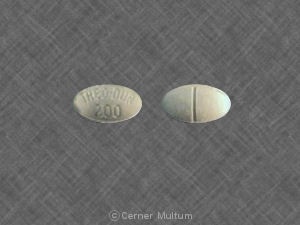
Theo-Dur 200 mg comprimidos de liberación prolongada se presenta en forma de comprimidos cilíndricos blancos, ranurados en una cara. Los envases contienen 40 comprimidos.
Titular de la autorización de comercialización y responsable de la fabricación
Titular de la autorización de comercialización
VEGAL FARMACEUTICA, S.L.
Vía de las Dos Castillas 9C, portal 2, 2º C
28224 Pozuelo de Alarcón – Madrid. España.
Responsable de la fabricación
GENERIS FARMACÊUTICA, S.A.
Rua Joäo de Deus, 19, Venda Nova, 2700-487 Amadora – Portugal
o
COVEX, S.A.
Calle Acero 25, Polígono Industrial Sur
28770 Colmenar Viejo - Madrid. España
Otras presentaciones
Theo-Dur 100 mg comprimidos de liberación prolongada: Envase con 40 comprimidos.
Theo-Dur 300 mg comprimidos de liberación prolongada: Envase con 40 comprimidos.
Fecha de la última revisión de este prospectoSeptiembre de 2013
La información detallada y actualizada de este medicamento está disponible en la página web de la Agencia Española de Medicamentos y Productos Sanitarios (AEMPS) http://www.aemps.gob.es/
- País de registro
- Forma farmacéuticaCOMPRIMIDO LIBERACION MODIFICADA, 200 mg
- Código ATCR03DA04
- Precio medio en farmacia4.54 EUR
- Disponibilidad en farmaciasProblema de suministro reportado
- Principio activo
- Requiere recetaSí
- Fabricante
- ComposiciónCETILICO, ALCOHOL (0,581 mg mg), MONOESTEARATO DE GLICEROL (52,900 mg mg), LACTOSA ANHIDRA (62,400 mg mg), PELLETS NEUTROS (ALMIDON DE MAIZ Y ESFERAS AZUCAR) (70,000 mg mg)
- Esta información es de carácter general y no sustituye la consulta con un profesional sanitario.
- Alternativas a THEO-DUR 200 mg COMPRIMIDOS DE LIBERACION PROLONGADAForma farmacéutica: SOLUCIÓN/SUSPENSIÓN ORAL, 5,33 mg teofilina anhidraPrincipio activo: teofilinaFabricante: Tora Laboratories S.L.U.Requiere recetaForma farmacéutica: COMPRIMIDO LIBERACION MODIFICADA, 300 mgPrincipio activo: teofilinaFabricante: Laboratorio Aldo Union S.L.Requiere recetaForma farmacéutica: COMPRIMIDO LIBERACION MODIFICADA, 100 mgPrincipio activo: teofilinaFabricante: Vegal Farmaceutica S.L.Requiere receta
Médicos online para THEO-DUR 200 mg COMPRIMIDOS DE LIBERACION PROLONGADA
Comenta la dosis, los posibles efectos secundarios, interacciones, contraindicaciones o la revisión de receta de THEO-DUR 200 mg COMPRIMIDOS DE LIBERACION PROLONGADA, sujeto a valoración médica y a la normativa local.









Preguntas frecuentes
THEO-DUR 200 mg COMPRIMIDOS DE LIBERACION PROLONGADA requiere receta en España. Puedes confirmarlo con un médico online según tu caso.
El principio activo de THEO-DUR 200 mg COMPRIMIDOS DE LIBERACION PROLONGADA es teofilina. Esta información ayuda a identificar medicamentos con la misma composición pero con diferentes nombres comerciales.
El precio medio en farmacia de THEO-DUR 200 mg COMPRIMIDOS DE LIBERACION PROLONGADA es de aproximadamente 4.54 EUR. Puede variar según el fabricante y la forma farmacéutica.
THEO-DUR 200 mg COMPRIMIDOS DE LIBERACION PROLONGADA es fabricado por Vegal Farmaceutica S.L.. La marca y el envase pueden variar según el distribuidor.
Los Médicos de familia, Psiquiatras, Dermatólogos, Cardiólogos, Endocrinólogos, Gastroenterólogos, Neumólogos, Nefrólogos, Reumatólogos, Hematólogos, Infectólogos, Alergólogos, Geriatras, Pediatras, Oncólogos pueden valorar la prescripción de THEO-DUR 200 mg COMPRIMIDOS DE LIBERACION PROLONGADA cuando esté clínicamente indicado. Puedes reservar una videoconsulta para comentar tu caso y las opciones de tratamiento.
La receta la emite un médico tras valorar tu estado de salud. En España, THEO-DUR 200 mg COMPRIMIDOS DE LIBERACION PROLONGADA se dispensa en las farmacias con esa receta médica. Una consulta online no garantiza su emisión: la decisión corresponde siempre al médico.
Para solicitar una valoración puedes usar Oladoctor:
Otros medicamentos con el mismo principio activo (teofilina) incluyen ELIXIFILIN 5,33 MG/ML SOLUCION ORAL, TEROMOL RETARD 300 MG COMPRIMIDOS DE LIBERACIÓN PROLONGADA, THEO-DUR 100 mg COMPRIMIDOS DE LIBERACION PROLONGADA. Pueden tener diferentes nombres comerciales o formulaciones, pero contienen el mismo componente terapéutico. Consulta siempre con un médico antes de cambiar o iniciar un nuevo medicamento.
