



SPEXOTRAS 0,05 MG/ML POLVO PARA SOLUCION ORAL

Revisión de receta online
Un médico revisará tu caso y determinará si la prescripción es médicamente apropiada.

Habla con un médico sobre este medicamento
Comenta tus síntomas y las opciones de tratamiento en una consulta online.



Cómo usar SPEXOTRAS 0,05 MG/ML POLVO PARA SOLUCION ORAL
Contenido del prospecto
- Introducción
- Qué es Spexotras y para qué se utiliza
- Qué necesita saber antes de empezar a dar Spexotras
- Cómo dar Spexotras
- Posibles efectos adversos
- Conservación de Spexotras
- Contenido del envase e información adicional
Introducción
Prospecto: información para el paciente
Spexotras 0,05mg/ml polvo para solución oral
trametinib
Lea todo el prospecto detenidamente antes que su hijo empiece a tomar este medicamento, porque contiene información importante.
- Conserve este prospecto, ya que puede tener que volver a leerlo.
- Si tiene alguna duda, consulte al médico, farmacéutico o enfermero.
- Este medicamento se le ha recetado solamente a su hijo, y no debe dárselo a otras personas aunque tengan los mismos síntomas que su hijo, ya que puede perjudicarles.
- Si su hijo experimenta efectos adversos, consulte al médico, farmacéutico o enfermero, incluso si se trata de efectos adversos que no aparecen en este prospecto. Ver sección 4.
- La información de este prospecto es para usted o su hijo, pero en el prospecto sólo dirá “su hijo”.
Contenido del prospecto
- Qué es Spexotras y para qué se utiliza
- Qué necesita saber antes de empezar a dar Spexotras
- Cómo dar Spexotras
- Posibles efectos adversos
- Conservación de Spexotras
- Contenido del envase e información adicional
1. Qué es Spexotras y para qué se utiliza
Spexotras es un medicamento que contiene el principio activo trametinib.
Se utiliza en combinación con otro medicamento (dabrafenib comprimidos dispersables) en niños a partir de 1 año de edad para tratar un tipo de tumor cerebral llamado glioma.
Spexotras puede utilizarse en pacientes con:
- glioma de bajo grado
- glioma de alto grado cuando el paciente ha recibido al menos un tratamiento de radiación y/o quimioterapia.
Spexotras, en combinación con dabrafenib comprimidos dispersables, se utiliza para tratar a pacientes cuyo tumor cerebral tiene una mutación (cambio) específica en un gen llamado BRAF. Esta mutación hace que el cuerpo produzca proteínas defectuosas que, a su vez, pueden provocar el desarrollo del tumor. El médico evaluará esta mutación antes de comenzar el tratamiento.
En combinación con dabrafenib, Spexotras se dirige a estas proteínas defectuosas y ralentiza o detiene el desarrollo del tumor. Lea también el prospecto de dabrafenibcomprimidos dispersables.

¿No estás seguro de si este medicamento es adecuado para ti?
Comenta tus síntomas y tratamiento con un médico online.
2. Qué necesita saber antes de empezar a dar Spexotras
No de Spexotras
- si su hijo es alérgicoa trametinib o a alguno de los demás componentes de este medicamento (incluidos en la sección 6).
Advertencias y precauciones
Consulte al médico antes de empezar a dar Spexotras. El médico necesita saber si su hijo:
- tiene problemas de corazóncomo insuficiencia cardíaca o problemas con la forma en que late el corazón.
- tiene o ha tenido alguna vez problemas de pulmón o para respirar, como dificultad al respirar frecuentemente acompañada de tos seca, respiración entrecortada y fatiga.
- tiene problemas oculares, como bloqueo de las venas que irrigan el ojo (oclusión de las venas de la retina) o hinchazón del ojo que se pueda deber a una pérdida de fluido (coriorretinopatía).
- tiene o ha tenido algún problema de hígado.
- tiene o ha tenido alguna vez problemas de riñón
- tiene o ha tenido algún problema gastrointestinalcomo diverticulitis (bolsas inflamadas en el colon) o metastasis en el tracto gastrointestinal.
Antes de que su hijo empiece a tomar Spexotras, durante y después de su tratamiento, el médico realizará controles para evitar complicaciones.
Examen de la piel
El tratamiento puede causar cáncer de piel. En general, estos cambios en la piel permanecen locales y se pueden eliminar mediante cirugía y el tratamiento puede continuarse sin interrupción. El médico puede revisar la piel de su hijo antes y de forma regular durante el tratamiento.
Revise la piel de su hijo mensualmente durante el tratamiento y durante 6 meses después de haber terminado de tomar este medicamento. Informe al médicolo antes posible si nota cualquier cambio en la piel de su hijo tal como una nueva verruga, llaga en la piel o un bulto rojizo que sangra o no sana, o un cambio en el tamaño o color de un lunar.
Síndrome de lisis tumoral
Si su hijo experimenta los siguientes síntomas, informe al médicoinmediatamente, ya que puede ser una afección potencialmente mortal: náuseas, dificultad para respirar, latidos cardíacos irregulares, calambres musculares, convulsiones, orina turbia, disminución de la producción de orina y cansancio. Estos pueden ser causados por un grupo de complicaciones metabólicas que pueden ocurrir durante el tratamiento del cáncer y que son causadas por los productos de descomposición de las células cancerosas moribundas (síndrome de lisis tumoral o SLT) y pueden provocar cambios en la función del riñón (ver también la sección 4).
Niñosmenores de 1año de edad
Spexotras en combinación con dabrafenib comprimidos dispersables no se ha evaluado en niños menores de 1 año. Por lo tanto, Spexotras no está recomendado en este grupo de edad.
Pacientes mayores de 18añosde edad
La información sobre el tratamiento en pacientes mayores de 18 años con glioma es limitada, por lo que el médico debe evaluar la continuación del tratamiento hasta la edad adulta.
Otros medicamentos ySpexotras
Antes de empezar el tratamiento, informe al médico, farmacéutico o enfermero si su hijo está tomando, ha tomado recientemente o pudiera tener que tomar cualquier otro medicamento, incluyendo medicamentos utilizados para diluir la sangre o cualquier otro medicamento adquirido sin receta médica.
Embarazo,lactancia y fertilidad
Embarazo
- Si su hija está embarazada o cree que su hija podría estar embarazada, consulte al médico o enfermero antes de utilizar este medicamento. Spexotras podría dañar al feto.
- Si su hija se queda embarazada mientras está tomando este medicamento, consulte con el médico inmediatamente.
Lactancia
Se desconoce si Spexotras puede pasar a la leche materna. Si su hija está en periodo de lactancia, o planea dar el pecho, debe indicárselo al médico. Usted, su hija y el médico decidirán si tomar Spexotras o dar el pecho.
Fertilidad
Spexotras puede afectar a la fertilidad tanto de machos y hembras.
TomarSpexotrascondabrafenibcomprimidos dispersables: Dabrafenib puede reducir el recuento de esperma y puede que no vuelva a los niveles normales hasta que haya dejado el tratamiento con dabrafenib.
Antes de empezar el tratamiento con dabrafenib comprimidos dispersables, hable con el médico sobre las opciones para mejorar las posibilidades de que su hijo pueda tener hijos en el futuro.
Anticoncepción
- Si su hija puede quedarse embarazada, debe utilizar un método de control de natalidad (anticonceptivo) fiable mientras esté tomando Spexotras y durante al menos 16 semanas después de dejar de tomarlo.
- Los métodos anticonceptivos que contienen hormonas (como la píldora, las inyecciones o los parches) pueden no ser tan eficaces cuando se está tomando Spexotras en combinación con drabafenib comprimidos dispersables. Por ello, mientras esté tomando esta combinación de medicamentos, necesita utilizar otro método anticonceptivo eficaz para no quedarse embarazada. Consulte al médico o enfermero.
Conducción y uso de máquinas
Spexotras puede provocar efectos adversos que pueden afectar la capacidad de su hijo para conducir, ir en bicicleta/moto, utilizar máquinas o participar en otras actividades que necesitan estar alerta. Si su hijo tiene problemas de visión o se siente cansado o débil, o siente que le falta energía, debería evitar realizar este tipo de actividades.
La descripción de los efectos adversos puede encontrarse en la sección 4. Para más información, lea toda la información de este prospecto.
Si no está seguro, hable con el médico, farmacéutico o enfermero. La capacidad de su hijo para realizar este tipo de actividades también se puede ver afectada incluso por su propia enfermedad, síntomas o tratamiento.
Spexotras contiene una ciclodextrina
Este medicamento contiene 100 mg de una ciclodextrina en cada ml de Spexotras solución oral.
Spexotras contiene parahidroxibenzoato de metilo
Puede provocar reacciones alérgicas (posiblemente retardadas).
Spexotras contiene sodio
Este medicamento contiene 1,98 mg de sodio (componente principal de la sal de mesa/para cocinar) en cada ml de Spexotras solución oral. Esto equivale al 4% de la ingesta diaria máxima de sodio recomendada para un adulto a la dosis diaria máxima de trametinib.
Spexotras contiene potasio
Este medicamento contiene potasio, menos de 1 mmol (39 mg) por dosis máxima diaria; esto es, esencialmente “exento de potasio”.
3. Cómo dar Spexotras
Siga exactamente las instrucciones de administración de este medicamento a su hijo indicadas por el médico, farmacéutico o enfermero. En caso de duda, consulte de nuevo al médico, farmacéutico o enfermero.
Cuánto dar
El médico decidirá la dosis correcta de Spexotras basándose en el peso corporal de su hijo.
El médico decidirá si su hijo necesita tomar una dosis menor según los efectos adversos que tenga.
Cómo dárselo
Lea las instrucciones de uso al final de este prospecto para obtener más información sobre cómo dar la solución oral. Su farmacéutico preparará la solución oral para usted.
- De Spexotras una vez al día. Dar Spexotras a la misma hora todos los días le ayudará a recordar cuándo dar el medicamento. De Spexotras tantocon la dosis matutina ocon la dosis vespertina de dabrafenib comprimidos dispersables. Las dosis de dabrafenib se deben dar con una diferencia de unas 12 horas.
- De Spexotras con el estómago vacío, al menos una hora antes o dos horas después de una comida, lo que significa que:
- después de tomar Spexotras, su hijo debe esperar al menos 1horaantes de comer.
- después de comer, su hijo debe esperar al menos 2horasantes de tomar Spexotras.
- si es necesario, se puede dar leche materna y/o de fórmula a demanda.
Si da másSpexotrasdel que debe
Si da demasiado Spexotras, contacte inmediatamente con el médico, farmacéutico o enfermero. Si fuera posible, enseñe el envase de Spexotras con el prospecto.
Si olvidó dar Spexotras
Si han transcurrido menos de 12 horas desde la dosis olvidada, désela tan pronto se acuerde.
Si han transcurrido 12 horas o más de 12 horas desde la dosis olvidada, no compense la dosis olvidada. De la siguiente dosis a la hora habitual y luego continúe dando Spexotras a la hora habitual.
No de una dosis doble para compensar las dosis olvidadas.
Si su hijo vomita después de tomar Spexotras
Si su hijo vomita después de tomar Spexotras, no de otra dosis hasta la siguiente dosis programada.
Si interrumpe el tratamiento con Spexotras
De Spexotras durante el tiempo que el médico le ha indicado. No interrumpa el tratamiento a menos que así se lo indique el médico.
Si tiene cualquier otra duda sobre el uso de este medicamento, pregunte a su médico, farmacéutico o enfermero.

¿Has empezado a tomar el medicamento y tienes preguntas?
Comenta tus síntomas y tratamiento con un médico online.
4. Posibles efectos adversos
Al igual que todos los medicamentos, este medicamento puede producir efectos adversos, aunque no todas las personas los sufran.
Deje de dar este medicamento y busque atención médica urgente si su hijo tiene alguno de los siguientes síntomas:
- tos con sangre, sangre en la orina, si vomita sangre o si el vómito tiene aspecto de “granos de café”, si presenta heces de color rojo o de color negro con aspecto de alquitrán. Estos pueden ser signos de sangrado.
- fiebre (temperatura de 38 ºC o más alta).
- dolor de pecho o dificultad para respirar, a veces con fiebre o tos. Estos pueden ser signos de neumonitis o pulmones inflamados (enfermedad pulmonar intersticial).
- visión borrosa, pérdida de visión u otros cambios en la visión. Estos pueden ser signos de desprendimiento de retina.
- enrojecimiento de los ojos, dolor de ojos, aumento de la sensibilidad a la luz. Estos pueden ser signos de uveítis.
- dolor muscular inexplicable, calambres musculares o debilidad muscular, orina oscura. Estos pueden ser signos de rabdomiólisis.
- fuerte dolor abdominal. Esto puede ser un signo de pancreatitis.
- fiebre, inflamación de los ganglios linfáticos, hematomas o erupción cutánea al mismo tiempo. Estos pueden ser signos de una afección en la que el sistema inmunitario produce demasiadas células que combaten infecciones que pueden causar varios síntomas (linfohistiocitosis hemofagocítica).
- náuseas, dificultad para respirar, latidos cardíacos irregulares, calambres musculares, convulsiones, orina turbia, disminución de la producción de orina y cansancio. Estos pueden ser signos de una afección resultante de una rápida descomposición de las células cancerosas que en algunas personas puede ser mortal (síndrome de lisis tumoral o SLT).
- manchas rojizas en el tronco, circulares o en diana, con o sin ampollas centrales, descamación de la piel, úlceras en la boca, garganta, nariz, genitales y ojos. Estos pueden ser signos de erupciones cutáneas graves, que pueden poner en peligro la vida y pueden estar precedidos por fiebre y síntomas similares a los de la gripe (síndrome de Stevens-Johnson), erupción generalizada, fiebre y ganglios linfáticos agrandados (DRESS).
Otros posibles efectos adversos
Muy frecuentes(pueden afectar a más de 1 de cada 10 personas)
- Dolor de cabeza
- Mareo
- Tos
- Diarrea, sensación de mareo (náuseas), malestar (vómitos), estreñimiento, dolor de estómago
- Problemas de la piel tales como erupción, erupción similar al acné, piel seca o con picor, enrojecimiento de la piel
- Crecimientos de tipo verrugoso (papiloma cutáneo)
- Infección la piel debajo de las uñas
- Dolor en brazos o piernas o articulaciones
- Falta de energía o sentirse débil o cansado
- Aumento de peso
- Infecciones del tracto respiratorio superior con síntomas como dolor de garganta y congestión nasal (nasofaringitis)
- Aumento de las enzimas hepáticas en los análisis de sangre
- Niveles bajos de glóbulos blancos (neutropenia, leucopenia)
- Niveles bajos de glóbulos rojos (anemia)
Frecuentes(pueden afectarhasta 1 de cada 10personas)
- Micción frecuente con dolor o sensación de ardor (infección del tracto urinario)
- Efectos en la piel que incluyen infección de la piel (celulitis), inflamación de los folículos pilosos en la piel, piel inflamada y descamada (dermatitis exfoliativa generalizada), engrosamiento de la capa externa de la piel (hiperqueratosis)
- Disminución del apetito
- Tensión sanguínea baja (hipotensión)
- Tensión sanguínea elevada (hipertensión)
- Respiración entrecortada
- Úlceras o dolor en la boca, inflamación de la mucosa
- Inflamación de la capa grasa bajo la piel (paniculitis)
- Pérdida inusual del cabello o cabello fino
- Enrojecimiento, dolor en las manos y pies (síndrome mano-pie)
- Espasmos musculares
- Escalofríos
- Reacción alérgica (hipersensibilidad)
- Deshidratación
- Problemas en la visión incluyendo visión borrosa
- Ritmo cardíaco disminuido (bradicardia)
- Cansancio, malestar en el pecho, sensación de mareo, palpitaciones (fracción de eyección reducida)
- Hinchazón localizada de los tejidos (edema)
- Dolor muscular (mialgia)
- Cansancio, escalofríos, dolor de garganta, dolor articular o muscular (enfermedad de tipo gripal)
- Resultados anormales de las pruebas relacionadas con la creatinina fosfoquinasa, una enzima que se encuentra principalmente en el corazón, cerebro y músculo esquelético
- Aumento de los niveles de azúcar en sangre
- Niveles bajos de sodio o fosfato en sangre
- Disminución del nivel de plaquetas en la sangre (células que ayudan a la coagulación de la sangre)
- Aumento de la sensibilidad de la piel al sol
Poco frecuentes(pueden afectar hasta 1 de cada 100personas)
- Latidos del corazón irregulares (bloqueo auriculoventricular)
- Inflamación de los intestinos (colitis)
- Piel agrietada
- Sudores nocturnos
- Sudor excesivo
- Manchas cutáneas abultadas, dolorosas, de color rojo a oscuro púrpura, o llagas que aparecen principalmente en brazos, piernas, cara y cuello, con fiebre (signos de dermatosis neutrófíla aguda febril)
Además de los efectos adversos descritos anteriormente, hasta ahora solo se han notificado los siguientes efectos adversos en pacientes adultos, aunque también podrían ocurrir en niños:
- problemas con los nervios que pueden producir dolor, pérdida de sensibilidad u hormigueo en las manos y los pies y/o debilidad muscular (neuropatía periférica)
- sequedad de boca
- insuficiencia renal
- tumor benigno de la piel (acrocordón)
- enfermedad inflamatoria que afecta principalmente a la piel, los pulmones, los ojos y los nódulos linfáticos (sarcoidosis)
- inflamación de los riñones
- agujero (perforación) en el estómago o los intestinos
- inflamación del músculo del corazón que puede producir dificultad para respirar, fiebre, palpitaciones y dolor en el pecho
Comunicación de efectos adversos
Si su hijo experimenta cualquier tipo de efecto adverso, consulte al médico, farmacéutico o enfermero, incluso si se trata de posibles efectos adversos que no aparecen en este prospecto. También puede comunicarlos directamente a través del sistema nacional de notificación incluido en el Apéndice V. Mediante la comunicación de efectos adversos usted puede contribuir a proporcionar más información sobre la seguridad de este medicamento.
5. Conservación de Spexotras
Mantener este medicamento fuera de la vista y del alcance de los niños.
No utilice este medicamento después de la fecha de caducidad que aparece en la etiqueta del frasco y en el envase, después de CAD. La fecha de caducidad es el último día del mes que se indica.
Conservar en el embalaje original para protegerlo de la luz y la humedad.
Antes de la reconstitución: Conservar en nevera (entre 2 ºC y 8 ºC).
Tras la reconstitución: Conservar por debajo de 25 ºC. No congelar. Desechar cualquier solución no utilizada después de los 35 días posteriores a la reconstitución.
Los medicamentos no se deben tirar por los desagües ni a la basura. Pregunte al farmacéutico cómo deshacerse de los envases y de los medicamentos que ya no necesita. De esta forma, ayudará a proteger el medio ambiente.
6. Contenido del envase e información adicional
Composición deSpexotras
- El principio activo es trametinib. Un frasco contiene trametinib dimetil sulfóxido equivante a 4,7 mg de trametinib. Cada ml de solución reconstituida contiene 0,05 mg de trametinib.
- Los demás componentes son: sulfobutilbetadex sódico (ver sección 2), sucralosa (E 955), ácido cítrico monohidrato (E 330), fosfato disódico (E 339) (ver sección 2), sorbato potásico (E 202) (ver sección 2), parahidroxibenzoato de metilo (E 218) (ver sección 2) y aroma de fresa.
Aspecto del producto y contenido del envase
Spexotras 0,05 mg/ml polvo para solución oral es un polvo blanco o casi blanco.
Spexotras se suministra en un frasco de vidrio ámbar de 180 ml con un tapón de rosca a prueba de niños, que contiene 12 g de polvo. Cada caja contiene un frasco, un adaptador a presión para el frasco y una jeringa reutilizable para dosificación oral de 20 ml con marcas graduadas de 0,5 ml.
Titular de la autorización de comercialización
Novartis Europharm Limited
Vista Building
Elm Park, Merrion Road
Dublín 4
Irlanda
Responsable de la fabricación
Sandoz S.R.L.
Str. Livenzeni nr.7A
540472 Targu Mures
Rumanía
Novartis Pharma GmbH
Roonstrasse 25
90429 Nuremberg
Alemania
Novartis Farmacéutica S.A.
Gran Via de les Corts Catalanes 764
08013 Barcelona
España
Novartis Pharma GmbH
Sophie-Germain-Strasse 10
90443 Nürnberg
Alemania
Pueden solicitar más información respecto a este medicamento dirigiéndose al representante local del titular de la autorización de comercialización:
België/Belgique/Belgien Novartis Pharma N.V. Tél/Tel: +32 2 246 16 11 | Lietuva SIA Novartis Baltics Lietuvos filialas Tel: +370 5 269 16 50 |
| Luxembourg/Luxemburg Novartis Pharma N.V. Tél/Tel: +32 2 246 16 11 |
Ceská republika Novartis s.r.o. Tel: +420 225 775 111 | Magyarország Novartis Hungária Kft. Tel.: +36 1 457 65 00 |
Danmark Novartis Healthcare A/S Tlf.: +45 39 16 84 00 | Malta Novartis Pharma Services Inc. Tel: +356 2122 2872 |
Deutschland Novartis Pharma GmbH Tel: +49 911 273 0 | Nederland Novartis Pharma B.V. Tel: +31 88 04 52 111 |
Eesti SIA Novartis Baltics Eesti filiaal Tel: +372 66 30 810 | Norge Novartis Norge AS Tlf: +47 23 05 20 00 |
Ελλ?δα Novartis (Hellas) A.E.B.E. Τηλ: +30 210 281 17 12 | Österreich Novartis Pharma GmbH Tel: +43 1 86 6570 |
España Novartis Farmacéutica, S.A. Tel: +34 93 306 42 00 | Polska Novartis Poland Sp. z o.o. Tel.: +48 22 375 4888 |
France Novartis Pharma S.A.S. Tél: +33 1 55 47 66 00 | Portugal Novartis Farma - Produtos Farmacêuticos, S.A. Tel: +351 21 000 8600 |
Hrvatska Novartis Hrvatska d.o.o. Tel. +385 1 6274 220 | România Novartis Pharma Services Romania SRL Tel: +40 21 31299 01 |
Ireland Novartis Ireland Limited Tel: +353 1 260 12 55 | Slovenija Novartis Pharma Services Inc. Tel: +386 1 300 75 50 |
Ísland Vistor hf. Sími: +354 535 7000 | Slovenská republika Novartis Slovakia s.r.o. Tel: +421 2 5542 5439 |
Italia Novartis Farma S.p.A. Tel: +39 02 96 54 1 | Suomi/Finland Novartis Finland Oy Puh/Tel: +358 (0)10 6133 200 |
Κ?προς Novartis Pharma Services Inc. Τηλ: +357 22 690 690 | Sverige Novartis Sverige AB Tel: +46 8 732 32 00 |
Latvija SIA Novartis Baltics Tel: +371 67 887 070 |
Fecha de la última revisión de este prospecto:
Otras fuentes de información
La información detallada de este medicamento está disponible en la página web de la Agencia Europea de Medicamentos: https://www.ema.europa.eu.
Esta información está destinada únicamente al farmacéutico:
Instrucciones para la reconstitución (solo para el farmacéutico):
- Lavarse y secarse las manos.
- Comprobar la fecha de caducidad del polvo en el frasco.
- Golpear ligeramente el frasco para soltar el polvo.
- Retirar el tapón y añadir 90 ml de agua destilada o purificada al polvo en el frasco.
- Colocar el tapón e invertir el frasco repetidamente durante 5 minutos como máximo hasta que se disuelva por completo. También puede agitar suavemente.
- Separar el adaptador del frasco de la jeringa para uso oral. Retirar el tapón del frasco e insertar el adaptador del frasco en el cuello del frasco. Presionar con fuerza hasta que el adaptador del frasco quede completamente insertado. El adaptador del frasco debe quedar completamente a ras con el cuello del frasco.
- Anotar la fecha de preparación en la caja. La solución caduca 35 días después de la preparación.
- Informar al receptor sobre la dosis y la fecha en que se preparó la solución.
INSTRUCCIONES DE USO
Pida al profesional sanitario o alfarmacéutico que le enseñe cómo usar Spexotras correctamente. Siga exactamente las instrucciones de administración de Spexotras indicadas por el profesional sanitario o elfarmacéutico.
Si tiene alguna duda sobre cómo usar Spexotras, consulte al profesional sanitarioo al farmacéutico.
SECCIÓNAADMINISTRACIÓN CON LA JERINGA PARA USO ORAL | |
Adaptador del frasco (ya insertado en el cuello del frasco) Solución en el frasco Jeringa para uso oral En caso de derrame o contacto de la solución de Spexotras con la piel o los ojos, siga la información que figura en la sección “LIMPIEZA DE DERRAMES”. Lávese y séquese las manos antes de administrar Spexotras.
| |
1 Compruebe la fecha de preparación de la solución en la caja. Noadministre Spexotras si han transcurrido más de 35 días desde la preparación de la solución. Nota:La fecha de caducidad impresa en el lado derecho de la etiqueta del frasco NOcorresponde a la de la solución. Esta fecha de caducidad impresa aplica únicamente al polvo antes de que el farmacéutico lo reconstituya en una solución. | |
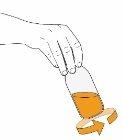
2 Agite suavemente el frasco en círculos durante 30 segundos para mezclar la solución. Si aparece espuma, deje reposar el frasco hasta que desaparezca la espuma. |
|
3 Quite el tapón a prueba de niños, presionándolo hacia abajo y girándolo en sentido contrario a las agujas del reloj. | |
4 Compruebe si el adaptador del frasco ya está insertado en el cuello del frasco. Si no está insertado, póngase en contacto con su farmacéutico. |
|
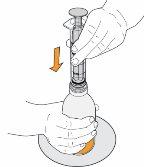
5 Empuje el émbolo hacia abajo en la jeringa oral hasta el final para eliminar todo el aire del interior. |
|
6 Coloque el frasco sobre una superficie plana y manténgalo en posición vertical. Introduzca la punta de la jeringa para uso oral en la abertura del adaptador del frasco. Asegúrese de que la jeringa para uso oral está bien conectada. IMPORTANTE:Debido a la presión del aire, el émbolo puede moverse por sí mismo cuando mida su dosis durante el Paso 7. Sujete el émbolo para evitar que se mueva. |
|
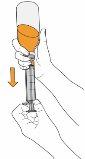
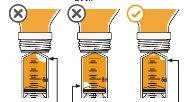
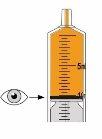
7 Gire cuidadosamente el frasco boca abajo y tire del émbolo para medir su dosis. Con la punta hacia arriba, la parte superiordel tapón negro debe alinearse con la dosis prescrita. Si aparecen grandes burbujas de aire en la jeringa, como se muestra en las imágenes, vuelva a introducir el medicamento en el frasco y extraiga de nuevo su dosis. Siga haciendo esto hasta que no haya burbujas grandes de aire. Se aceptan pequeñas burbujas de aire. |
|
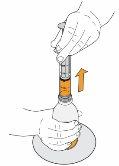
8 Continúe sujetando el émbolo en su lugar, de la vuelta al frasco y colóquelo sobre una superficie plana. Saque la jeringa oral del frasco tirando suavemente hacia arriba. |
|
9 Vuelva a comprobar que la parte superiordel tapón negro se encuentra a la dosis prescrita. Si no es así, repita los Pasos 6 a 8. Si la administración se realiza mediante la jeringa para uso oral, continúe con el Paso 10. Si se administra a través de una sonda de alimentación, vaya a la “SECCIÓN B”. |
|
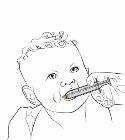
10 Coloque el extremo de la jeringa para uso oral dentro de la boca con la punta tocando el interior de cualquiera de las mejillas. Presione lentamente el émbolo hasta el fondo para administrar la dosis completa. ADVERTENCIA:Administrar Spexotras directamente en la garganta o empujar el émbolo demasiado rápido puede causar asfixia. |
|
11 Compruebe que no queda Spexotras en la jeringa para uso oral. Si queda algo de solución en la jeringa para uso oral, adminístrela. Nota:Si su dosis es mayor que la capacidad de la jeringa para uso oral, repita la administración hasta administrar el volumen total. | |
12 Vuelva a colocar el tapón en el frasco y gírelo en el sentido de las agujas del reloj para cerrarlo. Asegúrese de que el tapón esté bien sujeto al frasco. No retireel adaptador del frasco. | |
13 Limpiar la jeringa para uso oral siguiendo las instrucciones de la “SECCIÓN C”, a continuación conserve la solución y la jeringa para uso oral de acuerdo con las instrucciones de la sección “CONSERVACIÓN”. |
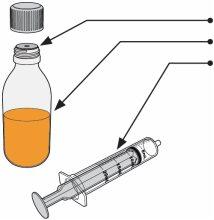 Para administrar Spexotras, necesitará: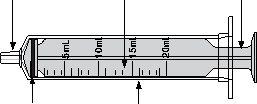


SECCIÓNBADMINISTRACIÓN POR SONDA DE ALIMENTACIÓN |
Por favor, siga esta sección solosi va a administrar Spexotras a través de una sonda de alimentación. Para administrar a través de una sonda de alimentación, lea la siguiente información y pase al Paso 1.
|
1 Lave la sonda de alimentación de acuerdo con las instrucciones del fabricante inmediatamente antes de administrar Spexotras. |
2 Siga los Pasos 1 a 9 de la “SECCIÓN A”, luego continúe con el Paso 3 de esta sección. |
3 Conecte la jeringa para uso oral de 20 ml que contiene Spexotras a la sonda de alimentación. Puede necesitar un adaptador ENFIT para conectar la jeringa para uso oral a la sonda de alimentación. |
4 Aplique una presión constante para dispensar la solución a la sonda de alimentación. |
5 Compruebe que no queda Spexotras en la jeringa para uso oral. Si queda algo de solución en la jeringa para uso oral, adminístrela. |
6 Vuelva a lavar la sonda de alimentación de acuerdo con las instrucciones del fabricante. |
7 Vaya a la “SECCIÓN C” para la limpieza. |
SECCIÓNCLIMPIEZA |
Para evitar el contacto de Spexotras con otros utensilios de cocina, limpie siempre la jeringa para uso oral separada de los otros utensilios de cocina. Limpieza de la jeringa para uso oral:
|
LIMPIEZA DE DERRAMES |
Si Spexotras entra en contacto con su piel, lave bien la zona con agua y jabón. Si Spexotras entra en sus ojos, enjuáguelos con agua. Siga estos pasos si se derrama algo de solución de solución de Spexotras:
|
CONSERVACIÓN |
Mantenga la solución de Spexotras y la jeringa para uso oral fuera de la vista y del alcance de los niños. Conservar la solución en posición vertical, en la caja proporcionada con el tapón perfectamente cerrado. Conservar por debajo de 25 ºC. Nocongelar. Conserve la jeringa para uso oral en la caja proporcionada junto con la solución de Spexotras. |
- País de registro
- Forma farmacéuticaSOLUCIÓN/SUSPENSIÓN ORAL, 4,7 mg
- Código ATCL01EE01
- Principio activo
- Requiere recetaSí
- Fabricante
- ComposiciónFOSFATO DISODICO (517 mg mg), SORBATO DE POTASIO (197,40 mg mg), PARAHIDROXIBENZOATO DE METILO (E-218) (75,20 mg mg), SULFOBUTILETER BETACICLODEXTRINA DE SODIO (9400 mg mg)
- Esta información es de carácter general y no sustituye la consulta con un profesional sanitario.
- Alternativas a SPEXOTRAS 0,05 MG/ML POLVO PARA SOLUCION ORALForma farmacéutica: COMPRIMIDO, 0,5 mgPrincipio activo: TrametinibFabricante: Novartis Europharm LimitedRequiere recetaForma farmacéutica: COMPRIMIDO, 2 mgPrincipio activo: TrametinibFabricante: Novartis Europharm LimitedRequiere recetaForma farmacéutica: COMPRIMIDO, 20 mgPrincipio activo: CobimetinibFabricante: Roche Registration GmbhRequiere receta
Médicos online para SPEXOTRAS 0,05 MG/ML POLVO PARA SOLUCION ORAL
Comenta la dosis, los posibles efectos secundarios, interacciones, contraindicaciones o la revisión de receta de SPEXOTRAS 0,05 MG/ML POLVO PARA SOLUCION ORAL, sujeto a valoración médica y a la normativa local.
Obtén una receta de SPEXOTRAS 0,05 MG/ML POLVO PARA SOLUCION ORAL online
Rellena un formulario de 2 minutos
Cuéntanos tus síntomas, historial y el medicamento que necesitas.
Elige un médico o nosotros te asignamos uno
Escoge un especialista o te conectamos con el próximo médico disponible.
El médico revisa tu caso
Normalmente en 30 minutos. Puede hacerte preguntas adicionales por chat.
Recógela en cualquier farmacia
Receta electrónica enviada a tu correo, válida en toda España.
Preguntas frecuentes
SPEXOTRAS 0,05 MG/ML POLVO PARA SOLUCION ORAL requiere receta en España. Puedes confirmarlo con un médico online según tu caso.
El principio activo de SPEXOTRAS 0,05 MG/ML POLVO PARA SOLUCION ORAL es Trametinib. Esta información ayuda a identificar medicamentos con la misma composición pero con diferentes nombres comerciales.
SPEXOTRAS 0,05 MG/ML POLVO PARA SOLUCION ORAL es fabricado por Novartis Europharm Limited. La marca y el envase pueden variar según el distribuidor.
Los Médicos de familia, Psiquiatras, Dermatólogos, Cardiólogos, Endocrinólogos, Gastroenterólogos, Neumólogos, Nefrólogos, Reumatólogos, Hematólogos, Infectólogos, Alergólogos, Geriatras, Pediatras, Oncólogos pueden valorar la prescripción de SPEXOTRAS 0,05 MG/ML POLVO PARA SOLUCION ORAL cuando esté clínicamente indicado. Puedes reservar una videoconsulta para comentar tu caso y las opciones de tratamiento.
España cuenta con una infraestructura sanitaria bien desarrollada en ciudades principales como Madrid, Barcelona, Valencia y Sevilla. Las farmacias están ampliamente disponibles y operan bajo estrictas regulaciones, garantizando el acceso a medicamentos con receta.
Puedes comprar SPEXOTRAS 0,05 MG/ML POLVO PARA SOLUCION ORAL en Madrid, Barcelona, Sevilla o Valencia en cualquier farmacia local con una receta válida.
Para obtener una receta, puedes utilizar Oladoctor:
Otros medicamentos con el mismo principio activo (Trametinib) incluyen MEKINIST 0,5 MG COMPRIMIDOS RECUBIERTOS CON PELICULA, MEKINIST 2 MG COMPRIMIDOS RECUBIERTOS CON PELICULA, COTELLIC 20 MG COMPRIMIDOS RECUBIERTOS CON PELICULA. Pueden tener diferentes nombres comerciales o formulaciones, pero contienen el mismo componente terapéutico. Consulta siempre con un médico antes de cambiar o iniciar un nuevo medicamento.
