



COTELLIC 20 mg Film-Coated Tablets

Prescription review online
A doctor will review your case and decide whether a prescription is medically appropriate.

Talk to a doctor about this medicine
Discuss your symptoms and possible next steps in a quick online consultation.



How to use COTELLIC 20 mg FILM-COATED TABLETS
Contents of the leaflet
- Introduction
- What is Cotellic and what is it used for
- What you need to know before you take Cotellic
- How to take Cotellic
- Possible side effects
- Storage of Cotellic
- Package Contents and Additional Information
Introduction
Patient Information Leaflet
Cotellic 20mg film-coated tablets
cobimetinib
Read all of this leaflet carefully before you start taking this medicine because it contains important information for you.
- Keep this leaflet, you may need to read it again.
- If you have any further questions, ask your doctor, pharmacist, or nurse.
- This medicine has been prescribed for you only. Do not pass it on to others. It may harm them, even if their signs of illness are the same as yours.
- If you get any side effects, talk to your doctor, pharmacist, or nurse. This includes any possible side effects not listed in this leaflet. See section 4.
Contents of the pack
- What is Cotellic and what is it used for
- What you need to know before you take Cotellic
- How to take Cotellic
- Possible side effects
- Storage of Cotellic
- Contents of the pack and other information
1. What is Cotellic and what is it used for
What is Cotellic
Cotellic is a cancer medicine that contains the active substance cobimetinib.
What is Cotellic used for
Cotellic is used to treat adult patients with a type of skin cancer called melanoma that has spread to other parts of the body or cannot be removed by surgery.
- It is used in combination with another cancer medicine called vemurafenib.
- It can only be used in patients whose cancer has a change (mutation) in a protein called "BRAF". Before starting treatment, your doctor will do a test for this mutation. This change can cause the melanoma to develop.
How Cotellic works
Cotellic works on a protein called "MEK", which is important for controlling the growth of cancer cells. When Cotellic is used in combination with vemurafenib (which works on the changed "BRAF" protein), it slows down or stops the growth of your cancer even further.

Not sure if this medicine is right for you?
Discuss your symptoms and treatment with a doctor online.
2. What you need to know before you take Cotellic
Do not take Cotellic:
- if you are allergic to cobimetinib or any of the other ingredients of this medicine (listed in section 6).
If you are not sure, talk to your doctor, pharmacist, or nurse before taking Cotellic.
Warnings and precautions
Talk to your doctor, pharmacist, or nurse before starting Cotellic if you have:
- Bleeding
Cotellic can cause serious bleeding, especially in your brain or stomach (see also "Serious bleeding" in section 4). Tell your doctor immediately if you have any unusual bleeding or any of these symptoms: headaches, dizziness, weakness, blood in your stools or black stools, or vomiting blood.
- Visual problems
Cotellic can cause visual problems (see also "Visual problems" in section 4). Tell your doctor immediately if you have any of the following symptoms: blurred vision, distorted vision, partially deficient vision, or any other change in your vision during treatment. Your doctor should examine your eyes if you experience any new or worsening visual problems while taking Cotellic.
- Heart problems
Cotellic can decrease the amount of blood pumped by your heart (see also "Heart problems" in section 4). Your doctor should do tests before and during treatment with Cotellic to check that your heart is pumping well. Tell your doctor immediately if you feel your heart racing, pounding, or beating irregularly, or if you experience dizziness, lightheadedness, shortness of breath, tiredness, or swelling in your legs.
- Liver problems
Cotellic can increase the levels of certain liver enzymes in your blood during treatment. Your doctor will do blood tests to check these levels and that your liver is working properly.
- Muscle problems
Cotellic can increase the level of an enzyme in your blood (creatine phosphokinase), which is found mainly in your muscles. This can be a sign of muscle damage (rhabdomyolysis) (see also "Muscle problems" in section 4). Your doctor will do blood tests to check this. Tell your doctor immediately if you experience any of the following symptoms: muscle pain, muscle spasms, weakness, or dark or red urine.
- Diarrhea
Tell your doctor immediately if you have diarrhea. Severe diarrhea can cause loss of body fluids (dehydration). Follow your doctor's instructions on what to do to help prevent or treat diarrhea.
Children and adolescents
Cotellic is not recommended for use in children and adolescents. The efficacy and safety of Cotellic in children under 18 years of age have not been established.
Other medicines and Cotellic
Tell your doctor or pharmacist if you are taking, have recently taken, or might take any other medicines. This is because Cotellic can affect the way other medicines work. Other medicines can also affect the way Cotellic works.
Talk to your doctor before taking Cotellic if you are taking:
Medicine | Indication of the medicine |
itraconazole, clarithromycin, erythromycin, telithromycin, voriconazole, rifampicin, posaconazole, fluconazole, miconazole | for certain fungal or bacterial infections |
ritonavir, cobicistat, lopinavir, delavirdine, amprenavir, fosamprenavir | for HIV infections |
telaprevir | for hepatitis C |
nefazodone | for depression |
amiodarone | for irregular heartbeat |
diltiazem, verapamil | for high blood pressure |
imatinib | for cancer |
carbamazepine, phenytoin | for seizures (fits) |
St. John's Wort | a herbal medicine used for the treatment of depression. It is available without a prescription. |
Using Cotellic with food and drink
Do not take Cotellic with grapefruit juice. The reason is that it can increase the amount of Cotellic in your blood.
Pregnancy and breastfeeding
If you are pregnant or breastfeeding, think you may be pregnant, or are planning to have a baby, ask your doctor or pharmacist for advice before taking this medicine.
- Cotellic is not recommended during pregnancy. Although the effects of Cotellic in pregnant women have not been studied, it may cause permanent damage or birth defects in the fetus.
- If you become pregnant during treatment with Cotellic or in the 3 months following your last dose, tell your doctor immediately.
- It is not known whether Cotellic passes into breast milk. If you are breastfeeding, your doctor will inform you of the benefits and risks of taking Cotellic.
Contraception
Women of childbearing age must use two effective methods of contraception, such as a condom or other barrier method (with spermicide, if possible), during treatment and for at least 3 months after finishing treatment. Ask your doctor about the best contraceptive method for you.
Driving and using machines
Cotellic may affect your ability to drive or use machines. Do not drive or use machines if you have any problems with your vision or other problems that could affect your ability, e.g., if you feel dizzy or tired. Ask your doctor if you are not sure.
Cotellic contains lactose and sodium
Cotellic tablets contain lactose (a type of sugar). If your doctor has told you that you have an intolerance to some sugars, talk to your doctor before taking this medicine.
This medicine contains less than 1 mmol of sodium (23 mg) per tablet; this is essentially "sodium-free".
3. How to take Cotellic
Follow exactly the instructions of your doctor or pharmacist for taking this medicine. If you are not sure, talk to your doctor or pharmacist again.
How much to take
The recommended dose is 3 tablets (a total of 60 mg) once a day.
- Take the tablets every day for 21 days (this is called a "treatment period").
- After 21 days, do not take any Cotellic tablets for 7 days. During this 7-day break in Cotellic treatment, you should continue to take vemurafenib as directed by your doctor.
- Start your 21-day treatment period with Cotellic after the 7-day break.
- If you experience any side effects, your doctor may consider reducing the dose, interrupting treatment temporarily, or permanently stopping treatment. Follow exactly the instructions of your doctor for taking Cotellic.
Taking the medicine
- Swallow the tablets whole with water.
- Cotellic can be taken with or without food.
If you feel sick
If you vomit after taking Cotellic, do not take an extra dose of Cotellic that day. Continue to take Cotellic as normal the next day.
If you take more Cotellic than you should
If you take more Cotellic than you should, tell your doctor immediately. Take the pack and this leaflet with you.
If you forget to take Cotellic
- If it is more than 12 hours until your next dose, take the missed dose as soon as you remember.
- If it is less than 12 hours until your next dose, skip the missed dose and continue to take Cotellic as normal.
- Do not take a double dose to make up for a missed dose.
If you stop taking Cotellic
It is important to take Cotellic for the full treatment period prescribed by your doctor.
If you have any further questions on the use of this medicine, ask your doctor, pharmacist, or nurse.

Started taking the medicine and have questions?
Discuss your symptoms and treatment with a doctor online.
4. Possible side effects
Like all medicines, this medicine can cause side effects, although not everybody gets them. If you experience any side effects, your doctor may consider reducing the dose, interrupting treatment temporarily, or permanently stopping treatment.
Also, read the patient information leaflet for vemurafenib, which is used in combination with Cotellic.
Serious side effects
Tell your doctor immediately if you experience any of the following side effects or if any of them get worse during treatment.
Serious bleeding(common: may affect up to 1 in 10 people)
Cotellic can cause serious bleeding, especially in your brain or stomach.
Depending on the area of bleeding, symptoms can include:
- headaches, dizziness, or weakness
- vomiting blood
- abdominal pain
- black or red stools.
Visual problems(very common: may affect more than 1 in 10 people)
Cotellic can cause visual problems. Some of these visual problems can lead to "serous retinopathy" (fluid accumulation under the retina of the eye). Symptoms of serous retinopathy include:
- blurred vision
- distorted vision
- partially deficient vision
- any other change in your vision.
Heart problems(common: may affect up to 1 in 10 people)
Cotellic can decrease the amount of blood pumped by your heart. Symptoms can include:
- dizziness
- lightheadedness
- shortness of breath
- tiredness
- fast, pounding, or irregular heartbeat
- swelling in your legs.
Muscle problems(uncommon: may affect up to 1 in 100 people)
Cotellic can increase the level of an enzyme in your blood (creatine phosphokinase), which is found mainly in your muscles. This can be a sign of muscle damage (rhabdomyolysis). Symptoms can include:
- muscle pain
- muscle spasms and weakness
- dark or red urine.
Diarrhea(very common: may affect more than 1 in 10 people)
Tell your doctor immediately if you have diarrhea. Severe diarrhea can cause loss of body fluids (dehydration). Follow your doctor's instructions on what to do to help prevent or treat diarrhea.
Other side effects
Tell your doctor, pharmacist, or nurse if you experience any of the following side effects:
Very common(may affect more than 1 in 10 people)
- increased sensitivity of the skin to sunlight
- rash
- feeling sick (nausea)
- fever
- chills
- increased liver enzymes (shown in blood tests)
- changes in blood test results related to creatine phosphokinase, an enzyme found mainly in the heart, brain, and skeletal muscle.
- vomiting
- rash with a flat, discolored area or bumps like acne
- high blood pressure
- anemia (low red blood cell count)
- bleeding
- abnormal skin thickening
- swelling, usually in the legs (peripheral edema)
- itching or dryness of the skin
- mouth pain or mouth ulcers, inflammation of the mucous membranes (stomatitis)
Common(may affect up to 1 in 10 people)
- certain types of skin cancer, such as basal cell carcinoma, squamous cell carcinoma, and keratoacanthoma
- dehydration, a condition in which your body does not have as much fluid as it should
- decreased levels of phosphate and sodium (shown in blood tests)
- increased sugar levels (shown in blood tests)
- increased levels of a liver pigment (called bilirubin) in the blood. Symptoms include yellowing of the skin and eyes
- inflammation of the lungs that can cause difficulty breathing and can be fatal (called "pneumonitis").
Reporting of side effects
If you experience any side effects, talk to your doctor, pharmacist, or nurse. This includes any possible side effects not listed in this leaflet. You can also report side effects directly via the national reporting system listed in Appendix V. By reporting side effects, you can help provide more information on the safety of this medicine.
5. Storage of Cotellic
- Keep this medicine out of the sight and reach of children.
- Do not use this medicine after the expiry date which is stated on the blister and carton after EXP. The expiry date is the last day of the month shown.
- This medicine does not require any special storage conditions.
- Medicines should not be disposed of via wastewater or household waste. Ask your pharmacist how to dispose of medicines no longer required. These measures will help protect the environment.
6. Package Contents and Additional Information
Cotellic Composition
- The active ingredient is cobimetinib. Each film-coated tablet contains cobimetinib hemifumarate equivalent to 20 mg of cobimetinib.
- The other ingredients are (see Section 2 "Cotellic contains lactose and sodium"):
- polyvinyl alcohol, titanium dioxide, macrogol, and talc in the film coating.
Appearance of Cotellic and Package Contents
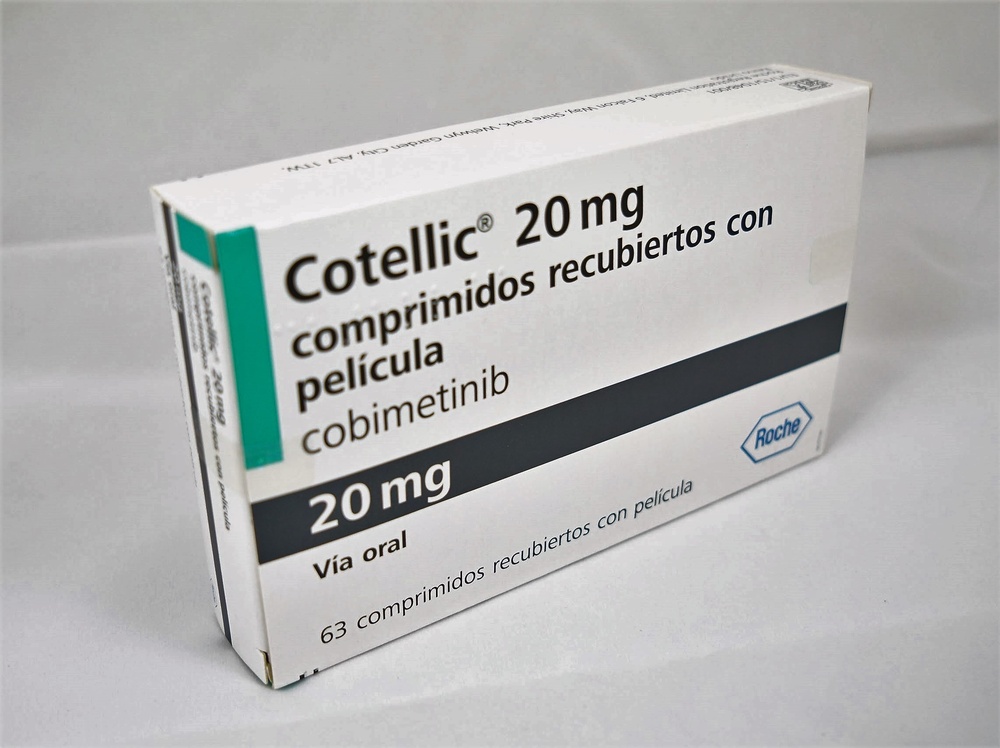
Cotellic film-coated tablets are white, round, and have the inscription "COB" engraved on one side. One package size is available: 63 tablets (3 blisters of 21 tablets).
Marketing Authorization Holder Roche Registration GmbH Emil-Barell-Strasse 1 79639 Grenzach-Wyhlen Germany |
Manufacturer
Roche Pharma AG
Emil-Barell-Strasse 1
79639
Grenzach-Wyhlen
Germany
You can request more information about this medication by contacting the local representative of the marketing authorization holder:
|

|
Date of the Last Revision of this Leaflet:
Detailed information on this medicinal product is available on the European Medicines Agency website http://www.ema.europa.eu.
- Country of registration
- Dosage formTABLET, 20 mg
- ATC codeL01EE02
- Active substance
- Prescription requiredYes
- Manufacturer
- CompositionLACTOSA MONOHIDRATO (36,48 mg mg), CROSCARMELOSA SODICA (4,80 mg mg)
- This information is for reference only and does not constitute medical advice. Always consult a doctor before taking any medication. Oladoctor is not responsible for medical decisions based on this content.
- Alternatives to COTELLIC 20 mg FILM-COATED TABLETSDosage form: CAPSULE, 10 mgActive substance: selumetinibManufacturer: Astrazeneca AbPrescription requiredDosage form: CAPSULE, 25 mgActive substance: selumetinibManufacturer: Astrazeneca AbPrescription requiredDosage form: TABLET, 0.5 mgActive substance: trametinibManufacturer: Novartis Europharm LimitedPrescription required
Online doctors for COTELLIC 20 mg FILM-COATED TABLETS
Discuss questions about COTELLIC 20 mg FILM-COATED TABLETS, including use, safety considerations and prescription review, subject to medical assessment and local regulations.
Get COTELLIC 20 mg FILM-COATED TABLETS Prescription Online
Fill in a 2-min form
Tell us your symptoms, history, and what medicine you're requesting.
Pick a doctor or let us assign
Choose a specialist or we'll match you with the next available doctor.
Doctor reviews your case
Usually within 30 minutes. They may ask follow-up questions via chat.
Collect from any pharmacy
Electronic prescription sent to your email — valid across Spain.
Frequently Asked Questions
COTELLIC 20 mg FILM-COATED TABLETS requires a prescription in Spain. You can check with a doctor online whether this medicine may be appropriate for your situation.
The active ingredient in COTELLIC 20 mg FILM-COATED TABLETS is cobimetinib. This information helps identify medicines with the same composition but different brand names.
COTELLIC 20 mg FILM-COATED TABLETS is manufactured by Roche Registration Gmbh. Pharmacy brands and packaging may differ depending on the distributor.
Doctors such as Family doctors, Psychiatrists, Dermatologists, Cardiologists, Endocrinologists, Gastroenterologists, Pulmonologists, Nephrologists, Rheumatologists, Hematologists, Infectious disease physicians, Allergists, Geriatricians, Paediatricians, Oncologists may assess whether COTELLIC 20 mg FILM-COATED TABLETS is appropriate, depending on your situation and local regulations. You can book an online consultation to discuss your symptoms and possible next steps.
Spain has a well-developed healthcare infrastructure across major cities such as Madrid, Barcelona, Valencia, and Seville. Pharmacies are widely available and operate under strict regulations, ensuring access to prescribed medications.
You can buy COTELLIC 20 mg FILM-COATED TABLETS in Madrid, Barcelona, Seville, or Valencia at any local pharmacy with a valid prescription.
To obtain a prescription, you can use Oladoctor:
Other medicines with the same active substance (cobimetinib) include KOSELUGO 10 mg HARD CAPSULES, KOSELUGO 25 mg HARD CAPSULES, MEKINIST 0.5 mg FILM-COATED TABLETS. These may have different brand names or formulations but contain the same therapeutic ingredient. Always consult a doctor before switching or starting a new medicine.
