



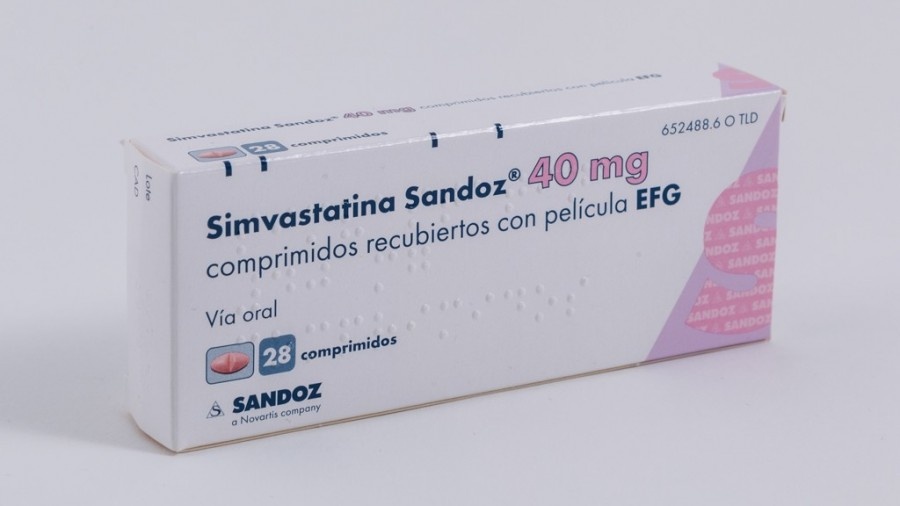
SIMVASTATINA 40 mg Comprimidos Recubiertos Con Película

Revisión de receta online
Un médico revisará tu caso y determinará si la prescripción es médicamente apropiada.

Habla con un médico sobre este medicamento
Comenta tus síntomas y las opciones de tratamiento en una consulta online.



Cómo usar SIMVASTATINA ALTER 40 mg COMPRIMIDOS RECUBIERTOS CON PELICULA EFG
Contenido del prospecto
- Introducción
- Qué es Simvastina Alter y para qué se utiliza
- Qué necesita saber antes de empezar a tomar Simvastatina Alter
- Cómo tomar Simvastatina Alter
- Posibles efectos adversos
- Conservación de Simvastatina Alter
- Contenido del envase e información adicional
Introducción
Prospecto: información para el paciente
Simvastatina Alter 10 mg comprimidos recubiertos con película EFG
Simvastatina Alter 20 mg comprimidos recubiertos con película EFG
Simvastatina Alter 40 mg comprimidos recubiertos con película EFG
Simvastatina
Lea todo el prospecto detenidamente antes de empezar a tomar este medicamento, porque contiene información importante para usted.
- Conserve este prospecto, ya que puede tener que volver a leerlo.
- Si tiene alguna duda, consulte a su médico o farmacéutico.
- Este medicamento se le ha recetado solamente a usted, y no debe dárselo a otras personas aunque tengan los mismos síntomas que usted, ya que puede perjudicarles.
- Si experimenta efectos adversos, consulte a su médico o farmacéutico, incluso si se trata de efectos adversos que no aparecen en este prospecto. Ver sección 4.
Contenido del prospecto
- Qué es Simvastatina Alter y para qué se utiliza
- Qué necesita saber antes de empezar a tomar Simvastatina Alter
- Cómo tomar Simvastatina Alter
- Posibles efectos adversos
- Conservación de Simvastatina Alter
- Contenido del envase e información adicional
1. Qué es Simvastina Alter y para qué se utiliza
Simvastatina Alter contiene el principio activo simvastatina. Simvastatina Alter es un medicamento que se utiliza para reducir las concentraciones de colesterol total, colesterol “malo” (colesterol LDL) y unas sustancias grasas llamadas triglicéridos que circulan en la sangre. Además, Simvastatina Alter eleva las concentraciones del colesterol “bueno” (colesterol HDL). Simvastatina es miembro de una clase de medicamentos llamados estatinas.
El colesterol es una de las sustancias grasas que se encuentran en la corriente sanguínea. Su colesterol total se compone principalmente del colesterol LDL y el HDL.
El colesterol LDL a menudo se denomina colesterol “malo” porque puede acumularse en las paredes de sus arterias formando placas. Con el tiempo, esta acumulación de placa puede provocar un estrechamiento de las arterias. Este estrechamiento puede hacer más lento o interrumpir el flujo sanguíneo a órganos vitales como el corazón y el cerebro. Esta interrupción del flujo sanguíneo puede provocar un infarto de miocardio o un accidente cerebrovascular.
El colesterol HDL a menudo se denomina colesterol “bueno” porque ayuda a evitar que el colesterol malo se acumule en las arterias y las protege de las enfermedades cardíacas.
Los triglicéridos son otro tipo de grasa en su sangre que pueden aumentar el riesgo de enfermedad cardíaca.
Mientras toma este medicamento debe seguir una dieta reductora del colesterol.
Simvastatina Alter se usa, junto con una dieta reductora del colesterol, si tiene:
- niveles elevados de colesterol en sangre (hipercolesterolemia primaria) o nivles elevados en sangre de sustancias grasas (hiperlipidemia mixta).
- una enfermedad hereditaria (hipercolesterolemia familiar homocigota), la cual aumenta el nivel de colesterol en la sangre. También puede recibir otros tratamientos.
- cardiopatía coronaria (CC) o si tiene un elevado riesgo de cardiopatía coronaria (porque tiene diabetes, antecedentes de accidente cerebrovascular u otra enfermedad de los vasos sanguíneos). Simvastatina Alter puede prolongar su vida reduciendo el riesgo de problemas de cardiopatía, independientemente de la cantidad de colesterol en su sangre.
En la mayoría de las personas, no hay síntomas inmediatos de colesterol alto. Su médico puede medir su colesterol con un sencillo análisis de sangre. Visite a su médico regularmente, vigile su colesterol y hable con su médico de sus objetivos.

¿No estás seguro de si este medicamento es adecuado para ti?
Comenta tus síntomas y tratamiento con un médico online.
2. Qué necesita saber antes de empezar a tomar Simvastatina Alter
No tome Simvastatina Alter
- Si es alérgico a simvastatina o a alguno de los demás componentes de este medicamento (incluidos en la sección 6).
- Si actualmente tiene problemas en el hígado.
- Si está embarazada o en periodo de lactancia.
- Si está tomando medicamentos con uno o más de uno de los siguientes principios activos:
- Itraconazol, ketoconazol, posaconazol o voriconazol (utilizados para tratar infecciones por hongos).
- Eritromicina, claritromicina o telitromicina (utilizados para tratar infecciones).
- Inhibidores de la proteasa del VIH como indinavir, nelfinavir, ritonavir y saquinavir (los inhibidores de la proteasa del VIH se usan para tratar las infecciones del VIH).
- Boceprevir o telaprevir (utilizados para tratar la infección por el virus de la hepatitis C).
- Nefazodona (utilizado para tratar la depresión).
- Cobicistat.
- Gemfibrozilo (utilizado para reducir el colesterol).
- Ciclosporina (utilizado en pacientes con trasplante de órganos).
- Danazol (una hormona sintética utilizada para tratar la endometriosis, una enfermedad en la que la capa interna del útero crece fuera del útero).
- Si está tomando o ha tomado en los últimos 7 días un medicamento que contenga ácido fusídico (utilizado para el tratamiento de la infección bacteriana) por vía oral o por inyección. La combinación de ácido fusídico y Simvastatina Alter puede producir problemas musculares graves (rabdomiólisis).
No tome más de 40 mg de simvastatina si está tomando lomitapida (utilizada para tratar enfermedades genéticas de colesterol graves y raras).
Consulte a su médico si no está seguro si su medicamento está en la lista anterior.
Advertencias y precauciones
Consulte con su médico o farmacéutico antes de empezar a tomar Simvastatina Alter.
Informe a su médico:
- de todos sus problemas médicos, incluidas las alergias.
- si consume cantidades importantes de alcohol.
- si ha tenido alguna vez una enfermedad hepática. Simvastatina puede que no sea adecuado para usted.
- si tiene prevista una operación. Puede ser necesario que deje de tomar los comprimidos de simvastatina durante un breve periodo de tiempo.
- si usted es asiático, ya que puede necesitar una dosis diferente.
- si tiene o ha tenido miastenia (una enfermedad que cursa con debilidad muscular generalizada que, en algunos casos, afecta a los músculos utilizados al respirar) o miastenia ocular (una enfermedad que provoca debilidad de los músculos oculares), ya que las estatinas a veces pueden agravar la enfermedad o provocar la aparición de miastenia (ver sección 4).
Su médico le hará un análisis de sangre antes de que empiece a tomar simvastatina y también si tiene algún síntoma de problemas en el hígado mientras toma simvastatina. Esto es para comprobar lo bien que funciona su hígado.
Su médico también puede querer hacerle análisis de sangre para comprobar lo bien que funciona su hígado después de que empiece el tratamiento con simvastatina.
Mientras usted esté tomando este medicamento su médico controlará si usted tiene diabetes o riesgo de desarrollar diabetes. Este riesgo de diabetes aumenta si usted tiene altos niveles de azúcares y grasas en la sangre, sobrepeso y presión arterial alta.
Informe a su médico si tiene una enfermedad pulmonar grave.
Consulte a su médico inmediatamente si presenta dolor, sensibilidad a la presión o debilidad de los músculos inexplicables. Esto se debe a que en raras ocasiones, los problemas musculares pueden ser graves, incluyendo fallo muscular lo que produce daño renal; y muy raramente se han producido muertes.
El riesgo de fallo muscular es mayor con dosis elevadas de simvastatina, especialmente con la dosis de 80 mg. El riesgo de fallo muscular también es mayor en determinados pacientes. Hable con su médico si alguna de las siguientes situaciones le afecta a usted:
- consume grandes cantidades de alcohol
- tiene problemas de riñón
- tiene problemas de tiroides
- tiene 65 años o más
- es mujer
- alguna vez ha tenido problemas musculares durante el tratamiento con medicamentos que reducen el colesterol llamados “estatinas” o fibratos
- usted o un familiar cercano tienen un problema muscular hereditario.
Informe también a su médico o farmacéutico si presenta debilidad muscular constante. Podrían ser necesarias pruebas y medicamentos adicionales para diagnosticar y tratar este problema.
Niños y adolescentes
La eficacia y seguridad del tratamiento con simvastatina se estudió en chicos de edades comprendidas entre 10 y 17 años y en chicas que tuvieron su primer periodo menstrual (menstruación) al menos un año antes (ver sección 3. Cómo tomar Simvastatina Alter). No se ha estudiado simvastatina en niños menores de 10 años. Para más información consulte a su médico.
Toma de Simvastatina Alter con otros medicamentos
Comunique a su médico si está tomando, ha tomado recientemente o podría tener que tomar cualquier otro medicamento con alguno de los siguientes principios activos. Tomar simvastatina con alguno de los siguientes medicamentos puede aumentar el riesgo de problemas musculares (algunos de éstos ya están incluidos en la sección anterior “No tome Simvastatina Alter”).
- Si tiene que tomar ácido fusídico oral para tratar una infección bacteriana, temporalmente tendrá que dejar de usar este medicamento. Su médico le indicará cuando podrá reiniciar el tratamiento con Simvastatina Alter. El uso de Simvastatina Alter con ácido fusídico raramente puede producir debilidad muscular, sensibilidad o dolor (rabdomiólisis). Para mayor información sobre rabdomiólisis ver sección 4.
- Ciclosporina (utilizado a menudo en pacientes trasplantados).
- Danazol (una hormona sintética utilizada para tratar la endometriosis, una enfermedad en la que la capa interna del útero crece fuera del útero).
- Medicamentos con un principio activo como itraconazol, ketoconazol, fluconazol, posaconazol o voriconazol (utilizados para tratar infecciones por hongos).
- Fibratos con un principio activo como gemfibrozilo y bezafibrato (utilizados para reducir el colesterol).
- Eritromicina, claritromicina o telitromicina (utilizados para tratar infecciones bacterianas).
- Inhibidores de la proteasa del VIH, como indinavir, nelfinavir, ritonavir y saquinavir (utilizados para tratar el SIDA).
- Antivirales para la hepatitis C como boceprevir, telaprevir, elbasvir o grazoprevir (utilizados para tratar la infección por el virus de la hepatitis C).
- Nefazodona (utilizado para tratar la depresión).
- Medicamentos con el principio activo cobicistat.
- Amiodarona (utilizado para tratar el ritmo cardiaco irregular).
- Verapamilo, diltiazem o amlodipino (utilizados para tratar la presión arterial alta, el dolor torácico asociado a cardiopatías o a otras enfermedades del corazón).
- Lomitapida (utilizado para tratar enfermedades genéticas de colesterol graves y raras).
- Daptomicina (un medicamento utilizado para tratar infecciones de la piel y de la estructura de la piel con complicaciones y bacteriemia). Es posible que los efectos adversos que afectan a los músculos puedan ser mayores cuando este medicamento se toma durante el tratamiento con simvastatina . Su médico puede decidir que deje de tomar Simvastatina por un tiempo,
- Colchicina (utilizado para tratar la gota).
- Ticagrelor (medicamento antiagregante plaquetario).
Así como con los medicamentos indicados anteriormente, comunique a su médico o farmacéutico si está tomando o ha tomado recientemente otros medicamentos, incluso los adquiridos sin receta. En especial, informe a su médico si está tomando medicamentos con alguno de los siguientes principios activos:
- medicamentos con un principio activo para prevenir la formación de coágulos de sangre, como warfarina, fenprocomón o acenocumarol (anticoagulantes)
- fenofibrato (también utilizado para reducir el colesterol)
- niacina (también utilizado para reducir el colesterol)
- rifampicina (utilizado para tratar la tuberculosis).
También debe informar a cualquier médico que le recete un nuevo medicamento que usted está tomando simvastatina.
Simvastatina Alter con alimentos, bebidas y alcohol
El zumo de pomelo contiene uno o más componentes que alteran cómo el cuerpo utiliza algunos medicamentos, incluyendo simvastatina. Debe evitarse el consumo de zumo de pomelo.
Embarazo, lactancia y fertilidad
Si está embarazada o en periodo de lactancia, cree que podría estar embarazada o tiene intención de quedarse embarazada, consulte a su médico o farmacéutico antes de utilizar este medicamento.
No tome Simvastatina Alter si está embarazada, si está tratando de quedarse embarazada o si piensa que pueda estar embarazada. Si se queda embarazada mientras está tomando Simvastatina Alter, deje de tomarlo inmediatamente e informe a su médico. No tome Simvastatina Alter si está en periodo de lactancia porque se desconoce si este medicamento pasa a la leche materna.
Consulte a su médico o farmacéutico antes de utilizar cualquier medicamento.
Conducción y uso de máquinas
No se espera que Simvastatina Alter interfiera con su capacidad para conducir o utilizar máquinas. Sin embargo, debe tenerse en cuenta que algunas personas sufren mareos después de tomar Simvastatina Alter
Simvastatina Alter contiene lactosa
Si su médico le ha indicado que padece una intolerancia a ciertos azúcares, consulte con él antes de tomar este medicamento.
3. Cómo tomar Simvastatina Alter
Su médico determinará la dosis por comprimido apropiada para usted, dependiendo de su estado, su tratamiento actual y de la situación de su riesgo personal.
Siga exactamente las instrucciones de administración de este medicamento indicadas por su médico. En caso de duda, consulte de nuevo a su médico o farmacéutico.
Antes de empezar a tomar este medicamento, debe estar siguiendo una dieta para reducir el colesterol.
Posología:
La dosis recomendada es 10 mg, 20 mg o 40 mg de simvastatina una vez al día por vía oral.
Adultos:
La dosis habitual de inicio es de 10, 20 o, en algunos casos, 40 mg al día. Después de al menos 4 semanas, su médico puede ajustarle la dosis hasta un máximo de 80 mg al día. No tome más de 80 mg al día.
Su médico puede recetarle dosis inferiores, sobre todo si está tomando ciertos medicamentos indicados anteriormente o si padece ciertos trastornos renales.
La dosis de 80 mg sólo se recomienda a pacientes adultos con niveles muy altos de colesterol y con un elevado riesgo de problemas por enfermedades de corazón que no han alcanzado su objetivo de colesterol con dosis más bajas.
Uso en niños y adolescentes
En los niños y adolescentes con edades entre 10 y 17 años, la dosis diaria recomendada para iniciar el tratamiento es de 10 mg, por la noche. La dosis diaria máxima recomendada es de 40 mg.
Método de administración:
Tome simvastatina por la noche. Puede tomarlo con o sin alimentos. Siga tomando los comprimidos de simvastatina hasta que su médico le diga que deje de tomarlo.
Si su médico le ha recetado simvastatina junto con otro medicamento para reducir el colesterol que contiene algún secuestrante de ácidos biliares, debe tomar los comprimidos de simvastatina por lo menos 2 horas antes o 4 horas después de tomar el secuestrante de ácidos biliares.
Si toma más Simvastatina Alter del que debe
En caso de sobredosis o ingestión accidental, consulte con su médico o farmacéutico o llame al Servicio de Información Toxicológica. Teléfono: 91 562 04 20.
Si olvidó tomar Simvastatina Alter
No tome una dosis doble para compensar las dosis olvidadas. Al día siguiente, tome su cantidad normal de simvastatina a la hora de siempre.
Si tiene cualquier otra duda sobre el uso de este medicamento, pregunte a su médico o farmacéutico.
Si interrumpe el tratamiento con Simvastatina Alter
Hable con su médico o farmacéutico porque su colesterol puede subir de nuevo.
Si tiene cualquier otra duda sobre el uso de este producto, pregunte a su médico o farmacéutico.

¿Has empezado a tomar el medicamento y tienes preguntas?
Comenta tus síntomas y tratamiento con un médico online.
4. Posibles efectos adversos
Al igual que todos los medicamentos, este medicamento puede producir efectos adversos, aunque no todas las personas los sufran.
Los siguientes términos se utilizan para describir con qué frecuencia se han comunicado los efectos adversos:
- Raros (pueden afectar hasta 1 de cada 1.000 personas).
- Muy raros (pueden afectar hasta 1 de cada 10.000 personas).
- Frecuencia no conocida (no puede estimarse a partir de los datos disponibles).
Si se produce cualquiera de los efectos adversos graves mencionados a continuación , deje de tomar el medicamento e informe a su médico de forma inmediata o vaya al servicio de urgencias del hospital más cercano.
Se han comunicado los siguientes efectos adversos graves raros:
- dolor muscular, sensibilidad a la presión, debilidad, o calambres musculares. En raras ocasiones, estos problemas musculares pueden ser graves, incluyendo fallo muscular lo que produce daño renal; y muy raramente se han producido muertes.
- reacciones de hipersensibilidad (alérgicas) que incluyen:
- hinchazón de la cara, lengua y garganta, que puede causar dificultad al respirar (angioedema)
- intenso dolor muscular, normalmente en los hombros y caderas
- erupción cutánea con debilidad de los músculos de los miembros y del cuello
- dolor o inflamación de las articulaciones (polimialgia reumática)
- inflamación de los vasos sanguíneos (vasculitis)
- hematomas atípicos, erupciones cutáneas e hinchazón (dermatomiositis), urticaria, sensibilidad de la piel a la luz del sol, fiebre, sofocos
- dificultad en la respiración (disnea) y malestar general
- síndrome seudolúpico (incluyendo erupción cutánea, trastornos en las articulaciones y efectos en las células sanguíneas)
- inflamación del hígado con los siguientes síntomas: coloración amarillenta de la piel y los ojos, picor, orina de color oscuro o heces de color pálido, sentirse cansado o débil, pérdida de apetito; insuficiencia hepática (muy rara)
- inflamación del páncreas, a menudo con dolor abdominal intenso.
Se han comuniicado los siguientes efectos adversos graves muy raros;
- una reacción alérgica grave que causa dificultad para respirar o mareos (reacción anafiláctica).
- erupción que puede producirse en la piel o úlceras en la boca (erupciones liquenoides medicamentosas),
- rotura muscular
- ginecomastia (aumento de tamaño de la mama en hombres).
Raramente también se han comunicado los siguientes efectos adversos:
- bajo recuento de glóbulos rojos (anemia)
- adormecimiento o debilidad de los brazos y las piernas
- dolor de cabeza, sensación de hormigueo, mareos
- visión borrosa y alteración visual
- trastornos digestivos (dolor abdominal, estreñimiento, gases, indigestión, diarrea, náuseas, vómitos)
- erupción cutánea, picor, pérdida de pelo
- debilidad
- problemas de sueño (muy raro)
- poca memoria (muy raro), pérdida de memoria, confusión.
También se han comunicado los siguientes efectos adversos pero a partir de la infromación disponible no puede estimarse la frecuencia (frecuencia no conocida)
- disfunción eréctil
- depresión
- inflamación de los pulmones lo que provoca problemas al respirar incluyendo tos persistente y/o dificultad al respirar o fiebre
- problemas en los tendones, algunas veces complicados con la rotura del tendón
- miastenia grave (una enfermedad que provoca debilidad muscular generalizada que, en algunos casos, afecta a los músculos utilizados al respirar)
- miastenia ocular (una enfermedad que provoca debilidad de los músculos oculares)
Consulte a su médico si presenta debilidad en los brazos o las piernas que empeora después de periodos de actividad, visión doble o caída de los párpados, dificultad para tragar o dificultad para respirar.
Posibles efectos adversos adicionales comunicados con algunas estatinas:
- trastornos del sueño, incluyendo pesadillas
- disfunción sexual
- diabetes. Es más probable si usted tiene niveles altos de azúcares y grasas en la sangre, sobrepeso y tensión arterial alta. Su médico le controlará mientras esté tomando este medicamento
- dolor, sensibilidad o debilidad muscular constante, que puede que no desaparezca tras suspender el tratamiento con simvastatina (frecuencia no conocida).
Pruebas complementarias
En algunos análisis de sangre se observaron elevaciones de la función hepática (transaminasas) y en una enzima del músculo (creatina cinasa).
Comunicación de efectos adversos
Si experimenta cualquier tipo de efecto adverso, consulte a su médico, farmacéutico o enfermero, incluso si se trata de posibles efectos adversos que no aparecen en este prospecto. También puede comunicarlos directamente a través del Sistema Español de Farmacovigilancia de medicamentos de Uso Humano: https://www.notificaram.es. Mediante la comunicación de efectos adversos usted puede contribuir a proporcionar más información sobre la seguridad de este medicamento.
5. Conservación de Simvastatina Alter
Mantener este medicamento fuera de la vista y del alcance de los niños.
No utilice este medicamento después de la fecha de caducidad que aparece en el envase después de CAD. La fecha de caducidad es el último día del mes que se indica.
No conservar a temperatura superior a 30ºC.
Conservar en el embalaje original.
Los medicamentos no se deben tirar por los desagües ni a la basura. Deposite los envases y los medicamentos que no necesita en el Punto SIGRE de la farmacia. En caso de duda pregunte a su farmacéutico cómo deshacerse de los envases y de los medicamentos que no necesita. De esta forma, ayudará a proteger el medio ambiente.
6. Contenido del envase e información adicional
Composición de Simvastatina Alter
- El principio activo es simvastatina. Cada comprimido contiene 10 mg, 20 mg o 40 mg de simvastatina.
Los demás componentes son: butilhidroxianisol (E320), ácido ascórbico, ácido cítrico, celulosa microcristalina, almidón de maíz pregelatinizado, lactosa, crospovidona, estearato de magnesio, hipromelosa, dióxido de titanio (E171), triacetina. Ver sección 2 Simvastatina Alter contiene lactosa.
Aspecto del producto y contenido del envase
Simvastatina Alter 10 mg se presenta en forma de comprimidos recubiertos con película, lenticulares de color blanco. Se presenta en envases de 28 comprimidos.
Simvastatina Alter 20 mg se presenta en forma de comprimidos recubiertos con película, lenticulares de color blanco. Se presenta en envases de 28 comprimidos.
Simvastatina Alter 40 mg se presenta en forma de comprimidos recubiertos con película, lenticulares de color blanco. Se presenta en envases de 28 comprimidos.
Titular de la autorización de comercialización
Laboratorios Alter, S.A.
C/ Mateo Inurria, 30
28036, Madrid
España
Responsable de la fabricación
Laboratorios Alter, S.A.
C/ Mateo Inurria, 30
28036, Madrid
España
o
Laboratorios Alter, S.A.
C/ Zeus, 6
Polígono Industrial R2
28880, Meco (Madrid)
España
Fecha de la última revisión de este prospecto: Marzo 2024.
La información detallada de este medicamento está disponible en la página web de la Agencia Española de Medicamentos y Productos Sanitarios (AEMPS) http://www.aemps.gob.es/
- País de registro
- Forma farmacéuticaCOMPRIMIDO, 40 mg
- Código ATCC10AA01
- Precio medio en farmacia2.17 EUR
- Principio activo
- Requiere recetaSí
- Fabricante
- ComposiciónLACTOSA ANHIDRA (245,8 mg mg), ALCOHOL ETILICO (ETANOL) (Equivalente a 0 ml mg), BUTILHIDROXIANISOL (E 320) (0,1 mg mg)
- Esta información es de carácter general y no sustituye la consulta con un profesional sanitario.
- Alternativas a SIMVASTATINA ALTER 40 mg COMPRIMIDOS RECUBIERTOS CON PELICULA EFGForma farmacéutica: COMPRIMIDO, 10 mg comprimidosPrincipio activo: SimvastatinaFabricante: Industria Quimica Y Farmaceutica Vir S.A.Requiere recetaForma farmacéutica: COMPRIMIDO, 20 mg simvastatinaPrincipio activo: SimvastatinaFabricante: Industria Quimica Y Farmaceutica Vir S.A.Requiere recetaForma farmacéutica: COMPRIMIDO, 40 mg simvastatinaPrincipio activo: SimvastatinaFabricante: Industria Quimica Y Farmaceutica Vir S.A.Requiere receta
Médicos online para SIMVASTATINA ALTER 40 mg COMPRIMIDOS RECUBIERTOS CON PELICULA EFG
Comenta la dosis, los posibles efectos secundarios, interacciones, contraindicaciones o la revisión de receta de SIMVASTATINA ALTER 40 mg COMPRIMIDOS RECUBIERTOS CON PELICULA EFG, sujeto a valoración médica y a la normativa local.
Obtén una receta de SIMVASTATINA ALTER 40 mg COMPRIMIDOS RECUBIERTOS CON PELICULA EFG online
Rellena un formulario de 2 minutos
Cuéntanos tus síntomas, historial y el medicamento que necesitas.
Elige un médico o nosotros te asignamos uno
Escoge un especialista o te conectamos con el próximo médico disponible.
El médico revisa tu caso
Normalmente en 30 minutos. Puede hacerte preguntas adicionales por chat.
Recógela en cualquier farmacia
Receta electrónica enviada a tu correo, válida en toda España.
Preguntas frecuentes
SIMVASTATINA ALTER 40 mg COMPRIMIDOS RECUBIERTOS CON PELICULA EFG requiere receta en España. Puedes confirmarlo con un médico online según tu caso.
El principio activo de SIMVASTATINA ALTER 40 mg COMPRIMIDOS RECUBIERTOS CON PELICULA EFG es Simvastatina. Esta información ayuda a identificar medicamentos con la misma composición pero con diferentes nombres comerciales.
El precio medio en farmacia de SIMVASTATINA ALTER 40 mg COMPRIMIDOS RECUBIERTOS CON PELICULA EFG es de aproximadamente 2.17 EUR. Puede variar según el fabricante y la forma farmacéutica.
SIMVASTATINA ALTER 40 mg COMPRIMIDOS RECUBIERTOS CON PELICULA EFG es fabricado por Laboratorios Alter S.A.. La marca y el envase pueden variar según el distribuidor.
Los Médicos de familia, Psiquiatras, Dermatólogos, Cardiólogos, Endocrinólogos, Gastroenterólogos, Neumólogos, Nefrólogos, Reumatólogos, Hematólogos, Infectólogos, Alergólogos, Geriatras, Pediatras, Oncólogos pueden valorar la prescripción de SIMVASTATINA ALTER 40 mg COMPRIMIDOS RECUBIERTOS CON PELICULA EFG cuando esté clínicamente indicado. Puedes reservar una videoconsulta para comentar tu caso y las opciones de tratamiento.
España cuenta con una infraestructura sanitaria bien desarrollada en ciudades principales como Madrid, Barcelona, Valencia y Sevilla. Las farmacias están ampliamente disponibles y operan bajo estrictas regulaciones, garantizando el acceso a medicamentos con receta.
Puedes comprar SIMVASTATINA ALTER 40 mg COMPRIMIDOS RECUBIERTOS CON PELICULA EFG en Madrid, Barcelona, Sevilla o Valencia en cualquier farmacia local con una receta válida.
Para obtener una receta, puedes utilizar Oladoctor:
Otros medicamentos con el mismo principio activo (Simvastatina) incluyen ALCOSIN 10 mg COMPRIMIDOS RECUBIERTOS CON PELICULA, ALCOSIN 20 mg COMPRIMIDOS RECUBIERTOS CON PELICULA, ALCOSIN 40 mg COMPRIMIDOS RECUBIERTOS CON PELICULA. Pueden tener diferentes nombres comerciales o formulaciones, pero contienen el mismo componente terapéutico. Consulta siempre con un médico antes de cambiar o iniciar un nuevo medicamento.
