







Cómo usar SEPTRIN PEDIATRICO 20 mg/100 mg COMPRIMIDOS
Traducción generada por IA
Este contenido ha sido traducido automáticamente y se ofrece solo con fines informativos. No sustituye la consulta con un profesional sanitario.
Ver originalContenido del prospecto
- Introducción
- Qué es Septrin Pediátrico 20 mg/100 mg comprimidos y para qué se utiliza
- Qué necesita saber antes de empezar a tomar Septrin Pediátrico 20 mg/100 mg comprimidos
- Cómo tomar Septrin Pediátrico 20mg/100 mg comprimidos
- Posibles efectos adversos
- Conservación de Septrin Pediátrico 20 mg/100 mg comprimidos
- Contenido del envase e información adicional
Introducción
Prospecto: información para el usuario
Septrin Pediátrico 20 mg/100 mg comprimidos
(trimetoprima/sulfametoxazol)
Lea todo el prospecto detenidamente antes de empezar a tomar este medicamento, porque contiene información importante para usted.
- Conserve este prospecto, ya que puede tener que volver a leerlo.
- Si tiene alguna duda, consulte a su médico o farmacéutico.
- Este medicamento se le ha recetado solamente a usted y no debe dárselo a otras personas, aunque tengan los mismos síntomas que usted, ya que puede perjudicarles.
- Si experimenta efectos adversos, consulte a su médico o farmacéutico, incluso si se trata de efectos adversos que no aparecen es este prospecto.
Contenido del prospecto:
- Qué es Septrin Pediátrico 20 mg/100 mg comprimidos y para qué se utiliza
- Qué necesita saber antes de empezar a tomar Septrin Pediátrico 20 mg/100 mg comprimidos.
- Cómo tomar Septrin Pediátrico 20 mg/100 mg comprimidos.
- Posibles efectos adversos.
- Conservación de Septrin Pediátrico 20 mg/100 mg comprimidos.
- Contenido del envase información adicional.
1. Qué es Septrin Pediátrico 20 mg/100 mg comprimidos y para qué se utiliza
Septrin Pediátrico es un antibiótico que elimina las bacterias que causan infecciones. Contiene dos fármacos diferentes llamados trimetoprima y sulfametoxazol (una sulfonamida).
Los antibióticos se utilizan para tratar infecciones bacterianas y no sirven para tratar infecciones víricas como la gripe o el catarro.
Es importante que siga las instrucciones relativas a la dosis, el intervalo de administración y la duración del tratamiento indicadas por su médico.
No guarde ni reutilice este medicamento. Si una vez finalizado el tratamiento le sobra antibiótico, devuélvalo a la farmacia para su correcta eliminación. No debe tirar los medicamentos por el desagüe ni a la basura.
Septrin Pediátrico está indicado para el tratamiento de las siguientes infecciones: tratamiento y prevención de la neumonía producida por Pneumocystis jiroveci (P.carinii), prevención de la toxoplasmosis, nocardiosis y melioidosis.
Septrin Pediátrico también puede ser útil para otras infecciones: infecciones del oído medio, infecciones pulmonares en pacientes con bronquitis crónica, infecciones del aparato urinario (vejiga, riñones), diarrea infecciosa, tratamiento de la toxoplasmosis, lesión en la zona genital y/o perianal (granuloma inguinal o donovanosis) y brucelosis.

2. Qué necesita saber antes de empezar a tomar Septrin Pediátrico 20 mg/100 mg comprimidos
No tome Septrin Pediátrico 20mg/100 mg comprimidos
- Si es alérgico a sulfonamidas, trimetoprima, cotrimoxazol o a cualquiera de los demás componentes de este medicamento (incluidos en la sección 6: Contenido del envase e información adicional).
- En caso de niños prematuros, y niños a término menores de 6 semanas.
- Si padece o cree que padece porfiria aguda (enfermedad de la sangre en la que no se produce adecuadamente hemoglobina).
- En combinación con dofetilida (fármaco que se utiliza para controlar los latidos del corazón irregulares o rápidos).
Advertencias y precauciones
Consulte a su médico o farmacéutico antes de empezar a tomar Septrin Pediátrico 20 mg/100 mg comprimidos.
- En pacientes de edad avanzada, ya que pueden sufrir con más probabilidad efectos graves.
- Si tiene problemas de riñón (padece una insuficiencia renal conocida). Su médico deberá adoptar medidas especiales. Para asegurar la adecuada eliminación renal, debe procurarse que el paciente reciba un aporte de líquido adecuado y que el pH urinario se mantenga dentro de los límites normales, evitando la acidificación de la orina.
- Si tiene problemas de hígado (lesión grave del parénquima hepático).
- Si padece alteraciones graves de la sangre a excepción de los casos en los que exista una supervisión médica estrecha.
- Si padece déficit de una enzima denominada glucosa-6-fosfato deshidrogenasa (G-6-PD).
- Septrin Pediátrico no debe ser utilizado en el tratamiento de la faringitis por estreptococo β-hemolítico Grupo A (S. pyogenes).
- Si toma Septrin Pediátrico durante mucho tiempo o si tiene déficit de folato o en pacientes de edad avanzada, puede que su médico solicite que le realicen análisis de sangre para efectuar recuentos sanguíneos.
- Si tiene riesgo de hiperpotasemia (niveles altos de potasio) e hiponatremia (niveles bajos de sodio) su médico considerará la necesidad de realizar un control del potasio y sodio en sangre.
- Si padece fenilcetonuria (enfermedad metabólica que afecta a la enzima fenilalanina), ya que la administración de trimetoprima altera el metabolismo de la fenilalanina. Esto no supone un problema en pacientes con una dieta restrictiva adecuada.
- Septrin Pediátrico puede interferir en los resultados de algunas pruebas analíticas.
- Aunque este medicamento está indicado para su uso en niños a partir de 6 semanas, puede que su médico decida no administrar Septrin a menores de 3 meses.
Se han producido casos raros de muerte, debidos a reacciones graves incluyendo necrosis hepática fulminante (grave daño en el hígado), agranulocitosis (disminución del número de un cierto tipo de glóbulos blancos), anemia aplásica (insuficiencia de la médula para producir los distintos tipos de células), otras alteraciones de la sangre e hipersensibilidad del aparato respiratorio.
Se han descrito erupciones cutáneas que pueden amenazar la vida del paciente (síndrome de Stevens Johnson, necrólisis epidérmica tóxica, pustulosis exantemática generalizada aguda y dermatosis neutrofílica febril aguda o síndrome de sweet) con el uso de Septrin Pediátrico, inicialmente aparecen como puntos o manchas circulares rojizos, a menudo con una ampolla central.
Otros signos adicionales que pueden aparecer son llagas en la boca, garganta, nariz, genitales y conjuntivitis (ojos hinchados y rojos).
Estas erupciones en la piel que pueden amenazar la vida del paciente, a menudo van acompañadas de síntomas de gripe. La erupción puede progresar a la formación de ampollas generalizadas o descamación de la piel.
El periodo de mayor riesgo de aparición de reacciones cutáneas graves es durante las primeras semanas de tratamiento.
Si usted ha desarrollado síndrome de Stevens Johnson, Necrólisis Epidérmica Tóxica o dermatosis neutrofílica febril aguda con el uso de Septrin Pediátrico, no debe utilizar Septrin Pediátrico de nuevo en ningún momento.
Si usted desarrolla erupciones o estos síntomas en la piel deje de tomar Septrin Pediátrico, acuda inmediatamente a un médico e infórmele de que usted está tomando este medicamento.
Si usted experimenta una reacción cutánea grave: una erupción roja y escamosa con bultos bajo la piel y ampollas (pustulosis exantemática generalizada aguda), póngase en contacto con un médico cuanto antes e infórmele de que usted está tomando este medicamento.
Se han notificado en raras ocasiones casos de reacciones de hipersensibilidad con eosinofilia (aumento de un cierto tipo de glóbulos blancos) y síntomas sistémicos asociados al uso de Septrin.
Como consecuencia de la colonización con Clostridium difficile, el uso de Septrin puede conducir en muy raras ocasiones al desarrollo de colitis pseudomembranosa la cual se manifiesta a través de diarrea.
Si presenta un empeoramiento inesperado de la tos y falta de aliento, informe a su médico inmediatamente.
Linfohistiocitosis hemofagocítica
Se han notificado muy raramente casos de reacciones inmunitarias excesivas debido a una activación no regulada de los glóbulos blancos que provoca inflamaciones (linfohistiocitosis hemofagocítica), que pueden ser potencialmente mortales si no se diagnostican y tratan precozmente. Si experimenta síntomas múltiples como fiebre, hinchazón de los ganglios, sensación de debilidad, mareo, falta de aliento, hematomas o erupción cutánea concomitante o con un ligero desfase, póngase en contacto con su médico inmediatamente.
Toma de Septrin Pediátrico 20 mg/100 mg comprimidos con otros medicamentos
Comunique a su médico o farmacéutico si está tomando, ha tomado recientemente o podría tener que tomar cualquier otro medicamento.
Septrin Pediátrico puede potenciar el efecto y/o toxicidad de algunos medicamentos. Es importante que informe a su médico si está tomando o ha tomado recientemente alguno de los siguientes medicamentos:
- Medicamentos utilizados para aumentar la eliminación de orina: diuréticos (especialmente tiazidas). La administración conjunta de diuréticos con trimetoprima/sulfametoxazol en pacientes de edad avanzada puede tener mayor riesgo de trombocitopenia (disminución del número de plaquetas) e hiponatremia (niveles bajos de sodio).
- Medicamentos anticoagulantes orales como warfarina. Trimetoprima/sulfametoxazol potencia la actividad anticoagulante de warfarina. Se aconseja un cuidadoso control del tratamiento anticoagulante durante el uso de Septrin Pediátrico.
- Algunos medicamentos utilizados para controlar la glucemia o azúcar en sangre: hipoglucémicos o antidiabéticos orales (sulfonilurea).
- Medicamentos empleados para tratar problemas de corazón (digoxina). El uso conjunto de trimetoprima y digoxina ha mostrado un aumento de los niveles de digoxina en algunos pacientes de edad avanzada.
- Medicamentos utilizados para tratar infecciones por algunos parásitos (pirimetamina). La administración conjunta de trimetoprima/sulfametoxazol con dosis de pirimetamina mayores de 25 mg por semana pueden dar lugar al desarrollo de anemia megaloblástica (disminución del número de glóbulos rojos y aumento del tamaño de los mismos).
- Ciertos medicamentos utilizados para tratar el virus de la inmunodeficiencia humana (VIH): antirretrovirales (lamivudina, zidovudina). El tratamiento conjunto de Septrin Pediátrico con zidovudina puede incrementar el riesgo de reacciones adversas hematológicas a trimetoprima/sulfametoxazol, se debe considerar un seguimiento de los parámetros sanguíneos.
- Medicamentos antagonistas del ácido fólico, como la fenitoína (utilizado en el tratamiento de la epilepsia) y metotrexato (utilizado para tratar varios tipos de cáncer y también para tratar artritis reumatoide). Si se administra trimetoprima/sulfametoxazol y fenitoína se debe tener en cuenta el efecto excesivo de la fenitoína. Si se administra Septrin Pediátrico con metotrexato, debe considerarse la administración de un suplemento de folato.
- Medicamentos utilizados en trasplantes: inmunosupresores (ciclosporina). En pacientes tratados con trimetoprima/sulfametoxazol y ciclosporina se ha observado un deterioro reversible en la función renal después de un trasplante renal.
- Medicamentos que produzcan hiperpotasemia (aumento del potasio en sangre).
- Medicamentos utilizados para controlar el ritmo cardíaco (antiarrítmicos de clase III), como dofetilida. Se han notificado niveles plasmáticos elevados de dofetilida tras la administración conjunta con trimetoprima.
Cuando se administra trimetoprima junto con fármacos como la procainamida, amantadina, existe posibilidad de aumento de la concentración plasmática de uno o ambos fármacos.
Embarazo, lactancia y fertilidad
Si está embarazada o en periodo de lactancia, cree que podría estar embarazada o tiene intención de quedarse embarazada, consulte a su médico o farmacéutico antes de utilizar este medicamento.
Trimetoprima y sulfametoxazol atraviesan la placenta y su seguridad en mujeres gestantes no ha sido establecida. Trimetoprima/sulfametoxazol debe evitarse en el embarazo, a menos que el beneficio potencial de la madre sea mayor que el riesgo potencial del feto, pudiéndose considerar un suplemento con dosis elevadas de folato (de hasta 4 o 5 mg/día) si se emplea trimetoprima/sulfametoxazol durante el embarazo.
Cuando se administra Septrin Pediátrico a la madre antes del parto puede haber un riesgo teórico de kernicterus (complicación neurológica grave por aumento de la bilirrubina en sangre) en el recién nacido. Este riesgo teórico es particularmente importante en niños con mayor riesgo de hiperbilirrubinemia, como prematuros o con deficiencia de glucosa-6-fosfato deshidrogenasa.
La administración de trimetoprima/sulfametoxazol debe evitarse en la etapa final del embarazo y en madres lactantes, cuando las madres o los niños tienen, o están en riesgo particular de desarrollar hiperbilirrubinemia.
El medicamento se elimina en la leche materna.
Conducción y uso de máquinas
La influencia de Septrin Pediátrico sobre la capacidad para conducir y utilizar máquinas es nula o insignificante.
3. Cómo tomar Septrin Pediátrico 20mg/100 mg comprimidos
Siga exactamente las instrucciones de administración del medicamento contenidas en este prospecto o las indicadas por su médico. En caso de duda, pregunte a su médico o farmacéutico.
Recuerde tomar su medicamento.
Su médico le indicará la duración de su tratamiento con Septrin Pediátrico 20 mg/100 mg comprimidos. No suspenda el tratamiento antes.
Septrin Pediátrico 20 mg/100 mg comprimidos se administrará preferentemente después de la ingesta de alimentos. Ingiera los comprimidos con una cantidad suficiente de líquido. Si se desea, las dosis especificadas pueden tomarse diluidas en una pequeña cantidad de agua.
Su médico le prescribirá la forma farmacéutica de Septrin más apropiada según la edad, el peso y la dosis.
Septrin Pediátrico 8 mg/40 mg/ ml suspensión oral y Septrin Pediátrico 20 mg/100 mg comprimidos son las presentaciones más apropiadas para lactantes y niños.
Dosis estándar
- Adultos y niños mayores de 12 años: se recomienda usar Septrin 80 mg/400 mg comprimidos o Septrin Forte 160 mg/800 mg comprimidos.
160 mg de trimetoprima/800 mg de sulfametoxazol/12 horas (2 comprimidos de Septrin 80 mg/400 mg comprimidos cada 12 horas o 1 comprimido de Septrin Forte 160 mg/800 mg comprimidos cada 12 horas o 20 ml de Septrin Pediátrico 8 mg/40 mg/ml suspensión oral cada 12 horas o 8 comprimidos de Septrin Pediátrico 20 mg/100 mg cada 12 horas).
- Lactantes y niños menores de 12 años(las dosis se aproximan a 6 mg de trimetoprima/ 30 mg de sulfametoxazol/kg/24 horas):
- 6 semanas a 5 meses:se recomienda usar Septrin Pediátrico 8 mg/40 mg/ml administrando 2,5 ml de suspensión oral cada 12 horas (20 mg de trimetoprima/ 100 mg de sulfametoxazol/ 12 horas).
- 6 meses a 5 años:2 comprimidos de Septrin Pediátrico 20 mg/100 mg comprimidos cada 12 horas o 5 ml de Septrin Pediátrico 8 mg/40 mg/ml suspensión oral cada 12 horas (40 mg de trimetoprima/ 200 mg de sulfametoxazol/ 12 horas).
- 6 a12 años:4 comprimidos de Septrin Pediátrico 20 mg/100 mg comprimidos cada 12 horas o 10 ml de Septrin Pediátrico 8 mg/40 mg/ml suspensión oral cada 12 horas (80 mg de trimetroprima/ 400 mg sulfametoxazol/ 12 horas).
Si después de 7 días de tratamiento no se observa una mejoría clínica, el paciente volverá a ser reevaluado.
Como alternativa a la dosis estándar, un tratamiento con 160/800 mg de trimetoprima-sulfametoxazol en los adultos y 5 mg de trimetoprima/25 mg de sulfametoxazol/kg en niños cada 12 horas durante tres días es apropiado para el tratamiento de infecciones del aparato urinario y de la diarrea infecciosa.
Dosificaciones especiales
Pacientes de edad avanzada: (ver sección 2: Advertencias y precauciones). Si no se indica otra posología, se utilizará la dosis estándar.
Pacientes con insuficiencia renal:
Adultos y niños mayores de 12 años (no se dispone de información para niños menores de 12 años):
Aclaramiento de creatinina (ml/min) Dosis Recomendada
> 30 Dosis estándar
15-30 La mitad de la dosis estándar
< 15 No se recomienda
El médico le podrá realizar análisis de sangre cada 2-3 días para medir la cantidad de medicamento en sangre.
Neumonía porPneumocystis jiroveci(P. carinii)
Tratamiento
Adultos y niños:20 mg de trimetoprima y 100 mg de sulfametoxazol/kg/día, en dos o más dosis divididas, durante dos semanas.
Profilaxis (prevención)
Adultos:se recomienda usar Septrin 80 mg/400 mg comprimidos o Septrin Forte 160 mg/800 mg comprimidos.
Pueden utilizarse las siguientes pautas posológicas:
- 160 mg de trimetoprima/800 mg de sulfametoxazol diarios, 7 días a la semana.
- 160 mg de trimetoprima/800 mg de sulfametoxazol tres veces por semana, en días alternos.
- 160 mg de trimetoprima/800 mg de sulfametoxazol, dos veces al día, tres veces por semana, en días alternos.
Niños
Pueden utilizarse las siguientes pautas posológicas:
- 6 semanas a 5 meses: se recomienda usar Septrin Pediátrico 8 mg/40 mg/ml administrando 2,5 ml de suspensión oral (20 mg de trimetoprima/ 100 mg de sulfametoxazol) dos veces al día, 7 días a la semana, o 3 veces por semana en días alternos o 3 veces por semana en días consecutivos.
- 6 meses a 5 años: 2 comprimidos de Septrin Pediátrico 20 mg/100 mg comprimidos o 5 ml de Septrin Pediátrico 8 mg/40 mg/ml suspensión oral (40 mg de trimetoprima/ 200 mg de sulfametoxazol) dos veces al día, 7 días a la semana, o 3 veces por semana en días alternos o 3 veces por semana en días consecutivos.
- 6 a12 años: 4 comprimidos de Septrin Pediátrico 20 mg/100 mg comprimidos o 10 ml de Septrin Pediátrico 8 mg/40 mg/ml suspensión oral (80 mg de trimetroprima/ 400 mg sulfametoxazol) dos veces al día, 7 días a la semana, o 3 veces por semana en días alternos o 3 veces por semana en días consecutivos.
También se pueden administrar las dosis arriba indicadas en dosis única, 3 veces por semana en días consecutivos. La dosis diaria administrada en un día de tratamiento se aproxima a 150 mg de trimetoprima/m2/día y 750 mg de sulfametoxazol/m2/día. La dosis diaria total no debe sobrepasar 320 mg de trimetoprima y 1.600 mg de sulfametoxazol.
Toxoplasmosis
Profilaxis primaria (prevención primaria)
Adultos y niños mayores de 12 años:se recomienda usar Septrin 80 mg/400 mg comprimidos o Septrin Forte 160 mg/800 mg comprimidos.
- 80 mg de trimetoprima/ 400 mg de sulfametoxazol diarios.
- 160 mg de trimetoprima/ 800 mg de sulfametoxazol 3 veces por semana.
- 160 mg de trimetoprima/ 800 mg de sulfametoxazol diarios.
Niños:150 mg de trimetoprima/m2 de superficie corporal/día y 750 mg de sulfametoxazol/m2 de superficie corporal /día en dos dosis. La dosis diaria total no debe sobrepasar 320 mg de trimetoprima y 1.600 mg de sulfametoxazol.
Tratamiento
Adultos: 5 mg/kg de trimetoprima/ 25mg/kg de sulfametoxazol/12 horas durante 6 semanas. Se recomienda usar Septrin 80 mg/400 mg comprimidos o Septrin Forte 160 mg/800 mg comprimidos.
Niños: no hay datos disponibles
Granuloma Inguinal (Donovanosis)
Adultos:160 mg de trimetoprima/ 800 mg de sulfametoxazol, dos veces al día durante un periodo de al menos 3 semanas o hasta que todas las lesiones hayan desaparecido completamente. Se recomienda usar Septrin 80 mg/400 mg comprimidos o Septrin Forte 160 mg/800 mg comprimidos.
Nocardiosis
10-15 mg/kg/día de trimetoprima /50-75 mg/kg/día de sulfametoxazol en dos o más dosis divididas durante un periodo de 3-6 meses. En los pacientes inmunodeprimidos el tratamiento debe ser más prolongado. Todos los pacientes con afectación del SNC deben ser tratados durante al menos un año.
Brucelosis
Adultos y niños mayores de 8 años: se recomienda usar Septrin 80 mg/400 mg comprimidos o Septrin Forte 160 mg/800 mg comprimidos.
160 mg de trimetoprima/ 800 mg de sulfametoxazol/ 12 horas (1 comprimido de Septrin Forte 160 mg/ 800 mg comprimidos/ 12 horas o 2 comprimidos de Septrin 80 mg/400 mg comprimidos/ 12 horas) durante 6 semanas.
Niños menores de 8 años(en este grupo de edad se considera tratamiento de primera elección):
10 mg/kg/día de trimetoprima y 50 mg/kg/día de sulfametoxazol dividido en dos tomas (es decir, 5 mg/kg de trimetropima/ 25 mg/kg de sulfametoxazol/ 12 horas) durante 6 semanas.
Melioidosis
8 mg/kg de trimetoprima y 40 mg/kg de sulfametoxazol (máximo 320 mg de trimetoprima/1.600 mg de sulfametoxazol) cada 12 horas durante 3-6 meses.
Si toma más Septrin Pediátrico 20 mg/100 mg comprimidos del que debiera
Los síntomas por sobredosis incluyen: náuseas, vómitos, mareo y confusión.
En sobredosis aguda con trimetoprima se ha observado depresión de la médula ósea.
En caso de que el vómito no apareciera, debe ser inducido. Se debe realizar lavado gástrico. Dependiendo del estado de la función renal, se recomienda la administración de líquidos si la eliminación por la orina es baja.
Ambas sustancias, trimetoprima y sulfametoxazol son dializables por hemodiálisis. La diálisis peritoneal no es efectiva.
En caso de sobredosis o ingestión accidental, consultar al Servicio de Información Toxicológica. Telf.: 91 562 04 20.
Si olvidó tomar Septrin Pediátrico 20 mg/100 mg comprimidos
No tome una dosis doble para compensar las dosis olvidadas.

4. Posibles efectos adversos
Al igual que todos los medicamentos, Septrin Pediátrico 20 mg/100 mg comprimidos puede producir efectos adversos, aunque no todas las personas los sufran.
Los efectos adversos descritos de Septrin Pediátrico 20 mg/100 mg comprimidos están clasificados por orden de frecuencia y son los siguientes:
- Muy frecuentes (pueden afectar a más de 1 de cada 10 personas): hiperpotasemia (nivel elevado de potasio).
- Frecuentes (pueden afectar hasta 1 de cada 10 personas): candidiasis (sobrecrecimiento del hongo cándida), dolor de cabeza, náuseas, diarrea y erupciones cutáneas.
- Poco frecuentes (pueden afectar hasta 1 de cada 100 personas): vómitos.
- Raros (pueden afectar hasta 1 de cada 1.000 personas): reacciones de hipersensibilidad con eosinofilia (aumento de un cierto tipo de glóbulos blancos) y síntomas sistémicos.
- Muy raros (pueden afectar hasta 1 de cada 10.000 personas): leucopenia (disminución del número de glóbulos blancos), neutropenia (disminución del número de un cierto tipo de glóbulos blancos), trombocitopenia (disminución del número de plaquetas), agranulocitosis (disminución del número de un cierto tipo de glóbulos blancos), anemia megaloblástica (disminución del número de glóbulos rojos y aumento del tamaño de los mismos), anemia aplásica (insuficiencia de la médula para producir los distintos tipos de células), anemia hemolítica (caracterizada por un número insuficiente de glóbulos rojos), metahemoglobinemia (incapacidad de la hemoglobina para transportar el oxígeno), eosinofilia (cantidad anormalmente alta de un cierto tipo de glóbulos blancos), púrpura (manchas rojizas en la piel), hemólisis (rotura de los glóbulos rojos) en ciertos pacientes susceptibles deficientes en G-6-PD.
Enfermedad del suero (reacción de hipersensibilidad parecida a una alergia), anafilaxis (reacción alérgica severa), miocarditis alérgica (reacción alérgica que afecta al corazón), angioedema (retención de líquidos en la piel y mucosas), fiebre, vasculitis alérgica semejante a púrpura de Schoenlein-Henoch (inflamación que afecta sobre todo a las venas pequeñas), periarteritis nodosa (enfermedad vascular), lupus eritematoso sistémico (enfermedad de tipo inmune).
Hipoglucemia (disminución de glucosa en sangre), hiponatremia (disminución de sodio en sangre), anorexia (trastorno metabólico). Depresión, alucinaciones, meningitis aséptica, convulsiones, neuritis periférica (lesión y deterioro de nervios periféricos), ataxia (pérdida de coordinación), vértigo, acúfenos (zumbidos en el oído), mareos, tos, dificultad para respirar, infiltrados pulmonares, glositis (inflamación de la lengua), estomatitis (lesiones en la boca), colitis pseudomembranosa (inflamación del colon), pancreatitis (inflamación del páncreas), trastornos hepatobiliares (alteración de la función hepática), fotosensibilidad (reacción cutánea producida por la interacción con la luz), dermatitis exfoliativa (inflamación grave de toda la superficie de la piel), erupción fija medicamentosa (reacción alérgica), eritema multiforme (reacción alérgica que afecta a la piel), artralgia (dolor articular), mialgia (dolor muscular), alteración de la función renal, uveítis (inflamación del ojo). Pueden aparecer erupciones en la piel que pueden amenazar la vida del paciente (Síndrome de Stevens Johnson, necrólisis epidérmica tóxica) (ver sección 2: Advertencias y precauciones).
- Frecuencia no conocida (no puede estimarse a partir de los datos disponibles): En
algunos casos se ha observado erupciones en la piel que pueden amenazar la vida del paciente como llagas de color ciruela, elevadas y dolorosas, en las extremidades y a veces en cara y cuello, con fibre (síndrome de Sweet) (ver sección 2: Advertencias y precauciones).
Póngase en contacto con un médico cuanto antes si experimenta una reacción cutánea grave: una erupción roja y escamosa con bultos bajo la piel y ampollas (pustulosis exantemática generalizada aguda). (Ver sección 2: Advertencias y precauciones).
- Efectos adversos muy raros (pueden afectar hasta 1 de cada 10.000 personas) relacionados con el tratamiento de neumonitis por Pneumocystis jiroveci (P.carinii): reacciones graves de hipersensibilidad, erupciones, fiebre, neutropenia (disminución del número de un cierto tipo de glóbulos blancos), trombocitopenia (disminución del número de plaquetas), incremento de las enzimas hepáticas, hiperpotasemia (nivel elevado de potasio), hiponatremia (disminución de sodio en sangre) y rabdomiólisis (destrucción o inflamación muscular que cursa con dolor muscular grave y debilidad).
Si experimenta efectos adversos, consulte a su médico o farmacéutico, incluso si se trata de efectos adversos que no aparecen en este prospecto.
Comunicación de efectos adversos:
Si experimenta cualquier tipo de efecto adverso, consulte a su médico, farmacéutico o enfermero, incluso si se trata de posibles efectos adversos que no aparecen en este prospecto. También puede comunicarlos directamente a través del Sistema Español de Farmacovigilancia de medicamentos de Uso Humano: www.notificaram.es. Mediante la comunicación de efectos adversos usted puede contribuir a proporcionar más información sobre la seguridad de este medicamento.
5. Conservación de Septrin Pediátrico 20 mg/100 mg comprimidos
No requiere condiciones especiales de conservación.
Mantener este medicamento fuera de la vista y del alcance de los niños.
No utilice este medicamento después de la fecha de caducidad que aparece en el envase después de CAD. La fecha de caducidad es el último día del mes que se indica.
Deposite los envases y los medicamentos que no necesita en el Punto SIGRE de la farmacia. En caso de duda pregunte a su farmacéutico cómo deshacerse de los envases y de los medicamentos que no necesita. De esta forma, ayudará a proteger el medio ambiente.
6. Contenido del envase e información adicional
Composición de Septrin Pediátrico 20 mg/100 mg comprimidos
- Los principios activos son trimetoprima y sulfametoxazol. Cada comprimido contiene 20 mg de trimetoprima y 100 mg de sulfametoxazol.
- Los demás componentes son: carboximetilalmidón sódico (tipo A) (procedente de almidón de patata), polivinilpirrolidona K30 (povidona), docusato de sodio, estearato de magnesio.
Aspecto del producto y contenido del envase
Septrin Pediátrico 20 mg/100 mg comprimidos son comprimidos de color blanco, redondos (con un diámetro aproximado de 7,4 mm), biconvexos y ranurados.
Blisters de PVC/Aluminio de 20 comprimidos y 100 comprimidos.
Titular de la autorización de comercialización
TEOFARMA S.r.l.
Via F.lli Cervi, 8
27010 Valle Salimbene
Pavia – Italia
Responsable de la fabricación
Alcalá Farma, S.L
Avenida de Madrid 82, Alcalá de Henares
28802 Madrid España
Otras presentaciones
- Septrin 80 mg/400 mg comprimidos.
Envases de 20 y 100 comprimidos.
- Septrin Forte 160 mg/800 mg comprimidos.
Envases de 20 y 50 comprimidos.
- Septrin Pediátrico 8 mg/40 mg/ml suspensión oral.
Envase con 100 ml.
Fecha de la última revisión de este prospecto: agosto 2021
La información detallada y actualizada de este medicamento está disponible en la página Web de la Agencia Española de Medicamentos y Productos Sanitarios (AEMPS) http://www.aemps.gob.es/
- País de registro
- Forma farmacéuticaCOMPRIMIDO, 20 trimetoprima; 100 mg sulfametoxazol
- Código ATCJ01EE01
- Precio medio en farmacia3.84 EUR
- Principio activo
- Requiere recetaSí
- Fabricante
- Esta información es de carácter general y no sustituye la consulta con un profesional sanitario.
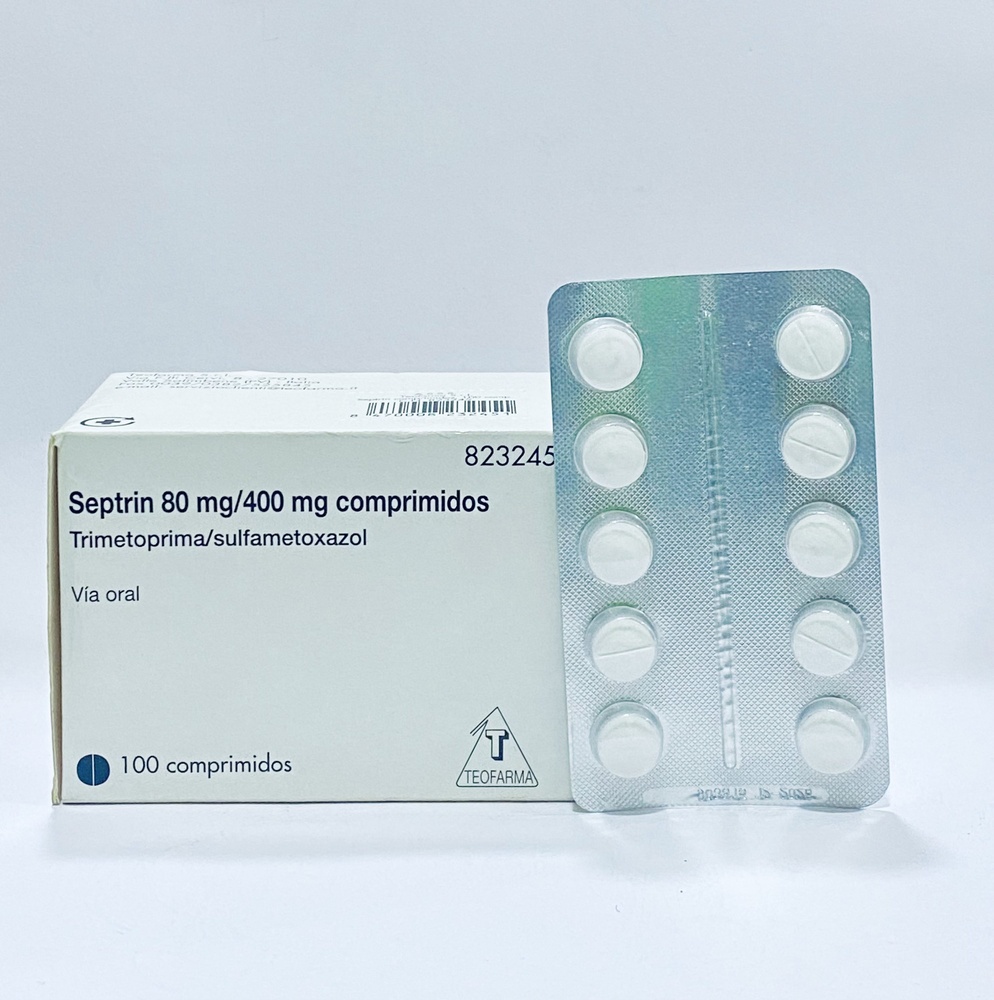
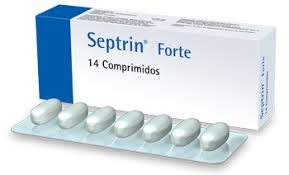
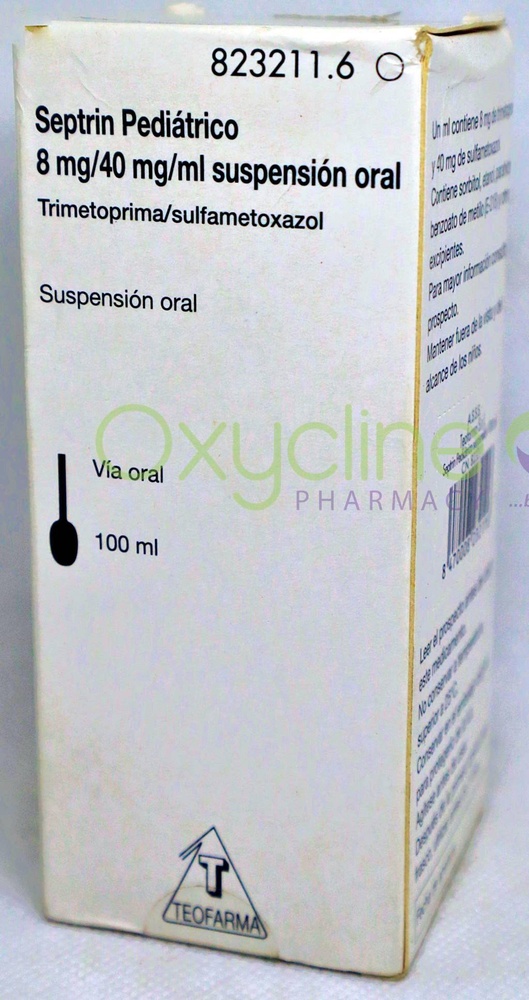
- Alternativas a SEPTRIN PEDIATRICO 20 mg/100 mg COMPRIMIDOSForma farmacéutica: COMPRIMIDO, 80/400 mg/mgPrincipio activo: sulfamethoxazole and trimethoprimFabricante: Teofarma S.R.L.Requiere recetaForma farmacéutica: COMPRIMIDO, 160 mg trimetropina; 800 mg sulfametoxazolPrincipio activo: sulfamethoxazole and trimethoprimFabricante: Teofarma S.R.L.Requiere recetaForma farmacéutica: SOLUCIÓN/SUSPENSIÓN ORAL, 200 mg sulfametoxazol; 40 mg trimetoprimaPrincipio activo: sulfamethoxazole and trimethoprimFabricante: Teofarma S.R.L.Requiere receta
Médicos online para SEPTRIN PEDIATRICO 20 mg/100 mg COMPRIMIDOS
Comenta la dosis, los posibles efectos secundarios, interacciones, contraindicaciones o la revisión de receta de SEPTRIN PEDIATRICO 20 mg/100 mg COMPRIMIDOS, sujeto a valoración médica y a la normativa local.









Obtén una receta de SEPTRIN PEDIATRICO 20 mg/100 mg COMPRIMIDOS online
Rellena un formulario de 2 minutos
Cuéntanos tus síntomas, historial y el medicamento que necesitas.
Elige un médico o nosotros te asignamos uno
Escoge un especialista o te conectamos con el próximo médico disponible.
El médico revisa tu caso
Normalmente en 30 minutos. Puede hacerte preguntas adicionales por chat.
Recógela en cualquier farmacia
Receta electrónica enviada a tu correo, válida en toda España.
Preguntas frecuentes
SEPTRIN PEDIATRICO 20 mg/100 mg COMPRIMIDOS requires receta en España. Puedes confirmarlo con un médico online según tu caso.
El principio activo de SEPTRIN PEDIATRICO 20 mg/100 mg COMPRIMIDOS es sulfamethoxazole and trimethoprim. Esta información ayuda a identificar medicamentos con la misma composición pero con diferentes nombres comerciales.
El precio medio en farmacia de SEPTRIN PEDIATRICO 20 mg/100 mg COMPRIMIDOS es de aproximadamente 3.84 EUR. Puede variar según el fabricante y la forma farmacéutica.
SEPTRIN PEDIATRICO 20 mg/100 mg COMPRIMIDOS es fabricado por Teofarma S.R.L.. La marca y el envase pueden variar según el distribuidor.
Los Médicos de familia, Psiquiatras, Dermatólogos, Cardiólogos, Endocrinólogos, Gastroenterólogos, Neumólogos, Nefrólogos, Reumatólogos, Hematólogos, Infectólogos, Alergólogos, Geriatras, Pediatras, Oncólogos pueden valorar la prescripción de SEPTRIN PEDIATRICO 20 mg/100 mg COMPRIMIDOS cuando esté clínicamente indicado. Puedes reservar una videoconsulta para comentar tu caso y las opciones de tratamiento.
España cuenta con una infraestructura sanitaria bien desarrollada en ciudades principales como Madrid, Barcelona, Valencia y Sevilla. Las farmacias están ampliamente disponibles y operan bajo estrictas regulaciones, garantizando el acceso a medicamentos con receta.
Puedes comprar SEPTRIN PEDIATRICO 20 mg/100 mg COMPRIMIDOS en Madrid, Barcelona, Sevilla o Valencia en cualquier farmacia local con una receta válida.
Para obtener una receta, puedes utilizar Oladoctor:
Otros medicamentos con el mismo principio activo (sulfamethoxazole and trimethoprim) incluyen SEPTRIN 80 mg/400 mg COMPRIMIDOS, SEPTRIN FORTE 160 mg/800 mg COMPRIMIDOS, SEPTRIN PEDIATRICO 8 mg/40 mg/ml SUSPENSION ORAL. Pueden tener diferentes nombres comerciales o formulaciones, pero contienen el mismo componente terapéutico. Consulta siempre con un médico antes de cambiar o iniciar un nuevo medicamento.
