



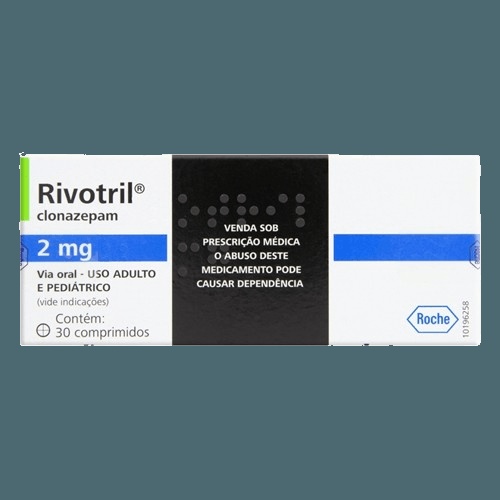
RIVOTRIL 2 mg Comprimidos

Revisión de receta online
Un médico revisará tu caso y determinará si la prescripción es médicamente apropiada.

Habla con un médico sobre este medicamento
Comenta tus síntomas y las opciones de tratamiento en una consulta online.



Cómo usar RIVOTRIL 2 mg COMPRIMIDOS
Contenido del prospecto
- Introducción
- Qué es Rivotril y para qué se utiliza
- Qué necesita saber antes de empezar a tomar Rivotril
- Cómo tomar Rivotril
- Posibles efectos adversos
- Conservación de Rivotril
- Contenido del envase e información adicional
Introducción
Prospecto: información para el usuario
Rivotril 2 mg comprimidos
Clonazepam
Lea todo el prospecto detenidamente antes de empezar a tomar este medicamento, porque contiene información importante para usted.
- Conserve este prospecto, ya que puede tener que volver a leerlo.
- Si tiene alguna duda, consulte a su médico o farmacéutico.
- Este medicamento se le ha recetado solamente a usted, y no debe dárselo a otras personas aunque tengan los mismos síntomas que usted, ya que puede perjudicarles.
- Si experimenta efectos adversos, consulte a su médico o farmacéutico, incluso si se trata de efectos adversos que no aparecen en este prospecto. Ver sección 4.
Contenido del prospecto
- Qué es Rivotril y para qué se utiliza
- Qué necesita saber antes de empezar a tomar Rivotril
- Cómo tomar Rivotril
- Posibles efectos adversos
- Conservación de Rivotril
- Contenido del envase e información adicional
1. Qué es Rivotril y para qué se utiliza
Rivotril contiene clonazepam como ingrediente activo, el cual pertenece a un grupo de medicamentos conocidos como benzodiazepinas. El clonazepam tiene propiedades anticonvulsivantes, es decir, previene los temblores (convulsiones).
Se utiliza en la mayoría de las formas de epilepsia del lactante y del niño, especialmente el pequeño mal y las crisis tónico-clónicas. Está igualmente indicado en las epilepsias del adulto, en las crisis focales y en el "status" epiléptico.

¿No estás seguro de si este medicamento es adecuado para ti?
Comenta tus síntomas y tratamiento con un médico online.
2. Qué necesita saber antes de empezar a tomar Rivotril
No tome Rivotril
- si es alérgico (hipersensible) al principio activo o a alguno de los demás componentes de este medicamento (incluidos en la sección 6)
- si es alérgico (hipersensible) a otros medicamentos del grupo de las benzodiazepinas
- si tiene dificultades respiratorias graves y persistentes (sensación de ahogo), insuficiencia hepática grave (el hígado no puede cumplir con sus funciones) o si tiene problemas de dependencia de drogas o alcohol, a menos que haya sido estrictamente indicado por su médico
Si no está seguro sobre estos aspectos, consulte a su médico.
Advertencias y precauciones
Consulte a su médico o farmacéutico antes de empezar a tomar Rivotril.
Puede ocurrir una pérdida de efecto durante el tratamiento con Rivotril.
Rivotril ha de utilizarse con especial precaución en las siguientes situaciones:
- si padece alguna enfermedad del hígado o del riñón,
- si es anciano, sufre de debilidad muscular, apnea del sueño o tiene dificultades respiratorias (sensación de ahogo),
- si tiene alergias,
- si tiene porfiria (enfermedad que puede afectar al sistema nervioso y hace que la piel sea muy sensible al sol),
- si tiene intolerancia hereditaria a galactosa, insuficiencia de lactasa de Lapp o malabsorción de glucosa o galactosa,
- si tiene otras enfermedades,
- si está tomando otros medicamentos, especialmente medicamentos para la epilepsia, medicamentos para ayudar a dormir (hipnóticos), medicamentos para tratar el dolor (analgésicos), medicamentos para tratar enfermedades mentales (neurolépticos), medicamentos para la depresión (antidepresivos) o litio,
- si tiene problemas de dependencia de drogas o alcohol,
- si tiene o ha tenido depresión y/o ha intentado suicidarse,
- si tiene ataxia (descoordinación de los movimientos voluntarios).
Un número reducido de personas que estuvieron en tratamiento con antiepilépticos como Rivotril han tenido pensamientos de autolesion o suicidio. Si en cualquier momento tiene usted estos pensamientos, contacte inmediatamente con su médico.
Antes de iniciar el tratamiento con Rivotril, su médico decidirá si usted puede tomar una dosis menor o no tomarlo en absoluto.
Toma de Rivotril con otros medicamentos
Informe a su médico o farmacéutico que está utilizando, ha utilizado recientemente o podría tener que utilizar cualquier otro medicamento. Este punto es muy importante, porque tomar varios medicamentos a la vez puede aumentar o disminuir su efecto.
Por ejemplo, pueden aumentar el efecto de Rivotril los tranquilizantes, medicamentos para inducir el sueño y otros medicamentos que afecten al sistema nervioso central.
Por lo tanto, no debe tomar Rivotril junto con otros medicamentos sin consultar a su médico. Cuando su médico se lo autorice usted puede empezar a tomarlo.
Su médico puede recetarle Rivotril junto con otros medicamentos para la epilepsia, en este caso su médico le ajustará la dosis de cada medicamento para conseguir el efecto deseado.
Toma de Rivotril con alcohol
Debe evitar tomar alcohol durante el tratamiento con Rivotril ya que puede modificar sus efectos disminuyendo la eficacia del tratamiento o produciendo efectos adversos no previstos.
Riesgo de dependencia
El uso de benzodiazepinas puede provocar dependencia, principalmente cuando se toma el medicamento de forma continua durante largo tiempo. Para prevenir al máximo este riesgo deben tenerse en cuenta estas precauciones:
- La toma de benzodiazepinas se hará sólo bajo prescripción médica (nunca porque hayan dado resultado en otros pacientes) y nunca las aconseje a otras personas.
- No aumente en absoluto las dosis prescritas por el médico, ni prolongue el tratamiento más tiempo del recomendado.
- Consulte a su médico regularmente para que decida si debe continuarse el tratamiento.
Embarazo y lactancia
Si está embarazada o en periodo de lactancia, o cree que podría estar embarazada o tiene intención de quedarse embarazada, consulte a su médico o farmacéutico antes de utilizar este medicamento.
Conducción y uso de máquinas
Rivotril puede producir síntomas tales como somnolencia, mareo o alteraciones en la vista, y disminuir la capacidad de reacción. Estos efectos así como la propia enfermedad pueden dificultar su capacidad para conducir vehículos o manejar máquinas. Por lo tanto no conduzca, ni maneje máquinas, ni practique otras actividades que requieran especial atención, hasta que su médico valore su respuesta a este medicamento.
Rivotril contiene lactosa
Este medicamento contiene lactosa. Si su médico le ha indicado que padece una intolerancia a ciertos azúcares, consulte con él antes de tomar este medicamento.
3. Cómo tomar Rivotril
Siga exactamente las instrucciones de administración de este medicamento indicadas por su médico. En caso de duda, consulte de nuevo a su médico o farmacéutico.
Dependiendo de su respuesta al medicamento, de la naturaleza de su enfermedad y de su peso, su médico le indicará la dosis correcta para usted, comenzando por una dosis inicial baja y aumentando poco a poco la dosis hasta conseguir el efecto deseado.
- Adultos: la dosis inicial no debe superar los 1,5 mg/día, divididos en tres tomas. Esta dosis se puede aumentar en 0,5 mg cada 3 días hasta que las convulsiones estén bien controladas o los efectos adversos impidan seguir aumentando la dosis. La dosis de mantenimiento debe ajustarse para cada paciente. Suele ser suficiente con una dosis de mantenimiento de 3-6 mg diarios.
Nunca debe superarse la dosis máxima de 20 mg diarios en adultos.
Para facilitar el ajuste de dosis, se recomienda la utilización de los comprimidos ranurados de 0,5 mg para los niños y adultos en la fase inicial del tratamiento.
Uso en niños y adolescentes
- Lactantes y niños menores de 10 años (o hasta 30 kg de peso): la dosis inicial es de 0,01-0,03 mg/kg/día, divididos en dos o tres tomas. Esta dosis se puede aumentar en 0,25-0,50 mg cada 3 días, hasta que las convulsiones estén bien controladas o los efectos adversos impidan seguir aumentando la dosis.
La dosis de mantenimiento aproximada es de 0,1 mg/kg/día.
Nunca debe superarse la dosis máxima de 0,2 mg/kg/día en los lactantes y niños menores de 10 años.
Para facilitar el ajuste de dosis, se recomienda la utilización de las gotas (1 gota=0,1 mg de sustancia activa) para los lactantes.
- Niños y adolescentes de 10-16 años: la dosis inicial es de 1-1,5 mg/día, divididos en dos o tres tomas. Esta dosis se puede aumentar en 0,25-0,5 mg cada 3 días hasta que se alcance la dosis de mantenimiento (por lo general, de 3-6 mg/día).
Como con todos los medicamentos para tratar la epilepsia , no debe suspenderse el tratamiento con Rivotril bruscamente, sino que debe reducirse de forma escalonada.
Normas para la correcta administración
Tome los comprimidos con agua u otra bebida no alcohólica.
El comprimido se puede partir en dosis iguales. Los comprimidos están ranurados para permitir la administración de dosis más bajas. Para dividir el comprimido, sostenerlo con la ranura hacia arriba y aplicar presión hacia abajo.
Si olvida tomar una dosis, nunca debe tomar el doble de medicamento cuando le toque la siguiente dosis. Simplemente continúe con la dosis habitual en la próxima administración de medicamento.
NO cambie la dosis indicada por su médico.
Consulte a su médico si cree que el efecto de este medicamento es demasiado fuerte o demasiado débil.
Duración del tratamiento
Su médico le indicará cuándo debe finalizar el tratamiento con Rivotril.
Este tratamiento puede durar toda su vida, por lo que si usted quiere dejar de tomar Rivotril, debe siempre consultar a su médico ya que dejar repentinamente el tratamiento puede provocar la aparición de síntomas de retirada como por ejemplo temblores.
Si toma másRivotrildel que debe
Los síntomas de sobredosificación o intoxicación varían sensiblemente de una persona a otra, según la edad, el peso y la respuesta individual al medicamento. Los síntomas pueden ir desde cansancio y mareo hasta ataxia (descoordinación de los movimientos voluntarios), somnolencia (sueño), falta de respiración, ausencia de reflejos, hipotensión (tensión baja) y estupor (baja respuesta a estímulos) y, por último, coma con depresión respiratoria e insuficiencia circulatoria. Pueden producirse convulsiones sobretodo en pacientes con concentraciones de medicamento en sangre por encima de las recomendadas.
El tratamiento de la intoxicación consistirá en monitorización (vigilancia estrecha) de la respiración, de la frecuencia cardiaca y la presión arterial; lavado gástrico, hidratación intravenosa, medidas generales de apoyo y medidas de urgencia en caso de obstrucción de las vías respiratorias. En caso de hipotensión (tensión baja), pueden administrarse medicamentos simpaticomiméticos.
Advertencia:
El medicamento flumazenilo (antagonista benzodiazepínico), no está indicado en los pacientes epilépticos tratados con benzodiazepinas. En estos pacientes, el flumazenilo puede provocar convulsiones.
Si usted toma más Rivotril del que debiera, contacte rápidamente con su médico o acuda al centro hospitalario más cercano. Lleve con usted el medicamento.
En caso de sobredosis o ingestión accidental, consultar al Servicio de Información Toxicológica, Teléfono 91 562.04.20.
Si olvidó tomar Rivotril
No tome una dosis doble para compensar las dosis olvidadas.
Si interrumpe el tratamiento conRivotril
Al cesar la administración puede aparecer inquietud, ansiedad, insomnio, falta de concentración, dolor de cabeza y sudores. No se recomienda, en general, interrumpir bruscamente la medicación sino reducir gradualmente la dosis, de acuerdo siempre con las instrucciones del médico.
Si tiene cualquier otra duda sobre el uso de este medicamento, pregunte a su médico o farmacéutico.

¿Has empezado a tomar el medicamento y tienes preguntas?
Comenta tus síntomas y tratamiento con un médico online.
4. Posibles efectos adversos
Al igual que todos los medicamentos, Rivotril puede producir efectos adversos, aunque no todas las personas los sufran.
Se han descrito los siguientes efectos adversos:
- Movimiento involuntario e incontrolable de los ojos (nistagmus).
- Somnolencia (sueño), lentitud en los reflejos, hipotonía, debilidad muscular, mareo, cansancio, ataxia (descoordinación de los movimientos voluntarios). Estos efectos adversos suelen ser pasajeros y generalmente desaparecen sin necesidad de interrumpir el tratamiento.
- Amnesia anterógrada.
- Trombocitopenia (disminución del número de plaquetas).
- Urticaria (alergia), picor, erupción cutánea (enrojecimiento de la piel), caída pasajera del cabello, alteraciones de la pigmentación (color) de la piel.
- Dolor de cabeza.
- Náuseas y molestias epigástricas (en la parte superior del vientre).
- Incontinencia urinaria (no control de la orina).
- Impotencia, disminución de la libido (disminución del deseo sexual).
- Reacciones alérgicas y shock anafiláctico (reacción alérgica grave).
- Ataques epilépticos generalizados.
- Disminución de la capacidad de concentración, inquietud, confusión, desorientación.
- Alteraciones emocionales y del humor.
- Depresión, que puede ser debida a otra enfermedad subyacente.
- Reacciones paradójicas (aparición de reacciones contrarias a las esperadas por la acción del medicamento): inquietud, irritabilidad, conducta agresiva, agitación, nerviosismo, hostilidad, ansiedad, trastornos del sueño, delirio, ira, pesadillas, sueños intensos, alucinaciones, psicosis, hiperactividad, alteraciones del comportamiento.
- Depresión respiratoria (respiración lenta y de poca intensidad), sobre todo si el clonazepam se administra por vía intravenosa. El riesgo de depresión respiratoria es mayor en pacientes con obstrucción de las vías respiratorias o daño cerebral previo. También puede ocurrir depresión respiratoria cuando se administran a la vez otros medicamentos depresores del centro respiratorio. Por lo general, este efecto puede evitarse mediante un cuidadoso ajuste individual de la dosis.
- Aumento del riesgo de caídas y fracturas en pacientes de edad avanzada y pacientes que estén tomando a la vez otros sedantes (incluidas las bebidas alcohólicas).
- Insuficiencia cardiaca (el corazón no bombea bien la sangre) y ataque al corazón.
- Dependencia y síndrome de abstinencia.
Cuando el tratamiento se prolonga largo tiempo o se utilizan dosis elevadas pueden aparecer trastornos reversibles como: disartria (dificultad para articular palabras), ataxia (descoordinación de los movimientos voluntarios) y visión doble (diplopía).
En algunas formas de epilepsia puede producirse un aumento de la frecuencia de las crisis (convulsiones) durante el tratamiento a largo plazo.
Se sabe que la utilización de benzodiazepinas puede producir amnesia anterógrada (dificultad para recordar hechos recientes) y el riesgo de este efecto adverso aumenta con la dosis.
Otros efectos adversos en niños:
- Hiperproducción salival (aumento de la cantidad de saliva) y secreciones bronquiales en lactantes y niños pequeños, por lo que es preciso prestar especial atención en mantener las vías respiratorias libres.
- Pubertad precoz incompleta (desarrollo rápido del cuerpo) en niños de ambos sexos.
Comunicación de efectos adversos
Si experimenta cualquier tipo de efecto adverso, consulte a su médico o farmacéutico, incluso si se trata de efectos adversos que no aparecen en este prospecto. También puede comunicarlos directamente a través del Sistema Español de Farmacovigilancia de Medicamentos de Uso Humano: www.notificaRAM.es/. Mediante la comunicación de efectos adversos usted puede contribuir a proporcionar más información sobre la seguridad de este medicamento.
5. Conservación de Rivotril
Mantener este medicamento fuera de la vista y del alcance de los niños.
No utilice este medicamento después de la fecha de caducidad que aparece en el envase.
La fecha de caducidad es el último día del mes que se indica.
Los medicamentos no se deben tirar por los desagües ni a la basura. Deposite los envases y los medicamentos que no necesita en el Punto SIGRE de la farmacia. En caso de duda pregunte a su farmacéutico cómo deshacerse de los envases y de los medicamentos que no necesita. De esta forma, ayudará a proteger el medio ambiente.
6. Contenido del envase e información adicional
Composición deRivotril
- El principio activo es clonazepam (DCI). Comprimidos ranurados con 2 mg de principio activo.
- Los demás componentes son lactosa anhidra, estearato magnésico, almidón pregelatinizado (procedente del maíz) y celulosa microcristalina.
Aspecto del producto y contenido del envase
Rivotril se presenta en caja que contiene envases tipo blíster con 60 comprimidos ranurados.
Titular de la autorización de comercialización y responsable de la fabricación
Titular de la autorización de comercialización:
CHEPLAPHARM Arzneimittel GmbH
Ziegelhof 24
17489 Greifswald
Alemania
Responsable de la fabricación:
Recipharm Leganés S.L.U.
Calle Severo Ochoa 13
Leganés
28914 Madrid
España
Representante local:
Laboratorios Rubió, S.A.
C/ Industria, 29 - Pol. Ind. Comte de Sert
08755 Castellbisbal (Barcelona)
España
Fecha de la última revisión de este prospecto:junio 2019
La información detallada y actualizada de este medicamento está disponible en la página web de la Agencia Española del Medicamento y Productos Sanitarios (AEMPS) http://www.aemps.es/
- País de registro
- Forma farmacéuticaCOMPRIMIDO, 2 mg clonazepam
- Código ATCN03AE01
- Precio medio en farmacia2.08 EUR
- Principio activo
- Requiere recetaSí
- Fabricante
- ComposiciónLACTOSA ANHIDRA (121,5 mg mg)
- Esta información es de carácter general y no sustituye la consulta con un profesional sanitario.
- Alternativas a RIVOTRIL 2 mg COMPRIMIDOSForma farmacéutica: COMPRIMIDO, 2 mgPrincipio activo: clonazepamFabricante: Biowise Pharmaceuticals, S.L.Requiere recetaForma farmacéutica: COMPRIMIDO, 0,5 mgPrincipio activo: clonazepamFabricante: Neuraxpharm Spain S.L.Requiere recetaForma farmacéutica: COMPRIMIDO, 1 mgPrincipio activo: clonazepamFabricante: Neuraxpharm Spain S.L.Requiere receta
Médicos online para RIVOTRIL 2 mg COMPRIMIDOS
Comenta la dosis, los posibles efectos secundarios, interacciones, contraindicaciones o la revisión de receta de RIVOTRIL 2 mg COMPRIMIDOS, sujeto a valoración médica y a la normativa local.



Obtén una receta de RIVOTRIL 2 mg COMPRIMIDOS online
Rellena un formulario de 2 minutos
Cuéntanos tus síntomas, historial y el medicamento que necesitas.
Elige un médico o nosotros te asignamos uno
Escoge un especialista o te conectamos con el próximo médico disponible.
El médico revisa tu caso
Normalmente en 30 minutos. Puede hacerte preguntas adicionales por chat.
Recógela en cualquier farmacia
Receta electrónica enviada a tu correo, válida en toda España.
Preguntas frecuentes
RIVOTRIL 2 mg COMPRIMIDOS requiere receta en España. Puedes confirmarlo con un médico online según tu caso.
El principio activo de RIVOTRIL 2 mg COMPRIMIDOS es clonazepam. Esta información ayuda a identificar medicamentos con la misma composición pero con diferentes nombres comerciales.
El precio medio en farmacia de RIVOTRIL 2 mg COMPRIMIDOS es de aproximadamente 2.08 EUR. Puede variar según el fabricante y la forma farmacéutica.
RIVOTRIL 2 mg COMPRIMIDOS es fabricado por Cheplapharm Arzneimittel Gmbh. La marca y el envase pueden variar según el distribuidor.
Los Médicos de familia, Psiquiatras, Dermatólogos, Cardiólogos, Endocrinólogos, Gastroenterólogos, Neumólogos, Nefrólogos, Reumatólogos, Hematólogos, Infectólogos, Alergólogos, Geriatras, Pediatras, Oncólogos pueden valorar la prescripción de RIVOTRIL 2 mg COMPRIMIDOS cuando esté clínicamente indicado. Puedes reservar una videoconsulta para comentar tu caso y las opciones de tratamiento.
España cuenta con una infraestructura sanitaria bien desarrollada en ciudades principales como Madrid, Barcelona, Valencia y Sevilla. Las farmacias están ampliamente disponibles y operan bajo estrictas regulaciones, garantizando el acceso a medicamentos con receta.
Puedes comprar RIVOTRIL 2 mg COMPRIMIDOS en Madrid, Barcelona, Sevilla o Valencia en cualquier farmacia local con una receta válida.
Para obtener una receta, puedes utilizar Oladoctor:
Otros medicamentos con el mismo principio activo (clonazepam) incluyen CLONAZEPAM BIOMED 2 MG COMPRIMIDOS EFG, CLONAZEPAM NEURAXPHARM 0,5 MG COMPRIMIDOS EFG, CLONAZEPAM NEURAXPHARM 1 MG COMPRIMIDOS. Pueden tener diferentes nombres comerciales o formulaciones, pero contienen el mismo componente terapéutico. Consulta siempre con un médico antes de cambiar o iniciar un nuevo medicamento.
