



RIVASTIGMINA 9,5 MG/24 H PARCHES TRANSDERMICOS

Revisión de receta online
Un médico revisará tu caso y determinará si la prescripción es médicamente apropiada.

Habla con un médico sobre este medicamento
Comenta tus síntomas y las opciones de tratamiento en una consulta online.



Cómo usar RIVASTIGMINA CINFA 9,5 MG/24 H PARCHES TRANSDERMICOS EFG
Contenido del prospecto
- Introducción
- Qué es rivastigmina cinfa y para qué se utiliza
- Qué necesita saber antes de empezar a usar rivastigmina cinfa
- Cómo usar rivastigmina cinfa
- Posibles efectos adversos
- Conservación de Rivastigmina cinfa
- Contenido del envase e información adicional
Introducción
Prospecto: información para el usuario
Rivastigmina cinfa 9,5 mg/24 h parches transdérmicos EFG
Lea todo el prospecto detenidamente antes de empezar a usar este medicamento, porque contiene información importante para usted.
- Conserve este prospecto, ya que puede tener que volver a leerlo.
- Si tiene alguna duda, consulte a su médico, farmacéutico o enfermero.
- Este medicamento se le ha recetado solamente a usted, y no debe dárselo a otras personas aunque tengan los mismos síntomas que usted, ya que puede perjudicarles.
- Si experimenta efectos adversos, consulte a su médico, farmacéutico o enfermero, incluso si se trata de efectos adversos que no aparecen en este prospecto. Ver sección 4.
Contenido del prospecto
- Qué es Rivastigmina cinfa y para qué se utiliza.
- Qué necesita saber antes de empezar a usar Rivastigmina cinfa.
- Cómo usar Rivastigmina cinfa.
- Posibles efectos adversos
- Conservación de Rivastigmina cinfa.
- Contenido del envase e información adicional
1. Qué es rivastigmina cinfa y para qué se utiliza
El principio activo de Rivastigmina cinfa es rivastigmina.
La rivastigmina pertenece al grupo de los inhibidores de la colinesterasa. En pacientes con demencia de Alzheimer, determinadas células nerviosas mueren en el cerebro, provocando bajos niveles de neurotransmisores de acetilcolina (una substancia que permite que las células nerviosas se comuniquen entre ellas). La rivastigmina actúa bloqueando las enzimas que rompen la acetilcolina: acetilcolinesterasa y butirilcolinesterasa. Bloqueando estas enzimas, Rivastigmina cinfa permite el aumento de acetilcolina en el cerebro, ayudando a reducir los síntomas de la enfermedad de Alzheimer.
Rivastigmina cinfa se utiliza para el tratamiento de pacientes adultos con demencia de Alzheimer de leve a moderadamente grave, un trastorno progresivo del cerebro que afecta gradualmente a la memoria, capacidad intelectual y el comportamiento.

¿No estás seguro de si este medicamento es adecuado para ti?
Comenta tus síntomas y tratamiento con un médico online.
2. Qué necesita saber antes de empezar a usar rivastigmina cinfa
No use Rivastigmina cinfa
- si es alérgico a la rivastigmina o a alguno de los demás componentes de este medicamento (incluidos en la sección 6).
- si alguna vez ha tenido una reacción alérgica a un medicamento similar (derivados del carbamato).
- si tiene una reacción de la piel que se extiende más allá del tamaño del parche, si hay una reacción local más intensa (tales como ampollas, inflamación de la piel en aumento, hinchazón) y si no hay mejoría durante las 48 horas después de retirar el parche transdérmico.
Si se encuentra en alguna de estas situaciones, informe a su médico y no utilice rivastigmina parches transdérmicos.
Advertencias y precauciones
Consulte a su médico o farmacéutico antes de empezar a usar rivastigmina:
- Si tiene o ha tenido alguna vez algún problema cardíaco como el el ritmo cardíaco (pulso) irregular o lento, prolongación de QTc, antecedentes familiares de prolongación de QTc, torsade de pointes, o si tiene un nivel bajo en sangre de potasio o de magnesio.
- Si tiene o ha tenido alguna vez úlcera de estómago activa.
- Si tiene o ha tenido alguna vez dificultades al orinar.
- Si tiene o ha tenido alguna vez convulsiones.
- Si tiene o ha tenido alguna vez asma o una enfermedad respiratoria grave.
- Si sufre temblores.
- Si tiene peso corporal bajo.
- Si tiene reacciones gastrointestinales tales como sensación de mareo (náuseas), mareo (vómitos) y diarrea. Podría deshidratarse (pérdida de gran cantidad de fluido) si los vómitos o diarrea son prolongados.
- Si tiene problemas del hígado (insuficiencia hepática).
Si se encuentra en alguna de estas situaciones, puede que su médico considere necesario realizar un mayor seguimiento mientras esté en tratamiento.
Si no ha utilizado los parches durante más de tres días, no se ponga otro sin antes consultarlo con su médico.
Niños y adolescentes
Este medicamento no debe utilizarse en la población pediátrica en el tratamiento de la enfermedad de Alzheimer.
Otros medicamentos y Rivastigmina cinfa
Informe a su médico o farmacéutico si está utilizando, ha utilizado recientemente o pudiera tener que utilizar cualquier otro medicamento.
Rivastigmina podría interferir con medicamentos anticolinérgicos algunos de los cuales son medicamentos utilizados para aliviar los calambres o espasmos estomacales (p.ej. diciclomina), para el tratamiento de la enfermedad de Parkinson (p.ej. amantadina) o para prevenir los mareos por movimiento (p.ej. difenhidramina, escopolamina, o meclizina).
Este medicamento no se debe administrar al mismo tiempo que metoclopramida (un medicamento utilizado para aliviar o prevenir las náuseas y los vómitos). La toma de los dos medicamentos juntos puede causar problemas como rigidez en las extremidades y temblor de manos.
En caso de que tenga que someterse a una intervención quirúrgica mientras está utilizando rivastigmina parches transdérmicos, informe a su médico de que lo está utilizando, ya que puede potenciar excesivamente los efectos de algunos relajantes musculares de la anestesia.
Se debe tener precaución cuando se utiliza este medicamento junto con beta-bloqueantes (medicamentos como atenolol utilizados para tratar la hipertensión, angina y otras afecciones cardíacas). La toma de los dos medicamentos juntos puede causar complicaciones como el descenso de la frecuencia cardíaca (bradicardia) que puede dar lugar a desmayos o pérdidas de conciencia.
Se debe tener precaución cuando se utiliza rivastigmina junto con otros medicamentos que pueden afectar el ritmo cardíaco o el sistema eléctrico del corazón (prolongación QT).
Embarazo, lactancia y fertilidad
Si está embarazada o en periodo de lactancia, cree que podría estar embarazada o tiene intención de quedarse embarazada, consulte a su médico o farmacéutico antes de utilizar este medicamento.
Si está embarazada es necesario evaluar los beneficios del uso de rivastigmina frente a los posibles efectos adversos para el feto. No se debe utilizar rivastigmina durante el embarazo a menos que sea claramente necesario.
No debe dar el pecho durante su tratamiento con este medicamento.
Conducción y uso de máquinas
Su enfermedad puede afectar la capacidad de conducir o utilizar maquinaria y no debe llevar a cabo estas actividades a menos que su médico le indique que es seguro realizarlas. Rivastigmina puede causar mareos y somnolencia, principalmente al inicio del tratamiento o al aumentar la dosis. Si experimenta estos efectos, no debe conducir o utilizar maquinaria.
3. Cómo usar rivastigmina cinfa
Siga exactamente las instrucciones de administración de este medicamento indicadas por su médico o farmacéutico. En caso de duda, consulte de nuevo a su médico o farmacéutico.
IMPORTANTE:
- Quítese el parche anterior antes de ponerse UN parche nuevo.
- Solo un parche al día.
- No corte el parche en trozos.
- Presione firmemente el parche contra la piel con la palma de la mano durante un mínimo de 30 segundos.
Cómo iniciar el tratamiento
Su médico le indicará la dosis de rivastigmina parches transdérmicos más adecuada en su caso.
- Normalmente se comienza el tratamiento con rivastigmina 4,6 mg/24 h.
- La dosis diaria recomendada es rivastigmina 9,5 mg/24 h. Si esta dosis es bien tolerada, el médico que lo trata puede considerar incrementar la dosis a 13,3 mg/24 h.
- Lleve sólo un parche de rivastigmina al mismo tiempo y sustituya el parche por otro nuevo a las 24 horas.
Durante el tratamiento, su médico podría ajustar la dosis dependiendo de sus necesidades individuales.
Si no ha utilizado los parches durante más de tres días, no se ponga otro antes de que lo haya consultado a su médico. El tratamiento con parche transdérmico se puede reiniciar a la misma dosis si el tratamiento no se interrumpe durante más de tres días. De lo contrario, su médico le hará reiniciar su tratamiento con rivastigmina 4,6 mg/24 h.
Rivastigmina se puede utilizar con alimentos, bebidas y alcohol.
Dónde colocar su Rivastigmina cinfa parche transdérmico
- Antes de ponerse un parche, asegúrese que la piel esté limpia, seca y sin pelo, sin polvos, aceite, hidratante o loción que impidan que el parche se pegue bien a la piel, sin cortes, enrojecimientos o irritaciones.
- Quítese cuidadosamente cualquier parche que lleve antes de ponerse uno nuevo.El llevar múltiples parches en su cuerpo podría exponerlo a una cantidad excesiva de este medicamento y esto podría ser potencialmente peligroso.
- Póngase solo UNparche al día en UNA SOLAde las posibles zonas como se muestra en los siguientes diagramas:
- parte superior izquierda oparte superior derecha del brazo
- parte superior izquierda oparte superior derecha del pecho (evitando los senos en mujeres)
- parte superior izquierda oparte superior derecha de la espalda
- parte inferior izquierda o parte inferior derecha de la espalda
Cada 24 horas quítese el parche previo antes de ponerse UN parche nuevo en SOLO UNA de las siguientes zonas posibles
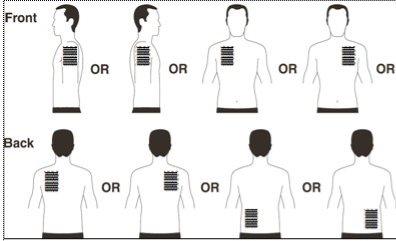
Cada vez que se cambie el parche, debe quitarse el parche del día anterior antes de ponerse el nuevo parche en un lugar diferente de la piel (por ejemplo, un día en el lado derecho del cuerpo y al día siguiente en el lado izquierdo; o un día en la parte de superior del cuerpo y al día siguiente en la parte inferior). Espere al menos 14 días para volver a ponerse un parche nuevo exactamente en la misma área de piel.
Cómo aplicar su Rivastigmina cinfa parches transdérmicos
Los parches de rivastigmina son de plástico fino y opaco y se pegan a la piel. Cada parche se encuentra en un sobre que lo protege hasta que se lo vaya a poner. No abra el sobre ni saque el parche hasta el momento de ponérselo.
Quítese cuidadosamente el parche existente antes de ponerse uno nuevo.
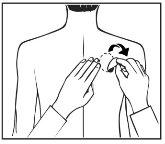
Los pacientes que inician el tratamiento por primera vez y para pacientes que reinician el tratamiento con rivastigmina después de la interrupción del tratamiento,deben empezar por la segunda figura.
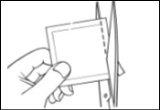
- Cada parche se encuentra en un sobre protector individual. Sólo se debe abrir el sobre cuando vaya a ponerse el parche. Corte el sobre a lo largo de la línea de puntos con unas tijeras y saque el parche del sobre.
- Una lámina protectora dividida en dos hojas cubre el lado adhesivo del parche. Quite la primera hoja de la lámina sin tocar con los dedos el lado adhesivo del parche.
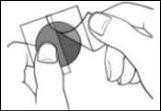
- Coloque el lado adhesivo del parche sobre la parte superior o inferior de la espalda o en la parte superior del brazo o en el pecho (evitando los senos en mujeres) y a continuación quite la segunda hoja de la lámina protectora.
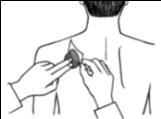
- Presione firmemente el parche contra la piel con la palma de la mano durante un mínimo de 30 segundos y asegúrese de que los bordes se han pegado bien.
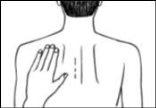
- Si esto le ayuda, puede escribir sobre el parche, por ejemplo, el día de la semana, con un bolígrafo de punta fina redondeada.
Debe llevar puesto el parche continuamente hasta el momento de cambiarlo por otro nuevo. Cuando se ponga un nuevo parche, puede probar con diferentes zonas para encontrar las que le resulten más cómodas y donde la ropa no roce con el parche.
Cómo quitar su Rivastigmina cinfa parche transdérmico
Tire suavemente de uno de los bordes del parche para despegarlo lentamente de la piel. Si quedan residuos adhesivos sobre la piel, empape el área con agua tibia y jabón suave o utilice aceite de bebé para eliminarlo. No se debe utilizar alcohol u otros líquidos disolventes (quitaesmaltes de uñas u otros disolventes).
Después de retirar el parche las manos se deben lavar con jabón o agua. En caso de contacto con los ojos o si los ojos se enrojecen después de manipular el parche, se debe lavar inmediatamente con abundante agua y pedir consejo médico si los síntomas no se resuelven.
¿Puede llevar su Rivastigmina cinfa parche transdérmico cuando se bañe, nade o se exponga al sol?
- El baño, la natación o la ducha no deberían afectar al parche. Asegúrese de que no se despegue parcialmente mientras realice estas actividades.
- No exponga el parche a una fuente de calor externa (p.ej. luz solar excesiva, sauna, solárium) durante periodos de tiempo largos.
Qué hacer si se le cae un parche
Si se le cayera un parche, póngase uno nuevo para el resto de ese día y cámbielo al día siguiente a la hora habitual.
Cuándo y durante cuánto tiempo debe ponerse su Rivastigmina cinfa parches transdérmicos
- Para beneficiarse de su tratamiento debe ponerse un nuevo parche cada día, preferiblemente a la misma hora.
- Lleve sólo un parche de Rivastigmina cinfa al mismo tiempo y sustituya el parche por otro nuevo a las 24 horas.
Si usa más Rivastigmina cinfa del que debe
Si accidentalmente se ha puesto más de un parche, quite todos los parches de la piel e informe de ello a su médico Es posible que necesite atención médica. Algunas personas que han tomado accidentalmente cantidades demasiado altas de rivastigmina por vía oral han tenido sensación de malestar (náuseas), vómitos, diarrea, tensión alta y alucinaciones. Pueden producirse también un enlentecimiento de la frecuencia cardiaca y desmayos.
En caso de sobredosis o ingestión accidental, consulte inmediatamente a su médico o farmacéutico o llame al Servicio de Información Toxicológica, teléfono 91 562 04 20, indicando el medicamento y la cantidad ingerida.
Si olvidó usar Rivastigmina cinfa
Si se da cuenta que ha olvidado ponerse un parche, póngaselo inmediatamente. Al día siguiente póngase el siguiente parche a la hora habitual. No se ponga dos parches para compensar el que olvidó.
Si interrumpe el tratamiento con Rivastigmina cinfa
Informe a su médico o farmacéutico si deja de utilizar los parches.
Si tiene cualquier otra duda sobre el uso de este medicamento, pregunte a su médico o farmacéutico.

¿Has empezado a tomar el medicamento y tienes preguntas?
Comenta tus síntomas y tratamiento con un médico online.
4. Posibles efectos adversos
Al igual que todos los medicamentos, este medicamento puede producir efectos adversos, aunque no todas las personas los sufran.
Puede tener efectos adversos con más frecuencia al empezar su tratamiento o cuando su dosis sea aumentada. Generalmente, los efectos adversos lentamente desaparecerán a medida que su organismo vaya acostumbrándose al medicamento.
Si advierte alguno de los siguientes efectos adversos que pueden ser graves, quítese el parche e informe inmediatamente a su médico.
Frecuentes(pueden afectar hasta 1 de cada 10 personas)
- Pérdida de apetito
- Sensación de mareo
- Sensación de agitación o adormecimiento
- Incontinencia urinaria (imposibilidad de detener adecuadamente la orina).
Poco frecuentes(pueden afectar hasta 1 de cada 100 personas)
- Problemas con el ritmo de su corazón tales como ritmo cardiaco lento
- Ver cosas que realmente no existen (alucinaciones)
- Úlcera de estómago
- Deshidratación (pérdida de gran cantidad de fluido)
- Hiperactividad (alto nivel de actividad, inquietud)
- Agresividad
Raras(pueden afectar hasta 1 de cada 1.000 personas)
- Caídas
Muy raras(pueden afectar hasta 1 de cada 10.000 personas)
- Rigidez de los brazos y piernas
- Temblor en las manos
Frecuencia no conocida(no puede estimarse a partir de los datos disponibles)
- Reacción alérgica donde se aplicó el parche, tales como ampollas o inflamación de la piel
- Empeoramiento de los signos de enfermedad de Parkinson – tales como temblor, rigidez y dificultad de movimiento
- Inflamación del páncreas – los signos incluyen dolor de la parte alta del estómago, frecuentemente acompañado de sensación de mareo (náuseas) o mareo (vómitos)
- Ritmo cardiaco rápido o irregular
- Tensión arterial alta
- Crisis epilépticas(convulsiones)
- Trastornos hepáticos (coloración amarillenta de la piel, amarillamiento del blanco de los ojos, oscurecimiento anormal de la orina o náuseas inexplicables, vómitos, cansancio y pérdida de apetito)
- Cambios en los análisis que muestran el funcionamiento de su hígado
- Sensación de inquietud
- Pesadillas
Si nota alguno de los efectos adversos listados arriba, quítese el parche e informe inmediatamente a su médico.
Otros efectos adversos experimentados con rivastigmina cápsulas o solución oral y que pueden tener lugar con los parches:
Frecuentes(pueden afectar hasta 1 de cada 10 personas)
- Excesiva saliva
- Pérdida de apetito
- Sensación de agitación
- Sensación de malestar general
- Temblor o sensación de confusión
- Aumento de la sudoración
Poco frecuentes(pueden afectar hasta 1 de cada 100 personas)
- Ritmo cardiaco irregular (p.ej. ritmo cardiaco rápido)
- Dificultad para dormir
- Caídas accidentales
Raras(pueden afectar hasta 1 de cada 1.000 personas)
- Crisis epilépticas (convulsiones)
- Úlcera en el intestino
- Dolor de pecho – causado probablemente por espasmo en el corazón
Muy raras(pueden afectar hasta 1 de cada 10.000 personas)
- Tensión arterial alta
- Inflamación del páncreas – los signos incluyen dolor grave de la parte alta del estómago frecuentemente con sensación de mareo (náuseas) o mareo (vómitos)
- Sangrado gastrointestinal – se manifiesta como sangre en las heces o al vomitar
- Ver cosas que no existen (alucinaciones)
- Algunas personas que han estado intensamente mareados (vómitos) han tenido desgarro de parte del tubo digestivo que conecta su boca con su estómago (esófago)
Frecuencia no conocida(no puede estimarse a partir de los datos disponibles)
- Síndrome de Pisa (afección que conlleva una contracción muscular involuntaria y la inclinación anormal del cuerpo y la cabeza hacia un lado)
Pacientes con demencia o enfermedad de Parkinson
Estos pacientes experimentan algunos efectos adversos más frecuentemente y también tienen algunos efectos adversos adicionales:
Frecuencia no conocida(no puede estimarse a partir de los datos disponibles)
- Síndrome de Pisa (afección que conlleva una contracción muscular involuntaria y la inclinación anormal del cuerpo y la cabeza hacia un lado)
Comunicación de efectos adversos
Si experimenta cualquier tipo de efecto adverso, consulte a su médico, farmacéutico o enfermero, incluso si se trata de posibles efectos adversos que no aparecen en este prospecto. También puede comunicarlos directamente a través del Sistema Español de Farmacovigilancia de Medicamentos de Uso Humano: https://www.notificaram.es. Mediante la comunicación de efectos adversos usted puede contribuir a proporcionar más información sobre la seguridad de este medicamento.
5. Conservación de Rivastigmina cinfa
Mantener este medicamento fuera de la vista y del alcance de los niños.
No utilice este medicamento después de la fecha de caducidad que aparece en la caja y en el sobre después de CAD. La fecha de caducidad es el último día del mes que se indica.
No utilizar ningún parche si observa que está dañado o muestra signos de manipulación.
Conservar en el envase original para protegerlo de la luz.
Conservar el parche transdérmico dentro del sobre hasta su uso.
Tras quitarse un parche, dóblelo por la mitad con el lado adhesivo hacia dentro y presione. Tras introducirlo en el sobre original, al deshacerse del parche asegúrese de que quede fuera de la vista y del alcance de los niños. Después de quitarse el parche no se toque los ojos, y lávese bien las manos con agua y jabón.
Los medicamentos no se deben tirar por los desagües ni a la basura. Deposite los envases y los medicamentos que no necesita en el Punto SIGRE de la farmacia. Pregunte a su farmacéutico cómo deshacerse de los envases y de los medicamentos que ya no necesita. De esta forma, ayudará a proteger el medio ambiente.
6. Contenido del envase e información adicional
Composición de Rivastigmina cinfa
- El principio activo es rivastigmina. Cada parche contiene 18 mg de rivastigmina en 10 cm2 y libera 9,5 mg de rivastigmina en 24 horas.
- Los demás componentes son: lámina de poliéster, lámina de poliéster con sílice recubierto, lámina de poliéster recubierta de fluoro, adhesivo acrílico (Duro-Tak 87-235A), copolímero de acrilato (Plastoid B), acetato de etilo, adhesivo de silicona (Bio-PSA 7-4302) y tinta.
Aspecto del producto y contenido del envase
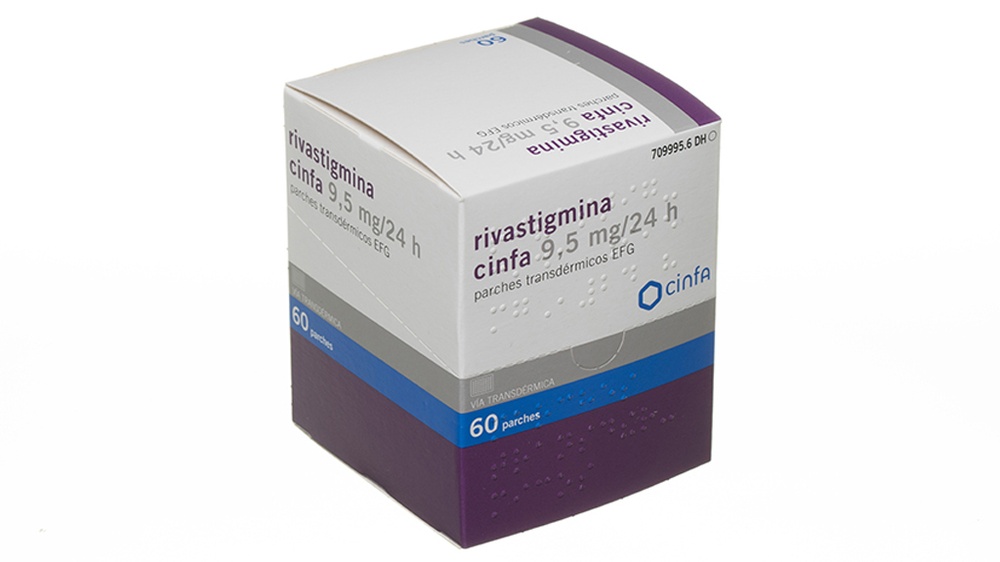
Rivastigmina cinfa 9,5 mg/24 h parches transdérmicos se presenta en forma de parche transdérmico compuesto por un adhesivo de forma redondeada y con una película de soporte rectangular. Cada sobre contiene un parche transdérmico.
Rivastigmina cinfa 9,5 mg/24 h parches transdérmicos se encuentra disponible en envases que contienen 60 sobres.
Titular de la autorización de comercialización y responsable de la fabricación
Titular de la autorización de comercialización
Laboratorios Cinfa, S.A.
Carretera Olaz-Chipi, 10. Polígono Industrial Areta
31620 Huarte (Navarra) - España
Responsable de la fabricación
Laboratorios Cinfa, S.A.
Carretera Olaz-Chipi, 10. Polígono Industrial Areta
31620 Huarte (Navarra) – España
o
Eurofins PHAST GmbH
Kardinal-Wendel-Strasse 16,
66424 Homburg, Germany
o
ACC GmbH Analytical Clinical Concepts
Schöntalweg 9,
63849 Leidersbach, Germany
Fecha de la última revisión de este prospecto:Diciembre 2024
La información detallada de este medicamento está disponible en la página web de la Agencia Española de Medicamentos y Productos Sanitarios (AEMPS) http://www.aemps.gob.es/.
Puede acceder a información detallada y actualizada sobre este medicamento escaneando con su teléfono móvil (smartphone) el código QR incluido en el prospecto y el cartonaje. También puede acceder a esta información en la siguiente dirección de internet: https://cima.aemps.es/cima/dochtml/p/80659/P_80659.html
Código QR a: https://cima.aemps.es/cima/dochtml/p/80659/P_80659.html
- País de registro
- Forma farmacéuticaPARCHE TRANSDERMICO, 9,5 mg/24 h
- Código ATCN06DA03
- Principio activo
- Requiere recetaSí
- Fabricante
- Esta información es de carácter general y no sustituye la consulta con un profesional sanitario.
- Alternativas a RIVASTIGMINA CINFA 9,5 MG/24 H PARCHES TRANSDERMICOS EFGForma farmacéutica: PARCHE TRANSDERMICO, 13,3 mg/24 hPrincipio activo: RivastigminaFabricante: Esteve Pharmaceuticals S.A.Requiere recetaForma farmacéutica: PARCHE TRANSDERMICO, 4,6 mg/24 hPrincipio activo: RivastigminaFabricante: Esteve Pharmaceuticals S.A.Requiere recetaForma farmacéutica: PARCHE TRANSDERMICO, 9,5 mg/24 hPrincipio activo: RivastigminaFabricante: Esteve Pharmaceuticals S.A.Requiere receta
Médicos online para RIVASTIGMINA CINFA 9,5 MG/24 H PARCHES TRANSDERMICOS EFG
Comenta la dosis, los posibles efectos secundarios, interacciones, contraindicaciones o la revisión de receta de RIVASTIGMINA CINFA 9,5 MG/24 H PARCHES TRANSDERMICOS EFG, sujeto a valoración médica y a la normativa local.









Obtén una receta de RIVASTIGMINA CINFA 9,5 MG/24 H PARCHES TRANSDERMICOS EFG online
Rellena un formulario de 2 minutos
Cuéntanos tus síntomas, historial y el medicamento que necesitas.
Elige un médico o nosotros te asignamos uno
Escoge un especialista o te conectamos con el próximo médico disponible.
El médico revisa tu caso
Normalmente en 30 minutos. Puede hacerte preguntas adicionales por chat.
Recógela en cualquier farmacia
Receta electrónica enviada a tu correo, válida en toda España.
Preguntas frecuentes
RIVASTIGMINA CINFA 9,5 MG/24 H PARCHES TRANSDERMICOS EFG requiere receta en España. Puedes confirmarlo con un médico online según tu caso.
El principio activo de RIVASTIGMINA CINFA 9,5 MG/24 H PARCHES TRANSDERMICOS EFG es Rivastigmina. Esta información ayuda a identificar medicamentos con la misma composición pero con diferentes nombres comerciales.
RIVASTIGMINA CINFA 9,5 MG/24 H PARCHES TRANSDERMICOS EFG es fabricado por Laboratorios Cinfa S.A.. La marca y el envase pueden variar según el distribuidor.
Los Médicos de familia, Psiquiatras, Dermatólogos, Cardiólogos, Endocrinólogos, Gastroenterólogos, Neumólogos, Nefrólogos, Reumatólogos, Hematólogos, Infectólogos, Alergólogos, Geriatras, Pediatras, Oncólogos pueden valorar la prescripción de RIVASTIGMINA CINFA 9,5 MG/24 H PARCHES TRANSDERMICOS EFG cuando esté clínicamente indicado. Puedes reservar una videoconsulta para comentar tu caso y las opciones de tratamiento.
España cuenta con una infraestructura sanitaria bien desarrollada en ciudades principales como Madrid, Barcelona, Valencia y Sevilla. Las farmacias están ampliamente disponibles y operan bajo estrictas regulaciones, garantizando el acceso a medicamentos con receta.
Puedes comprar RIVASTIGMINA CINFA 9,5 MG/24 H PARCHES TRANSDERMICOS EFG en Madrid, Barcelona, Sevilla o Valencia en cualquier farmacia local con una receta válida.
Para obtener una receta, puedes utilizar Oladoctor:
Otros medicamentos con el mismo principio activo (Rivastigmina) incluyen ALZERTA 13,3 MG/24 H PARCHES TRANSDERMICOS EFG, ALZERTA 4,6 MG/24 H PARCHES TRANSDERMICOS EFG, ALZERTA 9,5 MG/24 H PARCHES TRANSDERMICOS EFG. Pueden tener diferentes nombres comerciales o formulaciones, pero contienen el mismo componente terapéutico. Consulta siempre con un médico antes de cambiar o iniciar un nuevo medicamento.
