



RILAST 160 MICROGRAMOS/4,5 MICROGRAMOS INHALACIÓN PULMONAR

Revisión de receta online
Un médico revisará tu caso y determinará si la prescripción es médicamente apropiada.

Habla con un médico sobre este medicamento
Comenta tus síntomas y las opciones de tratamiento en una consulta online.



Cómo usar RILAST 160 MICROGRAMOS/4,5 MICROGRAMOS/INHALACION SUSPENSION PARA INHALACION EN ENVASE A PRESION
Contenido del prospecto
- Introducción
- Qué es Rilast y para qué se utiliza
- Qué necesita saber antes de empezar a usar Rilast
- Cómo usar Rilast
- Posibles efectos adversos
- Conservación de Rilast
- Contenido del envase e información adicional
Introducción
Prospecto: información para el usuario
Rilast 160 microgramos/4,5 microgramos/inhalación suspensión para inhalación en envase a presión
Budesonida/formoterol fumarato dihidrato
Lea todo el prospecto detenidamente antes de empezar a usar este medicamento, porque contiene información importante para usted.
- Conserve este prospecto, ya que puede tener que volver a leerlo.
- Si tiene alguna duda, consulte a su médico o farmacéutico.
- Este medicamento se le ha recetado solamente a usted, y no debe dárselo a otras personas aunque tengan los mismos síntomas que usted, ya que puede perjudicarles.
- Si experimenta efectos adversos, consulte a su médico o farmacéutico, incluso si se trata de efectos adversos que no aparecen en este prospecto. Ver sección 4.
Contenido del prospecto
- Qué es Rilast y para qué se utiliza
- Qué necesita saber antes de empezar a usar Rilast
- Cómo usar Rilast
- Posibles efectos adversos
- Conservación de Rilast
- Contenido del envase e información adicional
1. Qué es Rilast y para qué se utiliza
Rilast es un inhalador que se utiliza para el tratamiento sintomático de la Enfermedad Pulmonar Obstructiva Crónica (EPOC) en adultos mayores de 18 años. La EPOC es una enfermedad crónica de las vías respiratorias de los pulmones, causada frecuentemente por el humo del tabaco. Contiene dos medicamentos diferentes: budesonida y formoterol fumarato dihidrato.
- La budesonida pertenece a un grupo de medicamentos denominados “corticosteroides”, y actúa reduciendo y previniendo la inflamación de los pulmones.
- El formoterol fumarato dihidrato pertenece a un grupo de medicamentos denominados “agonistas beta2 adrenérgicos de acción larga” o “broncodilatadores”, y actúa relajando los músculos de las vías respiratorias, lo que le ayuda a respirar más fácilmente.
No use este medicamento como inhalador “de alivio”.

¿No estás seguro de si este medicamento es adecuado para ti?
Comenta tus síntomas y tratamiento con un médico online.
2. Qué necesita saber antes de empezar a usar Rilast
No use Rilast:
- si es alérgico a la budesonida, al formoterol o a alguno de los demás componentes de este medicamento (incluidos en la sección 6).
Advertencias y precauciones
Consulte a su médico o farmacéutico antes de empezar a usar Rilast si:
- Tiene diabetes.
- Presenta alguna infección pulmonar.
- Tiene la tensión arterial alta, o alguna vez ha tenido alguna enfermedad de corazón (incluyendo latidos irregulares, pulso acelerado, estrechamiento de las arterias o insuficiencia cardíaca).
- Tiene problemas de tiroides o de las glándulas suprarrenales.
- Presenta niveles bajos de potasio en la sangre.
- Tiene problemas graves de hígado.
Póngase en contacto con su médico si presenta visión borrosa u otras alteraciones visuales.
Uso en deportistas
Este medicamento contiene formoterol, que puede producir un resultado positivo en las pruebas de control de dopaje.
Niños y adolescentes
Rilast no se recomienda en niños ni adolescentes menores de 18 años.
Otros medicamentos y Rilast
Informe a su médico o farmacéutico si está utilizando, ha utilizado recientemente o podría tener que utilizar cualquier otro medicamento.
En particular, informe a su médico o farmacéutico si está usando cualquiera de los siguientes medicamentos:
- Medicamentos beta-bloqueantes (como el atenolol y el propranolol para la tensión arterial alta), incluyendo colirios (como el timolol para el glaucoma).
- Medicamentos para tratar el ritmo cardíaco acelerado o irregular (por ejemplo quinidina).
- Medicamentos como la digoxina, utilizados habitualmente para tratar la insuficiencia cardíaca.
- Diuréticos (como la furosemida), utilizados para el tratamiento de la tensión arterial alta.
- Medicamentos esteroides tomados por vía oral (como la prednisolona).
- Medicamentos xantínicos (como teofilina o aminofilina), utilizados comúnmente para el tratamiento de la EPOC o del asma.
- Otros broncodilatadores (como salbutamol).
- Antidepresivos tricíclicos (como amitriptilina) y el antidepresivo nefazodona.
- Medicamentos fenotiazínicos (como clorpromazina y proclorperazina).
- Medicamentos denominados “inhibidores de la proteasa del VIH” (como ritonavir) para el tratamiento del virus del SIDA.
- Medicamentos para tratar infecciones (como ketoconazol, itraconazol, voriconazol, posaconazol, claritromicina y telitromicina).
- Medicamentos para el tratamiento del Parkinson (como la levo-dopa).
- Medicamentos para problemas de tiroides (como la levo-tiroxina).
Si se encuentra en cualquiera de estas situaciones, o si no está seguro, pregunte a su médico o farmacéutico antes de utilizar Rilast.
Informe también a su médico o farmacéutico si va a someterse a anestesia general por una operación quirúrgica o por tratamiento dental.
Embarazo, lactancia y fertilidad
- Informe a su médico antes de usar este medicamento si está embarazada, o planea estarlo; no utilice Rilast a menos que su médico se lo indique.
- En caso de quedarse embarazada durante el tratamiento con Rilast, no deje de utilizarlo y consulte con su médico inmediatamente.
- Si se encuentra en periodo de lactancia, hable con su médico antes de utilizar Rilast.
Conducción y uso de máquinas
La influencia de Rilast sobre la capacidad de conducir y de manejar maquinaria es nula o insignificante.
3. Cómo usar Rilast
- Siga exactamente las instrucciones de administración de este medicamento indicadas por su médico o farmacéutico. En caso de duda, consulte de nuevo a su médico o farmacéutico.
- Es importante utilizar Rilast a diario, aunque no presente síntomas de EPOC en ese momento.
La dosis recomendada es de 2 inhalaciones dos veces al día. No se recomienda el uso de Rilast en niños ni adolescentes menores de 18 años de edad.
Si ha estado tomando comprimidos de esteroides para la EPOC, su médico puede reducir el número de comprimidos que toma, una vez que usted comience el tratamiento con Rilast. Si ha estado tomando comprimidos de esteroides orales durante mucho tiempo, su médico puede querer hacerle un análisis de sangre de vez en cuando. Cuando se le reduzca el número de comprimidos de esteroides orales puede sentir malestar general, aun cuando sus síntomas pulmonares puedan estar mejorando. En ese caso, puede que aparezcan temporalmente algunos síntomas como congestión o goteo nasal, debilidad o dolor en los músculos o en las articulaciones y erupción cutánea (urticaria). Póngase en contacto con su médico si alguno de estos síntomas le preocupa, o presenta algún otro síntoma como dolor de cabeza, cansancio, náuseas o vómitos. Si aparecen síntomas de alergia o de artritis, puede que necesite tomar otro medicamento. Debe consultar con su médico si está preocupado acerca de si debe continuar usando Rilast.
Su médico puede considerar añadir comprimidos de esteroides a su tratamiento habitual durante los períodos de estrés (por ejemplo, cuando tiene una infección en el pecho o antes de una operación).
Información importante sobre los síntomas de EPOC
Si mientras utiliza Rilast siente dificultad para respirar o aparecen “pitos” con la respiración, deberá seguir utilizándolo y contactar con su médico lo antes posible, ya que usted podría necesitar un tratamiento adicional.
Contacte inmediatamente con su médico si:
- Su respiración empeora o se despierta a menudo por la noche con síntomas de falta de aire.
- Empieza a sentir opresión en el pecho por la mañana, o la opresión en el pecho se prolonga más de lo normal.
- Estos signos pueden indicar que no hay un buen control de su EPOC y puede que usted necesite inmediatamente un tratamiento diferente o adicional.
Es posible que su médico le prescriba otros broncodilatadores, por ejemplo anticolinérgicos (como tiotropio o bromuro de ipratropio) para su EPOC.
Información sobre su nuevo inhalador Rilast
- Antes de utilizar su nuevo inhalador de Rilast, sáquelo de la envoltura de papel de aluminio. Tire el envoltorio así como el agente desecante que está dentro de la envoltura. No utilice el inhalador si el agente desecante se ha salido del paquete.
- El inhalador debe utilizarse dentro de los 3 meses siguientes tras haberlo sacado de la envoltura de papel de aluminio. Escriba en la etiqueta del inhalador la fecha límite de uso (3 meses a partir de haberlo sacado del envoltorio), para recordarle cuando debe dejar de usar el inhalador.
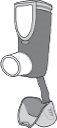
- En la imagen se muestran las partes de que está compuesto el inhalador, que ya estará montado cuando se lo den. No separe las piezas. Si el recipiente se aflojara, vuelva a colocarlo en el inhalador y siga utilizándolo.
Preparación de Rilast
Es necesario preparar el inhalador para su uso en las siguientes situaciones:
- Si está utilizando su nuevo Rilast por primera vez.
- Si usted no lo ha usado durante más de 7 días.
- Si se le ha caído.
Para preparar el inhalador para su uso, siga las siguientes instrucciones:
- Agite bien el inhalador durante al menos 5 segundos para mezclar el contenido del cartucho del aerosol.
- Retire la tapa de la boquilla presionando ligeramente sobre las protuberancias en el lateral. La tira de la tapa se mantendrá unida al inhalador.
- Sostenga el inhalador en posición vertical. A continuación, pulse el contador (en la parte superior del inhalador) para liberar una pulverización al aire. Puede utilizar una o ambas manos, como se muestra en las fotos.
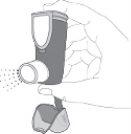
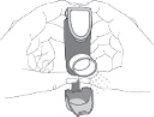
- Retire el dedo (s) del contador.
- Espere 10 segundos, agite bien y repita los pasos 3 y 4.
- Su inhalador está ahora listo para su uso.
Cómo realizar una inhalación
Cada vez que necesite realizar una inhalación, siga estas instrucciones:
- Agite bien el inhalador durante al menos 5 segundos para mezclar el contenido del cartucho del aerosol.
- Retire la tapa de la boquilla presionando ligeramente sobre las protuberancias en el lateral. Compruebe que la boquilla no está bloqueada.
- Sostenga el inhalador en posición vertical (puede usar una o las dos manos). Expulse el aire suavemente.
- Coloque suavemente la boquilla entre los dientes. Cierre los labios.
- Inspire lenta y profundamente a través de la boca. Apriete firmemente el contador (en la parte de arriba del inhalador) para liberar una pulverización. Retenga el aire por un momento mientras presiona el contador. Inspire al mismo tiempo que aprieta el contador para asegurar que el medicamento llega a los pulmones.
- Mantenga la respiración durante 10 segundos, o el máximo tiempo que a usted le resulte cómodo.
- Antes de expulsar el aire, suelte el dedo del contador y retire el inhalador de la boca. Mantenga el inhalador en posición vertical.
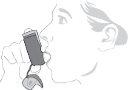 Expulse el aire suavemente. Antes de hacer otra inhalación, agite bien el inhalador durante al menos 5 segundos y repita los pasos del 3 al 7.
- Tape de nuevo la boquilla.
- Enjuáguese la boca con agua tras las dosis diarias de la mañana y de la noche. No se la trague.
Uso de cámara espaciadora
Su médico, enfermero o farmacéutico le puede sugerir el uso de una cámara espaciadora (por ejemplo, Aerochamber Plus Flow VuoAerochamber Plus). Siga las instrucciones que figuran en el prospecto incluido con la cámara espaciadora.
Limpieza de Rilast
- Limpie el interior y exterior de la boquilla por lo menos una vez a la semana con un paño seco.
- No utilice agua o líquidos y no separe el cartucho del inhalador.
¿Cómo puedo saber cuándo tengo que reemplazar mi inhalador Rilast?
- El contador de la parte superior le dice cuantas inhalaciones quedan en su inhalador Rilast. Se inicia con 120 inhalaciones cuando está lleno.
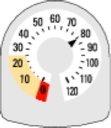
- Cada vez que realiza una inhalación, o la libera al aire, la flecha empieza una cuenta atrás hacia el cero ('0').
- Cuando la flecha entra por primera vez en el área amarilla, significa que quedan unas 20 inhalaciones.
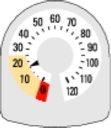
- Cuando la flecha llega al '0', debe dejar de usar su nuevo inhalador Rilast. Puede que no tenga la sensación de que el inhalador esté vacío y que parezca que aún funciona, pero sin embargo, no recibirá la cantidad correcta del medicamento si lo sigue usando.
Si usa más Rilast del que debe
Si ha utilizado más Rilast del que debiera, contacte con su médico o farmacéutico. Los síntomas y signos más habituales que pueden producirse tras una sobredosis son temblores, dolor de cabeza y latidos rápidos del corazón.
En caso de sobredosis o ingestión accidental, consulte al Servicio de Información Toxicológica. Teléfono: 91 5620420, indicando el medicamento y la cantidad ingerida.
Si olvidó usar Rilast
- Si usted olvida alguna de las dosis de Rilast, siga el tratamiento recomendado tan pronto como se acuerde. Sin embargo, si es casi la hora de su siguiente dosis, no se preocupe por la dosis olvidada.
- Nouse una dosis doble para compensar las dosis olvidadas.
Si interrumpe el tratamiento con Rilast
Antes de dejar de utilizar Rilast, debe consultar con el médico o el farmacéutico. Si deja de utilizar Rilast los síntomas y signos de la EPOC pueden empeorar.
Si tiene cualquier otra duda sobre el uso de este medicamento, pregunte a su médico o farmacéutico.

¿Has empezado a tomar el medicamento y tienes preguntas?
Comenta tus síntomas y tratamiento con un médico online.
4. Posibles efectos adversos
Al igual que todos los medicamentos, este medicamento puede producir efectos adversos, aunque no todas las personas los sufran.
Si le ocurre cualquiera de las siguientes situaciones, deje de utilizar Rilast y consulte inmediatamente con su médico:
- Se le hincha la cara, particularmente alrededor de la boca (lengua y/o garganta y/o dificultad para tragar) o aparece urticaria junto con dificultades para respirar (angioedema) y/o nota una sensación repentina de desfallecimiento, lo cual indica que puede estar sufriendo una reacción alérgica. Esto ocurre raramente, afectando a menos de 1 de cada 1.000 pacientes.
- Tiene “pitos” agudos o dificultad para respirar inmediatamente después de usar su inhalador. Si le sucede cualquiera de estos síntomas, deje de utilizar inmediatamente Rilast y use su “inhalador de alivio”. Contacte inmediatamente con su médico ya que puede que sea necesario cambiar su tratamiento.Esto ocurre muy raramente, afectando a menos de 1 de cada 10.000 pacientes.
Otros posibles efectos adversos:
Frecuentes (pueden afectar hasta 1 de cada 10 pacientes)
- Palpitaciones (notar los latidos del corazón), temblores o escalofríos. Estos efectos, si aparecen, suelen ser leves y desaparecen a medida que se va utilizando Rilast.
- Muguet (infección por hongos) en la boca; este efecto es menos probable si se aclara la boca con agua después de utilizar Rilast.
- Irritación leve de garganta, tos, ronquera.
- Dolor de cabeza.
- Neumonía (infección de los pulmones) en pacientes con EPOC.
Informe a su médico si usted tiene cualquiera de los siguientes síntomas mientras inhala Rilast, podrían ser síntomas de una infección pulmonar:
- Fiebre o escalofríos.
- Aumento de la producción de moco, cambio en el color del moco.
- Aumento de la tos o aumento de dificultades para respirar.
Poco frecuentes (pueden afectar hasta 1 de cada 100 pacientes)
- Agitación, inquietud, nerviosismo.
- Dificultad para dormir.
- Mareos.
- Náuseas (malestar).
- Ritmo cardíaco acelerado.
- Hematomas en la piel.
- Calambres musculares.
- Visión borrosa.
Raros (pueden afectar hasta 1 de cada 1.000 pacientes)
- Erupción, picor.
- Broncoespasmo (contracción de los músculos de las vías respiratorias, lo que provoca “pitos”). Si los pitos le ocurren repentinamente justo después de utilizar Rilast, deje de utilizarlo y consulte a su médico inmediatamente.
- Niveles bajos de potasio en sangre.
- Latido cardíaco irregular.
Muy raros (pueden afectar hasta 1 de cada 10.000 pacientes)
- Depresión.
- Cambios en el comportamiento, especialmente en niños.
- Dolor u opresión en el pecho (angina de pecho).
- Aumento en la cantidad de azúcar (glucosa) en sangre.
- Alteraciones del gusto, como sabor de boca desagradable.
- Variaciones en la tensión arterial.
Los corticoides inhalados pueden afectar a la producción normal de hormonas esteroides en el organismo, especialmente si se utilizan dosis elevadas durante mucho tiempo. Estos efectos incluyen:
- cambios en la densidad mineral ósea (adelgazamiento de los huesos)
- cataratas (pérdida de transparencia del cristalino en el ojo)
- glaucoma (aumento de la presión ocular)
- retraso del crecimiento en niños y adolescentes
- efectos sobre las glándulas suprarrenales (glándulas de pequeño tamaño situadas junto a los riñones).
Estos efectos son mucho menos probables con los corticoides inhalados que con los comprimidos de corticoides.
Comunicación de efectos adversos
Si experimenta cualquier tipo de efecto adverso, consulte a su médico o farmacéutico, incluso si se trata de posibles efectos adversos que no aparecen en este prospecto. También puede comunicarlos directamente a través del Sistema Español de Farmacovigilancia de medicamentos de Uso Humano: www.notificaRAM.es. Mediante la comunicación de efectos adversos usted puede contribuir a proporcionar más información sobre la seguridad de este medicamento.
5. Conservación de Rilast
- Mantenga este medicamento fuera de la vista y del alcance de los niños.
- No utilice este medicamento después de la fecha de caducidad que aparece en el cartonaje, el sobre de aluminio o la etiqueta después de CAD. La fecha de caducidad es el último día del mes que se indica.
- Al igual que con la mayoría de los medicamentos inhalados en envases a presión, el efecto de este medicamento puede disminuir cuando el envase está frío. Para obtener los mejores resultados, este medicamento debe estar a temperatura ambiente antes de su uso. No refrigerar o congelar. Proteger de las heladas y la luz solar directa.
- Se deberá utilizar dentro de los 3 meses siguientes tras haber sacado el inhalador de su envoltura de aluminio. Escriba la fecha de caducidad (3 meses a partir de la apertura de la envoltura) en la etiqueta del inhalador para recordarle cuándo debe dejar de usar el inhalador.
- Vuelva a colocar siempre la tapa de la boquilla y encájela en su posición después de usar el inhalador.
- Los medicamentos no se deben tirar por los desagües ni a la basura. Deposite los envases y los medicamentos que no necesita en el Punto SIGRE de la farmacia. Pregunte a su farmacéutico cómo deshacerse de los envases y de los medicamentos que no necesita. De esta forma, ayudará a proteger el medio ambiente.
Advertencia: El cartucho contiene un líquido presurizado. No exponer a temperaturas superiores a 50°C. No perforar el recipiente. El cartucho no debe romperse, pincharse o quemarse, incluso cuando parezca que está vacío.
6. Contenido del envase e información adicional
Composición de Rilast
Los principios activos son budesonida y formoterol fumarato dihidrato. Cada dosis inhalada contiene 160 microgramos de budesonida y 4,5 microgramos de formoterol fumarato dihidrato.
Los demás excipientes son apaflurano (HFA 227), povidona y Macrogol. Este inhalador no contiene CFCs.
Este medicamento contiene gases fluorados de efecto invernadero. Cada inhalador contiene 10,6 g de apaflurano (HFC-227ea) que corresponden a 0,034 toneladas de CO2 equivalente (potencial de calentamiento global PCG = 3 220).
Aspecto del producto y contenido del envase
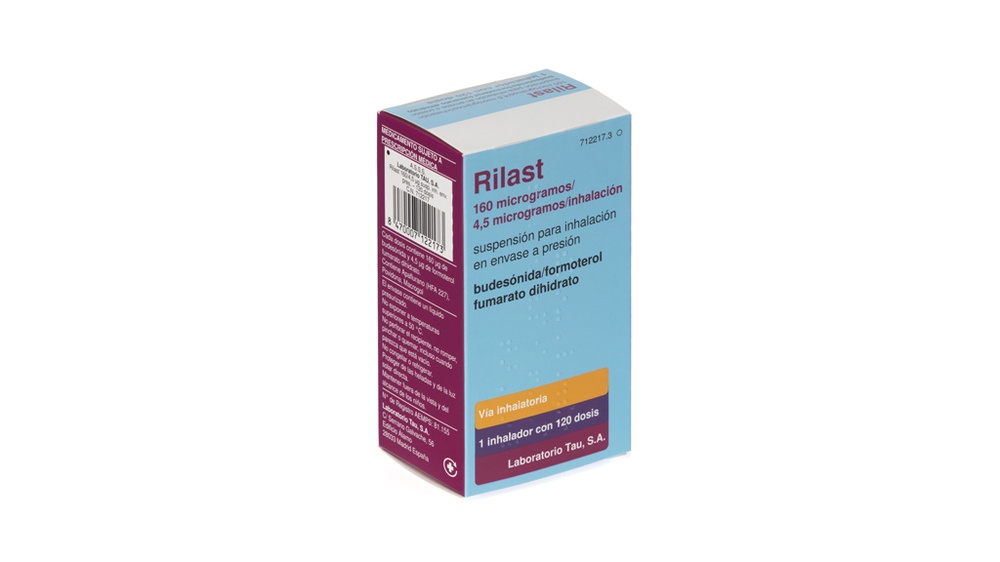
Rilast es un inhalador que contiene su medicamento. El cartucho a presión con indicador de dosis adjunto, contiene una suspensión de color blanco para la inhalación. El cartucho está montado en un adaptador de plástico de color rojo con una boquilla de plástico blanco y una tapa de plástico gris integrada. Cada inhalador contiene 120 inhalaciones después de que haya sido preparado para su uso. Cada inhalador se embala individualmente en una envoltura de papel de aluminio que contiene un agente desecante.
Rilast 160 microgramos/4,5 microgramos/inhalación suspensión para inhalación en envase a presión (budesonida/formoterol fumarato dihidrato) está disponible en envases con un solo inhalador.
Titular de la autorización de comercialización y responsable de la fabricación
El titular es:
Laboratorio TAU, S.A.
C/ Puerto de Somport 21-23
28050 Madrid
España
El responsable de la fabricación es:
AstraZeneca Dunkerque Production
224, Avenue de la Dordogne BP 41
59640 Dunkerque (Francia)
Este medicamento está autorizado en los estados miembros del Espacio Económico Europeo con los siguientes nombres:
País | Nombre comercial y concentración |
España | Rilast 160 μg/4,5 μg /inhalación suspensión para inhalación en envase a presión |
Suecia | Gardette 160 mikrogram /4.5 mikrogram/inhalation |
Fecha de la última revisión de este prospecto: Enero 2025
La información detallada de este medicamento está disponible en la página web de la Agencia Española de Medicamentos y Productos Sanitarios (AEMPS) http://www.aemps.gob.es/
- País de registro
- Forma farmacéuticaINHALACIÓN PULMONAR, 160 microgramos/4,5 microgramos
- Código ATCR03AK07
- Precio medio en farmacia39.56 EUR
- Principio activo
- Requiere recetaSí
- Fabricante
- Esta información es de carácter general y no sustituye la consulta con un profesional sanitario.
- Alternativas a RILAST 160 MICROGRAMOS/4,5 MICROGRAMOS/INHALACION SUSPENSION PARA INHALACION EN ENVASE A PRESIONForma farmacéutica: INHALACIÓN PULMONAR, 160 microgramos / 4,5 microgramosPrincipio activo: formoterol and budesonideFabricante: Teva Pharma B.V.Requiere recetaForma farmacéutica: INHALACIÓN PULMONAR, 320 microgramos / 9 microgramosPrincipio activo: formoterol and budesonideFabricante: Teva Pharma B.V.Requiere recetaForma farmacéutica: INHALACIÓN PULMONAR, 160 MICROGRAMOS/4,5 MICROGRAMOSPrincipio activo: formoterol and budesonideFabricante: Cipla Europe N.V.Requiere receta
Médicos online para RILAST 160 MICROGRAMOS/4,5 MICROGRAMOS/INHALACION SUSPENSION PARA INHALACION EN ENVASE A PRESION
Comenta la dosis, los posibles efectos secundarios, interacciones, contraindicaciones o la revisión de receta de RILAST 160 MICROGRAMOS/4,5 MICROGRAMOS/INHALACION SUSPENSION PARA INHALACION EN ENVASE A PRESION, sujeto a valoración médica y a la normativa local.









Obtén una receta de RILAST 160 MICROGRAMOS/4,5 MICROGRAMOS/INHALACION SUSPENSION PARA INHALACION EN ENVASE A PRESION online
Rellena un formulario de 2 minutos
Cuéntanos tus síntomas, historial y el medicamento que necesitas.
Elige un médico o nosotros te asignamos uno
Escoge un especialista o te conectamos con el próximo médico disponible.
El médico revisa tu caso
Normalmente en 30 minutos. Puede hacerte preguntas adicionales por chat.
Recógela en cualquier farmacia
Receta electrónica enviada a tu correo, válida en toda España.
Preguntas frecuentes
RILAST 160 MICROGRAMOS/4,5 MICROGRAMOS/INHALACION SUSPENSION PARA INHALACION EN ENVASE A PRESION requiere receta en España. Puedes confirmarlo con un médico online según tu caso.
El principio activo de RILAST 160 MICROGRAMOS/4,5 MICROGRAMOS/INHALACION SUSPENSION PARA INHALACION EN ENVASE A PRESION es formoterol and budesonide. Esta información ayuda a identificar medicamentos con la misma composición pero con diferentes nombres comerciales.
El precio medio en farmacia de RILAST 160 MICROGRAMOS/4,5 MICROGRAMOS/INHALACION SUSPENSION PARA INHALACION EN ENVASE A PRESION es de aproximadamente 39.56 EUR. Puede variar según el fabricante y la forma farmacéutica.
RILAST 160 MICROGRAMOS/4,5 MICROGRAMOS/INHALACION SUSPENSION PARA INHALACION EN ENVASE A PRESION es fabricado por Laboratorio Tau S.A.. La marca y el envase pueden variar según el distribuidor.
Los Médicos de familia, Psiquiatras, Dermatólogos, Cardiólogos, Endocrinólogos, Gastroenterólogos, Neumólogos, Nefrólogos, Reumatólogos, Hematólogos, Infectólogos, Alergólogos, Geriatras, Pediatras, Oncólogos pueden valorar la prescripción de RILAST 160 MICROGRAMOS/4,5 MICROGRAMOS/INHALACION SUSPENSION PARA INHALACION EN ENVASE A PRESION cuando esté clínicamente indicado. Puedes reservar una videoconsulta para comentar tu caso y las opciones de tratamiento.
España cuenta con una infraestructura sanitaria bien desarrollada en ciudades principales como Madrid, Barcelona, Valencia y Sevilla. Las farmacias están ampliamente disponibles y operan bajo estrictas regulaciones, garantizando el acceso a medicamentos con receta.
Puedes comprar RILAST 160 MICROGRAMOS/4,5 MICROGRAMOS/INHALACION SUSPENSION PARA INHALACION EN ENVASE A PRESION en Madrid, Barcelona, Sevilla o Valencia en cualquier farmacia local con una receta válida.
Para obtener una receta, puedes utilizar Oladoctor:
Otros medicamentos con el mismo principio activo (formoterol and budesonide) incluyen BiResp Spiromax 160 microgramos / 4,5 microgramos polvo para inhalacion, BiResp Spiromax 320 microgramos / 9 microgramos polvo para inhalacion, BUDESONIDA/FORMOTEROL CIPLA 160 MICROGRAMOS/4,5 MICROGRAMOS/INHALACION POLVO PARA INHALACION (UNIDOSIS). Pueden tener diferentes nombres comerciales o formulaciones, pero contienen el mismo componente terapéutico. Consulta siempre con un médico antes de cambiar o iniciar un nuevo medicamento.
