






Cómo usar RIFALDIN 300 mg CAPSULAS
Traducción generada por IA
Este contenido ha sido traducido automáticamente y se ofrece solo con fines informativos. No sustituye la consulta con un profesional sanitario.
Ver originalContenido del prospecto
Introducción
Prospecto: información para el usuario
Rifaldin 300 mg cápsulas duras
Rifampicina
Lea todo el prospecto detenidamente antes de empezar a tomar este medicamento, porque contiene información importante para usted.
- Conserve este prospecto, ya que puede tener que volver a leerlo.
- Si tiene alguna duda, consulte a su médico o farmacéutico.
- Este medicamento se le ha recetado solamente a usted y no debe dárselo a otras personas aunque tengan los mismos síntomas que usted, ya que puede perjudicarles.
- Si experimenta efectos adversos, consulte a su médico o farmacéutico, incluso si se trata de efectos adversos que no aparecen en este prospecto. Ver sección 4.
Contenido del prospecto:
- Qué es Rifaldin 300 mg cápsulas y para qué se utiliza
- Qué necesita saber antes de empezar a tomar Rifaldin 300 mg cápsulas
- Cómo tomar Rifaldin 300 mg cápsulas
- Posibles efectos adversos
- Conservación de Rifaldin 300 mg cápsulas
- Contenido del envase e información adicional
1. Qué es Rifaldin 300 mg cápsulas y para qué se utiliza
Rifaldin es un antibiótico perteneciente a un grupo de antibióticos llamado rifampicinas. Actúa deteniendo el crecimiento de las bacterias que provocan infecciones.
Los antibióticos se utilizan para tratar infecciones bacterianas y no sirven para tratar infecciones víricas como la gripe o el catarro. Es importante que siga las instrucciones relativas a la dosis, el intervalo de administración y la duración del tratamiento indicadas por su médico. No guarde ni reutilice este medicamento. Si una vez finalizado el tratamiento le sobra antibiótico, devuélvalo a la farmacia para su correcta eliminación. No debe tirar los medicamentos por el desagüe ni a la basura. |
Rifaldin está indicado en el tratamiento de infecciones debidas a bacterias frente a las que es activo este medicamento, tales como:
- Tuberculosis en todas sus formas (en asociación con otros agentes tuberculostáticos).
- Brucelosis.
- Erradicación de meningococos en personas que no tienen síntomas de la enfermedad (portadores asintomáticos). No está indicado en el tratamiento de la infección meningocócica establecida.
Infecciones en las que se ha demostrado previamente la sensibilidad a Rifaldin, y cuando no fuera oportuno administrar al paciente otros antibióticos o quimioterápicos, bien por ser alérgico o existir alguna contraindicación que no los hiciera aconsejables.

2. Qué necesita saber antes de empezar a tomar Rifaldin 300 mg cápsulas
No tome Rifaldin:
- si es alérgico a las rifamicinas o a alguno de los demás componentes de este medicamento (incluidos en la sección 6).
- si está enfermo del hígado y tiene la piel amarilla (ictericia).
- si está tomando medicamentos que contengan:
- Combinaciones de saquinavir/ritonavir o elvitegravir/cobicistat (medicamentos antirretrovirales).
- Atazanavir, darunavir, fosamprenavir, tipranavir, rilpivirina o dolutegravir/rilpivirina (medicamentos antirretrovirales).
- Nifedipino, nimodipino, nisoldipino o nitrendipino (medicamentos antihipertensivos).
- Glecaprevir/pibrentasvir o elbasvir/grazoprevir (medicamentos para la hepatitis C).
- Voriconazol (medicamento antifúngico).
- Artemetero/lumefantrina (medicamento antimalárico).
- BCG cultivo vivo desecado (interferón).
- si está tomando un medicamento llamado lurasidona para la esquizofrenia y los trastornos bipolares, (ver sección “Uso de Rifaldin con otros medicamentos” debajo).
Advertencias y precauciones
Consulte a su médico o farmacéutico antes de empezar a tomar Rifaldin.
- Si los síntomas de la tuberculosis vuelven o empeoran (ver 4. Posibles efectos adversos).
- Si padece alguna alteración de la función de su hígado. En ese caso su médico le reducirá la dosis y le controlará periódicamente el funcionamiento de su hígado realizándole análisis de sangre antes del tratamiento y cada 2-4 semanas durante el mismo. Si apareciera alguna lesión de las células del hígado su médico le suspenderá el tratamiento.
- Si experimenta picazón, debilidad, pérdida de apetito, náuseas, vómitos, dolor abdominal, coloración amarillenta de los ojos o la piel u orina oscura, informe inmediatamente a su médico. Estos síntomas pueden estar relacionados con una lesión hepática grave.
- Si toma rifampicina junto con isoniazida (medicamento para la tuberculosis), o es paciente de edad avanzada, o adolescente, está desnutrido o tiene predisposición a padecer alteraciones del sistema nervioso (por ejemplo si es diabético) puede que su médico le prescriba un aporte suplementario de vitamina B6.
- Durante el tratamiento se puede producir una reacción grave como el síndrome de reacción a fármaco con eosinofilia y síntomas sistémicos (DRESS) (ver sección 4. Posibles efectos adversos). Si presenta síntomas tempranos de hipersensibilidad al Rifaldin como fiebre, linfadenopatía (hinchazón de los ganglios linfáticos) o alteraciones biológicas (eosinofilia -aumento de un determinado grupo de glóbulos blancos-, trastornos en el hígado), con o sin erupción cutánea, póngase inmediatamente en contacto con su médico.
Rifaldin deberá discontinuarse si no se puede establecer un origen distinto para estos síntomas.
- Si presenta una erupción cutánea ampollosa grave y generalizada, con formación de ampollas o descamación de la piel, así como signos de gripe y fiebre (síndrome de Stevens-Johnson), malestar general, fiebre, escalofríos y dolores musculares (necrólisis epidérmica tóxica) o una erupción roja y escamosa con bultos bajo la piel y ampollas (pustulosis exantemática generalizada aguda), consulte a su médico cuanto antes, ya que se debe suspender de inmediato el tratamiento con rifampicina.
- Si usted es diabético. El tratamiento con rifampicina puede dificultar el manejo de los pacientes diabéticos.
- Debido a la rifampicina puede aparecer una decoloración (amarilla, naranja, roja, marrón) en sus dientes, orina, sudor, esputo,lágrimas y heces sin importancia clínica. Igualmente, puede provocar una coloración permanente de las lentes de contacto blandas.
- La rifampicina puede competir con varios medicamentos al nivel de absorción y cambio bioquímico / metabolismo y, por lo tanto, podría disminuir o aumentar la exposición, seguridad y eficacia de estos medicamentos (ver “Uso de Rifaldin con otros medicamentos”).
- Si tiene un problema de sangrado o tendencia a tener moratones fácilmente. La rifampicina puede causar coagulopatía dependiente de vitamina K (esto significa que puede disminuir la capacidad de coagulación de la sangre) y sangrado grave (ver sección “Posibles efectos adversos”).
- Si está tomando otros antibióticos al mismo tiempo.
- Si tiene antecedentes de inflamación pulmonar (enfermedad pulmonar intersticial/neumonitis).
- Si presenta un empeoramiento nuevo o repentino de la dificultad para respirar, posiblemente con tos seca o fiebre que no responde al tratamiento antibiótico. Estos pueden ser síntomas de inflamación pulmonar (enfermedad pulmonar intersticial/neumonitis) y pueden provocar graves problemas respiratorios e interferir con la respiración normal debido a la acumulación de fluido en los pulmones, lo que puede conducir a condiciones amenazantes para la vida.
Uso de Rifaldin con otros medicamentos
Informe a su médico o farmacéutico si está utilizando, ha utilizado recientemente o pudiera tener que utilizar cualquier otro medicamento.
La rifampicina aumenta la eliminación del organismo de muchos medicamentos por lo que puede producir una disminución de la actividad de éstos. Entre estos medicamentos se encuentran:
- medicamentos para el tratamiento de la epilepsia: fenitoína, fenobarbital
- medicamentos para tratar el corazón cuando late desacompasadamente (arritmias del corazón): disopiramida, mexiletina, quinidina, propafenona, tocainida
- medicamentos para otros problemas del corazón: beta-bloqueantes y losartán (para el
tratamiento de la tensión arterial alta), medicamentos llamados bloqueantes de los canales del calcio como diltiazem, nifedipino o verapamilo, glucósidos cardiacos como digoxina (para el tratamiento de la insuficiencia cardiaca)
- medicamentos para el tratamiento de problemas de la coagulación de la sangre: warfarina
- medicamentos para el tratamiento de trastornos mentales: haloperidol
- medicamentos para el tratamiento de las infecciones por hongos: caspofungina, fluconazol, itraconazol, ketoconazol
- medicamentos para la infección del VIH: zidovudina, saquinavir, indinavir, efavirenz
- medicamentos usados como anestésicos: tiopental
- algunos antibióticos: cloranfenicol, claritromicina, doxiciclina, fluoroquinolonas, telitromicina
- corticoides (ej. prednisolona)
- medicamentos para evitar el rechazo de trasplantes: ciclosporina, tacrolimus, sirolimus
- anticonceptivos hormonales sistémicos (incluyendo estrógenos y progestágenos)
- otros medicamentos para el tratamiento de infecciones: dapsona (para el tratamiento de la lepra y/o malaria) y quinina (para el tratamiento de la malaria)
- medicamentos para el tratamiento de la diabetes: sulfonilureas (glipizida, gliburida), rosiglitazona
- medicamentos para el tratamiento de la depresión: nortriptilina
- medicamentos para el tratamiento de la ansiedad y/o insomnio: diazepam, zopiclona, zolpidem
- medicamentos para el tratamiento del dolor: analgésicos opioides (oxicodona, morfina)
- medicamentos para tratar niveles elevados de colesterol: clofibrato, estatinas (ej. simvastatina)
- medicamentos para el tratamiento de los vómitos: ondansetrón
- medicamentos para el tratamiento del cáncer: irinotecán
- medicamentos para el tratamiento de enfermedades degenerativas nerviosas como la esclerosis lateral amiotrófica: riluzol
- medicamentos con actividad estrogénica y antiestrogénica (tamoxifeno, toremifeno)
- medicamentos antivirales para el tratamiento de la hepatitis C (daclatasvir, simeprevir, sofosbuvir, telaprevir, velpatasvir, voxilaprevir)
- otros medicamentos: hexobarbital (barbitúricos), levotiroxina (para el tratamiento del hipotiroidismo), metadona, teofilina (para el tratamiento del asma), praziquantel (para el tratamiento de parásitos helmínticos)
- algunos medicamentos utilizados para diluir la sangre, como clopidogrel
- dapsona: si está tomando dapsona (un antibiótico) con rifampicina, puede producirse toxicidad hematológica, incluida una disminución de las células sanguíneas y de la médula ósea, y metahemoglobinemia (disminución del oxígeno en la sangre causada por cambios en los glóbulos rojos).
- lurasidona para la esquizofrenia y los trastornos bipolares, ya que la rifampicina puede reducir los niveles sanguíneos de lurasidona.
En caso de que esté tomando alguno de estos medicamentos, puede ser necesario que su médico le modifique la dosis.
Si está tomando paracetamol y rifampicina, puede aumentar el riesgo de daño hepático.
Si está tomando anticonceptivos hormonales sistémicos deberá utilizar otro método anticonceptivo no hormonal durante el tratamiento con Rifaldin.
El uso simultáneo de ketoconazol y rifampicina disminuye los niveles séricos de ambos fármacos.
El uso simultáneo de Rifaldin y enalapril disminuye la actividad del enalapril. Si su estado clínico lo permite, puede ser necesario que su médico le modifique la dosis.
Cuando se utiliza simultáneamente atovacuona y Rifaldin se observa una disminución de las concentraciones de atovacuona y un aumento de las de rifampicina.
No debe tomar Rifaldin junto con ácido para-aminosalicílico (medicamento utilizado para el tratamiento de la tuberculosis) ya que éste disminuye los niveles en sangre de la rifampicina, por lo que es conveniente dejar un intervalo de 8 horas entre la toma de ambos medicamentos.
Los antiácidos reducen la absorción de la rifampicina por lo que deberá tomar su dosis diaria de Rifaldin al menos una hora antes de la toma de antiácidos.
El uso simultáneo de rifampicina con halotano o isoniazida aumenta el potencial de toxicidad hepática. No debe utilizar Rifaldin junto con halotano. Si tiene un tratamiento con rifampicina e isoniazida, su médico controlará periódicamente el funcionamiento de su hígado (ver sección 2. Advertencias y precauciones).
No se recomienda el uso concomitante con un grupo de medicamentos antirretrovirales, los inhibidores no nucleosidos de la transcriptasa inversa como etravirina, nevirapina, o cualquier inhibidor de la proteasa (sean solos o combinados con un antirretroviral que se llama ritonavir).
Tampoco se recomienda usar concomitantemente con maraviroc, otro medicamento antirretroviral; si está clínicamente justificado se requiere ajuste de dosis.
Se debe evitar el uso concomitante de rifampicina con otros antibióticos que causan coagulopatía dependiente de vitamina K (disminución de la capacidad de coagulación de la sangre), tales como cefazolina (u otras cefalosporinas del mismo grupo), ya que puede provocar trastornos graves de la coagulación (es cuando la sangre pierde su liquidez convirtiéndose en un gel, para formar un coágulo) que pueden conducir a un desenlace fatal (especialmente con dosis altas).
No debe tomar Rifaldin junto con la combinación saquinavir/ritonavir (medicamentos antirretrovirales).
Rifaldin modifica el resultado de algunas pruebas de laboratorio, como:
- la determinación de folatos y vitamina B12 en sangre,
- la prueba de la bromosulftaleína,
- los niveles de bilirrubina en sangre,
- puede perjudicar la eliminación de los métodos de contraste utilizados al examinar su vesícula biliar.
Por tanto, en caso necesario, le realizarán estas pruebas por la mañana y antes de haber tomado su dosis de Rifaldin.
En los pacientes tratados con rifampicina se han notificado casos de resultados falsamente positivos a presencia de opiáceos en orina cuando el análisis se hizo con un ensayo denominado ICMS (Interacción Cinética de Micropartículas en Solución). Con este motivo se aconseja emplear otras técnicas en estos pacientes como cromatografía gaseosa y espectrometría de masas.
Informe a su médico o farmacéutico si está embarazada y si está planeando o necesita someterse a la interrupción del embarazo con mifepristona
Toma de Rifaldin con alimentos, bebidas y alcohol
La absorción de Rifaldin se ve afectada por la comida, por lo tanto, para asegurar la absorción adecuada deberá tomar Rifaldin con el estómago vacío, esto es:
- al menos 30 minutos antes de la comida, o
- al menos 2 horas después, de la comida.
Embarazo, lactancia y fertilidad
Si está embarazada o en periodo de lactancia, cree que podría estar embarazada o tiene intención de quedarse embarazada, consulte a su médico o farmacéutico antes de utilizar este medicamento.
Embarazo
Como la rifampicina atraviesa la barrera placentaria y no se dispone de datos suficientes para establecer su seguridad durante el embarazo, su médico valorará cuidadosamente la conveniencia de la utilización de Rifaldin durante el embarazo. En ningún caso se administrará durante los tres primeros meses del embarazo.
Lactancia
La rifampicina se elimina por la leche materna, por tanto, solo se debe usar en madres en periodo de lactancia si el potencial beneficio supera el potencial riesgo en el niño.
Fertilidad
No existen datos sobre la capacidad a largo plazo de la rifampicina para alterar la fertilidad.
Conducción y uso de máquinas
La rifampicina puede producir determinados efectos adversos que pueden interferir en la capacidad de conducir y utilizar maquinas. En caso de experimentar estos efectos adversos (dificultad para respirar, náuseas, vómitos, debilidad muscular), no se debe conducir ni utilizar máquinas.
Rifaldin 300 mg cápsulas contiene sodio
Este medicamento contiene menos de 23 mg de sodio (1 mmol) por cápsula; esto es, esencialmente “exento de sodio”.
3. Cómo tomar Rifaldin 300 mg cápsulas
Siga exactamente las instrucciones de administración de este medicamento indicadas por su médico o farmacéutico. En caso de duda, consulte de nuevo a su médico o farmacéutico.
Su médico le indicará su dosis diaria y la duración de su tratamiento. No suspenda su tratamiento antes. La dosificación es individual para usted y podrá ser modificada por su médico en función de su respuesta al tratamiento.
Si estima que la acción de Rifaldin es demasiado fuerte o débil, comuníqueselo a su médico o farmacéutico.
Adultos:
La dosis recomendada en adultos depende de la enfermedad para la que le hayan recetado este medicamento y es:
- Tuberculosis:la dosis diaria recomendada es 10 mg por kg de peso en una sola toma,
esto es una dosis de 600 mg (2 cápsulas de 300 mg ) en el caso de que pese 50 kg o más y una dosis de 450 mg si su peso es menor de 50 kg. Como norma general para el tratamiento de la tuberculosis se le administrará Rifaldin asociado siempre a otros medicamentos antituberculosos como etambutol o isoniazida.
- Brucelosis: La dosis diaria recomendada en caso de que padezca brucelosis aguda es de
600 a 900 mg de Rifaldin al día (de 2 a 3 cápsulas de 300 mg) junto con 200 mg de doxicilina por vía oral durante 6 semanas.
- Portadores de meningococos:Se recomienda una dosis de 600 mg de Rifaldin (2 cápsulas
de 300 mg) cada 12 horas durante 2 días consecutivos.
- Otras infecciones no tuberculosas:La dosis diaria recomendada es de 450 a 600 mg.
Su médico le podrá incrementar esta dosis hasta 900 a 1.200 mg al día repartidas en dos administraciones.
Niños:
La dosis para niños se basa en su peso. Normalmente oscila entre 10 mg y 20 mg por Kg de peso corporal al día.
La dosis habitual para niños para el tratamiento de la tuberculosis es de 15 mg. En niños con alteración del peso puede ser necesaria una reducción de la dosis. En las infecciones graves, por ejemplo meningitis, podrá usarse una dosis mayor, como 20 mg por Kg de peso corporal al día.
Si toma más Rifaldin del que debe
Consulte inmediatamente a su médico o diríjase al servicio de urgencias del hospital más próximo acompañado de este prospecto.
Tras una toma masiva de este medicamento, puede esperarse la aparición de náuseas, vómitos, dolor de estómago, picor, dolor de cabeza y somnolencia progresiva; en caso de padecer una enfermedad del hígado (hepática) severa podría llegar a producirse una pérdida de conciencia. En pacientes pediátricos también se ha detectado edema facial o peribarbital. En algunos casos fatales se ha notificado hipotensión, taquicardia sinusal, arritmias ventriculares, convulsiones y paro cardíaco.También puede producirse un aumento transitorio de las enzimas del hígado y/o de la bilirrubina.
Asimismo, puede aparecer un color rojo marronáceo o naranja en: piel, orina, sudor, saliva, lágrimas y heces. La intensidad de este color variará según la cantidad de medicamento que haya tomado.
Su médico le realizará el tratamiento de los síntomas que considere adecuado, tales como lavado de estómago y/o provocación del vómito y administración de medicamentos para sus síntomas, así como controlarle las funciones de su hígado y sus riñones.
En caso de sobredosis o ingestión accidental, consulte a su médico o farmacéutico o llame al Servicio de Información Toxicológica, teléfono: 91 5620420, indicando el medicamento y la cantidad ingerida.
Si olvidó tomar Rifaldin
No tome una dosis doble para compensar las dosis olvidadas.

4. Posibles efectos adversos
Al igual que todos los medicamentos, este medicamento puede producir efectos adversos, aunque no todas las personas los sufran.
Si cualquiera de los siguientes efectos adversos graves apareciera, deje de tomar Rifaldin y consulte con su médico inmediatamente:
- Insuficiencia renal (los riñones no son capaces de filtrar adecuadamente las toxinas).
- Trombocitopenia disminución del número de plaquetas en sangre).
- Anemia hemolítica (destrucción de los glóbulos rojos en sangre, antes de lo normal).
Su médico le indicará que interrumpa inmediatamente el tratamiento con rifampicina y no vuelva a tomar este medicamento.
Efectos adversos muy frecuentes(puede afectar a más de 1 de cada 10 pacientes):
- Fiebre.
- Escalofríos.
Efectos adversos frecuentes(puede afectar hasta 1 de cada 10 pacientes):
- Trombocitopenia (reducción del número de plaquetas), con o sin aparición de manchas rojas de la piel formadas por pequeñas hemorragias sanguíneas subcutáneas (púrpura).
- Dolor de cabeza, mareos.
- Náuseas, vómitos.
- Elevación de la bilirrubina en sangre, elevación de transaminasas [aspartato aminotransferasa (AST), elevación de la alanina aminotransferasa (ALT)].
- Reacción paradójica al medicamento: durante el tratamiento los síntomas de la tuberculosis pueden reaparecer o pueden aparecer nuevos síntomas después de la mejoría inicial. Se han notificado reacciones paradójicas a las 2 semanas y hasta 18 meses después de comenzar el tratamiento antituberculoso. Las reacciones paradójicas suelen estar asociadas con fiebre, inflamación de los ganglios linfáticos (linfadenitis), dificultad para respirar y tos. Los pacientes con una reacción paradójica al medicamento también pueden experimentar dolores de cabeza, pérdida de apetito y pérdida de peso.
Efectos adversos poco frecuentes(puede afectar hasta 1 de cada 100 pacientes):
- Leucopenia (disminución del número de glóbulos blancos).
- Diarrea.
Efectos adversos de frecuencia no conocida(no puede estimarse a partir de los datos disponibles):
- Colitis pseudomembranosa (inflamación grave del intestino que puede aparecer después del tratamiento con antibióticos)
- Gripe.
- Coagulación intravascular diseminada (problemas de coagulación dentro de los vasos sanguíneos de forma generalizada), eosinofilia (aumento de un determinado grupo de glóbulos blancos), granulocitosis (disminución de un tipo de glóbulos blancos, los granulocitos), anemia hemolítica (disminución del número de glóbulos rojos producida por su destrucción), trastornos de coagulación dependientes de vitamina K.
- Reacción anafiláctica (reacción alérgica grave que cursa con dificultad respiratoria e incluso pérdida de conocimiento).
- Insuficiencia adrenal (alteración de la función de las glándulas suprarrenales en pacientes que padecen una alteración renal).
- Disminución del apetito.
- Trastorno psicótico (estado mental que consiste en una pérdida del contacto con la realidad).
- Hemorragia cerebral y muerte, en casos en que, tras la aparición de la púrpura (manchas en la piel de color violeta), se ha continuado o se ha reanudado el tratamiento con rifampicina.
- Cambio de color de las lágrimas.
- Shock (síndrome de insuficiencia cardiocirculatoria), rubefacción (enrojecimiento de la piel), vasculitis (inflamación de los vasos sanguíneos), sangrado grave.
- Disnea (ahogo o dificultad para respirar), sibilancias (sonidos durante la respiración), cambio de color del esputo.
- Trastorno gastrointestinal, molestias abdominales, decoloración de sus dientes (que puede ser permanente).
- Hepatitis (inflamación del hígado), hiperbilirrubinemia (elevación de la bilirrubina en sangre), colestasis (reducción del flujo de bilis). (Ver sección 2- Advertencias y precauciones).
- Eritema multiforme.
- Reacciones cutáneas graves como pustulosis exantemática generalizada aguda (erupción roja y escamosa con bultos bajo la piel y ampollas), síndrome de Stevens-Johnson (erupción generalizada con ampollas y descamación de la piel, particularmente alrededor de la boca, nariz, ojos y genitales) y necrólisis epidérmica tóxica [erupción generalizada con ampollas y descamación de la piel, particularmente alrededor de la boca, nariz, ojos y genitales causando una descamación generalizada de la piel (más del 30% de la superficie corporal)], síndrome de reacción a fármaco con eosinofilia y síntomas sistémicos [(DRESS) síntomas de tipo gripal con erupción cutánea, fiebre, inflamación de glándulas y resultados anormales en los análisis de sangre como aumento de los leucocitos (eosinofilia) y elevación de las enzimas hepáticas] (ver sección 2. Advertencias y precauciones).
- Reacciones cutáneas, picor, erupción cutánea pruriginosa, urticaria, dermatitis alérgica, lesiones cutáneas con ampollas (pénfigo).
- Cambio de color del sudor.
- Debilidad muscular, miopatía (trastorno de los músculos).
- Dolor de huesos.
- Daño agudo del riñón debido normalmente a muerte de las células de los riñones (necrosis tubular renal) o a inflamación de los riñones (nefritis tubulointersticial).
- Cromaturia (orina de color anormal).
- Hemorragia tras el parto.
- Hemorragia fetomaterna (entrada de sangre del feto hacia la madre).
- Trastorno menstrual.
- Porfiria.
- Edema (hinchazón de la piel por acumulación de líquidos).
- Bajada de la tensión arterial.
- Aumento de la creatinina en sangre.
- Aumento de las enzimas hepáticas.
- Inflamación de los pulmones (enfermedad pulmonar intersticial/neumonitis): informe a su médico inmediatamente si desarrolla un nuevo o repentino empeoramiento en la dificultad para respirar, posiblemente con tos o fiebre.
Comunicación de efectos adversos
Si experimenta cualquier tipo de efecto adverso, consulte a su médico o farmacéutico, incluso si se trata de posibles efectos adversos que no aparecen en este prospecto. También puede comunicarlos directamente a través del Sistema Español de Farmacovigilancia de Medicamentos de Uso Humano: https://www.notificaram.es. Mediante la comunicación de efectos adversos usted puede contribuir a proporcionar más información sobre la seguridad de este medicamento.
5. Conservación de Rifaldin 300 mg cápsulas
Mantener este medicamento fuera de la vista y del alcance de los niños.
No conservar a temperatura superior a 25ºC.
No utilice este medicamento después de la fecha de caducidad que aparece en el envase después de CAD. La fecha de caducidad es el último día del mes que se indica.
Los medicamentos no se deben tirar por los desagües ni a la basura. Deposite los envases y los medicamentos que no necesita en el Punto SIGRE de la farmacia. En caso de duda pregunte a su farmacéutico cómo deshacerse de los envases y de los medicamentos que no necesita. De esta forma, ayudará a proteger el medio ambiente.
6. Contenido del envase e información adicional
Composición de Rifaldin 300 mg cápsulas
- El principio activo es rifampicina. Cada cápsula dura contiene 300 mg de rifampicina.
- Los demás componentes (excipientes) son: almidón de maíz y estearato de magnesio. Componentes de la cápsula dura: gelatina; eritrosina (E-127); ácido índigo disulfónico (E-132); dióxido de titanio (E-171).
Aspecto del producto y contenido del envase
Rifaldin 300 mg cápsulas duras se presenta en envases con 24 cápsulas.
Titular de la autorización de comercialización y responsable de la fabricación
Titular de la autorización de comercialización
sanofi-aventis, S.A.
C/ Rosselló i Porcel, 21
08016 Barcelona
España
Responsable de la fabricación
Sanofi S.r.l.
Via valcanello, 4
03012 Anagni (FR)
Italia
Fecha de la última revisión de este prospecto: Agosto 2024
La información detallada de este medicamento está disponible en la página Web de la Agencia Española de Medicamentos y Productos Sanitarios (AEMPS) http://www.aemps.gob.es/.
-


- País de registro
- Forma farmacéuticaCAPSULA, 300 mg
- Código ATCJ04AB02
- Precio medio en farmacia8.37 EUR
- Principio activo
- Requiere recetaSí
- Fabricante
- Esta información es de carácter general y no sustituye la consulta con un profesional sanitario.
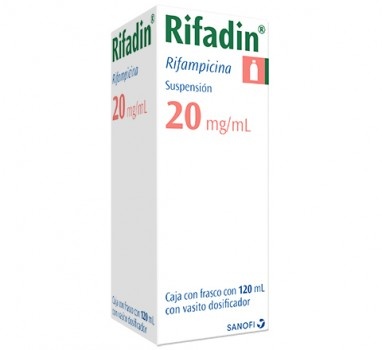
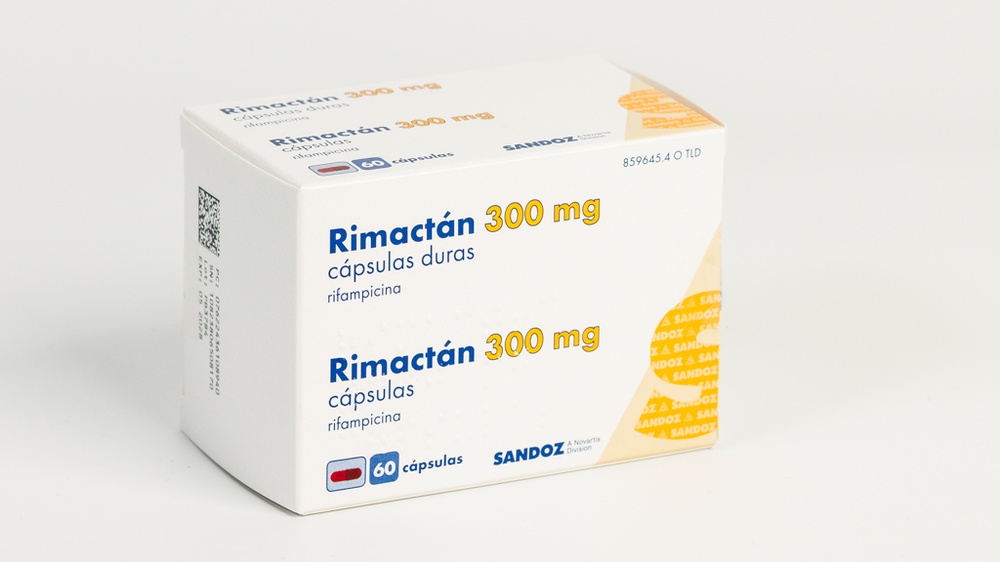
- Alternativas a RIFALDIN 300 mg CAPSULASForma farmacéutica: SOLUCIÓN/SUSPENSIÓN ORAL, 2%Principio activo: RifampicinaFabricante: Sanofi Aventis S.A.Requiere recetaForma farmacéutica: INYECTABLE PERFUSION, 600 mgPrincipio activo: RifampicinaFabricante: Sanofi Aventis S.A.Requiere recetaForma farmacéutica: CAPSULA, 300 mgPrincipio activo: RifampicinaFabricante: Sandoz Farmaceutica S.A.Requiere receta
Médicos online para RIFALDIN 300 mg CAPSULAS
Comenta la dosis, los posibles efectos secundarios, interacciones, contraindicaciones o la revisión de receta de RIFALDIN 300 mg CAPSULAS, sujeto a valoración médica y a la normativa local.









Obtén una receta de RIFALDIN 300 mg CAPSULAS online
Rellena un formulario de 2 minutos
Cuéntanos tus síntomas, historial y el medicamento que necesitas.
Elige un médico o nosotros te asignamos uno
Escoge un especialista o te conectamos con el próximo médico disponible.
El médico revisa tu caso
Normalmente en 30 minutos. Puede hacerte preguntas adicionales por chat.
Recógela en cualquier farmacia
Receta electrónica enviada a tu correo, válida en toda España.
Preguntas frecuentes
RIFALDIN 300 mg CAPSULAS requires receta en España. Puedes confirmarlo con un médico online según tu caso.
El principio activo de RIFALDIN 300 mg CAPSULAS es Rifampicina. Esta información ayuda a identificar medicamentos con la misma composición pero con diferentes nombres comerciales.
El precio medio en farmacia de RIFALDIN 300 mg CAPSULAS es de aproximadamente 8.37 EUR. Puede variar según el fabricante y la forma farmacéutica.
RIFALDIN 300 mg CAPSULAS es fabricado por Sanofi Aventis S.A.. La marca y el envase pueden variar según el distribuidor.
Los Médicos de familia, Psiquiatras, Dermatólogos, Cardiólogos, Endocrinólogos, Gastroenterólogos, Neumólogos, Nefrólogos, Reumatólogos, Hematólogos, Infectólogos, Alergólogos, Geriatras, Pediatras, Oncólogos pueden valorar la prescripción de RIFALDIN 300 mg CAPSULAS cuando esté clínicamente indicado. Puedes reservar una videoconsulta para comentar tu caso y las opciones de tratamiento.
España cuenta con una infraestructura sanitaria bien desarrollada en ciudades principales como Madrid, Barcelona, Valencia y Sevilla. Las farmacias están ampliamente disponibles y operan bajo estrictas regulaciones, garantizando el acceso a medicamentos con receta.
Puedes comprar RIFALDIN 300 mg CAPSULAS en Madrid, Barcelona, Sevilla o Valencia en cualquier farmacia local con una receta válida.
Para obtener una receta, puedes utilizar Oladoctor:
Otros medicamentos con el mismo principio activo (Rifampicina) incluyen RIFALDIN 20 mg/ml SUSPENSION ORAL, RIFALDIN 600 mg POLVO Y DISOLVENTE PARA SOLUCION PARA PERFUSION, RIMACTAN 300 mg CAPSULAS DURAS. Pueden tener diferentes nombres comerciales o formulaciones, pero contienen el mismo componente terapéutico. Consulta siempre con un médico antes de cambiar o iniciar un nuevo medicamento.
