



RESOCHIN 155 mg Film-Coated Tablets

Prescription review online
A doctor will review your case and decide whether a prescription is medically appropriate.

Talk to a doctor about this medicine
Discuss your symptoms and possible next steps in a quick online consultation.



How to use RESOCHIN 155 mg FILM-COATED TABLETS
Contents of the leaflet
- Introduction
- What is Resochin and what is it used for
- What you need to know before you take Resochin
- How to take Resochin
- Possible side effects
- Storage of Resochin
- Further information
Introduction
Package Leaflet: Information for the User
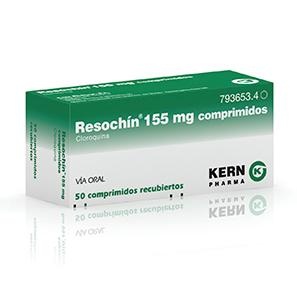
Resochin®155 mg film-coated tablets
Chloroquine
Read all of this leaflet carefully before you start taking this medicine because it contains important information for you.
- Keep this leaflet, you may need to read it again.
- If you have any further questions, ask your doctor or pharmacist.
- This medicine has been prescribed for you only. Do not pass it on to others. It may harm them, even if their signs of illness are the same as yours.
- If you get any side effects, talk to your doctor or pharmacist. This includes any possible side effects not listed in this leaflet. See section 4.
Contents of the pack:
- What is Resochin and what is it used for
- What you need to know before you take Resochin
- How to take Resochin
- Possible side effects
- Storage of Resochin
- Contents of the pack and other information
1. What is Resochin and what is it used for
Resochin belongs to the group of antiparasitic drugs used as antimalarials.
It is indicated in:
- prevention and treatment of malaria
- rheumatoid arthritis, spondyloarthritis (inflammatory disease of the spine)
- connective tissue diseases (systemic autoimmune diseases) and collagen diseases, such as systemic lupus erythematosus (chronic autoimmune disease), scleroderma (connective tissue disease), sarcoidosis (multisystem inflammatory disease), actinodermatitis (skin disease), rosacea (skin condition that causes chronic redness) and malignant dermatitis herpetiformis (skin disease that causes itching and rashes).
- other protozoal or helminthic infections: lambliasis (intestinal disease caused by the protozoan G. Lamblia), extraintestinal amebiasis (disease caused by the parasite Entamoeba histolytica), liver distoma (liver disease caused by parasites), paragonimiasis (disease caused by helminths) and American mucosal leishmaniasis (disease caused by the protozoan Leishmania).

Not sure if this medicine is right for you?
Discuss your symptoms and treatment with a doctor online.
2. What you need to know before you take Resochin
Do not take Resochin
- if you are allergic to chloroquine or to any of the other ingredients of this medicine (listed in section 6)
- if you have any retinal disease
- if you have any blood disease
- if you have hemolytic anemia (glucose-6-phosphate dehydrogenase deficiency)
- if you have myasthenia gravis (autoimmune disease that causes muscle weakness and fatigue)
- if you have skin disorders, such as psoriasis
- if you have porphyria (hereditary metabolic disorder)
- if you have epilepsy
- if you have severe liver or kidney disease
- if you are pregnant or breastfeeding (see section "Pregnancy and breastfeeding")
Do not take Resochin with the medicines described in the section "Other medicines and Resochin".
Warnings and precautions
Talk to your doctor or pharmacist before you start taking Resochin.
Some people treated with Resochin may experience mental health problems such as irrational thoughts, hallucinations, confusion, aggression, paranoia, depression, or thoughts of self-harm or suicide, even if they have never had similar problems before. If you or others around you notice any of these side effects (see section 4), consult a doctor immediately.
Before starting long-term treatment, your doctor will perform an eye examination and then perform periodic examinations every three months. Talk to your doctor as soon as you notice any visual disturbances.
Your doctor will tell you when to have periodic blood tests to monitor your blood cell count.
You should tell your doctor if you have:
- Liver disease
- Kidney disease
Talk to your doctor, even if any of the above circumstances have occurred to you at any time.
Chloroquine may cause a decrease in blood glucose levels. Please talk to your doctor about the signs and symptoms of low blood glucose levels. It may be necessary to check your blood glucose level.
During treatment and at least 3 months after finishing treatment, you should avoid becoming pregnant (see section "Pregnancy and breastfeeding").
Chloroquine may cause heart rhythm disorders in some patients: you should be cautious when using chloroquine if you have a congenital prolongation of the QT interval, if you have a family history of QT interval prolongation, if you have an acquired QT interval prolongation (observed in an ECG, an electrical recording of the heart), if you have heart disease, if you have a history of heart attack (myocardial infarction) or if you have an electrolyte imbalance in the blood (especially low potassium or magnesium levels, see section "Other medicines and Resochin").
If you notice palpitations or an irregular heartbeat during the treatment period, you should inform your doctor immediately. The risk of heart problems may increase with the increase in dose. Therefore, you should follow the recommended dose.
Other medicines and Resochin
Tell your doctor or pharmacist if you are using or have recently used or may need to use any other medicines.
Tell your doctor if you are taking any of the following medicines:
- Medicines that are known to affect heart rhythm. This includes medicines used for abnormal heart rhythms (antiarrhythmics), for depression (tricyclic antidepressants), for psychiatric disorders (antipsychotics), for bacterial infections (e.g., a group of medicines called macrolides, including azithromycin) and for malaria (such as halofantrine).
Do not take Resochin with the following medicines:
- antacids and kaolin,
- rabies vaccine by intradermal route,
- phenylbutazone (medicine for the treatment of pain and/or fever),
- probenecid (medicine for the treatment of gout),
- corticosteroids,
- monoamine oxidase inhibitor (MAOI) drugs such as phenelzine, tranylcypromine, isocarboxazid, and selegiline, and potentially hepatotoxic drugs such as isoniazid, amiodarone, carbamazepine, phenytoin, phenothiazines, and ketoconazole) or MAO inhibitors (such as phenelzine, tranylcypromine, isocarboxazid, and selegiline).
- digoxin (medicine for the treatment of heart failure),
- methotrexate (medicine for the treatment of certain types of cancer and/or diseases that affect the immune system such as psoriasis or rheumatoid arthritis),
- neostigmine and pyridostigmine,
- cyclosporin,
- ampicillin (medicine for the treatment of different infections),
- cimetidine (medicine for the treatment of ulcers),
- mefloquine,
- bupropion (medicine to help quit smoking),
- penicillamine,
- metronidazole, pyrimethamine/sulfadoxine, praziquantel (medicines for the treatment of parasitic infections).
Pregnancy and breastfeeding
If you are pregnant or breastfeeding, or think you may be pregnant or are planning to have a baby, ask your doctor or pharmacist for advice before taking this medicine.
Resochin should not be taken during pregnancy. However, your doctor will tell you if it is essential for you to take it if you are pregnant.
Contraception:
During treatment and at least 3 months after finishing treatment, you should avoid becoming pregnant.
This medicine is excreted in breast milk; your doctor will tell you whether it is convenient to continue breastfeeding.
Driving and using machines:
Resochin can cause side effects such as headache, dizziness, drowsiness, or confusion that can reduce your ability to drive or use machines. This is especially important when starting treatment or if you take alcohol or other sedative medicines.
3. How to take Resochin
Always take this medicine exactly as your doctor has told you.
If you are not sure, ask your doctor or pharmacist.
Resochin is taken orally. Take the tablets, whole or broken, with a little water after the main meals.
Your doctor will determine the dosage of Resochin based on your condition.
Malaria (Malaria):
Your doctor will determine the treatment schedule, as it will depend on the region and the sensitivity of the parasites.
- Preventive therapy:
Adults: usually, an initial dose of 2 tablets is recommended, administered one week before starting the trip, or, if treatment is started when the trip begins, 4 tablets administered in two equal doses separated by a 6-hour interval.
The maintenance dose is 2 tablets per week, taken exactly on the same day of the week.
Children: an initial dose of 5 mg of chloroquine base per kg of body weight is recommended one week before starting the trip, or, if treatment is started when the trip begins, 10 mg of chloroquine base per kg divided into two equal doses separated by a 6-hour interval.
The maintenance dose is 5 mg of chloroquine base per kg of body weight per week, taken exactly on the same day of the week.
Preventive therapy should be continued until 4 weeks after leaving the risk area.
- Treatment of malaria:
Adults: usually, it is recommended to take 620 mg of chloroquine base (4 tablets) on the first and second day and 310 mg of chloroquine base (2 tablets) on the third day.
Children: your doctor will determine the dose based on their body weight.
Rheumatoid arthritis, spondyloarthritis (rheumatic disease of the spine):
Adults: 1 tablet per day.
Children: your doctor will determine the dose based on their body weight.
The duration of treatment, at a dose of 1 tablet per day, should not exceed 2 years.
Systemic lupus erythematosus (chronic autoimmune disease):
Adults: 3 tablets per day for the first ten days, continuing with 1 tablet per day for 3-5 weeks.
Children: your doctor will determine the dose based on their body weight.
Actinodermatitis (skin disease):
Adults: 1 tablet per day for several weeks; continue with 1 tablet taken two or three days a week.
Children: your doctor will determine the dose based on their body weight.
Rosacea (skin condition that causes chronic redness):
Adults: 3 tablets per day for the first ten days; 2 tablets per day for the next ten days and finally 1 tablet per day for a few months.
Children: your doctor will determine the dose based on their body weight.
Lambliasis (intestinal disease caused by G. Lamblia):
Adults: 3 tablets per day for five consecutive days.
Children: your doctor will determine the dose based on their body weight.
Sarcoidosis (multisystem inflammatory disease):
Adults: 1-2 tablets per day for three to six months.
Children: your doctor will determine the dose based on their body weight.
Extraintestinal amebiasis (disease caused by the parasite Entamoeba histolytica):
Adults: 3 tablets per day for the first week; 2 tablets per day in the second week and 1 tablet per day in the third week.
Children: your doctor will determine the dose based on their body weight.
Follow these instructions unless your doctor has given you different instructions.
Remember to take your medicine.
If you think the effect of Resochin is too strong or too weak, talk to your doctor or pharmacist.
Your doctor will tell you how long to take Resochin. Do not stop treatment before, as it will not be effective.
If you take more Resochin than you should:
It can cause headache, vision disturbances, and heart rhythm disturbances. It can cause a drop in blood pressure, followed by a state of shock, with loss of consciousness and convulsions. It can lead to death from cardiorespiratory arrest.
Go to a hospital immediately. Gastric lavage should be performed as soon as possible.
If you accidentally take more chloroquine than you should, inform your doctor immediately.
The following effects may occur: heart problems, which can lead to an irregular heartbeat.
In case of overdose or accidental ingestion, consult your doctor or pharmacist immediately or call the Toxicology Information Service, phone 91 562 04 20, indicating the medicine and the amount ingested.
If you forget to take Resochin:
Do not take a double dose to make up for forgotten doses.
If you have any further questions on the use of this medicine, ask your doctor or pharmacist.

Started taking the medicine and have questions?
Discuss your symptoms and treatment with a doctor online.
4. Possible side effects
Like all medicines, Resochin can cause side effects, although not everybody gets them.
Common (less than 1 in 10 but at least 1 in 100 patients):
- abdominal pain
- loss of appetite
- diarrhea
- nausea
- vomiting
- weight loss
- vision disturbances
Uncommon (less than 1 in 100 but at least 1 in 1,000 patients):
- headache
- heart problems, low blood pressure
- confusion
- dizziness
- muscle weakness
- insomnia or drowsiness
- nervousness
- tingling sensation
Rare (less than 1 in 1,000 but at least 1 in 10,000 patients):
-light intolerance
- liver damage and worsening of existing liver damage
- changes in liver function test results
- changes in blood cell count
- worsening of porphyria (familial metabolic disorder)
- muscle weakness
- seizures
- mood changes
- neuropathy
- worsening of psoriasis
- hair loss
- itching
- skin pigmentation changes, hair, and oral mucosa
- hearing loss, altered hearing
- retinal changes
- heart muscle disease (cardiomyopathy) that can be fatal in case of long-term treatment at high doses (see section 2, Warnings and precautions).
Very rare (less than 1 in 10,000 patients):
-hypersensitivity syndrome (drug reaction characterized by fever, rash, and involvement of internal organs)
- acquired methemoglobinemia (hemoglobin disease that prevents oxygen transport)
- abnormal ECG, in long-term treatments, especially at high doses, cardiomyopathy may occur in some cases.
-eosinophilia in blood and tissues
-Stevens-Johnson syndrome (vesiculobullous erythema multiforme of the skin and other organs)
- toxic epidermal necrolysis (severe skin disorder that causes blisters and skin exfoliation)
- reversible phospholipidosis (increase in phospholipids).
Frequency not known (cannot be estimated from the available data):
- reduction of blood glucose levels
- abnormal heart rhythm
- life-threatening irregular heartbeat (observed in the ECG) (see section 2, Warnings and precautions);
- depression or thoughts of self-harm or suicide, anxiety, confusion, irrational thoughts, paranoia, aggression, sleep disorders, agitation, euphoria or overexcitement, lack of concentration.
Reporting of side effects
If you experience any side effects, talk to your doctor or pharmacist. This includes any possible side effects not listed in this leaflet. You can also report side effects directly through the Spanish Pharmacovigilance System for Human Use Medicines: www.notificaRAM.es. By reporting side effects, you can help provide more information on the safety of this medicine.
5. Storage of Resochin
Keep this medicine out of the sight and reach of children.
No special storage conditions are required.
Do not use this medicine after the expiry date which is stated on the carton after "EXP". The expiry date refers to the last day of the month shown.
Medicines should not be disposed of via wastewater or household waste. Ask your pharmacist how to dispose of medicines no longer required. These measures will help protect the environment.
6. Further information
Composition of Resochin:
-The active substance is chloroquine. Each tablet contains 250 mg of chloroquine diphosphate equivalent to 155 mg of chloroquine base.
-The other ingredients (excipients) are: cornstarch, talc, magnesium stearate, hypromellose, macrogol 4000, and titanium dioxide (E171).
Appearance and packaging of the product
Resochin film-coated tablets are white to slightly brownish in color
Resochin tablets are available in blister packs of 50 tablets.
Marketing authorization holder and manufacturer:
Kern Pharma, S.L.
Venus, 72 - Pol. Ind. Colón II
08228 Terrassa - Barcelona
Spain
Date of last revision of this leaflet: March 2022
Detailed and updated information on this medicine is available on the website of the Spanish Agency for Medicines and Health Products (AEMPS) http://www.aemps.gob.es/
- Country of registration
- Dosage formTABLET, 155 mg chloroquine phosphate
- ATC codeP01BA01
- Average pharmacy price6.76 EUR
- Active substance
- Prescription requiredYes
- Manufacturer
- This information is for reference only and does not constitute medical advice. Always consult a doctor before taking any medication. Oladoctor is not responsible for medical decisions based on this content.
- Alternatives to RESOCHIN 155 mg FILM-COATED TABLETSDosage form: TABLET, 200 mgActive substance: hydroxychloroquineManufacturer: Products And Technology S.L.Prescription requiredDosage form: TABLET, 300 mgActive substance: hydroxychloroquineManufacturer: Products And Technology S.L.Prescription requiredDosage form: TABLET, 200 mgActive substance: hydroxychloroquineManufacturer: Laboratorios Gebro Pharma S.A.Prescription required
Online doctors for RESOCHIN 155 mg FILM-COATED TABLETS
Discuss questions about RESOCHIN 155 mg FILM-COATED TABLETS, including use, safety considerations and prescription review, subject to medical assessment and local regulations.









Get RESOCHIN 155 mg FILM-COATED TABLETS Prescription Online
Fill in a 2-min form
Tell us your symptoms, history, and what medicine you're requesting.
Pick a doctor or let us assign
Choose a specialist or we'll match you with the next available doctor.
Doctor reviews your case
Usually within 30 minutes. They may ask follow-up questions via chat.
Collect from any pharmacy
Electronic prescription sent to your email — valid across Spain.
Frequently Asked Questions
RESOCHIN 155 mg FILM-COATED TABLETS requires a prescription in Spain. You can check with a doctor online whether this medicine may be appropriate for your situation.
The active ingredient in RESOCHIN 155 mg FILM-COATED TABLETS is chloroquine. This information helps identify medicines with the same composition but different brand names.
The average pharmacy price for RESOCHIN 155 mg FILM-COATED TABLETS is around 6.76 EUR. Prices may vary depending on the manufacturer and dosage form.
RESOCHIN 155 mg FILM-COATED TABLETS is manufactured by Kern Pharma S.L.. Pharmacy brands and packaging may differ depending on the distributor.
Doctors such as Family doctors, Psychiatrists, Dermatologists, Cardiologists, Endocrinologists, Gastroenterologists, Pulmonologists, Nephrologists, Rheumatologists, Hematologists, Infectious disease physicians, Allergists, Geriatricians, Paediatricians, Oncologists may assess whether RESOCHIN 155 mg FILM-COATED TABLETS is appropriate, depending on your situation and local regulations. You can book an online consultation to discuss your symptoms and possible next steps.
Spain has a well-developed healthcare infrastructure across major cities such as Madrid, Barcelona, Valencia, and Seville. Pharmacies are widely available and operate under strict regulations, ensuring access to prescribed medications.
You can buy RESOCHIN 155 mg FILM-COATED TABLETS in Madrid, Barcelona, Seville, or Valencia at any local pharmacy with a valid prescription.
To obtain a prescription, you can use Oladoctor:
Other medicines with the same active substance (chloroquine) include DOLQUINE 200 mg FILM-COATED TABLETS, DOLQUINE 300 mg FILM-COATED TABLETS, DUPLAXIL 200 mg FILM-COATED TABLETS. These may have different brand names or formulations but contain the same therapeutic ingredient. Always consult a doctor before switching or starting a new medicine.
