






Cómo usar RABIPUR POLVO Y DISOLVENTE PARA SOLUCION INYECTABLE EN JERINGA PRECARGADA
Traducción generada por IA
Este contenido ha sido traducido automáticamente y se ofrece solo con fines informativos. No sustituye la consulta con un profesional sanitario.
Ver originalContenido del prospecto
Introducción
Prospecto: información para el usuario
Rabipur
Polvo y disolvente para solución inyectable en jeringa precargada
virus de la rabia (inactivado, cepa Flury LEP)
Lea todo el prospecto detenidamente antes de que usted o su hijo reciba Rabipur, porque contiene información importante para usted.
- Conserve este prospecto, ya que puede tener que volver a leerlo.
- Si tiene alguna duda, consulte a su médico, farmacéutico o enfermero.
- Esta vacuna se le ha recetado solamente a usted o a su hijo, y no debe dársela a otras personas.
- Si experimenta efectos adversos, consulte a su médico, farmacéutico o enfermero, incluso si se trata de efectos adversos que no aparecen en este prospecto. Ver sección 4.
Contenido del prospecto:
- Qué es Rabipur y para qué se utiliza
- Qué necesita saber antes de que usted o su hijo reciban Rabipur
- Cómo usar Rabipur
- Posibles efectos adversos
- Conservación de Rabipur
- Contenido del envase e información adicional
1. Qué es Rabipur y para qué se utiliza
Qué es Rabipur
Rabipur es una vacuna que contiene el virus de la rabia que ha sido inactivado. Tras la administración de la vacuna, el sistema inmunológico (el sistema de defensa natural del organismo) forma anticuerpos frente a los virus de la rabia. Estos anticuerpos le protegen de las infecciones o las enfermedades producidas por el virus que causa la rabia. Ninguno de los componentes de la vacuna puede producir la rabia.
Para qué se utiliza Rabipur
Rabipur se puede utilizar en personas de todas las edades.
Rabipur se puede utilizar para prevenir la rabia:
- antes de un posible riesgo de exposición al virus de la rabia (profilaxis pre-exposición)
o
- tras una exposición sospechosa o demostrada al virus de la rabia (profilaxis post-exposición).
La rabia es una infección que se puede transmitir cuando un animal infectado muerde, araña o incluso cuando lame a una persona, especialmente cuando la piel no está intacta. Incluso el contacto con trampas para animales que han sido lamidas o mordidas por animales infectados puede causar infecciones en los humanos.

2. Qué necesita saber antes de que usted o su hijo reciba Rabipur
Usted o su hijo no debe recibir Rabipur antes del posible riesgo de exposición al virus de la rabia si:
- Tiene antecedentes de reacciones alérgicas graves al principio activo o a alguno de los demás componentes de la vacuna (incluidos en la sección 6).
- Sufre una enfermedad aguda que requiere tratamiento.
Debido a la gravedad de la infección por el virus de la rabia, se puede administrar Rabipur a cualquiera que haya estado expuesto a la rabia, incluso a las embarazadas.
Reacciones alérgicas graves (hipersensibilidad)
Si se sabe que usted o su hijo corre el riesgo de sufrir una reacción alérgica grave a la vacuna o a alguno de sus componentes, le pueden administrar a usted o a su hijo una vacuna antirrábica diferente que no contenga tales componentes. Si no hay otra vacuna alternativa disponible, su médico o enfermero hablará con usted acerca de los riesgos de la vacunación y de la infección por el virus de la rabia antes de que usted o su hijo reciba la vacuna.
Advertencias y precauciones
En caso de enfermedad aguda que requiere tratamiento, se suele posponer la vacunación hasta al menos 2 semanas tras la recuperación. La presencia de una infección leve no requiere posponer la vacunación. No obstante, consulte primero a su médico o enfermero.
Consulte a su médico o enfermero antes de recibir Rabipur para la profilaxis post-exposición si usted o su hijo:
- Tiene una alergia grave al huevo o a los productos derivados del huevo (para los síntomas, ver sección 4de este prospecto). Rabipur contiene residuos de proteínas de pollo que quedan del proceso de fabricación.
- Tiene una alergia grave a los antibióticos neomicina, clortetraciclina o anfotericina B. Estos antibióticos pueden estar presentes en cantidades muy pequeñas en la vacuna.
- Tiene una alergia grave a la poligelina.
Antes o después de cualquier inyección, podría producirse un desmayo, por lo que debe informar a su médico o enfermero si usted o su hijo se ha desmayado en anteriores ocasiones tras la administración de una inyección.
Se han notificado casos de trastornos muy raros pero graves que afectan al sistema nervioso tras la administración de la vacuna Rabipur. Ver sección 4. Los medicamentos antiinflamatorios (esteroides), que con frecuencia se utilizan para tratar estos trastornos, pueden interferir en la efectividad de la vacuna (ver a continuación, Uso de Rabipur con otros medicamentos). Su médico o enfermero decidirá cómo actuar en estas circunstancias.
Como todas las vacunas, puede que Rabipur no proteja completamente a todas las personas que se vacunan.
No se debe administrar la vacuna en las nalgas, bajo la piel o en un vaso sanguíneo.
Otros medicamentos y Rabipur
Informe a su médico o enfermero si usted o su hijo está tomando, ha tomado recientemente o pudiera tener que tomar cualquier otro medicamento, incluidos los medicamentos sin receta. A menos que su médico le indique lo contrario, usted o su hijo deberá seguir tomando de la manera habitual todos los medicamentos recetados.
Si usted o su hijo sufre una deficiencia del sistema inmunológico o si toma medicamentos que disminuyen la inmunidad del organismo frente a las infecciones, seguirá siendo posible administrarle Rabipur; aunque, es posible que usted o su hijo no esté tan bien protegido como otras personas. En este caso, su médico o el de su hijo puede solicitar análisis de sangre tras la administración de la vacuna para comprobar si el organismo ha generado suficientes anticuerpos frente al virus. Si es necesario, usted o su hijo recibirá dosis adicionales de la vacuna (ver sección 3de este prospecto).
Rabipurse puede administrar al mismo tiempo que otras vacunas inactivadas.Se empleará un lugar de inyección diferente para cada tipo de vacuna.
Es posible que también sea necesario que usted o su hijo reciba una inyección deanticuerpos frente a la rabia(denominados “inmunoglobulina antirrábica”) si usted o su hijo no ha sido completamente vacunado frente a la rabia y es muy probable que haya sido infectado por el virus. En ese caso, le administrarán la inyección de inmunoglobulina antirrábica (que se administra solo una vezy generalmente con la primera dosis de la vacuna) y la vacuna endiferentes partesdel cuerpo.
Embarazo y lactancia
Si está embarazada o en periodo de lactancia, cree que podría estar embarazada o tiene intención de quedarse embarazada, deberá recibir de todas maneras la vacuna antirrábica si ha tenido o es probable que haya tenido contacto con el virus.
También puede vacunarse con Rabipur durante el embarazo o el periodo de lactancia y antes de la exposición al virus, si se cree que el riesgo de contacto con el virus es considerable. En este caso, su médico le hablará acerca de los riesgos de la vacunación y de la infección por el virus de la rabia y le aconsejará acerca del mejor momento para vacunarse con Rabipur.
Conducción y uso de máquinas
Algunos de los efectos adversos que se describen en la sección 4de este prospecto pueden afectar a la capacidad para conducir y utilizar máquinas.
Rabipur contiene sodio
Este medicamento contiene menos de 1mmol de sodio (23 mg) por dosis, esto es, esencialmente “exento de sodio”.
3. Cómo usar Rabipur
Un médico o enfermero que haya recibido formación para administrar vacunas le administrará Rabipur a usted o a su hijo. Debe estar disponible el tratamiento que pueda ser necesario para tratar los tipos muy graves de reacciones alérgicas que pueden producirse tras la administración de la vacuna (ver sección 4de este prospecto). La vacuna debe administrársele a usted o a su hijo en una clínica o consulta que cuente con el equipo necesario para tratar estas reacciones.
Las instrucciones de reconstitución de la vacuna destinadas a los médicos y al personal médico se encuentran al final de este prospecto.
La dosis recomendada para adultos y niños de cualquier edad es de un mililitro (1,0 ml) por dosis.
Su médico decidirá el número de dosis que deben administrarle a usted o a su hijo, en función de si se le ha administrado Rabipur a usted o a su hijo antes o después de cualquier posible contacto con el virus.
La vacuna se administra como inyección en un músculo (generalmente en la parte superior del brazo o, en los niños pequeños, en el músculo del muslo).
ANTES DE CUALQUIER POSIBLE CONTACTO CON EL VIRUS
Si usted o su hijo no se ha vacunado nuncafrente a la rabia:
- Necesita recibir 3 dosis en primer lugar. La primera dosis se administra en la primera visita; la segunda dosis se administra 7 días después y la tercera dosis 21 o 28 días después de la primera dosis.
- Si usted es un adulto entre 18 y 65 años de edad que necesita una protección rápida, también se le pueden administrar tres dosis de Rabipur a lo largo de 7 días. La primera dosis se administra en la primera visita; la segunda dosis se administra 3 días después y la tercera dosis 4 días después de la segunda dosis.
- Alternativamente, si usted es una persona con una respuesta inmunitaria normal, Rabipur se le puede administrar en dos dosis a lo largo de 7 días. La primera dosis se administra en la primera visita y la segunda dosis 7 días después.
Si usted o su hijo no acude a una cita para la administración de una dosis, debe concertar una cita lo antes posible después de la fecha programada inicialmente.
La necesidad de dosis de recuerdo depende del riesgo de contacto con el virus de la rabia. Su médico consultará las recomendaciones oficiales sobre vacunación antirrábica y le informará si es necesaria una dosis de recuerdo.
Si usted se encuentra en alto riesgo de infección de forma continuaes posible que su médico también le pida que se haga periódicamente análisis de sangre para determinar la cantidad de anticuerpos frente a la rabia presentes en su sangre, a fin de que las dosis de recuerdo se administren lo antes posible. La experiencia indica que, generalmente, son necesarias dosis de recuerdo cada 2-5 años.
TRAS UN CONTACTO SOSPECHOSO O DEMOSTRADO CON EL VIRUS
Personas vacunadas
Si usted o su hijo ya se ha vacunado completamente frente a la rabia y/o ha recibido las dosis de recuerdo y ha estado en contacto con un animal que padece o se sospecha que padece la rabia, usted o su hijo necesitará, por lo general, 2 dosis adicionales de la vacuna (cada una de 1,0 ml). La primera dosis se administrará lo antes posible después del contacto y la segunda 3 días después.
Personas no vacunadas
Si usted o su hijo no se ha vacunado antes o se le ha administrado una inmunización básica inadecuada, se administrarán 4 ó 5 dosis (cada una de 1,0 ml) siguiendo una de las siguientes pautas:
- Si se utiliza una pauta de inmunización de 4 dosis, las 2 primeras dosis de la vacuna se administrarán el día 0 lo antes posible después del contacto y, a continuación, se administrarán dosis únicas los días 7 y 21 después de la primera dosis.
- También se puede adoptar una pauta alternativa de 4 dosis para personas sanas que se sabe tienen una buena respuesta inmune; la primera dosis se administrará lo antes posible después del contacto, el día 0, y las otras se administrarán los días 3, 7 y 14 después de la primera dosis.
- Si se utiliza una pauta de inmunización de 5 dosis, la primera dosis de la vacuna se administrará el día 0, lo antes posible después del contacto, y las demás se administrarán los días 3, 7, 14 y 28 después de la primera dosis.
Después de cualquier posible contactocon el virus de la rabia, su médico considerará el riesgo de infección en función del tipo de contacto que usted o su hijo haya tenido. Por ejemplo, si le ha mordido o arañado un animal que pudiera tener el virus o ha estado en contacto con murciélagos, tendrá un riesgo de infección por el virus de la rabia mucho más alto que alguien con la piel intacta que ha sido lamido.
Personas con el sistema inmunológico deprimido (inmunidad deficiente a las infecciones)
Si usted o su hijo tiene un riesgo mayorde infección por el virus de la rabia porque su sistema inmunológico no funciona correctamente, usted o su hijo necesitará cinco o seis dosis (cada una de 1,0 ml) de vacuna antirrábica después del contacto con un animal que padece o se sospecha que padece la rabia. La vacunación se administrará en combinación con el tratamiento local de la herida y la inmunoglobulina antirrábica.
Si se emplean seis dosis, las dos primeras se administrarán lo antes posible después del contacto y, a continuación, se administrarán dosis únicas los días 3, 7, 14 y 28 después de la primera dosis.
Si se emplean cinco dosis, la primera dosis se administrará lo antes posible después del contacto y las demás se administrarán los días 3, 7, 14 y 28 después de la primera dosis.
Es posible que también sea necesario realizarle análisis de sangre a usted o su hijo para medir la cantidad de anticuerpos frente al virus de la rabia presente en su sangre, de manera que puedan administrarse dosis adicionales de la vacuna si fuera necesario. Su médico le explicará los pasos a seguir y le informará de cuándo debe acudir para que se le realicen análisis o se le inyecten dosis adicionales.

4. Posibles efectos adversos
Al igual que todos los medicamentos, este medicamento puede producir efectos adversos, aunque no todas las personas los sufran.
Tras la vacunación con Rabipur, pueden ocurrir reacciones alérgicas graves que afectan a todo el cuerpo, en ocasiones asociadas con shock (presión arterial peligrosamente baja)*. Se debe disponer siempre de tratamiento y supervisión médica adecuados por si ocurre una rara reacción alérgica grave a la vacuna. Si se presenta, se debe hablar inmediatamente con un médico.
Los efectos adversos más habituales que se han comunicado con el uso de Rabipur fueron: dolor en el lugar de la inyección, principalmente dolor debido a la inyección, o endurecimiento de la piel en el lugar de la inyección. Estas reacciones son muy frecuentes (se producen en más de 1 de cada 10 personas). La mayoría de las reacciones en el lugar de la inyección no fueron graves y se resolvieron en las 24-48 horas siguientes a la inyección.
Otros efectos adversos incluidos:
Muy frecuentes(éstos pueden afectar a más de 1 de cada 10 personas)
Cefalea
Mareo
Erupción
Indisposición general
Cansancio
Debilidad
Fiebre
Frecuentes(éstos pueden afectar hasta a 1 de cada 10 personas)
Hinchazón de las glándulas
Disminución del apetito
Náuseas
Vómitos
Diarrea
Dolor/molestia en el estómago
Habón
Dolor muscular
Dolor articular
Raros(éstos pueden afectar hasta a 1 de cada 1.000 personas)
Reacciones alérgicas
Agujetas o sensación de hormigueo
Sudoración
Escalofríos
Muy raros(éstos pueden afectar hasta a 1 de cada 10.000 personas)
Inflamación del cerebro, perturbaciones nerviosas que pueden ocasionar debilidad, incapacidad para moverse o pérdida de sensibilidad en ciertas partes del cuerpo*
Desfallecimiento, inestabilidad con mareo*
Reacción alérgica grave que causa hinchazón de la cara o garganta*
*Reacciones adversas comunicadas espontáneamente
Efectos adversos adicionales en niños
Se espera que la frecuencia, el tipo y la gravedad de las reacciones adversas en los niños sea la misma que en los adultos.
Comunicación de efectos adversos
Si usted o su hijo experimenta cualquier tipo de efecto adverso, consulte a su médico o enfermero, incluso si se trata de posibles efectos adversos que no aparecen en este prospecto. También puede comunicarlos directamente a través del Sistema Español de Farmacovigilancia de Medicamentos de Uso Humano, www.notificaRAM.es. Mediante la comunicación de efectos adversos usted puede contribuir a proporcionar más información sobre la seguridad de este medicamento.
5. Conservación de Rabipur
Mantener esta vacuna fuera de la vista y del alcance de los niños.
Conservar en nevera protegida de la luz (entre 2 °C y 8 °C). No congelar.
Conservar el vial y la jeringa en el embalaje exterior para protegerlos de la luz.
No utilice esta vacuna después de la fecha de caducidad que aparece en el embalaje original. La fecha de caducidad es el último día del mes que se indica. Los medicamentos no se deben tirar por los desagües ni a la basura. Pregunte a su farmacéutico cómo deshacerse de los envases y de los medicamentos que ya no necesita. De esta forma, ayudará a proteger el medio ambiente.
6. Contenido del envase e información adicional
Composición de Rabipur
El principio activode la vacuna es el virus de la rabia (inactivado, cepa Flury LEP) ? 2,5 UI. Este se ha producido en células embrionarias de pollo purificadas (PCEC).
Los demás componentesson: trometamol, cloruro sódico, edetato disódico, L-glutamato potásico, poligelina, sacarosa y agua para preparaciones inyectables.
Contiene resíduos de proteínas de pollo (p.ej., ovoalbúmina), albúmina de suero humano, neomicina, clortetraciclina y anfotericina B.
Aspecto del producto y contenido del envase
Rabipur es un polvo liofilizado blanco que se debe reconstituir con el disolvente transparente e incoloro. La vacuna reconstituida es entre transparente y ligeramente opalescente y entre incolora y ligeramente rosa.
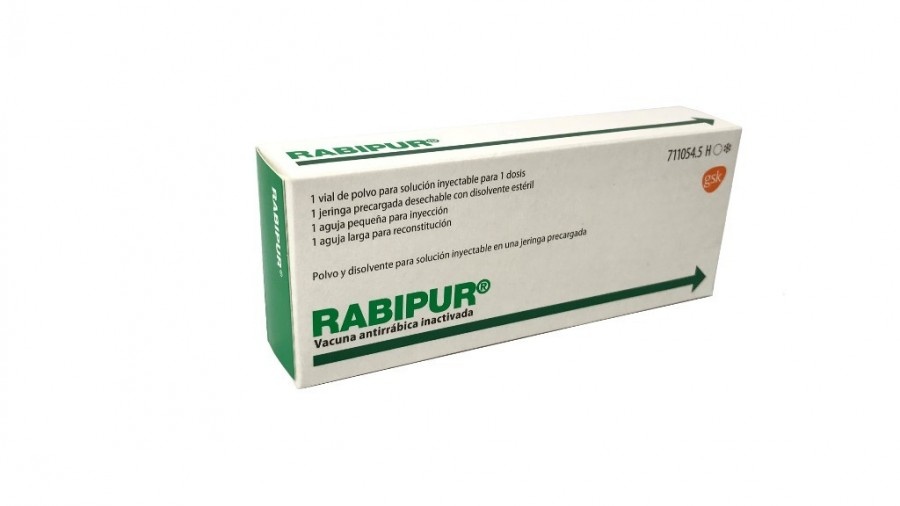
Rabipur se suministra en envases que contienen 1 vial de polvo, 1 jeringa precargada desechable de disolvente estéril con 2 agujas idénticas (calibre 25, 25 mm), una para la reconstitución y otra para la inyección.
Titular de la autorización de comercialización y responsable de la fabricación
Titular de la autorización de comercialización
Bavarian Nordic A/S
Philip Heymans Alle 3
2900 Hellerup
Dinamarca
Responsable de la fabricación
GSK Vaccines GmbH
Emil-von-Behring-Str. 76
35041 Marburg
Alemania
o
Bavarian Nordic A/S
Hejreskovvej 10A
3490 Kvistgaard
Dinamarca
Este medicamento está autorizado en los estados miembros del Espacio Económico Europeo con los siguientes nombres:
Alemania Rabipur
Austria Rabipur
Bélgica Rabipur
Croacia Rabipur
Dinamarca Rabipur
España Rabipur
Francia Rabipur
Hungría Rabipur
Italia Rabipur
Luxemburgo Rabipur
Noruega Rabipur
Países Bajos Rabipur
Polonia Rabipur
Portugal Rabipur
Suecia Rabipur
Fecha de la última revisión de este prospecto: 11/2023
La información detallada y actualizada de este medicamento está disponible en la página Web de la Agencia Española de Medicamentos y Productos Sanitarios (AEMPS) http://www.aemps.gob.es/.
Otras fuentes de información
Esta información está destinada únicamente a profesionales del sector sanitario:
Instrucciones de uso de la jeringa precargada desechable de Rabipur
Jeringa precargada
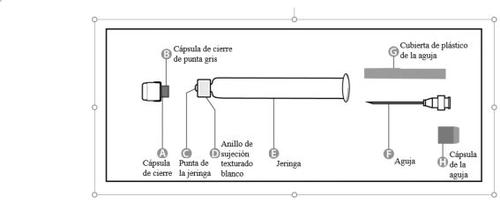
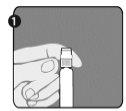
Paso 1: Sujete con una mano la jeringa (E) con la cápsula de cierre apuntando hacia arriba. Asegúrese de sujetar la jeringa por el anillo de sujeción texturado blanco (D). |
|
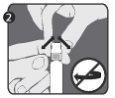
Paso 2:Tome con la otra mano la cápsula de cierre (A) e inclínela firmemente hacia adelante y hacia atrás para romper su conexión con el anillo de sujeción (D). No gire ni doble la cápsula de cierre. |
|
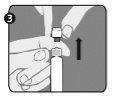
Paso 3:Levante la cápsula de cierre (A) y la cápsula de cierre de la punta gris acoplada (B) para quitarlas. Tenga cuidado de no tocar la punta de la jeringa estéril (C). |
|
Aplicación de la aguja (estas instrucciones son válidas para las dos agujas suministradas):
Paso 1: Gire la cápsula de cierre (H) de una de las dos agujas idénticas para quitarla.Esta será la aguja utilizada para la reconstitución.No quite la cubierta de plástico (G). |
|
Paso 2:Sujete firmemente con una mano la jeringa (E) por el anillo de sujeción texturado blanco (D). Inserte con la otra mano esta aguja (F) y gírela en el sentido de las agujas del reloj hasta que encaje. Una vez bloqueada la aguja, retire su cubierta de plástico (G). La jeringa (E) ya está lista para su uso. |
|
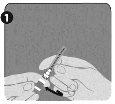
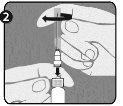
Instrucciones para la reconstitución de Rabipur utilizando la jeringa precargada:
La vacuna debe inspeccionarse visualmente antes y después de la reconstitución para detectar cualquier partícula extraña y/o modificación del aspecto físico. La vacuna no se debe utilizar si se ha detectado cualquier cambio en su aspecto. La vacuna reconstituida es entre transparente y ligeramente opalescente y entre incolora y ligeramente rosa.
El polvo para solución se debe reconstituir con el disolvente para solución suministrado, agitando la mezcla con cuidado antes de la inyección. La vacuna reconstituida se debe utilizar inmediatamente.
Durante la fabricación, el vial está sellado al vacío. Por lo tanto, a fin de evitar problemas al extraer la vacuna reconstituida del vial, después de la reconstitución de la vacuna, se recomienda desenroscar la jeringa de la aguja para eliminar la presión negativa. Después de esto, la vacuna se puede extraer fácilmente del vial. No se recomienda inducir una presión excesiva, puesto que el exceso de presurización creará problemas en la extracción de la cantidad adecuada de vacuna.
La longitud de la aguja no es suficiente para alcanzar el fondo del vial, por lo que es necesario invertir el vial y tirar hacia atrás de la aguja hasta acercarla al tapón. Esto permitirá extraer la totalidad de la solución vacunal del vial.
Tras finalizar la reconstitución de la vacuna, retire la cápsula de cierre de la segunda aguja (tal como se explicó en el paso 1 para las agujas) y sustituya la aguja utilizada para la reconstitución por la segunda aguja, que se usará para la administración. No utilice la misma aguja para la reconstitución y para la administración.
-

- País de registro
- Forma farmacéuticaINYECTABLE, Mayor o igual que 2,5 UI
- Código ATCJ07BG01
- Principio activo
- Requiere recetaSí
- Fabricante
- Esta información es de carácter general y no sustituye la consulta con un profesional sanitario.
- Alternativas a RABIPUR POLVO Y DISOLVENTE PARA SOLUCION INYECTABLE EN JERINGA PRECARGADAForma farmacéutica: INYECTABLE, 3.25 IUPrincipio activo: rabies, inactivated, whole virusFabricante: Sanofi Winthrop IndustrieRequiere recetaForma farmacéutica: INYECTABLE, 60 microgramos/dosis + 60 microgramos/dosisPrincipio activo: respiratory syncytial virus vaccinesFabricante: Pfizer Europe Ma EeigRequiere recetaForma farmacéutica: INYECTABLE, 3,75 microgramosPrincipio activo: influenza, inactivated, split virus or surface antigenFabricante: Glaxosmithkline BiologicalsRequiere receta

Médicos online para RABIPUR POLVO Y DISOLVENTE PARA SOLUCION INYECTABLE EN JERINGA PRECARGADA
Comenta la dosis, los posibles efectos secundarios, interacciones, contraindicaciones o la revisión de receta de RABIPUR POLVO Y DISOLVENTE PARA SOLUCION INYECTABLE EN JERINGA PRECARGADA, sujeto a valoración médica y a la normativa local.









Obtén una receta de RABIPUR POLVO Y DISOLVENTE PARA SOLUCION INYECTABLE EN JERINGA PRECARGADA online
Rellena un formulario de 2 minutos
Cuéntanos tus síntomas, historial y el medicamento que necesitas.
Elige un médico o nosotros te asignamos uno
Escoge un especialista o te conectamos con el próximo médico disponible.
El médico revisa tu caso
Normalmente en 30 minutos. Puede hacerte preguntas adicionales por chat.
Recógela en cualquier farmacia
Receta electrónica enviada a tu correo, válida en toda España.
Preguntas frecuentes
RABIPUR POLVO Y DISOLVENTE PARA SOLUCION INYECTABLE EN JERINGA PRECARGADA requires receta en España. Puedes confirmarlo con un médico online según tu caso.
El principio activo de RABIPUR POLVO Y DISOLVENTE PARA SOLUCION INYECTABLE EN JERINGA PRECARGADA es rabies, inactivated, whole virus. Esta información ayuda a identificar medicamentos con la misma composición pero con diferentes nombres comerciales.
RABIPUR POLVO Y DISOLVENTE PARA SOLUCION INYECTABLE EN JERINGA PRECARGADA es fabricado por Bavarian Nordic A/S. La marca y el envase pueden variar según el distribuidor.
Los Médicos de familia, Psiquiatras, Dermatólogos, Cardiólogos, Endocrinólogos, Gastroenterólogos, Neumólogos, Nefrólogos, Reumatólogos, Hematólogos, Infectólogos, Alergólogos, Geriatras, Pediatras, Oncólogos pueden valorar la prescripción de RABIPUR POLVO Y DISOLVENTE PARA SOLUCION INYECTABLE EN JERINGA PRECARGADA cuando esté clínicamente indicado. Puedes reservar una videoconsulta para comentar tu caso y las opciones de tratamiento.
España cuenta con una infraestructura sanitaria bien desarrollada en ciudades principales como Madrid, Barcelona, Valencia y Sevilla. Las farmacias están ampliamente disponibles y operan bajo estrictas regulaciones, garantizando el acceso a medicamentos con receta.
Puedes comprar RABIPUR POLVO Y DISOLVENTE PARA SOLUCION INYECTABLE EN JERINGA PRECARGADA en Madrid, Barcelona, Sevilla o Valencia en cualquier farmacia local con una receta válida.
Para obtener una receta, puedes utilizar Oladoctor:
Otros medicamentos con el mismo principio activo (rabies, inactivated, whole virus) incluyen VERORAB POLVO Y DISOLVENTE PARA SUSPENSION INYECTABLE EN JERINGA PRECARGADA. VACUNA ANTIRRABICA, INACTIVADA, ABRYSVO POLVO Y DISOLVENTE PARA SOLUCION INYECTABLE, ADJUPANRIX 3,75 microgramos EMULSION Y SUSPENSION PARA EMULSION INYECTABLE. Pueden tener diferentes nombres comerciales o formulaciones, pero contienen el mismo componente terapéutico. Consulta siempre con un médico antes de cambiar o iniciar un nuevo medicamento.
