






Cómo usar PROPALGINA PLUS POLVO PARA SOLUCIÓN ORAL
Traducción generada por IA
Este contenido ha sido traducido automáticamente y se ofrece solo con fines informativos. No sustituye la consulta con un profesional sanitario.
Ver originalContenido del prospecto
Introducción
Prospecto: información para el usuario
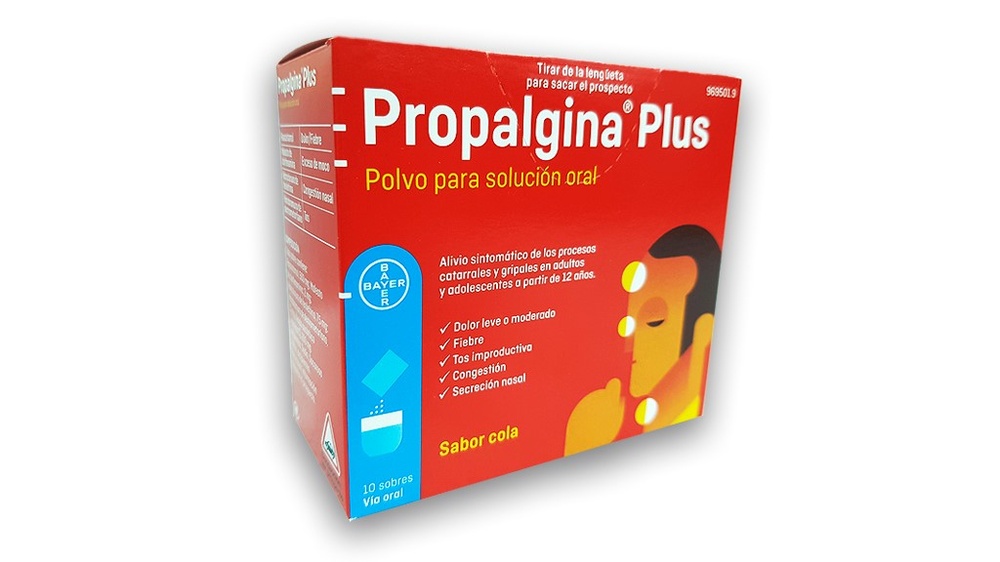
Propalgina Plus polvo para solución oral
Paracetamol/ Clorfenamina maleato/ Fenilefrina hidrocloruro/
Dextrometorfano hidrobromuro/ Ácido ascórbico
Lea todo el prospecto detenidamente antes de empezar a tomar este medicamento, porque contiene información importante para usted.
Siga exactamente las instrucciones de administración del medicamento contenidas en este prospecto o las indicadas por su médico o farmacéutico.
- Conserve este prospecto, ya que puede tener que volver a leerlo.
- Si necesita consejo o más información, consulte a su farmacéutico.
- Si experimenta efectos adversos, consulte a su médico o farmacéutico, incluso si se trata de efectos adversos que no aparecen en este prospecto. Ver sección 4.
- Debe consultar a un médico si empeora o no mejora después de 3 días de tratamiento, en el caso de fiebre, o 5 días, en el caso de dolor.
Contenido del prospecto
- Qué es Propalgina Plus y para qué se utiliza
- Qué necesita saber antes de empezar a tomar Propalgina Plus
- Cómo tomar Propalgina Plus
- Posibles efectos adversos
- Conservación de Propalgina Plus
- Contenido del envase e información adicional
1. Qué es Propalgina Plus y para qué se utiliza
Se trata de una asociación de paracetamol, eficaz para reducir el dolor y la fiebre; dextrometorfano, que inhibe el reflejo de la tos; clorfenamina, que es un antihistamínico, con efecto secante de la mucosa de la nariz; fenilefrina, que es un descongestivo nasal, y vitamina C.
Este medicamento está indicado para el alivio sintomático de los procesos catarrales y gripales que cursen con dolor leve o moderado, fiebre, tos improductiva, congestión y secreción nasal, en adultos y adolescentes a partir de 12 años.
Debe consultar a un médico si empeora o si no mejora después de 3 días de tratamiento, en el caso de fiebre, o 5 días, en el caso de dolor.

2. Qué necesita saber antes de empezar a tomar Propalgina Plus
No tome Propalgina Plus
- Si es alérgico a paracetamol, clorfenamina maleato, fenilefrina hidrocloruro, hidrobromuro de dextrometorfano, vitamina C (ácido ascórbico), a la tartrazina o a cualquiera de los demás componentes de este medicamento (incluidos en el apartado 6.). Pueden aparecer reacciones de hipersensibilidad cruzada en aquellos pacientes sensibles a otros antihistamínicos o aminas simpaticomiméticas.
- Si padece depresión respiratoria (respiración débil).
- Niños menores de 12 años.
- Si tiene una enfermedad grave en los pulmones.
- Si tiene tos asmática.
- Si padece asma.
- Si tiene tos acompañada de abundantes secreciones.
- Si está en tratamiento, o lo ha estado durante las 2 semanas anteriores, con algún medicamento inhibidor de la monoaminooxidasa (IMAO), utilizado para el tratamiento de la depresión o para la enfermedad de Parkinson u otras enfermedades, o si está en tratamiento con inhibidores de la recaptación de serotonina (SSRI). (Ver apartado Uso de otros medicamentos).
- Si padece insuficiencia renal o hepática grave.
- Si padece insuficiencia cardiovascular o cardiopatía isquémica (angina de pecho, infarto de miocardio).
- Si padece neumonía.
- Si padece insuficiencia respiratoria.
- Si padece hipertensión arterial (tensión arterial alta).
- Si padece hipertiroidismo (aumento de la actividad de la glándula tiroides).
- Si padece glaucoma (aumento de la tensión del ojo).
- Si padece obstrucción del cuello vesical (obstrucción de la vejiga) o retención urinaria.
- Si se encuentra en tratamiento de terapia conjunta con anticoagulantes orales (medicamentos para evitar los coágulos en sangre).
- Si padece urolitiasis oxálica (formación de cálculos de oxalato en el aparato urinario) o hiperoxaluria (concentración de ácido oxálico u oxalatos en orina más alta de lo normal).
- Si tiene o ha tenido nefrolitiasis (cálculos renales).
- Si padece hemocromatosis (enfermedad en la que se acumula un exceso de hierro en el organismo).
Advertencias y precauciones
- No tomar más cantidad de medicamento que la recomendada en el apartado 3. Cómo tomar Propalgina Plus.
- Los alcohólicos crónicos deberán tener la precaución de no tomar más de 4 sobres de este medicamento en 24 horas.
- Cuando se está en tratamiento para la epilepsia, hay que consultar al médico antes de tomar este medicamento, debido a que cuando se usan al mismo tiempo, se disminuye la eficacia y se potencia la toxicidad hepática del paracetamol.
- Debe evitarse el uso simultáneo de este medicamento con otros medicamentos que contengan paracetamol, ya que las dosis altas pueden dar lugar a daño en el hígado. No use más de un medicamento que contenga paracetamol sin consultar al médico.
- Evitar la toma de este medicamento con bebidas alcohólicas.
- Los pacientes sensibles a un antihistamínico pueden ser sensibles a otros.
- Si observa enrojecimiento en la piel, erupción, ampollas o descamación, interrumpa el tratamiento y consulte con su médico.
Este medicamento puede provocar dependencia. Por lo tanto, el tratamiento debe ser de corta duración.
Deben consultar al médico antes de utilizar este medicamento los pacientes:
- con enfermedades del riñón, del hígado, del corazón o del pulmón y los pacientes con anemia,
- asmáticos sensibles al ácido acetilsalicílico o a otros medicamentos antiinflamatorios no esteroideos (AINE),
- con síndrome de Gilbert (alteración hereditaria caracterizada por un alto nivel de bilirrubina),
- en caso de déficit de glucosa-6-fosfato deshidrogenasa (G6PD) (puede provocar anemia hemolítica),con enfermedades genéticas del hígado,
- con tos persistente o crónica, como la debida al tabaco. Especialmente en los niños, la tos crónica podría ser un síntoma temprano de asma,
- con dermatitis atópica (enfermedad inflamatoria de la piel caracterizada por eritema, picor, exudación, costras y descamación, que comienza en la infancia en individuos con predisposición alérgica hereditaria),
- que están sedados, debilitados o encamados.
- Consulte a su médico o farmacéutico si padece alguna de las siguientes enfermedades: feocromocitoma (tumor raro que provocan aumento de la producción hormonal), enfermedades cardiovasculares, diabetes mellitus, hipertrofia prostática (agrandamiento de la próstata), pancreatitis (inflamación del páncreas), obstrucción píloroduodenal (obstrucción intestinal), enfermedades del tiroides, enfermedades pulmonares y renales y anemia, ya que la fenilefrina puede agravar la enfermedad e interaccionar con medicamentos empleados habitualmente para tratarlas.
- Los pacientes en tratamiento con antidepresivos tricíclicos, maprotilina u otros medicamentos con acción anticolinérgica (medicamentos usados en el alivio de espasmos o contracciones de estómago, intestino y vejiga), tienen que informar lo antes posible a su médico o farmacéutico cuando, durante el tratamiento con Propalgina Plus, le surjan problemas de estómago, ya que se les podría producir íleo paralítico (obstrucción intestinal).
- Las personas ancianas pueden ser más susceptibles a padecer los efectos adversos de este medicamento, incluso a la dosis usual para adultos.
- Si usted está tomando otros medicamentos como antidepresivos o antipsicóticos, Propalgina Plus puede interactuar con estos medicamentos y es posible que experimente cambios en su estado mental (p. ej. agitación, alucinaciones, coma) y otros efectos como temperatura corporal superior a los 38º C, aumento de la frecuencia cardíaca, hipertensión arterial y exageración de los reflejos, rigidez muscular, falta de coordinación y/o síntomas gastrointestinales (p. ej., náuseas, vómitos y diarrea).
Durante el tratamiento con Propalgina Plus, informe inmediatamente a su médico si tiene enfermedades graves, como insuficiencia renal grave o sepsis (cuando las bacterias y sus toxinas circulan en la sangre, lo que provoca daños en los órganos), o si padece malnutrición, alcoholismo crónico o si también está tomando flucloxacilina (un antibiótico). Se ha notificado una enfermedad grave denominada acidosis metabólica (una anomalía en la sangre y los líquidos) en pacientes en estas situaciones cuando se utiliza paracetamol a dosis regulares durante un período prolongado o cuando se toma paracetamol junto con flucloxacilina. Los síntomas de acidosis metabólica pueden incluir: dificultad respiratoria grave con respiración profunda y rápida, somnolencia, sensación de malestar (náuseas) y vómitos.
Se han producido casos de abuso con medicamentos que contienen dextrometorfano en adolescentes; por lo tanto, deberá tenerse en cuenta esta posibilidad, debido a que pueden ocasionarse efectos adversos graves (ver apartado Si toma más Propalgina Plus de la que debiera).
Niños y adolescentes
Los niños menores de 12 años no pueden tomar este medicamento, está contraindicado en ellos.
Interferencias con pruebas analíticas:
Si le van a hacer alguna prueba analítica (incluidos análisis de sangre, orina, etc.…) comunique a su médico que está tomando este medicamento, ya que puede alterar los resultados.
Toma de Propalgina Plus con otros medicamentos
Informe a su médico o farmacéutico si está utilizando, ha utilizado recientemente o podría tener que utilizar cualquier otro medicamento.
En particular, si está utilizando algunos de los siguientes medicamentos, ya que puede ser necesario modificar la dosis de algunos de ellos o la interrupción del tratamiento:
- Medicamentos para evitar los coágulos en la sangre: Anticoagulantes orales (warfarina, acenocumarol, fenitoína).
- Medicamentos para tratar la epilepsia: Antiepilépticos (lamotrigina, fenitoína u otras hidantoínas, fenobarbital, metilfenobarbital, primidona, carbamazepina).
- Medicamentos usados en el alivio de espasmos o contracciones de estómago, intestino y vejiga: Anticolinérgicos (propantelina).
- Medicamentos para tratar la tuberculosis: Antituberculosos (isoniazida, rifampicina).
- Medicamentos para tratar la depresión y las convulsiones: Barbitúricos utilizados como hipnóticos, sedantes y anticonvulsivantes.
- Medicamentos antidepresivos tricíclicos (maprotilina), tetracíclicos (utilizados para tratar trastornos depresivos secundarios en pacientes alcohólicos) y antidepresivos inhibidores de la recaptación de la serotonina (paroxetina, fluoxetina).
- Medicamentos utilizados para disminuir los niveles de colesterol en sangre: Colestiramina.
- Medicamentos utilizados para el tratamiento de la gota: Antigotosos (probenecid y sulfinpirazona).
- Tetraciclina (utilizado para tratar las infecciones por bacterias).
- Algunos medicamentos utilizados para aumentar la eliminación de orina (diuréticos del asa como los del grupo furosemida).
- Medicamentos Antihipertensivos (utilizados para tratar la tensión arterial alta): Alcaloides de la rauwolfia y medicamentos con mecanismo de acción relacionado con el sistema nervioso simpático (como el Propanolol también utilizado en las alteraciones del ritmo del corazón (arritmias cardíacas)).
- Medicamentos utilizados para el corazón: Glucósidos digitálicos y antiarrítmicos.
- Medicamentos utilizados para evitar náuseas y vómitos: Metoclopramida y domperidona o tropisetron y granisetron (utilizados en quimioterapia).
- Tampoco debe utilizarse con otros analgésicos, como el ácido acetilsalicílico (medicamentos que disminuyen el dolor) sin consultar con el médico.
- Inhibidores de la monoaminooxidasa (IMAO), que se utilizan para el tratamiento de la depresión (tranilcipromina, moclobemida) o para la enfermedad del Parkinson (selegilina), furazolidona o linezolid (antibacteriano) y procarbazina (utilizado para tratar el cáncer). Se pueden producir efectos adversos graves que se manifiesten como dolor fuerte de cabeza, elevación de la tensión arterial y elevación brusca de la temperatura, mareo, palpitaciones, contracciones en los músculos y coma, entre otros síntomas. Si ha tomado uno de estos medicamentos, espere un mínimo de 15 días antes de tomar Propalgina Plus. Si no está seguro de si su medicación contiene un fármaco IMAO, consulte a su médico o farmacéutico antes de tomar Propalgina Plus.
- Bloqueantes alfa-adrenérgicos (medicamentos para la migraña u otros para el parto, la tensión arterial u otras enfermedades).
- Bloqueantes beta-adrenérgicos (para la tensión y otras dolencias).
- Anestésicos generales.
- Atropina sulfato (para el corazón o enfermedades de la digestión).
- Cafeína (utilizado para tratar el cansancio, la falta de vigor, somnolencia, dolor de cabeza, etc.).
- Hormonas tiroideas (utilizadas para tratar el bocio).
- Indometacina (medicamento utilizado para reducir la inflamación y el dolor).
- Bromocriptina (medicamento utilizado para tratar enfermedades como Parkinson, síndrome de abstención a la cocaína, alteraciones menstruales como amenorrea (sin menstruación), etc.).
- Medicamentos ototóxicos (medicamentos que pueden dañar el oído), como algunos antibióticos (aminoglucósidos) y los antitumorales (la bleomicina y el cis-platino).
- Medicamentos fotosensibilizantes (medicamentos que pueden provocar reacciones de fotosensibilidad a la luz), como algunos antidepresivos, antibióticos (sulfamidas), algunos diuréticos, etc.
- Anticonceptivos orales con estrógenos.
- Deferoxamina (medicamento utilizado para eliminar el exceso de hierro del cuerpo).
- Ciclosporina (medicamento utilizado para ayudar al cuerpo a aceptar un órgano (tal como riñón, hígado y corazón) que ha sido trasplantado).
- Antiinflamatorios (celecoxib, parecoxib. valdecoxib).
- Inhibidores de la CYP2D6 (utilizados para tratar alteraciones psíquicas), como el Haloperidol.
- Medicamentos que producen depresión (sedación o un efecto más profundo) sobre el sistema nervioso central (como los utilizados para tratar el insomnio o la ansiedad o los antihistamínicos, algunos de ellos se pueden utilizar para tratar la enfermedad de Parkinson).
- Amiodarona y quinidina (para tratar las arritmias del corazón).
- Sibutramina (utilizado para tratar la obesidad).
- Bupropión (utilizado para dejar de fumar).
- Expectorantes y mucolíticos (utilizados para eliminar flemas y mocos).
- Flucloxacilina (antiobiótico), debido a un riesgo grave de alteración de la sangre y los fluidos (denominada acidosis metabólica) que debe recibir un tratamiento urgente(ver sección 2).
Toma de Propalgina Plus con alimentos, bebidas y alcohol

No se deben consumir bebidas alcohólicas durante el tratamiento, porque pueden provocar efectos adversos.
No tomar conjuntamente con zumo de pomelo, o de naranja amarga, porque pueden aumentar los efectos adversos de este medicamento.
La toma de este medicamento con alimentos, excepto los anteriormente citados, no afecta a la eficacia del mismo.
Embarazo, Lactancia y Fertilidad
Si está embarazada o en periodo de lactancia, o cree que podría estar embarazada o tiene intención de quedarse embarazada, consulte a su médico o farmacéutico antes de utilizar este medicamento.
Propalgina Plus no se debe tomar durante el embarazo ni durante el periodo de lactancia, a no ser que su médico se lo recete.
Conducción y uso de máquinas
La influencia de Propalgina Plus sobre la capacidad para conducir y utilizar máquinas es moderada. Este medicamento puede provocar somnolencia o sedación, por lo que, si notase estos síntomas, no deberá conducir ni manejar máquinas.
Propalgina Plus contiene sacarosa y sodio
Este medicamento contiene sacarosa. Si su médico le ha indicado que padece una intolerancia a ciertos azúcares, consulte con él antes de tomar este medicamento.
Los pacientes con diabetes mellitus deben tener en cuenta que este medicamento contiene 3,67 g de sacarosa por sobre.
Este medicamento contiene 34,44 mg de sodio (componente principal de la sal de mesa/para cocinar) en cada sobre. Esto equivale al 1,7 % de la ingesta máxima diaria de sodio recomendada para un adulto.
3. Cómo tomar Propalgina Plus
Siga exactamente las instrucciones de administración de este medicamento contenidas en este prospecto o las indicadas por su médico o farmacéutico. En caso de duda, pregunte a su médico o farmacéutico.
La dosis recomendada es:
Adultos y adolescentes mayores de 14 años:
Tomar 1 sobre cada 4 a 6 horas (6 a 4 veces al día), según necesidad. En ningún caso se tomarán más de 6 sobres (3 g de paracetamol) en 24 horas. Ver apartado Advertencias y precauciones.
Adolescentes entre 12 y 14 años:Administrar 1 sobre cada 6 horas. En ningún caso se tomarán más de 4 sobres (2 g de paracetamol) en 24 horas.
Pacientes con enfermedades del hígado
Antes de tomar este medicamento tienen que consultar a su médico.
Deben tomar la cantidad de medicamento prescrita por su médico, con un intervalo mínimo entre cada toma de 8h.
No deben tomar más de 3 sobres (1,5 g de paracetamol) en 24 horas, repartidos en 3 tomas.
Pacientes con enfermedades del riñón
Antes de tomar este medicamento tienen que consultar a su médico.
Tomar, como máximo, 1 sobre (0,5 g de paracetamol) por toma.
Según su enfermedad, su médico le indicará si debe tomar su medicamento con un intervalo mínimo de 6 u 8 horas.
Este medicamento se toma por vía oral.
Disolver totalmente el contenido del sobre en un vaso de agua (fría o caliente).
La toma del medicamento con alimentos y bebidas, excepto, zumo de pomelo o de naranja amarga y bebidas alcohólicas, no afecta a la eficacia del mismo.
Tomar siempre la dosis menor que sea efectiva.
La toma del medicamento está supeditada a la aparición de los síntomas gripales o catarrales para los que está indicado este medicamento. A medida que estos desaparezcan, debe suspender el tratamiento.
Si el dolor se mantiene durante más de 5 días, la fiebre durante más de 3 días o bien el dolor o la fiebre empeoran o aparecen otros síntomas, debe interrumpir el tratamiento y consultar a su médico.
Para el dolor de garganta, no se debe tomar el medicamento más de 2 días seguidos sin consultar al médico.
Si toma más Propalgina Plus de la que debe:
Debe consultar inmediatamente a su médico.
Si usted toma más Propalgina Plus de la que debe, puede notar los siguientes síntomas: mareos, vómitos, pérdida de apetito, dolor abdominal, náuseas, ocasionalmente diarrea, coloración amarillenta de la piel y los ojos (ictericia), sudores, malestar general, temor, agitación, excitabilidad, inquietud, nerviosismo, insomnio, psicosis con alucinaciones (visiones o audiciones no presentes), confusión mental, irritabilidad, vértigo, dolor de cabeza, visión borrosa, miosis (contracción de la pupila del ojo), torpeza o inestabilidad, somnolencia intensa, sequedad de boca, nariz o garganta graves, enrojecimiento de la cara, disnea (dificultad al respirar), vasodilatación e hiperventilación, temblores y efectos sobre el sistema cardiovascular como hemorragia cerebral y edema pulmonar, vasoconstricción periférica (reducción del grosor de los vasos sanguíneos), reducción del caudal de sangre a órganos vitales, pudiendo disminuir la perfusión renal, disminución de la cantidad de orina, acidosis metabólica (disminución de la reserva alcalina en sangre), parestesias (alteraciones de la sensibilidad en zonas del cuerpo). En uso prolongado, se puede producir depleción del volumen plasmático (disminución del volumen en sangre).
La toma de cantidades muy altas de este medicamento puede producir en los niños alucinaciones, sopor, erupciones, náuseas, nerviosismo, movimientos involuntarios de los ojos y alteraciones en la forma de andar, entre otros síntomas.
Si toma más Propagina Plus de lo indicado, puede experimentar los siguientes síntomas debidos al dextrometorfano: náuseas y vómitos, contracciones musculares involuntarias, agitación, confusión, somnolencia, trastornos de la consciencia, movimientos oculares involuntarios y rápidos, trastornos cardíacos (aceleración del ritmo cardíaco), trastornos de coordinación, psicosis con alucinaciones visuales e hiperexcitabilidad.
Otros síntomas en caso de sobredosis masiva por dextrometorfano pueden ser: coma, problemas respiratorios graves y convulsiones.
Póngase en contacto con su médico u hospital inmediatamente si experimenta cualquiera de los síntomas mencionados.
A causa del paracetamol, la sobredosis también puede provocar: trastornos de la coagulación (coágulos sanguíneos y hemorragias).
Se han producido casos de abuso con medicamentos como Propalgina Plus, que contienen dextrometorfano, pudiendo aparecer efectos adversos graves como: ansiedad, pánico, pérdida de la memoria, taquicardia (aceleración de los latidos del corazón), letargo, hipertensión o hipotensión (tensión alta o baja), midriasis (dilatación de la pupila del ojo), agitación, vértigo, molestias gastrointestinales, habla farfullante, nistagmo (movimiento incontrolado e involuntario de los ojos), fiebre, taquipnea (respiración superficial y rápida), daño cerebral, ataxia (movimientos descoordinados), convulsiones, depresión respiratoria, pérdida de conciencia, arritmias (latidos irregulares del corazón) y muerte.
Se han documentado síntomas leves tras la retirada de medicamentos como Propalgina Plus, que contienen dextrometorfano, en casos de uso diario y prolongado, como inquietud, dolor muscular y de huesos, insomnio, diarrea, vómitos y escalofríos.
En casos de intoxicación grave, se puede producir estupor o coma (especialmente si se ha ingerido el medicamento junto con dosis de alcohol), insuficiencia hepática y renal.
Si ha ingerido una sobredosis, debe acudir inmediatamente a un centro médico, aunque no note los síntomas, ya que, a menudo, éstos no se manifiestan hasta pasados 3 días desde la ingestión de la sobredosis, incluso en casos de intoxicación grave.
El tratamiento de la sobredosis es más eficaz si se inicia dentro de las 4 horas siguientes a la ingestión del medicamento.
Los pacientes en tratamiento con barbitúricos o los alcohólicos crónicos pueden ser más susceptibles a la toxicidad de una sobredosis de paracetamol.
Se recomienda llevar el envase y el prospecto del medicamento al profesional sanitario.
En caso de sobredosis o ingestión accidental, acudir inmediatamente a un centro médico o llamar al Servicio de Información Toxicológica (teléfono 91 562 04 20), indicando el medicamento y la cantidad ingerida.
Si olvidó tomar Propalgina Plus
Si olvidó tomar Propalgina Plus y los síntomas continúan, no tome una dosis doble para compensar la dosis olvidada. Si es necesario, vuelva a tomar el medicamento de la misma forma que se indica en el apartado 3. Cómo tomar Propalgina Plus.
Si tiene cualquier otra duda sobre el uso de este producto, pregunte a su médico o farmacéutico.

4. Posibles efectos adversos
Al igual que todos los medicamentos, Propalgina Plus puede producir efectos adversos, aunque no todas las personas los sufran.
Efectos adversos raros que pueden afectar hasta 1 de cada 1.000 personas son:
Malestar, hipotensión (disminución de la tensión), niveles aumentados de transaminasas hepáticas (marcadores de la función del hígado).
Efectos adversos muy raros que pueden afectar hasta 1 de cada 10.000 personasson:
Alteraciones en el recuento de células de la sangre (como trombocitopenia, agranulocitosis, leucopenia, neutropenia, anemia hemolítica), piuria estéril (orina turbia), insuficiencia renal, hipoglucemia (disminución de los niveles de glucosa en sangre), reacciones de hipersensibilidad, que oscilan entre una simple erupción cutánea o una urticaria y shock anafiláctico (reacción alérgica muy grave, que puede llegar a producir la muerte), reacciones graves en la piel, hepatotoxicidad (ictericia: coloración amarillenta de piel y ojos).
Debido a los diferentes principios activos de este medicamento, pueden aparecer los siguientes efectos adversos, cuya frecuencia no se ha podido establecer con exactitud:
Mareos, vértigo y somnolencia, dolor de cabeza, inquietud, ansiedad, nerviosismo, debilidad, mareo, temblores, insomnio, irritabilidad, movimientos involuntarios de la cara, temblor, hormigueo o adormecimiento e incluso confusión mental. Con dosis altas pueden producirse convulsiones y psicosis con alucinaciones, torpeza, se puede producir excitación paradójica, especialmente con altas dosis y en niños o ancianos, caracterizada por inquietud, insomnio, temblores, nerviosismo, delirio, palpitaciones e incluso convulsiones; reacciones en la piel como rash, palidez , vello erizado, aumento de la sudoración, enrojecimiento de la piel, dermatitis alérgica, picor y edema (hinchazón), reacciones de hipersensibilidad graves como erupciones pustulosas (con pus) severas generalizadas, brotes, como eritema multiforme, síndrome de Stevens-Johnson (enfermedad inflamatoria aguda), necrólisis epidérmica tóxica (enfermedad cutánea grave caracterizada por la aparición de ampollas); efectos que afectan al sistema respiratorio, como sequedad de nariz y garganta, espesamiento de las mucosidades, sibilancias (ruido en los pulmones), broncoespasmo (estrechamiento de los bronquios) y asma incluyendo el síndrome de asma analgésico o edema pulmonar (acumulación de líquido en los pulmones), a dosis elevadas, generalmente, o en individuos susceptibles; reacciones de hipersensibilidad (alérgicas), como tos, dificultad para tragar, latidos rápidos, hinchazón de párpados o alrededor de los ojos, cara, lengua, dificultad para respirar, cansancio, sarpullidos, angioedema alérgico (hinchazón que se presenta bajo la piel), fotosensibilidad (sensibilización a la luz del sol), sensibilidad cruzada con medicamentos relacionados con la clorfenamina, etc; molestias gastrointestinales como náuseas, vómitos, diarrea, dolor abdominal, estreñimiento, molestias de estómago, como dolor en la parte superior del estómago y calambres en el estómago, sequedad de boca, pérdida de apetito, alteraciones del gusto u olfato; efectos adversos en el hígado, como colestasis (disminución del flujo de la bilis), insuficiencia hepática, hepatitis, fallo hepático dependiente de la dosis; la administración crónica puede llevar a fibrosis hepática y cirrosis, que pueden llevar a resultados letales; efectos adversos en el riñón, especialmente en casos de sobredosis, como reducción de la cantidad de orina, retención urinaria o dificultad al orinar. Por su contenido en vitamina C, existe riesgo de formación de cálculos en las vías urinarias o ataques de gota en individuos predispuestos; trastornos cardiacos, como infarto de miocardio, taquicardias, dolor en el pecho o malestar, bradicardia grave (latidos del corazón muy lentos), posible inducción o exacerbación de una insuficiencia cardiaca asociada a una enfermedad cardiaca; trastornos vasculares, como hemorragia cerebral, hipertensión e hipotensión (tensión alta o baja), vasoconstricción periférica (reducción del grosor de los vasos sanguíneos); frío en las extremidades, rubor; en uso prolongado se puede producir disminución del volumen en sangre; trastornos en el metabolismo, como hiperglucemia (subida de azúcar en sangre), hipocaliemia (niveles bajos de Potasio en sangre) y acidosis metabólica (se produce cuando el cuerpo produce demasiado ácido o los riñones no eliminan el suficiente ácido del cuerpo); trastornos de la visión, como visión borrosa o visión doble; alteraciones en el oído, como zumbido en los oídos o inflamación e irritación del oído; también se han notificado impotencia o alteraciones menstruales.
Efectos adversos de frecuencia no conocida (no puede estimarse a partir de los datos disponibles) son:
Enfermedad grave que puede hacer que la sangre sea más ácida (denominada acidosis metabólica) en pacientes con enfermedad grave que utilizan paracetamol (ver sección 2).
Si experimenta efectos adversos, consulte a su médico o farmacéutico, incluso si se trata de efectos adversos que no aparecen en este prospecto.
Comunicación de efectos adversos:
Si experimenta cualquier tipo de efecto adverso, consulte a su médico o farmacéutico, incluso si se trata de posibles efectos adversos que no aparecen en este prospecto. También puede comunicarlos directamente a través del Sistema Español de Farmacovigilancia de Medicamentos de Uso Humano: https://www.notificaram.es. Mediante la comunicación de efectos adversos usted puede contribuir a proporcionar más información sobre la seguridad de este medicamento.
5. Conservación de Propalgina Plus
Mantener fuera de la vista y del alcance de los niños.
No requiere condiciones especiales de conservación.
No utilice Propalgina Plus después de la fecha de caducidad que aparece en el envase después de CAD. La fecha de caducidad es el último día del mes que se indica.
Los medicamentos no se deben tirar por los desagües ni a la basura. Deposite los envases y los medicamentos que no necesita en el Punto SIGRE de la farmacia. En caso de duda, pregunte a su farmacéutico cómo deshacerse de los envases y de los medicamentos que no necesita. De esta forma, ayudará a proteger el medio ambiente.
6. Contenido del envase e información adicional.
Composición de Propalgina Plus
- Los principios activos son: 500 mg de paracetamol, 10 mg de dextrometorfano hidrobromuro, 2 mg de clorfenamina maleato, 7,5 mg de fenilefrina hidrocloruro y 200 mg de ácido ascórbico.
- Los demás componentes (excipientes) son: sacarina sódica, ciclamato de sodio, ácido cítrico anhidro, manitol (E-421), sacarosa, edetato de disodio, sílice coloidal anhidra, povidona y aroma-colorante de cola.
Aspecto del producto y contenido del envase
Propalgina Plus es un granulado uniforme, de color amarillento-rosado.
Propalgina Plus se presenta en sobres compuestos de Papel/Aluminio/Polietileno.
Se presenta en estuches de cartón que contienen 10 ó 20 sobres.
Puede que no todos los tamaños de envase estén comercializados.
Titular de la autorización de comercialización y responsable de la fabricación
Titular de la autorización de comercialización
BAYER HISPANIA, S.L.
Av. Baix Llobregat, 3 – 5
08970 Sant Joan Despí (Barcelona)
España
Responsable de la fabricación
Bayer Bitterfeld GmbH
OT Greppin
Salegaster Chaussee 1
06803 Bitterfeld-Wolfen
Alemania
Fecha de la última revisión de este prospecto:Marzo 2025
La información detallada y actualizada de este medicamento está disponible en la página web de la Agencia Española de Medicamentos y Productos Sanitarios (AEMPS) http://www.aemps.gob.es.
-

- País de registro
- Forma farmacéuticaSOLUCIÓN/SUSPENSIÓN ORAL, -
- Código ATCN02BE51
- Principio activo
- Requiere recetaNo
- Fabricante
- Esta información es de carácter general y no sustituye la consulta con un profesional sanitario.
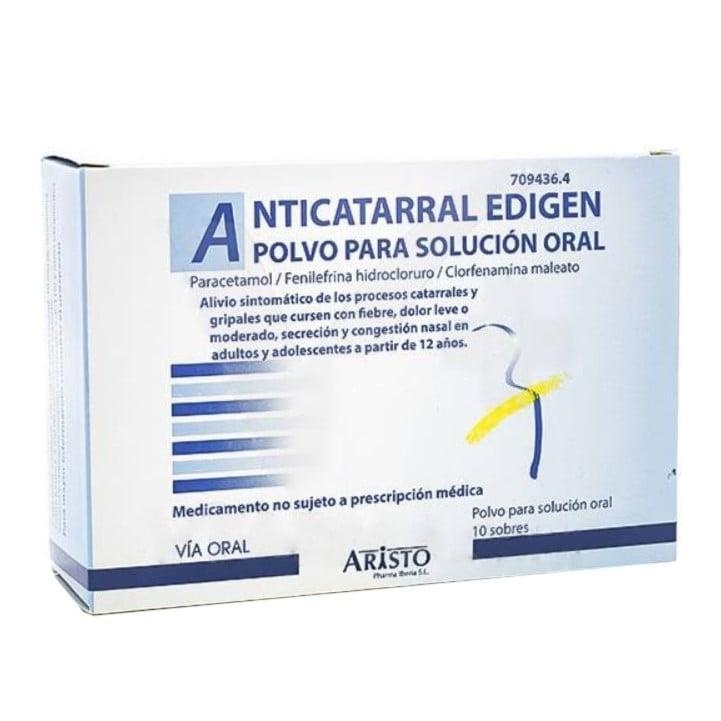
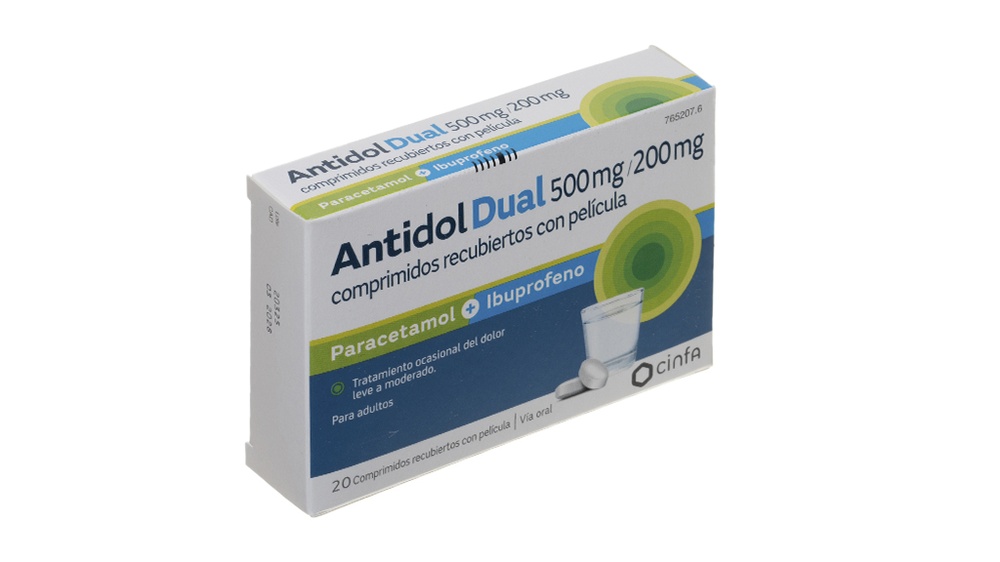
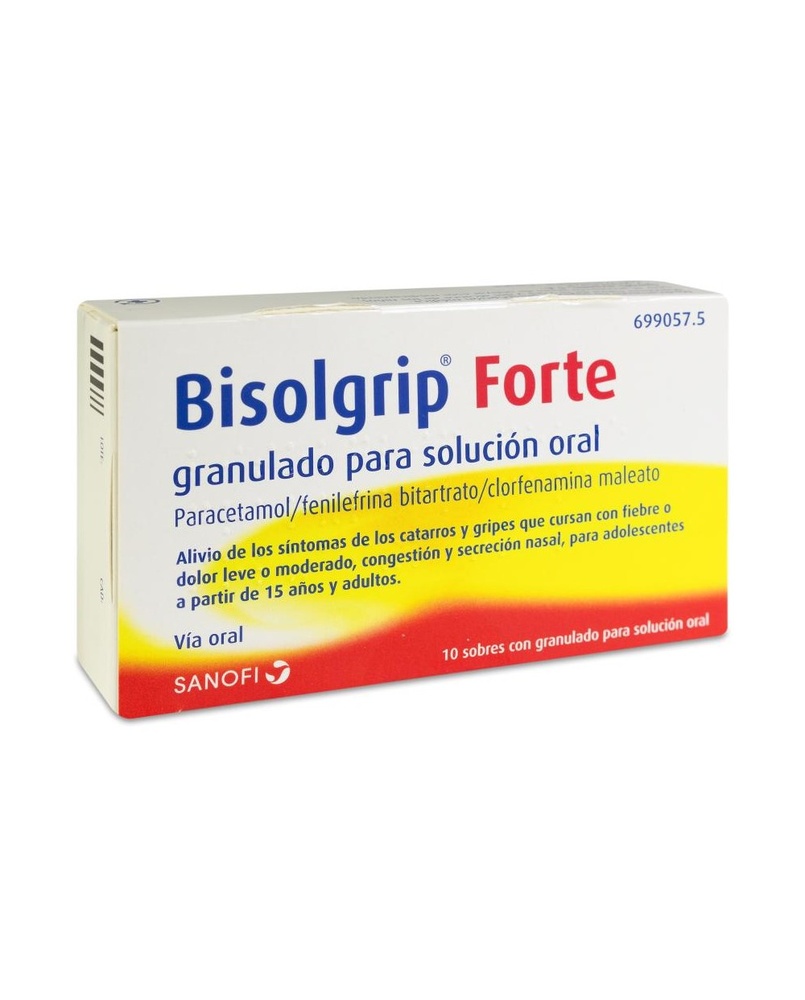
- Alternativas a PROPALGINA PLUS POLVO PARA SOLUCIÓN ORALForma farmacéutica: SOLUCIÓN/SUSPENSIÓN ORAL, 500 mg; 4 mg ; 10 mgPrincipio activo: paracetamol, combinations excl. psycholepticsFabricante: Aristo Pharma Iberia S.L.No requiere recetaForma farmacéutica: COMPRIMIDO, 500 mg/200 mgPrincipio activo: paracetamol, combinations excl. psycholepticsFabricante: Laboratorios Cinfa S.A.No requiere recetaForma farmacéutica: SOLUCIÓN/SUSPENSIÓN ORAL, 650 mg/2,8 mg/8,21 mgPrincipio activo: paracetamol, combinations excl. psycholepticsFabricante: Opella Healthcare Spain S.L.No requiere receta
Médicos online para PROPALGINA PLUS POLVO PARA SOLUCIÓN ORAL
Comenta la dosis, los posibles efectos secundarios, interacciones, contraindicaciones o la revisión de receta de PROPALGINA PLUS POLVO PARA SOLUCIÓN ORAL, sujeto a valoración médica y a la normativa local.









Obtén una receta de PROPALGINA PLUS POLVO PARA SOLUCIÓN ORAL online
Rellena un formulario de 2 minutos
Cuéntanos tus síntomas, historial y el medicamento que necesitas.
Elige un médico o nosotros te asignamos uno
Escoge un especialista o te conectamos con el próximo médico disponible.
El médico revisa tu caso
Normalmente en 30 minutos. Puede hacerte preguntas adicionales por chat.
Recógela en cualquier farmacia
Receta electrónica enviada a tu correo, válida en toda España.
Preguntas frecuentes
PROPALGINA PLUS POLVO PARA SOLUCIÓN ORAL does not require receta en España. Puedes confirmarlo con un médico online según tu caso.
El principio activo de PROPALGINA PLUS POLVO PARA SOLUCIÓN ORAL es paracetamol, combinations excl. psycholeptics. Esta información ayuda a identificar medicamentos con la misma composición pero con diferentes nombres comerciales.
PROPALGINA PLUS POLVO PARA SOLUCIÓN ORAL es fabricado por Bayer Hispania S.L.. La marca y el envase pueden variar según el distribuidor.
Los Médicos de familia, Psiquiatras, Dermatólogos, Cardiólogos, Endocrinólogos, Gastroenterólogos, Neumólogos, Nefrólogos, Reumatólogos, Hematólogos, Infectólogos, Alergólogos, Geriatras, Pediatras, Oncólogos pueden valorar la prescripción de PROPALGINA PLUS POLVO PARA SOLUCIÓN ORAL cuando esté clínicamente indicado. Puedes reservar una videoconsulta para comentar tu caso y las opciones de tratamiento.
España cuenta con una infraestructura sanitaria bien desarrollada en ciudades principales como Madrid, Barcelona, Valencia y Sevilla. Las farmacias están ampliamente disponibles y operan bajo estrictas regulaciones, garantizando el acceso a medicamentos con receta.
Puedes comprar PROPALGINA PLUS POLVO PARA SOLUCIÓN ORAL en Madrid, Barcelona, Sevilla o Valencia en cualquier farmacia local con una receta válida.
Para obtener una receta, puedes utilizar Oladoctor:
Otros medicamentos con el mismo principio activo (paracetamol, combinations excl. psycholeptics) incluyen ANTICATARRAL EDIGEN POLVO PARA SOLUCION ORAL, ANTIDOL DUAL 500 MG/200 MG COMPRIMIDOS RECUBIERTOS CON PELÍCULA, BISOLGRIP FORTE GRANULADO PARA SOLUCION ORAL. Pueden tener diferentes nombres comerciales o formulaciones, pero contienen el mismo componente terapéutico. Consulta siempre con un médico antes de cambiar o iniciar un nuevo medicamento.
