


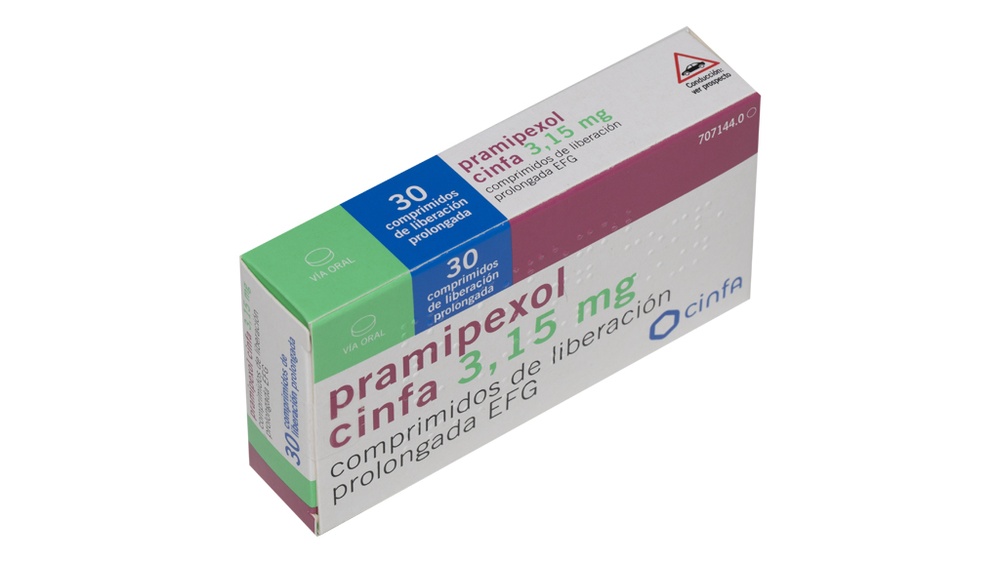
PRAMIPEXOL CINFA 3,15 MG COMPRIMIDOS DE LIBERACION PROLONGADA EFG



Cómo usar PRAMIPEXOL CINFA 3,15 MG COMPRIMIDOS DE LIBERACION PROLONGADA EFG
Traducción generada por IA
Este contenido ha sido traducido automáticamente y se ofrece solo con fines informativos. No sustituye la consulta con un profesional sanitario.
Ver originalContenido del prospecto
Introducción
Prospecto: información para el usuario
Pramipexol cinfa 3,15 mg comprimidos de liberación prolongada EFG
Lea todo el prospecto detenidamente antes de empezar a tomar este medicamento, porque contiene información importante para usted.
- Conserve este prospecto, ya que puede tener que volver a leerlo.- Si tiene alguna duda, consulte a su médico o farmacéutico.
- Este medicamento se le ha recetado solamente a usted, y no debe dárselo a otras personas aunque tengan los mismos síntomas que usted, ya que puede perjudicarles.
- Si experimenta efectos adversos, consulte a su médico o farmacéutico, incluso si se trata de efectos adversos que no aparecen en este prospecto. Ver sección 4.
Contenido del prospecto
- Qué es Pramipexol cinfa y para qué se utiliza
- Qué necesita saber antes de empezar a tomar Pramipexol cinfa
- Cómo tomar Pramipexol cinfa
- Posibles efectos adversos
- Conservación de Pramipexol cinfa
- Contenido del envase e información adicional
1. Qué es Pramipexol cinfa y para qué se utiliza
Pramipexol cinfa contiene el principio activo pramipexol y pertenece a un grupo de medicamentos denominados agonistas dopaminérgicos, que estimulan los receptores de la dopamina en el cerebro. La estimulación de los receptores dopaminérgicos desencadena impulsos nerviosos en el cerebro que ayudan a controlar los movimientos del cuerpo.
Pramipexol se utiliza para tratar los síntomas de la enfermedad de Parkinson idiopática en adultos. Puede utilizarse solo o en combinación con levodopa (otro medicamento para la enfermedad de Parkinson).

2. Qué necesita saber antes de empezar a tomar Pramipexol cinfa
No tome Pramipexol cinfa
- Si es alérgico al pramipexol o a alguno de los demás componentes de este medicamento (incluidos en la sección 6).
Advertencias y precauciones
Consulte a su médico o farmacéutico antes de empezar a tomar Pramipexol cinfa.
Informe a su médico si padece o ha padecido alguna enfermedad o síntoma, especialmente cualquiera de los siguientes:
- Enfermedad del riñón.
- Alucinaciones (ver, oír o sentir cosas que no están presentes). La mayoría de las alucinaciones son visuales.
- Discinesia (p. ej., movimientos involuntarios anormales de las extremidades). Si tiene enfermedad de Parkinson avanzada y también está utilizando levodopa, podría presentar discinesia durante el aumento progresivo de la dosis de pramipexol.
- Distonía (imposibilidad de mantener el tronco y el cuello rectos y erguidos (distonía axial)). En concreto, podría experimentar flexión hacia delante de la cabeza y el cuello (denominada también antecollis), curvatura hacia delante de la zona lumbar (denominada también camptocormia) o curvatura de la espalda hacia los lados (denominada también pleurotótonos o síndrome de Pisa).
- Somnolencia y episodios de sueño repentino.
- Psicosis (p. ej. parecida a los síntomas de esquizofrenia).
- Alteración de la visión. Debe someterse a revisiones oculares periódicas durante el tratamiento con pramipexol.
- Enfermedad grave del corazón o de los vasos sanguíneos. Debe someterse a controles periódicos de la presión sanguínea, especialmente al principio del tratamiento, con el fin de evitar la hipotensión postural (un descenso de la presión de la sangre al ponerse de pie).
Informe a su médico si usted, su familia o cuidadores notan que usted está desarrollando impulsos o ansias de comportarse de forma inusual en usted y que no puede resistirse al impulso, instinto o tentación de llevar a cabo ciertas actividades que pueden dañarle a usted o a otros. Esto se denomina trastorno del control de impulsos y puede incluir comportamientos como adicción al juego, ingesta o gasto excesivo, apetito sexual anormalmente alto o preocupación por un aumento de los pensamientos y sentimientos sexuales. Podría ser necesario que su médico ajuste o interrumpa la dosis.
Informe a su médico si usted, su familia o cuidadores notan que usted está desarrollando manía (agitación, sentirse exaltado o sobreexcitado) o delirio (disminución de la conciencia, confusión, pérdida de contacto con la realidad). Podría ser necesario que su médico ajuste o interrumpa su dosis.
Informe a su médico si nota síntomas como depresión, apatía, ansiedad, fatiga, sudoración o dolor al interrumpir o reducir el tratamiento con pramipexol. Si los problemas persisten más de unas semanas podría ser necesario que su médico ajuste su tratamiento.
Informe a su médico si está notando incapacidad para mantener el tronco y el cuello rectos y erguidos (distonía axial). En este caso, es posible que el médico decida ajustar o modificar su tratamiento.
Pramipexol cinfa comprimidos de liberación prolongada es un comprimido especialmente diseñado del cual se libera gradualmente el principio activo una vez ingerido el comprimido. En ocasiones pueden excretarse y verse en las heces partes de los comprimidos que pueden parecer comprimidos enteros. Informe a su médico si encuentra fragmentos de comprimidos en las heces.
Niños y adolescentes
Pramipexol no está recomendado para uso en niños o adolescentes menores de 18 años.
Toma de Pramipexol cinfa con otros medicamentos
Informe a su médico o farmacéutico si está tomando, ha tomado recientemente o pudiera tener que tomar cualquier otro medicamento. Esto incluye medicamentos, plantas medicinales, alimentos naturales o suplementos nutricionales que haya obtenido sin receta médica.
Debe evitar el uso de pramipexol junto con medicamentos antipsicóticos.
Tenga precaución si está utilizando los siguientes medicamentos:
- cimetidina (para el tratamiento del exceso de ácido y de las úlceras en el estómago)
- amantadina (que puede ser utilizada en el tratamiento de la enfermedad de Parkinson)
- mexiletina (para el tratamiento de latidos del corazón irregulares, una condición conocida como arritmia ventricular)
- zidovudina (que puede ser utilizada para tratar el síndrome de inmunodeficiencia adquirida (SIDA), una enfermedad del sistema inmunológico humano)
- cisplatino (para tratar varios tipos de cánceres)
- quinina (que puede ser utilizada para la prevención de los calambres dolorosos en las piernas que ocurren por la noche y para el tratamiento de un tipo de malaria conocida como malaria falciparum (malaria maligna))
- procainamida (para tratar el latido irregular del corazón).
Si está utilizando levodopa, se recomienda disminuir la dosis de levodopa al iniciar el tratamiento con pramipexol.
Tenga precaución si está utilizando medicamentos tranquilizantes (con efecto sedante) o si bebe alcohol. En estos casos pramipexol puede afectar su capacidad para conducir y manejar maquinaria.
Toma de Pramipexol cinfa con alimentos, bebidas y alcohol
Debe tener precaución si bebe alcohol durante el tratamiento con pramipexol.
Puede tomar pramipexol con o sin alimentos.
Embarazo y lactancia
Si está embarazada o en periodo de lactancia, cree que podría estar embarazada o tiene intención de quedarse embarazada, consulte a su médico o farmacéutico antes de utilizar este medicamento. Su médico le indicará si debe continuar el tratamiento con pramipexol.
No se conoce el efecto de pramipexol sobre el feto. Por lo tanto, no tome pramipexol si está embarazada a menos que su médico se lo indique.
Pramipexol no debe utilizarse durante la lactancia. Pramipexol puede disminuir la producción de leche materna. Además, puede pasar a la leche materna y llegar a su bebé. Si el uso de pramipexol es imprescindible, debe interrumpirse la lactancia.
Consulte a su médico o farmacéutico antes de utilizar cualquier medicamento.
Conducción y uso de máquinas
Pramipexol puede causar alucinaciones (ver, oír o sentir cosas que no están presentes). Si sucede, no conduzca ni maneje máquinas.
Pramipexol puede causar somnolencia y provocarle episodios repentinos de sueño. Si esto sucede, no debe conducir vehículos o realizar actividades en las que una falta de atención pueda suponer un riesgo, ponerle a usted o a los demás en peligro de muerte o daño grave (p. ej. utilización de máquinas), hasta que dichos episodios y/o la somnolencia hayan desaparecido.
3. Cómo tomar Pramipexol cinfa
Siga exactamente las instrucciones de administración de este medicamento indicadas por su médico o farmacéutico. En caso de duda, consulte de nuevo a su médico o farmacéutico. Su médico le indicará la posología correcta.
Tome pramipexol comprimidos de liberación prolongada una vez al día y sobre la misma hora cada día.
Puede tomar pramipexol con o sin alimentos. Los comprimidos deben tragarse enteros con agua.
No mastique, divida o triture los comprimidos de liberación prolongada. Si lo hiciera, existe riesgo de sobredosificación, ya que el medicamento puede liberarse en su cuerpo demasiado rápido.

Durante la primera semana, la dosis diaria habitual es 0,26 mg de pramipexol.
Esta dosis se incrementará cada 5-7 días según las indicaciones de su médico, hasta que sus síntomas estén controlados (dosis de mantenimiento).
Pauta de escalada de dosis de pramipexol comprimidos de liberación prolongada | ||
Semana | Dosis diaria (mg) | Número de comprimidos |
1 | 0,26 | 1 comprimido de liberación prolongada de pramipexol 0,26 mg. |
2 | 0,52 | 1 comprimido de liberación prolongada de pramipexol 0,52 mg, o bien 2 comprimidos de liberación prolongada de pramipexol 0,26 mg. |
3 | 1,05 | 1 comprimido de liberación prolongada de pramipexol 1,05 mg, o bien 2 comprimidos de liberación prolongada de pramipexol 0,52 mg o bien 4 comprimidos de liberación prolongada de pramipexol 0,26 mg |
La dosis recomendada de mantenimiento es 1,05 mg al día. Sin embargo, es posible que haya que aumentar más su dosis. Si fuera necesario, su médico podría aumentar su dosis de comprimidos hasta un máximo de 3,15 mg de pramipexol al día. También es posible reducir la dosis de mantenimiento a un comprimido de liberación prolongada de pramipexol 0,26 mg al día.
Pacientes con enfermedad renal
Si tiene una enfermedad del riñón, su médico le puede aconsejar que tome la dosis recomendada de inicio de 0,26 mg comprimidos de liberación prolongada en días alternos durante la primera semana.
Después, su doctor puede aumentarle la frecuencia de tomas a un comprimido de liberación prolongada de 0,26 mg cada día. Si fuera necesario aumentar más su dosis, su doctor puede ajustarle la dosis en niveles de 0,26 mg de pramipexol.
Si tiene una enfermedad del riñón grave, su doctor puede considerar necesario que cambie a un medicamento con pramipexol diferente. Si durante el tratamiento sus problemas del riñón empeoran, contacte con su doctor lo antes posible.
Si usted está cambiando de Pramipexol comprimidos de liberación inmediata
Su doctor basará su dosis de pramipexol comprimidos de liberación prolongada en la dosis de pramipexol comprimidos de liberación inmediata que estaba tomando.
El día anterior al cambio, tome sus comprimidos de pramipexol liberación inmediata como lo hacía habitualmente. A la mañana siguiente, tome su comprimido de pramipexol liberación prolongada y no tome ningún comprimido más de pramipexol comprimidos de liberación inmediata.
Si toma más Pramipexol cinfa del que debeSi ingiere accidentalmente demasiados comprimidos:
- consulte inmediatamente con su médico o servicio de urgencias del hospital más próximo.
- puede experimentar vómitos, inquietud o cualquiera de los efectos adversos descritos en la sección 4 (Posibles efectos adversos).
En caso de sobredosis o ingestión accidental, consulte inmediatamente a su médico o farmacéutico o llame al Servicio de Información Toxicológica, teléfono 91 562 04 20, indicando el medicamento y la cantidad ingerida.
Si olvidó tomar Pramipexol cinfa
Si olvidó tomar la dosis de pramipexol, pero recuerda tomarla dentro de las 12 horas tras su hora habitual, tome su comprimido y continúe con el próximo comprimido a la hora habitual.
Si olvida tomar la dosis transcurridas más de 12 horas, simplemente tome la siguiente dosis a su hora habitual. No tome una dosis doble para compensar las dosis olvidadas.
Si interrumpe el tratamiento con Pramipexol cinfa
No interrumpa su tratamiento con pramipexol sin consultar antes con su médico. Si debe interrumpir su tratamiento con este medicamento, su médico reducirá su dosis de forma gradual. Así se reduce el riesgo de empeorar los síntomas.
Si tiene la enfermedad de Parkinson no debe interrumpir su tratamiento con pramipexol de forma brusca. Una interrupción repentina puede causar la aparición de un trastorno llamado síndrome neuroléptico maligno que puede representar un riesgo muy importante para la salud. Estos síntomas incluyen:
- acinesia (pérdida de movimiento muscular)
- rigidez muscular
- fiebre
- presión sanguínea inestable
- taquicardia (aumento del ritmo del corazón)
- confusión
- disminución del nivel de conciencia (p. ej. coma).
Si interrumpe el tratamiento o reduce la dosis de pramipexol cinfa también puede sufrir un trastorno médico denominado síndrome de abstinencia a agonistas de la dopamina. Los síntomas incluyen depresión, apatía, ansiedad, cansancio, sudoración o dolor. Si experimenta estos síntomas, debe ponerse en contacto con su médico.
Si tiene cualquier otra duda sobre el uso de este medicamento, pregunte a su médico o farmacéutico.

4. Posibles efectos adversos
Al igual que todos los medicamentos, este medicamento puede producir efectos adversos, aunque no todas las personas los sufran. La clasificación de los efectos adversos se basa en las siguientes frecuencias:
Muy frecuentes | pueden afectar a más de 1 de cada 10 personas |
Frecuentes | pueden afectar hasta 1 de cada 10 personas |
Poco frecuentes | pueden afectar hasta 1 de cada 100 personas |
Raros | pueden afectar hasta 1 de cada 1.000 personas |
Muy raros | pueden afectar hasta 1 de cada 10.000 personas |
Frecuencia no conocida | no puede estimarse a partir de los datos disponibles |
Puede experimentar los siguientes efectos adversos:
Muy frecuentes:
- Discinesia (p. ej. movimientos involuntarios anormales de las extremidades)
- Somnolencia
- Mareo
- Náuseas
Frecuentes:
- Necesidad de comportarse de una forma no habitual
- Alucinaciones (ver, oír o sentir cosas que no están presentes)
- Confusión
- Cansancio (fatiga)
- Insomnio
- Exceso de líquidos, habitualmente en las piernas (edema periférico)
- Dolor de cabeza
- Hipotensión (presión sanguínea baja)
- Sueños anormales
- Estreñimiento
- Alteración de la visión
- Vómitos (ganas de vomitar)
- Pérdida de peso incluyendo pérdida de apetito
Poco frecuentes:
- Paranoia (p. ej. preocupación excesiva por su salud)
- Delusión
- Excesiva somnolencia durante el día y episodios de sueño repentino
- Amnesia (alteración de la memoria)
- Hipercinesia (aumento de los movimientos e incapacidad de mantenerse quieto)
- Aumento de peso
- Reacciones alérgicas (p. ej. erupciones cutáneas, picor, hipersensibilidad)
- Desmayo
- Insuficiencia cardíaca (problemas de corazón que pueden provocar respiración entrecortada o hinchazón de los tobillos)*
- Secreción inadecuada de la hormona antidiurética*
- Inquietud
- Disnea (dificultad para respirar)
- Hipo
- Neumonía (infección de los pulmones)
- Incapacidad de resistir el impulso, instinto o tentación de realizar una acción que puede ser dañina para usted o para otros, pudiendo incluir:
- Fuerte impulso de jugar excesivamente a pesar de las serias consecuencias personales o familiares.*
- Interés sexual alterado o aumentado y comportamiento preocupante para usted o para otros, por ejemplo, aumento del apetito sexual.*
- Compra o gasto excesivo incontrolable.*
- Atracón (ingesta de grandes cantidades de comida en un corto período de tiempo) o ingesta compulsiva (ingesta de más comida de lo normal y más de la necesaria para satisfacer el hambre)*
- Delirio (disminución de la conciencia, confusión, pérdida de contacto con la realidad)
Raros:
- Manía (agitación, sentirse exaltado o sobreexcitado)
Frecuencia no conocida:
- Después de interrumpir o reducir el tratamiento con pramipexol: pueden producirse depresión, apatía, ansiedad, fatiga, sudoración o dolor (lo que se denomina síndrome de abstinencia a agonistas de la dopamina o SAAD).
Informe a su médico si presenta alguno de estos comportamientos; él le explicará la manera de manejar o reducir los síntomas.
Para los efectos adversos señalados con * no es posible disponer de una estimación precisa de la frecuencia, ya que estos efectos adversos no se observaron en ensayos clínicos entre 2.762 pacientes tratados con pramipexol. La categoría de la frecuencia probablemente no es superior a “poco frecuente”.
Comunicación de efectos adversos
Si experimenta cualquier tipo de efecto adverso, consulte a su médico o farmacéutico, incluso si se trata de posibles efectos adversos que no aparecen en este prospecto. También puede comunicarlos directamente a través del Sistema Español de Farmacovigilancia de Medicamentos de Uso Humano: https://www.notificaram.es. Mediante la comunicación de efectos adversos usted puede contribuir a proporcionar más información sobre la seguridad de este medicamento.
5. Conservación de Pramipexol cinfa
Mantener este medicamento fuera de la vista y del alcance de los niños.
No utilice este medicamento después de la fecha de caducidad que aparece en el envase después de CAD. La fecha de caducidad es el último día del mes que se indica.
Este medicamento no requiere condiciones especiales de conservación.
Los medicamentos no se deben tirar por los desagües ni a la basura. Deposite los envases y los medicamentos que no necesita en el Punto SIGRE de la farmacia. En caso de duda pregunte a su farmacéutico cómo deshacerse de los envases y de los medicamentos que no necesita. De esta forma, ayudará a proteger el medio ambiente.
6. Contenido del envase e información adicional
Composición de Pramipexol cinfa
- El principio activo es pramipexol. Cada comprimido de liberación prolongada contiene 3,15 mg de pramipexol como 4,5 mg de dihidrocloruro de pramipexol monohidrato.
- Los demás componentes son: hipromelosa, hidrogenofosfato de calcio, estearato de magnesio y sílice coloidal anhidra.
Aspecto del producto y contenido del envase
Pramipexol cinfa 3,15 mg de liberación prolongada son comprimidos de 11 mm, de color blanco o casi blanco, cilíndricos, planos, con bordes biselados y presentan escrito en relieve315 en una cara. Cada envase contiene 30 comprimidos en blíster de Alu/Alu-PVC-OPA.
Titular de la autorización de comercialización y responsable de la fabricación
Titular de la autorización de comercialización
Laboratorios Cinfa, S.A.
Carretera Olaz-Chipi, 10. Poligono Industrial Areta
31620 Huarte (Navarra) - España
Responsable de la fabricación
Laboratorios Normon, S.A.
Ronda de Valdecarrizo, 6 – 28760 Tres Cantos – Madrid (ESPAÑA)
o
Laboratorios Cinfa, S.A.
Carretera Olaz-Chipi, 10. Poligono Industrial Areta
31620 Huarte (Navarra) - España
Fecha de la última revisión de este prospecto: Abril 2020
La información detallada de este medicamento está disponible en la página web de la Agencia Española de Medicamentos y Productos Sanitarios http://www.aemps.gob.es
Puede acceder a información detallada y actualizada sobre este medicamento escaneando con su teléfono móvil (smartphone) el código QR incluido en prospecto y cartonaje. También puede acceder a esta información en la siguiente dirección de internet: https://cima.aemps.es/cima/dochtml/p/80057/P_80057.html
Código QR a: https://cima.aemps.es/cima/dochtml/p/80057/P_80057.html
- País de registro
- Forma farmacéuticaCOMPRIMIDO LIBERACION MODIFICADA, 3,15 mg/comprimido
- Código ATCN04BC05
- Precio medio en farmacia133.3 EUR
- Principio activo
- Requiere recetaSí
- Fabricante
- Esta información es de carácter general y no sustituye la consulta con un profesional sanitario.
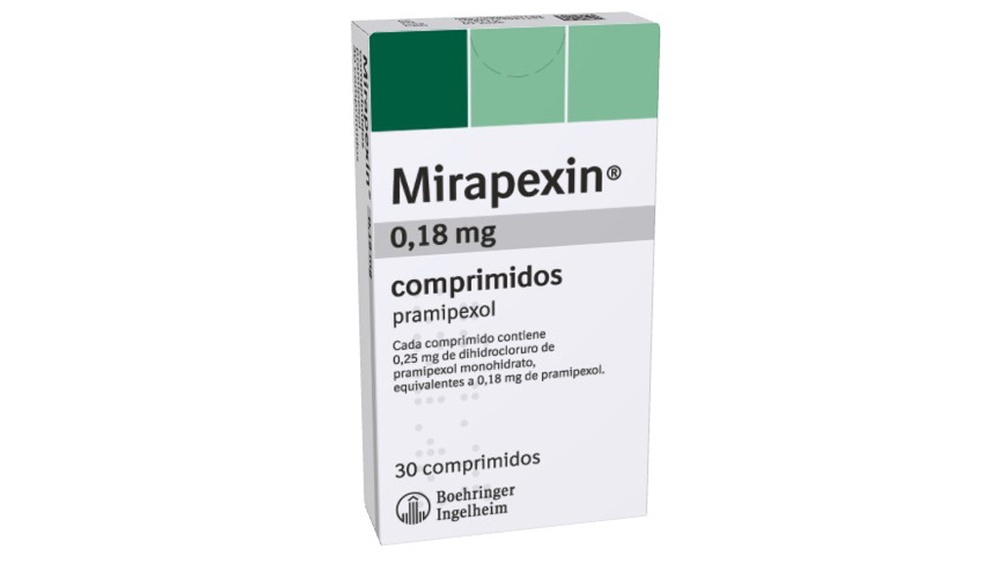
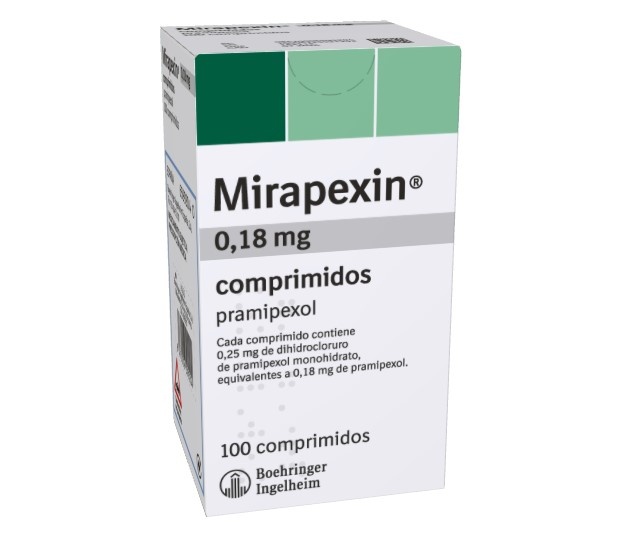
- Alternativas a PRAMIPEXOL CINFA 3,15 MG COMPRIMIDOS DE LIBERACION PROLONGADA EFGForma farmacéutica: COMPRIMIDO, 0,088 mgPrincipio activo: pramipexoleFabricante: Boehringer Ingelheim International GmbhRequiere recetaForma farmacéutica: COMPRIMIDOPrincipio activo: pramipexoleFabricante: Boehringer Ingelheim International GmbhRequiere recetaForma farmacéutica: COMPRIMIDOPrincipio activo: pramipexoleFabricante: Boehringer Ingelheim International GmbhRequiere receta

Médicos online para PRAMIPEXOL CINFA 3,15 MG COMPRIMIDOS DE LIBERACION PROLONGADA EFG
Comenta la dosis, los posibles efectos secundarios, interacciones, contraindicaciones o la revisión de receta de PRAMIPEXOL CINFA 3,15 MG COMPRIMIDOS DE LIBERACION PROLONGADA EFG, sujeto a valoración médica y a la normativa local.




Preguntas frecuentes
