

POSACONAZOL 100 mg Comprimidos Gastroresistentes





Cómo usar POSACONAZOL FRESENIUS KABI 100 MG COMPRIMIDOS GASTRORRESISTENTES
Traducción generada por IA
Este contenido ha sido traducido automáticamente y se ofrece solo con fines informativos. No sustituye la consulta con un profesional sanitario.
Ver originalContenido del prospecto
- Introducción
- Qué es Posaconazol Fresenius Kabi y para qué se utiliza
- Qué necesita saber antes de empezar a tomar Posaconazol Fresenius Kabi
- Cómo tomar Posaconazol Fresenius Kabi
- Posibles efectos adversos
- Conservación de Posaconazol Fresenius Kabi
- Mantener este medicamento fuera de la vista y del alcance de los niños.
- Contenido del envase e información adicional
Introducción
Prospecto: Información para el usuario
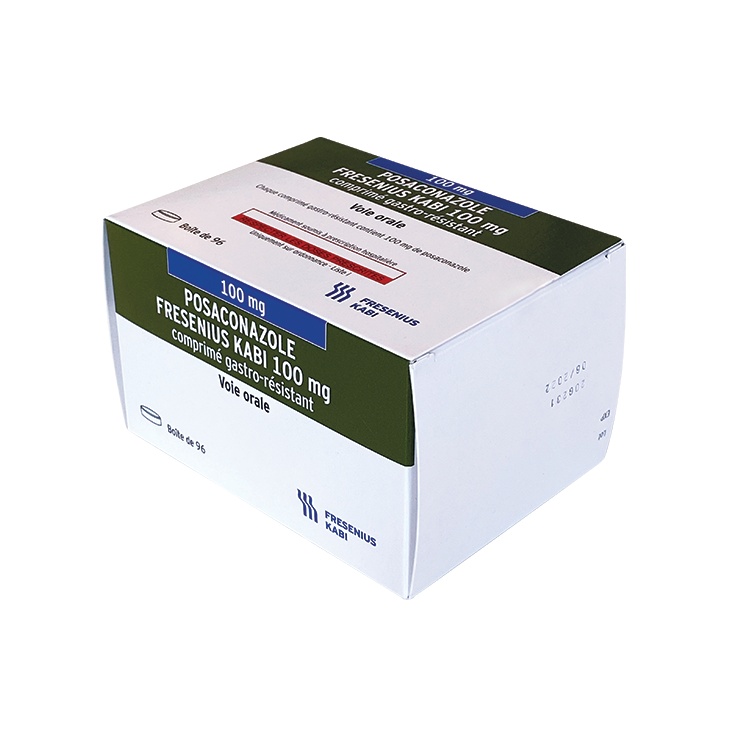
Posaconazol Fresenius Kabi 100 mg comprimidos gastrorresistentes
posaconazol
Lea todo el prospecto detenidamente antes de empezar a tomar este medicamento, porque
contiene información importante para usted.
- Conserve este prospecto, ya que puede tener que volver a leerlo.
- Si tiene alguna duda, consulte a su médico, farmacéutico o enfermero.
- Este medicamento se le ha recetado solamente a usted, y no debe dárselo a otras personas
aunque tengan los mismos síntomas que usted, ya que puede perjudicarles.
- Si experimenta efectos adversos, consulte a su médico, farmacéutico o enfermero, incluso si se
trata de efectos adversos que no aparecen en este prospecto. Ver sección 4.
Contenido del prospecto
- Qué es Posaconazol Fresenius Kabi y para qué se utiliza
- Qué necesita saber antes de empezar a tomar Posaconazol Fresenius Kabi
- Cómo tomar Posaconazol Fresenius Kabi
- Posibles efectos adversos
- Conservación de Posaconazol Fresenius Kabi
- Contenido del envase e información adicional
1. Qué es Posaconazol Fresenius Kabi y para qué se utiliza
Posaconazol Fresenius Kabi contiene un medicamento llamado posaconazol, que pertenece a un grupo de medicamentos denominados "antifúngicos". Se utiliza para prevenir y tratar muchas infecciones fúngicas diferentes.
Este medicamento actúa matando o deteniendo el crecimiento de algunos tipos de hongos que pueden causar infecciones.
Posaconazol se puede utilizar en adultos para tratar las infecciones fúngicas causadas por hongos de la familia Aspergillus.
Este medicamento se puede utilizar en adultos y niños a partir de dos años de edad y que pesen más de 40 kg para tratar los siguientes tipos de infecciones fúngicas:
- infecciones causadas por hongos de la familia Aspergillusque no han mejorado durante el
tratamiento con los medicamentos antifúngicos amfotericina B o itraconazol o cuando se ha
tenido que interrumpir el tratamiento con estos medicamentos;
- infecciones causadas por hongos de la familia Fusariumque no han mejorado durante el
tratamiento con amfotericina B o cuando se ha tenido que interrumpir el tratamiento con
amfotericina B;
- infecciones causadas por hongos que provocan las enfermedades conocidas como
“cromoblastomicosis” y “micetoma” que no han mejorado durante el tratamiento con itraconazol o cuando se ha tenido que interrumpir el tratamiento con itraconazol;
- infecciones causadas por un hongo llamado Coccidioidesque no han mejorado durante el
tratamiento con uno o varios medicamentos, amfotericina B, itraconazol o fluconazol, o cuando
se ha tenido que interrumpir el tratamiento con estos medicamentos.
Este medicamento también se puede utilizar para prevenir infecciones fúngicas en adultos y niños a partir de 2 años de edad y que pesen más de 40 kg con riesgo alto de contraer una infección fúngica, tales como:
- pacientes que presenten un sistema inmunitario débil como consecuencia de haber recibido
quimioterapia para "leucemia mielógena aguda" (LMA) o "síndromes mielodisplásicos" (SMD)
- pacientes que estén recibiendo "altas dosis de un tratamiento inmunodepresivo" tras un
"trasplante de células madre hematopoyéticas" (TCMH).

2. Qué necesita saber antes de empezar a tomar Posaconazol Fresenius Kabi
No tomePosaconazol Fresenius Kabi
- si es alérgico a posaconazol o a alguno de los demás componentes de este medicamento
(incluidos en la sección 6).
- si está tomando: terfenadina, astemizol, cisaprida, pimozida, halofantrina, quinidina, cualquier medicamento que contenga "alcaloides del ergot", como ergotamina o dihidroergotamina, o una "estatina", como simvastatina, atorvastatina o lovastatina.
- si acaba de empezar a tomar venetoclax o su dosis de venetoclax se está aumentando lentamente para el tratamiento de leucemia linfocítica crónica (LLC).
No tome Posaconazol Fresenius Kabi si se encuentra en alguna de las circunstancias anteriores. En caso de duda, consulte a su médico o farmacéutico antes de tomar este medicamento.
Ver la sección “Toma de Posaconazol Fresenius Kabi con otros medicamentos” más adelante para obtener más información, incluida la relacionada con otros medicamentos que pueden interaccionar con Posaconazol.
Advertencias y precauciones
Consulte a su médico, farmacéutico o enfermero antes de empezar a tomar Posaconazol Fresenius Kabi si:
- ha presentado una reacción alérgica a otro medicamento antifúngico, como ketoconazol,
fluconazol, itraconazol o voriconazol.
- presenta o ha presentado en alguna ocasión problemas hepáticos. Es posible que necesite que le hagan análisis de sangre mientras esté tomando este medicamento.
- desarrolla diarrea grave o vómitos, ya que estas situaciones pueden limitar la eficacia de este medicamento.
- presenta una alteración del ritmo cardíaco (ECG) que muestra un problema llamado
prolongación del intervalo QTc.
- presenta debilidad del músculo cardíaco o insuficiencia cardiaca.
- presenta un latido del corazón muy lento.
- presenta cualquier alteración del ritmo cardíaco.
- presenta cualquier problema con las cantidades de potasio, magnesio o calcio en sangre.
- está tomando vincristina, vinblastina y otros “alcaloides de la vinca” (medicamentos utilizados para tratar el cáncer).
- está tomando venetoclax (un medicamento utilizado para tratar el cáncer).
Debe evitar la exposición al sol mientras esté en tratamiento. Es importante cubrir las áreas de piel expuestas al sol con ropa protectora y usar protector solar con un factor de protección solar (SPF) alto, ya que puede aparecer una mayor sensibilidad de la piel a los rayos UV del sol.
Si se encuentra en alguna de las circunstancias anteriores (o en caso de duda), consulte a su médico, farmacéutico o enfermero antes de tomar este medicamento.
Si desarrolla diarrea o vómitos graves (se siente enfermo) mientras está tomando Posaconazol Fresenius Kabi, consulte a su médico, farmacéutico o enfermero inmediatamente, ya que esta circunstancia puede impedir que el medicamento actúe correctamente. Para obtener más información, ver sección 4.
Niños
No se debe dar este medicamento a niños menores de 2 años de edad.
Toma dePosaconazol Fresenius Kabicon otros medicamentos
Informe a su médico o farmacéutico si está tomando, ha tomado recientemente o pudiera tener que tomar cualquier otro medicamento.
No tomePosaconazol Fresenius Kabisi está tomando alguno de los siguientes medicamentos:
- terfenadina (utilizada para tratar alergias)
- astemizol (utilizado para tratar alergias)
- cisaprida (utilizada para tratar problemas de estómago)
- pimozida (utilizada para tratar síntomas del síndrome de Tourette y enfermedades mentales)
- halofantrina (utilizada para tratar la malaria)
- quinidina (utilizada para tratar alteraciones del ritmo cardíaco).
Posaconazol puede incrementar la cantidad de estos medicamentos en la sangre, lo que podría provocar cambios muy graves en su ritmo cardiaco.
- cualquier medicamento que contenga "alcaloides del ergot", tales como ergotamina o
dihidroergotamina utilizados para tratar las migrañas. Posaconazol puede aumentar la cantidad de estos medicamentos en la sangre, lo que podría provocar una disminución grave del flujo sanguíneo hacia los dedos de las manos o de los pies y dañarlos.
- una "estatina", como simvastatina, atorvastatina o lovastatina utilizadas para el tratamiento de los niveles altos de colesterol.
- venetoclax cuando se usa al comienzo del tratamiento de un tipo de cáncer, leucemia linfocítica crónica (LLC).
No tome Posaconazol Fresenius Kabi si se encuentra en alguna de las circunstancias anteriores. En caso de duda, consulte a su médico o farmacéutico antes de tomar este medicamento.
Otros medicamentos
Consulte la lista proporcionada anteriormente con los medicamentos que no debe usar mientras esté tomando Posaconazol Fresenius Kabi. Además de los medicamentos mencionados anteriormente, hay otros medicamentos que presentan riesgo de problemas en el ritmo cardíaco, que puede ser mayor cuando se toman con Posaconazol. Asegúrese de informar a su médico de todos los medicamentos que esté tomando (con o sin receta médica).
Algunos medicamentos pueden aumentar el riesgo de efectos adversos de Posaconazol por aumentar la cantidad de este medicamento en la sangre.
Los siguientes medicamentos pueden disminuir la efectividad de Posaconazol al reducir sus niveles en sangre:
- rifabutina y rifampicina (utilizadas para tratar ciertas infecciones). Si ya está tomando
rifabutina, tendrá que someterse a un análisis de sangre, así como estar atento a algunos posibles efectos adversos de rifabutina.
- algunos medicamentos utilizados para tratar o prevenir ataques incluyen: fenitoína,
carbamazepina, fenobarbital o primidona.
- efavirenz y fosamprenavir, utilizados para tratar la infección por VIH.
- Flucloxacilina (antibiótico utilizado contra infecciones bacterianas).
Posaconazol Fresenius Kabi posiblemente aumente el riesgo de efectos adversos de otros medicamentos aumentando la cantidad de éstos en la sangre. Estos medicamentos incluyen:
- vincristina, vinblastina y otros “alcaloides de la vinca” (utilizados para tratar cáncer)
- venetoclax (utilizado para tratar el cáncer)
- ciclosporina (utilizada durante o después de trasplantes)
- tacrolimus y sirolimus (utilizados durante o después de trasplantes)
- rifabutina (utilizada para tratar ciertas infecciones)
- medicamentos utilizados para tratar VIH llamados inhibidores de la proteasa (incluyendo
lopinavir y atazanavir, que se administran con ritonavir)
- midazolam, triazolam, alprazolam u otras "benzodiazepinas" (utilizados como sedantes o
relajantes musculares)
- diltiazem, verapamilo, nifedipino, nisoldipino u otros "bloqueantes de los canales de calcio"
(utilizados para tratar la presión sanguínea alta)
- digoxina (utilizada para tratar la insuficiencia cardíaca)
- glipizida u otras "sulfonilureas" (utilizadas para tratar niveles altos de azúcar en sangre).
- ácido transretinoico (ATRA), también llamado tretinoína (utilizado para tratar algunos cánceres de sangre).
Si se encuentra en alguna de las circunstancias anteriores (o en caso de duda), consulte a su médico o farmacéutico antes de tomar este medicamento.
Uso de Posaconazol Fresenius Kabi con alimentos y bebidas
Posaconazol Fresenius Kabi 100 mg comprimidos gastrorresistentes se pueden tomar con o sin alimentos. La comida no afecta la biodisponibilidad del medicamento.
Embarazo y lactancia
Informe a su médico si está o cree que podría estar embarazada antes de empezar a tomar Posaconazol Fresenius Kabi. No tome Posaconazol Fresenius Kabi si está embarazada, a menos que se lo indique su médico.
Si es usted una mujer que puede quedarse embarazada debe utilizar medidas anticonceptivas eficaces mientras esté tomando este medicamento. Si se queda embarazada mientras está tomando Posaconazol, póngase en contacto con su médico inmediatamente.
No dé el pecho mientras esté tomando este medicamento, ya que pequeñas cantidades pueden pasar a la leche materna.
Conducción y uso de máquinas
Usted puede sentir mareo, somnolencia o presentar visión borrosa mientras está tomando Posaconazol Fresenius Kabi, lo que puede afectar a su capacidad para conducir o usar herramientas o máquinas. En caso de que esto ocurra, no conduzca ni use ninguna herramienta o máquina y póngase en contacto con su médico.
Posaconazol Fresenius Kabi contiene sodio
Este medicamento contiene menos de 1 mmol (23 mg) de sodio por comprimido, por lo que se considera esencialmente exento de sodio.
Posaconazol Fresenius Kabi contiene lactosa
Cada comprimido contiene 80,0 mg de lactosa. Si su médico le ha indicado que padece una intolerancia a ciertos azúcares, consulte con él antes de tomar este medicamento.
3. Cómo tomar Posaconazol Fresenius Kabi

Siga exactamente las instrucciones de administración de este medicamento indicadas por su médico o farmacéutico. En caso de duda, consulte de nuevo a su médico o farmacéutico.
No tome indistintamente Posaconazol Fresenius Kabi comprimidos y Posaconazol Fresenius Kabi suspensión oral sin consultar a su médico o farmacéutico, ya que puede producir una falta de eficacia o aumentar el riesgo de reacciones adversas.
Qué cantidad se administra
La dosis recomendada es 300 mg (tres comprimidos de 100 mg) dos veces al día el primer día y
posteriormente 300 mg (tres comprimidos de 100 mg) una vez al día.
La duración del tratamiento puede depender del tipo de infección que tenga y puede ser adaptada individualmente para usted por su médico. No adapte su dosis usted mismo antes de consultar a su médico, ni cambie su pauta de tratamiento.
Cómo se administra este medicamento
- Tragar el comprimido entero con algo de agua.
- No triturar, masticar, romper o disolver el comprimido.
- Los comprimidos se pueden tomar con o sin alimentos.
Si toma másPosaconazol Fresenius Kabidel que debe
Si cree que podría haber tomado demasiado Posaconazol, informe inmediatamente a su médico, acuda de inmediato al hospital o llame al Servicio de Información Toxicológica, teléfono 91 562 04 20, indicando el medicamento y la cantidad ingerida.
Si olvidó tomarPosaconazol Fresenius Kabi
Si ha olvidado una dosis, tómela en cuanto se dé cuenta.
No obstante, si es casi la hora de la siguiente dosis, no tome la dosis omitida y retome su pauta habitual.
No tome una dosis doble para compensar las dosis olvidadas.
Si tiene cualquier otra duda sobre el uso de este medicamento, pregunte a su médico, farmacéutico o enfermero.
4. Posibles efectos adversos
Al igual que todos los medicamentos, este medicamento puede producir efectos adversos, aunque no todas las personas los sufran.
Efectos adversos graves
Informe a su médico, farmacéutico o enfermero de inmediato si usted nota cualquiera de los siguientes efectos adversos graves; es posible que necesite tratamiento médico urgente:
- náuseas o vómitos (sentirse o estar enfermo), diarrea
- signos de problemas hepáticos, que incluyen amarilleamiento de la piel o del blanco de los ojos, orina inusualmente oscura o heces pálidas, sentirse enfermo sin motivo aparente, problemas del estómago, pérdida de apetito o cansancio o debilidad inusuales, un aumento de las enzimas hepáticas detectado en los análisis de sangre
- reacción alérgica
Otros efectos adversos
Informe a su médico, farmacéutico o enfermero si nota cualquiera de los siguientes efectos adversos:
Frecuentes:lo siguiente puede afectar hasta 1 de cada 10 pacientes
- un cambio en los niveles de sales en sangre detectado en los análisis de sangre, cuyos signos
incluyen sensación de confusión o debilidad
- sensaciones anormales en la piel, tales como entumecimiento, hormigueo, picor, cosquilleo
reptante, pinchazos o ardor
- dolor de cabeza
- niveles bajos de potasio, detectados en los análisis de sangre
- niveles bajos de magnesio, detectados en los análisis de sangre
- presión arterial alta
- pérdida de apetito, dolor de estómago o malestar estomacal, flatulencia, boca seca, cambios en el sentido del gusto
- ardor de estómago (sensación de ardor en el pecho que asciende hasta la garganta)
- niveles bajos de "neutrófilos", un tipo de glóbulo blanco (neutropenia), lo que puede hacerle
más propenso a contraer infecciones y que se detectan en los análisis de sangre
- fiebre
- sensación de debilidad, mareo, cansancio o somnolencia
- erupción
- picor
- estreñimiento
- molestias rectales
Poco frecuentes:lo siguiente puede afectar hasta 1 de cada 100 pacientes
- anemia, cuyos signos incluyen dolores de cabeza, sensación de cansancio o mareo, respiración difícil o palidez y bajos niveles de hemoglobina detectados en los análisis de sangre
- niveles de plaquetas bajos (trombocitopenia), detectados en los análisis de sangre. Esto puede producir hemorragias
- niveles bajos de "leucocitos", un tipo de glóbulo blanco (leucopenia), detectados en los análisis de sangre. Esto puede hacerle más susceptible a las infecciones
- niveles altos de "eosinófilos", un tipo de glóbulo blanco (eosinofilia). Esto puede aparecer si
presenta un proceso inflamatorio
- inflamación de los vasos sanguíneos
- problemas con el ritmo cardiaco
- ataques (convulsiones)
- daño neurológico (neuropatía)
- ritmo cardiaco anormal, detectado en un electrocardiograma (ECG), palpitaciones, latido
cardiaco lento o rápido, presión arterial alta o baja
- presión arterial baja
- inflamación del páncreas (pancreatitis). Esto puede provocar dolor de estómago intenso
- interrupción del aporte de oxígeno al bazo (infarto esplénico), lo que puede producir dolor de estómago intenso
- problemas renales graves, cuyos signos incluyen aumento o disminución de la micción con
orina que presenta un color diferente del habitual
- niveles sanguíneos de creatinina altos, detectados en los análisis de sangre
- tos, hipo
- hemorragias nasales
- dolor punzante e intenso en el pecho al respirar (dolor pleurítico)
- inflamación de los ganglios linfáticos (linfadenopatía)
- disminución de la sensibilidad, especialmente en la piel
- temblores
- niveles de azúcar en sangre altos o bajos
- visión borrosa, sensibilidad a la luz
- pérdida de pelo (alopecia)
- úlceras bucales
- tiritona, sensación habitual de malestar
- dolor, dolor de espalda o cuello, dolor en brazos o piernas
- retención de líquidos (edema)
- problemas menstruales (sangrado vaginal anormal)
- incapacidad para dormir (insomnio)
- incapacidad total o parcial para hablar
- hinchazón de la boca
- sueños anormales o problemas para dormir
- problemas de coordinación o de equilibrio
- inflamación de la mucosa
- congestión nasal
- dificultad respiratoria
- molestias en el pecho
- sentirse hinchado
- náuseas, vómitos, calambres y diarrea de leves a graves, normalmente provocados por un virus, dolor de estómago
- eructos
- sensación de inquietud
Raros:lo siguiente puede afectar hasta 1 de cada 1.000 pacientes
- neumonía, cuyos signos incluyen sensación de falta de aliento y producción de flemas
decoloradas
- presión sanguínea alta en los vasos sanguíneos de los pulmones (hipertensión pulmonar), que puede ocasionar daños graves a los pulmones y al corazón
- problemas sanguíneos tales como coagulación inusual de la sangre o sangrado prolongado
- reacciones alérgicas graves, incluyendo erupción cutánea generalizada con ampollas y
exfoliación de la piel
- problemas mentales, como oír voces o ver cosas que no están ahí
- desmayo
- problemas al pensar o al hablar, movimientos bruscos, especialmente en sus manos, que no
puede controlar
- accidente cerebrovascular, cuyos signos incluyen dolor, debilidad, entumecimiento o cosquilleo en las extremidades
- presencia de un punto ciego o mancha oscura en el campo de visión
- insuficiencia cardíaca o ataque al corazón, que puede provocar una parada cardiaca y la muerte, problemas con el ritmo cardíaco con muerte súbita
- coágulos sanguíneos en las piernas (trombosis venosa profunda), cuyos signos incluyen dolor intenso o hinchazón de las piernas
- coágulos sanguíneos en sus pulmones (embolismo pulmonar), cuyos signos incluyen sensación de falta de aire o dolor al respirar
- hemorragia en el estómago o el intestino, cuyos signos incluyen vomitar sangre o sangre en las heces
- un bloqueo del intestino (obstrucción intestinal), especialmente del "íleon". Dicho bloqueo
impide que los contenidos del intestino pasen a través del colon y cuyos signos incluyen
sensación de hinchazón, vómitos, estreñimiento grave, pérdida de apetito y retortijones
- "síndrome urémico hemolítico" que aparece cuando se produce la destrucción de los glóbulos rojos (hemolisis), que puede darse con o sin insuficiencia renal
- "pancitopenia", nivel bajo de todas las células sanguíneas (glóbulos rojos, blancos y plaquetas), detectada en los análisis de sangre
- manchas moradas y grandes en la piel (púrpura trombocitopénica trombótica)
- inflamación de la cara o lengua
- depresión
- visión doble
- dolor de mama
- funcionamiento inadecuado de las glándulas adrenales, lo que puede producir debilidad,
cansancio, pérdida de apetito, decoloración de la piel
- funcionamiento inadecuado de la glándula pituitaria, lo que pude producir bajos niveles en
sangre de algunas hormonas que afectan a la función de los órganos sexuales masculinos o
femeninos
- problemas para oír
- pseudoaldosteronismo, que produce presión sanguínea alta con un nivel bajo de potasio (aparece en el análisis de sangre)
Frecuencia no conocida:no puede estimarse a partir de los datos disponibles
- algunos pacientes también han comunicado sentirse confusos tras tomar Posaconazol Fresenius Kabi.
- enrojecimiento de la piel
Informe a su médico, farmacéutico o enfermero si experimenta alguno de los efectos adversos
descritos anteriormente.
Comunicación de efectos adversos
Si experimenta cualquier tipo de efecto adverso, consulte a su médico, farmacéutico o enfermero, incluso si se trata de posibles efectos adversos que no aparecen en este prospecto. También puede comunicarlos directamente a través del sistema nacional de notificación incluido en el Sistema Español de Farmacovigilancia de medicamentos de Uso Humano: https:// www.notificaram.es
Mediante la comunicación de efectos adversos usted puede contribuir a proporcionar más información sobre la seguridad de este medicamento.
5. Conservación de Posaconazol Fresenius Kabi
Mantener este medicamento fuera de la vista y del alcance de los niños.
No utilice este medicamento después de la fecha de caducidad que aparece en el blíster después de CAD. La fecha de caducidad es el último día del mes que se indica.
Este medicamento no requiere condiciones especiales de conservación.
Los medicamentos no se deben tirar por los desagües ni a la basura. Pregunte a su farmacéutico cómo deshacerse de los envases y de los medicamentos que ya no necesita. De esta forma, ayudará a proteger el medio ambiente.
6. Contenido del envase e información adicional
Composición dePosaconazol Fresenius Kabi
- El principio activo es posaconazol. Cada comprimido contiene 100 mg de posaconazol.
- Los demás componentes son succinato acetato de hipromelosa, hipromelosa, almidón de maíz, sílice coloidal anhidra, croscarmelosa sódica, lactosa monohidrato secada por aspersión, celulosa microcristalina silicificada, hidroxipropilcelulosa de baja sustitución, estearato de magnesio, alcohol polivinílico parcialmente hidrolizado, dióxido de titanio (E-171), macrogol, talco, óxido de hierro amarillo (E-172).
Aspecto del producto y contenido del envase
Los comprimidos gastrorresistentes de Posaconazol Fresenius Kabi son comprimidos recubiertos con película de color amarillo, con forma de cápsula biconvexa, de aproximadamente 19,9 mm de longitud, marcados con ‘P100’ en una cara.
Se envasan en blísteres, en cajas de 24 o 96 comprimidos.
Puede que solamente estén comercializados algunos tamaños de envases.
Titular de la autorización de comercialización y responsable de la fabricación
Titular de la autorización de comercialización
Fresenius Kabi España, S.A.U
C/ Marina 16-18
Barcelona
08005 España
Responsable de la fabricación
Interpharma Services Ltd.
43A Cherni Vrach Blvd.,
1407 Sofia
Bulgaria
Este medicamento está autorizado en los estados miembros del Espacio Económico Europeo y en el Reino Unido (Irlanda del Norte) con los siguientes nombres:
Nombre del estado miembro | Nombre del medicamento |
Alemania | Posaconazol Fresenius Kabi 100 mg magensaftresistente Tabletten |
Francia | Posaconazole Fresenius Kabi 100 mg comprimé gastrorésistant |
Italia | Posaconazolo Fresenius Kabi 100 mg compressa gastroresistente |
Países Bajos | Posaconazol Fresenius Kabi 100 mg maagsapresistente tablet |
España | Posaconazol Fresenius Kabi 100 mg comprimidos gastrorresistentes |
Reino Unido (Irlanda del Norte) | Posaconazole Fresenius Kabi 100 mg gastro-resistant tablet |
Fecha de la última revisión de este prospecto: 10/2021
La información detallada de este medicamento está disponible en la página web de la Agencia Española de Medicamentos y Productos Sanitarios (AEMPS) : http://www.aemps.gob.es
-

- País de registro
- Forma farmacéuticaCOMPRIMIDO, 100 mg
- Código ATCJ02AC04
- Disponibilidad en farmacias
Problema de suministro reportado
Los datos de la Agencia Española de Medicamentos y Productos Sanitarios (AEMPS) indican un problema de suministro que afecta a este medicamento.
La disponibilidad puede ser limitada en algunas farmacias.
Para actualizaciones o alternativas, consulte a su farmacéutico. - Principio activo
- Requiere recetaSí
- Fabricante
- ComposiciónCROSCARMELOSA SODICA (10 mg mg), LACTOSA MONOHIDRATO SECADA POR ASPERSION (80 mg mg)
- Esta información es de carácter general y no sustituye la consulta con un profesional sanitario.
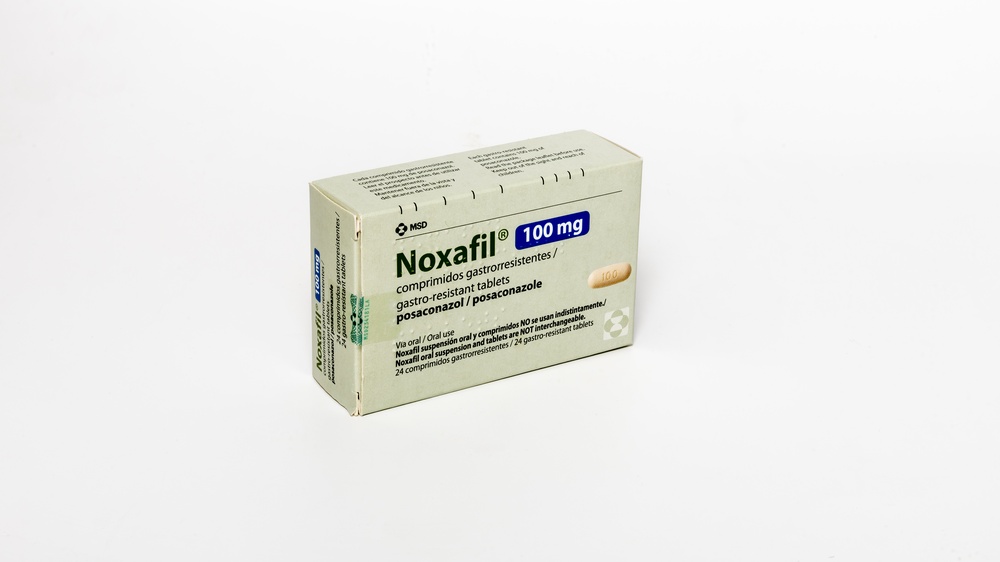
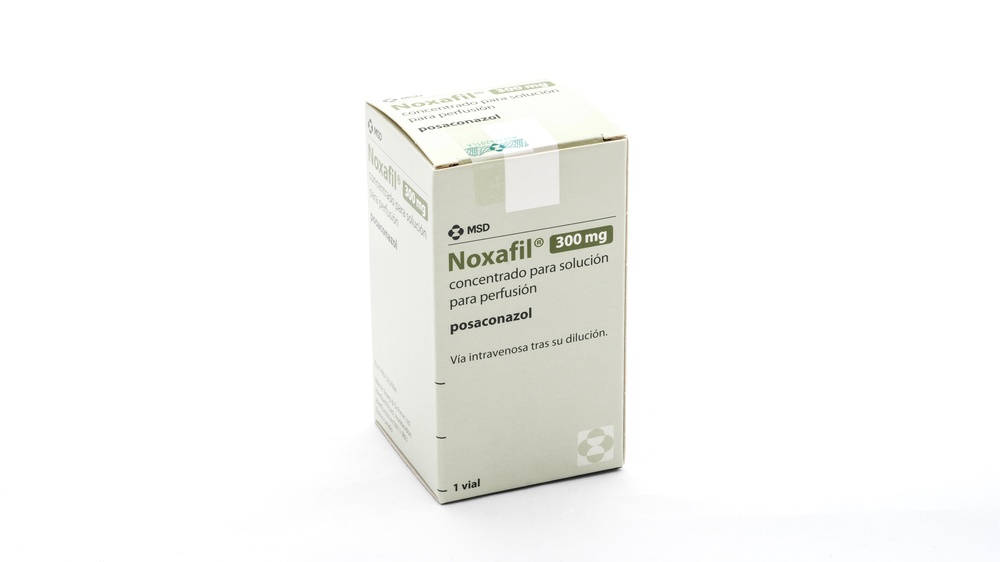
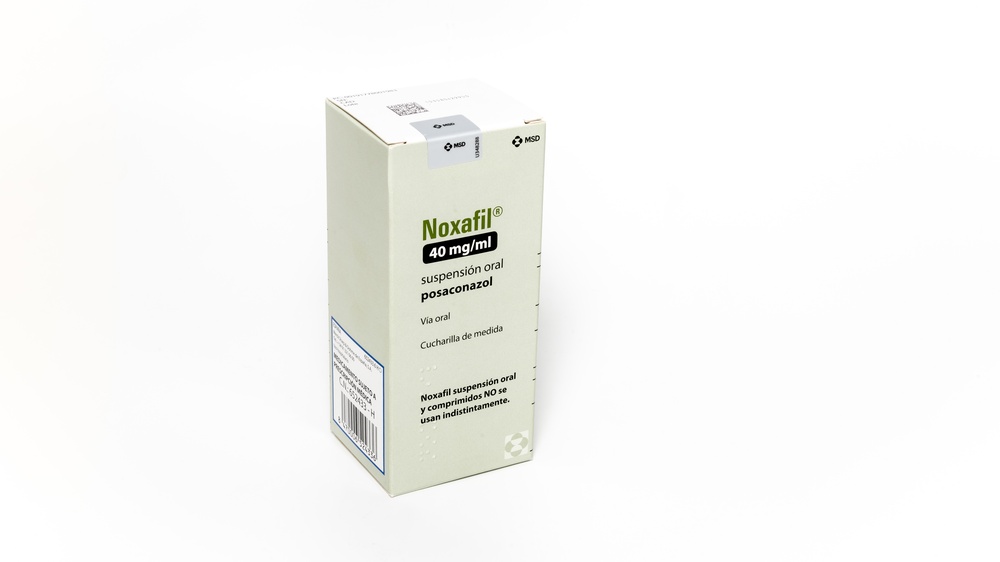
- Alternativas a POSACONAZOL FRESENIUS KABI 100 MG COMPRIMIDOS GASTRORRESISTENTESForma farmacéutica: COMPRIMIDO, 100 mg/comprimidoPrincipio activo: PosaconazolFabricante: Merck Sharp & Dohme B.V.Requiere recetaForma farmacéutica: INYECTABLE PERFUSION, 300 mg/vial (18 mg/ml)Principio activo: PosaconazolFabricante: Merck Sharp & Dohme B.V.Requiere recetaForma farmacéutica: SOLUCIÓN/SUSPENSIÓN ORALPrincipio activo: PosaconazolFabricante: Merck Sharp & Dohme B.V.Requiere receta
Médicos online para POSACONAZOL FRESENIUS KABI 100 MG COMPRIMIDOS GASTRORRESISTENTES
Comenta la dosis, los posibles efectos secundarios, interacciones, contraindicaciones o la revisión de receta de POSACONAZOL FRESENIUS KABI 100 MG COMPRIMIDOS GASTRORRESISTENTES, sujeto a valoración médica y a la normativa local.









Obtén una receta de POSACONAZOL FRESENIUS KABI 100 MG COMPRIMIDOS GASTRORRESISTENTES online
Rellena un formulario de 2 minutos
Cuéntanos tus síntomas, historial y el medicamento que necesitas.
Elige un médico o nosotros te asignamos uno
Escoge un especialista o te conectamos con el próximo médico disponible.
El médico revisa tu caso
Normalmente en 30 minutos. Puede hacerte preguntas adicionales por chat.
Recógela en cualquier farmacia
Receta electrónica enviada a tu correo, válida en toda España.
Preguntas frecuentes
¿Se requiere receta para POSACONAZOL FRESENIUS KABI 100 MG COMPRIMIDOS GASTRORRESISTENTES?
POSACONAZOL FRESENIUS KABI 100 MG COMPRIMIDOS GASTRORRESISTENTES requires receta en España. Puedes confirmarlo con un médico online según tu caso.
¿Cuál es el principio activo de POSACONAZOL FRESENIUS KABI 100 MG COMPRIMIDOS GASTRORRESISTENTES?
El principio activo de POSACONAZOL FRESENIUS KABI 100 MG COMPRIMIDOS GASTRORRESISTENTES es Posaconazol. Esta información ayuda a identificar medicamentos con la misma composición pero con diferentes nombres comerciales.
¿Quién fabrica POSACONAZOL FRESENIUS KABI 100 MG COMPRIMIDOS GASTRORRESISTENTES?
POSACONAZOL FRESENIUS KABI 100 MG COMPRIMIDOS GASTRORRESISTENTES es fabricado por Fresenius Kabi España, S.A.U.. La marca y el envase pueden variar según el distribuidor.
¿Qué médicos pueden recetar POSACONAZOL FRESENIUS KABI 100 MG COMPRIMIDOS GASTRORRESISTENTES online?
Los Médicos de familia, Psiquiatras, Dermatólogos, Cardiólogos, Endocrinólogos, Gastroenterólogos, Neumólogos, Nefrólogos, Reumatólogos, Hematólogos, Infectólogos, Alergólogos, Geriatras, Pediatras, Oncólogos pueden valorar la prescripción de POSACONAZOL FRESENIUS KABI 100 MG COMPRIMIDOS GASTRORRESISTENTES cuando esté clínicamente indicado. Puedes reservar una videoconsulta para comentar tu caso y las opciones de tratamiento.
¿Cómo comprar POSACONAZOL FRESENIUS KABI 100 MG COMPRIMIDOS GASTRORRESISTENTES en España?
España cuenta con una infraestructura sanitaria bien desarrollada en ciudades principales como Madrid, Barcelona, Valencia y Sevilla. Las farmacias están ampliamente disponibles y operan bajo estrictas regulaciones, garantizando el acceso a medicamentos con receta.
Puedes comprar POSACONAZOL FRESENIUS KABI 100 MG COMPRIMIDOS GASTRORRESISTENTES en Madrid, Barcelona, Sevilla o Valencia en cualquier farmacia local con una receta válida.
Para obtener una receta, puedes utilizar Oladoctor:
¿Cuáles son las alternativas a POSACONAZOL FRESENIUS KABI 100 MG COMPRIMIDOS GASTRORRESISTENTES?
Otros medicamentos con el mismo principio activo (Posaconazol) incluyen NOXAFIL 100 MG COMPRIMIDOS GASTRORRESISTENTES, NOXAFIL 300 MG CONCENTRADO PARA SOLUCION PARA PERFUSION, NOXAFIL 40 MG/ML SUSPENSION ORAL. Pueden tener diferentes nombres comerciales o formulaciones, pero contienen el mismo componente terapéutico. Consulta siempre con un médico antes de cambiar o iniciar un nuevo medicamento.
