






Cómo usar PLAVIX 300 MG COMPRIMIDOS RECUBIERTOS CON PELICULA
Traducción generada por IA
Este contenido ha sido traducido automáticamente y se ofrece solo con fines informativos. No sustituye la consulta con un profesional sanitario.
Ver originalContenido del prospecto
Introducción
Prospecto: información para el usuario
Plavix 300 mg comprimidos recubiertos con película
clopidogrel
Lea todo el prospecto detenidamente antes de empezar a tomar este medicamento, porque contiene información importante para usted.
- Conserve este prospecto, ya que puede tener que volver a leerlo.
- Si tiene alguna duda, consulte a su médico o farmacéutico.
- Este medicamento se le ha recetado solamente a usted, y no debe dárselo a otras personas aunque tengan los mismos síntomas que usted, ya que puede perjudicarles.
- Si experimenta efectos adversos, consulte a su médico o farmacéutico, incluso si se trata de efectos adversos que no aparecen en este prospecto. Ver sección 4.
Contenido del prospecto
- Qué es Plavix y para qué se utiliza
- Qué necesita saber antes de empezar a tomar Plavix
- Cómo tomar Plavix
- Posibles efectos adversos
- Conservación de Plavix
- Contenido del envase e información adicional
1. Qué es Plavix y para qué se utiliza
Plavix contiene clopidogrel y pertenece a un grupo de medicamentos denominados antiagregantes plaquetarios. Las plaquetas son unas células muy pequeñas que se encuentran en la sangre, y se agregan cuando la sangre se coagula. Los medicamentos antiagregantes plaquetarios, al prevenir dicha agregación, reducen la posibilidad de que se produzcan coágulos sanguíneos (un proceso denominado trombosis).
Plavix se administra en adultos para prevenir la formación de coágulos sanguíneos (trombos) en vasos sanguíneos (arterias) endurecidos, un proceso conocido como aterotrombosis y que puede provocar efectos aterotrombóticos (como infarto cerebral, infarto de miocardio o muerte).
Se le ha prescrito Plavix para ayudar a prevenir la formación de coágulos sanguíneos y reducir el riesgo de estos acontecimientos graves ya que:
- sufre un proceso que produce el endurecimiento de las arterias (también denominado ateroesclerosis), y
- ha sufrido previamente un infarto de miocardio, un infarto cerebral o sufre una enfermedad denominada enfermedad arterial periférica, o
- ha sufrido un tipo de dolor torácico grave, conocido como “angina inestable” o “infarto de miocardio”. Para el tratamiento de esta enfermedad, su médico puede tener que colocar un stent en la arteria obstruida o estrechada para restablecer el flujo sanguíneo adecuado. Es posible que su médico también le haya prescrito ácido acetilsalicílico (sustancia presente en muchos medicamentos utilizados para aliviar el dolor y bajar la fiebre, así como para prevenir la formación de coágulos sanguíneos).
- ha experimentado síntomas de un ictus que desaparecen en un corto período de tiempo (también conocido como ataque isquémico transitorio) o un ictus isquémico de gravedad leve. Su médico también puede administrarle ácido acetilsalicílico durante las primeras 24 horas.
- tiene un latido del corazón irregular, una enfermedad llamada “fibrilación auricular”, y no puede tomar medicamentos conocidos como “anticoagulantes orales” (antagonistas de la vitamina K) que previenen la formación de nuevos coágulos e impiden el crecimiento de los coágulos que existen. Le habrán dicho que los “anticoagulantes orales” son más eficaces que el ácido acetilsalicílico o que el uso combinado de Plavix y el ácido acetilsalicílico para esta enfermedad. Su médico le habrá prescrito Plavix más ácido acetilsalicílico si usted no puede tomar “anticoagulantes orales” y no tiene ningún riesgo de hemorragia grave.

2. Qué necesita saber antes de empezar a tomar Plavix
No tome Plavix
- Si es alérgico (hipersensible) a clopidogrel o a cualquiera de los demás componentes de este medicamento (incluidos en la sección 6).
- Si padece una hemorragia activa, como una úlcera de estómago o hemorragia en el cerebro.
- Si sufre una enfermedad grave del hígado.
Si cree que algo de esto puede afectarle, o si tiene alguna duda, consulte a su médico antes de tomar Plavix.
Advertencias y precauciones
Antes de empezar el tratamiento con Plavix, informe a su médico si se encuentra en alguna de las situaciones descritas a continuación:
- Si tiene riesgo de sufrir una hemorragia (sangrado) porque:
- padece una enfermedad que implica un riesgo de hemorragias internas (como una úlcera de estómago).
- padece una anomalía sanguínea que le predispone a sufrir hemorragias internas (hemorragias en tejidos, órganos o articulaciones del organismo).
- ha sufrido una herida grave recientemente.
- se ha sometido recientemente a una intervención quirúrgica (incluyendo cirugía dental).
- debe someterse a una intervención quirúrgica (incluyendo cirugía dental) en los próximos siete días.
- Si ha tenido un coágulo en una arteria del cerebro (infarto cerebral isquémico) en los últimos 7 días.
- Si padece enfermedades del hígado o del riñón.
- Si ha tenido una alergia o reacción a cualquier medicamento utilizado para tratar su enfermedad.
- Si ha tenido antecedentes de hemorragia cerebral no traumática.
Durante el tratamiento con Plavix:
- Informe a su médico si tiene prevista una intervención quirúrgica (incluyendo cirugía dental).
- Informe a su médico inmediatamente si desarrolla un trastorno (también conocido como Púrpura Trombótica Trombocitopénica o PTT) que incluya fiebre y hematomas (moratones) bajo la piel que pueden aparecer como puntos rojos localizados, acompañados o no de inexplicable cansancio extremo, confusión, color amarillo en la piel o los ojos (ictericia) (ver sección 4 “Posibles efectos adversos”).
- Si se corta o se hace una herida, la hemorragia puede tardar más de lo normal en detenerse. Esto está relacionado con el modo en que actúa el medicamento, ya que éste previene de la capacidad de la sangre para formar coágulos. Para cortes o heridas de poca importancia, como por ejemplo cortarse durante el afeitado, esto no tiene importancia. No obstante, si está preocupado por su pérdida de sangre, consulte inmediatamente con su médico (ver sección 4 “Posibles efectos adversos”).
- Su médico puede pedirle que se haga análisis de sangre.
Niños y adolescentes
Este medicamento no debe administrarse a niños porque no es eficaz.
Toma de Plavix con otros medicamentos
Informe a su médico o farmacéutico si está tomando, ha tomado recientemente o podría tener que tomar cualquier otro medicamento, incluso los adquiridos sin receta.
Algunos medicamentos pueden influir en el uso de Plavix o viceversa.
Debe informar expresamente a su médico si está tomando:
- medicamentos que pueden incrementar el riesgo de hemorragia como:
- anticoagulantes orales, medicamentos utilizados para disminuir la coagulación sanguínea,
- antiinflamatorios no esteroideos, medicamentos utilizados generalmente para tratar el dolor y/o la inflamación de músculos o articulaciones,
- heparina, o cualquier otro medicamento inyectable utilizado para disminuir la coagulación sanguínea,
- ticlopidina, u otros agentes antiagregantes plaquetarios,
- un inhibidor de la recaptación de serotonina (como fluoxetina o fluvoxamina y otros fármacos del mismo tipo), medicamentos utilizados normalmente para el tratamiento de la depresión,
- rifampicina (utilizado para infecciones graves)
- omeprazol o esomeprazol, medicamentos para tratar las molestias de estómago,
- fluconazol o voriconazol, medicamentos para tratar las infecciones bacterianas y fúngicas,
- efavirenz, u otros medicamentos antirretrovirales (utilizados para el tratamiento de las infecciones por VIH),
- carbamazepina, un medicamento para tratar algunas formas de epilepsia,
- moclobemida, medicamento para la depresión,
- repaglinida, medicamento para el tratamiento de la diabetes,
- paclitaxel, medicamento para el tratamiento del cáncer,
- opioides: si está en tratamiento con clopidogrel, debe informar a su médico antes de que le receten cualquier opioide (utilizado para tratar el dolor intenso),
- rosuvastatina (utilizada para reducir el nivel de colesterol).
Si usted ha sufrido dolor torácico grave (angina inestable o infarto de miocardio), ataque isquémico transitorio o ictus isquémico de gravedad leve, quizás le han prescrito Plavix en combinación con ácido acetilsalicílico, sustancia presente en muchos medicamentos utilizados para aliviar el dolor y bajar la fiebre. Una dosis de ácido acetilsalicílico administrada esporádicamente (no superior a 1.000 mg en 24 horas) generalmente no debe causar ningún problema, pero el uso prolongado en otras circunstancias debe consultarse con su médico.
Toma de Plavix con alimentos y bebidas
Plavix puede tomarse con y sin alimentos.
Embarazo y lactancia
Es preferible no tomar este medicamento durante el embarazo.
Si está embarazada o cree que puede estarlo, debe avisar a su médico o farmacéutico antes de tomar Plavix. Si se queda embarazada mientras está tomando Plavix, consulte a su médico inmediatamente, ya que no se recomienda tomar clopidogrel durante el embarazo.
No debe dar el pecho mientras está tomando este medicamento.
Si está dando el pecho o planea hacerlo, comuníqueselo a su médico antes de tomar este medicamento.
Consulte a su médico o farmacéutico antes de tomar un medicamento.
Conducción y uso de máquinas
Es poco probable que Plavix altere su capacidad de conducir o manejar maquinaria.
Plavix contiene lactosa
Si su médico le ha indicado que padece una intolerancia a ciertos azúcares (p. ej. lactosa), consulte con él antes de tomar este medicamento.
Plavix también contiene aceite de ricino hidrogenado
Esto puede producir molestias de estómago y diarrea.
3. Cómo tomar Plavix
Siga exactamente las instrucciones de administración de este medicamento indicadas por su médico o farmacéutico. En caso de duda, consulte de nuevo a su médico o farmacéutico.
La dosis recomendada, incluso para los pacientes con una enfermedad llamada “fibrilación auricular” (un latido cardiaco irregular), es de un comprimido de 75 mg de Plavix al día, administrado por vía oral con o sin alimentos y a la misma hora cada día.
Si ha sufrido dolor torácico grave (angina inestable o infarto) su médico puede prescribirle 300 mg o 600 mg de Plavix (1 o 2 comprimidos de 300 mg o 4 u 8 comprimidos de 75 mg) para que los tome una única vez al inicio del tratamiento. Después, la dosis recomendada es de un comprimido de 75 mg de Plavix al día, tal y como se describe anteriormente.
Si ha experimentado síntomas de un ictus que desaparecen en un corto período de tiempo (también conocido como ataque isquémico transitorio) o un ictus isquémico de gravedad leve, su médico puede recetarle 300 mg de Plavix (1 comprimido de 300 mg o 4 comprimidos de 75 mg) una vez al inicio del tratamiento. Después, la dosis recomendada es un comprimido de 75 mg de Plavix por día tal y como se describe anteriormente con ácido acetilsalicílico durante 3 semanas. Después el médico le recetará o bien Plavix solo, o bien ácido acetilsalicílico solo.
Deberá tomar Plavix durante el tiempo que su médico continúe prescribiéndoselo.
Si toma más Plavix del que debe
Contacte con su médico o acuda al servicio de urgencias del hospital más próximo, ya que existe un mayor riesgo de hemorragia.
Si tiene cualquier otra duda sobre el uso de este medicamento, pregunte a su médico o farmacéutico.

4. Posibles efectos adversos
Al igual que todos los medicamentos, Plavix puede tener efectos adversos, aunque no todas las personas los sufran.
Contacte con su médico inmediatamente si experimenta:
- Fiebre, signos de infección o cansancio extremo. Estos pueden deberse a un raro descenso de algunas células de la sangre.
- Signos de problemas del hígado, tales como coloración amarilla de la piel y/o los ojos (ictericia), asociada o no a hemorragia que aparece bajo la piel como puntos rojos y/o confusión (ver sección 2 “Advertencias y precauciones”).
- Hinchazón de la boca o trastornos de la piel tales como sarpullidos y picores, ampollas en la piel. Estos pueden ser signos de una reacción alérgica.
El efecto adverso más frecuente notificado con Plavixes la hemorragia. La hemorragia puede aparecer en el estómago o intestino, magulladuras, hematomas (sangrado anormal o moratones bajo la piel), hemorragia nasal, sangre en orina. También se han notificado un número reducido de casos de hemorragia de los vasos sanguíneos de los ojos, hemorragia intracraneal, pulmonar o de articulaciones.
Si sufre hemorragia prolongada mientras está tomando Plavix
Si se corta o se hace una herida es posible que la hemorragia tarde un poco más de lo normal en detenerse. Esto está relacionado con el mecanismo de acción del medicamento, ya que previene la capacidad de la sangre para formar coágulos. Para cortes o heridas de poca importancia, como por ejemplo cortarse durante el afeitado, esto normalmente no tiene importancia. Sin embargo, si está preocupado por su hemorragia, consulte con su médico inmediatamente (ver sección 2 “Advertencias y precauciones”).
Otros efectos adversos incluyen:
Efectos adversos frecuentes (pueden afectar hasta 1 de cada 10 personas):
Diarrea, dolor abdominal, indigestión o ardor.
Efectos adversos poco frecuentes (pueden afectar hasta 1 de cada 100 personas):
Dolor de cabeza, úlcera de estómago, vómitos, náuseas, estreñimiento, exceso de gases en estómago o intestino, erupciones, picor, mareo, sensación de hormigueo y entumecimiento.
Efectos adversos raros (pueden afectar hasta 1 de cada 1.000 personas):
Vértigo, aumento de las mamas en los varones.
Efectos adversos muy raros (pueden afectar hasta 1 de cada 10.000 personas):
Ictericia; dolor abdominal grave con o sin dolor de espalda; fiebre, dificultad para respirar, en ocasiones asociadas a tos; reacciones alérgicas generalizadas (por ejemplo, sensación de calor generalizada con malestar general repentino hasta el desvanecimiento); hinchazón de la boca; ampollas en la piel; alergia en la piel; inflamación de la mucosa de la boca (estomatitis); disminución de la presión arterial; confusión; alucinaciones; dolor articular; dolor muscular; cambios en el sabor o pérdida del gusto de las comidas.
Efectos adversos con frecuencia desconocida (no puede estimarse a partir de los datos disponibles): Reacciones de hipersensibilidad con dolor de pecho o abdominal, síntomas persistentes de bajo nivel de azúcar en la sangre.
Además, su médico puede observar cambios en los resultados de sus análisis de sangre u orina.
Comunicación de efectos adversos
Si experimenta cualquier tipo de efecto adverso, consulte a su médico o farmacéutico, incluso si se trata de posibles efectos adversos que no aparecen en este prospecto. También puede comunicarlos directamente a través del sistema nacional de notificación incluido en el Apéndice V. Mediante la comunicación de efectos adversos usted puede contribuir a proporcionar más información sobre la seguridad de este medicamento.
5. Conservación de Plavix
Mantener este medicamento fuera de la vista y del alcance de los niños.
No utilice este medicamento después de la fecha de caducidad que aparece en el envase y en el blíster, después de CAD. La fecha de caducidad es el último día del mes que se indica.
Este medicamento no requiere condiciones especiales de conservación.
No utilice este medicamento si observa cualquier signo visible de deterioro.
Los medicamentos no se deben tirar por los desagües ni a la basura. Pregunte a su farmacéutico cómo deshacerse de los envases y de los medicamentos que ya no necesita. De esta forma ayudará a proteger el medio ambiente.
6. Contenido del envase e información adicional
Composición de Plavix
El principio activo es clopidogrel. Cada comprimido contiene 300 mg de clopidogrel (como hidrogenosulfato).
Los demás componentes son (ver sección 2 “Plavix contiene lactosa” y “Plavix contiene aceite de ricino hidrogenado”):
- Núcleo del comprimido: manitol (E421), aceite de ricino hidrogenado, celulosa microcristalina, macrogol 6000 e hidroxipropilcelulosa poco sustituida.
- Cubierta del comprimido: lactosa monohidrato (azúcar de la leche), hipromelosa (E464), triacetina (E1518), óxido de hierro rojo (E172) y dióxido de titanio (E171).
- Barniz: cera carnauba.
Aspecto del producto y contenido del envase
Plavix 300 mg comprimidos recubiertos son oblongos, de color rosa y llevan grabado en una cara el número “300” y en la otra el número “1332”. Plavix se presenta en envases de cartón de 4x1, 10x1, 30x1 y 100x1 comprimidos en blísteres unidosis de Aluminio/Aluminio.
Puede que solamente estén comercializados algunos tamaños de envases.
Titular de la autorización de comercialización y fabricante
Titular de la autorización de comercialización:
Sanofi Winthrop Industrie
82 avenue Raspail
94250 Gentilly
Francia
Fabricante:
Sanofi Winthrop Industrie
1, Rue de la Vierge, Ambarès & Lagrave, F-33565 Carbon Blanc cedex, Francia.
Pueden solicitar más información respecto a este medicamento dirigiéndose al representante local del titular de la autorización de comercialización.
België/Belgique/Belgien Sanofi Belgium Tél/Tel: +32 (0)2 710 54 00 | Luxembourg/Luxemburg Sanofi Belgium Tél/Tel: +32 (0)2 710 54 00 (Belgique/Belgien) |
???????? Swixx Biopharma EOOD ???.: +359 (0)2 4942 480 | Magyarország SANOFI-AVENTIS Zrt Tel.: +36 1 505 0050 |
Ceská republika sanofi-aventis, s.r.o. Tel: +420 233 086 111 | Malta Sanofi S.r.l. Tel: +39 02 39394275 |
Danmark Sanofi A/S Tlf: +45 45 16 70 00 | Nederland Sanofi B.V. Tel: +31 20 245 4000 |
Deutschland Sanofi-Aventis Deutschland GmbH Tel.: 0800 52 52 010 Tel. aus dem Ausland: +49 69 305 21 131 | Norge sanofi-aventis Norge AS Tlf: +47 67 10 71 00 |
Eesti Swixx Biopharma OÜ Tel: +372 640 10 30 | Österreich sanofi-aventis GmbH Tel: +43 1 80 185 – 0 |
Ελλ?δα Sanofi-Aventis Μονοπρ?σωπη AEBE Τηλ: +30 210 900 16 00 | Polska sanofi-aventis Sp. z o.o. Tel.: +48 22 280 00 00 |
España sanofi-aventis, S.A. Tel: +34 93 485 94 00 | Portugal Sanofi - Produtos Farmacêuticos, Lda. Tel: +351 21 35 89 400 |
France Sanofi Winthrop Industrie Tél: 0 800 222 555 Appel depuis l’étranger : +33 1 57 63 23 23 Hrvatska Swixx Biopharma d.o.o. Tel: +385 1 2078 500 | România Sanofi Romania SRL Tel: +40 (0) 21 317 31 36 |
Ireland sanofi-aventis Ireland Ltd. T/A SANOFI Tel: +353 (0) 1 403 56 00 | Slovenija Swixx Biopharma d.o.o. Tel: +386 1 235 51 00 |
Ísland Vistor hf. Sími: +354 535 7000 | Slovenská republika Swixx Biopharma s.r.o. Tel: +421 2 208 33 600 |
Italia Sanofi S.r.l. Tel: 800 536 389 | Suomi/Finland Sanofi Oy Puh/Tel: +358 (0) 201 200 300 |
Κ?προς C.A. Papaellinas Ltd. Τηλ: +357 22 741741 | Sverige Sanofi AB Tel: +46 (0)8 634 50 00 |
Latvija Swixx Biopharma SIA Tel: +371 6 616 47 50 | United Kingdom (Northern Ireland) sanofi-aventis Ireland Ltd. T/A SANOFI Tel: +44 (0) 800 035 2525 |
Lietuva Swixx Biopharma UAB Tel: +370 5 236 91 40 |
Fecha de la última revisión de este prospecto:
La información detallada de este medicamento está disponible en la página web de la Agencia Europea de Medicamentos: http://www.ema.europa.eu/
-

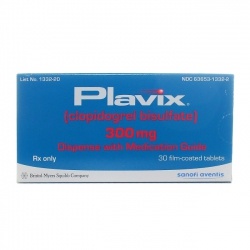
- País de registro
- Forma farmacéuticaCOMPRIMIDO, 300 mg
- Código ATCB01AC04
- Principio activo
- Requiere recetaSí
- Fabricante
- Esta información es de carácter general y no sustituye la consulta con un profesional sanitario.
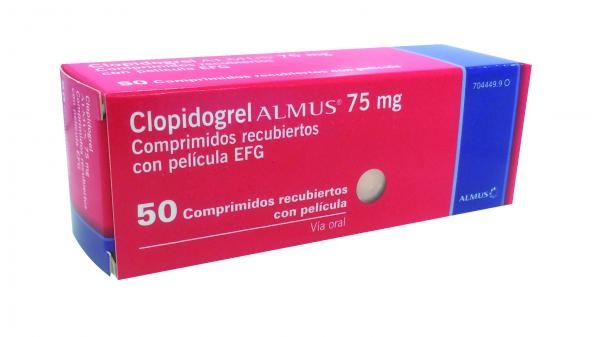
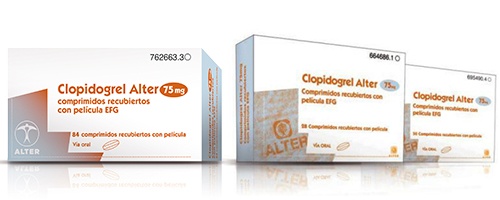
- Alternativas a PLAVIX 300 MG COMPRIMIDOS RECUBIERTOS CON PELICULAForma farmacéutica: COMPRIMIDO, 75 MG CLOPIDOGREL (112,10 MG CLOPIDOGREL BESILATO)Principio activo: ClopidogrelFabricante: Especialidades Farmaceuticas Centrum S.A.Requiere recetaForma farmacéutica: COMPRIMIDO, 75 mg clopidogrelPrincipio activo: ClopidogrelFabricante: Almus Farmaceutica S.A.U.Requiere recetaForma farmacéutica: COMPRIMIDO, 75 mgPrincipio activo: ClopidogrelFabricante: Laboratorios Alter S.A.Requiere receta

Médicos online para PLAVIX 300 MG COMPRIMIDOS RECUBIERTOS CON PELICULA
Comenta la dosis, los posibles efectos secundarios, interacciones, contraindicaciones o la revisión de receta de PLAVIX 300 MG COMPRIMIDOS RECUBIERTOS CON PELICULA, sujeto a valoración médica y a la normativa local.









Obtén una receta de PLAVIX 300 MG COMPRIMIDOS RECUBIERTOS CON PELICULA online
Rellena un formulario de 2 minutos
Cuéntanos tus síntomas, historial y el medicamento que necesitas.
Elige un médico o nosotros te asignamos uno
Escoge un especialista o te conectamos con el próximo médico disponible.
El médico revisa tu caso
Normalmente en 30 minutos. Puede hacerte preguntas adicionales por chat.
Recógela en cualquier farmacia
Receta electrónica enviada a tu correo, válida en toda España.
Preguntas frecuentes
PLAVIX 300 MG COMPRIMIDOS RECUBIERTOS CON PELICULA requires receta en España. Puedes confirmarlo con un médico online según tu caso.
El principio activo de PLAVIX 300 MG COMPRIMIDOS RECUBIERTOS CON PELICULA es Clopidogrel. Esta información ayuda a identificar medicamentos con la misma composición pero con diferentes nombres comerciales.
PLAVIX 300 MG COMPRIMIDOS RECUBIERTOS CON PELICULA es fabricado por Sanofi Winthrop Industrie. La marca y el envase pueden variar según el distribuidor.
Los Médicos de familia, Psiquiatras, Dermatólogos, Cardiólogos, Endocrinólogos, Gastroenterólogos, Neumólogos, Nefrólogos, Reumatólogos, Hematólogos, Infectólogos, Alergólogos, Geriatras, Pediatras, Oncólogos pueden valorar la prescripción de PLAVIX 300 MG COMPRIMIDOS RECUBIERTOS CON PELICULA cuando esté clínicamente indicado. Puedes reservar una videoconsulta para comentar tu caso y las opciones de tratamiento.
España cuenta con una infraestructura sanitaria bien desarrollada en ciudades principales como Madrid, Barcelona, Valencia y Sevilla. Las farmacias están ampliamente disponibles y operan bajo estrictas regulaciones, garantizando el acceso a medicamentos con receta.
Puedes comprar PLAVIX 300 MG COMPRIMIDOS RECUBIERTOS CON PELICULA en Madrid, Barcelona, Sevilla o Valencia en cualquier farmacia local con una receta válida.
Para obtener una receta, puedes utilizar Oladoctor:
Otros medicamentos con el mismo principio activo (Clopidogrel) incluyen AGRELAN 75 mg COMPRIMIDOS RECUBIERTOS CON PELICULA EFG, CLOPIDOGREL ALMUS 75 mg COMPRIMIDOS RECUBIERTOS CON PELICULA EFG, CLOPIDOGREL ALTER 75 mg COMPRIMIDOS RECUBIERTOS CON PELICULA EFG. Pueden tener diferentes nombres comerciales o formulaciones, pero contienen el mismo componente terapéutico. Consulta siempre con un médico antes de cambiar o iniciar un nuevo medicamento.
