


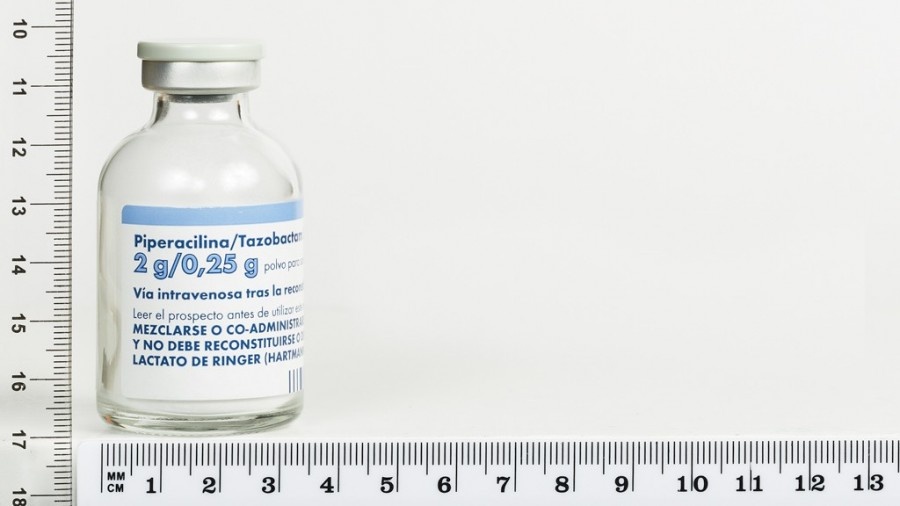
Piperacilina 2 g/0,25 g polvo para solución para perfusión

Revisión de receta online
Un médico revisará tu caso y determinará si la prescripción es médicamente apropiada.

Habla con un médico sobre este medicamento
Comenta tus síntomas y las opciones de tratamiento en una consulta online.



Cómo usar PIPERACILINA/TAZOBACTAM TILLOMED 2 G/0,25 G POLVO PARA SOLUCIÓN PARA PERFUSIÓN EFG
Contenido del prospecto
- Introducción
- Qué es Piperacilina/Tazobactam Tillomed y para qué se utiliza
- Qué necesita saber antes de empezar a usar Piperacilina/Tazobactam Tillomed
- No use Piperacilina/Tazobactam Tillomed
- Cómo usar Piperacilina/Tazobactam Tillomed
- Posibles efectos adversos
- Conservación de Piperacilina/Tazobactam Tillomed
- Contenido del envase e información adicional
- Composición de piperacilina/tazobactam Tillomed
Introducción
Prospecto: información para el usuario
Piperacilina/Tazobactam Tillomed 2 g/0,25 g polvo para solución para perfusión EFG
Lea todo el prospecto detenidamente antes de empezar a usar este medicamento, porque contiene información importante para usted.
- Conserve este prospecto, ya que puede tener que volver a leerlo.
- Si tiene alguna duda, consulte a su médico, farmacéutico o enfermero.
- Si experimenta efectos adversos, consulte a su médico, farmacéutico o enfermero, incluso si se trata de efectos adversos que no aparecen en este prospecto. Ver sección 4.
Contenido del prospecto
- Qué es Piperacilina/Tazobactam Tillomed y para qué se utiliza
- Qué necesita saber antes de empezar a usar Piperacilina/Tazobactam Tillomed
- Cómo usar Piperacilina/Tazobactam Tillomed
- Posibles efectos adversos
- Conservación de Piperacilina/Tazobactam Tillomed
- Contenido del envase e información adicional
1. Qué es Piperacilina/Tazobactam Tillomed y para qué se utiliza
Piperacilina/Tazobactam Tillomed contiene los principios activos piperacilina y tazobactam.
Piperacilina pertenece al grupo de medicamentos llamado “antibióticos penicilínicos de amplio espectro” y pueden destruir muchos tipos de bacterias. Tazobactam puede evitar que algunas bacterias resistentes sobrevivan a los efectos de la piperacilina. De esta forma, al administrar juntos piperacilina y tazobactam, se destruyen más tipos de bacterias.
Los antibióticos se utilizan para tratar infecciones bacterianas y no sirven para tratar infecciones víricas como la gripe o el catarro. Es importante que siga las instrucciones relativas a la dosis, las tomas y la duración del tratamiento indicadas por su médico. No guarde ni reutilice este medicamento. Si una vez finalizado el tratamiento le sobra antibiótico, devuélvalo a la farmacia para su correcta eliminación. No debe tirar los medicamentos por el desagüe ni a la basura. |
Piperacilina/Tazobactam se utiliza en adultos y adolescentes para tratar infecciones bacterianas, como las que afectan al aparato respiratorio inferior (pulmones), aparato urinario (riñones y vejiga), abdomen, piel o sangre. Piperacilina/Tazobactam se puede utilizar para tratar infecciones bacterianas en pacientes con recuentos bajos de glóbulos blancos (menor resistencia a las infecciones).
Piperacilina/Tazobactam se utiliza en niños entre 2 y 12 años de edad para tratar infecciones en el abdomen, como apendicitis, peritonitis (infección del fluido y del revestimiento de los órganos del abdomen), y las infecciones de la vesícula biliar. Piperacilina/Tazobactam se puede utilizar para tratar infecciones bacterianas en pacientes con recuentos bajos de glóbulos blancos (menor resistencia a infecciones).
En determinadas infecciones graves, su médico puede decidir utilizar Piperacilina/Tazobactam en combinación con otros antibióticos.

¿No estás seguro de si este medicamento es adecuado para ti?
Comenta tus síntomas y tratamiento con un médico online.
2. Qué necesita saber antes de empezar a usar Piperacilina/Tazobactam Tillomed
No use Piperacilina/Tazobactam Tillomed
- si es alérgico a piperacilina sódica, tazobactam sodico o alguno de los demás componentes de este medicamento (incluídos en la seccion 6)
- si es alérgico a los antibióticos llamados penicilinas, cefalosporinas u otros inhibidores de las beta- lactamasas, ya que podría ser alérgico a piperacilina/tazobactam.
Advertencias y precauciones
Consulte a su médico o farmacéutico o enfermero antes de empezar a usar piperacilina/tazobactam:
- si tiene alergias. Si tiene varias alergias, asegúrese de decírselo a su médico u otro profesional sanitario antes de recibir este producto,
- si padece diarrea antes del tratamiento o si la empieza a tener durante o después del tratamiento. En este caso, asegúrese de decírselo inmediatamente a su médico u otro profesional sanitario. No tome ningún medicamento para la diarrea sin consultar antes con su médico,
- si está tomando otro antibiótico llamado vancomicina al mismo tiempo que piperacilina/tazobactam, esto puede aumentar el riesgo de lesión renal (ver también “ Otros medicamentos y Piperacilina/Tazobactam Tillomed” a continuación)
- si tiene los niveles de potasio en sangre bajos. Es posible que su médico quiera examinarle los riñones antes de recibir este medicamento y podría realizarle análisis de sangre periódicos durante el tratamiento,
- si tiene problemas de riñón o de hígado, o si recibe hemodiálisis. Es posible que su médico quiera examinarle los riñones antes de recibir este medicamento y podría realizarle análisis de sangre periódicos durante el tratamiento,
- si está utilizando determinados medicamentos (llamados anticoagulantes) para evitar el exceso de coagulación de la sangre (ver también “Otros medicamentos y Piperacilina/Tazobactam Tillomed” en este prospecto) o si presenta una hemorragia inesperada durante el tratamiento. En este caso, debe informar inmediatamente a su médico u otro profesional sanitario.
- si presenta convulsiones durante el tratamiento. En este caso, debe informar inmediatamente a su médico u otro profesional sanitario.
- si piensa que le ha aparecido una infección nueva o le ha empeorado la infección. En este caso, debe informar inmediatamente a su médico u otro profesional sanitario.
Linfohistiocitosis hemofagocítica
Se han notificado casos de una enfermedad en la que el sistema inmunitario produce demasiados glóbulos blancos, por lo demás normales, denominados histiocitos y linfocitos, lo que provoca una inflamación (linfohistiocitosis hemofagocítica). Esta enfermedad puede ser potencialmente mortal si no se diagnostica y trata precozmente. Si experimenta síntomas múltiples como fiebre, hinchazón de los ganglios, sensación de debilidad, sensación de mareo, dificultad para respirar, hematomas o erupción cutánea, póngase en contacto con su médico inmediatamente.
Niños
No se recomienda utilizar piperacilina/tazobactam en niños menores de 2 años de edad debido a la escasez de datos sobre seguridad y eficacia.
Otros medicamentos y Piperacilina/Tazobactam Tillomed
Informe a su médico, farmacéutico u otro profesional sanitario si está utilizando, ha utilizado recientemente o pudiera tener que utilizar cualquier otro medicamento, incluso los adquiridos sin receta. Algunos medicamentos pueden tener interacciones con la piperacilina o el tazobactam.
Estos incluyen:
- un medicamento para la gota (probenecid). Este producto puede aumentar el tiempo que tardan piperacilina y tazobactam en eliminarse del organismo,
- medicamentos que se utilizan para diluir la sangre o para tratar los coágulos de sangre (por ejemplo, heparina, warfarina o ácido acetilsalicílico),
- medicamentos que se utilizan para relajar los músculos durante la cirugía. Informe a su médico si se va a someter a una anestesia general,
- metotrexato (un medicamento que se utiliza para el tratamiento del cáncer, artritis o psoriasis). Piperacilina y tazobactam pueden aumentar el tiempo que tarda el metotrexato en eliminarse del organismo,
- medicamentos que disminuyen el nivel de potasio en la sangre (p.ej., pastillas para orinar o algunos medicamentos para el cáncer),
- medicamentos que contengan otros antibióticos como tobramicina, gentamicina o vancomicina. Informe a su médico si tiene problemas renales. El uso de Piperacilina/Tazobactam y vancomicina al mismo tiempo puede aumentar el riesgo de lesión renal incluso si no tiene problemas renales.
Efectos sobre los análisis de laboratorio
Si tiene que proporcionar una muestra de sangre u orina, dígale al médico o al personal de laboratorio que está usando piperacilina/tazobactam.
Embarazo y lactancia
Si está embarazada o en periodo de lactancia, cree que podría estar embarazada o tiene intención de quedarse embarazada, consulte a su médico u otro profesional sanitario antes de utilizar este medicamento. Su médico decidirá si piperacilina/tazobactam es adecuado para usted.
Piperacilina y tazobactam pueden pasar al niño en el útero o a través de la leche materna. Si está amamantando a un niño, su médico decidirá si piperacilina/tazobactam es adecuado para usted.
Conducción y uso de máquinas
No se prevé que el uso de Piperacilina/Tazobactam Tillomed influya en la capacidad para conducir o utilizar máquinas.
Piperacilina/Tazobactam Tillomed 2g /0,25 g contiene sodio (como parte del principio activo)
Este medicamento contiene 108,05 mg de sodio (componente principal de la sal de mesa/para cocinar) en cada vial. Esto equivale al 5,4% de la ingesta diaria máxima de sodio recomendada para un adulto.

¿Has empezado a tomar el medicamento y tienes preguntas?
Comenta tus síntomas y tratamiento con un médico online.
3. Cómo usar Piperacilina/Tazobactam Tillomed
Su médico u otro profesional sanitario le administrará este medicamento mediante perfusión intravenosa (en una vena con un gotero durante 30 minutos).
Dosis
La dosis de medicamento que se le administre depende de la enfermedad por la que se le trata, de su edad y de si tiene o no problemas de riñón.
Adultos y adolescentes mayores de 12 años de edad
La dosis habitual es de 4 g/0,5 g de piperacilina/tazobactam administrada cada 6-8 horas a través de una vena (directamente en la circulación sanguínea).
Niños de 2 a 12 años de edad
La dosis habitual para niños con infecciones abdominales es de 100 mg/12,5 mg/kg de peso corporal de piperacilina/tazobactam administrada cada 8 horas a través de una vena (directamente en la circulación sanguínea).
La dosis habitual para niños con cifras bajas de glóbulos blancos es de 80 mg/10 mg/kg de peso corporal de piperacilina/tazobactam administrada cada 6 horas a través de una vena (directamente en la circulación sanguínea).
Su médico calculará la dosis en función del peso del niño, pero cada dosis individual no superará 4 g/0,5 g de piperacilina/tazobactam.
Se le administrará piperacilina/tazobactam hasta que los signos de infección hayan desaparecido por completo (de 5 a 14 días).
Pacientes con problemas renales
Puede ser necesario que su médico le reduzca la dosis de piperacilina/tazobactam o la frecuencia de administración. También es posible que su médico desee realizarle unos análisis de sangre para asegurarse de que recibe la dosis adecuada del tratamiento, especialmente si tiene que utilizar este medicamento durante mucho tiempo.
Si usa más Piperacilina/Tazobactam Tillomed del que debe
Como un médico u otro profesional sanitario le va a administrar piperacilina/tazobactam, es poco probable que reciba una dosis equivocada. Sin embargo, si sufre efectos adversos, como convulsiones, o piensa que le han administrado demasiado medicamento, dígaselo a su médico inmediatamente.
En caso de sobredosis o ingestión accidental, consulte a su médico o farmacéutico o llame al Servicio de Información Toxicológica, teléfono: 91 562 04 20, indicando el medicamento y la cantidad utilizada.
Si olvidó usar Piperacilina/Tazobactam Tillomed
Si piensa que no le han administrado una dosis de piperacilina/tazobactam, dígaselo inmediatamente a su médico u otro profesional sanitario.
Si tiene cualquier otra duda sobre el uso de este medicamento, pregunte a su médico, farmacéutico o enfermero.
4. Posibles efectos adversos
Al igual que todos los medicamentos, este medicamento puede producir efectos adversos, aunque no todas las personas los sufran.
Consulte a un médico de inmediato si experimenta alguno de estos efectos secundarios potencialmente graves de piperacilina/tazobactam:
Los efectos adversos graves (con la frecuencia entre paréntesis) de piperacilina/ tazobactam son:
- erupciones cutáneas graves [síndrome de Stevens-Johnson, dermatitis bullosa (no conocida), dermatitis exfoliativa (no conocida), necrólisis epidérmica tóxica (rara)] que aparece inicialmente como lunares rojizos o manchas circulares con ampollas centrales en el tronco. Otros signos incluyen úlceras en la boca, garganta, nariz, extremidades, genitales y conjuntivitis (ojos rojos e hinchados). La erupción puede progresar a formación de ampollas o descamación generalizada de la piel y, potencialmente, puede ser mortal,
- reacción alérgica grave potencialmente mortal(reacción medicamentosa con eosinofilia y síntomas sistémicos) que puede afectar la piel y otros de los órganos más importantes del organismo como riñones o el hígado,
- una enfermedad de la piel (pustulosis exantemática aguda generalizada) acompañada de fiebre, que consiste en numerosas pústulas pequeñas llenas de líquido que aparecen en grandes áreas de piel hinchada y enrojecida
- hinchazón de la cara, labios, lengua u otras partes del cuerpo (no conocida),
- falta de aire, silbidos o dificultad al respirar (no conocida),
- erupción grave o habones (poco frecuente), picor o erupción en la piel (frecuente)
- coloración amarillenta de los ojos y la piel (no conocida),
- daño de células sanguíneas (los síntomas incluyen: falta de aire cuando no lo espera, orina de color rojo o marrón (no conocida), hemorragias nasales (rara), moretones (no conocida), disminución grave de los glóbulos blancos en la sangre (rara)]
- diarrea grave o persistente acompañada de fiebre o debilidad (rara).
Si cualquiera de los siguientesefectos adversos se vuelve grave o si nota cualquier efecto adverso no mencionado en este prospecto, informe a su médico u otro profesional sanitario
Efectos adversos muy frecuentes (pueden afectar a más de 1 de cada 10 personas)
- diarrea.
Efectos adversos frecuentes (pueden afectar hasta a 1 de cada 10 personas)
- infección por levaduras,
- disminución de las plaquetas, disminución de los glóbulos rojos o de la hemoglobina o pigmento de la sangre, pruebas de laboratorio anormales (Coombs directo positivo), prolongación del tiempo de coagulación de la sangre (tiempo de tromboplastina parcial activado prolongado),
- disminución de las proteínas en sangre,
- dolor de cabeza, insomnio,
- dolor abdominal, vómitos, náuseas, estreñimiento, malestar de estómago,
- aumento de las enzimas hepáticas en sangre,
- erupción cutánea, picazón
- análisis de sangre del riñón anormales,
- fiebre, reacción en el lugar de inyección.
Efectos adversos poco frecuentes (pueden afectar hasta a 1 de cada 100 personas)
- disminución de los glóbulos blancos en sangre (leucopenia), prolongación del tiempo de coagulación de la sangre (tiempo de protrombina prolongado),
- disminución del potasio en sangre, disminución de azúcar en sangre,
- ataques (convulsiones), observados en pacientes con dosis altas o con problemas renales
- tensión arterial baja, inflamación de las venas (sensibilidad o enrojecimiento de la zona afectada), enrojecimiento de la piel,
- aumento de un producto de degradación del pigmento de la sangre (bilirrubina),
- reacciones cutáneas con enrojecimiento, formación de lesiones cutáneas, urticaria
- dolor de músculos y articulaciones,
- escalofríos.
Efectos adversos raros (pueden afectar hasta a 1 de cada 1.000 personas)
- disminución grave de los glóbulos blancos (agranulocitosis), sangrado de la nariz
- infección grave del colon, inflamación del revestimiento mucoso de la boca
- desprendimiento de la capa superior de la piel en todo el cuerpo (necrólisis epidérmica tóxica).
Efectos adversos de frecuencia no conocida (no puede estimarse a partir de los datos disponibles)
- disminución grave de glóbulos rojos, glóbulos blancos y plaquetas (pancitopenia), disminución de glóbulos blancos (neutropenia), disminución de glóbulos rojos debido a la degradación o degradación prematuras, pequeños hematomas, tiempo de sangrado prolongado, aumento de plaquetas, aumento de un tipo específico de glóbulos blancos (eosinofilia),
- reacción alérgica y reacción alérgica grave,
- inflamación del hígado, coloración amarilla de la piel o el blanco de los ojos
- reacción alérgica grave en todo el cuerpo con erupciones cutáneas y mucosas, ampollas y diversas erupciones cutáneas (síndrome de Stevens-Johnson), trastorno alérgico grave que afecta a la piel y otros órganos como el riñón y el hígado (reacción a medicamentos con eosinofilia y síntomas sistémicos), Numerosas ampollas diminutas llenas de líquido contenidas dentro de grandes áreas de piel hinchada y enrojecida acompañadas de fiebre (pustulosis exantemática aguda generalizada), reacciones cutáneas con ampollas (dermatitis ampollosa)
- función renal deficiente y problemas renales,
- un tipo de enfermedad pulmonar donde los eosinófilos (un tipo de glóbulos blancos) aparecen en el pulmón en mayor número.
- desorientación aguda y confusión (delirio)
En los pacientes con fibrosis quística, el tratamiento con piperacilina se ha asociado a un aumento de la incidencia de fiebre y erupciones en la piel.
Los antibióticos betalactámicos, incluida la piperacilina tazobactam, pueden provocar manifestaciones de encefalopatía y convulsiones
Comunicación de efectos adversos:
Si experimenta cualquier tipo de efecto adverso, consulte a su médico, farmacéutico o enfermero, incluso si se trata de posibles efectos adversos que no aparecen en este prospecto. También puede comunicarlos directamente a través del Sistema Español de Farmacovigilancia de medicamentos de Uso Humano: https://www.notificaram.es . Mediante la comunicación de efectos adversos, usted puede contribuir a proporcionar más información sobre la seguridad de este medicamento.
5. Conservación de Piperacilina/Tazobactam Tillomed
Mantener fuera de la vista y del alcance de los niños.
No utilice este medicamento después de la fecha de caducidad que aparece en el envase y la etiqueta después de “CAD”. La fecha de caducidad es el último día del mes que se indica.
No requiere condiciones especiales de conservación.
Solución reconstituida/diluida para perfusión
Se ha demostrado la estabilidad química y física en uso durante 12 horas a 25 °C y durante 48 horas a 2-8 °C.
Desde un punto de vista microbiológico, el producto debe utilizarse inmediatamente. Si no se usa inmediatamente, los tiempos de almacenamiento en uso y las condiciones antes del uso son responsabilidad del usuario y normalmente no excederán las 24 horas a 2-8 °C, a menos que la reconstitución/dilución haya tenido lugar en condiciones asépticas controladas y validadas.
Los viales no deben congelarse después de la reconstitución.
No tire ningún medicamento por los desagues ni a la basura. Pregúntele a su farmacéutico cómo desechar los medicamentos que ya no usa. Estas medidas ayudarán a proteger el medio ambiente.
6. Contenido del envase e información adicional
Composición de piperacilina/tazobactam Tillomed
Piperacilina/Tazobactam Tillomed 2 g/0,25 g
- Los principios activos son piperacilina y tazobactam.
- Cada vial contiene 2 g de piperacilina (como piperacilina sódica) y 0,25 g de tazobactam (como tazobactam sódico).
- Este medicamento no contiene más ingredientes que los principios activos
Aspecto del producto y contenido del envase
El medicamento es un aglomerado o polvo blanquecino a blanco para solución para perfusión.
El medicamento está disponible en viales de vidrio tipo I de 30 ml con tapones de goma de bromobutilo y tapa combinada de plástico de aluminio gris.
Tamaños de envase: 1 o 10 viales
Puede que solamente estén comercializados algunos tamaños de envases.
Titular de la autorización de comercialización y responsable de la fabricación
Titular de la autorización de comercialización:
Laboratorios Tillomed Spain, S.L.U
c/ Cardenal Marcelo Spínola 8
28016 Madrid
España
Responsable de la fabricación: (1)
MIAS Pharma Limited
Suite 2
Stafford House, Strand Road
Portmarnock
D13 H525
Irlanda
Pharmadox Healthcare Ltd
KW20A Kordin Industrial Park
Paola PLA 3000, Malta
Tillomed Malta Limited,
Malta Life Sciences Park,
LS2.01.06 Industrial Estate,
San Gwann, SGN 3000,
Malta
(1) Solo el fabricante real será indicado en el prospecto
Este medicamento está autorizado en los estados miembros del Espacio Económico Europeo con siguientes nombres:
Alemania Piperacillin/ Tazobactam Tillomed 2 g/0,25 g Pulver zur Herstellung einer Infusionslösung
Francia Piperacilline/Tazobactam Tillomed 2 g/0,2 g, poudre pour solution pour perfusion
Italia Piperacillin/Tazobactam Tillomed
Paises Bajos Piperacilline/Tazobactam Tillomed 2 g/0,25 g poeder voor oplossing voor infusie
España Piperacilina/Tazobactam Tillomed 2 g/0,25 g porvo para solución para perfusión EFG
Fecha de la última revisión de este prospecto: Noviembre 2022
La información detallada de este medicamento está disponible en la página web de la Agencia Española de Medicamentos y Productos Sanitarios (AEMPS)
http://www.aemps.gob.es.
Esta información está destinada únicamente a profesionales del sector sanitario:
Instrucciones de uso
Piperacilina/Tazobactam se administrará mediante perfusión intravenosa (gotero durante 30 minutos).
Instrucciones para la reconstitución y dilución
Reconstituya cada vial con el volumen de disolvente que se muestra en la siguiente tabla, utilizando uno de los disolventes compatibles para la reconstitución. Agitar hasta que se disuelva. Cuando se agita constantemente, la reconstitución generalmente ocurre dentro de los 5 a 10 minutos (véanse los detalles de manipulación más adelante).
Contenido del vial | Volumen de disolvente* que debe añadirse al vial |
2 g /0,25 g (2 g de piperacilina y 0,25 g de tazobactam) | 10 ml |
- Disolventes compatibles para reconstitución:
- solución inyectable de cloruro sódico 9 mg/ml (0,9%)
- agua para preparaciones inyectables estéril (1)
- solución inyectable de glucosa 50 mg/ml (5%)
(1) El volumen máximo recomendado de agua para preparaciones inyectables estéril por dosis es de 50 ml.
Las soluciones reconstituidas se deben extraer del vial con una jeringa. Después de la reconstitución del modo indicado, el contenido del vial extraído con una jeringa proporcionará la cantidad nominal de piperacilina y tazobactam.
Las soluciones reconstituidas se pueden diluir posteriormente hasta el volumen deseado (por ejemplo, de 50 ml a 150 ml) con uno de los siguientes disolventes compatibles:
- solución inyectable de cloruro sódico 9 mg/ml ( 0,9%)
- glucosa 50 mg/ml (5%)
- dextrano 60 mg/ml (6%) en cloruro sódico 9 mg/ml (0,9%).
Incompatibilidades
Siempre que se utilice este producto simultáneamente con otro antibiótico (p. ej. Amnioglucósidos), las sustancias deben administrarse por separado. La mezcla de antibióticos betalactámicos con aminoglucósidos in vitropuede dar lugar a una inactivación sustancial del aminoglucósido.
Piperacilina/Tazobactam Tillomed no se debe mezclar con otras sustancias en una jeringa o frasco para perfusión, ya que no se ha establecido su compatibilidad.
Por causas de inestabilidad química, Piperacilina/Tazobactam no debe utilizarse con soluciones que solamente contengan bicarbonato sódico.
Piperacilina/Tazobactam Tillomed no se debe añadir a hemoderivados o a hidrolizados de albúmina.
Piperacilina/Tazobactam Tillomed no debe usarse con solución de Ringer Lactato, solución de acetato de Ringer, solución de acetato/malato de Ringer y solución de Hartmann.
- País de registro
- Forma farmacéuticaINYECTABLE PERFUSION, 2 G/0,25 G
- Código ATCJ01CR05
- Principio activo
- Requiere recetaSí
- Fabricante
- Esta información es de carácter general y no sustituye la consulta con un profesional sanitario.
- Alternativas a PIPERACILINA/TAZOBACTAM TILLOMED 2 G/0,25 G POLVO PARA SOLUCIÓN PARA PERFUSIÓN EFGForma farmacéutica: INYECTABLE PERFUSION, 2 g/0,25 gPrincipio activo: piperacillin and beta-lactamase inhibitorFabricante: Accord Healthcare S.L.U.Requiere recetaForma farmacéutica: INYECTABLE PERFUSION, 4 G/0,5 GPrincipio activo: piperacillin and beta-lactamase inhibitorFabricante: Accord Healthcare S.L.U.Requiere recetaForma farmacéutica: INYECTABLE PERFUSION, 4 g piperacilina sodica/ 0.5 g tazobactam sodicoPrincipio activo: piperacillin and beta-lactamase inhibitorFabricante: Accord Healthcare S.L.U.Requiere receta
Médicos online para PIPERACILINA/TAZOBACTAM TILLOMED 2 G/0,25 G POLVO PARA SOLUCIÓN PARA PERFUSIÓN EFG
Comenta la dosis, los posibles efectos secundarios, interacciones, contraindicaciones o la revisión de receta de PIPERACILINA/TAZOBACTAM TILLOMED 2 G/0,25 G POLVO PARA SOLUCIÓN PARA PERFUSIÓN EFG, sujeto a valoración médica y a la normativa local.









Preguntas frecuentes
PIPERACILINA/TAZOBACTAM TILLOMED 2 G/0,25 G POLVO PARA SOLUCIÓN PARA PERFUSIÓN EFG requiere receta en España. Puedes confirmarlo con un médico online según tu caso.
El principio activo de PIPERACILINA/TAZOBACTAM TILLOMED 2 G/0,25 G POLVO PARA SOLUCIÓN PARA PERFUSIÓN EFG es piperacillin and beta-lactamase inhibitor. Esta información ayuda a identificar medicamentos con la misma composición pero con diferentes nombres comerciales.
PIPERACILINA/TAZOBACTAM TILLOMED 2 G/0,25 G POLVO PARA SOLUCIÓN PARA PERFUSIÓN EFG es fabricado por Laboratorios Tillomed Spain S.L.. La marca y el envase pueden variar según el distribuidor.
Los Médicos de familia, Psiquiatras, Dermatólogos, Cardiólogos, Endocrinólogos, Gastroenterólogos, Neumólogos, Nefrólogos, Reumatólogos, Hematólogos, Infectólogos, Alergólogos, Geriatras, Pediatras, Oncólogos pueden valorar la prescripción de PIPERACILINA/TAZOBACTAM TILLOMED 2 G/0,25 G POLVO PARA SOLUCIÓN PARA PERFUSIÓN EFG cuando esté clínicamente indicado. Puedes reservar una videoconsulta para comentar tu caso y las opciones de tratamiento.
La receta la emite un médico tras valorar tu estado de salud. En España, PIPERACILINA/TAZOBACTAM TILLOMED 2 G/0,25 G POLVO PARA SOLUCIÓN PARA PERFUSIÓN EFG se dispensa en las farmacias con esa receta médica. Una consulta online no garantiza su emisión: la decisión corresponde siempre al médico.
Para solicitar una valoración puedes usar Oladoctor:
Otros medicamentos con el mismo principio activo (piperacillin and beta-lactamase inhibitor) incluyen PIPERACILINA/TAZOBACTAM ACCORD HEALTHCARE 2 G/0,25 G POLVO PARA SOLUCION PARA PERFUSION EFG, PIPERACILINA/TAZOBACTAM ACCORD HEALTHCARE 4 G/0,5 G POLVO PARA SOLUCION PARA PERFUSION EFG, PIPERACILINA/TAZOBACTAM ACCORDPHARMA 4/0,5 g POLVO PARA SOLUCION INYECTABLE EFG. Pueden tener diferentes nombres comerciales o formulaciones, pero contienen el mismo componente terapéutico. Consulta siempre con un médico antes de cambiar o iniciar un nuevo medicamento.
