






Cómo usar PARICALCITOL STADA 1 MICROGRAMO CAPSULAS BLANDAS EFG
Traducción generada por IA
Este contenido ha sido traducido automáticamente y se ofrece solo con fines informativos. No sustituye la consulta con un profesional sanitario.
Ver originalContenido del prospecto
Introducción
Prospecto: Información para el usuario
ParicalcitolStada1 microgramo cápsulas blandas EFG
Lea todo el prospecto detenidamente antes de empezar a tomar este medicamento,porque contiene información importante para usted.
- Conserve este prospecto, ya que puede tener que volver a leerlo.
- Si tiene alguna duda, consulte a su médico o farmacéutico.
- Este medicamento se le ha recetado solamente a usted, y no debe dárselo a otras personas aunque tengan los mismos síntomas que usted, ya que puede perjudicarles.
- Si experimenta efectos adversos, consulte a su médico o farmacéutico, incluso si se trata de efectos adversos que no aparecen en este prospecto. Ver sección 4.
Contenido del prospecto
- Qué es Paricalcitol Stada y para qué se utiliza
- Qué necesita saber antes de empezar a tomar Paricalcitol Stada
- Cómo tomar Paricalcitol Stada
- Posibles efectos adversos
- Conservación de Paricalcitol Stada
- Contenido del envase e información adicional
1. Qué es Paricalcitol Stada y para qué se utiliza
Paricalcitol Stada contiene el principio activo paricalcitol, que es una forma sintética de la vitamina D activa.
La vitamina D activa es necesaria para el funcionamiento normal de muchos tejidos del cuerpo, incluyendo la glándula paratiroidea y los huesos. En las personas que tienen la función renal normal, esta forma activa de la vitamina D se produce de forma natural por los riñones, pero en la insuficiencia renal la producción de vitamina D activa está marcadamente reducida. Por tanto, paricalcitol proporciona una fuente de vitamina D activa cuando el organismo no puede producir suficiente y ayuda a prevenir las consecuencias de niveles bajos de vitamina D activa concretamente niveles altos de hormona paratiroidea que pueden causar problemas óseos. Paricalcitol se utiliza en pacientes adultos con enfermedad renal estadíos 3, 4 y 5 y niños de 10 a 16 años con enfermedad renal etapas 3 y 4.

2. Qué necesita saber antes de empezar a tomar Paricalcitol Stada
Notome ParicalcitolStada:
- si es alérgicoal paricalcitol o a alguno de los demás componentes de este medicamento (incluidos en la sección 6).
- si tiene niveles muy altos de calcioo vitamina Den su sangre.
Su médico le dirá si le afectan estas condiciones.
Advertencias y precauciones
Consulte a su médico o farmacéutico antes de empezar a tomar Paricalcitol Stada.
- antes de iniciar el tratamiento, es importante que limite la cantidad de fósforo en su dieta.
- puede que sea necesario utilizar agentes quelantes de fósforo para controlar los niveles de fósforo.
- si usted está tomando agentes quelantes de fósforo con contenido en calcio, su médico puede modificarle la dosis.
- su médico le realizará análisis de sangre para el seguimiento de su tratamiento.
- en algunos pacientes con enfermedad renal crónica en estadíos 3 y 4 se ha observado un aumento de los niveles de una sustancia llamada creatinina. No obstante, este incremento no se refleja en una disminución de la función renal.
Toma de ParicalcitolStadacon otros medicamentos
Informe a su médico o farmacéutico si está utilizando, ha utilizado recientemente o pudiera tener que utilizar cualquier otro medicamento.
Algunos medicamentos pueden afectar a la acción de paricalcitol o puede aumentar la probabilidad de producir efectos adversos. Es particularmente importante informar a su médico si está tomando alguno de los siguientes medicamentos:
- para tratar las infecciones por hongos tales como cándida, aftas bucales (por ejemplo, ketoconazol)
- para tratar problemas del corazón o la tensión arterial alta (por ejemplo digoxina, diuréticos o medicamentos que eliminan líquidos);
- que contienen alto contenido en calcioo Vitamina D, incluyendo suplementos o multivitaminas que se pueden comprar sin receta médica;
- que contienen magnesioo aluminio (por ejemplo algunos medicamentos para la indigestión (antiácidos) y medicamentos que se unen al fósforo.
- para tratar niveles elevados de colesterol (por ejemplo colestiramina),
Toma de ParicalcitolStadacon alimentos y bebidas
Paricalcitol Stada puede tomarse con o sin alimentos.
Embarazo, lactancia y fertilidad
Si está embarazada o en periodo de lactancia, cree que pudiera estar embarazada o tiene intención de quedarse embarazada, consulte a su médico o farmacéutico antes de utilizar este medicamento.
No existen datos suficientes sobre la utilización de paricalcitol en mujeres embarazadas. Se desconoce el riesgo en seres humanos, por ello, paricalcitol no debería utilizarse durante el embarazo excepto si fuese claramente necesario.
Se desconoce si paricalcitol pasa a la leche materna. Si está tomando paricalcitol, informe a su médico antes de darle el pecho a su hijo.
Conducción y uso de máquinas
Paricalcitol Stada no debería afectar a su capacidad para conducir o manejar máquinas.
ParicalcitolStadacontiene etanol
Este medicamento contiene pequeñas cantidades de etanol (un alcohol), menos de 100 mg por cápsula, lo cual puede modificar o aumentar el efecto de otros medicamentos. Esto puede ser perjudicial para personas que sufren enfermedad hepática, alcoholismo, epilepsia, daño o enfermedad cerebral, así como en mujeres embarazadas o en periodo de lactancia y niños.
3. Cómo tomar Paricalcitol Stada
Siga exactamente las instrucciones de administración de este medicamento indicadas por su médico o farmacéutico. En caso de duda, consulte de nuevo a su médico o farmacéutico.
Enfermedad renal crónica, estadíos 3 y 4
En pacientes adultos la dosis habitual inicial es de una cápsula diaria, o una cápsula en días alternos hasta un máximo de tres veces a la semana. Su médico utilizará los resultados de algunas pruebas de laboratorio para decidir la dosis correcta para usted. Una vez iniciado el tratamiento con paricalcitol, es probable que necesite un ajuste de la dosis en función de su respuesta al tratamiento. Su médico le ayudará a determinar la dosis correcta de paricalcitol.
Enfermedad renal crónica, estadio 5
En pacientes adultos la dosis habitual inicial es de una cápsula en días alternos, hasta un máximo de tres veces a la semana. Su médico utilizará los resultados de algunas pruebas de laboratorio para determinar la dosis correcta para usted. Una vez iniciado el tratamiento con paricalcitol, es probable que necesite un ajuste de la dosis en función de su respuesta al tratamiento. Su médico le ayudará a determinar la dosis correcta de paricalcitol.
Enfermedad hepática
Si usted padece de enfermedad hepática de leve a moderada, no necesitará ajustar la dosis. Sin embargo, no hay experiencia en pacientes con enfermedad hepática grave.
Transplanterenal
La dosis habitual es de una cápsula diaria, o una cápsula en días alternos hasta un máximo de tres veces a la semana. Su médico utilizará los resultados de algunas pruebas de laboratorio para decidir la dosis correcta para usted. Una vez iniciado el tratamiento con paricalcitol, es probable que necesite un ajuste de la dosis en función de su respuesta al tratamiento. Su médico le ayudará a determinar la dosis correcta de paricalcitol.
Uso en niñosy adolescentes
En niños de 10 a 16 años de edad con enfermedad renal crónica estadíos 3 o 4, la dosis inicial habitual es de una cápsula cada dos días, hasta tres veces por semana. Su médico utilizará los resultados de algunas pruebas de laboratorio para decidir la dosis correcta para usted. Una vez que se inicia paricalcitol, es probableque necesite un ajuste de la dosis en función de su respuesta al tratamiento.Su médico le ayudará a determinar la dosis correcta de paricalcitol.
La eficacia de paricalcitol en niños con ERC estadío 5 no se ha establecido.
No hay información sobre el uso de paricalcitol cápsulas en niños menores de 10 años.
Pacientes de edad avanzada
Hay una experiencia limitada en el uso de paricalcitol en pacientes de 65 años y mayores. En general, no se han observado diferencias globales de efectividad o seguridad entre pacientes mayores de 65 años y pacientes jóvenes.
Si toma más ParicalcitolStadadel que debe
Una dosis excesiva de paricalcitol puede producir niveles de calcio en sangre anormalmente altos, lo cual puede ser perjudicial. Los síntomas que pueden aparecer después de tomar una dosis excesiva de paricalcitol pueden incluir: sensación de debilidad y/o somnolencia, dolor de cabeza, náuseas (sentirse mal) o vómitos (estar mal), sequedad de boca, estreñimiento, dolor en los músculos o en los huesos y sabor metálico.
Los síntomas que pueden producirse a largo plazo tras una ingesta excesiva de paricalcitol pueden incluir: pérdida de apetito, sensación de debilidad, pérdida de peso, sequedad de ojos, goteo de la nariz, picores en la piel, sensación de calor y fiebre, pérdida del apetito sexual, dolor abdominal fuerte (debido a una inflamación del páncreas), y piedras en el riñón. Puede verse afectada su presión arterial y pueden producirse latidos irregulares del corazón (palpitaciones). Los resultados de los análisis de sangre y orina pueden mostrar colesterol alto, urea, nitrógeno y niveles elevados de enzimas hepáticas. Raras veces paricalcitol puede causar cambios mentales como confusión, somnolencia, insomnio o nerviosismo.
Si toma demasiado paricalcitol, o experimenta alguno de los síntomas descritos arriba, consulte inmediatamente a su médico. En caso de sobredosis o ingestión accidental, consulte inmediatamente a su médico o farmacéutico o llame al Servicio de Información Toxicológica, teléfono 91.562.04.20, indicando el medicamento y la cantidad ingerida. Se recomienda llevar el envase y el prospecto del medicamento al profesional sanitario.
Si olvidó tomar ParicalcitolStada
Si olvidó tomar una dosis, tómela tan pronto como se acuerde. Sin embargo, si está cerca el momento de la toma de la siguiente cápsula no ingiera la cápsula que ha olvidado y continúe normalmente con el tratamiento tal y como su médico le había indicado.
No tome una dosis doble para compensar las dosis olvidadas.
Si interrumpe el tratamiento con ParicalcitolStada
No interrumpa el tratamiento con paricalcitol salvo que su médico se lo indique.
Si tiene cualquier otra duda sobre el uso de este medicamento, pregunte a su médico o farmacéutico.

4. Posibles efectos adversos
Al igual que todos los medicamentos, este medicamento puede producir efectos adversos aunque no todas las personas los sufran.
Importante: Aviseinmediatamente a su médico si nota cualquiera de los siguientes efectos adversos:
Los efectos adversos frecuentes (pueden afectar hasta 1 de cada 10 personas) observados en pacientes durante el uso de cápsulas de paricalcitol incluyen aumento de los niveles en sangre de una sustancia llamada calcio, además del aumento del tiempo de calcio, puede ocurrir el aumento de otra sustancia llamada fosfato (en pacientes con enfermedades renales crónicas significativas). Los niveles de fosfato en la sangre también pueden aumentar.
Los efectos adversos poco frecuentes (pueden afectar hasta 1 de cada 100 personas) observados en pacientes durante el uso de cápsulas de paricalcitol incluyen reacciones alérgicas (tales como dificultad para respirar, erupción cutánea, picor, o hinchazón de la cara y los labios), disminución de los niveles de hormona paratiroidea, diarrea, calambres musculares, náuseas, mareo, malestar o dolor de estómago, vómitos, debilidad, cansancio, erupción cutánea, neumonía, disminución del apetito, disminución de los niveles de calcio, sabor raro en la boca, latido del corazón irregular, estreñimiento, sequedad de boca, ardor de estómago (reflujo o indigestión), acné, picores en la piel, urticaria, dolor muscular, sensibilidad de la mama, sensación de malestar, hinchazón en las piernas, dolor, aumento de los niveles de creatinina y alteraciones en los análisis de la función hepática y cefalea.
Si experimenta una reacción alérgica, por favor, contacte con su médico inmediatamente.
Comunicación de efectos adversos
Si experimenta cualquier tipo de efecto adverso, consulte a su médico o enfermero, incluso si se trata de posibles efectos adversos que no aparecen en este prospecto. También puede comunicarlos directamente a través del Sistema Español de Farmacovigilancia de Medicamentos de Uso Humano: https://www.notificaram.es. Mediante la comunicación de efectos adversos usted puede contribuir a proporcionar más información sobre la seguridad de este medicamento.
5. Conservación de Paricalcitol Stada
Mantener este medicamento fuera de la vista y del alcance de los niños.
No conservar a temperatura superior a 30ºC.
No utilice este medicamento después de la fecha de caducidad que aparece en el envase después de CAD. La fecha de caducidad es el último día del mes que se indica.
Los medicamentos no se deben tirar por los desagües ni a la basura. Deposite los envases y los medicamentos que no necesita en el Punto SIGRE de la farmacia. En caso de duda pregunte a su farmacéutico cómo deshacerse de los envases y de los medicamentos que no necesita. De esta forma ayudará a proteger el medio ambiente.
6. Contenido del envase e información adicional
Composición de ParicalcitolStada
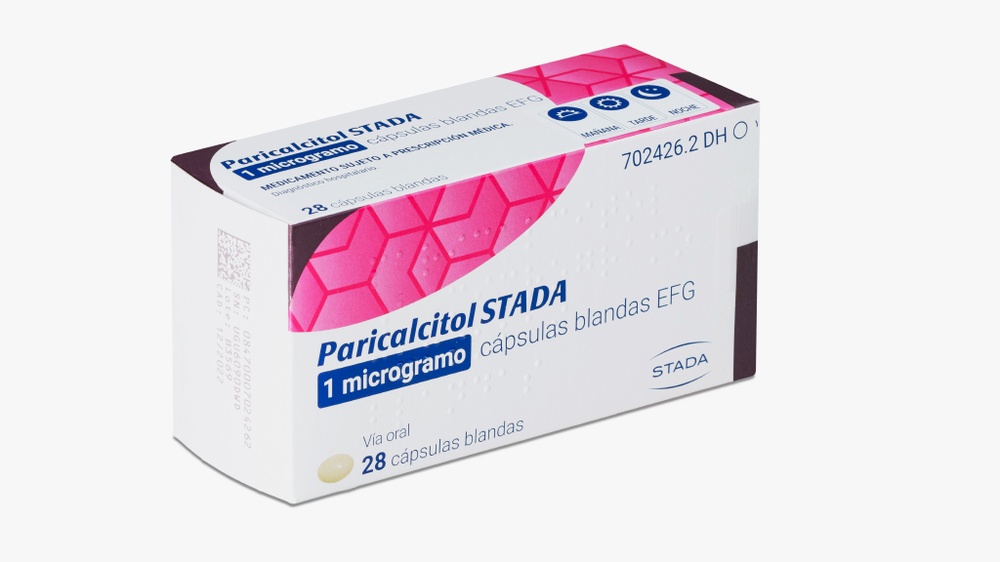
- El principio activo es paricalcitol. Cada cápsula blanda contiene 1 microgramo de paricalcitol.
- Los demás componentes son:
- contenido de la cápsula: triglicéridos de cadena media, etanol 96% e butilhidroxitolueno (E321).
- cápsula: gelatina (E441), agua, glicerol (E422), dióxido de titanio (E 171).
Aspecto del producto y contenido del envase
Paricalcitol Stada 1 microgramo son cápsulas blandas, ovaladas, de color blanco o blanquecino, que contienen un líquido aceitoso transparente.
Se encuentra disponible en envases blíster de 7, 28 o 30 cápsulas.
Puede que solamente estén comercializados algunos tamaños de envases.
Titular de la autorización de comercialización y responsable de la fabricación
Titular de la autorización de comercialización
Laboratorio STADA, S.L.
Frederic Mompou, 5
08960 Sant Just Desvern (Barcelona)
España
Responsable de la fabricación
STADA Arzneimittel AG
Stadastrasse 2-18
61118 Bad Vilbel
Alemania
Fecha de la última revisión de este prospecto: Diciembre 2018
La información detallada y actualizada de este medicamento está disponible en la página Web de la Agencia Española de Medicamentos y Productos Sanitarios (AEMPS) http://www.aemps.gob.es/
-

- País de registro
- Forma farmacéuticaCAPSULA, 1 microgramo
- Código ATCH05BX02
- Principio activo
- Requiere recetaSí
- Fabricante
- Esta información es de carácter general y no sustituye la consulta con un profesional sanitario.
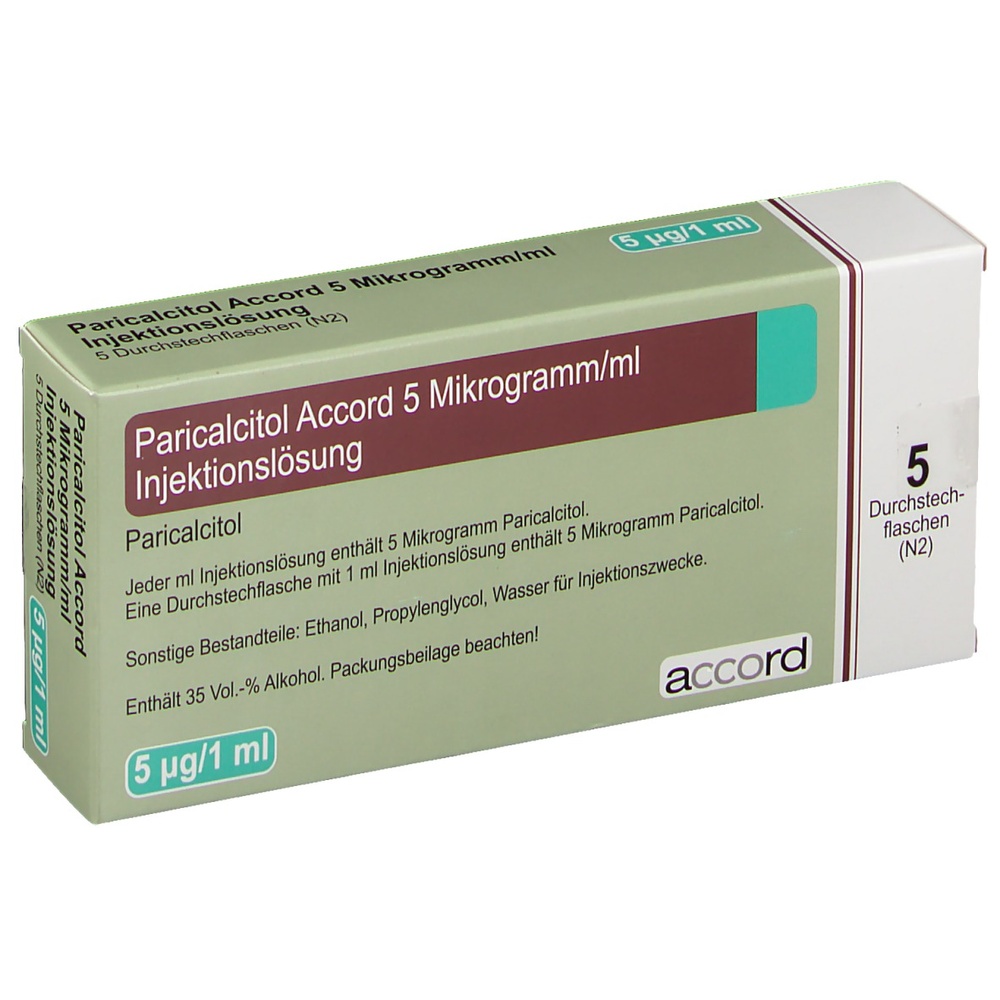
- Alternativas a PARICALCITOL STADA 1 MICROGRAMO CAPSULAS BLANDAS EFGForma farmacéutica: INYECTABLE, 2 mcg/mlPrincipio activo: ParicalcitolFabricante: Accord Healthcare S.L.U.Requiere recetaForma farmacéutica: INYECTABLE, 5 mcg/mlPrincipio activo: ParicalcitolFabricante: Accord Healthcare S.L.U.Requiere recetaForma farmacéutica: INYECTABLE, 2 microgramosPrincipio activo: ParicalcitolFabricante: Accord Healthcare S.L.U.Requiere receta

Médicos online para PARICALCITOL STADA 1 MICROGRAMO CAPSULAS BLANDAS EFG
Comenta la dosis, los posibles efectos secundarios, interacciones, contraindicaciones o la revisión de receta de PARICALCITOL STADA 1 MICROGRAMO CAPSULAS BLANDAS EFG, sujeto a valoración médica y a la normativa local.



Obtén una receta de PARICALCITOL STADA 1 MICROGRAMO CAPSULAS BLANDAS EFG online
Rellena un formulario de 2 minutos
Cuéntanos tus síntomas, historial y el medicamento que necesitas.
Elige un médico o nosotros te asignamos uno
Escoge un especialista o te conectamos con el próximo médico disponible.
El médico revisa tu caso
Normalmente en 30 minutos. Puede hacerte preguntas adicionales por chat.
Recógela en cualquier farmacia
Receta electrónica enviada a tu correo, válida en toda España.
Preguntas frecuentes
PARICALCITOL STADA 1 MICROGRAMO CAPSULAS BLANDAS EFG requires receta en España. Puedes confirmarlo con un médico online según tu caso.
El principio activo de PARICALCITOL STADA 1 MICROGRAMO CAPSULAS BLANDAS EFG es Paricalcitol. Esta información ayuda a identificar medicamentos con la misma composición pero con diferentes nombres comerciales.
PARICALCITOL STADA 1 MICROGRAMO CAPSULAS BLANDAS EFG es fabricado por Laboratorio Stada S.L.. La marca y el envase pueden variar según el distribuidor.
Los Médicos de familia, Psiquiatras, Dermatólogos, Cardiólogos, Endocrinólogos, Gastroenterólogos, Neumólogos, Nefrólogos, Reumatólogos, Hematólogos, Infectólogos, Alergólogos, Geriatras, Pediatras, Oncólogos pueden valorar la prescripción de PARICALCITOL STADA 1 MICROGRAMO CAPSULAS BLANDAS EFG cuando esté clínicamente indicado. Puedes reservar una videoconsulta para comentar tu caso y las opciones de tratamiento.
España cuenta con una infraestructura sanitaria bien desarrollada en ciudades principales como Madrid, Barcelona, Valencia y Sevilla. Las farmacias están ampliamente disponibles y operan bajo estrictas regulaciones, garantizando el acceso a medicamentos con receta.
Puedes comprar PARICALCITOL STADA 1 MICROGRAMO CAPSULAS BLANDAS EFG en Madrid, Barcelona, Sevilla o Valencia en cualquier farmacia local con una receta válida.
Para obtener una receta, puedes utilizar Oladoctor:
Otros medicamentos con el mismo principio activo (Paricalcitol) incluyen PARICALCITOL ACCORD 2 MICROGRAMOS/ML SOLUCION INYECTABLE EFG, PARICALCITOL ACCORD 5 MICROGRAMOS/ML SOLUCION INYECTABLE EFG, PARICALCITOL ACCORDPHARMA 2 MICROGRAMOS/ML SOLUCION INYECTABLE EFG. Pueden tener diferentes nombres comerciales o formulaciones, pero contienen el mismo componente terapéutico. Consulta siempre con un médico antes de cambiar o iniciar un nuevo medicamento.
