






Cómo usar PARACODINA 2,4 mg/ml JARABE
Traducción generada por IA
Este contenido ha sido traducido automáticamente y se ofrece solo con fines informativos. No sustituye la consulta con un profesional sanitario.
Ver originalContenido del prospecto
Introducción
Prospecto: información para el paciente
Paracodina 2,4 mg/ml jarabe
Dihidrocodeína bitartrato
Lea todo el prospecto detenidamente antes de empezar a tomar este medicamento, porque contiene información importante para usted.
- Conserve este prospecto, ya que puede tener que volver a leerlo.
- Si tiene alguna duda, consulte a su médico o farmacéutico.
- Este medicamento se le ha recetado solamente a usted, y no debe dárselo a otras personas aunque tengan los mismos síntomas que usted, ya que puede perjudicarles.
- Si experimenta efectos adversos, consulte a su médico o farmacéutico, incluso si se trata de efectos adversos que no aparecen en este prospecto. Ver sección 4.
Contenido del prospecto:
- Qué es Paracodina y para qué se utiliza
- Qué necesita saber antes de empezar a tomar Paracodina
- Cómo tomar Paracodina
- Posibles efectos adversos
- Conservación de Paracodina
- Contenido del envase e información adicional
1. Qué es Paracodina y para qué se utiliza
Paracodina se presenta en forma de jarabe conteniendo dihidrocodeína bitartrato como principio activo. La dihidrocodeína pertenece al grupo de medicamentos llamados antitusígenos que sirven para tratar la tos.
Este medicamento está indicado para el tratamiento sintomático de la tos seca (no acompañada de mucosidad).

2. Qué necesita saber antes de empezar a tomar Paracodina
No tome Paracodina
- Si es alérgico a dihidrocodeína y a sus sales o a alguno de los demás componentes de este medicamento (incluidos en la sección 6).
- Si tiene problemas respiratorios como Enfermedad Pulmonar Obstructiva Crónica (EPOC), depresión respiratoria (respiración lenta o con fuerza insuficiente) o ataques agudos de asma.
- si está en estado de coma (estado grave de pérdida de consciencia).
- Si está en el tercer trimestre del embarazo (ver sección “Embarazo y lactancia”).
- Durante el periodo de lactancia materna (ver sección “Embarazo y lactancia”).
- En niños menores de 2 años.
Advertencia y precauciones
Consulte a su médico o farmacéutico antes de empezar a tomar Paracodina.
No se recomienda su uso:
- si padece enfermedades que cursen con problemas respiratorios,
- si padece problemas de consciencia o presión intracraneal elevada (presión elevada en el interior de la cabeza) o tiene antecedentes de ataques epilépticos, ya que se puede aumentar la depresión respiratoria (respiración lenta o con fuerza insuficiente),
- si está en los cuatro primeros meses del embarazo (ver sección “Embarazo y lactancia”),
- si tiene esterñimiento crónico o tiene riesgo o padece íleo paralítico (parálisis del movimiento intestinal),
- si presenta diarrea asociada a colitis pseudomembranosa (inflamación del colon) causada por antibióticos o en diarrea causada por intoxicación hasta que se haya eliminado el material tóxico del tracto gastrointestinal,
- si tiene dependencia a opiáceos.
Debe administrarse con precaución:
- en personas de edad avanzada, ya que puede ser más sensible a los efectos de este medicamento,
- si presenta problemas de hígado o riñón,
- si padece hipertrofia de próstata (agrandamiento de la próstata), estenosis uretral (estrechamiento anormal de la uretra),
- si padece afecciones de la vesícula biliar,
- si padece diarrea asociada a colitis ulcerosa crónica (inflamación y ulceración del colon y el recto).
No tome este medicamento si sabe que metaboliza muy rápido la codeína o la dihidrocodeína ya que puede existir riesgo de mayores efectos secundarios.
No se recomienda la administración prolongada de Paracodina ya que puede producir dependencia física y psicológica (adición) y tolerancia. Si la tos persiste durante más de tres días debe consultar de nuevo a su médico.
Niños
Dado que este medicamento está contraindicado en caso de asma bronquial, debe tenerse en cuenta que la tos crónica en niños podría ser un síntoma de asma bronquial.
Uso de Paracodina con otros medicamentos
Informe a su médico o farmacéutico si está tomando, ha tomado recientemente o pudiera tener que tomar cualquier otro medicamento.
Los medicamentos citados a continuación pueden interferir y, por tanto, no deben tomarse junto con Paracodina sin antes consultar a su médico:
- Medicamentos utilizados para el tratamiento de la depresión denominados IMAO (inhibidores de la monoaminoxidasa) o si ha tomado este tipo de medicamentos en las dos últimas semanas.
- Depresores del Sistema Nervioso Central (medicamentos que actúan sobre el cerebro y producen somnolencia), como los medicamentos que le ayudan a conciliar el sueño, antihistamínicos (utilizados para tratar las alergias), medicamentos utilizados para tratar la ansiedad, medicamentos utilizados para tratar ciertos trastornos mentales, ciertos analgésicos u anestésicos generales.
- Antidepresivos tricíclicos.
- Cimetidina y otros fármacos que influyen sobre el metabolismo hepático
Toma de Paracodina con alimentos, bebidas y alcohol
No tome bebidas alcohólicas mientras dure el tratamiento. La administración de dihidrocodeína con depresores del Sistema Nervioso Central como el alcohol puede provocar una reducción de la coordinación, además de la prolongación del tiempo de reacción y el deterioro de la memoria reciente.
Embarazo y lactancia
Si está embarazada o en periodo de lactancia, cree que podría estar embarazada o tiene intención de quedarse embarazada, consulte a su médico o farmacéutico antes de utilizar este medicamento.
Embarazo
No tome Paracodina si se encuentra en el tercer trimestre del embarazo. La utilización cercana al parto y a dosis altas puede provocar respiración lenta o con fuerza insuficiente en el recién nacido.
No se recomienda el uso este medicamento durante el primer y segundo trimestre de embarazo, a menos que su médico lo considere estrictamente necesario.
Lactancia
Este medicamento pasa a la leche materna. Por este motivo, no debe tomar Paracodina durante la lactancia. En caso de que fuera imprescindible, se debe interrumpir la lactancia materna.
Conducción y uso de máquinas
Pregunte a su médico si puede conducir o utilizar máquinas durante el tratamiento con Paracodina. Es importante que antes de conducir o utilizar máquinas, observe como le afecta este medicamento. No conduzca ni utilice maquinas si siente sueño, mareo, tiene visión borrosa o ve doble, o tiene dificultad para concentrarse. Tenga especial cuidado al inicio del tratamiento y/o al administrarlo conjuntamente con otros medicamentos.
El alcohol puede potenciar la somnolencia, por lo que no se deberán tomar bebidas alcohólicas durante el tratamiento.
Uso en deportistas
Se informa a los deportistas que este medicamento contiene un componente que puede producir un resultado positivo en las pruebas de control del dopaje.
Paracodina contiene sacarosa
Este medicamento contiene sacarosa. Si su médico le ha indicado que padece una intolerancia a ciertos azúcares, consulte con él antes de tomar este medicamento.
Los pacientes con diabetes mellitus deben tener en cuenta que este medicamento contiene 2,4 g de sacarosa por dosis de 5 ml.
Puede producir caries.
3. Cómo tomar Paracodina
Siga exactamente las instrucciones de administración de este medicamento indicadas por su médico. En caso de duda, consulte de nuevo a su médico o farmacéutico.
Su médico le indicará la dosis que debe tomar de este medicamento y la duración del tratamiento. Es importante que utilice la dosis más pequeña que controle los síntomas. Este medicamento no se debe tomar durante más de 3 días. Si al cabo de tres días no se tiene alivio de la tos, deberá consultar de nuevo a su médico.
La administración del medicamento está supeditada a la aparición de síntomas, por lo que se puede reducir la dosis a medida que estos vayan desapareciendo.
La dosis recomendada es:
Adultos y adolescentes mayores de 12 años:de 5 a 10 ml de jarabe (de 1 a 2 cucharaditas de 5 ml) hasta tres veces al día.
No superar la dosis máxima de 72 mg de dihidrocodeína al día (30 ml de jarabe al día).
Niños de 6-12 años:de 1 a 2 ml de jarabe hasta tres veces al día.
No superar la dosis máxima de 15 mg de dihidrocodeína al día, que corresponde a 6,25 ml de este jarabe.
Niños de 2-5 años:1 ml de jarabe hasta tres veces al día.
No superar la dosis máxima de 7,5 mg de dihidrocodeína al día, que corresponde a 3,125 ml de este jarabe.
Los niños menores 2 años no pueden tomar este medicamento, está contraindicado.
Nota importante: Por razones de seguridad, con el objetivo de administrar la dosis correcta en caso de niños menores de 12 años, se recomienda la utilización de una jeringa dosificadora.
Consulte con su farmacéutico sobre cuál es el dispositivo más adecuado para administrar la dosis indicada por su médico.
Si estima que la acción de este medicamento es demasiado fuerte o débil, comuníqueselo a su médico o farmacéutico.
Si toma más Paracodina de la que debe
La ingestión de dosis muy elevadas puede producir excitación inicial, ansiedad, insomnio y posteriormente, en ciertos casos, somnolencia, falta de reflejos que progresa a estupor o coma, dolor de cabeza, contracción de la pupila, alteraciones de la tensión arterial, arritmias (latidos irregulares del corazón), sequedad de boca, reacciones alérgicas, piel fría y viscosa, descenso o aumento del ritmo cardiaco, convulsiones, trastornos gastrointestinales, náuseas, vómitos y depresión respiratoria (respiración lenta o con fuerza insuficiente). En la intoxicación grave puede aparecer apnea (pausas en la respiración o respiraciones superficiales), colapso circulatorio (pérdida del tono basal de la pared de los vasos, retorno insuficiente de sangre al corazón) parada cardiaca y muerte.
Si ha tomado más Paracodina de lo que debe, consulte inmediatamente a su médico o a su farmacéutico o al Servicio de Información Toxicológica, teléfono 91 562 04 20. Si se ha producido una intoxicación grave, el médico adoptará las medidas necesarias.
Si olvidó tomar Paracodina
No tome una dosis doble para compensar las dosis olvidadas.
Si interrumpe el tratamiento con Paracodina
La administración debe suspenderse gradualmente tras su uso prolongado ya que puede aparecer dependencia física y tolerancia con la administración repetida de este fármaco.
Si tiene cualquier otra duda sobre el uso de este medicamento, pregunte a su médico o farmacéutico.

4. Posibles efectos adversos
Al igual que todos los medicamentos, este medicamento puede producir efectos adversos, aunque no todas las personas los sufran.
La valoración de la frecuencia de las reacciones adversas se basa en los siguientes criterios: Muy frecuentes (pueden afectar a más de 1 de cada 10 pacientes), frecuentes (pueden afectar hasta 1 de cada 10 pacientes), poco frecuentes (pueden afectar hasta 1 de cada 100 pacientes), raros (pueden afectar hasta 1 de cada 1.000 pacientes), muy raros (pueden afectar hasta 1 de cada 10.000 pacientes).
- Se han observado los siguientes efectos adversos cuya frecuencia no ha podido ser establecida: molestias de estómago, estreñimiento, vómitos, náuseas, fatiga, somnolencia, mareos, incapacidad para orinar, problemas para respirar (disnea), depresión respiratoria.
- Efectos adversos raros: dolor de cabeza, picores, urticaria.
- Efectos adversos muy raros: euforia, reacción alérgica de la piel conocida como edema de Quincke, contracción de la pupila del ojo, pérdida de visión, problemas de circulación, angina de pecho.
Comunicación de efectos adversos
Si experimenta cualquier tipo de efecto adverso, consulte a su médico, farmacéutico o enfermero, incluso si se trata de posibles efectos adversos que no aparecen en este prospecto. También puede comunicarlos directamente a través del Sistema Español de Farmacovigilancia de medicamentos de Uso Humano: www.notificaram.es. Mediante la comunicación de efectos adversos usted puede contribuir a proporcionar más información sobre la seguridad de este medicamento.
5. Conservación de Paracodina
Mantener este medicamento fuera de la vista y del alcance de los niños.
No conservar a temperatura superior a 25ºC.
No utilice este medicamento después de la fecha de caducidad que aparece en el envase después de CAD. La fecha de caducidad es el último día del mes que se indica.
Los medicamentos no se deben tirar por los desagües ni la basura. Deposite los envases y los medicamentos que no necesita en el Punto SIGRE de la farmacia. En caso de duda pregunte a su farmacéutico cómo deshacerse de los envases y de los medicamentos que no necesita. De esta forma ayudará a proteger el medio ambiente.
6. Contenido del envase e información adicional
Composición de Paracodina
- El principio activo es dihidrocodeína bitartrato. Cada 5 ml de jarabe (una cucharadita) contienen aproximadamente 12 mg de dihidrocodeína bitartrato.
- Los demás componentes son: glicerol (E-422), sacarosa, ácido benzoico (E-210), aroma de cerezas y agua purificada.
Aspecto del producto y contenido del envase
Paracodina se presenta en forma de jarabe débilmente amarillento. Cada envase contiene 125 ml de jarabe.
Titular de la autorización de comercialización y responsable de la fabricación
Titular de la autorización de comercialización:
TEOFARMA S.r.l. Via F.lli Cervi, 8 Valle Salimbene (Pavia).
Responsable de la fabricación:
Teofarma S.r.l. Viale Certosa, 8/A Pavia, Italia.
Fecha de la última revisión de este prospecto: julio 2020
La información detallada y actualizada de este medicamento está disponible en la página web de la Agencia Española de Medicamentos y Productos Sanitarios (AEMPS) (http://www.aemps.es/).
-

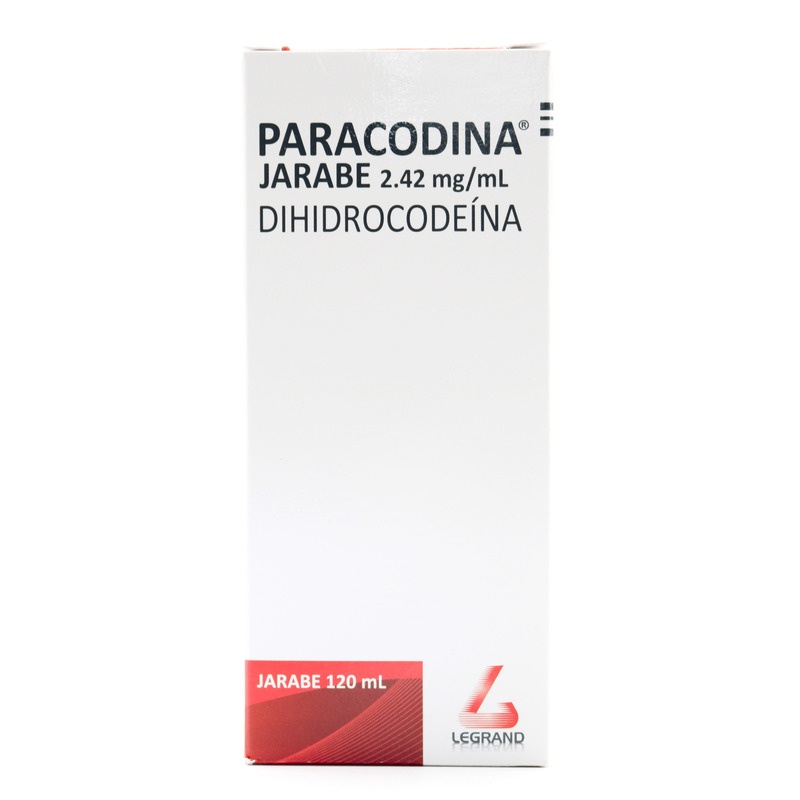
- País de registro
- Forma farmacéuticaSOLUCIÓN/SUSPENSIÓN ORAL, 2 mg/ml
- Código ATCN02AA08
- Principio activo
- Requiere recetaSí
- Fabricante
- Esta información es de carácter general y no sustituye la consulta con un profesional sanitario.
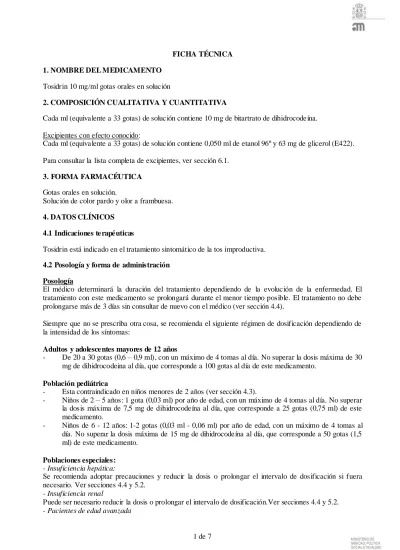
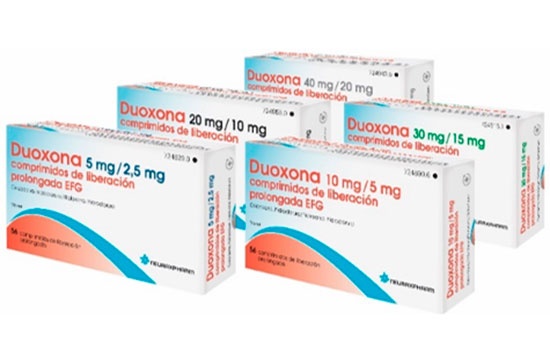
- Alternativas a PARACODINA 2,4 mg/ml JARABEForma farmacéutica: SOLUCION/SUSPENSION GOTAS ORALES, 10 mgPrincipio activo: dihydrocodeineRequiere recetaForma farmacéutica: COMPRIMIDO, 100 mg / 15 mg / 10 mgPrincipio activo: codeine, combinations with psycholepticsFabricante: Farmalider S.A.Requiere recetaForma farmacéutica: COMPRIMIDO LIBERACION MODIFICADA, 10 mg/5 mgPrincipio activo: oxycodone and naloxoneFabricante: Neuraxpharm Spain S.L.Requiere receta

Médicos online para PARACODINA 2,4 mg/ml JARABE
Comenta la dosis, los posibles efectos secundarios, interacciones, contraindicaciones o la revisión de receta de PARACODINA 2,4 mg/ml JARABE, sujeto a valoración médica y a la normativa local.









Obtén una receta de PARACODINA 2,4 mg/ml JARABE online
Rellena un formulario de 2 minutos
Cuéntanos tus síntomas, historial y el medicamento que necesitas.
Elige un médico o nosotros te asignamos uno
Escoge un especialista o te conectamos con el próximo médico disponible.
El médico revisa tu caso
Normalmente en 30 minutos. Puede hacerte preguntas adicionales por chat.
Recógela en cualquier farmacia
Receta electrónica enviada a tu correo, válida en toda España.
Preguntas frecuentes
PARACODINA 2,4 mg/ml JARABE requires receta en España. Puedes confirmarlo con un médico online según tu caso.
El principio activo de PARACODINA 2,4 mg/ml JARABE es dihydrocodeine. Esta información ayuda a identificar medicamentos con la misma composición pero con diferentes nombres comerciales.
PARACODINA 2,4 mg/ml JARABE es fabricado por Teofarma S.R.L.. La marca y el envase pueden variar según el distribuidor.
Los Médicos de familia, Psiquiatras, Dermatólogos, Cardiólogos, Endocrinólogos, Gastroenterólogos, Neumólogos, Nefrólogos, Reumatólogos, Hematólogos, Infectólogos, Alergólogos, Geriatras, Pediatras, Oncólogos pueden valorar la prescripción de PARACODINA 2,4 mg/ml JARABE cuando esté clínicamente indicado. Puedes reservar una videoconsulta para comentar tu caso y las opciones de tratamiento.
España cuenta con una infraestructura sanitaria bien desarrollada en ciudades principales como Madrid, Barcelona, Valencia y Sevilla. Las farmacias están ampliamente disponibles y operan bajo estrictas regulaciones, garantizando el acceso a medicamentos con receta.
Puedes comprar PARACODINA 2,4 mg/ml JARABE en Madrid, Barcelona, Sevilla o Valencia en cualquier farmacia local con una receta válida.
Para obtener una receta, puedes utilizar Oladoctor:
Otros medicamentos con el mismo principio activo (dihydrocodeine) incluyen TOSIDRIN 10 mg/ml GOTAS ORALES EN SOLUCION, DOLODENS 100 mg/15 mg/10 mg COMPRIMIDOS RECUBIERTOS, DUOXONA 10 MG/5 MG COMPRIMIDOS DE LIBERACION PROLONGADA EFG. Pueden tener diferentes nombres comerciales o formulaciones, pero contienen el mismo componente terapéutico. Consulta siempre con un médico antes de cambiar o iniciar un nuevo medicamento.
