



PARACETAMOL 1 g COMPRIMIDOS

Revisión de receta online
Un médico revisará tu caso y determinará si la prescripción es médicamente apropiada.

Habla con un médico sobre este medicamento
Comenta tus síntomas y las opciones de tratamiento en una consulta online.



Cómo usar PARACETAMOL STADA 1 g COMPRIMIDOS EFG
Contenido del prospecto
- Introducción
- Qué es Paracetamol Stada y para qué se utiliza
- Qué necesita saber antes de empezar a tomar Paracetamol Stada
- Cómo tomar Paracetamol Stada
- Posibles efectos adversos
- Conservación de Paracetamol Stada
- Contenido del envase e información adicional
Introducción
Prospecto: información para el paciente
Paracetamol STADA1 gcomprimidos EFG
Lea todo el prospecto detenidamente antes de empezar a tomar este medicamento, porque contiene información importante para usted.
- Conserve este prospecto, ya que puede tener que volver a leerlo.
- Si tiene alguna duda, consulte a su médico o farmacéutico.
- Este medicamento se le ha recetado solamente a usted, y no debe dárselo a otras personas aunque tengan los mismos síntomas que usted, ya que puede perjudicarles.
- Si experimenta efectos adversos, consulte a su médico o farmacéutico, incluso si se trata de efectos adversos que no aparecen en este prospecto. Ver sección 4.
Contenido del prospecto:
- Qué es Paracetamol Stada y para qué se utiliza
- Qué necesita saber antes de empezar a tomar Paracetamol Stada
- Cómo tomar Paracetamol Stada
- Posibles efectos adversos
- Conservación de Paracetamol Stada
- Contenido del envase e información adicional
1. Qué es Paracetamol Stada y para qué se utiliza
Paracetamol pertenece al grupo de medicamentos llamados analgésicos y antipiréticos.
Paracetamol Stada se utiliza para el tratamiento sintomático del dolor de intensidad moderada. Estados febriles.

¿No estás seguro de si este medicamento es adecuado para ti?
Comenta tus síntomas y tratamiento con un médico online.
2. Qué necesita saber antes de empezar a tomar Paracetamol Stada
No tome Paracetamol Stada
- Si es alérgico a paracetamol o a alguno de los demás componentes de este medicamento (incluidos en la sección 6).
- Si padece alguna enfermedad en el hígado.
Advertencias y precauciones
Consulte a su médico o farmacéutico antes de empezar a tomar Paracetamol Stada.
No tomar más dosis de la recomendada.
Durante el tratamiento con Paracetamol Stada, informe inmediatamente a su médico si:
Si tiene enfermedades graves, como insuficiencia renal grave o sepsis (cuando las bacterias y sus toxinas circulan en la sangre, lo que provoca daños en los órganos), o si padece malnutrición, alcoholismo crónico o si también está tomando flucloxacilina (un antibiótico). Se ha notificado una enfermedad grave denominada acidosis metabólica (una anomalía en la sangre y los líquidos) en pacientes en estas situaciones cuando se utiliza paracetamol a dosis regulares durante un período prolongado o cuando se toma paracetamol junto con flucloxacilina. Los síntomas de acidosis metabólica pueden incluir: dificultad respiratoria grave con respiración profunda y rápida, somnolencia, sensación de malestar (náuseas) y vómitos.
Si padece enfermedad de riñón, corazón o del pulmón,o tiene anemia (disminución de la tasa de hemoglobina en la sangre, a causa o no de una disminución de glóbulos rojos), deberá consultar con su médico antes de tomar este medicamento.
En alcohólicos crónicos se deberá tener la precaución de no tomar más de 2 gramos/día de paracetamol.
Si el dolor se mantiene durante mas de 10 días, la fiebre más de 3 días o bien el dolor o la fiebre empeoran o aparecen otros síntomas, hay que interrumpir el tratamiento y consultar al médico.
En niños menores de 15 años consulte a su médico o farmacéutico ya que existen otras presentaciones con dosis que se adaptan a este grupo de pacientes.
Toma de Paracetamol Stada con otros medicamentos
Informe a su médico o farmacéutico si está tomando, ha tomado recientemente o pudiera tener que tomar cualquier otro medicamento.
Paracetamol puede tener interacciones con los siguientes medicamentos:
- Antibióticos (cloranfenicol)
- Anticoagulantes (utilizados para el tratamiento de enfermedades tromboembólicas)
- Antiepilépticos (utilizados para el tratamiento de las crisis epilépticas)
- Anticonceptivos
- Diuréticos (utilizados para aumentar la eliminación de orina)
- Isoniazida ( utilizado para el tratamiento de la tuberculosis)
- Lamotrigina (utilizado para el tratamiento de la epilepsia)
- Probenecid (utilizado para el tratamiento de la gota)
- Propanolol (utilizado para el tratamiento de la hipertensión, arritmias cardiacas)
- Rifampicina ( utilizado para el tratamiento de la tuberculosis)
- Anticolinérgicos ( utilizados para el alivio de espasmos o contracciones de estómago, intestino y vejiga)
- Zidovudina (utilizado para el tratamiento de las infecciones por VIH)
- Colestiramida (utilizado para disminuir los niveles de colesterol en sangre)
- Flucloxacilina (antiobiótico), debido a un riesgo grave de alteración de la sangre y los fluidos (acidosis metabólica con alto desequilibrio aniónico) que debe ser tratada urgentemente (véase la sección 2).
No utilizar con otros analgésicos (medicamentos que disminuyen el dolor) sin consultar al médico.
Como norma general para cualquier medicamento es recomendable informar sistemáticamente al médico o farmacéutico si está en tratamiento con otro medicamento. En caso de tratamiento con anticoagulantes orales se puede administrar ocasionalmente como analgésico de elección.
Interacciones con pruebas de diagnóstico
Consultar con el médico si tiene que someterse a un análisis de sangre u orina.
Toma de Paracetamol Stada con los alimentos, bebidas y alcohol
La utilización de paracetamol en pacientes que consumen habitualmente alcohol (tres o más bebidas alcohólicas al día- cerveza, vino, licor....al día) puede provocar daño en el hígado.
Embarazo y lactancia
Si está embarazada o en periodo de lactancia, cree que podría estar embarazada o tiene intención de quedarse embarazada, consulte a su médico o farmacéutico antes de utilizar este medicamento.
Embarazo
Consulte a su médico o farmacéutico antes de utilizar cualquier medicamento.
IMPORTANTE PARA LA MUJER
Si está embarazada o en periodo de lactancia, cree que podría estar embarazada o tiene intención de quedarse embarazada, consulte a su médico o farmacéutico antes de utilizar este medicamento. El consumo de medicamentos durantes el embarazo puede ser peligroso para el embrión o el feto, y debe ser vigilado por su médico.
En caso necesario, se puede utilizar paracetamol durante el embarazo. Debe utilizar la dosis más baja posible que reduzca el dolor o la fiebre y utilizarla durante el menor tiempo posible. Contacte con su médico o matrona si el dolor o la fiebre no disminuyen o si necesita tomar el medicamento con más frecuencia.
Lactancia
Consulte a su médico o farmacéutico antes de utilizar cualquier medicamento.
Pueden aparecer pequeñas cantidades de paracetamol en la leche materna, por lo tanto se recomienda que consulte a su médico o farmacéutico antes de tomar este medicamento.
Conducción y uso de máquinas
No se ha descrito ningún efecto que modifique la capacidad de conducción y de manejo de maquinaria.
3. Cómo tomar Paracetamol Stada
Siga exactamente las instrucciones de administración del medicamento contenidas en este prospecto o las indicadas por su médico o farmacéutico. En caso de duda, pregunte a su médico o farmacéutico.
Recuerde tomar su medicamento.
Este medicamento debe tomarse por vía oral. Según sus preferencias, los comprimidos se pueden ingerir directamente o partidos por la mitad con agua, leche o zumo de frutas. Consulte a su médico o farmacéutico si tiene dudas.
La dosis recomendada es:
Adultos y adolescentes mayores de 15 años (y peso superior a 50 kg): la dosis habitual es de 1 comprimido (1 gramo de paracetamol) 3-4 veces al día. Las tomas deben espaciarse al menos 4 horas. No se tomarán más de 4 comprimidos (4 gramos) en 24 horas.
Pacientes con enfermedad en el hígado o riñón : deben consultar a su médico
Pacientes de edad avanzada: deben consultar a su médico
Si se estima que la acción de este medicamento es demasiado fuerte o débil, comuníqueselo a su médico o farmacéutico.
Cuando se requiera la administración de dosis inferiores a 1 gramo de paracetamol por toma se deberán emplear otras presentaciones de paracetamol que se adapten a la dosificación requerida.
El comprimido se puede dividir en dosis iguales.
Si toma más Paracetamol Stada del que debe
Si usted ha tomado más paracetamol de lo que debe, consulte inmediatamente a su médico o al Servicio de Información Toxicológica, teléfono 915 620 420. Si se ha tomado una sobredosis, debe acudir inmediatamente a un centro médico aunque no haya síntomas, ya que a menudo no se manifiestan hasta pasados tres días de la toma de la sobredosis, aún en casos de intoxicación grave. Los síntomas por sobredosis pueden ser: mareos, vómitos, pérdida de apetito, coloración amarillenta de la piel y los ojos (ictericia) y dolor abdominal.
El tratamiento de la sobredosis es más eficaz si se inicia dentro de las 4 horas siguientes a la toma del medicamento.
Los pacientes en tratamiento con barbitúricos o que padezcan alcoholismo crónico pueden ser más susceptibles a una sobredosis de paracetamol.
Si olvidó tomar Paracetamol Stada
No tome una dosis doble para compensar las dosis olvidadas, simplemente tome la dosis olvidada cuando se acuerde, tomando las siguientes dosis con la separación entre tomas indicada en cada caso (al menos 4 horas).
Si tiene cualquier otra duda sobre el uso de este medicamento, pregunte a su médico o farmacéutico.

¿Has empezado a tomar el medicamento y tienes preguntas?
Comenta tus síntomas y tratamiento con un médico online.
4. Posibles efectos adversos
Al igual que todos los medicamentos, este medicamento puede producir efectos adversos, aunque no todas las personas los sufran.
Paracetamol Stada puede producir los siguientes efectos adversos:
- Raros (pueden afectar hasta 1 de cada 1.000 personas), son: malestar, bajada de tensión (hipotensión), y aumento de los niveles de transaminasas en sangre.
- Muy raros (pueden afectar hasta 1 de cada 10.000 personas), son: enfermedades del riñón, orina turbia, dermatitis alérgica (erupción cutánea), ictericia (coloración amarillenta de la piel), alteraciones sanguíneas (agranulocitosis, leucopenia, neutropenia, anemia hemolítica) e hipoglucemia (bajada de azúcar en sangre). Se han notificado casos de reacciones cutáneas graves.
- Frecuencia no conocida (no puede estimarse a partir de los datos disponibles): Una enfermedad grave que puede hacer que la sangre sea más ácida (denominada acidosis metabólica) en pacientes con enfermedad grave que utilizan paracetamol (ver sección 2).
Paracetamol puede dañar el hígado cuando se toma en dosis altas o en tratamientos prolongados.
Comunicación de efectos adversos
Si experimenta cualquier tipo de efecto adverso, consulte a su médico o farmacéutico, incluso si se trata de posibles efectos adversos que no aparecen en este prospecto. También puede comunicarlos directamente a través del Sistema Español de Farmacovigilancia de Medicamentos de Uso Humano: https://www.notificaram.es. Mediante la comunicación de efectos adversos usted puede contribuir a proporcionar más información sobre la seguridad de este medicamento.
5. Conservación de Paracetamol Stada
Mantener fuera de la vista y del alcance de los niños.
Este medicamento no requiere condiciones especiales de conservación.
No utilice este medicamento después de la fecha de caducidad que aparece en el envase, después de CAD. La fecha de caducidad es el último día del mes que se indica.
Los medicamentos no se deben tirar por los desagües ni a la basura. Deposite los envases y los medicamentos que no necesita en el Punto SIGRE de la farmacia. Pregunte a su farmacéutico cómo deshacerse de los envases y de los medicamentos que ya no necesita. De esta forma, ayudará a proteger el medio ambiente.
6. Contenido del envase e información adicional
Composición de Paracetamol Stada
- El principio activo es paracetamol. Cada comprimido contiene 1 g de paracetamol.
- Los demás componentes son: almidón pregelatinizado de maíz, ácido esteárico, povidona, crospovidona, celulosa microcristalina y estearato de magnesio de origen vegetal.
Aspecto del producto y contenido del envase
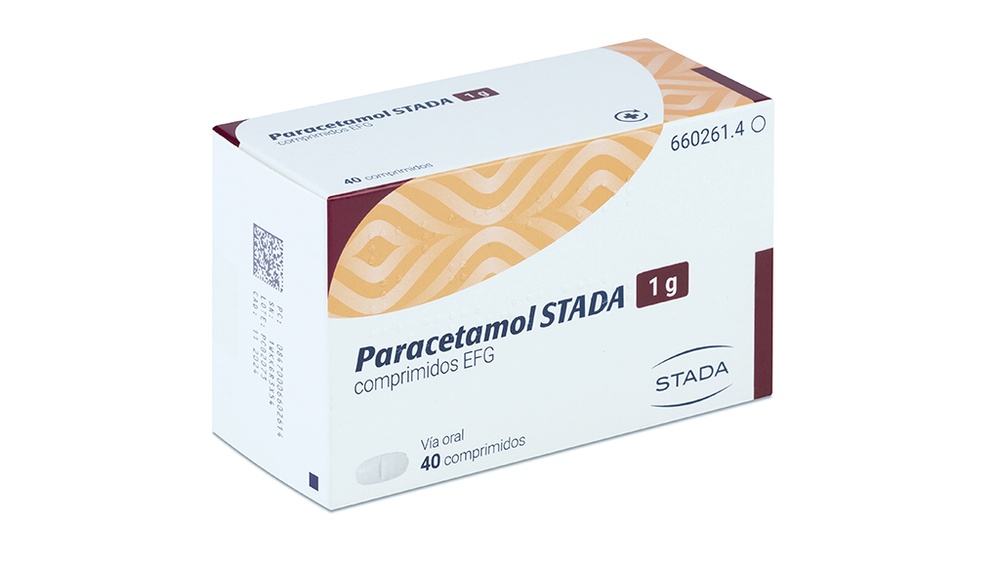
Paracetamol Stada 1 g comprimidos se presenta en forma de comprimidos oblongos, de color blanco y ranurados en ambas caras. Cada envase contiene 20 o 40 comprimidos, acondicionados en blísteres.
Puede que solamente estén comercializados algunos tamaños de envases.
Titular de la autorización de comercialización y responsable de la fabricación:
Titular de la autorización de comercialización
Titular de la autorización de comercialización
Laboratorio STADA, S.L.
Frederic Mompou, 5
08960 Sant Just Desvern
(Barcelona)
Responsable de la fabricación
SAG MANUFACTURING S.L.U.
Carretera Nacional I, Km. 36
28750 San Agustin de Guadalix,
España
Fecha de la última revisión de este prospecto:febrero 2025
La información detallada y actualizada de este medicamento está disponible en la página Web de la Agencia Española de Medicamentos y Productos Sanitarios (AEMPS) http://www.aemps.gob.es/
- País de registro
- Forma farmacéuticaCOMPRIMIDO, 1 g paracetamol
- Código ATCN02BE01
- Precio medio en farmacia1.9 EUR
- Principio activo
- Requiere recetaSí
- Fabricante
- Esta información es de carácter general y no sustituye la consulta con un profesional sanitario.
- Alternativas a PARACETAMOL STADA 1 g COMPRIMIDOS EFGForma farmacéutica: COMPRIMIDO, 1 gPrincipio activo: ParacetamolFabricante: Uxa Farma S.A.Requiere recetaForma farmacéutica: COMPRIMIDO, 1 gPrincipio activo: ParacetamolFabricante: Laboratorios Cinfa S.A.No requiere recetaForma farmacéutica: COMPRIMIDO, 1 gPrincipio activo: ParacetamolFabricante: Laboratorios Cinfa S.A.No requiere receta
Médicos online para PARACETAMOL STADA 1 g COMPRIMIDOS EFG
Comenta la dosis, los posibles efectos secundarios, interacciones, contraindicaciones o la revisión de receta de PARACETAMOL STADA 1 g COMPRIMIDOS EFG, sujeto a valoración médica y a la normativa local.









Obtén una receta de PARACETAMOL STADA 1 g COMPRIMIDOS EFG online
Rellena un formulario de 2 minutos
Cuéntanos tus síntomas, historial y el medicamento que necesitas.
Elige un médico o nosotros te asignamos uno
Escoge un especialista o te conectamos con el próximo médico disponible.
El médico revisa tu caso
Normalmente en 30 minutos. Puede hacerte preguntas adicionales por chat.
Recógela en cualquier farmacia
Receta electrónica enviada a tu correo, válida en toda España.
Preguntas frecuentes
PARACETAMOL STADA 1 g COMPRIMIDOS EFG requiere receta en España. Puedes confirmarlo con un médico online según tu caso.
El principio activo de PARACETAMOL STADA 1 g COMPRIMIDOS EFG es Paracetamol. Esta información ayuda a identificar medicamentos con la misma composición pero con diferentes nombres comerciales.
El precio medio en farmacia de PARACETAMOL STADA 1 g COMPRIMIDOS EFG es de aproximadamente 1.9 EUR. Puede variar según el fabricante y la forma farmacéutica.
PARACETAMOL STADA 1 g COMPRIMIDOS EFG es fabricado por Laboratorio Stada S.L.. La marca y el envase pueden variar según el distribuidor.
Los Médicos de familia, Psiquiatras, Dermatólogos, Cardiólogos, Endocrinólogos, Gastroenterólogos, Neumólogos, Nefrólogos, Reumatólogos, Hematólogos, Infectólogos, Alergólogos, Geriatras, Pediatras, Oncólogos pueden valorar la prescripción de PARACETAMOL STADA 1 g COMPRIMIDOS EFG cuando esté clínicamente indicado. Puedes reservar una videoconsulta para comentar tu caso y las opciones de tratamiento.
España cuenta con una infraestructura sanitaria bien desarrollada en ciudades principales como Madrid, Barcelona, Valencia y Sevilla. Las farmacias están ampliamente disponibles y operan bajo estrictas regulaciones, garantizando el acceso a medicamentos con receta.
Puedes comprar PARACETAMOL STADA 1 g COMPRIMIDOS EFG en Madrid, Barcelona, Sevilla o Valencia en cualquier farmacia local con una receta válida.
Para obtener una receta, puedes utilizar Oladoctor:
Otros medicamentos con el mismo principio activo (Paracetamol) incluyen ABEZEN 1 G COMPRIMIDOS RECUBIERTOS CON PELICULA, ANTIDOL 1 G COMPRIMIDOS RECUBIERTOS, ANTIDOL 1 G COMPRIMIDOS. Pueden tener diferentes nombres comerciales o formulaciones, pero contienen el mismo componente terapéutico. Consulta siempre con un médico antes de cambiar o iniciar un nuevo medicamento.
