



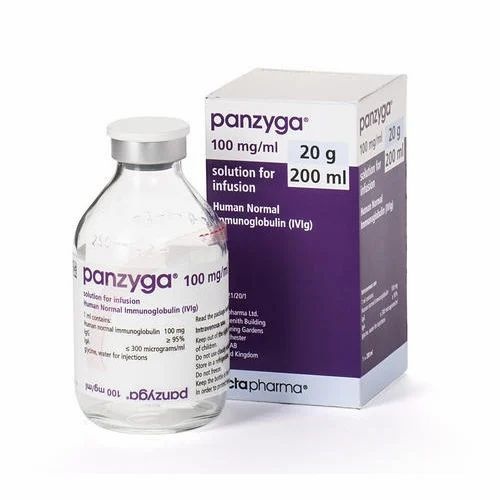
PANZYGA 100 mg /Ml Solucion Para Perfusion

Revisión de receta online
Un médico revisará tu caso y determinará si la prescripción es médicamente apropiada.

Habla con un médico sobre este medicamento
Comenta tus síntomas y las opciones de tratamiento en una consulta online.



Cómo usar PANZYGA 100 MG/ML SOLUCION PARA PERFUSION
Contenido del prospecto
- Introducción
- Qué es Panzyga y para qué se utiliza
- Qué necesita saber antes de empezar a usar Panzyga
- Cómo usar Panzyga
- Posibles efectos adversos
- Conservación de Panzyga
- Contenido del envase e información adicional
Introducción
Prospecto: información para el usuario
Panzyga 100mg/ml solución para perfusión
Inmunoglobulina humana normal (IgIV)
Lea todo el prospecto detenidamente antes de empezar a usar este medicamento, porque contiene información importante para usted.
- Conserve este prospecto, ya que puede tener que volver a leerlo.
- Si tiene alguna duda, consulte a su médico o farmacéutico.
- Este medicamento se le ha recetado solamente a usted, y no debe dárselo a otras personas aunque tengan los mismos síntomas que usted, ya que puede perjudicarles.
- Si experimenta efectos adversos, consulte a su médico o farmacéutico, incluso si se trata de efectos adversos que no aparecen en este prospecto. Ver sección 4.
Contenido del prospecto
- Qué es Panzyga y para qué se utiliza
- Qué necesita saber antes de empezar a usar Panzyga
- Cómo usar Panzyga
- Posibles efectos adversos
- Conservación de Panzyga
- Contenido del envase e información adicional
1. Qué es Panzyga y para qué se utiliza
Qué es Panzyga
Este medicamento es una solución de inmunoglobulina humana normal (IgG), es decir, una solución de anticuerpos humanos, para su administración por vía intravenosa (es decir, perfusión en una vena). Las inmunoglobulinas son componentes normales de la sangre humana y apoyan a las defensas inmunitarias del organismo. Panzyga contiene todas las IgG que se encuentran en la sangre humana de las personas sanas. Las dosis adecuadas de Panzyga pueden devolver las concentraciones anormalmente bajas de IgG hasta los valores normales.
Panzyga tiene un amplio espectro de anticuerpos frente a diferentes agentes infecciosos.
Para qué se utiliza Panzyga
Panzyga se utiliza como tratamiento de sustitución en niños, adolescentes (0-18 años) y adultos en diferentes grupos de pacientes:
- Pacientes con deficiencia congénita de anticuerpos (síndromes de inmunodeficiencia primaria, como: agammaglobulinemia congénita e hipogammaglobulinemia, inmunodeficiencia común variable, inmunodeficiencias combinadas severas)
- Pacientes con una deficiencia de anticuerpos (inmunodeficiencia secundaria) debida a enfermedades específicas y/o a tratamientos y que experimenten infecciones graves o recurrentes.
Este medicamento se puede utilizar para el tratamiento de adultos y de niños y adolescentes (0‑18 años) vulnerables que hayan estado expuestos al sarampión o que tengan riesgo de exposición al sarampión y en los que la vacunación activa frente al sarampión no está indicada o no se recomienda.
Panzyga también se puede utilizar en el tratamiento de los siguientes trastornos autoinmunitarios (inmunomodulación):
- En pacientes con trombocitopenia inmune (PTI), una enfermedad en la que las plaquetas se destruyen y, por tanto, su número se reduce, y que tienen un riesgo alto de hemorragia o antes de una intervención quirúrgica para corregir el recuento plaquetario.
- En pacientes con enfermedad de Kawasaki, una enfermedad que da lugar a la inflamación de varios órganos
- En pacientes con síndrome de Guillain Barré, una enfermedad que da lugar a la inflamación de ciertas partes del sistema nervioso
- En pacientes con polineuropatía desmielinizante inflamatoria crónica (CIDP), una enfermedad que da lugar a una inflamación crónica de las partes periféricas del sistema nervioso y que causa debilidad muscular y/o entumecimiento principalmente en las piernas y los brazos.
En pacientes con neuropatía motora multifocal (NMM), una afección que se caracteriza por una debilidad asimétrica progresiva lenta de las extremidades sin pérdida sensitiva.

¿No estás seguro de si este medicamento es adecuado para ti?
Comenta tus síntomas y tratamiento con un médico online.
2. Qué necesita saber antes de empezar a usar Panzyga
No use Panzyga:
- si es alérgico a la inmunoglobulina humana normal o a alguno de los demás componentes de este medicamento (incluidos en la sección 6).
- si tiene una deficiencia en inmunoglobulina A (deficiencia en IgA) y si ha desarrollado anticuerpos frente a las inmunoglobulinas del tipo IgA.
Advertencias y precauciones
Consulte a su médico o farmacéutico antes de empezar a usar Panzyga.
Se recomienda encarecidamente que cada vez que reciba una dosis de Panzyga se registre el nombre y el número de lote del producto, a fin de mantener un registro de los lotes utilizados.
Ciertas reacciones adversas pueden producirse con mayor frecuencia:
- en caso de una velocidad de perfusión alta
- cuando recibe Panzyga por primera vez o, en casos raros, cuando ha habido un intervalo prolongado desde la perfusión anterior.
- cuando tenga una infección no tratada o una inflamación crónica subyacente
En caso de reacción adversa, su médico reducirá la velocidad de administración o detendrá la perfusión. El tratamiento necesario del acontecimiento adverso dependerá de la naturaleza y gravedad del mismo.
Circunstancias y condiciones que incrementan el riesgo de tener efectos adversos
- Tras la administración de Panzyga, se pueden producir en muy raras ocasiones acontecimientos tromboembólicos como ataque al corazón, accidente cerebrovascular y obstrucciones de una vena profunda, por ejemplo, en la parte inferior de la pierna, o de un vaso sanguíneo del pulmón. Estos tipos de acontecimientos se producen con más frecuencia en pacientes con factores de riesgo, como obesidad, edad avanzada, hipertensión, diabetes, apariciones previas de estos acontecimientos, periodos prolongados de inmovilización e ingesta de ciertas hormonas (p. ej., “la píldora”). Asegúrese de ingerir líquidos de forma adecuada. Además, Panzyga se debe administrar lo más lentamente posible.
Si ha tenido problemas de riñón en el pasado o si tiene ciertos factores de riesgo como diabetes, sobrepeso o más de 65 años de edad, Panzyga se debe administrar lo más lentamente posible porque se han notificado casos de fallo renal agudo en pacientes con estos factores de riesgo. Informe a su médico, incluso cuando cualquiera de las circunstancias mencionadas anteriormente le hayan ocurrido en el pasado.
- Los pacientes con grupos sanguíneos A, B o AB, así como los pacientes con ciertas enfermedades inflamatorias tienen un riesgo mayor de que las inmunoglobulinas administradas destruyan los glóbulos rojos (lo que se denomina hemólisis).
¿Cuándo puede ser necesario reducir la velocidad o detener la perfusión?
- Se pueden producir en raras ocasiones dolores de cabeza fuertes y rigidez en el cuello desde varias horas y hasta 2 días tras el tratamiento con Panzyga.
- Las reacciones alérgicas son raras, pero pueden inducir un shock anafiláctico, incluso en pacientes que han tolerado los tratamientos anteriores.
Una disminución repentina en la tensión arterial o el shock pueden ser consecuencias de una reacción anafiláctica.
- En casos muy raros, se puede producir daño pulmonar agudo relacionado con la transfusión (TRALI, por sus siglas en inglés) tras recibir inmunoglubulinas, incluido Panzyga. Esto dará lugar a la acumulación no debida a causas cardíacas de líquido en los espacios de aire de los pulmones. Reconocerá el TRALI por una importante dificultad para respirar, con una función normal del corazón y un incremento de la temperatura corporal (fiebre). Los síntomas suelen aparecer entre 1 y 6 horas tras recibir el tratamiento.
Consulte a su médico o profesional sanitario inmediatamente si detecta cualquiera de los síntomas mencionados anteriormente durante o después de la perfusión de Panzyga, quien decidirá si reduce la velocidad de perfusión o si la detiene por completo, así como si se necesitan más medidas.
- En ocasiones, las soluciones de inmunoglobuinas como Panzyga, pueden desencadenar una disminución en el número de leucocitos. Normalmente, este trastorno se resuelve de manera espontánea en un plazo de 1 a 2 semanas.
Efectos en los análisis de sangre
Panzyga contiene una amplia variedad de anticuerpos distintos, algunos de ellos pueden afectar a los análisis de sangre. Si se le realiza un análisis de sangre tras recibir Panzyga, informe a la persona que le extrae la sangre o a su médico que ha recibido una solución de inmunoglobulina humana normal.
Seguridad vírica
Cuando los medicamentos están fabricados a partir de sangre o plasma humano, se establecen ciertas medidas para evitar que las infecciones se transmitan a los pacientes. Estas incluyen:
- Selección cuidadosa de los donantes de sangre o plasma para asegurarse de que se excluyan aquellos en riesgo de ser portadores de infecciones.
- Análisis de marcadores específicos de infecciones en las donaciones individuales y en las mezclas de plasma sobre los signos de virus/infección.
- Etapas incluidas por los fabricantes en el procesamiento de la sangre o del plasma para inactivar o eliminar los virus.
A pesar de estas medidas, cuando se administran medicamentos derivados de sangre o plasma humano, la posibilidad de transmitir una infección no puede excluirse completamente. Esto también se aplica a cualquier virus desconocido o emergente o a otros tipos de infecciones.
Las medidas tomadas se consideran eficaces para los virus encapsulados como el virus de la inmunodeficiencia humana (VIH), el virus de la hepatitis B y el virus de la hepatitis C, así como para los virus no encapsulados como el virus de la hepatitis A o el parvovirus B19.
Las inmunoglobulinas no se han asociado con infecciones por el virus de la hepatitis A o por el parvovirus B19, posiblemente debido a los anticuerpos frente a estas infecciones, que se encuentran en el producto y que tienen un efecto protector.
Niños y adolescentes
No existen advertencias o precauciones específicas o adicionales, aplicables a niños y adolescentes.
Uso de Panzyga con otros medicamentos
Informe a su médico o farmacéutico si está tomando, ha tomado recientemente o pudiera tener que tomar cualquier otro medicamento, incluidos los medicamentos obtenidos sin receta, o si se le ha administrado una vacuna durante los últimos tres meses.
Durante el tratamiento con Panzyga, se debe evitar el uso concomitante de medicamentos que aumentan la excreción de agua del organismo (diuréticos del asa). Su médico decidirá si debe usar o continuar el tratamiento con diuréticos del asa.
Panzyga puede alterar el efecto de las vacunas con virus atenuados como
- sarampión,
- rubéola,
- paperas,
- varicela.
Tras la administración de este producto debe transcurrir un intervalo de 3 meses antes de la vacunación con vacunas que contengan virus vivos atenuados. En el caso del sarampión, esta alteración puede persistir hasta 1 año.
Uso de Panzyga con alimentos, bebidas y alcohol
No se han observado efectos. Debe procurarse una hidratación adecuada antes de la perfusión del medicamento.
Embarazo, lactancia y fertilidad
Si está embarazada o en periodo de lactancia, cree que podría estar embarazada o tiene intención de quedarse embarazada, consulte a su médico o farmacéutico antes de utilizar o seguir utilizando este medicamento.
La seguridad de este producto durante el embarazo no se ha determinado en ensayos clínicos controlados y, por lo tanto, debe administrarse con precaución a mujeres embarazadas y lactantes. Se ha demostrado que los productos con inmunoglobulina atraviesan con frecuencia la placenta, especialmente durante el tercer trimestre. La experiencia clínica con inmunoglobulinas indica que no deben esperarse efectos perjudiciales durante el embarazo, en el feto ni en el recién nacido.
Las inmunoglobulinas se excretan en la leche materna, por lo que no se esperan efectos negativos en los neonatos que estén siendo amamantados o en los lactantes.
Conducción y uso de máquinas
Este medicamento carece de influencia, o ésta es insignificante, sobre la capacidad de conducir o utilizar máquinas. No obstante, los pacientes que experimenten reacciones adversas durante el tratamiento, deben esperar a que estas se resuelvan antes de conducir o utilizar máquinas.
Panzyga contiene sodio
Este medicamento contiene 69 mg de sodio (componente principal de la sal de mesa/para cocinar) en cada vial de 100 ml. Esto equivale al 3,45 % de la ingesta diaria máxima de sodio recomendada para un adulto.
Se debe tener en cuenta en pacientes con una dieta pobre en sodio.
3. Cómo usar Panzyga
Su médico decidirá si necesita Panzyga y en qué dosis. La administración del medicamento en forma de perfusión intravenosa (perfusión en una vena) está a cargo del personal sanitario. La dosis y la pauta posológica dependen de la indicación y puede ser necesario ajustarlas de forma individual para cada paciente.
Si tiene alguna otra pregunta sobre el uso de este medicamento, consulte a su médico o farmacéutico.
Uso en niños y adolescentes
La administración (por vía intravenosa) del medicamento en niños y adolescentes (0-18 años) no se diferencia de la administración en adultos.
Si recibe más Panzyga del que debe
Es muy improbable que se produzca una sobredosis porque este medicamento normalmente se administra bajo supervisión médica. Si, a pesar de ello, usted recibe más Panzyga del que debe, la sangre se puede volver demasiado espesa (hiperviscosa), lo que puede aumentar el riesgo de formación de coágulos sanguíneos. Esto puede ocurrir sobre todo si usted es un paciente de riesgo como, por ejemplo, si su edad es avanzada o si tiene una enfermedad del corazón o del riñón. Asegúrese de estar bien hidratado. Informe a su médico si tiene algún problema médico conocido.
Si olvidó usar Panzyga
Consulte a su médico para comentar cómo proceder.

¿Has empezado a tomar el medicamento y tienes preguntas?
Comenta tus síntomas y tratamiento con un médico online.
4. Posibles efectos adversos
Al igual que todos los medicamentos, este medicamento puede producir efectos adversos, aunque no todas las personas los sufran.
Consulte a su médico lo antes posible si experimenta cualquiera de los efectos adversos graves descritos a continuación (todos son muy rarosy pueden afectar hasta a 1 de cada 10.000 perfusiones). En algunos casos, su médico puede necesitar interrumpir el tratamiento y reducir su dosis, o detener el tratamiento:
- Inflamación de la cara, lengua y tráqueaque pueden ocasionar gran dificultad para respirar
- Reacción alérgica repentinacon dificultad respiratoria, sarpullidos, sibilancias y descenso de la presión arterial
- Accidente cerebrovascularque puede causar debilidad y/o pérdida de la sensibilidad en un lado del cuerpo
- Ataque al corazónque causa dolor en el pecho
- Coágulo sanguíneoque causa dolor e inflamación de las extremidades
- Coágulo sanguíneo en el pulmónque causa dolor en el pecho y dificultad para respirar
- Anemiaque causa dificultad respiratoria o palidez
- Trastorno grave de los riñonesque puede causar que no orine
- Una afección pulmonarllamada daño pulmonar agudo relacionado con la transfusión (TRALI) que causa dificultad para respirar, piel azulada, fiebre y disminución de la tensión arterial
Si experimenta cualquiera de los síntomas anteriores, póngase en contacto con su médico lo antes posible.
También se han notificado los siguientes efectos adversos:
Efectos adversos frecuentes(pueden afectar hasta a 1 de cada 10 perfusiones):
Dolor de cabeza, náuseas, fiebre
Efectos adversos poco frecuentes(pueden afectar hasta a 1 de cada 100 perfusiones):
Sarpullidos, dolor de espalda, dolor en el pecho, escalofríos, mareos, sensación de cansancio, tos, vómitos, dolor de vientre, diarrea, dolor en las articulaciones, dolor en los músculos, picor en el lugar de la perfusión, erupción, dolor en el cuello, dolor en el brazo o la pierna, reducción del sentido del tacto o de la sensibilidad, reducción de los glóbulos rojos, reducción de los glóbulos blancos, meningitis aséptica (ver también la sección Advertencias y precauciones), picor en los ojos, taquicardia, hipertensión, dolor en el oído, rigidez, sensación de frío, sensación de calor, malestar, escalofríos, entumecimiento, cambios en los análisis de sangre que informan sobre cómo funciona el hígado.
Comunicación de efectos adversos
Si experimenta cualquier tipo de efecto adverso, consulte a su médico o farmacéutico, incluso si se trata de posibles efectos adversos que no aparecen en este prospecto.También puede comunicarlos directamente a través del sistema nacional de notificación.. Mediante la comunicación de efectos adversos usted puede contribuir a proporcionar más información sobre la seguridad de este medicamento.
España
Sistema Español de Farmacovigilancia de Medicamentos de Uso Humano:
www.notificaRAM.es
5. Conservación de Panzyga
Mantener este medicamento fuera de la vista y del alcance de los niños.
No utilice este medicamento después de la fecha de caducidad que aparece en la etiqueta y en la caja. La fecha de caducidad es el último día del mes que se indica.
Conservar en nevera (entre 2 °C y 8 °C). Conservar el envase en el embalaje exterior para protegerlo de la luz. No congelar.
El medicamento se puede retirar de la nevera durante un periodo de 12 meses (sin superar la fecha de caducidad) y conservarse por encima de +8 °C y por debajo de +25 °C. Durante este periodo, el medicamento no se debe refrigerar de nuevo. Deseche el medicamento si no se utiliza durante este periodo o tras la fecha de caducidad, lo que ocurra antes. Registre en el embalaje exterior la fecha en la que se sacó el producto de la nevera.
No utilice este medicamento si observa que la solución está turbia, tiene depósitos o tiene un color intenso.
Los medicamentos no se deben tirar por los desagües ni a la basura. Pregunte a su farmacéutico cómo deshacerse de los envases y de los medicamentos que ya no necesita. De esta forma, ayudará a proteger el medio ambiente.
6. Contenido del envase e información adicional
Composición de Panzyga
- El principio activo es la inmunoglobulina humana normal (anticuerpos humanos). Panzyga contiene 100 mg/ml de proteínas humanas de los que al menos el 95 % es inmunoglobulina G (IgG).
- Los demás componentes son glicina y agua para preparaciones inyectables.
Aspecto de Panzygay contenido del envase
Solución para perfusión disponible en viales (1 g/10 ml, 2,5 g/25 ml) o en frascos (5 g/50 ml, 6 g/60 ml, 10 g/100 ml, 20 g/200 ml, 30 g/300 ml).
Tamaños de envase:
1 vial (1 g/10 ml o 2,5 g/25 ml)
1 frasco (5 g/50 ml; 6 g/60 ml; 10 g/100 ml; 20 g/200 mlo 30 g/300 ml)
3 frascos (3 x 10 g/100 ml o 3 x 20 g/200 ml)
La solución es transparente o ligeramente opalescente, incolora o ligeramente amarilla.
Puede que solamente estén comercializados algunos tamaños de envases.
Titular de la autorización de comercialización
Octapharma S.A.
Avda. Castilla, 2. (P.E. San Fernando)Ed. Dublín, 2ª Planta28830 San Fernando de Henares, Madrid
Fabricantes
Octapharma
72 rue du Maréchal Foch, 67380 Lingolsheim, Francia
Octapharma Pharmazeutika Produktionsges.m.b.H.
Oberlaaer Strasse 235, 1100 Viena, Austria
Octapharma GmbH
Elisabeth-Selbert-Str. 11, 40764 Langenfeld, Germany
Este medicamento está autorizado en losestados miembros del Espacio Económico Europeo y en el Reino Unido (Irlanda del Norte)con los siguientes nombres:
Alemania, Austria, Bélgica, Bulgaria, Croacia, Dinamarca, Eslovaquia, Eslovenia, España, Estonia, Finlandia, Francia, Hungría, Irlanda, Islandia, Letonia, Lituania, Luxemburgo, Malta, Noruega, Países Bajos, Portugal, Reino Unido (Irlanda del Norte), República Checa, Rumanía, Suecia: | Panzyga |
Italia: | Globiga |
Fecha de la última revisión de este prospecto:Julio 2024
Esta información está destinada únicamente a profesionales del sector sanitario:
- El medicamento debe llevarse a temperatura ambiente o a la temperatura corporal antes de su uso.
- La solución debe ser desde transparente a ligeramente opalescente y desde incolora a ligeramente amarilla.
- No se deben usar soluciones turbias o que tengan sedimentos.
- El medicamento no utilizado o material de desecho, debe ser eliminado de acuerdo a los requerimiento locales.
- Este medicamento no se debe mezclar con otros medicamentos.
- Con el fin de terminar la perfusión del medicamento que haya podido quedar en los tubos al finalizar la perfusión, puede hacerse circular por el tubo una solución salina al 0,9% (9 mg/ml) o de dextrosa al 5% (50 mg/ml).
- País de registro
- Forma farmacéuticaINYECTABLE PERFUSION, 100 mg/ml
- Código ATCJ06BA02
- Principio activo
- Requiere recetaSí
- Fabricante
- Esta información es de carácter general y no sustituye la consulta con un profesional sanitario.
- Alternativas a PANZYGA 100 MG/ML SOLUCION PARA PERFUSIONForma farmacéutica: INYECTABLE PERFUSION, 100 mg/mlPrincipio activo: immunoglobulins, normal human, for intravascular adm.Fabricante: Instituto Grifols S.A.Requiere recetaForma farmacéutica: INYECTABLE PERFUSION, 100 mg/mlPrincipio activo: immunoglobulins, normal human, for intravascular adm.Fabricante: Instituto Grifols S.A.Requiere recetaForma farmacéutica: INYECTABLE PERFUSION, 100 mg/mlPrincipio activo: immunoglobulins, normal human, for intravascular adm.Fabricante: Instituto Grifols S.A.Requiere receta
Médicos online para PANZYGA 100 MG/ML SOLUCION PARA PERFUSION
Comenta la dosis, los posibles efectos secundarios, interacciones, contraindicaciones o la revisión de receta de PANZYGA 100 MG/ML SOLUCION PARA PERFUSION, sujeto a valoración médica y a la normativa local.









Obtén una receta de PANZYGA 100 MG/ML SOLUCION PARA PERFUSION online
Rellena un formulario de 2 minutos
Cuéntanos tus síntomas, historial y el medicamento que necesitas.
Elige un médico o nosotros te asignamos uno
Escoge un especialista o te conectamos con el próximo médico disponible.
El médico revisa tu caso
Normalmente en 30 minutos. Puede hacerte preguntas adicionales por chat.
Recógela en cualquier farmacia
Receta electrónica enviada a tu correo, válida en toda España.
Preguntas frecuentes
PANZYGA 100 MG/ML SOLUCION PARA PERFUSION requiere receta en España. Puedes confirmarlo con un médico online según tu caso.
El principio activo de PANZYGA 100 MG/ML SOLUCION PARA PERFUSION es immunoglobulins, normal human, for intravascular adm.. Esta información ayuda a identificar medicamentos con la misma composición pero con diferentes nombres comerciales.
PANZYGA 100 MG/ML SOLUCION PARA PERFUSION es fabricado por Octapharma S.A.. La marca y el envase pueden variar según el distribuidor.
Los Médicos de familia, Psiquiatras, Dermatólogos, Cardiólogos, Endocrinólogos, Gastroenterólogos, Neumólogos, Nefrólogos, Reumatólogos, Hematólogos, Infectólogos, Alergólogos, Geriatras, Pediatras, Oncólogos pueden valorar la prescripción de PANZYGA 100 MG/ML SOLUCION PARA PERFUSION cuando esté clínicamente indicado. Puedes reservar una videoconsulta para comentar tu caso y las opciones de tratamiento.
España cuenta con una infraestructura sanitaria bien desarrollada en ciudades principales como Madrid, Barcelona, Valencia y Sevilla. Las farmacias están ampliamente disponibles y operan bajo estrictas regulaciones, garantizando el acceso a medicamentos con receta.
Puedes comprar PANZYGA 100 MG/ML SOLUCION PARA PERFUSION en Madrid, Barcelona, Sevilla o Valencia en cualquier farmacia local con una receta válida.
Para obtener una receta, puedes utilizar Oladoctor:
Otros medicamentos con el mismo principio activo (immunoglobulins, normal human, for intravascular adm.) incluyen FLEBOGAMMA DIF 100 mg/ml SOLUCION PARA PERFUSION, FLEBOGAMMA DIF 100 mg/ml SOLUCION PARA PERFUSION, FLEBOGAMMA DIF 100 mg/ml SOLUCION PARA PERFUSION. Pueden tener diferentes nombres comerciales o formulaciones, pero contienen el mismo componente terapéutico. Consulta siempre con un médico antes de cambiar o iniciar un nuevo medicamento.
