







Cómo usar PANTOMICINA 1G POLVO PARA SOLUCIÓN PARA PERFUSIÓN
Traducción generada por IA
Este contenido ha sido traducido automáticamente y se ofrece solo con fines informativos. No sustituye la consulta con un profesional sanitario.
Ver originalContenido del prospecto
- Introducción
- Qué es Pantomicina 1g polvo para solución para perfusión y para qué se utiliza
- Qué necesita saber antes de empezar a usar Pantomicina 1g polvo para solución para perfusión
- Cómo usar Pantomicina 1g polvo para solución para perfusión
- Posibles efectos adversos
- Conservación de Pantomicina 1g polvo para solución para perfusión
- Contenido del envase e información adicional
Introducción
Prospecto: información para el usuario
Pantomicina 1g polvo para solución para perfusión
eritromicina lactobionato
Lea todo el prospecto detenidamente antes de empezar a usar este medicamento, porque contiene información importante para usted.
- Conserve este prospecto, ya que puede tener que volver a leerlo.
- Si tiene alguna duda, consulte a su médico, farmacéutico o enfermero.
- Este medicamento se le ha recetado solamente a usted, y no debe dárselo a otras personas aunque tengan los mismos síntomas que usted, ya que puede perjudicarles.
- Si experimenta efectos adversos, consulte a su médico o farmacéutico, incluso si se trata de efectos adversos que no aparecen en este prospecto. Ver sección 4.
Contenido del prospecto
- Qué es Pantomicina 1g polvo para solución para perfusión y para qué se utiliza
- Qué necesita saber antes de empezar a usar Pantomicina 1g polvo para solución para perfusión
- Cómo usar Pantomicina 1g polvo para solución para perfusión
- Posibles efectos adversos
- Conservación de Pantomicina 1g polvo para solución para perfusión
- Contenido del envase e información adicional
1. Qué es Pantomicina 1g polvo para solución para perfusión y para qué se utiliza
Pantomicina 1g polvo para solución para perfusión contiene la sustancia activa eritromicina lactobionato, un antibiótico que pertenece a un grupo llamado macrólidos.
Los antibióticos se utilizan para tratar infecciones bacterianas y no sirven para tratar infecciones víricas como la gripe o el catarro. Es importante que siga las instrucciones relativas a la dosis, el intervalo de administración y la duración del tratamiento indicadas por su médico. No guarde ni reutilice este medicamento. Si una vez finalizado el tratamiento le sobra antibiótico, devuélvalo a la farmacia para su correcta eliminación. No debe tirar los medicamentos por el desagüe ni a la basura. |
Pantomicina 1g polvo para solución para perfusión está indicada para el tratamiento de:
- Infección del pulmón (como neumonía)
- Infecciones de piel, músculos, tendones y grasa
- Inflamación del tracto digestivo (enterocolitis) y deposiciones blandas frecuentes (diarrea)
- Tos ferina
- Difteria (infección bacteriana grave que causa dolor de garganta, fiebre, inflamación de los ganglios y debilidad)
- Uretritis (inflamación del conducto que vacía la vejiga), cervicitis (inflamación del cuello del útero) o inflamación de la mucosa del recto (última parte del tubo digestivo)
- Conjuntivitis del recién nacido causada por Chlamydia trachomatis.
- Linfogranuloma venéreo (infección de transmisión sexual causada por un microorganismo llamado Chlamydia trachomatis).

2. Qué necesita saber antes de empezar a usar Pantomicina 1g polvo para solución para perfusión
No use Pantomicina 1g polvo para solución para perfusión
- Si es alérgico a eritromicina o a cualquiera de los demás componentes de este medicamento (incluidos en la sección 6).
- Si es alérgico a otros antibióticos macrólidos.
- Si está tomando terfenadina o astemizol (antihistamínicos utilizados para tratar la alergia), cisaprida (utilizado para problemas del movimiento intestinal), pimozida (antipsicótico) y ergotamina o dihidroergotamina (utilizados para el tratamiento de las migrañas).
- Si tiene niveles anormalmente bajos de potasio o magnesio en sangre (hipomagnesemia o hipopotasemia).
- Si usted o alguien de su familia tiene antecedentes de alteraciones del ritmo cardíaco (arritmia cardíaca ventricular o torsades de pointes) o una alteración en el electrocardiograma (registro eléctrico del corazón) denominada "síndrome de prolongación del intervalo QT".
- Si está tomando actualmente un medicamento llamado Lomitapida (usado para reducir el aumento de las grasas en sangre, como el colesterol y los triglicéridos). Tomar este medicamento al mismo tiempo que la eritromicina puede provocar un aumento de las enzimas producidas por las células hepáticas (transaminasas), lo que indica que el hígado está bajo estrés y puede provocar problemas hepáticos.
Advertencias y precauciones
Consulte a su médico, farmacéutico o enfermero antes de empezar a usar Pantomicina 1g polvo para solución para perfusión:
- si sufre alteraciones de la función del hígado
- si tiene problemas del corazón
- si está tomando otros medicamentos que se sabe que producen alteraciones graves del ritmo cardíaco
- si ha experimentado fiebre, naúseas, vómitos y dolor muscular; esto podría significar que está teniendo síntomas de daño muscular (rabdomiolisis)
- si tiene miastenia gravis (enfermedad que afecta a los nervios de los músculos)
- si recibió tratamiento para la sífilis (una enfermedad de transmisión sexual) mientras estaba embarazada o ha dado a luz mientras recibía el tratamiento.
- si ha experimentado diarrea después de haber recibido previamente el medicamento. Esto puede indicar diarrea asociada a Clostridium difficile (DACD) que se relaciona con el uso de fármacos antibacterianos, incluyendo eritromicina, y puede causar desde diarrea leve a colitis fatal.
- en el tratamiento a largo plazo o repetido, existe la posibilidad de propagación de bacterias no sensibles o de hongos. Si aparece este tipo de infección, el tratamiento debe cesar y se deben tomar las medidas adecuadas. Las áreas de infección local pueden necesitar drenaje junto con la terapia antibacteriana.
NiñosSi un bebé o niño está recibiendo antibióticos y se encuentra irritable o vomita cuando se alimenta, debe comunicarlo a su médico inmediatamente. Hay riesgo de que el niño desarrolle un trastorno estomacal grave llamado estenosis pilórica.
Uso de Pantomicina 1g polvo para solución para perfusión con otros medicamentos
Informe a su médico, farmacéutico o enfermero si está utilizando, ha utilizado recientemente o podría tener que utilizar cualquier otro medicamento.
Es especialmente importante que le informe si está tomando alguno de los medicamentos y tratamientos indicados a continuación.
Esto también es importante si está tomando medicamentos llamados:
- Corticosteroides, administrados por vía oral, por inyección o inhalados (usados para ayudar a inhibir la acción del sistema inmunitario del organismo. Esto es útil para tratar una amplia variedad de patologías).
- Hidroxicloroquina o cloroquina (usados para tratar patologías como la artritis reumatoide o para tratar o prevenir el paludismo). Tomar estos medicamentos al mismo tiempo que la eritromicina puede aumentar las posibilidades de sufrir ritmos cardíacos anómalos y otros efectos secundarios graves que afecten al corazón.
La administración de Pantomicina 1g polvo para solución para perfusión puede aumentar el efecto de:
- Medicamentos para tratar la ansiedad (como las benzodiacepinas o el hexobarbital)
- Alcaloides ergóticos (medicamentos para tratar la migraña)
- Carbamazepina (medicamento para el tratamiento de las convulsiones epilépticas)
- Ciclosporina (medicamento para el tratamiento de enfermedades reumáticas y para prevenir el rechazo de transplantes)
- Medicamentos para tratar alergias (como la terfenadina, el astemizol y la mizolastina)
- Medicamentos para infecciones producidas por hongos (como el fluconazol, el ketoconazol y el itraconazol)
- Medicamentos para reducir el nivel de lípidos en sangre (como la lovastatina y la simvastatina)
- Rifabutina (medicamento para el tratamiento de la tuberculosis)
- Anticoagulantes p. ej. ,warfarina, acenocoumarol y rivaroxaban (usado para diluir la sangre)
- Digoxina (medicamento para el tratamiento de problemas cardíacos)
- Omeprazol (medicamento para tratar el ardor de estómago y la indigestión)
- Tratamiento para reducir el reflujo (como la cisaprida)
- Pimozida (medicamento usado para tratar los problemas de conducta)
- Teofilina (medicamento para tratar el asma y otros problemas respiratorios como la enfermedad pulmonar obstructiva crónica (EPOC))
- Alfentanilo (medicamento que se emplea para anestesiar al paciente antes de una intervención quirúrgica)
- Bromocriptina (medicamento para tratar la enfermedad de parkinson)
- Antiinflamatorios (como la metilprednisolona)
- Cilostazol (medicamento para tratar el dolor de las extremidades inferiores provocado por la mala circulación)
- Vinblastina (medicamento para el tratamiento del cáncer)
- Sildenafilo (medicamento para tratar la disfunción eréctil)
- Tratamiento de trastornos de la frecuencia cardíaca o paludismo (como la quinidina)
- Colchicina (medicamento para tratar los problemas de las articulaciones, como la gota y la artritis)
- Zopiclona (medicamento para tratar los trastornos del sueño)
Los siguientes medicamentos podrían reducir el efecto de Pantomicina 1g polvo para solución para perfusión:
- Rifampicina (para el tratamiento de algunas infecciones),
- Fenitoína, carbamazepina, fenobarbital (tratamiento de las convulsiones) y
- Hierba de San Juan (hierba medicinal para tratar la depresión)
La administración de Pantomicina 1g polvo para solución para perfusión puede disminuir el efecto de:
- Anticonceptivos (medicamentos usados para el control de la natalidad)
- Tratamiento anti-VIH llamados inhibidores de la proteasa
- Tratamiento para las infecciones (como la clindamicina, la lincomicina, el cloranfenicol, la estreptomicina, las tetraciclinas, la colistina)
El uso de Pantomicina 1g polvo para solución para perfusión junto con bloqueantes de los canales de calcio, como verapamilo, puede provocar bajada de la tensión arterial, descenso del ritmo cardíaco o acidificación de la sangre.
El uso de Pantomicina 1g polvo para solución para perfusión junto con cimetidina (medicamento utilizado para el tratamiento de úlceras) puede provocar un aumento en sangre de Pantomicina.
Embarazo, lactanciay fertilidad
Si está embarazada o en periodo de lactancia, cree que podría estar embarazada o tiene intención de quedarse embarazada, consulte a su médico o farmacéutico antes de utilizar este medicamento.
Pantomicina 1g polvo para solución para perfusión sólo se puede utilizar durante el embarazo y la lactancia si su médico cree que es necesario, y siguiendo sus recomendaciones. No ha sido establecida la inocuidad de eritromicina durante el embarazo. Eritromicina atraviesa la membrana placentaria y aparece también en la leche materna.
La información de estudios sobre el riesgo de anomalías congénitas no es coherente, pero algunos estudios han notificado anomalías cardíacas tras el uso de Pantomicina 1g polvo para solución para perfusión al comienzo del embarazo.Es importante utilizar métodos anticonceptivos eficaces durante el tratamiento con el medicamento (ver sección "Uso de Pantomicina 1g polvo para solución para perfusión con otros medicamentos”).
Conducción y uso de máquinas
El tratamiento con Pantomicina tiene una influencia leve sobre la capacidad para conducir o utilizar máquinas. .
3. Cómo usar Pantomicina 1g polvo para solución para perfusión
Siga exactamente las instrucciones de administración de este medicamento indicadas por su médico. En caso de duda, consulte de nuevo a su médico o farmacéutico. Este medicamento siempre será administrado por un médico o enfermero.
La dosis recomendada es
Para el tratamiento de infecciones graves en adultos y niños, la dosis intravenosa recomendada es de 15 a 20 mg/kg/día. En caso de infecciones muy graves, se pueden utilizar dosis más elevadas, hasta 4 g/día.
Para el tratamiento de la "enfermedad del legionario" aunque las dosis óptimas no han sido establecidas, las dosis recomendadas, según los datos clínicos conocidos, son de 1 a 4 g al día en dosis divididas.
Para el tratamiento de la enfermedad inflamatoria aguda pélvica causada por N. gonorrhoeae, en mujeres hipersensibles a penicilina, administrar 500 mg de lactobionato de eritromicina cada 6 horas durante 3 días, seguido de 250 mg de eritromicina por vía oral cada 6 horas durante 7 días.
Pacientes de edad avanzada
Los pacientes de edad avanzada normalmente necesitan dosis más bajas que los pacientes adultos. Es más probable que se produzcan reacciones adversas en estos pacientes. Su médico le dará información especial acerca de las precauciones, dosis y seguimiento necesarios.
Si le administran más Pantomicina 1g polvo para solución para perfusión del que debe
No se ha descrito ningún tipo de intoxicación con la administración intravenosa de eritromicina. Si se presentaran manifestaciones de hipersensibilidad, se deberá suspender el tratamiento e instaurar la terapia apropiada: administración de adrenalina, esteroides, etc.
En caso de sobredosis o ingestión accidental, consultar al Servicio de Información Toxicológica, teléfono: 91 562 04 20.
Si tiene cualquier otra duda sobre el uso de este producto, pregunte a su médico o farmacéutico.

4. Posibles efectos adversos
Al igual que todos los medicamentos, este medicamento puede producir efectos adversos, aunque no todas las personas los sufran.
Póngase en contacto con su médico o farmacéutico cuanto antes si experimenta los siguientes efectos adversos:
- Erupción repentina, dificultad para respirar y desmayo (reacción anafiláctica)
- Inflamación del páncreas, inflamación del hígado.
- Empeoramiento de una enfermedad llamada miastenia gravis.
- Estrechamiento de la zona de salida del estómago llamada píloro en los niños**.
- Diarrea causada por el uso de antibióticos (colitis seudomebranosa).
- Alteraciones graves de la piel (afecciones conocidas como síndrome de Stevens Johnson, necrólisis epidérmica tóxica y eritema multiforme).
- Coloración amarillenta de la piel y/u ojos, falta de energía y pérdida de apetito (son síntomas de problemas con el hígado como por ejemplo hiperbilirrubinemia, inflamación del hígado con colestasis, ictericia e insufiencia hepática) y alteración de la función del hígado.
- Inflamación de la piel llamada angioedema.
- Inflamación de los riñones.
- Ritmos cardíacos anómalos (como palpitaciones, latido cardíaco más rápido, latido cardíaco irregular potencialmente mortal denominado torsades de pointes o trazado cardíaco anómalo del ECG) o parada cardíaca;
- Contacte con un médico de inmediato si experimenta una reacción cutánea grave: una erupción roja y escamosa con bultos bajo la piel y ampollas (pustulosis exantemática). La frecuencia de este efecto adverso se considera como no conocida (no puede estimarse a partir de los datos disponibles).
Con la administración de este medicamento se han observado los siguientes efectos adversos:
Muy frecuentes (pueden afectar a más de 1 de cada 10 personas):
Dolores estomacales
Náuseas
Vómitos
Diarrea
Falta de apetito (anorexia).
Frecuentes (pueden afectar hasta 1 de cada 10 personas):
Aumento de enzimas del hígado y bilirrubina
Erupción cutánea.
Poco frecuentes (pueden afectar hasta 1 de cada 100 personas):
Reacciones alérgicas en forma de ronchas que provocan un picor intenso.
Raras (pueden afectar hasta 1 de cada 1.000 personas):
Pérdidas reversibles de la audición*
Muy raras (pueden afectar hasta 1 de cada 10.000 personas):
Desorientación
Alucinaciones
Convulsiones
Mareo
Escucha de ruidos en el oído (tinnitus)
Estado de confusión
Sensación de movimiento rotatorio (vértigo)
Frecuencia no conocida (no puede estimarse a partir de los datos disponibles):
Niveles bajos de glóbulos blancos (eosinofilia)
Alucinaciones
Discapacidad visual
Sordera
Bajada de la tensión arterial (hipotensión)
Picor
Dolor de pecho
Dolor en el lugar de la inyección ***
Fiebre
Malestar.
- La eritromicina en perfusión intravenosa a las dosis más altas (4 g de eritromicina o superior en un día) puede causar raramente pérdida de la audición reversible.
** Estenosis hipertrófica del píloro infantil
*** A veces se ha encontrado irritación venosa y dolor; si la perfusión se administra lentamente, preferiblemente por perfusión intravenosa continua o intermitente en no menos de 20 a 60 minutos, este efecto puede reducirse al mínimo.
Si considera que alguno de los efectos adversos que sufre es grave o si aprecia cualquier efecto adverso no mencionado en este prospecto, informe a su médico o farmacéutico.
Comunicación de efectos adversos
Si experimenta cualquier tipo de efecto adverso, consulte a su médico o farmacéutico, incluso si se trata de posibles efectos adversos que no aparecen en este prospecto. También puede comunicarlos directamente a través del Sistema Español de Farmacovigilancia de Medicamentos de Uso Humano: https://www.notificaram.es. Mediante la comunicación de efectos adversos usted puede contribuir a proporcionar más información sobre la seguridad de este medicamento.
5. Conservación de Pantomicina 1g polvo para solución para perfusión
Mantener este medicamento fuera de la vista y del alcance de los niños.
Este medicamento no requiere condiciones especiales de conservación.
No utilice este medicamento después de la fecha de caducidad que aparece en el envase después de la abreviatura CAD.: La fecha de caducidad es el último día del mes que se indica.
No utilice este medicamento si observa que el envase está dañado o muestra signos de manipulación.
Los medicamentos no se deben tirar por los desagües ni a la basura. Deposite los envases y los medicamentos que no necesita en el Punto SIGREde la farmacia. En caso de duda pregunte a su farmacéutico cómo deshacerse de los envases y de los medicamentos que no necesita. De esta forma, ayudará a proteger el medio ambiente.
6. Contenido del envase e información adicional
Composición de Pantomicina 1g polvo para solución para perfusión
- El principio activo es eritromicina (en forma de lactobionato).
Aspecto del producto y contenido del envase
Polvo para solución para perfusión liofilizado en 1 vial estéril
Titular de la Autorización de Comercialización y responsable de la fabricación
Titular:
Amdipharm Limited
Unit 17
Northwood House
Northwood Crescent
Northwood
Dublín 9
D09 V504
Irlanda
Representante local
Ferrer Internacional, S.A.
Gran Vía Carlos III, 94
08028 Barcelona, España
Responsable de la fabricación
DELPHARM SAINT REMY
Rue de l'Isle
Saint Remy sur Avre,
28380, – Francia
Fecha de la última revisión de este prospecto: Febrero 2023
La información detallada y actualizada de este medicamento está disponible en la página Web de la Agencia Española de Medicamentos y Productos Sanitarios (AEMPS) (http://www.aemps.gob.es/)
- País de registro
- Forma farmacéuticaINYECTABLE PERFUSION, 1 g eritromicina
- Código ATCJ01FA01
- Principio activo
- Requiere recetaSí
- Fabricante
- Esta información es de carácter general y no sustituye la consulta con un profesional sanitario.
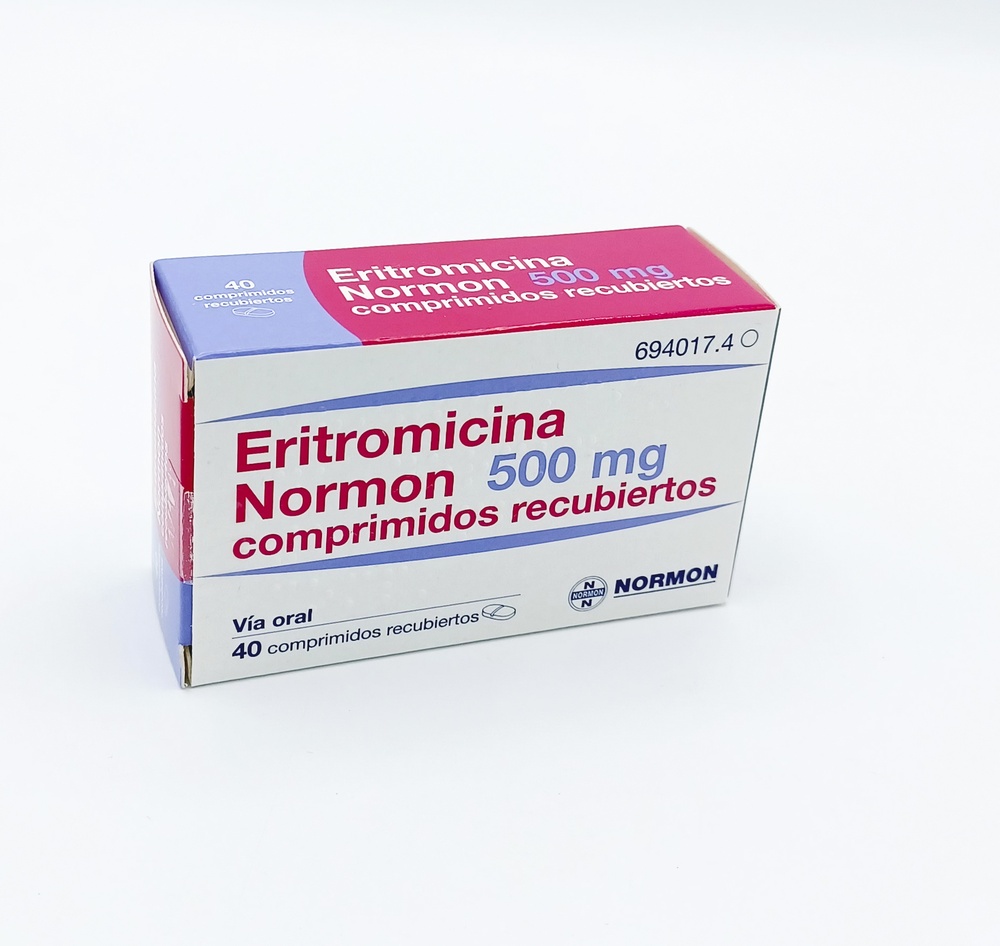
- Alternativas a PANTOMICINA 1G POLVO PARA SOLUCIÓN PARA PERFUSIÓNForma farmacéutica: COMPRIMIDO, ERITROMICINA ETILSUCCINATO 500 mgPrincipio activo: EritromicinaFabricante: Laboratorios Normon S.A.Requiere recetaForma farmacéutica: INYECTABLE PERFUSION, 50 mg/mlPrincipio activo: EritromicinaFabricante: PanpharmaRequiere recetaForma farmacéutica: SOLUCIÓN/SUSPENSIÓN ORAL, 500 mg eritromicina etilsuccinato/5 mlPrincipio activo: EritromicinaFabricante: Amdipharm LimitedRequiere receta

Médicos online para PANTOMICINA 1G POLVO PARA SOLUCIÓN PARA PERFUSIÓN
Comenta la dosis, los posibles efectos secundarios, interacciones, contraindicaciones o la revisión de receta de PANTOMICINA 1G POLVO PARA SOLUCIÓN PARA PERFUSIÓN, sujeto a valoración médica y a la normativa local.









Obtén una receta de PANTOMICINA 1G POLVO PARA SOLUCIÓN PARA PERFUSIÓN online
Rellena un formulario de 2 minutos
Cuéntanos tus síntomas, historial y el medicamento que necesitas.
Elige un médico o nosotros te asignamos uno
Escoge un especialista o te conectamos con el próximo médico disponible.
El médico revisa tu caso
Normalmente en 30 minutos. Puede hacerte preguntas adicionales por chat.
Recógela en cualquier farmacia
Receta electrónica enviada a tu correo, válida en toda España.
Preguntas frecuentes
PANTOMICINA 1G POLVO PARA SOLUCIÓN PARA PERFUSIÓN requires receta en España. Puedes confirmarlo con un médico online según tu caso.
El principio activo de PANTOMICINA 1G POLVO PARA SOLUCIÓN PARA PERFUSIÓN es Eritromicina. Esta información ayuda a identificar medicamentos con la misma composición pero con diferentes nombres comerciales.
PANTOMICINA 1G POLVO PARA SOLUCIÓN PARA PERFUSIÓN es fabricado por Amdipharm Limited. La marca y el envase pueden variar según el distribuidor.
Los Médicos de familia, Psiquiatras, Dermatólogos, Cardiólogos, Endocrinólogos, Gastroenterólogos, Neumólogos, Nefrólogos, Reumatólogos, Hematólogos, Infectólogos, Alergólogos, Geriatras, Pediatras, Oncólogos pueden valorar la prescripción de PANTOMICINA 1G POLVO PARA SOLUCIÓN PARA PERFUSIÓN cuando esté clínicamente indicado. Puedes reservar una videoconsulta para comentar tu caso y las opciones de tratamiento.
España cuenta con una infraestructura sanitaria bien desarrollada en ciudades principales como Madrid, Barcelona, Valencia y Sevilla. Las farmacias están ampliamente disponibles y operan bajo estrictas regulaciones, garantizando el acceso a medicamentos con receta.
Puedes comprar PANTOMICINA 1G POLVO PARA SOLUCIÓN PARA PERFUSIÓN en Madrid, Barcelona, Sevilla o Valencia en cualquier farmacia local con una receta válida.
Para obtener una receta, puedes utilizar Oladoctor:
Otros medicamentos con el mismo principio activo (Eritromicina) incluyen ERITROMICINA NORMON 500 MG COMPRIMIDOS RECUBIERTOS, ERITROMICINA PANPHARMA 1 G POLVO PARA SOLUCION PARA PERFUSION EFG, PANTOMICINA 100mg/ml GRANULADO PARA SUSPENSION ORAL. Pueden tener diferentes nombres comerciales o formulaciones, pero contienen el mismo componente terapéutico. Consulta siempre con un médico antes de cambiar o iniciar un nuevo medicamento.
