







Cómo usar ONDANSETRON HIKMA 4 MG/2 ML SOLUCION INYECTABLE EFG
Traducción generada por IA
Este contenido ha sido traducido automáticamente y se ofrece solo con fines informativos. No sustituye la consulta con un profesional sanitario.
Ver originalContenido del prospecto
Introducción
Prospecto: información para el usuario
Ondansetrón Hikma 4 mg/2 ml solución inyectableEFG
Ondansetrón Hikma 8 mg/4 ml solución inyectableEFG
Lea todo el prospecto detenidamente antes de empezar a usar este medicamento, porque contiene información importante para usted.
- Conserve este prospecto, ya que puede tener que volver a leerlo.
- Si tiene alguna duda, consulte a su médico, enfermero o farmacéutico.
- Este medicamento se le ha recetado solamente a usted, y no debe dárselo a otras personas aunque tengan los mismos síntomas que usted, ya que puede perjudicarles.
- Si experimenta efectos adversos, consulte a su médico, enfermero o farmacéutico, incluso si se trata de efectos adversos que no aparecen en este prospecto. Ver sección 4.
Contenido del prospecto
- Qué es Ondansetrón Hikma y para qué se utiliza
- Qué necesita saber antes de empezar a usar Ondansetrón Hikma
- Cómo usar Ondansetrón Hikma
- Posibles efectos adversos
- Conservación de Ondansetrón Hikma
- Contenido del envase e información adicional
1. Qué es Ondansetrón Hikma y para qué se utiliza
Ondansetrón pertenece al grupo de medicamentos denominados antieméticos.
Ondansetrón se utiliza para:
- Prevenir las náuseas y los vómitos causados por la quimioterapia (en adultos y niños) y radioterapia en el tratamiento del cáncer (únicamente en adultos).
- Prevenir y tratar las náuseas y vómitos postoperatorios.
Pregunte a su médico, enfermera o farmacéutico si desea alguna explicación adicional sobre estos usos.

2. Qué necesita saber antes de empezar a usar Ondansetrón Hikma
No useOndansetrón Hikma:
- si es alérgico a ondansetrón o a alguno de los demás componentes de este medicamento (incluidos en la sección 6).
- si está tomando apomorfina (medicamento usado para tratar la enfermedad de Parkinson).
Si no está seguro, consulte a su médico, enfermero o farmacéutico antes de tomar ondansetrón.
Advertencias y precauciones
Consulte a su médico o farmacéutico antes de empezar a usar ondansetrón:
- si alguna vez ha tenido problemas de corazón (p. ej., insuficiencia cardiaca congestiva, que produce falta de aire e hinchazón de los tobillos).
- si tiene latidos del corazón irregulares (arritmias).
- si es alérgico a medicamentos similares a ondansetrón, como granisetrón o palonosetrón (no use este medicamento).
- si tiene problemas hepáticos
- si tiene una obstrucción intestinal.
- si tiene problemas con los niveles de sales en su sangre, como potasio, sodio y magnesio.
Si no está seguro de si alguno de los puntos anteriores le aplican, consulte con su médico, enfermero o farmacéutico antes de que le administren ondansetrón inyectable.
Otros medicamentos y Ondansetrón Hikma
Informe a su médico o farmacéutico si está utilizando o ha utilizado recientemente o pudiera tener que utilizar cualquier otro medicamento. Esto incluye medicamentos que puede comprar sin receta y plantas medicinales. Ondansetrón puede afectar al modo de actuar de algunos medicamentos y otros medicamentos pueden afectar al modo de actuar de ondansetrón.
En particular, informe a su médico, enfermero o farmacéutico si está tomando cualquiera de los siguientes medicamentos:
- carbamazepina o fenitoína, utilizados para tratar la epilepsia.
- rifampicina, usado para tratar infecciones como la tuberculosis (TB).
- antibióticos como eritromicina o ketoconazol.
- medicamentos antiarrítmicos, usados para tratar latidos irregulares del corazón.
- medicamentos betabloqueantes, utilizados para tratar algunos problemas de corazón u oculares, ansiedad o prevenir migrañas.
- tramadol, un analgésico.
- medicamentos que afectan al corazón (como haloperidol o metadona).
- medicamentos para el cáncer (especialmente antraciclinas o trastuzumab).
- inhibidores selectivos de la recaptación de serotonina (ISRS) utilizados para el tratamiento de la depresión y/o ansiedad, incluyendo fluoxetina, paroxetina, sertralina, fluvoxamina, citalopram, escitalopram.
- inhibidores de la recaptación de serotonina y noradrenalina (IRSN) utilizados para el tratamiento de la depresión y/o ansiedad, incluyendo venlafaxina, duloxetina.
Si se encuentra en alguna de estas situaciones, o si tiene dudas, consulte con su médico, enfermero o farmacéutico antes de usar ondansetrón inyectable.
Ondansetrón inyectable no se debe administrar en la misma jeringa o perfusión (gotero) que otros medicamentos.
Embarazo y lactancia
Ondansetrón no debe utilizarse durante el primer trimestre del embarazo. Esto se debe a que puede aumentar ligeramente el riesgo de que un bebé nazca con labio leporino y/o fisura de la palatina (aberturas o hendiduras en el labio superior o en el paladar). Si ya está embarazada, cree que podría estar embarazada o tiene intención de quedarse embarazada, consulte a su médico o farmacéutico antes de utilizar ondansetrón ya que este medicamento puede causar daño en el feto. Si es una mujer en edad fértil, se le recomienda utilizar un método anticonceptivo efectivo.
No se recomienda dar el pecho durante el tratamiento con ondansetrón. Este medicamento puede pasar a la leche materna. Pida consejo a su médico o matrona.
Ondansetrón Hikma contiene citrato de sodio y cloruro sódico
Este medicamento contiene menos de 1 mmol de sodio (23 mg) por mililitro, esto es esencialmente "exento de sodio.
3. Cómo usar Ondansetrón Hikma
Ondansetrón normalmente es administrado por un enfermero o un médico. La dosis que se le ha prescrito dependerá del tratamiento que esté recibiendo.
Para prevenir las náuseas y vómitos debidos a quimioterapia o radioterapia en adultos
En el día de la quimioterapia o radioterapia:
- La dosis recomendada en adultos es de 8 mg administrados mediante una inyección lenta en una vena, inmediatamente antes de su tratamiento, y otros 8 mg doce horas más tarde. Después de la quimioterapia, el medicamento suele administrarse por vía oral en forma de comprimido de ondansetrón de 8 mg o 10 ml de jarabe de ondansetrón (8 mg).
En los siguientes días:
- La dosis recomendada en adultos es un comprimido de 8 mg o 10 ml (8 mg) de jarabe de ondansetrón dos veces al día.
- Puede administrarse durante un periodo de hasta 5 días.
Si es probable que su quimioterapia o radioterapia cause náuseas y vómitos intensos, le podrán administrar una dosis de ondansetrón mayor de lo habitual. Su médico decidirá qué hacer.
Paraprevenir las náuseas y vómitos debidos a quimioterapia en niños mayores de 6 meses y adolescentes
El médico decidirá la dosis en función de la superficie corporal o del peso del niño.
En el día de la quimioterapia:
- La primera dosis se administra como una inyección lenta en una vena, inmediatamente antes del tratamiento de su hijo. Después de la quimioterapia, la medicación de su hijo normalmente se administrará por vía oral doce horas más tarde en forma de comprimido o jarabe de ondansetrón.
En los días siguientes
- 2,5 ml (2 mg) de jarabe dos veces al día para los niños pequeños y los que pesan 10 kg o menos
- un comprimido de 4 mg o 5 ml (4 mg) de jarabe dos veces al día para los niños mayores y los que pesan más de 10 kg
- dos comprimidos de 4 mg o 10 ml (8 mg) de jarabe dos veces al día para adolescentes (o aquellos con una gran superficie corporal)
- estas dosis pueden administrarse durante un máximo de cinco días.
Para prevenir las náuseas y vómitos después de una operación
Adultos:
- La dosis habitual en adultos es de 4 mg, administrada mediante una inyección lenta en una vena. Como prevención, esta dosis se le administrará inmediatamente antes de la operación.
Niños:
- Para niños mayores de 1 mes y adolescentes, el médico decidirá la dosis. La dosis máxima es de 4 mg, administrada mediante una inyección lenta en una vena. Esta dosis se le administrará inmediatamente antes de la operación.
Pacientes con problemas hepáticos moderados o graves
La dosis diaria total no debe ser superior a 8 mg.
Si continúa la sensación de malestar
Ondansetrón debe empezar a hacer efecto rápidamente después de la inyección. Si continúa la sensación de malestar, informe a su médico o enfermero.
Si se usa más Ondansetrón Hikma del que se debiera
Su médico o enfermero le administrará la inyección de ondansetrón a usted o a su hijo por lo que es improbable que usted o su hijo reciban demasiada cantidad. Si cree que a usted o a su hijo les han administrado más cantidad o no le han dado una dosis, informe al médico o enfermero.
En caso de sobredosis o ingestión accidental, consulte inmediatamente a su médico o farmacéutico o llame al servicio de Información Toxicológica, teléfono 91 562 04 20, indicando el medicamento y la cantidad administrada.

4. Posibles efectos adversos
Al igual que todos los medicamentos, este medicamento puede tener efectos adversos aunque no todas las personas los sufran.
Reacciones alérgicas
Si tiene una reacción alérgica, informe inmediatamente a su médico o a un miembro del personal médico. Los signos pueden incluir:
- sibilancias repentinas y dolor u opresión en el pecho
- hinchazón de los párpados, cara, labios, boca o lengua
- erupción cutánea - manchas rojas o bultos bajo la piel (urticaria) en cualquier parte del cuerpo)
- colapso.
Isquemia de miocardio:Los signos incluyen:
- dolor torácico repentino u
- opresión en el pecho.
Efectos adversos muy frecuentes(pueden afectar a más de 1 de cada 10 pacientes)
- dolor de cabeza
Efectos adversos frecuentes(pueden afectar a hasta 1 de cada 10 pacientes)
- sensación de calor o rubor
- estreñimiento
- cambios en los resultados de pruebas del funcionamiento del hígado (si toma ondansetrón con un medicamento llamado cisplatino, por lo demás este efecto secundario es poco frecuente)
- irritación y enrojecimiento en el lugar donde se administró la inyección
Efectos adversos poco frecuentes(pueden afectar a hasta 1 de cada 100 pacientes)
- hipo
- presión sanguínea baja, que puede hacerle sentir desmayado o mareado
- latidos cardíacos irregulares
- dolor en el pecho
- convulsiones
- movimientos corporales inusuales o temblores.
Efectos adversos raros(pueden afectar a menos de 1 de cada 1.000 pacientes)
- vértigo o mareo
- visión borrosa
- alteración del ritmo cardiaco (en ocasiones pueda causar una pérdida repentina del conocimiento)
Efectos adversos muy raros(pueden afectar a menos de 1 de cada 10.000 pacientes)
- perdida de visión o ceguera transitoria, que normalmente se resuelve en 20 minutos
Comunicación de efectos adversos
Si experimenta cualquier tipo de efecto adverso, consulte a su médico o farmacéutico, incluso si se trata de posibles efectos adversos que no aparecen en este prospecto. También puede comunicarlos directamente a través del Sistema Español de Farmacovigilancia de Medicamentos de Uso Humano: www.notificaRAM.es. Mediante la comunicación de efectos adversos usted puede contribuir a proporcionar más información sobre la seguridad de este medicamento.
5. Conservación de Ondansetrón Hikma
Mantener este medicamento fuera de la vista y del alcance de los niños.
Conservar por debajo de 30°C.
Conservar las ampollas en el embalaje original para protegerlo de la luz.
La solución diluida es químicamente estable durante 24 h almacenado entre 2-8º C.
No use este medicamento después de la fecha de caducidad que aparece en el envase después de CAD. La fecha de caducidad es el último día del mes que se indica.
Los medicamentos no se deben tirar por los desagües ni a la basura. En caso de duda pregunte a su farmacéutico cómo deshacerse de los envases y de los medicamentos que no necesita. De esta forma, ayudará a proteger el medio ambiente.
6. Contenido del envase e información adicional
Composición deOndansetrón Hikma
- El principio activo es ondansetrón, como hidrocloruro dihidrato. Cada ml de solución contiene 2 mg de ondansetrón. Cada ampolla de 2 ml contiene 4 mg de ondansetrón y cada ampolla de 4 ml contiene 8 mg de ondansetrón.
- Los demás componentes son cloruro de sodio, ácido cítrico monohidrato, citrato de sodio y agua para preparaciones inyectables.
Aspecto del producto y contenido del envase
Ondansetrón Hikma es una solución inyectable transparente e incolora que se presenta en ampollas de vidrio transparentes.
Ondansetrón Hikma 4 mg/ 2 ml solución inyectable EFG:
Cada ampolla contiene 2 ml de solución.
Tamaño de envase: 5 ampollas.
Ondansetrón Hikma 8 mg/4 ml solución inyectable EFG:
Cada ampolla contiene 4 ml de solución.
Tamaño de envase: conteniendo 5 ampollas.
Titular de la autorización de comercialización
Hikma Farmacêutica (Portugal), S.A.
Estrada do Rio da Mó n,º 8, 8A e 8B – Fervença
2705-906 Terrugem SNT
Portugal
Tel.: +351 219 608 410
Fax: +351 219 615 102
Responsable de la fabricación
Hikma Farmacêutica (Portugal), S.A.
Estrada do Rio da Mó n,º 8, 8A e 8B – Fervença
2705-906 Terrugem SNT
Portugal
ó
Hikma Italia S.p.A.
Viale Certosa, 10
27100 Pavia
Italia
Pueden solicitar más información respecto a este medicamento dirigiéndose al representante local del titular de la autorización de comercialización:
Hikma España, S.L.U.
Calle Anabel Segura nº11, Edificio A, planta 1ª, oficina 2
28108 - Alcobendas, Madrid
España
Este medicamento está autorizado en los estados miembros del Espacio Económico Europeo con los siguientes nombres:
Alemania | Ondansetron Hikma 4 mg/2 ml & 8 mg/4 ml Injektionslösung |
Austria | Ondansetron Hikma 4 mg/2 ml & 8 mg/4 ml Injektionslösung |
Bélgica | Ondansetron Hikma 2 mg/ml Oplossing voor injectie/ Solution injectable / Injektionslösung |
España: | Ondansetrón Hikma 4 mg / 2 ml solución inyectable y para perfusión EFG Ondansetrón Hikma 8 mg / 4 ml solución inyectable y para perfusión EFG |
Italia: | Ondansetron Hikma 4 mg/2 ml & 8 mg/4 ml Soluzione iniettabile |
Países Bajos: | Ondansetron Hikma 4 mg/2 ml & 8 mg/4 ml Oplossing voor injectie |
Portugal: | Ondansetrom Hikma |
Fecha de la última revisión de este prospecto: Agosto 2024
La información detallada y actualizada de este medicamento está disponible en la página web de la Agencia Española de Medicamentos y Productos Sanitarios (AEMPS) http://www.aemps.gob.es
Esta información está destinada únicamente a profesionales del sector sanitario:
Ondansetrón Hikma 4 mg/2 ml solución inyectableEFG
Ondansetrón Hikma 8 mg/4 ml solución inyectableEFG
Para más información sobre este producto, consulte la Ficha Ténica del Producto (FT).
Ondansetrón Hikma solución inyectable EFG
Ondansetrón Hikma 2 mg/ml:
- Ampollas de 2 ml que contienen cada una 4 mg de ondansetrón (como hidrocloruro dihidrato) en solución acuosa para administración intravenosa.
- Ampollas de 4 ml conteniendo cada una 8 mg de ondansetrón (como hidrocloruro dihidrato) en solución acuosa para administración intravenosa.
Náuseas y vómitos inducidos por quimioterapia y radioterapia
Adultos
El potencial emetógeno del tratamiento del cáncer varía según la dosis y las combinaciones de los regímenes de quimioterapia y radioterapia utilizados. La vía de administración y la dosis de ondansetrón deben ser flexibles en el intervalo de 8-32 mg al día, y se deben seleccionar como se muestra a continuación.
Quimioterapia y radioterapia emetógena:Ondansetrón puede administrarse por vía rectal, oral (comprimidos o jarabe), intravenosa o intramuscular. Sin embargo, Ondansetrón Hikma sólo está aprobado para administración intravenosa. Para la mayoría de los pacientes que reciben quimioterapia o radioterapia emetógena, ondansetrón 8 mg debe administrarse en forma de inyección intravenosa lenta (en no menos de 30 segundos), inmediatamente antes de la quimioterapia o radioterapia, seguida por dosis de 8 mg por vía oral cada 12 horas. Para proteger frente a la emesis retardada o prolongada después de las primeras 24 horas, continuar administrando ondansetrón por vía oral o rectal durante 5 días después de un ciclo de tratamiento.
Quimioterapia altamente emetógena:En los pacientes tratados con quimioterapia altamente emetógena, por ejemplo, con cisplatino a dosis altas, ondansetrón puede administrarse por vía rectal, oral, intravenosa o intramuscular. Sin embargo, Ondansetrón Hikma sólo está aprobado para administración intravenosa.
Se ha demostrado que el ondansetrón es igualmente eficaz en los siguientes esquemas de dosis durante las primeras 24 horas de quimioterapia:
- Una dosis única de 8 mg mediante inyección intravenosa lenta (en no menos de 30 segundos) inmediatamente antes de la quimioterapia;
- Una dosis de 8 mg mediante inyección intravenosa lenta (en no menos de 30 segundos) inmediatamente antes de la quimioterapia, seguida de dos dosis adicionales intravenosas de 8 mg (en no menos de 30 segundos) espaciadas por 4 horas entre sí, o mediante una perfusión constante de 1 mg/hora durante 24 horas;
- Una dosis máxima inicial de 16 mg por vía intravenosa, diluida en 50–100 ml de solución salina u otros fluidos de perfusión compatibles (ver sección 6.6) y administrada mediante perfusión en no menos de 15 minutos, inmediatamente antes de la quimioterapia. La dosis inicial de ondansetrón puede ir seguida de dos dosis intravenosas de 8 mg adicionales (en no menos de 30 segundos), espaciadas 4 horas entre sí.
- No se debe administrar una dosis mayor de 16 mg debido al incremento del riesgo dosis-dependiente de prolongación del intervalo QT (ver secciones 4.4, 4.8 y 5.1).
La selección de la pauta posológica debe determinarse en función de la intensidad del tratamiento emetógeno. Puede potenciarse la eficacia de ondansetrón en quimioterapia altamente emetógena, añadiendo una dosis intravenosa única de 20 mg de fosfato sódico de dexametasona antes de la quimioterapia.
Para proteger contra la emesis retardada o prolongada tras las primeras 24 horas, deberá continuarse con ondansetrón por vía oral o rectal durante 5 días después de un ciclo de tratamiento.
Población pediátrica
Náuseas y vómitos inducidos por quimioterapia en niños ≥ 6 meses y adolescentes
La dosis para las náuseas y vómitos inducidos por quimioterapia se puede calcular en función de la superficie corporal (SC) o del peso (ver a continuación). En estudios clínicos pediátricos, ondansetrón se administró por perfusión intravenosa diluido en 25 a 50 ml de solución salina u otro líquido de perfusión compatible y se administró durante no menos de 15 minutos.
La posología basada en el peso da lugar a una dosis diaria total más elevada que la calculada a partir de la SC (ver secciones 4.4 y 5.1 de la Ficha Técnica).
Ondansetrón se debe diluir en dextrosa al 5% o cloruro de sodio al 0,9% u otro líquido de perfusión compatible (ver Instrucciones de uso/manipulación) y administrar en perfusión intravenosa durante no menos de 15 minutos.
No hay datos de ensayos clínicos controlados sobre el uso de ondansetrón inyectable en la prevención de las náuseas y vómitos retardados o prolongados inducidos por quimioterapia. No hay datos de ensayos clínicos controlados sobre el uso de ondansetrón inyectable para náuseas y vómitos inducidos por radioterapia en niños.
Cálculo de dosis por superficie corporal:
Ondansetrón se debe administrar inmediatamente antes de la quimioterapia como una dosis única intravenosa de 5 mg/m2. La dosis intravenosa única no debe exceder de 8 mg. La dosis oral puede comenzar 12 horas más tarde y puede continuar hasta 5 días (ver tablas de posología en la Ficha Técnica). La dosis diaria total en 24 horas (administrada en dosis divididas) no debe exceder la dosis de adultos de 32 mg.
Cálculo de dosis por peso corporal:
La posología basada en el peso da lugar a una dosis diaria total más alta que la calculada a partir de la SC. Ondansetrón se debe administrar inmediatamente antes de la quimioterapia como una dosis intravenosa única de 0,15 mg/kg. La dosis intravenosa única no debe exceder de 8 mg. Pueden administrarse dos dosis intravenosas adicionales a intervalos de 4 horas. La dosis oral puede comenzar 12 horas después y puede continuar hasta 5 días. La dosis total en 24 horas (administrada en dosis divididas) no debe exceder la dosis de adultos de 32 mg (para más información, consultar la Ficha Técnica).
Edad avanzada
En pacientes de 65 a 74 años,se pueden seguir las mismas pautas posológicas que para los adultos. Todas las dosis intravenosas se deben diluir en 50-100 ml de solución salina u otros líquidos de perfusión compatibles (ver Instrucciones de uso/manipulación) y administrar mediante perfusión durante 15 minutos.
En pacientes de 75 años o mayores, la dosis inicial intravenosa de ondansetrón no debe exceder de 8 mg. Todas las dosis intravenosas se deben diluir en 50-100 ml de solución salina u otros líquidos de perfusión compatibles (ver Instrucciones de uso/manipulación) y administrar mediante perfusión durante 15 minutos. Tras la dosis inicial de 8 mg, se pueden administrar 2 dosis adicionales de 8 mg administradas mediante perfusión durante 15 minutos, dejando un tiempo de no menos de 4 horas entre la administración de una dosis y otra (ver Ficha Técnica).
Náuseas y vómitos postoperatorios (NVPO)
Adultos
Para la prevención de NVPO, ondansetrón se puede administrar por vía oral o mediante inyección intravenosa. Sin embargo, Ondansetrón Hikma sólo está aprobado para administración intravenosa. Ondansetrón se puede administrar como una dosis única de 4 mg mediante inyección intravenosa lenta en el momento de la inducción de la anestesia. Para el tratamiento de NVPO establecidos, se recomienda administrar una dosis única de 4 mg mediante inyección intravenosa lenta.
Población pediátrica
Niños (mayores de 1 mes y adolescentes)
Para la prevención de NVPO en pacientes pediátricos sometidos a cirugía con anestesia general se puede administrar una dosis única de ondansetrón mediante inyección intravenosa lenta (no menos de 30 segundos) a una dosis de 0,1 mg/kg hasta un máximo de 4 mg antes, durante o después de la inducción de la anestesia. Para el tratamiento de NVPO en pacientes pediátricos después de cirugía con anestesia general se puede administrar una dosis única de ondansetrón mediante inyección intravenosa lenta (no menos de 30 segundos) a una dosis de 0,1 mg/kg hasta un máximo de 4 mg. No hay datos sobre el uso de ondansetrón inyectable para el tratamiento de los vómitos postoperatorios de niños menores de 2 años.
Edad avanzada
Se dispone de poca experiencia sobre el uso de ondansetrón en la prevención y tratamiento de NVPO en personas de edad avanzada, si bien ondansetrón es bien tolerado en pacientes mayores de 65 años tratados con quimioterapia.
Para todas las indicaciones:
Pacientes con insuficiencia renal
No se requiere una modificación de la dosis diaria, frecuencia de administración ni vía de administración.
Pacientes con insuficiencia hepática
El aclaramiento de ondansetrón está significativamente reducido y la semivida sérica significativamente prolongada en sujetos con insuficiencia hepática moderada o grave. En estos pacientes no se debe exceder una dosis diaria total de 8 mg vía parenteral o oral.
Pacientes metabolizadores lentos de esparteína/debrisoquina
La semivida de eliminación de ondansetrón no se ve alterada en personas calificadas como metabolizadores lentos de esparteína y debrisoquina. Por consiguiente, los niveles de exposición al fármaco tras administración repetida en estos pacientes no difieren de los alcanzados en la población general. No se requiere modificar la dosis diaria o la frecuencia de administración.
Para un solo uso. Todo medicamento no utilizado o material de desecho debe eliminarse de acuerdo con las disposiciones locales.
La solución debe inspeccionarse visualmente antes de su uso. Sólo deben utilizarse soluciones claras prácticamente libres de partículas.
Compatibilidad con fluidos intravenosos
Ondansetrón Hikma solo debe mezclarse con aquellas soluciones para perfusión que se recomiendan:
- Perfusión intravenosa de cloruro sódico al 0,9% (p/v).
- Perfusión intravenosa de glucosa al 5% (p/v.)
- Perfusión intravenosa de manitol al 10% (p/v).
•Perfusión intravenosa de solución de Ringer.
•Perfusión intravenosa de cloruro potásico al 0,3% (p/v) en cloruro sódico al 0,9% (p/v) .
•Perfusión intravenosa de cloruro potásico al 0,3% (p/v) en glucosa al 5% (p/v) .
De acuerdo con las buenas prácticas farmacéuticas, las diluciones de ondansetrón Hikma en fluidos intravenosos deben prepararse en el momento de la perfusión o almacenarse a 2-8°C durante no más de 24 horas antes del inicio de la administración.
Compatibilidad con otros medicamentos
Ondansetrón puede administrarse mediante perfusión intravenosa a 1 mg/hora, por ejemplo, desde una bolsa de perfusión o una bomba de jeringa. Los siguientes fármacos pueden administrarse a través del punto Y del equipo de perfusión para concentraciones de ondansetrón de 16 a 160 microgramos/ml (por ejemplo, 8 mg/500 ml y 8 mg/50 ml, respectivamente);
Cisplatino-Concentraciones de hasta 0,48 mg/ml (es decir, 240 mg en 500 ml) administrado durante un periodo de 1-8 horas
5-Fluorouracilo-Concentraciones de hasta 0,8 mg/ml (es decir 2,4 g en 3 litros o 400 mg en 500 ml) administrados a una velocidad de por lo menos 20 ml/hora (500 ml/24 horas). Concentraciones superiores de 5-fluorouracilo pueden causar la precipitación de ondansetrón. La solución de 5-fluorouracilo puede contener hasta un 0,045% (p/v) de cloruro magnésico además de otros excipientes compatibles.
Carboplatino -Concentraciones entre 0,18 mg/ml y 9,9 mg/ml (es decir, 90 mg en 500 ml hasta 990 mg en 100 ml), administrado durante un periodo de entre 10 minutos y una hora.
Etopósido -Concentraciones entre 0,144 mg/ml y 0,25 mg/ml (es decir, 72 mg en 500 ml hasta 250 mg en 1 litro), administrado durante un periodo de entre 30 minutos y una hora.
Ceftazidima -Dosis entre 250 mg y 2000 mg reconstituida con agua para preparaciones inyectables BP según las recomendaciones del fabricante (es decir, 2,5 ml para 250 mg y 10 ml para 2 g de ceftazidima), administrada en forma de inyección en bolo durante un periodo aproximado de cinco minutos.
Ciclofosfamida -Dosis entre 100 mg y 1 g reconstituida con agua para preparaciones inyectables BP, 5 ml para 100 mg de ciclofosfamida, según las recomendaciones del fabricante y administrada en forma de inyección en bolo durante un periodo aproximado de cinco minutos
Doxorrubicina -Dosis entre de 10 mg y 100 mg reconstituida con agua para preparaciones inyectables BP, 5 ml para 10 mg de doxorrubicina, según las recomendaciones del fabricante y administrada en forma de inyección en bolo durante un periodo aproximado de cinco minutos.
Dexametasona -Se puede administrar el fosfato sódico de dexametasona a dosis de 20 mg en forma de inyección intravenosa lenta durante 2-5 minutos a través de la conexión en Y de un sistema de perfusión con el que se administren 8 o 16 mg de ondansetrón diluidos en 50-100 ml de una solución para perfusión compatible durante un periodo aproximado de 15 minutos. Se ha confirmado la compatibilidad entre el fosfato sódico de dexametasona y el ondansetrón, lo que avala la administración de estos fármacos a través del mismo sistema con concentraciones de 32 microgramos- 2,5 mg/ml para el fosfato sódico de dexametasona y 8 microgramos-1 mg/ml para ondansetrón.
Periodo de validez
3 años.
Condiciones especiales de conservación
Conservar por debajo de 30°C.
Conservar en su envase original para protegerlo de la luz.
- País de registro
- Forma farmacéuticaINYECTABLE, 2 mg/ml
- Código ATCA04AA01
- Principio activo
- Requiere recetaSí
- Fabricante
- Esta información es de carácter general y no sustituye la consulta con un profesional sanitario.
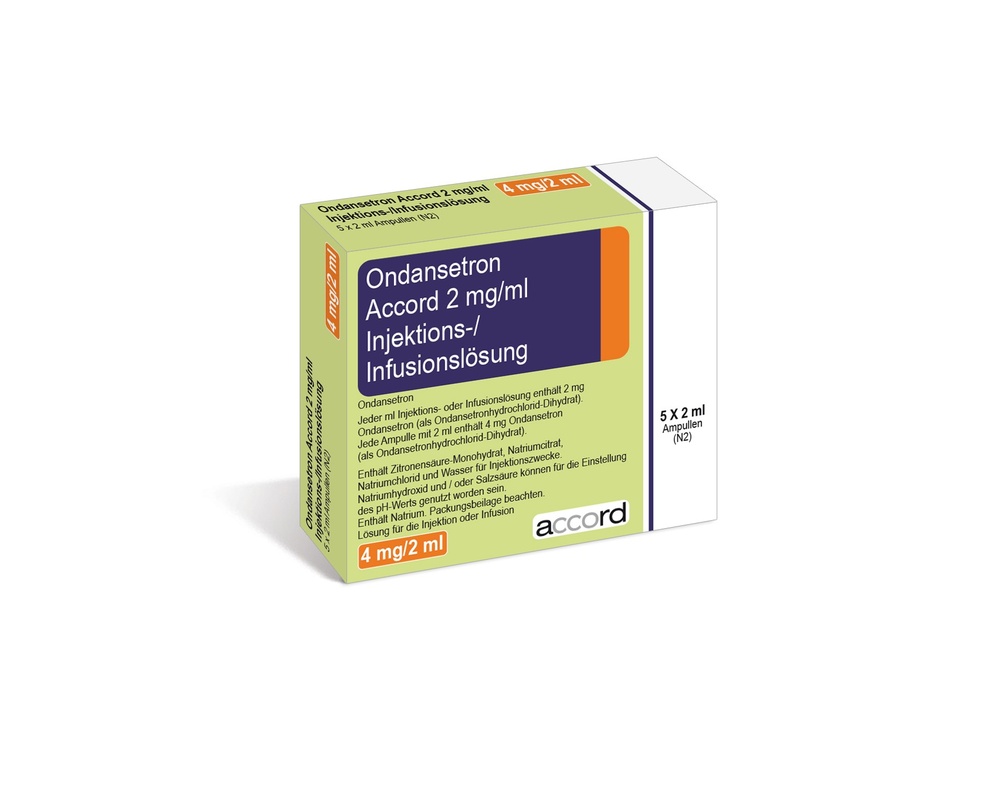
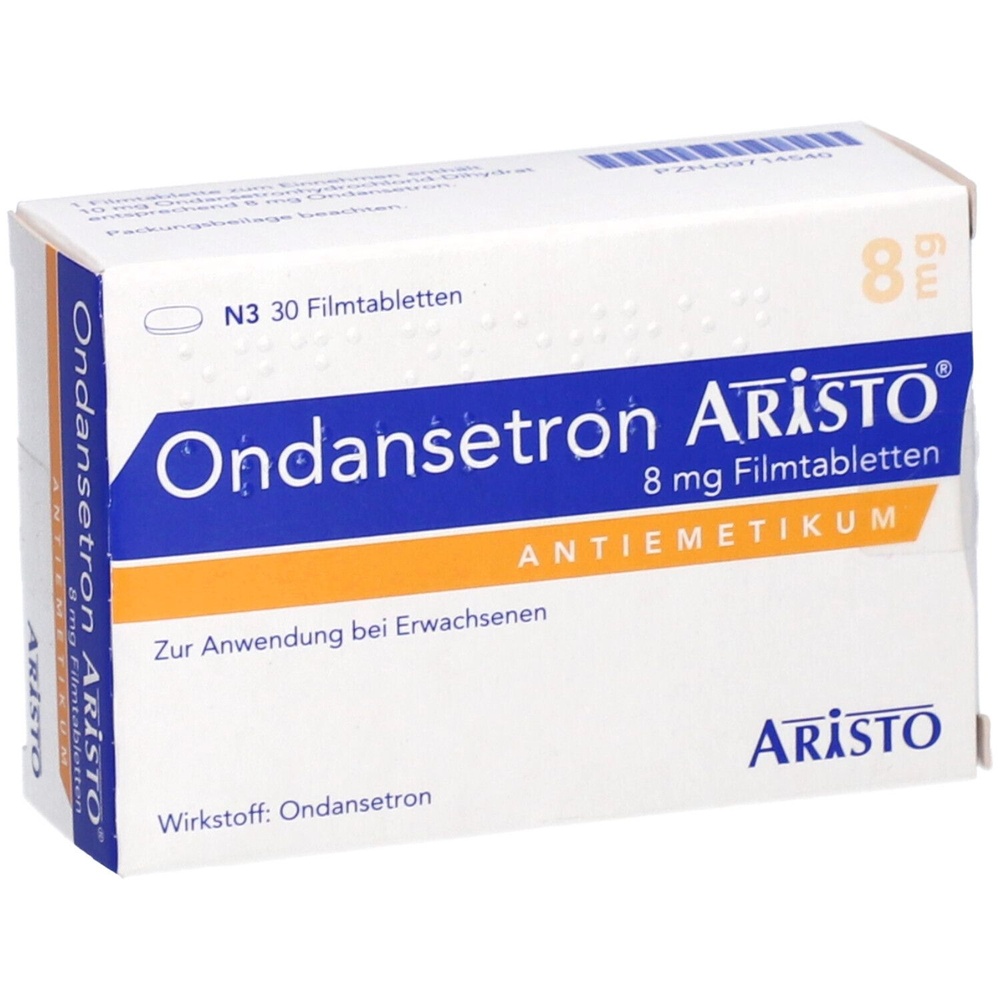
- Alternativas a ONDANSETRON HIKMA 4 MG/2 ML SOLUCION INYECTABLE EFGForma farmacéutica: INYECTABLE, 2 MG/MLPrincipio activo: OndansetronFabricante: Accord Healthcare S.L.U.Requiere recetaForma farmacéutica: COMPRIMIDO BUCODISPERSABLE/LIOTAB, 4 MGPrincipio activo: OndansetronFabricante: Aristo Pharma Iberia S.L.Requiere recetaForma farmacéutica: COMPRIMIDO BUCODISPERSABLE/LIOTAB, 8 MGPrincipio activo: OndansetronFabricante: Aristo Pharma Iberia S.L.Requiere receta
Médicos online para ONDANSETRON HIKMA 4 MG/2 ML SOLUCION INYECTABLE EFG
Comenta la dosis, los posibles efectos secundarios, interacciones, contraindicaciones o la revisión de receta de ONDANSETRON HIKMA 4 MG/2 ML SOLUCION INYECTABLE EFG, sujeto a valoración médica y a la normativa local.









Obtén una receta de ONDANSETRON HIKMA 4 MG/2 ML SOLUCION INYECTABLE EFG online
Rellena un formulario de 2 minutos
Cuéntanos tus síntomas, historial y el medicamento que necesitas.
Elige un médico o nosotros te asignamos uno
Escoge un especialista o te conectamos con el próximo médico disponible.
El médico revisa tu caso
Normalmente en 30 minutos. Puede hacerte preguntas adicionales por chat.
Recógela en cualquier farmacia
Receta electrónica enviada a tu correo, válida en toda España.
Preguntas frecuentes
ONDANSETRON HIKMA 4 MG/2 ML SOLUCION INYECTABLE EFG requires receta en España. Puedes confirmarlo con un médico online según tu caso.
El principio activo de ONDANSETRON HIKMA 4 MG/2 ML SOLUCION INYECTABLE EFG es Ondansetron. Esta información ayuda a identificar medicamentos con la misma composición pero con diferentes nombres comerciales.
ONDANSETRON HIKMA 4 MG/2 ML SOLUCION INYECTABLE EFG es fabricado por Hikma Farmaceutica (Portugal) S.A.. La marca y el envase pueden variar según el distribuidor.
Los Médicos de familia, Psiquiatras, Dermatólogos, Cardiólogos, Endocrinólogos, Gastroenterólogos, Neumólogos, Nefrólogos, Reumatólogos, Hematólogos, Infectólogos, Alergólogos, Geriatras, Pediatras, Oncólogos pueden valorar la prescripción de ONDANSETRON HIKMA 4 MG/2 ML SOLUCION INYECTABLE EFG cuando esté clínicamente indicado. Puedes reservar una videoconsulta para comentar tu caso y las opciones de tratamiento.
España cuenta con una infraestructura sanitaria bien desarrollada en ciudades principales como Madrid, Barcelona, Valencia y Sevilla. Las farmacias están ampliamente disponibles y operan bajo estrictas regulaciones, garantizando el acceso a medicamentos con receta.
Puedes comprar ONDANSETRON HIKMA 4 MG/2 ML SOLUCION INYECTABLE EFG en Madrid, Barcelona, Sevilla o Valencia en cualquier farmacia local con una receta válida.
Para obtener una receta, puedes utilizar Oladoctor:
Otros medicamentos con el mismo principio activo (Ondansetron) incluyen ONDANSETRON ACCORD 2 mg/ml SOLUCION INYECTABLE EFG, ONDANSETRON ARISTO 4 MG COMPRIMIDOS BUCODISPERSABLES EFG, ONDANSETRON ARISTO 8 MG COMPRIMIDOS BUCODISPERSABLES EFG. Pueden tener diferentes nombres comerciales o formulaciones, pero contienen el mismo componente terapéutico. Consulta siempre con un médico antes de cambiar o iniciar un nuevo medicamento.
