



NABILA 20 mg Comprimidos Recubiertos Con Película

Revisión de receta online
Un médico revisará tu caso y determinará si la prescripción es médicamente apropiada.

Habla con un médico sobre este medicamento
Comenta tus síntomas y las opciones de tratamiento en una consulta online.



Cómo usar NABILA 20 MG COMPRIMIDOS RECUBIERTOS CON PELICULA EFG
Contenido del prospecto
- Introducción
- Qué es Nabila y para qué se utiliza
- Qué necesita saber antes de empezar a tomar Nabila
- Cómo tomar Nabila
- Posibles efectos adversos
- Conservación de Nabila
- Contenido del envase e información adicional
Introducción
Prospecto: información para el paciente
Nabila20 mg comprimidos recubiertos con película EFG
Hidrocloruro de memantina
Lea todo el prospecto detenidamente antes de empezar a tomar este medicamento, porque contiene información importante para usted.
- Conserve este prospecto, ya que puede tener que volver a leerlo.
- Si tiene alguna duda, consulte a su médico, farmacéutico o enfermero.
- Este medicamento se le ha recetado solamente a usted, y no debe dárselo a otras personas aunque tengan los mismos síntomas que usted, ya que puede perjudicarles.
- Si experimenta efectos adversos, consulte a su médico, farmacéutico o enfermero,incluso si se trata de efectos adversos que no aparecen en este prospecto.
Contenido del prospecto :
- Qué es Nabila y para qué se utiliza
- Qué necesita saber antes de empezar a tomar Nabila
- Cómo tomar Nabila
- Posibles efectos adversos
5 Conservación de Nabila
- Contenido del envase e información adicional
1. Qué es Nabila y para qué se utiliza
Cómo actúa Nabila
Nabila pertenece a un grupo de medicamentos denominados como medicamentos anti-demencia.
La pérdida de memoria en la enfermedad de Alzheimer se debe a una alteración en las señales del cerebro. El cerebro contiene los llamados receptores N-metil-D-aspartato (NMDA) que participan en la transmisión de señales nerviosas importantes en el aprendizaje y la memoria. Nabila pertenece al grupo de medicamentos llamados antagonistas de los receptores NMDA. Nabila actúa sobre estos receptores mejorando la transmisión de las señales nerviosas y la memoria.
Para qué se utilizaNabila
Nabila se utiliza en el tratamiento de pacientes con enfermedad de Alzheimer de moderada a grave.

¿No estás seguro de si este medicamento es adecuado para ti?
Comenta tus síntomas y tratamiento con un médico online.
2. Qué necesita saber antes de empezar a tomar Nabila
No tomeNabila
Si es alérgico al hidrocloruro de memantina o a cualquiera de los demás componentes de este medicamento (incluidos en la sección 6).
Advertencias y precauciones
Consulte a su médico o farmacéutico antes de empezar a tomar Nabila:
- Si tiene antecedentes de crisis epilépticas.
- Si ha sufrido recientemente un infarto de miocardio (ataque al corazón), si sufre enfermedad cardiaca congestiva o si tiene hipertensión (la presión arterial elevada) no controlada.
En las situaciones anteriores, el tratamiento debe ser supervisado cuidadosamente y el médico debe reevaluar el beneficio clínico de memantina regularmente.
Si padece insuficiencia renal (problemas en los riñones), su médico debe controlar atentamente la función renal y si es necesario, adaptar las dosis de memantina.
Se debe evitar el uso de memantina junto con otros medicamentos como amantadina (para el tratamiento del Parkinson), ketamina (fármaco generalmente usado como anestesico), dextrometorfano (fármaco para el tratamiento de la tos) y otros antagonistas del NMDA.
No se recomienda el uso de memantina en niños y adolescentes menores de 18 años.
Toma deNabilacon otros medicamentos
Informe a su médico o farmacéutico si está utilizando, ha utilizado recientemente o podría tener que utilizar cualquier otro medicamento incluso los adquiridos sin receta.
En concreto, la administración de memantina puede producir cambios en los efectos de los siguientes medicamentos, por lo que puede que su médico necesite ajustar la dosis:
- Amantadina, ketamina, dextrometorfano,
- Dantroleno, baclofeno,
- Cimetidina, ranitidina, procainamida, quinidina, quinina, nicotina,
- Hidroclorotiazida (o cualquier combinación con hidroclorotiazida),
- Anticolinérgicos (sustancias generalmente utilizadas para tratar alteraciones del movimiento o espasmos intestinales),
- Anticonvulsivantes (sustancias utilizadas para prevenir y eliminar las convulsiones),
- Barbitúricos (sustancias generalmente utilizadas para inducir el sueño),
- Agonistas dopaminérgicos (sustancias como L-dopa, bromocriptina),
- Neurolépticos (sustancias utilizadas en el tratamiento de enfermedades mentales),
- Anticoagulantes orales.
Si ingresa en un hospital, informe a su médico que está tomando Nabila.
Toma deNabilacon los alimentos, bebidas y alcohol
Debe informar a su médico si ha cambiado recientemente o tiene la intención de cambiar su dieta de manera sustancial (por ejemplo de dieta normal a dieta vegetariana estricta) o si padece acidosis tubular renal (ATR, exceso de sustancias productoras de ácido en la sangre debido a una disfunción renal (problema de riñón)) o infecciones graves del tracto urinario (conducto de la orina), ya que su médico puede tener que ajustar la dosis del medicamento.
Embarazo, lactancia y fertilidad
Si usted está embarazada o en periodo de lactancia, piensa que puede estar embarazada o planea estarlo, consulte a su médico o farmacéutico antes de tomar este medicamento.
No se recomienda el uso de memantina en mujeres embarazadas.
Las mujeres que toman Nabila deben suspender la lactancia.
Conducción y uso de máquinas
Su médico le informará de si su enfermedad le permite conducir y usar máquinas con seguridad.
Asimismo, Nabila puede alterar su capacidad de reacción, por lo que la conducción o el manejo de máquinas pueden resultar inapropiados.
Su médico le informará de si su enfermedad le permite conducir y usar máquinas con seguridad.
Asimismo, Nabila puede alterar su capacidad de reacción, por lo que la conducción o el manejo de máquinas pueden resultar inapropiados.
Nabilacontiene Amarillo anaranjado S (E110)
Este medicamento puede producir reacciones alérgicas porque contiene Amarillo anaranjado S (E110). Puede provocar asma, especialmente en pacientes alérgicos al ácido acetilsalicílico.
3. Cómo tomar Nabila
Siga exactamente las instrucciones de administración de este medicamento indicadas por su médico. Consulte a su médico o farmacéutico si tiene dudas.
Posología
La dosis recomendada para adultos y pacientes de edad avanzada es de 20 mg administrados una vez al día.
Para reducir el riesgo de aparición de efectos adversos, esta dosis ha de alcanzarse de manera gradual siguiendo un esquema de tratamiento diario. Para ajustar la dosis existen comprimidos con diferentes dosis.
Al inicio del tratamiento empezará a tomar Nabila 5 mg comprimidos recubiertos con película una vez al día. Esta dosis se incrementará de forma semanal en 5 mg hasta alcanzar la dosis recomendada (de mantenimiento). La dosis recomendada de mantenimiento es de 20 mg una vez al día, que se alcanza al comienzo de la cuarta semana.
Posología para pacientes con insuficiencia renal
Si padece problemas de riñón, su médico decidirá la dosis apropiada para su condición. En este caso, su médico debe controlar periódicamente su función renal.
Administración
Nabila debe administrarse por vía oral una vez al día. Para sacar el máximo provecho de su medicación, debe tomarla todos los días y a la misma hora. Los comprimidos se deben tragar con un poco de agua. Los comprimidos se pueden tomar con o sin alimentos.
Duración del tratamiento
Continúe tomando Nabila mientras sea beneficioso para usted. El médico debe evaluar los efectos de su tratamiento periódicamente.
Si toma másNabiladel que debiera
En caso de sobredosis o ingestión accidental, consulte inmediatamente a su médico o farmacéutico o llame al Servicio de Información Toxicológica (teléfono 91 562 04 20), indicando el medicamento y la cantidad tomada.
En general, tomar una cantidad excesiva de Nabila no debe provocarle ningún daño. Puede experimentar un aumento de los síntomas descritos en la sección 4 “Posibles efectos adversos”.
Si toma una sobredosis de Nabila, póngase en contacto con su médico o pida consejo médico, ya que podría necesitar atención médica.
Si olvidó tomarNabila
Si se da cuenta de que ha olvidado tomar su dosis de memantina, espere y tome la siguiente dosis a la hora habitual.
No tome una dosis doble para compensar la dosis olvidada.
Si tiene cualquier otra duda sobre el uso de este medicamento, pregunte a su médico o farmacéutico.

¿Has empezado a tomar el medicamento y tienes preguntas?
Comenta tus síntomas y tratamiento con un médico online.
4. Posibles efectos adversos
Al igual que todos los medicamentos, Nabila puede producir efectos adversos, aunque no todas las personas los sufran.
En general los efectos adversos se clasifican de leves a moderados.
Frecuentes (pueden afectar a entre 1 y 10 de cada 100 pacientes):
- Dolor de cabeza, sueño, estreñimiento, pruebas de función hepática elevadas, vértigo, alteración del equilibrio, respiración difícil, tensión alta e hipersensibilidad al medicamento.
Poco frecuentes (pueden afectar a entre 1 y 10 de cada 1.000 pacientes):
- Cansancio, infecciones por hongos, confusión, alucinaciones, vómitos, alteración de la marcha, insuficiencia cardíaca y formación de coágulos en el sistema venoso (trombosis/tromboembolismo venoso).
Muy raros (pueden afectar a menos de 1 de cada 10.000 pacientes):
- Convulsiones.
Frecuencia no conocida (la frecuencia no puede estimarse a partir de los datos disponibles):
- Inflamación del páncreas, inflamación del hígado (hepatitis) y reacciones psicóticas.
La enfermedad de Alzheimer se ha relacionado con depresión, ideación suicida y suicidio. Se ha informado de la aparición de estos acontecimientos en pacientes tratados con memantina.
Si considera que alguno de los efectos adversos que sufre es grave o si aprecia cualquier efecto adverso no mencionado en este prospecto, informe a su médico o farmacéutico.
Si experimenta efectos adversos, consulte a su médico o farmacéutico,incluso si se trata de efectos adversos que no aparecen en este prospecto.
5. Conservación de Nabila
Mantener este medicamento fuera de la vista y del alcance de los niños.
No utilice este medicamento después de la fecha de caducidad que aparece en el blíster y en la caja después de CAD. La fecha de caducidad es el último día del mes que se indica.
Este medicamento no requiere condiciones especiales de conservación.
Los medicamentos no se deben tirar por los desagües ni a la basura. Deposite los envases y los medicamentos que no necesita en el Punto SIGRE de la farmacia. En caso de duda pregunte a su farmacéutico cómo deshacerse de los envases y de los medicamentos que no necesita. De esta forma, ayudará a proteger el medio ambiente.
6. Contenido del envase e información adicional
Composición de Nabila
El principio activo es hidrocloruro de memantina. Cada comprimido recubierto con película contiene 20 mg de hidrocloruro de memantina, que equivalen a 16,62 mg de memantina.
Los demás componentes son celulosa microcristalina pH 200, povidona K-25, croscarmelosa sódica y estearato de magnesio, en el núcleo del comprimido; e hidroxipropilcelulosa, hipromelosa, talco, dioxido de titanio (E171), óxido de hierro amarillo (E172), óxido de hierro rojo (E172) y amarillo anaranjado S (E110) en la cubierta del comprimido.
Aspecto del producto y contenido del envase
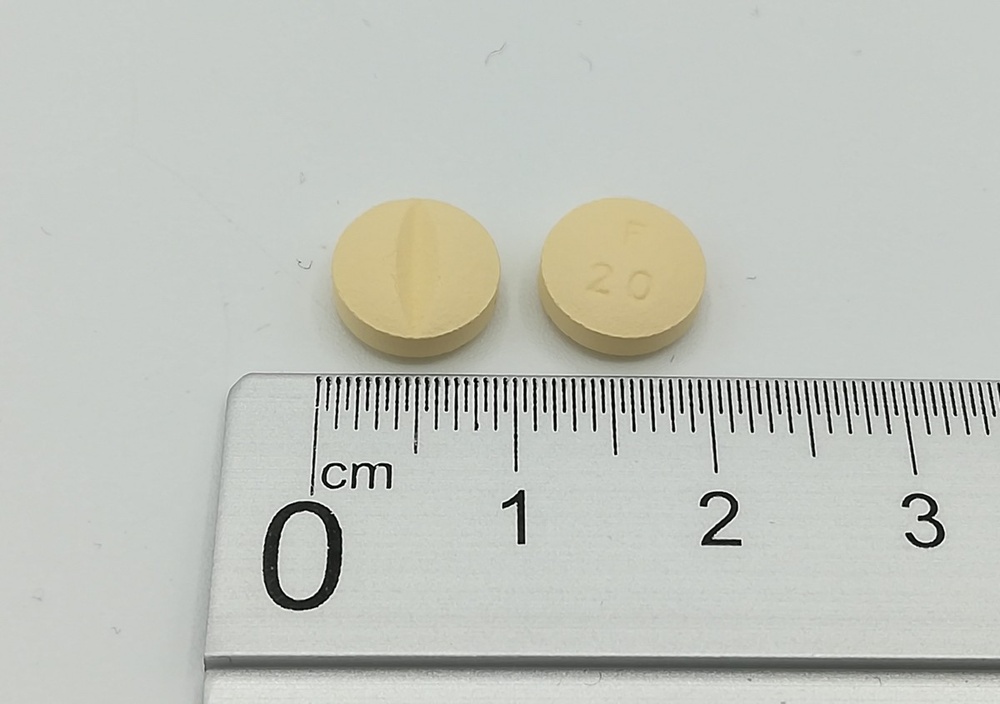
Nabila se presenta en forma de comprimidos recubiertos con película de color rosa a naranja y forma elíptica biconvexa.
Nabila comprimidos se presenta en envases de 28 y 56 comprimidos.
Puede que solamente estén comercializados algunos tamaños de envases.
Titular de la autorización de comercialización
EXELTIS HEALTHCARE, S.L.
Avda de Miralcampo 7. Polígono Industrial Miralcampo.
19200 Azuqueca de Henares. Guadalajara. España
Responsable de la fabricación
Atlantic Pharma – Produções Farmacêuticas, S.A.
Rua da Tapada Grande, n.º 2; Abrunheira, 2710-089 Sintra, Portugal
Fecha de la última revisión de este prospecto:Septiembre 2014.
La información detallada y actualizada de este medicamento está disponible en la página Web de la Agencia Española de Medicamentos y Productos Sanitarios (AEMPS) http: //www.aemps.gob.es/
- País de registro
- Forma farmacéuticaCOMPRIMIDO, 20 mg
- Código ATCN06DX01
- Principio activo
- Requiere recetaSí
- Fabricante
- ComposiciónCROSCARMELOSA SODICA (22,00 mg mg), AMARILLO ANARANJADO S (E 110, CI=15985) (0,04 mg mg)
- Esta información es de carácter general y no sustituye la consulta con un profesional sanitario.
- Alternativas a NABILA 20 MG COMPRIMIDOS RECUBIERTOS CON PELICULA EFGForma farmacéutica: COMPRIMIDO, 10 mgPrincipio activo: memantineFabricante: Merz Pharmaceuticals GmbhRequiere recetaForma farmacéutica: COMPRIMIDO, 10 mgPrincipio activo: memantineFabricante: Merz Pharmaceuticals GmbhRequiere recetaForma farmacéutica: COMPRIMIDO, 20 mgPrincipio activo: memantineFabricante: Merz Pharmaceuticals GmbhRequiere receta
Médicos online para NABILA 20 MG COMPRIMIDOS RECUBIERTOS CON PELICULA EFG
Comenta la dosis, los posibles efectos secundarios, interacciones, contraindicaciones o la revisión de receta de NABILA 20 MG COMPRIMIDOS RECUBIERTOS CON PELICULA EFG, sujeto a valoración médica y a la normativa local.









Obtén una receta de NABILA 20 MG COMPRIMIDOS RECUBIERTOS CON PELICULA EFG online
Rellena un formulario de 2 minutos
Cuéntanos tus síntomas, historial y el medicamento que necesitas.
Elige un médico o nosotros te asignamos uno
Escoge un especialista o te conectamos con el próximo médico disponible.
El médico revisa tu caso
Normalmente en 30 minutos. Puede hacerte preguntas adicionales por chat.
Recógela en cualquier farmacia
Receta electrónica enviada a tu correo, válida en toda España.
Preguntas frecuentes
NABILA 20 MG COMPRIMIDOS RECUBIERTOS CON PELICULA EFG requiere receta en España. Puedes confirmarlo con un médico online según tu caso.
El principio activo de NABILA 20 MG COMPRIMIDOS RECUBIERTOS CON PELICULA EFG es memantine. Esta información ayuda a identificar medicamentos con la misma composición pero con diferentes nombres comerciales.
NABILA 20 MG COMPRIMIDOS RECUBIERTOS CON PELICULA EFG es fabricado por Exeltis Healthcare S.L.. La marca y el envase pueden variar según el distribuidor.
Los Médicos de familia, Psiquiatras, Dermatólogos, Cardiólogos, Endocrinólogos, Gastroenterólogos, Neumólogos, Nefrólogos, Reumatólogos, Hematólogos, Infectólogos, Alergólogos, Geriatras, Pediatras, Oncólogos pueden valorar la prescripción de NABILA 20 MG COMPRIMIDOS RECUBIERTOS CON PELICULA EFG cuando esté clínicamente indicado. Puedes reservar una videoconsulta para comentar tu caso y las opciones de tratamiento.
España cuenta con una infraestructura sanitaria bien desarrollada en ciudades principales como Madrid, Barcelona, Valencia y Sevilla. Las farmacias están ampliamente disponibles y operan bajo estrictas regulaciones, garantizando el acceso a medicamentos con receta.
Puedes comprar NABILA 20 MG COMPRIMIDOS RECUBIERTOS CON PELICULA EFG en Madrid, Barcelona, Sevilla o Valencia en cualquier farmacia local con una receta válida.
Para obtener una receta, puedes utilizar Oladoctor:
Otros medicamentos con el mismo principio activo (memantine) incluyen AXURA 10 mg COMPRIMIDOS RECUBIERTOS CON PELICULA, AXURA 10 mg COMPRIMIDOS RECUBIERTOS CON PELICULA, AXURA 20 mg COMPRIMIDOS RECUBIERTOS CON PELICULA. Pueden tener diferentes nombres comerciales o formulaciones, pero contienen el mismo componente terapéutico. Consulta siempre con un médico antes de cambiar o iniciar un nuevo medicamento.
