






Cómo usar MOVENTIG 25 MG COMPRIMIDOS RECUBIERTOS CON PELICULA
Traducción generada por IA
Este contenido ha sido traducido automáticamente y se ofrece solo con fines informativos. No sustituye la consulta con un profesional sanitario.
Ver originalContenido del prospecto
Introducción
Prospecto: información para el paciente
Moventig 12,5 mg comprimidos recubiertos con película
Moventig 25 mg comprimidos recubiertos con película
naloxegol
Lea todo el prospecto detenidamente antes de empezar a tomar este medicamento, porque contiene información importante para usted.
- Conserve este prospecto, ya que puede tener que volver a leerlo.
- Si tiene alguna duda, consulte a su médico, farmacéutico o enfermero.
- Este medicamento se le ha recetado solamente a usted, y no debe dárselo a otras personas aunque tengan los mismos síntomas que usted, ya que puede perjudicarles.
- Si experimenta efectos adversos, consulte a su médico, farmacéutico o enfermero, incluso si se trata de efectos adversos que no aparecen en este prospecto. Ver sección 4.
Contenido del prospecto
- Qué es Moventig y para qué se utiliza
- Qué necesita saber antes de empezar a tomar Moventig
- Cómo tomar Moventig
- Posibles efectos adversos
- Conservación de Moventig
- Contenido del envase e información adicional
1. Qué es Moventig y para qué se utiliza
Moventig contiene el principio activo naloxegol. Es un medicamento que se utiliza en adultos para el tratamiento del estreñimiento causado específicamente por unos analgésicos, llamados opioides, (como morfina, oxicodona, fentanilo, tramadol, codeína) tomados de forma regular. Se utiliza cuando los laxantes no han proporcionado alivio aceptable del estreñimiento.
El estreñimiento asociado a los opioides puede provocar síntomas como:
- dolor de estómago
- esfuerzo rectal (necesidad de empujar con mucha fuerza para expulsar las heces del recto, lo que también puede producir dolor en el ano durante el empuje)
- heces duras (heces “duras como una piedra”)
- vaciamiento incompleto del recto (después de una deposición, sensación de que permanecen heces en el recto con necesidad de ser expulsadas)
En pacientes con estreñimiento que toman opioides, que han probado al menos un laxante y han tenido un alivio incompleto del estreñimiento, Moventig ha demostrado en ensayos clínicos aumentar el número de movimientos intestinales y mejorar los síntomas del estreñimiento causado por opioides.

2. Qué necesita saber antes de empezar a tomar Moventing
No tome Moventig:
- si es alérgico a naloxegol, a medicamentos similares o a cualquiera de los demás componentes de este medicamento (incluidos en la sección 6).
- si tiene o puede tener obstrucción intestinal (intestino bloqueado) o si le han advertido de que tiene riesgo de obstrucción intestinal.
- si tiene cáncer de intestino o “peritoneo” (el revestimiento de la región digestiva), cáncer de ovario avanzado o recurrente, o recibe unos medicamentos para tratar el cáncer, tales como los inhibidores del “VEGF” (como bevacizumab).
- si está tomando determinados medicamentos, como ketoconazol o itraconazol (para tratar infecciones por hongos), claritromicina o telitromicina (antibióticos) o ritonavir, indinavir o saquinavir (para tratar el VIH).
No utilice Moventig si se encuentra en alguna de las circunstancias anteriores. Si tiene dudas, hable con su médico, farmacéutico o enfermero antes de tomar Moventig.
Advertencias y precauciones
Consulte a su médico, farmacéutico o enfermero antes de empezar a tomar Moventig:
- si tiene úlcera de estómago, enfermedad de Crohn (una enfermedad inflamatoria del intestino), diverticulitis (otra enfermedad en la que se inflama el intestino), cáncer en el intestino o en el "peritoneo" (el revestimiento de la región digestiva) o cualquier enfermedad que pueda alterar la pared de su intestino
- si actualmente padece un dolor de estómago inusualmente intenso, persistente o que empeora
- si está alterada la barrera protectora natural que se sitúa entre los vasos sanguíneos de la cabeza y el cerebro, por ejemplo cuando se tiene cáncer en el cerebro o en el sistema nervioso central, o si padece una enfermedad del sistema nervioso central como la esclerosis múltiple o la enfermedad de Alzheimer - consulte a su médico de inmediato si deja de notar el alivio del dolor que logra con su medicamento opioide o si manifiesta síntomas del síndrome de abstinencia a opioides (ver sección 4)
- si está tomando metadona (ver más abajo la sección “Toma de Moventig con otros medicamentos”)
- si ha tenido un ataque al corazón durante los últimos 6 meses, insuficiencia cardíaca con falta de aliento diaria u otros problemas graves con su corazón que hayan causado síntomas diarios.
- si tiene problemas renales – su médico podría indicarle que tome una dosis diferente (ver más abajo la sección “Cómo tomar Moventig”)
- si tiene problemas hepáticos graves
Si alguna de las situaciones anteriores es aplicable en su caso (o si tiene dudas), hable con su médico, farmacéutico o enfermero antes de tomar Moventig.
Consulte a su médico, farmacéutico o enfermero mientras tome Moventig:
- si desarrolla dolor de estómago intenso, persistente o que empeora. Esto podría ser un síntoma de tener dañada la pared del intestino y puede ser potencialmente mortal. Consulte a su médico inmediatamente porque puede que sea necesario reducir la dosis o dejar de tomar Moventig.
- si tiene que interrumpir su medicamento opioide durante más de 24 horas.
- si experimenta síntomas de síndrome de abstinencia a opioides (ver más abajo la sección 4). Informe a su médico, usted podría tener que dejar de tomar Moventig.
Niños y adolescentes
No se recomienda el uso de Moventig en niños y adolescentes menores de 18 años de edad, porque no se ha estudiado en estos grupos de edad.
Otros medicamentos y Moventig
Informe a su médico o farmacéutico si está tomando, ha tomado recientemente o podría tener que tomar cualquier otro medicamento. Asimismo, informe a su médico sobre los medicamentos opioides que utiliza y la dosis.
No tome Moventig si está utilizando alguno de los siguientes medicamentos (ver sección “No tome Moventig”):
- ketoconazol o itraconazol - para el tratamiento de infecciones por hongos
- claritromicina o telitromicina - antibióticos
- ritonavir, indinavir o saquinavir – para tratar el VIH
No tome Moventig si se encuentra en alguna de las circunstancias anteriores.
Informe a su médico, farmacéutico o enfermero si está tomando alguno de estos medicamentos:
- otros medicamentos para el estreñimiento (cualquier laxante);
- metadona;
- diltiazem o verapamilo (medicamentos para la hipertensión arterial o la angina). Es posible que deba tomar una dosis más baja de Moventig;
- rifampicina (un antibiótico), carbamazepina (para la epilepsia) o hipérico o hierba de San Juan (para la depresión). Es posible que tenga que dejar de tomar Moventig;
- medicamentos llamados “antagonistas opioides” (como naltrexona y naloxona) que se utilizan para contrarrestar los efectos de los opioides.
Si alguna de las situaciones anteriores se aplica en su caso (o si tiene dudas), hable con su médico, farmacéutico o enfermero antes de tomar Moventig.
Toma de Moventig con bebidas
No debe tomar grandes cantidades de zumo de pomelo mientras utilice Moventig porque en cantidades grandes puede alterar la cantidad de medicamento que llega a su organismo.
Embarazo y lactancia
Si está embarazada, cree que podría estar embarazada o tiene intención de quedarse embarazada, consulte a su médico, farmacéutico o enfermero antes de utilizar este medicamento. Dado que hay datos complementarios relativos al uso de este medicamento en mujeres embarazadas, no se recomienda el uso de Moventig durante el embarazo.
Dado que se desconoce si este medicamento se excreta en la leche materna, no tome Moventig durante la lactancia.
Conducción y uso de máquinas
No es previsible que Moventig afecte a su capacidad para conducir vehículos o utilizar herramientas o máquinas.
Moventig contiene sodio
Este medicamento contiene menos de 1 mmol de sodio (23 mg) por 12,5 mg / 25 mg comprimido; esto es, esencialmente “exento de sodio”.
3. Cómo tomar Moventig
Siga exactamente las instrucciones de administración de este medicamento indicadas por su médico o farmacéutico. En caso de duda, consulte de nuevo a su médico o farmacéutico.
La dosis recomendada es un comprimido de 25 mg cada día.
Tome Moventig por la mañana para evitar deposiciones durante la noche. Moventig debe tomarse con el estómago vacío al menos 30 minutos antes de la primera comida del día o 2 horas después de la primera comida.
Cuando inicie el tratamiento con Moventig, no es necesario que deje de usar laxantes, a menos que se lo indique su médico. Moventig se puede usar con o sin laxantes.
Suspenda Moventig si el tratamiento con analgésicos opioides también se suspende.
Es posible que su médico le recomiende una dosis más baja de 12,5 mg
- si tiene problemas renales
- si toma diltiazem o verapamilo (para la hipertensión arterial o la angina)
Su médico podría indicarle una subida de dosis a 25 mg dependiendo de cómo responda al medicamento.
Si tiene dificultad para tragar el comprimido
Si tiene dificultad para tragar el comprimido puede triturarlo y mezclarlo con agua de la siguiente manera:
- Triturar el comprimido hasta convertirlo en un polvo
- Verter el polvo en medio vaso de agua (120 ml)
- Remover y beber inmediatamente
- Para asegurarse de que no han quedado restos del medicamento, enjuagar el vaso vacío con otro medio vaso de agua (120 ml) y beberlo
Si toma más Moventig del que debe
Si toma más Moventig del que debe, consulte a un médico o acuda al hospital.
Si olvidó tomar Moventig
- Si se olvida de tomar una dosis de Moventig, tómesela en cuanto se acuerde. Sin embargo, si faltan menos de 12 horas hasta la siguiente dosis, omita la dosis olvidada.
- No tome una dosis doble para compensar las dosis olvidadas.
Si tiene cualquier otra duda sobre el uso de este medicamento, pregunte a su médico, farmacéutico o enfermero.

4. Posibles efectos adversos
Al igual que todos los medicamentos, este medicamento puede producir efectos adversos, aunque no todas las personas los sufran.
Deje de tomar el medicamento e informe a su médico inmediatamentesi presenta síntomas de abstinencia a opioides (si usted tiene una combinación de tres o más de estos síntomas: sentirse deprimido, náuseas, vómitos, dolores musculares, aumento del lagrimeo, goteo nasal, dilatación de las pupilas, piel de gallina, sudoración excesiva, diarrea, bostezos, fiebre o insomnio) que suelen aparecer en los primeros días después de comenzar el tratamiento con naloxegol. Los síntomas de abstinencia a opioides pueden afectar hasta a 1 de cada 100 personas.
Otros posibles efectos adversos:
Muy frecuentes (pueden afectar a más de 1 de cada 10 personas):
- dolor de estómago
- diarrea (eliminación frecuente de heces acuosas)
Frecuentes (pueden afectar hasta a 1 de cada 10 personas):
- meteorismo
- náuseas (malestar de estómago)
- vómitos
- nasofaringitis (congestión u obstrucción nasal)
- dolor de cabeza
- sudoración excesiva
Frecuencia no conocida (no puede estimarse a partir de los datos disponibles):
- reacción alérgica
- perforación gastrointestinal (un agujero que aparece en la pared del intestino)
Comunicación de efectos adversos
Si experimenta cualquier tipo de efecto adverso, consulte a su médico, farmacéutico o enfermero, incluso si se trata de posibles efectos adversos que no aparecen en este prospecto. También puede comunicarlos directamente a través del sistema nacional de notificación incluido en el Apéndice V. Mediante la comunicación de efectos adversos usted puede contribuir a proporcionar más información sobre la seguridad de este medicamento.
5. Conservación de Moventig
Mantener este medicamento fuera de la vista y del alcance de los niños.
No utilice este medicamento después de la fecha de caducidad que aparece en la caja después de “CAD”. La fecha de caducidad es el último día del mes que se indica.
Conservar por debajo de 25ºC.
Los medicamentos no se deben tirar por los desagües ni a la basura. Pregunte a su farmacéutico cómo deshacerse de los envases y de los medicamentos que ya no necesita. De esta forma, ayudará a proteger el medio ambiente.
6. Contenido del envase e información adicional
Composición de Moventig
- El principio activo es naloxegol.
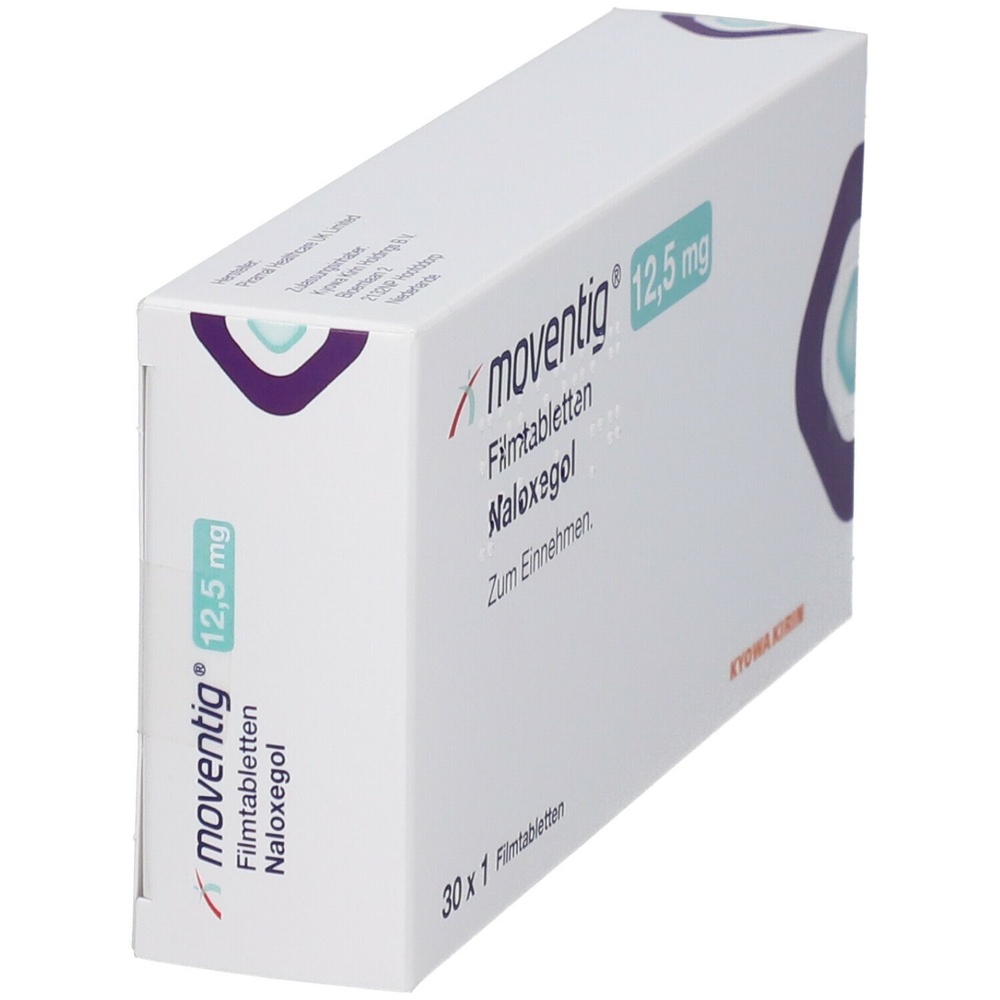
- Cada comprimido recubierto con película (comprimido) de Moventig 12,5 mg contiene 12,5 mg de naloxegol como naloxegol oxalato.
- Cada comprimido recubierto con película (comprimido) de Moventig 25 mg contiene 25 mg de naloxegol como naloxegol oxalato.
- Los demás componentes son:
- núcleo del comprimido: manitol (E421), celulosa microcristalina (E460), croscarmelosa sódica (E468) –ver sección 2 “Moventig contiene sodio”–, estearato de magnesio (E470b), propilgalato (E310)
- cubierta pelicular: hipromelosa (E464), dióxido de titanio (E171), macrogol (E1521), óxido de hierro rojo (E172) y óxido de hierro negro (E172).
Aspecto del producto y contenido del envase
Moventig 12,5 mg: comprimido oval de color malva recubierto con película, de 10,5 x 5,5 mm, con la inscripción “nGL” en una cara y “12,5” en la otra.
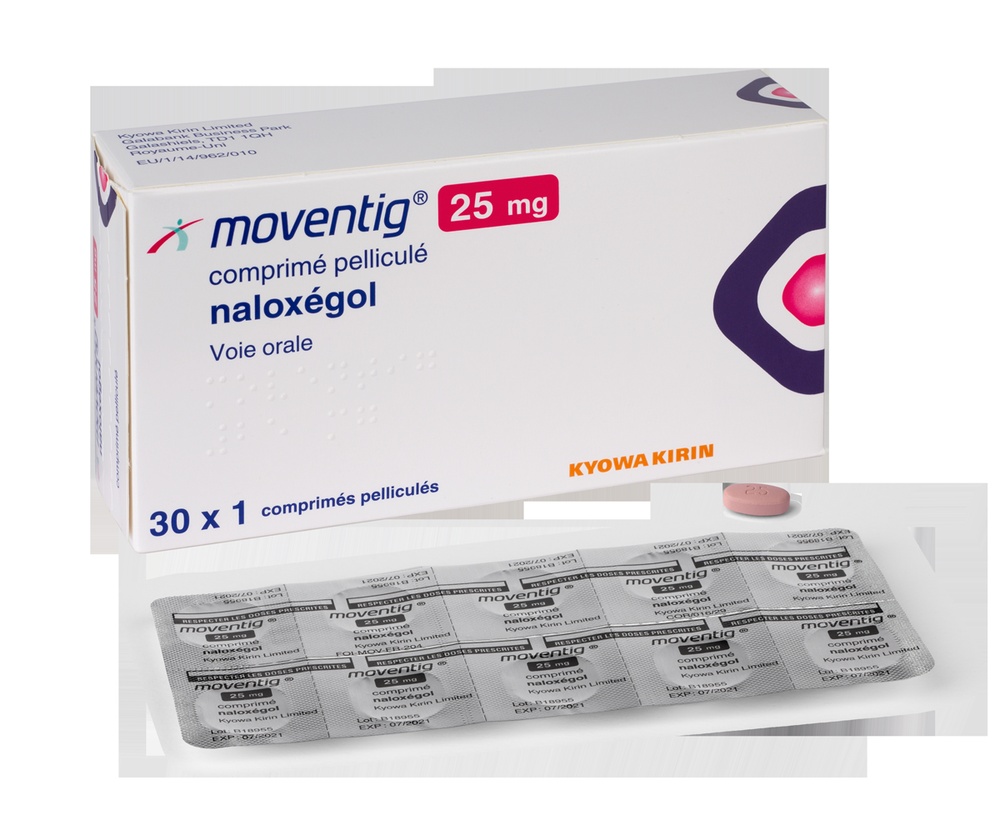
Moventig 25 mg: comprimido oval de color malva recubierto con película, de 13 x 7 mm, con la inscripción “nGL” en una cara y “25” en la otra.
Los comprimidos de Moventig 12,5 mg se presentan en blísters de aluminio con 30 o 90 comprimidos recubiertos con película en blísters no perforados y como 30 x 1 o 90 x 1 comprimidos recubiertos con película en blísters unidosis perforados.
Los comprimidos de Moventig 25 mg se presentan en blísters de aluminio con 10, 30 o 90 comprimidos recubiertos con película en blísters no perforados y como 10 x 1, 30 x 1, 90 x 1 o 100 x 1 comprimidos recubiertos con película en blísters unidosis perforados.
Puede que en su país solamente estén comercializados algunos tamaños de envases.
Titular de la autorización de comercialización
Grünenthal GmbH
Zieglerstraße 6
52078 Aachen
Alemania
Responsable de la fabricación
Piramal Pharma Solutions (Dutch) B.V.
Bargelaan 200
Leiden
2333CW
Países Bajos
Pueden solicitar más información respecto a este medicamento dirigiéndose al representante local del titular de la autorización de comercialización:
Fecha de la última revisión de este prospecto:
La información detallada de este medicamento está disponible en la página web de la Agencia Europea de Medicamentos: http://www.ema.europa.eu/.
-

- País de registro
- Forma farmacéuticaCOMPRIMIDO, 25 mg
- Código ATCA06AH03
- Precio medio en farmacia102.56 EUR
- Principio activo
- Requiere recetaSí
- Fabricante
- Esta información es de carácter general y no sustituye la consulta con un profesional sanitario.
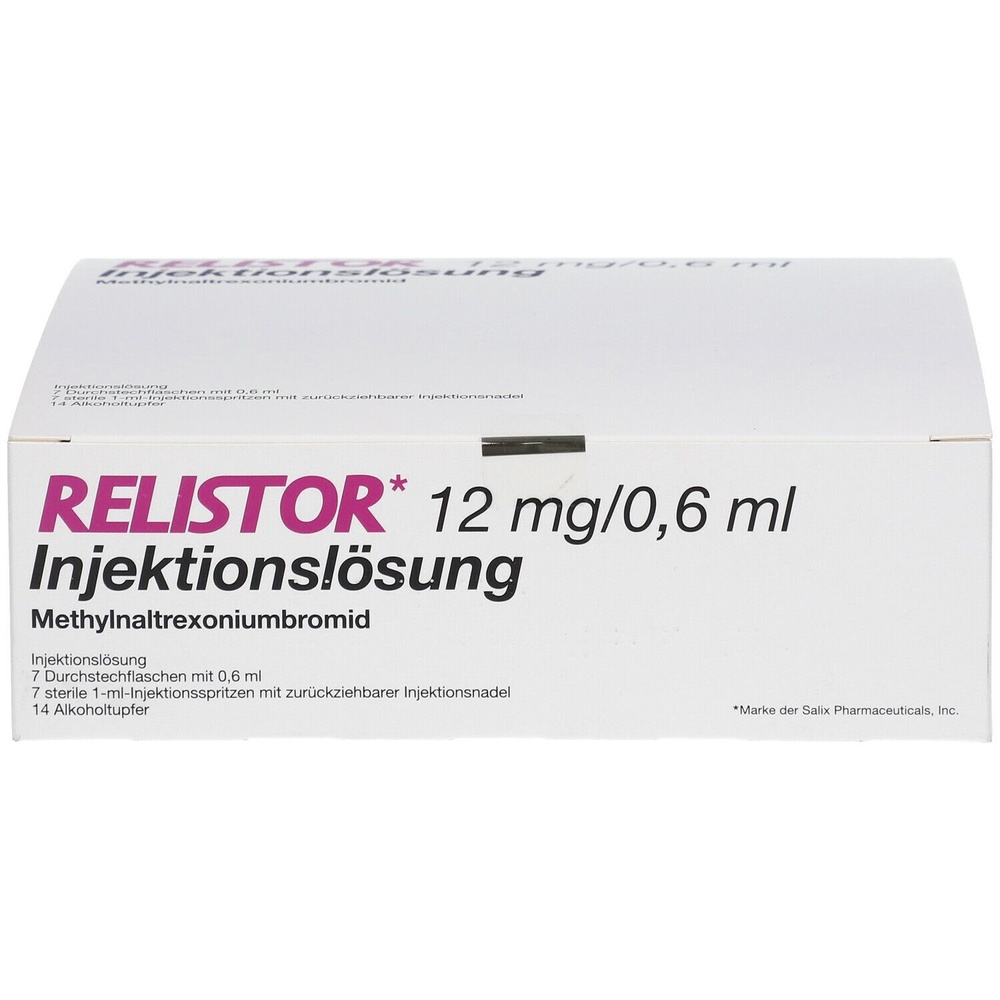
- Alternativas a MOVENTIG 25 MG COMPRIMIDOS RECUBIERTOS CON PELICULAForma farmacéutica: COMPRIMIDO, 12,5 mgPrincipio activo: naloxegolFabricante: Grünenthal GmbhRequiere recetaForma farmacéutica: INYECTABLE, 12 mgPrincipio activo: methylnaltrexone bromideFabricante: Bausch Health Ireland LimitedRequiere recetaForma farmacéutica: INYECTABLE, 12 mgPrincipio activo: methylnaltrexone bromideFabricante: Bausch Health Ireland LimitedRequiere receta
Médicos online para MOVENTIG 25 MG COMPRIMIDOS RECUBIERTOS CON PELICULA
Comenta la dosis, los posibles efectos secundarios, interacciones, contraindicaciones o la revisión de receta de MOVENTIG 25 MG COMPRIMIDOS RECUBIERTOS CON PELICULA, sujeto a valoración médica y a la normativa local.









Obtén una receta de MOVENTIG 25 MG COMPRIMIDOS RECUBIERTOS CON PELICULA online
Rellena un formulario de 2 minutos
Cuéntanos tus síntomas, historial y el medicamento que necesitas.
Elige un médico o nosotros te asignamos uno
Escoge un especialista o te conectamos con el próximo médico disponible.
El médico revisa tu caso
Normalmente en 30 minutos. Puede hacerte preguntas adicionales por chat.
Recógela en cualquier farmacia
Receta electrónica enviada a tu correo, válida en toda España.
Preguntas frecuentes
MOVENTIG 25 MG COMPRIMIDOS RECUBIERTOS CON PELICULA requires receta en España. Puedes confirmarlo con un médico online según tu caso.
El principio activo de MOVENTIG 25 MG COMPRIMIDOS RECUBIERTOS CON PELICULA es naloxegol. Esta información ayuda a identificar medicamentos con la misma composición pero con diferentes nombres comerciales.
El precio medio en farmacia de MOVENTIG 25 MG COMPRIMIDOS RECUBIERTOS CON PELICULA es de aproximadamente 102.56 EUR. Puede variar según el fabricante y la forma farmacéutica.
MOVENTIG 25 MG COMPRIMIDOS RECUBIERTOS CON PELICULA es fabricado por Grünenthal Gmbh. La marca y el envase pueden variar según el distribuidor.
Los Médicos de familia, Psiquiatras, Dermatólogos, Cardiólogos, Endocrinólogos, Gastroenterólogos, Neumólogos, Nefrólogos, Reumatólogos, Hematólogos, Infectólogos, Alergólogos, Geriatras, Pediatras, Oncólogos pueden valorar la prescripción de MOVENTIG 25 MG COMPRIMIDOS RECUBIERTOS CON PELICULA cuando esté clínicamente indicado. Puedes reservar una videoconsulta para comentar tu caso y las opciones de tratamiento.
España cuenta con una infraestructura sanitaria bien desarrollada en ciudades principales como Madrid, Barcelona, Valencia y Sevilla. Las farmacias están ampliamente disponibles y operan bajo estrictas regulaciones, garantizando el acceso a medicamentos con receta.
Puedes comprar MOVENTIG 25 MG COMPRIMIDOS RECUBIERTOS CON PELICULA en Madrid, Barcelona, Sevilla o Valencia en cualquier farmacia local con una receta válida.
Para obtener una receta, puedes utilizar Oladoctor:
Otros medicamentos con el mismo principio activo (naloxegol) incluyen MOVENTIG 12,5 MG COMPRIMIDOS RECUBIERTOS CON PELICULA, RELISTOR 12 mg/0,6 ml, SOLUCION INYECTABLE, RELISTOR 12 mg/0,6 ml, SOLUCION INYECTABLE. Pueden tener diferentes nombres comerciales o formulaciones, pero contienen el mismo componente terapéutico. Consulta siempre con un médico antes de cambiar o iniciar un nuevo medicamento.
