



MONOPROST 50 MICROGRAMOS/ML COLIRIO

Revisión de receta online
Un médico revisará tu caso y determinará si la prescripción es médicamente apropiada.

Habla con un médico sobre este medicamento
Comenta tus síntomas y las opciones de tratamiento en una consulta online.



Cómo usar MONOPROST 50 MICROGRAMOS/ML COLIRIO EN SOLUCION
Contenido del prospecto
- Introducción
- Qué es Monoprost y para qué se utiliza
- Qué necesita saber antes de empezar a usar Monoprost
- Cómo usar Monoprost
- Posibles efectos adversos
- Conservación de Monoprost
- Contenido del envase e información adicional
Introducción
Prospecto:información para el usuario
Monoprost 50 microgramos/ml colirio en solución
Latanoprost
Lea todo el prospecto detenidamente antes de empezar a usar este medicamento,porque contiene información importante para usted.
- Conserve este prospecto, ya que puede tener que volver a leerlo.
- Si tiene alguna duda, consulte a su médico, farmacéutico o enfermero.
- Este medicamento se le ha recetado solamente a usted, y no debe dárselo a otras personas aunque tengan los mismos síntomas que usted, ya que puede perjudicarles.
- Si experimenta efectos adversos, consulte a su médico, o farmacéutico o enfermero, incluso si se trata de efectos adversos que no aparecen en este prospecto. Ver sección 4.
Contenido del prospecto:
- Qué es Monoprost y para qué se utiliza
- Qué necesita saber antes de empezar a usar Monoprost
- Cómo usar Monoprost
- Posibles efectos adversos
- Conservación de Monoprost
- Contenido del envase e información adicional
1. Qué es Monoprost y para qué se utiliza
Monoprost pertenece al grupo de medicamentos conocidos como prostaglandinas. Disminuye la presión dentro del ojo al aumentar el flujo natural de líquido desde el interior del ojo al torrente sanguíneo.
Monoprost se utiliza para tratar unas enfermedades conocidas como glaucoma de ángulo abierto e hipertensión ocularen adultos. Ambas enfermedades están relacionadas con un aumento de la presión dentro del ojo, lo que puede llegar a afectar a la visión.
Monoprost es un colirio en solución sin conservantes.

¿No estás seguro de si este medicamento es adecuado para ti?
Comenta tus síntomas y tratamiento con un médico online.
2. Qué necesita saber antes de empezar a usar Monoprost
No use Monoprost
- Si es alérgico (hipersensible) a latanoprost o a cualquiera de los demás componentes de este medicamento (incluidos en la sección 6).
Advertencias y precauciones
Consulte a su médico,farmacéutico o enfermero antes de empezar a usar Monoprost si considera que alguna de las siguientes situaciones le afecta:
- Si ha sufrido o va a sufrir una intervención quirúrgica ocular (incluyendo una operación de cataratas).
- Si padece problemas en los ojos (tales como dolor en el ojo, irritación o inflamación, visión borrosa).
- Si padece asma grave o el asma no está bien controlado.
- Si utiliza lentes de contacto. Puede seguir utilizando Monoprost, pero ha de seguir las instrucciones que se incluyen en la sección 3 para usuarios de lentes de contacto.
Si ha sufrido o está sufriendo una infección vírica del ojo causada por el virus del herpes simple (VHS)Niños y adolescentes
No administre este medicamento a niños y adolescentes menores de 18 años.No se ha investigado Monoprost en esta población.
Uso de Monoprost con otros medicamentos
Monoprost puede tener interacciones con otros medicamentos. Informe a su médico o farmacéutico que está utilizando, ha utilizado recientemente o podría tener que utilizar cualquier otro medicamento.
Embarazo, lactancia y fertilidad
No utilice Monoprostsi está embarazada o en periodo de lactancia.
Si está embarazada o en periodo de lactancia, cree que podría estar embarazada o tiene intención de quedarse embarazada, consulte a su médico o farmacéutico antes de utilizar este medicamento.
Conducción y uso de máquinas
Al utilizar Monoprost puede aparecer visión borrosa durante un periodo de tiempo breve. Si esto le sucede, no conduzcani utilice herramientas o máquinas hasta que su visión vuelva a ser clara de nuevo.
Información importante sobre alguno de los componentes de Monoprost.
Monoprost contiene hidroxiestearato de macrogolglicerol (derivado del aceite de ricino), por lo que puede causar reacciones alérgicas en la piel.
3. Cómo usar Monoprost
Dosis habitual
- Siga exactamente las instrucciones de administración de Monoprost indicadas por su médico. En caso de duda, consulte de nuevo a su médico o farmacéutico.
- La dosis habitual para adultos (incluyendo pacientes de edad avanzada), es de una gota en el ojo o en los ojos afectados una vez al día. Es preferible que se administre por la noche.
- No utilice Monoprost más de una vez al día, ya que la eficacia del tratamiento puede disminuir si se administra con mayor frecuencia.
- Siga exactamente las instrucciones de administración del medicamento contenidas en este prospecto o las indicadas por su médico, hasta que su médico le indique que interrumpa el tratamiento. En caso de duda, pregunte a su médico, farmacéutico o enfermero.
- Este medicamento es un colirio en solución sin conservantes. No deje que la punta del frasco toque los ojos o las zonas que los rodean. Puede contaminarse con bacterias capaces de causar infecciones oculares que originen graves daños en los ojos, e incluso la pérdida de la visión. Para evitar una posible contaminación del frasco, evite que la punta del frasco entre en contacto con cualquier superficie.
Usuarios de lentes de contacto
Si usted utiliza lentes de contacto, debe quitárselas antes de utilizar Monoprost. Después de la aplicación de Monoprost, debe esperar 15 minutos antes de volver a ponerse las lentes de contacto.
Instrucciones de uso
Es importante seguir las siguientes instrucciones cuando se utiliza este producto:
| Antes de utilizar este medicamento por primera vez:
|
|
|
|
|
|
Para aplicar una gota en el saco conjuntival inferior del(de los) ojo(s) afectado(s), presione brevemente, pero con firmezael frasco. Gracias a la dosificación automática, se libera exactamente una gota en cada bombeo. |
Si la gota no cae, agitar suavemente el frasco para extraer la gota restante del extremo del gotero. En este caso repetir el paso 3. | |
|
|
|
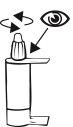

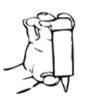
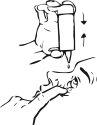

Si usa Monoprost con otros colirios
Espere al menos 5 minutos entre la aplicación de Monoprost y la administración de otros colirios.
Si usa más Monoprost del que debe
Si se ha aplicado más gotas en el ojo de las que debe, puede sentir una ligera irritación en el ojo y también puede que los ojos se pongan rojos y que lloren; esta situación debería desaparecer, pero si le preocupa, contacte con su médico.
En caso de ingestión accidental de Monoprost consulte a su médico lo antes posible.
En caso de sobredosis o ingestión accidental consulte inmediatamente a su médico o farmacéutico o llame al Servicio de Información Toxicológica, teléfono: 91 562 04 20 indicando el medicamento y la cantidad ingerida.
Si olvidó usar Monoprost
Continúe con la administración de la siguiente dosis de la forma habitual. No debe aplicarse una gota adicional en el ojo para compensar la dosis olvidada. Si tiene dudas consulte con su médico o farmacéutico.
Si interrumpe el tratamiento con Monoprost
Si desea dejar de utilizar Monoprost, debe consultar con su médico.
Si tiene cualquier otra duda sobre el uso de este medicamento, pregunte a su médico, farmacéutico o enfermero.

¿Has empezado a tomar el medicamento y tienes preguntas?
Comenta tus síntomas y tratamiento con un médico online.
4. Posibles efectos adversos
Al igual que todos los medicamentos, este medicamento puede producir efectos adversos, aunque no todas las personas los sufran.
Las siguientes reacciones adversas son conocidas con el uso de Monoprost:
Muy frecuentes: puedenafectar a más de 1 de cada 10 pacientes.
- Cambio gradual en el color de los ojos por el incremento de la cantidad de pigmento de color marrón de la parte coloreada del ojo conocida como iris.
- Si tiene ojos de color mixto (azul-marrón, gris-marrón, amarillo-marrón o verde-marrón) es más probable que vea este cambio que si sus ojos son de un solo color (azul, gris, verde o marrón).
- El cambio en el color de los ojos puede tardar años en desarrollarse, aunque puede apreciarse normalmente a los 8 meses de tratamiento.
- El cambio de color puede ser permanente y puede ser más llamativo si Monoprost se utiliza únicamente en un ojo.
- El cambio en el color del ojo no parece estar asociado a la aparición de ningún problema.
- El cambio en el color del ojo no progresa una vez que se ha suspendido el tratamiento con Monoprost.
- Enrojecimiento del ojo.
- Irritación ocular (sensación de escozor, sensación de arenilla en el ojo, picor, dolor y sensación de cuerpo extraño en el ojo).
- Cambio gradual en las pestañas del ojo tratado y del vello fino que hay alrededor del ojo tratado, observado en la mayoría de los pacientes de origen japonés. Estos cambios incluyen un aumento del color (oscurecimiento), alargamiento, engrosamiento y aumento del número de pestañas.
Frecuentes: puedenafectar hasta 1 de cada 10 pacientes
- Irritación o erosión en la superficie del ojo, inflamación del párpado (blefaritis), dolor en el ojo y sensibilidad a la luz (fotofobia), conjuntivitis.
Poco frecuentes: puedenafectar hasta 1 de cada 100 pacientes
- Hinchazón de los párpados, ojo seco, inflamación o irritación de la superficie del ojo (queratitis), visión borrosa, inflamación de la parte coloreada del ojo (uveítis), hinchazón de la retina (edema macular).
- Erupción de la piel.
- Dolor de pecho (angina), sentir el ritmo cardiaco (palpitaciones).
- Asma, dificultad en la respiración (disnea).
- Dolor de pecho.
- Dolor de cabeza, mareo.
- Dolor muscular, dolor articular.
- Náuseas, vómitos.
Raros: puedenafectar hasta 1 de cada 1.000 pacientes
- Inflamación del iris (iritis), síntomas de hinchazón o lesión/daño en la superficie del ojo, hinchazón alrededor del ojo (edema periorbitario), pestañas desviadas o hilera adicional de pestañas, acumulación de líquido en la parte coloreada del ojo (quiste del iris).
- Reacciones en la piel de los párpados, oscurecimiento de la piel de los párpados.
- Empeoramiento del asma.
- Picor intenso en la piel.
- Desarrollo de una infección vírica del ojo causada por el virus del herpes simple (VHS).
Muy raros: puedenafectar hasta 1 de cada 10.000 pacientes
- Agravamiento de la angina en pacientes que también tienen problemas cardiacos.
- Aspecto de hundimiento del ojo (profundización del surco del ojo).
Comunicación de efectos adversos
Si experimenta cualquier tipo de efecto adverso, consulte a su médico, farmacéutico o enfermero, incluso si se trata de posibles efectos adversos que no aparecen en este prospecto. También puede comunicarlos directamente a través del Sistema Español de Farmacovigilancia de Medicamentos de Uso Humano: https//: notificaram.es. Mediante la comunicación de efectos adversos usted puede contribuir a proporcionar más información sobre la seguridad de este medicamento.
5. Conservación de Monoprost
Mantener este medicamento fuera de la vista y del alcance de los niños.
No utilice este medicamento después de la fecha de caducidad que aparece en la caja y el frasco. La fecha de caducidad es el último día del mes que se indica.
Antes de la primera apertura del frasco: No conservar a temperatura superior a 25°C.
Tras la primera apertura del frasco: Monoprost puede utilizarse hasta 1 mes para el frasco de 2,5 ml y hasta 3 meses para el frasco de 6 ml, sin condiciones especiales de conservación.
Anote la fecha de primera apertura en la caja.
Los medicamentos no se deben tirar por los desagües ni a la basura. Deposite los envases y los medicamentos que no necesita en el Punto SIGRE de la farmacia. En caso de duda pregunte a su farmacéutico cómo deshacerse de los envases y de los medicamentos que no necesita. De esta forma, ayudará a proteger el medio ambiente.
6. Contenido del envase e información adicional
Composición deMonoprost
El principio activo es latanoprost.
1 ml de colirio contiene 50 microgramos de latanoprost.
Los demás componentes (excipientes) son: hidroxiestearato de macrogolglicerol 40, sorbitol, carbómero 974P, macrogol 4000, edetato de disodio, hidróxido de sodio (para ajuste del pH), agua para preparaciones inyectables.
Aspecto del producto y contenido del envase
Monoprost es una solución opalescente y ligeramente amarilla sin conservantes.
Monoprost está disponible en los siguientes tamaños de envase:
- frasco multidosis de 2,5 ml (como mínimo 70 gotas sin conservantes) para 1 mes de tratamiento, que incluye una bomba equipada con un dispositivo Easygrip con apoyos ergonómicos.
- frasco multidosis de 6 ml (como mínimo 190 gotas sin conservantes) para 3 meses de tratamiento, que incluye una bomba equipada con un dispositivo Easygrip con apoyos ergonómicos.
Puede que solamente estén comercializados algunos tamaños de envases.
Titular de la autorización de comercialización y responsable de la fabricación
Titular de la autorización de comercialización
LABORATOIRES THEA
12 RUE LOUIS BLERIOT
63017 CLERMONT-FERRAND CEDEX 2
FRANCIA
Responsable de la fabricación
DELPHARM TOURS
RUE PAUL LANGEVIN
37170 CHAMBRAY LES TOURS
FRANCIA
O
LABORATOIRES THEA
12 RUE LOUIS BLERIOT
63017 CLERMONT-FERRAND CEDEX 2
FRANCIA
Representante local
Laboratorios Thea, S.A.
C/ Enric Granados nº 86-88, 2ª planta
08008 – BARCELONA
Este medicamento está autorizado en los estados miembros del Espacio Económico Europeo con los siguientes nombres:
Alemania, Bélgica, Bulgaria, Chipre, Dinamarca, España, Finlandia, Francia, Grecia, Holanda, Islandia, Italia, Luxemburgo, Noruega, Polonia, Portugal, Suecia
Monoprost
Austria, Eslovenia, República Checa, República Eslovaca, Rumania
Monopost
Fecha de la última revisión de este prospecto: Febrero 2024
La información detallada y actualizada de este medicamento está disponible en la página Web de la Agencia Española de Medicamentos y Productos Sanitarios (AEMPS) http://www.aemps.gob.es/.
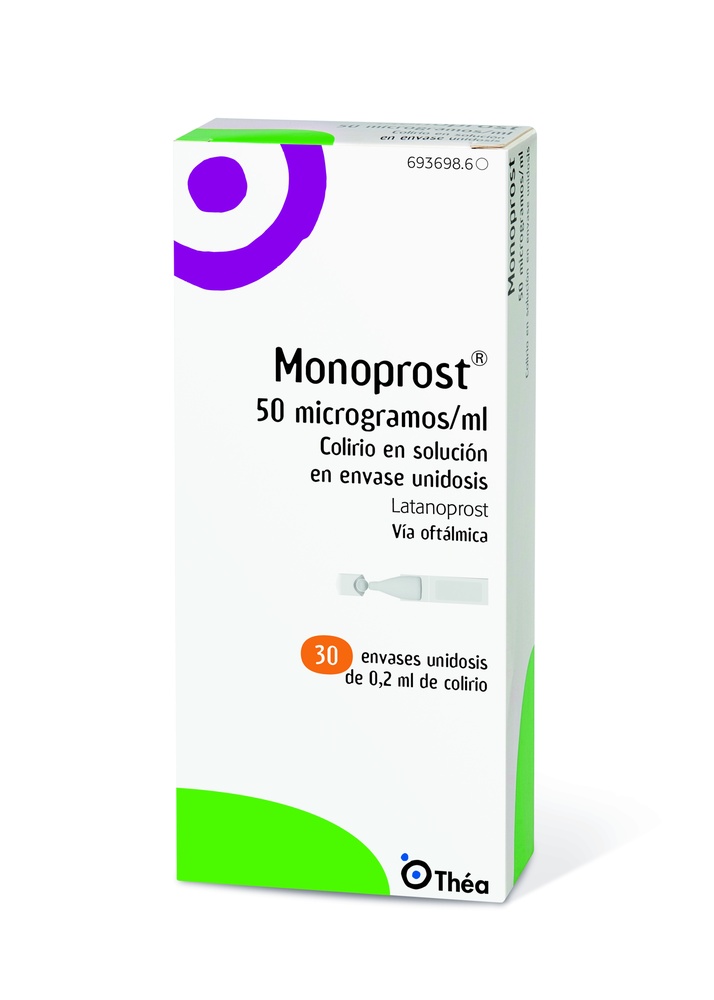
- País de registro
- Forma farmacéuticaCOLIRIO, 50 microgramos/ml
- Código ATCS01EE01
- Principio activo
- Requiere recetaSí
- Fabricante
- ComposiciónMACROGOLGLICEROL, HIDROXIESTEARATO DE (125 mg mg), SORBITOL (87,500 mg mg), EDETATO DE DISODIO (1,250 mg mg), HIDROXIDO DE SODIO (E 524) (csp ml mg)
- Esta información es de carácter general y no sustituye la consulta con un profesional sanitario.
- Alternativas a MONOPROST 50 MICROGRAMOS/ML COLIRIO EN SOLUCIONForma farmacéutica: COLIRIO, 50 microgramos/mlPrincipio activo: LatanoprostFabricante: Santen OyRequiere recetaForma farmacéutica: COLIRIO, 50 µg/mlPrincipio activo: LatanoprostFabricante: Esteve Pharmaceuticals S.A.Requiere recetaForma farmacéutica: COLIRIO, 50 MG/MLPrincipio activo: LatanoprostFabricante: Aurovitas Spain, S.A.U.Requiere receta
Médicos online para MONOPROST 50 MICROGRAMOS/ML COLIRIO EN SOLUCION
Comenta la dosis, los posibles efectos secundarios, interacciones, contraindicaciones o la revisión de receta de MONOPROST 50 MICROGRAMOS/ML COLIRIO EN SOLUCION, sujeto a valoración médica y a la normativa local.









Obtén una receta de MONOPROST 50 MICROGRAMOS/ML COLIRIO EN SOLUCION online
Rellena un formulario de 2 minutos
Cuéntanos tus síntomas, historial y el medicamento que necesitas.
Elige un médico o nosotros te asignamos uno
Escoge un especialista o te conectamos con el próximo médico disponible.
El médico revisa tu caso
Normalmente en 30 minutos. Puede hacerte preguntas adicionales por chat.
Recógela en cualquier farmacia
Receta electrónica enviada a tu correo, válida en toda España.
Preguntas frecuentes
MONOPROST 50 MICROGRAMOS/ML COLIRIO EN SOLUCION requiere receta en España. Puedes confirmarlo con un médico online según tu caso.
El principio activo de MONOPROST 50 MICROGRAMOS/ML COLIRIO EN SOLUCION es Latanoprost. Esta información ayuda a identificar medicamentos con la misma composición pero con diferentes nombres comerciales.
MONOPROST 50 MICROGRAMOS/ML COLIRIO EN SOLUCION es fabricado por Laboratoires Thea. La marca y el envase pueden variar según el distribuidor.
Los Médicos de familia, Psiquiatras, Dermatólogos, Cardiólogos, Endocrinólogos, Gastroenterólogos, Neumólogos, Nefrólogos, Reumatólogos, Hematólogos, Infectólogos, Alergólogos, Geriatras, Pediatras, Oncólogos pueden valorar la prescripción de MONOPROST 50 MICROGRAMOS/ML COLIRIO EN SOLUCION cuando esté clínicamente indicado. Puedes reservar una videoconsulta para comentar tu caso y las opciones de tratamiento.
España cuenta con una infraestructura sanitaria bien desarrollada en ciudades principales como Madrid, Barcelona, Valencia y Sevilla. Las farmacias están ampliamente disponibles y operan bajo estrictas regulaciones, garantizando el acceso a medicamentos con receta.
Puedes comprar MONOPROST 50 MICROGRAMOS/ML COLIRIO EN SOLUCION en Madrid, Barcelona, Sevilla o Valencia en cualquier farmacia local con una receta válida.
Para obtener una receta, puedes utilizar Oladoctor:
Otros medicamentos con el mismo principio activo (Latanoprost) incluyen CATIOLANZE 50 MICROGRAMOS/ML COLIRIO EN EMULSION, LATANEST 50 MICROGRAMOS/ML COLIRIO EN SOLUCION, LATANOPROST AUROVITAS 50 microgramos/ml COLIRIO EN SOLUCION. Pueden tener diferentes nombres comerciales o formulaciones, pero contienen el mismo componente terapéutico. Consulta siempre con un médico antes de cambiar o iniciar un nuevo medicamento.
