


MINOCIN 100 MG CÁPSULAS DURAS
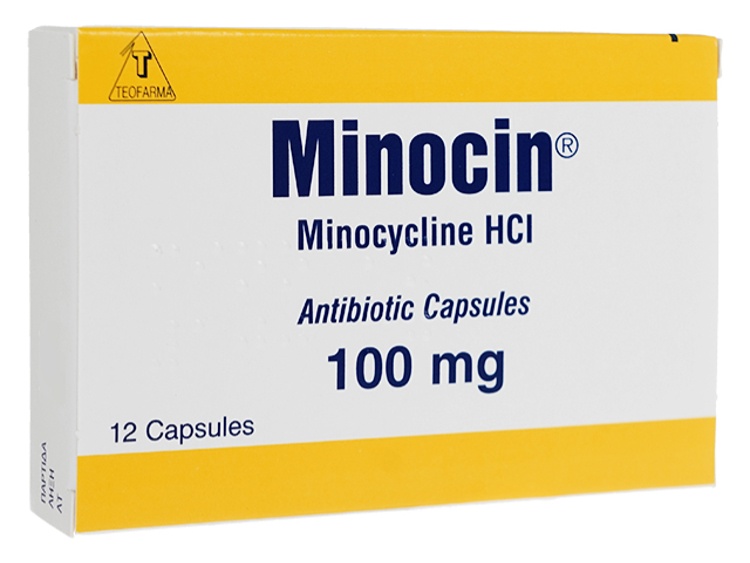



Cómo usar MINOCIN 100 MG CÁPSULAS DURAS
Traducción generada por IA
Este contenido ha sido traducido automáticamente y se ofrece solo con fines informativos. No sustituye la consulta con un profesional sanitario.
Ver originalContenido del prospecto
Introducción
Prospecto: información para el usuario
Minocin 100 mg cápsulas duras
hidrocloruro de minociclina
Lea todo el prospecto detenidamente antes de empezar a tomar este medicamento, porque contiene información importante para usted.
- Conserve este prospecto, ya que puede tener que volver a leerlo.
- Si tiene alguna duda, consulte a su médico o farmacéutico.
- Este medicamento se le ha recetado solamente a usted, y no debe dárselo a otras personas aunque tengan los mismos síntomas que usted, ya que puede perjudicarles.
- Si experimenta efectos adversos, consulte a su médico o farmacéutico, incluso si se trata de efectos adversos que no aparecen en este prospecto. Ver sección 4.
Contenido del prospecto
- Qué es Minocin y para qué se utiliza
- Qué necesita saber antes de empezar a tomar Minocin
- Cómo tomar Minocin
- Posibles efectos adversos
- Conservación de Minocin
- Contenido del envase e información adicional
1. Qué es Minocin y para qué se utiliza
Minocin contiene hidrocloruro de minociclina, un antibiótico perteneciente al grupo de medicamentos llamados tetraciclinas.
Los antibióticos se utilizan para tratar infecciones bacterianas y no sirven para tratar infecciones víricas como la gripe o el catarro.
Es importante que siga las instrucciones relativas a la dosis, el intervalo de administración y la duración del tratamiento indicadas por su médico.
No guarde ni reutilice este medicamento. Si una vez finalizado el tratamiento le sobra antibiótico, devuélvalo a la farmacia para su correcta eliminación. No debe tirar los medicamentos por el desagüe ni a la basura.
Minocin está indicado para el tratamiento de las siguientes infecciones en adultos y niños mayores de 8 años:
- uretritis (inflamación de la uretra) no gonocócicas no complicadas;
- infecciones respiratorias tales como traqueobronquitis;
- infecciones oculares tales como tracoma;
- sífilis, actinomicosis (enfermedad infecciosa que causa inflamación de los ganglios linfáticos de la boca junto con otras complicaciones internas) o carbunco (enfermedad infecciosa que afecta a la piel, intestino o pulmones) en pacientes alérgicos a la penicilina.

2. Qué necesita saber antes de empezar a tomar Minocin
No tome Minocin
- si es alérgico al principio activo, a cualquier otra tetraciclina o a alguno de los demás componentes de este medicamento (incluidos en la sección 6). Las reacciones alérgicas incluyen: erupción, picor, dificultad para respirar, hinchazón de la cara, labios, garganta o lengua;
- si tiene insuficiencia renal grave;
- si tiene insuficiencia hepática grave;
- si está embarazada o sospecha que puede estarlo;
- si está en período de lactancia.
Minocin no debe utilizarse en niños menores de 8 años.
Advertencias y precauciones
Consulte a su médico o farmacéutico antes de empezar a tomar Minocin.
Antes de comenzar a tomar este medicamento, comunique a su médico si tiene alguna de las siguientes enfermedades:
- problemas renales o hepáticos;
- síndrome de Ménière (los síntomas son mareos, trastornos visuales y acúfenos);
- antecedentes de reacciones alérgicas a tetraciclinas. Comuníquelo a su médico antes de iniciar el tratamiento con minociclina.
Si usted es una mujer en edad fértil, es importante que compruebe que no está embarazada antes de iniciar el tratamiento con Minocin.
Se recomienda el uso de cremas solares de pantalla total y evitar la exposición al sol o a las radiaciones ultravioletas durante el tratamiento con Minocin. En raras ocasiones pueden aparecer erupciones cutáneas (coloración roja).
Durante el tratamiento a largo plazo puede producirse una carencia de vitamina B.
Si le van a realizar pruebas médicas, informe a su médico que está tomando Minocin ya que este medicamento puede afectar al resultado de algunas pruebas analíticas.
Póngase en contacto con su médico:
- si sufre reacciones graves de quemadura solar tras la exposición a la luz solar o a los rayos UV. Deje de utilizar Minocin inmediatamente;
- si, mientras utiliza Minocin, sufre otras infecciones debidas a bacterias u otros microorganismos insensibles a la minociclina;
- si empieza a sufrir dolores de cabeza y visión doble. Esto podría deberse a un aumento de la presión sanguínea en la cabeza;
- si, durante el tratamiento, sufre síntomas como mareos, movimientos involuntarios de los ojos, sordera en un oído, acúfenos, trastornos visuales, alucinaciones (ver cosas que no existen) o manchas oscuras en el campo visual;
- si el tratamiento dura más de 6 meses y padece síntomas de una enfermedad autoinmune específica (lupus eritematoso sistémico, LES). Los síntomas típicos del LES son: cansancio extremo, hipersensibilidad a la luz y al sol e inflamaciones en los vasos sanguíneos, por ejemplo, en la piel;
- si padece síntomas de inflamación hepática. Los síntomas típicos de la hepatitis son: dolor de estómago, náuseas, cansancio, picor, ictericia;
- si presenta diarrea intensa y duradera mientras está en tratamiento con minociclina, puede que tenga un tipo de colitis asociado al uso de antibióticos, que puede ser grave. En estos casos deberá consultar a su médico, que decidirá si se debe suspender la administración de minociclina e instaurar un tratamiento adecuado.
Niños y adolescentes
Minocin no debe utilizarse en niños en período de dentición (segunda mitad del embarazo, lactancia y niños menores de 8 años) porque puede producir coloración permanente de los dientes, así como retraso en el desarrollo de los huesos.
Minocin sólo debe prescribirse a niños de entre 8 y 12 años de edad una vez agotadas todas las demás opciones de tratamiento.
Otros medicamentos y Minocin
Informe a su médico o farmacéutico si está tomando, ha tomado recientemente o podría tener que tomar cualquier otro medicamento, incluso los adquiridos sin receta médica.
Ciertos medicamentos pueden interaccionar con Minocin. En estos casos puede resultar necesario cambiar la dosis o interrumpir el tratamiento con alguno de los medicamentos. Es especialmente importante que informe a su médico si utiliza alguno de los siguientes medicamentos:
- penicilina, ya que Minocin puede interferir en su efecto,
- isotretinoína, ya que tomado junto a Minocin puede producir hipertensión intracraneal benigna,
- anticonceptivos orales, ya que Minocin puede disminuir la eficacia de estos,
- anticoagulantes (como warfarina) ya que Minocin puede alterar el efecto de estos,
- antiácidos (medicamentos utilizados para calmar la acidez del estómago) y otros medicamentos que contengan aluminio, calcio, magnesio y medicamentos que contengan sales de hierro o sales de bismuto, ya que pueden disminuir el efecto de Minocin,
- antiepilépticos y barbitúricos (medicamentos para insomnio grave y convulsiones), ya que pueden disminuir el efecto de Minocin,
- metoxiflurano (medicamento utilizado para anestesiar), ya que cuando se usa conjuntamente con antibióticos del grupo de las tetracilinas, como es Minocin, se puede producir toxicidad grave en el riñón.
Toma de Minocin con alimentos y bebidas
- Es importante tomar Minocin en el transcurso de una comida, acompañada de un vaso grande de agua o de leche, y dejar transcurrir al menos una hora antes de tumbarse o acostarse, para evitar irritación del esófago (ver sección 3).
Embarazo y lactancia
Si está embarazada o en período de lactancia, cree que podría estar embarazada o tiene intención de quedarse embarazada, consulte a su médico o farmacéutico antes de utilizar este medicamento.
Embarazo
Minocin no debe utilizarse durante el embarazo, ya que puede dañar el desarrollo de los huesos y los dientes del feto.
Es importante que durante el tratamiento con Minocin utilice métodos anticonceptivos para evitar quedarse embarazada. Los anticonceptivos orales (hormonales) pueden no ser eficaces, ya que la toma de Minocin reduce el efecto anticonceptivo y, por lo tanto, se recomienda utilizar métodos barrera.
Lactancia
Minocin no debe utilizarse durante la lactancia, ya que se podrían producir trastornos en el desarrollo de los huesos y los dientes del recién nacido/lactante. Su médico decidirá si es necesario interrumpir la lactancia o interrumpir el tratamiento, tras considerar el beneficio de la lactancia para el niño y el beneficio del tratamiento para la madre.
Conducción y uso de máquinas
Puede sentir mareos, vértigos o que su visión o audición se afecte con este medicamento, por lo que no se recomienda que conduzca o maneje máquinas hasta que no compruebe que este medicamento no le afecta.
Minocin contiene amarillo anaranjado S (E-110)
Este medicamento contiene amarillo anaranjado S (E-110), lo que puede provocar reacciones de tipo alérgico.
3. Cómo tomar Minocin
Siga exactamente las instrucciones de administración de este medicamento indicadas por su médico. En caso de duda, consulte de nuevo a su médico o farmacéutico.
Adultos
La dosis normal recomendada en adultos es de 200 mg (2 cápsulas) el primer día de tratamiento, administrados en dosis única diaria o como 100 mg (1 cápsula) cada 12 horas, seguido de una dosis de mantenimiento de 100 mg (1 cápsula) cada 24 horas en infecciones leves o 100 mg (1 cápsula) cada 12 horas en infecciones graves.
En el caso de uretritis (infección de la uretra) no gonocócica, la dosis diaria es de 200 mg administrados como 100 mg (1 cápsula) cada 12 horas, durante 7 días.
Su médico le indicará la dosis a utilizar y la duración del tratamiento en función del tipo de infección que presente. En general, el tratamiento debe continuarse hasta al menos 24 a 48 horas tras la desaparición de los síntomas. No suspenda su tratamiento antes de lo indicado por su médico. No sobrepase la dosis prescrita.
Pacientes de edad avanzada:
Su médico le indicará la dosis que debe utilizar, empezando preferiblemente con la dosis más baja posible.
Uso en niños y adolescentes
La dosis normal recomendada en niños mayores de 8 años es:
- en infecciones leves: 4 mg/kg de peso el primer día de tratamiento, continuando el tratamiento con una dosis de 2 mg/kg de peso cada 24 horas (administrado en una única dosis al día).
Forma de administración
Vía oral.
Las cápsulas deben tragarse enteras, sin masticarlas.
Este medicamento debe tomarse en el transcurso de una comida, acompañado de un vaso grande de agua o con leche, y dejando transcurrir al menos una hora antes de tumbarse o acostarse, para evitar la aparición de problemas digestivos, especialmente úlceras en el esófago.
Si toma más Minocin del que debe
Si ha tomado más Minocin del que debe, consulte inmediatamente a su médico o farmacéutico o vaya al hospital más cercano. Si es posible muéstreles el envase del medicamento o este prospecto.
En caso de sobredosis o ingestión accidental, consulte inmediatamente a su médico o farmacéutico o llame al Servicio de Información Toxicológica, teléfono: 91 562 04 20, indicando el medicamento y la cantidad ingerida.
Si olvidó tomar Minocin
Si está seguro de haber olvidado la toma de una cápsula, intente tomarla lo antes posible y continúe con la medicación normalmente. Sin embargo, si es casi el momento de tomar la siguiente dosis, sáltese la dosis olvidada y tome la siguiente cápsula a la hora habitual.
No tome una dosis doble para compensar las dosis olvidadas. En caso de duda, consulte con su médico o farmacéutico.
Si interrumpe el tratamiento con Minocin
Su médico le indicará la duración de su tratamiento con Minocin. No suspenda el tratamiento antes de tiempo, ya que podría no ejercer el efecto deseado.
Si ha tomado este medicamento durante un largo período de tiempo (como por ejemplo seis meses o más) consulte a su médico si debe seguir tomándolo.
Si tiene cualquier otra duda sobre el uso de este medicamento, pregunte a su médico o farmacéutico.

4. Posibles efectos adversos
Al igual que todos los medicamentos, este medicamento puede producir efectos adversos, aunque no todas las personas los sufran.
Se han observado los siguientes efectos adversos en pacientes que han tomado tetraciclinas, incluida la minociclina, ordenados según sus frecuencias de aparición:
Efectos adversos frecuentes(pueden afectar hasta 1 de cada 10 personas):
Disminución del número de plaquetas (trombocitopenia), alteración del número de glóbulos blancos: disminución del número de neutrófilos (neutropenia) o aumento del número de eosinófilos (eosinofilia), reacciones alérgicas (incluyendo edema de la piel y las mucosas (angioedema), lesiones de la piel rojizas y con picor (urticaria).
Efectos adversos poco frecuentes(pueden afectar hasta 1 de cada 100 personas):
Fiebre.
Efectos adversos raros(pueden afectar hasta 1 de cada 1.000 personas):
Elevada destrucción de glóbulos rojos (anemia hemolítica), dolor en las articulaciones, reacciones alérgicas graves (anafilaxia), púrpura anafilactoide, inflamación alrededor del corazón (pericarditis) que puede producir fiebre y dolor en el pecho, empeoramiento de la condición llamada lupus eritematoso sistémico cuyos síntomas incluyen: erupción en la piel, pérdida de pelo, fiebre, dolor de las articulaciones o pérdida de peso, infiltrados pulmonares con eosinófilos, síndrome transitorio similar al lupus, reacción similar a la enfermedad del suero e inflamación de los vasos sanguíneos (vasculitis), abombamiento de las fontanelas (espacio sin osificar del cráneo de los niños de corta edad) en niños, aumento de la presión dentro del cráneo (hipertensión intracraneal benigna) en adultos, acompañado de dolor de cabeza (síntomas reversibles), hormigueo, convulsiones y sedación, anorexia, náuseas, vómitos, diarrea, inflamación del esófago, úlceras esofágicas, lesiones inflamatorias en la zona anogenital, prurito anal, lengua negra, estomatitis, alteraciones en resultados de análisis (aumento de los niveles de enzimas hepáticas), daño en el hígado, inflamación del hígado (hepatitis), alopecia, prurito, erupciones de la piel (maculopapulares y eritematosas), inflamación extendida de la piel con descamación (dermatitis exfoliativa), lesiones enrojecidas y abultadas en la piel con forma de diana (eritema multiforme), inflamación de la piel y las mucosas que puede ser muy grave (síndrome de Stevens-Johnson), reacción exagerada de la piel a luz solar o a las radiaciones ultravioleta, cambios en el color de la piel, uñas y membranas mucosas (generalmente reversible), decoloración de los huesos, elevación de la urea en sangre, elevación de compuestos nitrogenados como creatinina y urea en sangre (azotemia) en pacientes con alteraciones de la función renal.
Efectos adversos muy raros(pueden afectar hasta 1 de cada 10.000 personas):
Coloraciones marrón-negro de la glándula tiroides, cambios en la función de la glándula tiroidea, incluyendo inflamación de las células tiroideas (tiroiditis), nódulos tiroideos, bocio y carcinoma de tiroides, inflamación de la lengua (glositis), dolor en la zona del estómago (dolor epigástrico), dispepsia, dificultad para tragar (disfagia), enterocolitis, incluida enteritis estafilocócica, inflamación del páncreas (pancreatitis), alteración en el volumen o fluidez de las heces (colitis pseudomembranosa), daño en el hígado, ocasionalmente acompañado de pancreatitis, o disfunción hepática o renal; insuficiencia hepática en tratamientos prolongados y disfunción renal aguda reversible.
Efectos adversos de frecuencia no conocida(no pueden estimarse a partir de los datos disponibles):
Aumento de microorganismos no sensibles, incluidos los hongos, disminución de glóbulos blancos (leucopenia, pancitopenia y agranulocitosis), reducción de la actividad de protrombina, síndrome de hipersensibilidad a fármacos con eosinofilia y síntomas sistémicos (síndrome DRESS), inflamación del músculo cardíaco (miocarditis) y reacciones inmunológicas pulmonares como disnea, tos, fiebre, disminución de los valores de vitamina B, ácido ascórbico y ácido fólico, alucinaciones, alteraciones visuales (escotoma, visión doble), pigmentación de la córnea, la esclerótica y la retina, alteraciones vestibulares, vértigo, problemas de audición o zumbido de oídos, inflamación de los vasos sanguíneos (poliarteritis nodosa), tos, disnea, dificultad para respirar o sibilancias (broncoespasmo), exacerbación de asma y eosinofilia pulmonar, disminución o ausencia del flujo de bilis desde el hígado hasta el duodeno (colestasis hepática), hiperbilirrubinemia e ictericia, erupción de la piel, urticaria, eritema nodoso, vasculitis y necrodermitis tóxica, artritis e inflamación y rigidez de las articulaciones, cambio en la coloración de los dientes o mal desarrollo del esmalte dental, que normalmente aparece en tratamientos durante largo tiempo, nefritis intersticial, flujo vaginal, inflamación de la vagina (vaginitis) y del pene (balanitis) debido a infección por levaduras (Candidaalbicans) y decoloración de las secreciones.
Si considera que alguno de los efectos adversos que sufre es grave o si aprecia cualquier efecto adverso no mencionado en este prospecto, informe a su médico o farmacéutico.
Comunicación de efectos adversos
Si experimenta cualquier tipo de efecto adverso, consulte a su médico o farmacéutico, incluso si se trata de posibles efectos adversos que no aparecen en este prospecto. También puede comunicarlos directamente a través del Sistema Español de Farmacovigilancia de medicamentos de Uso Humano: https://www.notificaRAM.es. Mediante la comunicación de efectos adversos usted puede contribuir a proporcionar más información sobre la seguridad de este medicamento.
5. Conservación de Minocin
Mantener este medicamento fuera de la vista y del alcance de los niños.
No utilice este medicamento después de la fecha de caducidad que aparece en el envase después de CAD. La fecha de caducidad es el último día del mes que se indica.
Este medicamento no requiere condiciones especiales de conservación.
Los medicamentos no se deben tirar por los desagües ni a la basura. Deposite los envases y los medicamentos que no necesita en el Punto SIGRE de la farmacia. En caso de duda, pregunte a su farmacéutico cómo deshacerse de los envases y de los medicamentos que no necesita. De esta forma, ayudará a proteger el medio ambiente.
6. Contenido del envase e información adicional
Composición de Minocin
- El principio activo es minociclina en forma de hidrocloruro. Cada cápsula contiene 100 mg de minociclina (como hidrocloruro).
- Los demás componentes son: almidón de maíz gelatinizado y estearato magnésico. Los componentes de la cápsula son: gelatina, amarillo anaranjado S (E-110), eritrosina (E-127), azul brillante FCF (E-133) y dióxido de titanio (E-171). La composición de la tinta de impresión es: goma laca (E-904) y dióxido de titanio (E-171).
Aspecto del producto y contenido del envase
Minocin se presenta en forma de cápsulas duras de color naranja y azul marino.
Minocin se envasa en blísteres de PVC/Aluminio.
Envase normal de 12 cápsulas.
Envase clínico de 100 cápsulas.
Puede que solamente estén comercializados algunos tamaños de envases.
Titular de la autorización de comercialización y responsable de la fabricación
Titular de la autorización de comercialización
Teofarma S.r.l.
Via Fratelli Cervi, 8
27010 Valle Salimbene
Pavia – Italia
Responsable de la fabricación
Teofarma S.r.l.
Viale Certosa, 8/A
27100 Pavia, Italia
Fecha de la última revisión de este prospecto:marzo 2023
Otras fuentes de información
La información detallada de este medicamento está disponible en la página web de la Agencia Española de Medicamentos y Productos Sanitarios (AEMPS)} (http://www.aemps.gob.es/)
- País de registro
- Forma farmacéuticaCAPSULA, 100 mg
- Código ATCJ01AA08
- Precio medio en farmacia5.48 EUR
- Principio activo
- Requiere recetaSí
- Fabricante
- Esta información es de carácter general y no sustituye la consulta con un profesional sanitario.
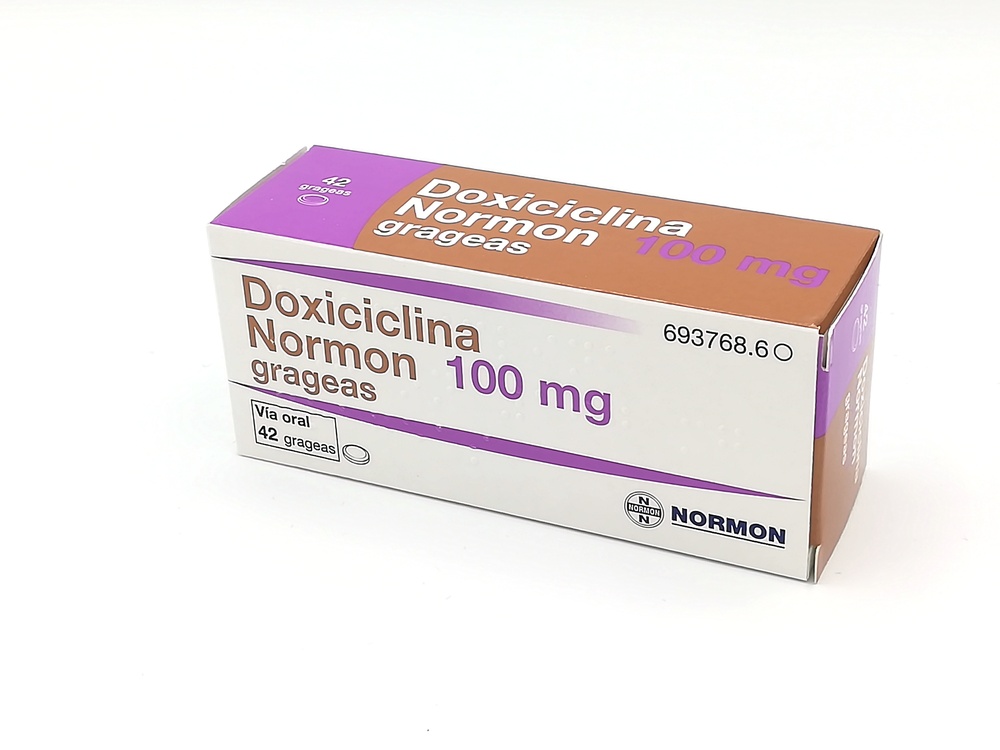
- Alternativas a MINOCIN 100 MG CÁPSULAS DURASForma farmacéutica: CAPSULA, 100 mgPrincipio activo: DoxiciclinaFabricante: Laboratorios Llorens S.L.Requiere recetaForma farmacéutica: COMPRIMIDO, 100 mgPrincipio activo: DoxiciclinaFabricante: Laboratorios Normon S.A.Requiere recetaForma farmacéutica: COMPRIMIDO, 100 mgPrincipio activo: DoxiciclinaFabricante: Pierre Fabre Iberica S.A.Requiere receta

Médicos online para MINOCIN 100 MG CÁPSULAS DURAS
Comenta la dosis, los posibles efectos secundarios, interacciones, contraindicaciones o la revisión de receta de MINOCIN 100 MG CÁPSULAS DURAS, sujeto a valoración médica y a la normativa local.











Preguntas frecuentes
