



METAMIZOL KALCEKS 500 MG/ML SOLUCION INYECTABLE

Revisión de receta online
Un médico revisará tu caso y determinará si la prescripción es médicamente apropiada.

Habla con un médico sobre este medicamento
Comenta tus síntomas y las opciones de tratamiento en una consulta online.



Cómo usar METAMIZOL KALCEKS 500 MG/ML SOLUCION INYECTABLE EFG
Contenido del prospecto
- Introducción
- Qué es Metamizol Kalceks y para qué se utiliza
- Qué necesita saber antes de empezar a usar Metamizol Kalceks
- Cómo usar Metamizol Kalceks
- Posibles efectos adversos
- Conservación de Metamizol Kalceks
- Contenido del envase e información adicional
Introducción
Prospecto: Información para el usuario
Metamizol Kalceks 500mg/ml solución inyectable EFG
metamizol sódico monohidrato
Metamizol Kalceks puede causar un recuento de los glóbulos blancos más bajo de lo normal (agranulocitosis), lo que puede producir infecciones graves y potencialmente mortales (ver sección 4).
Debe dejar de tomar este medicamento y contactar con su médico inmediatamente en caso de presentar cualquiera de los siguientes síntomas: fiebre, escalofríos, dolor de garganta, llagas dolorosas en su nariz, boca y garganta, o en la zona genital o anal.
Si alguna vez ha tenido agranulocitosis con metamizol o medicamentos similares, nunca debe volver a tomar este medicamento (ver sección 2).
Lea todo el prospecto detenidamente antes de empezar a usar este medicamento, porque contiene información importante para usted.
- Conserve este prospecto, ya que puede tener que volver a leerlo.
- Si tiene alguna duda, consulte a su médico, farmacéutico o enfermero.
- Este medicamento se le ha recetado solamente a usted, y no debe dárselo a otras personas aunque tengan los mismos síntomas que usted, ya que puede perjudicarles.
- Si experimenta efectos adversos, consulte a su médico, farmacéutico o enfermero, incluso si se trata de efectos adversos que no aparecen en este prospecto. Ver sección 4.
Contenido del prospecto
- Qué es Metamizol Kalceks y para qué se utiliza
- Qué necesita saber antes de empezar a usar Metamizol Kalceks
- Cómo usar Metamizol Kalceks
- Posibles efectos adversos
- Conservación de Metamizol Kalceks
- Contenido del envase e información adicional
1. Qué es Metamizol Kalceks y para qué se utiliza
Metamizol Kalceks contiene el principio activo metamizol, que es un medicamento con efectos analgésicos (alivio del dolor), antipiréticos (reducción de la fiebre) y espasmolíticos (control de las convulsiones).
Metamizol se utiliza para tratar
- el dolor intenso repentino o persistente;
- la fiebre cuando no han surtido efecto otros tratamientos.

¿No estás seguro de si este medicamento es adecuado para ti?
Comenta tus síntomas y tratamiento con un médico online.
2. Qué necesita saber antes de empezar a usar Metamizol Kalceks
No use Metamizol Kalceks:
- si es alérgico al metamizol o a otras sustancias relacionadas (por ejemplo, fenazona, propifenazona, fenilbutazona, oxifenbutazona) o a alguno de los demás componentes de este medicamento (incluidos en la sección 6);
- si previamente ha tenido un descenso significativo de un tipo de glóbulos blancos llamados granulocitos, que fue causado por metamizol u otros medicamentos similares llamados pirazolonas o pirazolidinas;
- si padece hipotensión o problemas de circulación de la sangre;
- si tiene problemas con su médula ósea o tiene un trastorno que afecta la manera en la que se producen o funcionan sus células sanguíneas;
- si ha tenido alguna vez asma o reacciones alérgicas asociadas a la toma de analgésicos (salicilatos, paracetamol u otros analgésicos, por ejemplo, el diclofenaco, el ibuprofeno, la indometacina o el naproxeno), como urticaria o hinchazón de la cara y de las mucosas del aparato respiratorio o digestivo;
- si actualmente padece de una enfermedad grave del hígado, como la porfiria (riesgo de desencadenar los llamados ataques de porfiria);
- si padece deficiencia genética de glucosa‑6‑fosfato‑deshidrogenasa (riesgo de descomposición de los glóbulos rojos);
- si se encuentra en los últimos tres meses de embarazo.
Advertencias y precauciones
Consulte a su médico, farmacéutico o enfermero antes de empezar a usar Metamizol Kalceks.
Tenga especial cuidado con metamizol:
- Si experimenta fiebre, escalofríos, dolor de garganta o úlceras en la boca, consulte a su médico inmediatamente. Estos síntomas pueden ser debidos a una neutropenia (falta de glóbulos blancos en la sangre, como los neutrófilos).
- Consulte inmediatamente con su médico si presenta signos y síntomas que sugieran alteraciones de la sangre (por ejemplo, debilidad general, infección, fiebre persistente, moretones, hemorragias, palidez). Puede tratarse de la llamada pancitopenia (reducción del número de todos los tipos de células sanguíneas).
- Si padece asma o atopia (tipo de alergia). En el caso de estas enfermedades existe un mayor riesgo de sufrir un choque anafiláctico (reacción alérgica que puede ser mortal) (ver No use Metamizol Kalceks).
- Si padece alguno de los trastornos enumerados a continuación, ya que existe un mayor riesgo de reacciones anafilácticas graves al metamizol:
- asma bronquial y rinitis simultánea de la mucosa nasal;
- urticaria prolongada/permanente;
- hipersensibilidad al alcohol, es decir, si reacciona incluso a pequeñas cantidades de alcohol con síntomas como estornudos, lagrimeo y enrojecimiento de la cara;
- intolerancia a colorantes (por ejemplo, la tartracina) o a conservantes (como los benzoatos).
- Si padece hipotensión, pérdida de líquidos, volumen inestable de líquidos corporales o insuficiencia circulatoria incipiente o tiene fiebre alta. En estos casos existe un mayor riesgo de reacción hipotensiva grave (relacionada con el descenso de la presión arterial). Su médico considerará debidamente la administración de Metamizol Kalceks y si este medicamento se administra incluso en estas circunstancias, se realizará una estricta supervisión médica. Es necesario adoptar medidas preventivas para reducir el riesgo de una reacción hipotensiva grave. La administración de metamizol puede provocar reacciones hipotensivas incluso sin asociación con las enfermedades mencionadas anteriormente. Estas reacciones parecen depender de la dosis; su médico considerará cuidadosamente las indicaciones de una dosis única superior a 1 g de metamizol.
- Si padece una enfermedad coronaria grave o tiene los vasos sanguíneos que irrigan el cerebro muy estrechos. En estos casos, es absolutamente esencial evitar una hipotensión y, por lo tanto, este medicamento sólo puede administrarse bajo una estricta vigilancia de las funciones circulatorias.
- Si sufre una enfermedad grave de riñón o de hígado. En este caso no debe recibir dosis altas de este medicamento ya que su secreción está reducida.
Recuento de los glóbulos blancos más bajo de lo normal (agranulocitosis).
Metamizol Kalceks puede causar agranulocitosis, un nivel muy bajo de un tipo de glóbulos blancos llamados granulocitos, que son importantes para combatir las infecciones (ver sección 4). Debe dejar de tomar metamizol y ponerse en contacto inmediatamente con un médico si presenta los siguientes síntomas, ya que pueden indicar una posible agranulocitosis: escalofríos, fiebre, dolor de garganta y llagas dolorosas en las mucosas (superficies húmedas del cuerpo) especialmente en la boca, nariz y garganta o en la zona genital o anal. Su médico le realizará pruebas de laboratorio para comprobar el nivel de sus células sanguíneas.
Si toma metamizol para la fiebre, algunos síntomas de la agranulocitosis pueden pasar desapercibidos. De manera similar los síntomas pueden estar enmascarados si usted está tomando antibióticos.
La agranulocitosis puede aparecer en cualquier momento durante el uso de Metamizol Kalceks e incluso poco después de haber dejado de tomar metamizol.
Puede presentar agranulocitosis incluso si usted ha usado metamizol sin problemas en el pasado.
Reacciones cutáneas graves
Se han notificado reacciones cutáneas graves, como síndrome de Stevens‑Johnson, necrólisis epidérmica tóxica y reacción medicamentosa con eosinofilia y síntomas sistémicos (DRESS), en asociación con el tratamiento con metamizol. Deje de usar metamizol y solicite atención médica inmediatamente si observa alguno de los síntomas relacionados con estas reacciones cutáneas graves descritas en la sección 4.
Si ha sufrido alguna vez reacciones cutáneas graves, no debe reanudar el tratamiento con Metamizol Kalceks en ningún momento (ver sección 4).
Problemas hepáticos
Se han notificado casos de inflamación del hígado en pacientes que toman metamizol, con síntomas que se desarrollan en unos pocos días hasta unos meses después del inicio del tratamiento.
Deje de usar metamizol y póngase en contacto con un médico si presenta síntomas de problemas hepáticos, como malestar (náuseas o vómitos), fiebre, sensación de cansancio, pérdida de apetito, orina oscura, heces de color claro, coloración amarillenta de la piel o de la parte blanca de los ojos, picor, erupción o gastralgia superior. Su médico comprobará el funcionamiento de su hígado.
No debe tomar metamizol si ha tomado previamente algún medicamento que contenga metamizol y tuvo problemas hepáticos.
Otros medicamentos y Metamizol Kalceks
Informe a su médico si está utilizando, ha utilizado recientemente o pudiera tener que utilizar cualquier otro medicamento. Es especialmente importante, si usa:
- bupropion, un medicamento usado para tratar la depresión y/o para ayudar a dejar de fumar;
- efavirenz, medicamento utilizado para el tratamiento del VIH/SIDA;
- metadona, medicamento utilizado para tratar la dependencia a drogas ilícitas (denominadas opioides);
- valproato, medicamento utilizado para tratar la epilepsia o el trastorno bipolar;
- tacrólimus, medicamento utilizado para prevenir el rechazo de órgano en pacientes trasplantados;
- sertralina, medicamento utilizado para tratar la depresión;
- ciclosporina, un medicamento para la supresión del sistema inmunitario.
Si se le administra Metamizol Kalceks junto con alguno de los medicamentos mencionados, su médico deberá prestar la debida atención a su control.
La administración concomitante de Metamizol Kalceks y metotrexato (un medicamento para la supresión del sistema inmunitario) puede aumentar los efectos secundarios del metotrexato sobre la hematopoyesis (hematotoxicidad), en particular en pacientes de edad avanzada. Es preferible evitar el uso de esta combinación.
Debe tenerse precaución al administrar este medicamento junto con el ácido acetilsalicílico para la prevención de los infartos.
Embarazo y lactancia
Si está embrazada o en periodo de lactancia, cree que podría estar embarazada o tiene intención de quedarse embarazada, consulte a su médico antes de utilizar este medicamento.
Embarazo
Los datos disponibles sobre el uso del metamizol durante los primeros tres meses de embarazo son limitados, pero no indican efectos dañinos para el embrión. En casos seleccionados cuando no existen otras opciones de tratamiento, las dosis únicas de metamizol durante el primer y el segundo trimestre pueden ser aceptables después de consultar con su médico o farmacéutico y luego de evaluar cuidadosamente los beneficios y riesgos del uso de metamizol. Sin embargo, en general, no se recomienda el uso de metamizol durante el primer y segundo trimestre.
Durante los tres últimos meses de embarazo, no debe tomar Metamizol Kalceks debido al mayor riesgo de complicaciones para la madre y el bebé (hemorragias, cierre prematuro de un vaso importante para el feto, llamado conducto arterioso de Botal, que se cierra de forma natural después del nacimiento).
Lactancia
Los productos de degradación de metamizol se excretan en la leche materna en cantidades considerables y no se puede excluir que exista riesgo para el lactante. Por lo tanto, se debe evitar el uso repetido de metamizol durante la lactancia. En caso de que se administre una única dosis de metamizol, se recomienda a las madres que se extraigan y desechen la leche materna durante las 48 horas posteriores a su administración.
Conducción y uso de máquinas
El uso de este medicamento a las dosis recomendadas no afectará a su capacidad para conducir o utilizar máquinas.
No conduzca ni utilice máquinas si está tomando dosis superiores a las recomendadas de este medicamento y, especialmente, en combinación con alcohol, ya que su capacidad de reacción y concentración se verán afectadas.
Metamizol Kalceks contiene sodio
Este medicamento contiene menos de 1 mmol de sodio (23 mg) por dosis diarias de hasta 0,7 ml; esto es, esencialmente “exento de sodio”. Si se administran dosis diarias de 0,8 ml o más (equivalente a más de 1 mmol de sodio) debe tenerse en cuenta lo siguiente: Este medicamento contiene 32,71 mg de sodio (componente principal de la sal de mesa/para cocinar) en cada ml de solución. Esto equivale al 1,64 % de la ingesta diaria máxima de sodio recomendada para un adulto.
3. Cómo usar Metamizol Kalceks
Siga exactamente las instrucciones de administración de este medicamento indicadas por su médico o farmacéutico. En caso de duda, consulte de nuevo a su médico o farmacéutico.
La dosis y la forma de administración depende esencialmente de los efectos analgésicos deseados y de su estado de salud.
La dosis se establece en función de la intensidad del dolor o la fiebre y la sensibilidad de cada persona al tratamiento con metamizol.
El efecto del medicamento suele aparecer 30 minutos después de la administración parenteral. La duración de la acción suele ser de unas 4 horas.
Este medicamento se le administrará en forma de inyección en la vena o en el músculo. Cuando se administra por inyección, es necesario permanecer tumbado después de la administración del medicamento y bajo la vigilancia de un médico, que hará un seguimiento de su salud con la debida atención.
Si el efecto de una dosis única es insuficiente o más tarde, cuando el efecto analgésico haya disminuido, su médico puede administrarle otra dosis hasta alcanzar la dosis máxima diaria que se indica a continuación.
Adultos y adolescentes de 15años o mayores
A los adultos y adolescentes de 15 años de edad o mayores (que pesen más de 53 kg) se les puede administrar de 1 a 2 ml por vía intravenosa o intramuscular en una dosis única; cuando sea necesario, la dosis única puede aumentarse hasta 5 ml (correspondiente a 2 500 mg de Metamizol Kalceks). La dosis máxima diaria es de 8 ml; cuando sea necesario, la dosis diaria puede aumentarse hasta 10 ml (correspondiente a 5 000 mg de Metamizol Kalceks).
Lactantes y niños
Se debe utilizar como guía la pauta de administración para dosis únicas por vía intravenosa o por vía intramuscular de la siguiente tabla:
Intervalo de edad en niños (peso corporal) | Dosis única | Dosis máxima diaria |
Lactantes de 3 a 11 meses (aprox. 5-8 kg) | 0,1-0,2 ml | 0,4-0,8 ml |
1-3 años (aprox. 9-15 kg) | 0,2-0,5 ml | 0,8-2,0 ml |
4-6 años (aprox. 16-23 kg) | 0,3-0,8 ml | 1,2-3,2 ml |
7-9 años (aprox. 24-30 kg) | 0,4-1,0 ml | 1,6-4,0 ml |
10-12 años (aprox. 31-45 kg) | 0,5-1,4 ml | 2,0-5,6 ml |
13-14 años (aprox. 46-53 kg) | 0,8-1,8 ml | 3,2-7,2 ml |
Personas de edad avanzada y pacientes con un mal estado de salud general/con insuficiencia renal
La dosis se disminuir en personas de edad avanzada, en pacientes debilitados y en aquellos con disminución de la función renal, ya que la eliminación de los productos de degradación de metamizol se puede retrasar.
Pacientes con insuficiencia renal o hepática
Dado que en los casos de insuficiencia renal o hepática la velocidad de eliminación disminuye, se debe evitar la administración de dosis elevadas repetidas. Solo en tratamientos de corta duración no es necesaria una reducción de la dosis. No se dispone de experiencia con tratamientos prolongados.
Uso en niños
Para consultar la dosis, véase la tabla anterior.
La dosis habitual para el tratamiento de la fiebre en los niños es de 10 mg/kg de peso corporal.
Si usa más Metamizol Kalceks del que debe
Los síntomas de sobredosis aguda incluyen náuseas, vómitos, dolor abdominal, deterioro de la función renal/insuficiencia renal aguda, trastornos nerviosos (mareos, somnolencia, coma, convulsiones), hipotensión y ritmos cardíacos anómalos. La administración de dosis muy altas de metamizol puede ocasionar una coloración roja de la orina sin efectos nocivos.
En caso de sobredosis o ingestión accidental, consulte inmediatamente a su médico o farmacéutico o llame al Servicio de Información Toxicológica, teléfono: 91 562 04 20, indicando el medicamento y la cantidad ingerida.
Si tiene cualquier otra duda sobre el uso de este medicamento, pregunte a su médico, farmacéutico o enfermero.

¿Has empezado a tomar el medicamento y tienes preguntas?
Comenta tus síntomas y tratamiento con un médico online.
4. Posibles efectos adversos
Al igual que todos los medicamentos, este medicamento puede producir efectos adversos, aunque no todas las personas los sufran.
Interrumpa el tratamiento inmediatamentey póngase en contacto con su médico u hospital si experimenta alguno de los siguientes efectos secundarios; pueden ser síntomas de agranulocitosis (disminución o incluso desaparición de un tipo de glóbulos blancos de la sangre) (raras – pueden afectar hasta 1 de cada 1 000 personas):
- Fiebre (que inesperadamente persiste o reaparece)
- Escalofríos
- Dolor de garganta
- Dificultad para tragar
- Úlceras bucales o lesiones de otras membranas mucosas, p. ej., nasal, genital y anorrectal.
La aparición de la agranulocitosis es imprevisible y puede ocurrir incluso cuando el metamizol se ha utilizado previamente sin ninguna complicación. La agranulocitosis puede poner en peligro la vida y llegar a ser mortal (ver también, Advertencias y precauciones). Los síntomas mencionados pueden ser mínimos en los pacientes tratados con antibióticos. La sedimentación de los glóbulos rojos aumenta en gran medida, mientras que el agrandamiento de los ganglios linfáticos es moderado o nulo.
Reacciones cutáneas graves
Deje de usar metamizol y solicite atención médica inmediatamentesi observa alguno de los siguientes efectos adversos graves (frecuencia no conocida: no puede estimarse a partir de los datos disponibles):
- Parches rojizos no elevados, o parches circulares o en forma de diana en el tórax, con frecuencia con ampollas centrales, descamación de la piel, úlceras en la boca, garganta, nariz, genitales y ojos. Estos eritemas cutáneos graves pueden ir precedidos de fiebre y síntomas gripales (síndrome de Stevens‑Johnson, necrólisis epidérmica tóxica).
- Eritema generalizado, temperatura corporal elevada y aumento de tamaño de los ganglios linfáticos (síndrome DRESS o síndrome de hipersensibilidad medicamentosa).
Deje de usar metamizol y póngase en contacto inmediatamentecon un médico si experimenta alguno de los síntomas siguientes:
- Sensación de enfermedad (náuseas o vómitos), fiebre, sensación de cansancio, pérdida de apetito, orina oscura, deposiciones de color claro, coloración amarillenta de la piel o de la parte blanca de los ojos, picor, erupción o dolor en la zona superior del estómago. Estos síntomas pueden ser signos de daño hepático. Ver también la sección 2 Advertencias y precauciones.
Informe a su médico si experimenta alguno de las siguientes reacciones adversas, o si tiene algún problema con la medicación.
Raras(pueden afectar hasta 1 de cada 1 000 personas).
- Anemia aplásica (disminución del número de glóbulos rojos).
- Leucopenia (disminución del número de glóbulos blancos).
- Pancitopenia (disminución del número de todos los derivados de la sangre).
- Trombocitopenia (disminución del número de plaquetas) (aumento de la tendencia a las hemorragias y presencia de pequeñas manchas de color marrón rojizo (petequias) en la piel y las mucosas).
- Reacciones alérgicas (anafilácticas/anafilactoides).
- Shock anafiláctico (potencialmente mortal).
Estas reacciones pueden aparecer durante la inyección o en pocas horas (normalmente en una hora) después de la administración del medicamento. Pueden producirse a pesar de que el uso repetido de metamizol en el pasado no haya dado lugar a ninguna complicación.
Las reacciones alérgicas moderadas se manifiestan con síntomas cutáneos y de las mucosas (como picor, ardor, enrojecimiento, urticaria e hinchazón), dificultades respiratorias o, raramente, síntomas gastrointestinales. En los casos más graves, los síntomas pueden generalizarse, incluyendo un angioedema grave (hinchazón de la cara, los labios, la lengua o la garganta que puede causar dificultad para tragar o respirar), broncoespasmo grave, dificultad para respirar, alteraciones del ritmo cardíaco y presión arterial baja, y provocar un choque anafiláctico. En pacientes con asma bronquial, estas reacciones se manifiestan en forma de ataque bronquial.
- Erupción cutánea
Muy raras(pueden afectar hasta 1 de cada 10 000 personas):
- Disfunción renal reversible con disminución de la diuresis (oliguria) o detención (anuria), o insuficiencia renal aguda, acompañada de excreción de proteínas en la orina (proteinuria).
Frecuencia no conocida(no puede estimarse a partir de los datos disponibles):
- Síndrome de Kounis (afección cardíaca debida a una reacción alérgica).
- Descenso aislado y transitorio de la presión sanguínea, raramente crítico, sin más síntomas de reacción de hipersensibilidad. Una inyección intravenosa rápida puede aumentar el riesgo de dicha reacción hipotensiva.
- Inflamación renal (nefritis intersticial).
- Dolor en el lugar de inyección.
- Flebitis.
- Inflamación del hígado, coloración amarillenta de la piel y de la parte blanca de los ojos, aumento del nivel sanguíneo de enzimas hepáticas.
Comunicación de efectos adversos
Si experimenta cualquier tipo de efecto adverso, consulte a su médico, farmacéutico o enfermero, incluso si se trata de posibles efectos adversos que no aparecen en este prospecto. También puede comunicarlos directamente a través del Sistema Español de Farmacovigilancia de Medicamentos de Uso Humano: www.notificaRAM.es. Mediante la comunicación de efectos adversos usted puede contribuir a proporcionar más información sobre la seguridad de este medicamento.
5. Conservación de Metamizol Kalceks
Conservar en el embalaje original para protegerlo de la luz. No congelar.
Después de abrir la ampolla: el producto debe usarse inmediatamente.
Periodo de validez tras la dilución
Se ha demostrado la estabilidad química y física en uso durante 6 horas a 25 °C cuando se diluye con solución de cloruro sódico al 0,9 % o solución de Ringer.
Se ha demostrado la estabilidad química y física en uso durante 20 minutos a 25 °C cuando se diluye con solución de glucosa al 5 %.
Desde el punto de vista microbiológico, a menos que el método de dilución impida el riesgo de contaminación microbiana, el medicamento debe utilizarse de forma inmediata. Si no se utiliza inmediatamente, los tiempos y condiciones de almacenamiento previos a la utilización son responsabilidad del usuario.
Mantener este medicamento fuera de la vista y del alcance de los niños.
No utilice este medicamento después de la fecha de caducidad que aparece en el embalaje después de CAD. La fecha de caducidad es el último día del mes que se indica.
Los medicamentos no se deben tirar por los desagües ni a la basura. Deposite los envases y los medicamentos que no necesite en el Punto SIGRE de la farmacia. En caso de duda pregunte a su farmacéutico cómo deshacerse de los envases y de los medicamentos que no necesita. De esta forma, ayudará a proteger el medio ambiente.
6. Contenido del envase e información adicional
Composición de Metamizol Kalceks
- El principio activo es el metamizol sódico monohidrato.
1 ml de solución contiene 500 mg de metamizol sódico monohidrato.
Cada ampolla (de 2 ml) contiene 1 000 mg de metamizol sódico monohidrato.
Cada ampolla (de 5 ml) contiene 2 500 mg de metamizol sódico monohidrato.
- Los demás componentes son: solución 1 M de ácido clorhídrico (para ajuste del pH), agua para preparaciones inyectables.
Aspecto del producto y contenido del envase
Solución inyectable (inyectable).
Solución clara, de color casi incoloro a amarillo‑pardo, prácticamente sin partículas visibles.
Solución de 2 o 5 ml en una ampolla de vidrio de color topacio.
5 ampollas se colocan en una bandeja. 1, 2 o 20 bandejas se envasan en cajas de cartón.
Tamaños de envases: 5, 10 o 100 ampollas.
Puede que solamente estén comercializados algunos tamaños de envases.
Titular de la autorización de comercialización
AS KALCEKS
Krustpils iela 71E, Riga, LV‑1057, Letonia
Responsable de la fabricación
Akciju sabiedriba “Kalceks”
Krustpils iela 71E, Riga, LV‑1057, Letonia
Este medicamento está autorizado en los estados miembros del Espacio Económico Europeo con los siguientes nombres:
República Checa Metamizole Kalceks
Austria, Alemania Metamizol Kalceks 500 mg/ml Injektionslösung
Bulgaria Metamizole Kalceks 500 mg/ml ??????????? ???????
Croacia Metamizolnatrij hidrat Kalceks 500 mg/ml otopina za injekciju
Hungría Metamizole Kalceks 500 mg/ml oldatos injekció
Lituania Metamizole sodium Kalceks 500 mg/ml injekcinis tirpalas
Polonia Metamizole Kalceks
Rumanía Metamizol Kalceks 500 mg/ml solu?ie injectabila
Eslovaquia Metamizole Kalceks 500 mg/ml injekcný roztok
Eslovenia Natrijev metamizolat Kalceks 500 mg/ml raztopina za injiciranje
España Metamizol Kalceks 500 mg/ml solución inyectable EFG
Pueden solicitar más información sobre este medicamento dirigiéndose al titular de la autorización de comercialización.
Fecha de la última revisión de este prospecto:Abril 2025.
La información detallada y actualizada de este medicamento está disponible en la página web de la Agencia Española de Medicamentos y Productos Sanitarios (AEMPS) http://www.aemps.gob.es/.
--------------------------------------------------------------------------------------------------------------------
Esta información está destinada únicamente a profesionales del sector sanitario:
Se debe tener en cuenta que la administración parenteral está asociada a un alto riesgo de reacciones anafilácticas/anafilactoides.
Es necesario asegurarse de que la inyección del medicamento se interrumpe al primer signo de reacción anafiláctica/anafilactoide y se reduce al mínimo el riesgo de una reacción hipotensiva aislada. Durante la administración parenteral, es necesario asegurar que el paciente esté en posición horizontal y bajo estricta supervisión médica. Además, en aras de la prevención de la reacción hipotensiva, la inyección intravenosa debe administrarse muy lentamente, es decir, no más de 1 ml (500 mg de metamizol) por minuto.
La solución inyectable puede diluirse con solución de glucosa al 5 %, solución de cloruro sódico al 0,9 % o solución de Ringer. Debido a posibles incompatibilidades, la solución de metamizol no debe administrarse junto con otros medicamentos inyectables.
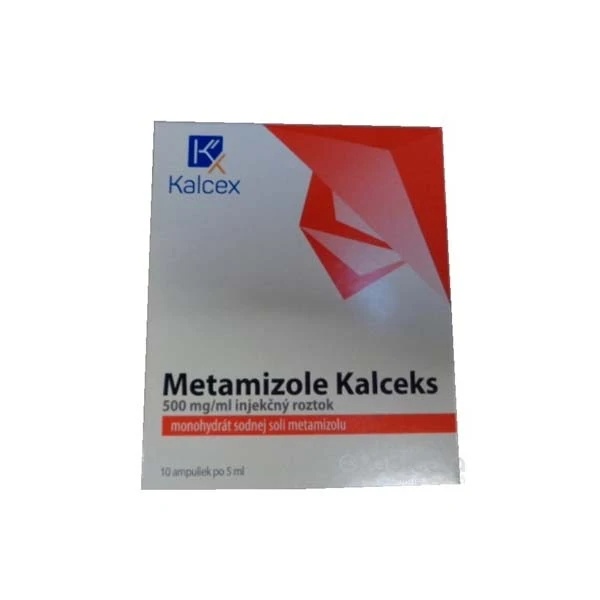
- País de registro
- Forma farmacéuticaINYECTABLE, 500 mg/ml
- Código ATCN02BB02
- Principio activo
- Requiere recetaSí
- Fabricante
- Esta información es de carácter general y no sustituye la consulta con un profesional sanitario.
- Alternativas a METAMIZOL KALCEKS 500 MG/ML SOLUCION INYECTABLE EFGForma farmacéutica: SOLUCION/SUSPENSION GOTAS ORALES, 500 mg metamizol sodico/mlPrincipio activo: Metamizol sodicoFabricante: Laboratorios Ern S.A.Requiere recetaForma farmacéutica: CAPSULA, 575 mgPrincipio activo: Metamizol sodicoFabricante: Ababor Pharmaceuticals S.L.Requiere recetaForma farmacéutica: CAPSULA, 575 mgPrincipio activo: Metamizol sodicoFabricante: Industria Quimica Y Farmaceutica Vir S.A.Requiere receta
Médicos online para METAMIZOL KALCEKS 500 MG/ML SOLUCION INYECTABLE EFG
Comenta la dosis, los posibles efectos secundarios, interacciones, contraindicaciones o la revisión de receta de METAMIZOL KALCEKS 500 MG/ML SOLUCION INYECTABLE EFG, sujeto a valoración médica y a la normativa local.









Obtén una receta de METAMIZOL KALCEKS 500 MG/ML SOLUCION INYECTABLE EFG online
Rellena un formulario de 2 minutos
Cuéntanos tus síntomas, historial y el medicamento que necesitas.
Elige un médico o nosotros te asignamos uno
Escoge un especialista o te conectamos con el próximo médico disponible.
El médico revisa tu caso
Normalmente en 30 minutos. Puede hacerte preguntas adicionales por chat.
Recógela en cualquier farmacia
Receta electrónica enviada a tu correo, válida en toda España.
Preguntas frecuentes
METAMIZOL KALCEKS 500 MG/ML SOLUCION INYECTABLE EFG requiere receta en España. Puedes confirmarlo con un médico online según tu caso.
El principio activo de METAMIZOL KALCEKS 500 MG/ML SOLUCION INYECTABLE EFG es Metamizol sodico. Esta información ayuda a identificar medicamentos con la misma composición pero con diferentes nombres comerciales.
METAMIZOL KALCEKS 500 MG/ML SOLUCION INYECTABLE EFG es fabricado por Kalceks As. La marca y el envase pueden variar según el distribuidor.
Los Médicos de familia, Psiquiatras, Dermatólogos, Cardiólogos, Endocrinólogos, Gastroenterólogos, Neumólogos, Nefrólogos, Reumatólogos, Hematólogos, Infectólogos, Alergólogos, Geriatras, Pediatras, Oncólogos pueden valorar la prescripción de METAMIZOL KALCEKS 500 MG/ML SOLUCION INYECTABLE EFG cuando esté clínicamente indicado. Puedes reservar una videoconsulta para comentar tu caso y las opciones de tratamiento.
España cuenta con una infraestructura sanitaria bien desarrollada en ciudades principales como Madrid, Barcelona, Valencia y Sevilla. Las farmacias están ampliamente disponibles y operan bajo estrictas regulaciones, garantizando el acceso a medicamentos con receta.
Puedes comprar METAMIZOL KALCEKS 500 MG/ML SOLUCION INYECTABLE EFG en Madrid, Barcelona, Sevilla o Valencia en cualquier farmacia local con una receta válida.
Para obtener una receta, puedes utilizar Oladoctor:
Otros medicamentos con el mismo principio activo (Metamizol sodico) incluyen METALGIAL 500 MG/ML GOTAS ORALES EN SOLUCION, METAMIZOL ABABOR 575 MG CÁPSULAS DURAS EFG, METAMIZOL AIKO FARMACÉUTICA 575 MG CÁPSULAS DURAS EFG. Pueden tener diferentes nombres comerciales o formulaciones, pero contienen el mismo componente terapéutico. Consulta siempre con un médico antes de cambiar o iniciar un nuevo medicamento.
