


METAMIZOL ARISTO 575 mg CAPSULAS EFG




Cómo usar METAMIZOL ARISTO 575 mg CAPSULAS EFG
Traducción generada por IA
Este contenido ha sido traducido automáticamente y se ofrece solo con fines informativos. No sustituye la consulta con un profesional sanitario.
Ver originalContenido del prospecto
Introducción
Prospecto: Información para el usuario
Metamizol Aristo 575 mg cápsulas EFG
Metamizol Aristo puede causar un recuento de los glóbulos blancos más bajo de lo normal (agranulocitosis), lo que puede producir infecciones graves y potencialmente mortales (ver sección 4).
Debe dejar de tomar este medicamento y contactar con su médico inmediatamente en caso de presentar cualquiera de los siguientes síntomas: fiebre, escalofríos, dolor de garganta, llagas dolorosas en su nariz, boca y garganta, o en la zona genital o anal.
Si alguna vez ha tenido agranulocitosis con metamizol o medicamentos similares, nunca debe volver a tomar este medicamento (ver sección 2).
Lea todo el prospecto detenidamente antes de empezar a tomar este medicamento, porque contiene información importante para usted.
- Conserve este prospecto, ya que puede tener que volver a leerlo.
- Si tiene alguna duda, consulte a su médico o farmacéutico.
- Este medicamento se le ha recetado solamente a usted, y no debe dárselo a otras personas aunque tengan los mismos síntomas que usted, ya que puede perjudicarles.
- Si experimenta efectos adversos, consulte a su médico o farmacéutico, incluso si se trata de efectos adversos que no aparecen en este prospecto. Ver sección 4.
Contenido del prospecto:
1.- Qué es Metamizol Aristo y para qué se utiliza
2.- Qué necesita saber antes de empezar a tomar Metamizol Aristo
3.- Cómo tomar Metamizol Aristo
4.- Posibles efectos adversos
5.- Conservación de Metamizol Aristo
6.- Contenido del envase e información adicional
1. Qué es Metamizol Aristo y para qué se utiliza
Metamizol Aristo pertenece al grupo de medicamentos denominado “Otros analgésicos y antipiréticos”.
Este medicamento se utiliza para el tratamiento del dolor agudo moderado o intenso post-operatorio o post-traumático, de tipo cólico o de origen tumoral. También se utiliza en los casos de fiebre alta que no responda a otras medidas u otros medicamentos para la fiebre.

2. Qué necesita saber antes de empezar a tomar Metamizol Aristo
No tome Metamizol Aristo
- Si es alérgico al metamizol o a alguno de los demás componentes de este medicamento (incluidos en la sección 6).
- Si previamente ha tenido un descenso significativo de un tipo de glóbulos blancos llamados granulocitos, que fue causado por metamizol u otros medicamentos similares llamados pirazolonas o pirazolidinas.
- Si tiene problemas con su médula ósea o tiene un trastorno que afecta la manera en la que se producen o funcionan sus células sanguíneas.
- Si ha tenido previamente reacciones alérgicas o reacciones hematológicas (disminución de glóbulos blancos, glóbulos rojos o plaquetas en sangre) con medicamentos que contienen metamizol u otros compuestos similares.
- Si ha padecido síntomas de asma, rinitis o urticaria (manchas rojizas o habones en la piel que pueden producir picor) durante el tratamiento con otros analgésicos como ácido acetilsalicílico, paracetamol o antiinflamatorios no esteroideos, ya que en estos casos también puede existir sensibilidad a metamizol.
- Si padece porfiria aguda intermitente (un trastorno del metabolismo de los pigmentos sanguíneos que forman parte de la hemoglobina).
- Si padece deficiencia genética de glucosa-6-fosfato-deshidrogenasa.
- Si está en los tres últimos meses de embarazo.
- Si ha sufrido reacciones cutáneas muy graves (denominadas, por ejemplo, síndrome de Stevens Johnson o necrólisis epidérmica tóxica) con el uso previo de Metamizol Aristo u otro medicamento que contuviese metamizol.
Advertencias y precauciones
Consulte a su médico o farmacéutico antes de empezar a tomar Metamizol Aristo.
Recuento de los glóbulos blancos más bajo de lo normal (agranulocitosis).
Metamizol Aristo puede causar agranulocitosis, un nivel muy bajo de un tipo de glóbulos blancos llamados granulocitos, que son importantes para combatir las infecciones (ver sección 4). Debe dejar de tomar metamizol y ponerse en contacto inmediatamente con un médico si presenta los siguientes síntomas, ya que pueden indicar una posible agranulocitosis: escalofríos, fiebre, dolor de garganta y llagas dolorosas en las mucosas (superficies húmedas del cuerpo) especialmente en la boca, nariz y garganta o en la zona genital o anal. Su médico le realizará pruebas de laboratorio para comprobar el nivel de sus células sanguíneas.
Si toma metamizol para la fiebre, algunos síntomas de la agranulocitosis pueden pasar desapercibidos. De manera similar los síntomas pueden estar enmascarados si usted está tomando antibióticos.
La agranulocitosis puede aparecer en cualquier momento durante el uso de metamizol Aristo e incluso poco después de haber dejado de tomar metamizol.
Puede presentar agranulocitosis incluso si usted ha usado metamizol sin problemas en el pasado.
Tenga especial cuidado:
- Si experimenta malestar general, infección, fiebre persistente, dolor de garganta, inflamación en boca, nariz o garganta, lesiones en la mucosa de la boca o de los genitales, hematomas, sangrado o palidez, debe suspender el tratamiento y consultar a su médico inmediatamente. Estos trastornos pueden ser debidos a un descenso del número de glóbulos blancos en la sangre (agranulocitosis), de plaquetas (trombocitopenia) o un fallo en la producción de todas las células de la sangre (anemia aplásica).
- Si experimenta mareo, dificultad para respirar, rinitis, hinchazón de la cara, descenso de la presión arterial, manchas rojizas en la piel de aparición súbita, suspenda el tratamiento y consulte a su médico. Estos síntomas pueden deberse a una reacción alérgica grave denominada shock anafiláctico. Esta reacción es más probable si usted padece asma o trastornos de tipo alérgico (atopía).
- Si padece asma bronquial (especialmente en presencia de inflamación de la mucosa nasal y pólipos nasales), urticaria crónica o bien si es intolerante a colorantes y/o conservantes o al alcohol, ya que el riesgo de posibles reacciones alérgicas graves es mayor.
- Si tiene problemas de tensión arterial baja o tiene hipovolemia (disminución del volumen circulante de sangre o cualquier otro líquido corporal), deshidratación o la circulación inestable ya que el riesgo de una caída brusca de la tensión arterial es mayor.
- Si aparece una erupción en la piel que progresa hacia la formación de ampollas o lesiones en la mucosa debe de interrumpir el tratamiento y acudir al médico ya que esto puede ser debido a la aparición de trastornos cutáneos muy graves (síndrome de Stevens-Johnson o necrólisis epidérmica tóxica). En estos casos no debe recibir de nuevo medicamentos que contengan metamizol.
- Si tiene la función del riñón o del hígado disminuida, ya que puede eliminar el medicamento con mayor dificultad.
- Si es un paciente de edad avanzada, esté especialmente atento a la aparición de cualquiera de los trastornos descritos anteriormente, ya que pudieran aparecer con mayor frecuencia.
Problemas hepáticos
Se ha notificado inflamación del hígado en pacientes que toman metamizol con síntomas que se desarrollan en unos pocos días hasta unos meses después del inicio del tratamiento.
Deje de usar Metamizol Aristo y póngase en contacto con un médico si presenta síntomas de problemas hepáticos, como malestar (náuseas o vómitos), fiebre, sensación de cansancio, pérdida de apetito, orina oscura, heces de color claro, coloración amarillenta de la piel o de la parte blanca de los ojos, picor, erupción o gastralgia superior. Su médico comprobará el funcionamiento de su hígado.
No debe tomar Metamizol Aristo si ha tomado previamente algún medicamento que contenga metamizol y tuvo problemas hepáticos.
Reacciones cutáneas graves
Se han notificado reacciones cutáneas graves, como síndrome de Stevens-Johnson, necrólisis epidérmica tóxica y reacción medicamentosa con eosinofilia y síntomas sistémicos (DRESS), en asociación con el tratamiento con metamizol. Deje de tomar metamizol y solicite atención médica inmediatamente si observa alguno de los síntomas relacionados con estas reacciones cutáneas graves descritos en la sección 4.
Si ha sufrido alguna vez reacciones cutáneas graves, no debe reanudar el tratamiento con Metamizol Aristo en ningún momento (ver sección 4).
Otros medicamentos y Metamizol Aristo
Informe a su médico o farmacéutico si está utilizando, ha utilizado recientemente o pudiera tener que utilizar cualquier otro medicamento.
- Si se administra conjuntamente con ciclosporina (medicamento que previene el rechazo de los trasplantes), puede reducir los niveles en sangre de ciclosporina y por lo tanto éstos se deben medir con regularidad.
- Si se administra junto con clorpromazina (medicamento para el tratamiento de la psicosis) puede provocar un descenso de la temperatura corporal.
- Si se administra conjuntamente con metotrexato u otros medicamentos para el tratamiento de los tumores (antineoplásicos), puede potencial los efectos tóxicos en sangre de los antineoplásicos, sobretodo en pacientes de edad avanzada.
- Si se adminsitra conjuntamente con ácido acetilsalicílico, puede reducir el efecto del ácido acetilsalicílico para disminuir la agregación de las plaquetas (antiplaquetario) y por lo tanto se debe usar con precaución en pacientes que lo estén tomando para proteger el corazón (cardioprotector).
- Si se administra conjuntamente con bupropión, medicamento utilizado conjuntamente para el tratamiento de la depresión y/o para ayudar a dejar de fumar, puede reducir los niveles en sangre de bupropión, por lo que se debe utilizar con precaución.
- Efavirenz, medicamento utilizado para el tratamiento del VIH/SIDA.
- Metadona, medicamento utilizado para tratar la dependencia a drogas ilícitas (denominadas opioides).
- Valproato, medicamento utilizado para prevenir el rechazo de órganos en pacientes trasplantados.
- Sertralina, medicamento utilizado para tratar la depresión.
Metamizol puede modificar el efecto de los antihipertensivos (medicamentos que reducen la tensión arterial) y diuréticos (medicamentos que aumentan la eliminación de líquidos).
Toma de Metamizol Aristo con alimentos, bebidas y alcohol
Junto con alcohol, pueden potenciarse los efectos tanto de éste, como del fármaco.
Embarazo, lactancia y fertilidad
Embarazo
Consulte a su médico o farmacéutico antes de utilizar este medicamento.
Los datos disponibles sobre el uso de metamizol durante los primeros tres meses de embarazo son limitados, pero no indican efectos dañinos para el embrión. En casos seleccionados cuando no existen otras opciones de tratamiento, las dosis únicas de metamizol durante el primer y el segundo trimestre pueden ser aceptables depsués de consultar con su médico o farmacéutico y luego de evaluar cuidadosamente los beneficios y riesgos del uso de metamizol. Sin embargo, en general, no se recomienda el uso de metamizol durante el primer y segundo trimestre.
Durante los tres últimos meses de embarazo, no debe tomar Metamizol Aristo debido al mayor riesgo de complicaciones para la madre y el bebé (hemorragias, cierre prematuro de un vaso importante para el feto, llamado conducto de Botal, que se cierra de forma natural después del nacimiento.
Lactancia
Consulte a su médico o farmacéutico antes de utilizar este medicamento.
Los productos de degradación de metamizol se excretan en la leche materna en cantidades considerables y no se puede excluir que exista riesgo para el lactante. Por lo tanto, se debe evitar el uso repetido de metamizol durante la lactancia. En caso de que se administre una única dosis de metamizol, se recomienda a las madres que se extraigan y desechen la leche materna durante las 48 horas posteriores a su administración.
Conducción y uso de máquinas
Aunque no son de esperar efectos adversos sobre la capacidad de concentración y de reacción, a las dosis más altas, dentro de las recomendadas, debe tenerse en cuenta que estas capacidades pueden verse afectadas y se debe evitar utilizar máquinas, conducir vehículos u otras actividades peligrosas.
3. Cómo tomar Metamizol Aristo
Siga exactamente las instrucciones de administración de este medicamento indicadas por su médico. En caso de duda, consulte de nuevo a su médico o farmacéutico.
Este medicamento es para su uso a corto plazo. Su médico le indicará la duración de su tratamiento.
Este medicamento debe administrarse por vía oral.
La dosis se establece en función de la intensidad del dolor o la fiebre y de la sensibilidad de cada persona al tratamiento con Metamizol Aristo. Siempre se debe seleccionar la dosis más baja necesaria para controlar el dolor y la fiebre. Su médico le indicará cómo debe tomar Metamizol Aristo.
Adultos y adolescentes de 15 años de edad o mayores
Los adultos y adolescentes de 15 años de edad o mayores (que pesen más de 53 kg) pueden tomar 1 cápsula (575 mg de metamizol) en una dosis única, que se puede administrar hasta 6 veces al día, en intervalos de 4 a 6 horas. La dosis máxima diaria es de 3450 mg (correspondiente a 6 cápsulas).
El efecto del medicamento suele aparecer entre los 30 y 60 minutos después de la administración oral.
Metamizol Aristo no se debe utilizar en niños menores de 15 años de edad. Para niños más pequeños hay disponibles otras presentaciones y dosis de este medicamento; consulte a su médico o farmacéutico.
Personas de edad avanzada y pacientes con un mal estado de salud general/con insuficiencia renal
La dosis se debe disminuir en personas de edad avanzada, en pacientes debilitados y en aquellos con disminución de la función renal, ya que la eliminación de los productos de degradación de metamizol se puede retrasar.
Pacientes con insuficiencia renal o hepática:
Dado que en los casos de insuficiencia renal o hepática la velocidad de eliminación disminuye, se debe evitar la administración de dosis elevadas repetidas. Solo en tratamientos de corta duración no es necesaria una reducción de la dosis. No se dispone de experiencia con tratamientos prolongados.
Si el dolor persiste o empeora debe consultar a un médico para investigar la causa de los síntomas.
Si toma más Metamizol Aristo del que debe
Podrían aparecer náuseas, vómitos, dolor del abdomen, deterioro de la función del riñón, y en ocasiones más raras mareo, somnolencia, coma, convulsiones, descenso de la presión arterial o incluso shock y aumento del ritmo del corazón (taquicardia).
Después de la administración de dosis muy altas de metamizol, puede producirse una coloración roja de la orina, la cual desaparece al suspender el tratamiento.
Si ha tomado más cantidad del medicamento del que debe, consulte a su médico o a su farmacéutico, o al Servicio de Información Toxicológica, teléfono: 91 562 04 20
Información para el médico:
No se conoce ningún antídoto específico. Tras la sobredosis por administración oral es posible realizar un lavado gástrico y forzar el vómito. Se pueden considerar una diuresis forzada o diálisis, ya que el metamizol es dializable.
En caso de reacciones de alergia graves, deben aplicarse además, otras medidas de urgencia habituales como poner al paciente de costado, mantener las vías respiratorias libres de obstrucción, o administrar oxígeno. Las medidas farmacológicas de urgencia incluyen la administración de adrenalina, fluidoterapia y glucocorticodes.
Se aconseja una cuidadosa monitorización de las funciones vitales, así como tomar las medidas generales necesarias.
Si olvidó tomar Metamizol Aristo
No tome una dosis doble para compensar las dosis olvidadas.
Si tiene cualquier otra duda sobre el uso de este medicamento, pregunte a su médico o farmacéutico.

4. Posibles efectos adversos
Al igual que todos los medicamentos, este medicamento puede producir efectos adversos, aunque no todas las personas los sufran.
Las reacciones alérgicas más leves (p.ej. reacciones en piel y mucosas como picor, quemazón, enrojecimiento, hinchazón así como dificultad para respirar y molestias gastrointestinales pueden progresar hasta formas graves p.ej. urticaria generalizada, hinchazón de pies, manos, labios garganta y vías respiratorias (angioedema), broncoespasmo grave (estrechamiento de las paredes de los bronquios), alteraciones del corazón y disminución de la presión arterial (algunas veces precedida por un aumento de la presión arterial).
Deje de usar Metamizol Aristo y póngase en contacto inmediatamente con un médico si experimenta alguno de los síntomas siguientes:
Sensación de enfermedad (náuseas o vómitos), fiebre, sensación de cansancio, pérdida de apetito, orina oscura, deposiciones de color claro, coloración amarillenta de la piel o de la parte blanca de los ojos, picor, erupción o dolor en la zona superior del estómago. Estos síntomas pueden ser signos de daño hepático. Ver también la sección 2 Advertencias y precauciones.
Otros efectos adversos que pueden ocurrir con las siguientes frecuencias son:
Frecuentes (pueden afectar hasta 1 de cada 10 personas):
- hipotensión (disminución de la presión arterial).
Poco frecuentes (pueden afectar hasta 1 de cada 100 personas):
- erupciones y reacciones en la piel.
Raros (pueden afectar hasta 1 de cada 1.000 personas):
- reacciones alérgicas que suelen presentarse durante o justo después de la administración pero también horas más tarde.
- erupciones y aparición de habones en la piel.
- disminución del número de glóbulos blancos en sangre (leucopenia)
- asma
Muy raros (pueden afectar hasta 1 de cada 10.000 personas):
- reacciones cutáneas en las que aparecen vesículas o ampollas (necrólisis tóxica epidérmica, síndrome de Stevens-Johnson),
- problemas del riñón con disminución o supresión de la orina eliminada
- incremento en la cantidad de proteínas excretadas por la orina
- inflamación del riñón (nefritis intersticial)
- disminución severa de los glóbulos blancos (agranulocitosis) que puede producir la muerte debida a infecciones graves
- disminución del número de plaquetas en sangre (trombocitopenia), en este caso pueden producirse lesiones inflamatorias en mucosas, dolor de garganta y fiebre.
- shock (bajada drástica de la presión arterial).
Frecuencia no conocida (no puede estimarse a partir de los datos disponibles):
- sepsis (infección grave que implica una reacción inflamatoria de todo el organismo y que puede producir la muerte),
- anemia aplásica (fallo en la producción de las células de la médula ósea y de la sangre),
- pancitopenia (número bajo de glóbulos rojos, blancos y plaquetas simultáneamente),
- shock anafiláctico (reacción alérgica grave que puede producir la muerte)
- síndrome de Kounis (un tipo de trastorno cardíaco),
- hemorragias gastrointestinales
- cromaturia (coloración anormal de la orina).
- Inflamación del hígado, coloración amarillenta de la piel y de la parte blanca de los ojos, aumento del nivel sanguíneo de enzimas hepáticas.
- Reacciones cutáneas graves
Deje de tomar metamizol y solicite atención médica inmediatamente si observa alguno de los siguientes efectos adversos graves:
- Parches rojizos no elevados, o parches circulares o en forma de diana en el tórax, con frecuencia con ampollas centrales, descamación de la piel, úlceras en la boca, garganta, nariz, genitales y ojos. Estos eritemas cutáneos graves pueden ir precedidos de fiebre y síntomas gripales (síndrome de Stevens-Johnson, necrólisis epidérmica tóxica).
- Eritema generalizado, temperatura corporal elevada y aumento de tamaño de los ganglios linfáticos (síndrome DRESS o síndrome de hipersensibilidad medicamentosa).
Comunicación de efectos adversos
Si experimenta cualquier tipo de efecto adverso, consulte a su médico o farmacéutico, inlcuso si se trata de posibles efectos adversos que no aparecen en este prospecto. También puede comunicarlos directamente a través del Sistema Español de Farmacovigilancia de medicamentos de Uso Humano: https://www.notificaram.es. Mediante la comunicación de efectos adversos usted puede contribuir a proporcionar más información sobre la seguridad de este medicamento.
5. Conservación de Metamizol Aristo
Mantener este medicamento fuera de la vista y del alcance de los niños.
No se requieren condiciones especiales de conservación.
No utilice este medicamento después de la fecha de caducidad que aparece en el envase. La fecha de caducidad es el último día del mes que se indica.
Los medicamentos no se deben tirar por los desagües ni a la basura. Deposite los envases y los medicamentos que no necesite en el punto SIGRE de la farmacia. Pregunte a su farmacéutico cómo deshacerse de los medicamentos que ya no necesita. De esta forma, ayudará a proteger el medio ambiente.
6. Contenido del envase e información adicional
Composición de Metamizol Aristo
- El principio activo es metamizol magnésico. Cada cápsula contiene 575 mg de metamizol magnésico.
- Los demás componentes (excipientes) son: estearato magnésico. Los componentes de la cápsula son: indigotina ( E 132), eritrosina ( E 127), dióxido titanio ( E 171) y gelatina
Aspecto del producto y contenido del envase
Las cápsulas de Metamizol Aristo son cápsulas duras de color granate y el polvo que contienen es blanco.
Los envases contienen 10 ó 20 cápsulas.
Titular de la autorización de comercialización y responsable de la fabricación
Titular de comercialización
Aristo Pharma Iberia, S.L.
C/ Solana, 26
28850 Torrejón de Ardoz (Madrid)
España
Responsable de la fabricación
Laboratorios Medicamentos Internacionales, S.A. (Medinsa)
C/ Solana, 26
28850 – Torrejón de Ardoz (Madrid)
España
Fecha de la última revisión de este prospecto:agosto 2025
La información detallada de este medicamento está disponible en la página web de la Agencia Española de Medicamentos y Productos Sanitarios (AEMPS) https://www.aemps.gob.es/.
- País de registro
- Forma farmacéuticaCAPSULA, 575 mg
- Código ATCN02BB02
- Precio medio en farmacia1.56 EUR
- Principio activo
- Requiere recetaSí
- Fabricante
- Esta información es de carácter general y no sustituye la consulta con un profesional sanitario.
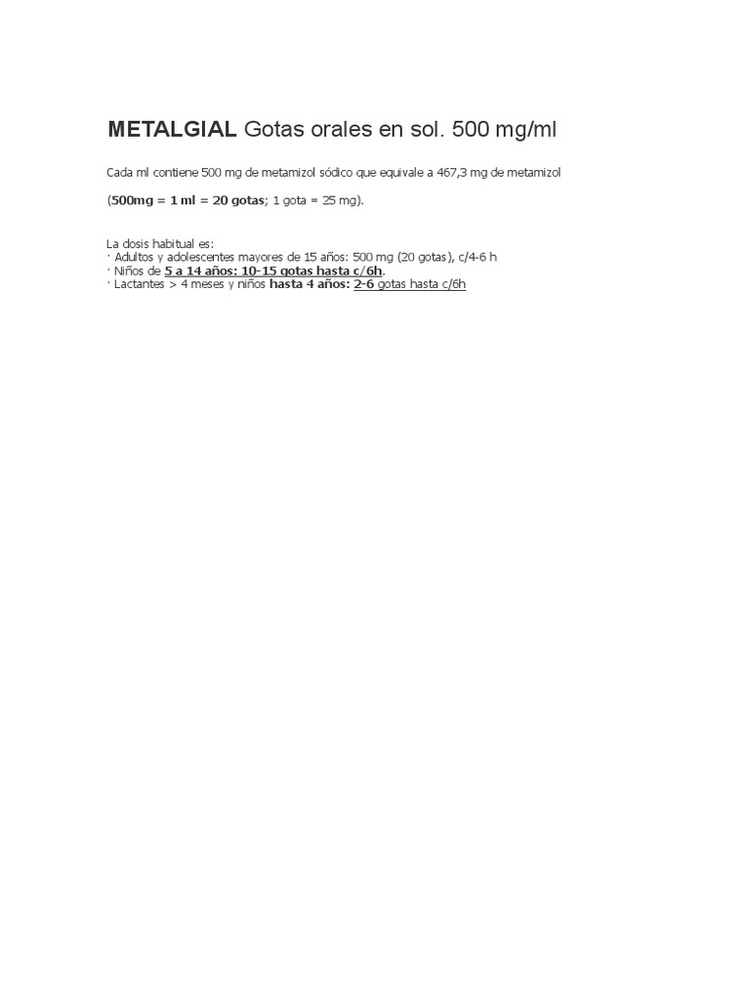
- Alternativas a METAMIZOL ARISTO 575 mg CAPSULAS EFGForma farmacéutica: SOLUCION/SUSPENSION GOTAS ORALES, 500 mg metamizol sodico/mlPrincipio activo: Metamizol sodicoFabricante: Laboratorios Ern S.A.Requiere recetaForma farmacéutica: CAPSULA, 575 mgPrincipio activo: Metamizol sodicoFabricante: Ababor Pharmaceuticals S.L.Requiere recetaForma farmacéutica: CAPSULA, 575 mgPrincipio activo: Metamizol sodicoFabricante: Industria Quimica Y Farmaceutica Vir S.A.Requiere receta

Médicos online para METAMIZOL ARISTO 575 mg CAPSULAS EFG
Comenta la dosis, los posibles efectos secundarios, interacciones, contraindicaciones o la revisión de receta de METAMIZOL ARISTO 575 mg CAPSULAS EFG, sujeto a valoración médica y a la normativa local.











Preguntas frecuentes
