


MEPIVACAINA NORMON 20 MG/ML SOLUCION INYECTABLE EFG



Cómo usar MEPIVACAINA NORMON 20 MG/ML SOLUCION INYECTABLE EFG
Traducción generada por IA
Este contenido ha sido traducido automáticamente y se ofrece solo con fines informativos. No sustituye la consulta con un profesional sanitario.
Ver originalContenido del prospecto
Introducción
Prospecto:información para el paciente
Mepivacaína Normon20 mg/mlsolución inyectable EFG
Mepivacaína hidrocloruro
Lea todo el prospecto detenidamente antes de empezar a usar este medicamento, porque contiene información importante para usted.
- Conserve este prospecto, ya que puede tener que volver a leerlo.
- Si tiene alguna duda, consulte a su médico, enfermero o farmacéutico.
- Si experimenta efectos adversos, consulte a su médico, enfermero o farmacéutico, incluso si se trata de efectos adversos que no aparecen en este prospecto. Ver sección 4.
Contenido del prospecto
- Qué es Mepivacaína Normon 20 mg/ml y para qué se utiliza
- Qué necesita saber antes de que le administren Mepivacaína Normon 20 mg/ml
- Cómo usar Mepivacaína Normon 20 mg/ml
- Posibles efectos adversos
- Conservación de Mepivacaína Normon 20 mg/ml
- Contenido del envase e información adicional
1. Qué es Mepivacaína Normon 20 mg/ml y para qué se utiliza
Mepivacaína Normon 20 mg/ml solución inyectable es un medicamento que pertenece al grupo de medicamentos denominados anestésicos locales y regionales de tipo amida.
Está indicada en:
- Bloqueo de nervios periféricos y plexos nerviosos
- Anestesia epidural y caudal
- Anestesia para cirugía oftálmica
Dependiendo de la cantidad utilizada, detendrá totalmente el dolor o provocará una pérdida parcial de la sensibilidad.
Se utiliza antes de la cirugía o de varios exámenes médicos para prevenir o aliviar el dolor en el área de su cuerpo donde se llevará a cabo el procedimiento.

2. Qué necesita saber antes de que le administren Mepivacaína Normon 20 mg/ml
No le deben administrar Mepivacaína Normon
- si es alérgico a la mepivacaína o a alguno de los demás componentes de este medicamento (incluidos en la sección 6);
- si es alérgico a otros anestésicos locales del mismo grupo (por ejemplo, la bupivacaína o la lidocaína);
- si padece defectos graves en la coagulación de la sangre;
- si padece enfermedad nerviosa degenerativa;
- si tiene problemas graves con la conducción del impulso del corazón u otros problemas cardíacos;
- si tiene epilepsia no controlada;
- si tiene incrementada la presión cerebral.
Advertencias y precauciones
Consulte a su médico o enfermero antes de que le administren Mepivacaína Normon:
- si tiene problemas graves con su ritmo cardiaco o tiene alguna enfermedad cardiaca;
- si padece enfermedad nerviosa degenerativa;
- si tiene edad avanzada;
- si presenta un mal estado general;
- si padece enfermedades hepáticas (hígado);
- si padece deterioro de la función renal (de los riñones);
- si padece enfermedad por estrechamiento de los vasos sanguíneos, arteriosclerosis (endurecimiento de las arterias);
- si podría estar en riesgo de hipertermia maligna (una complicación que incluye fiebre alta repentina, rigidez muscular e insuficiencia renal);
- si sufre de epilepsia;
- si presenta inflamación y/o infección en el lugar de inyección;
- si tiene una enfermedad de la sangre llamada porfiria.
La dosis que va a recibir se controlará cuidadosamente para evitar que la mepivacaína cause reacciones tóxicas en su corazón o sus nervios y cerebro.
Será observado cuidadosamente mientras se le administra la mepivacaína para detectar tan pronto como sea posible cualquier complicación que pueda afectar la función cardíaca, la circulación sanguínea o las funciones nerviosas y cerebrales, y darle cualquier tratamiento necesario en caso de que ocurran tales complicaciones.
Otros medicamentos y Mepivacaína Normon
Informe a su médico o enfermero si está utilizando, ha utilizado recientemente o pudiera tener que utilizar cualquier otro medicamento.
La administración de mepivacaína junto con los siguientes medicamentos puede hacer necesario modificar la dosis de alguno de ellos o la interrupción del tratamiento:
- analgésicos fuertes;
- otros anestésicos locales;
- algunos medicamentos que se utilizan para tratar las alteraciones del ritmo del corazón;
- anestésicos generales como el éter;
- medicamentos que producen vasoconstricción (reducción del diámetro de los vasos sanguíneos);
- heparina, medicamentos anticoagulantes (que impiden la coagulación de la sangre), antiinflamatorios no esteroideos y substitutivos del plasma (productos que se utilizan ante una pérdida de sangre). Su función de coagulación sanguínea se controlará cuidadosamente si está recibiendo alguno de estos medicamentos;
- inhibidores del citocromo PYP 1A2 (como ciprofloxacino enoxacino o fluvoxamina);
- medicamentos utilizados para tratar el ardor y úlceras de estómago e intestinos (como la cimetidina);
- propranolol.
La mepivacaína generalmente no se combina con otros anestésicos locales.
Uso en niños y ancianos
Los ancianos requieren dosis menores que los adultos jóvenes o de mediana edad.
No debe usarse en niños y adolescentes menores de 15 años.
Embarazo, lactancia y fertilidad
Si está embarazada o en periodo de lactancia, cree que podría estar embarazada o tiene intención de quedarse embarazada, consulte a su médico antes de que le administren este medicamento.
Durante el embarazo solo se le administrará mepivacaína tras una estricta consideración de las indicaciones y si su médico lo considera absolutamente necesario. Su médico tomará cualquier posible precaución para evitarle daños a usted o su hijo.
La mepivacaína no es un fármaco de preferencia en la anestesia epidural en obstetricia.
Se le administrará este medicamento durante la lactancia solo si su médico lo considera necesario. Si fuera necesaria dicha administración, la lactancia se debe interrumpir hasta 24 horas después de la finalización del tratamiento.
Conducción y uso de máquinas
Mepivacaína puede alterar temporalmente su capacidad de movimiento, atención y coordinación. Su médico le indicará si puede conducir o utilizar máquinas.
Mepivacaína Normon contiene sodio
Este medicamento contiene menos de 23 mg de sodio (1 mmol) por ampolla; esto es, esencialmente “exento de sodio”.
Uso en deportistas
Se informa a los deportistas que este medicamento contiene un componente que puede producir un resultado analítico de control de dopaje como positivo.
3. Cómo usar Mepivacaína Normon 20 mg/ml
Mepivacaína Normon está destinada a la administración epidural y perineural para el bloqueo de la conducción nerviosa y vías de administración para bloqueos peri y retrobulbar en cirugía oftalmológica.
Será administrada por personal sanitario únicamente y su médico determinará cuál es la dosis más adecuada para usted. Se debe utilizar siempre la dosis más pequeña requerida para producir la anestesia deseada. La dosificación debe ajustarse individualmente de acuerdo con la edad y peso del paciente así como a las particularidades de cada caso.
En pacientes con enfermedades del hígado, riñón, corazón, mal estado general y en ancianos, es necesario una precaución especial y un ajuste cuidadoso de la dosis.
Su médico le pedirá que hable con él/ella mientras le administra el medicamento para asegurarse de que está consciente.
Su presión arterial puede ser medida de vez en cuando.
Si se le administra más Mepivacaína Normon 20 mg/ml de la que se debe
La sobredosis puede provocar signos y síntomas de intoxicación. La gravedad de los signos y síntomas depende de la dosis administrada. Se puede observar lo siguiente:
- Síntomas en el Sistema nervioso central:
Intoxicación leve:
Hormigueo y entumecimiento en el área de la boca, sabor metálico, alteraciones de la audición y la visión, bostezos, ansiedad, inquietud, escalofríos, espasmos musculares, náuseas, vómitos, desorientación.
Intoxicación moderada:
Trastornos del habla, somnolencia, náuseas, vómitos, mareos, confusión, temblor, movimientos coreiformes, convulsiones, midriasis, taquipnea.
Intoxicación grave:
Vómitos (riesgo de asfixia), parálisis del esfínter, pérdida de tono muscular y reactividad, estupor, respiración irregular, parálisis respiratoria, coma, muerte.
- Síntomas en el sistema cardiovascular
Intoxicación leve:
Palpitaciones, hipertensión, taquicardia, taquipnea.
Intoxicación moderada:
Taquicardia, arritmias cardíacas, hipoxia, palidez.
Intoxicación grave:
Hipoxia y cianosis severas, insuficiencia cardíaca primaria, hipotensión, arritmias cardíacas (bradicardia, fibrilación auricular, asistolia).
En tales casos, recibirá el tratamiento necesario primero para normalizar y estabilizar las funciones de su corazón, circulación y respiración y seguidamente para controlar las convulsiones y otros síntomas nerviosos graves. Esto incluye administrar oxígeno y medicación adicional, principalmente para normalizar la función y circulación del corazón.
En caso de sobredosis o ingestión accidental, consulte inmediatamente a su médico, enfermero o farmacéutico o llame al Servicio de Información Toxicológica, teléfono: 91 562 04 20, indicando el producto y la cantidad recibida.

4. Posibles efectos adversos
Al igual que todos los medicamentos, este medicamento puede producir efectos adversos, aunque no todas las personas los sufran.
Frecuentes (pueden afectar hasta a 1 de cada 10 personas):
- Sensación de quemazón, pinchazos y hormigueo en la piel (parestesia) y vértigo.
- Ritmo cardiaco lento y anormal (bradicardia).
- Hipotensión.
- Hipertensión.
- Náuseas.
- Vómitos.
Poco frecuentes (pueden afectar hasta a 1 de cada 100 personas):
- Mareo (ligero aturdimiento).
- Temblor.
- Depresión del Sistema Nervioso Central.
- Pérdida de consciencia.
- Convulsiones (incluidas las crisis epilépticas).
- Trastornos del habla como dificultad para articular sonidos y palabras (disartria) y charlatanería excesiva (logorrea).
- Afectación visual
- Zumbido de oídos (acúfenos).
Raros (pueden afectar hasta a 1 de cada 1.000 personas):
- Reacciones anafilácticas /anafilactoides.
- Reacciones alérgicas.
- Dolor debido a la lesión en el nervio (neuropatía).
- Daño neural periférico.
- Aracnoiditis.
- Diplopía (parálisis de los músculos oculares).
- Paro cardíaco.
- Angina de pecho.
- Problemas de coordinación del latido cardíaco (bloqueo auriculoventricular).
- Arritmia cardiaca.
- Dificultad para respirar.
Frecuencia no conocida (la frecuencia no puede estimarse a partir de los datos disponibles):
- Euforia.
- Ansiedad/nerviosismo.
- Incapacidad del corazón para contraerse de forma efectiva (depresión miocárdica)
Efectos adversos debidos a errores de uso
Se puede producir una anestesia espinal extensa (total) mediante la inyección intratecal inadvertida durante la anestesia epidural planificada, como resultado del uso de un volumen demasiado grande o la colocación incorrecta del paciente (cuando se usan soluciones no isobáricas).
Los primeros signos son inquietud y somnolencia que pueden llevar a la pérdida del conocimiento y al paro respiratorio.
Comunicación de efectos adversos
Si experimenta cualquier tipo de efecto adverso, consulte a su médico o farmacéutico, incluso si se trata de posibles efectos adversos que no aparecen en este prospecto. También puede comunicarlos directamente a través del Sistema Español de Farmacovigilancia de Medicamentos de Uso Humano: http://www.notificaram.es. Mediante la comunicación de efectos adversos, usted puede contribuir a proporcionar más información sobre la seguridad de este medicamento.
5. Conservación de Mepivacaína Normon 20 mg/ml
Mantener este medicamento fuera de la vista y del alcance de los niños.
Este medicamento no requiere condiciones especiales de conservación.
No utilice este medicamento después de la fecha de caducidad que aparece en la caja después de CAD. La fecha de caducidad es el último día del mes que se indica.
Los medicamentos no se deben tirar por los desagües ni a la basura. Pregunte a su farmacéutico cómo deshacerse de los envases y de los medicamentos que ya no necesita. De esta forma, ayudará a proteger el medio ambiente.
6. Contenido del envase e información adicional
Composición deMepivacaína Normon20 mg/ml solución inyectable EFG
- El principio activo es hidrocloruro de mepivacaína. Cada ampolla de 10 ml contiene 200 mg de hidrocloruro de mepivacaína y cada ampolla de 2 ml contiene 40 mg de hidrocloruro de mepivacaína.
- Los demás componentes son: cloruro de sodio y agua para preparaciones inyectables.
Aspecto del producto y contenido del envase
Este medicamento es una solución transparente, incolora o prácticamente incolora.
La presentación comercial es una caja con 1 ampolla o con 100 ampollas de 10 ml o 2 ml de solución inyectable.
Titular de la autorización de comercialización y responsable de la fabricación
LABORATORIOS NORMON, S.A.
Ronda de Valdecarrizo, 6 – 28760 Tres Cantos – Madrid (ESPAÑA)
Fecha de la última revisión de este prospecto: abril 2023.
La información detallada de este medicamento está disponible en la página web de la Agencia Española de Medicamentos y Productos Sanitarios (AEMPS) http://www.aemps.gob.es.
--------------------------------------------------------------------------------------------------------------------
Esta información está destinada únicamente a profesionales sanitarios.
Mepivacaína Normon 20 mg/ml solo debe ser utilizada por médicos con experiencia en anestesia regional y en técnicas de reanimación o bajo su supervisión. Debe haber disponibles equipos de reanimación cuando se administren anestésicos locales. Debe administrarse la dosis más baja posible que produzca el efecto deseado. La dosis debe ajustarse individualmente a las particularidades de cada caso.
Posología
Se debe utilizar siempre la dosis más pequeña requerida para producir la anestesia deseada. La dosificación debe ajustarse individualmente de acuerdo con la edad y peso del paciente así como a las particularidades de cada caso.
Anestesia caudal y epidural, bloqueos nerviosos periféricos
La dosis no debe exceder de los 400 mg.
La dosis máxima diaria es de 1g.
Mepivacaína Normon 20 mg/ml solución inyectable puede administrarse de forma continua.
Para diferentes tipos de usos, se recomiendan las siguientes dosis:
Bloqueo del nervio ciático | 15 - 20 ml |
Bloqueo del plexo braquial | 3 - 5 ml |
Cirugía oftalmológica | |
| 3 ml |
| 5 - 7,5 ml |
Anestesia epidural para cirugía | 5 - 15 ml |
Anestesia caudal | 10 - 20 ml |
Para obtener más detalles sobre las dosis que se aplicarán para anestesiar nervios específicos o para técnicas anestésicas específicas, consulte los libros de texto estándar.
Pacientes de edad avanzada
Puede ser necesario aplicar dosis más bajas para pacientes de edad avanzada o aquellos en mal estado general.
Población pediátrica
Las dosis para adolescentes a partir de 15 años son las indicadas anteriormente para adultos.
No está indicado para menores de 15 años.
Insuficiencia hepática
En pacientes con insuficiencia hepática no es necesaria una reducción de la dosis para la anestesia quirúrgica.
Cuando se usan bloqueos prolongados, por ejemplo, mediante administración repetida, las dosis repetidas de mepivacaína deben reducirse en un 50% en pacientes con enfermedad hepática de grado C (clasificación de Child-Pugh) y la dosis total en 24 horas no debe exceder de 750 mg de mepivacaína.
Insuficiencia renal
No es necesaria una reducción de la dosis para la anestesia quirúrgica hasta las 24 h en pacientes con disfunción renal.
Administración
- Vía perineural, epidural para bloqueo de la conducción nerviosa.
- Cirugía oftalmológica: vías de administración para bloqueos peri y retrobulbar.
La anestesia local no debe ser inyectada en zonas infectadas.
Antes de la inyección debe asegurarse que la aguja no está situada intravasalmente.La inyección debe efectuarse de forma lenta y fraccionada.
Normas básicas a seguir:
- Elegir la menor dosificación posible.
- Utilizar una aguja de la dimensión apropiada.
- Inyectar lentamente con varias aspiraciones en dos planos (rotar la aguja 180º). Se debe tener mucho cuidado para evitar la inyección intravascular accidental. Es esencial realizar una aspiración cuidadosa.
- Controlar la presión sanguínea.
- Tener en cuenta la premedicación. La premedicación debería incluir la administración profiláctica de atropina y, en función de las cantidades convenientes de anestésico local a inyectar, un barbitúrico de acción corta.
- Si es necesario, suspender la administración de anticoagulantes antes de la administración del anestésico local.
- Observar las contraindicaciones generales y específicas para los diversos métodos de anestesia local o regional.
Para la administración epidural continua deben utilizarse soluciones de mepivacaína más diluidas.
Para la anestesia epidural, se debe administrar una dosis de prueba, que consiste en 3 - 4 ml de un anestésico local con adrenalina añadida (1: 200 000) antes de la dosis completa, debido a que una inyección intravascular de adrenalina es rápidamente reconocida debido al aumento de la frecuencia cardíaca. La frecuencia cardíaca debe medirse repetidamente hasta 5 minutos después de la administración de la dosis de prueba.
Debe mantenerse el contacto verbal con el paciente y el ritmo cardíaco debe ser medido repetidamente hasta 5 minutos después de la administración de la dosis de prueba. Debe repetirse la aspiración antes de administrar la dosis principal. La dosis principal debe inyectarse lentamente y, especialmente al incrementar la dosis, mantener contacto constante con el paciente. La administración debe interrumpirse inmediatamente a los primeros síntomas de toxicidad.
Antes de administrar un anestésico local debe asegurarse que el equipo necesario para la reanimación, p. ej. fuente de oxígeno, material para mantener libre el tracto respiratorio y medicación de emergencia para el tratamiento de las reacciones tóxicas, está disponible de forma inmediata.
- País de registro
- Forma farmacéuticaINYECTABLE, 20 mg/ml
- Código ATCN01BB03
- Principio activo
- Requiere recetaSí
- Fabricante
- Esta información es de carácter general y no sustituye la consulta con un profesional sanitario.
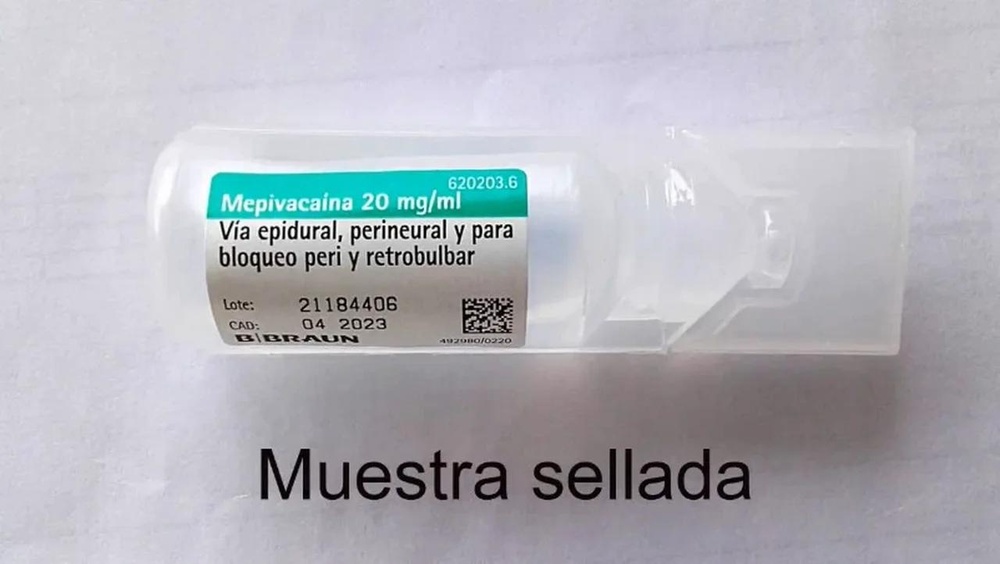
- Alternativas a MEPIVACAINA NORMON 20 MG/ML SOLUCION INYECTABLE EFGForma farmacéutica: INYECTABLE, 54 mgPrincipio activo: mepivacaineFabricante: Laboratorios Clarben S.A.Requiere recetaForma farmacéutica: INYECTABLE, 10 mg/mlPrincipio activo: mepivacaineFabricante: B Braun Medical S.A.Requiere recetaForma farmacéutica: INYECTABLE, 20 mg/mlPrincipio activo: mepivacaineFabricante: B Braun Medical S.A.Requiere receta

Médicos online para MEPIVACAINA NORMON 20 MG/ML SOLUCION INYECTABLE EFG
Comenta la dosis, los posibles efectos secundarios, interacciones, contraindicaciones o la revisión de receta de MEPIVACAINA NORMON 20 MG/ML SOLUCION INYECTABLE EFG, sujeto a valoración médica y a la normativa local.











Preguntas frecuentes
