



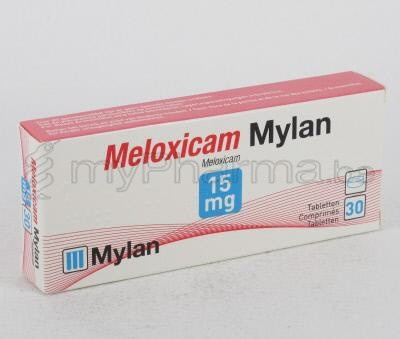
MELOXICAM 15 mg Comprimidos

Revisión de receta online
Un médico revisará tu caso y determinará si la prescripción es médicamente apropiada.

Habla con un médico sobre este medicamento
Comenta tus síntomas y las opciones de tratamiento en una consulta online.



Cómo usar MELOXICAM MYLAN 15 mg COMPRIMIDOS EFG
Contenido del prospecto
- Introducción
- Qué es Meloxicam Mylan y para qué se utiliza
- Qué necesita saber antes de empezar a tomar Meloxicam Mylan
- Cómo tomar Meloxicam Mylan
- Posibles efectos adversos
- Conservación de Meloxicam Mylan
- Contenido del envase e información adicional
Introducción
Prospecto: información para el paciente
Meloxicam Mylan 15 mg comprimidos EFG
Lea todo el prospecto detenidamente antes de empezar a tomar este medicamento, porque contiene información importante para usted.
- Conserve este prospecto, ya que puede tener que volver a leerlo.
- Si tiene alguna duda, consulte a su médico o farmacéutico.
- Este medicamento se le ha recetado solamente a usted y no debe dárselo a otras personas, aunque tengan los mismos síntomas que usted, ya que puede perjudicarles.
- Si experimenta efectos adversos, consulte a su médico o farmacéutico, incluso si se trata de efectos adversos que no aparecen en este prospecto. Ver sección 4.
Contenido del prospecto:
- Qué es Meloxicam Mylan y para qué se utiliza
- Qué necesita saber antes de empezar a tomar Meloxicam Mylan
- Cómo tomar Meloxicam Mylan
- Posibles efectos adversos
- Conservación de Meloxicam Mylan
- Contenido del envase e información adicional

¿No estás seguro de si este medicamento es adecuado para ti?
Comenta tus síntomas y tratamiento con un médico online.
1. Qué es Meloxicam Mylan y para qué se utiliza
Meloxicam Mylan contiene el principio activo meloxicam. Meloxicam pertenece al grupo de medicamentos denominados antiinflamatorios no esteroideos (AINEs) utilizados para tratar el dolor y la inflamación en músculos y articulaciones.
Meloxicam Mylan está indicado en adultos y adolescentes mayores de 16 años para:
- Tratamiento de corta duración de las crisis agudas de artrosis (enfermedad de las articulaciones).
- Tratamiento a largo plazo del dolor relacionado con la artritis reumatoide (inflamación de las articulaciones).
- Tratamiento a largo plazo de una enfermedad parecida llamada espondilitis anquilosante (inflamación de la columna).
2. Qué necesita saber antes de empezar a tomar Meloxicam Mylan
No tome Meloxicam Mylan:
- Durante el último trimestre del embarazo.
- Si es un niño o adolescente menor de 16 años.
- Si es alérgico a meloxicam o a cualquiera de los demás componentes de este medicamento (incluidos en la sección 6).
- Si es alérgico al ácido acetilsalicílico (por ejemplo, aspirina) o a otros medicamentos antiinflamatorios no esteroideos (AINEs).
- Si tiene antecedentes de sibilancias, opresión torácica, falta de aire (asma), bloqueo nasal debido a la inflamación de la parte interna de la nariz (pólipos nasales), hinchazón alrededor de los ojos, cara, labios, boca o garganta que conlleva dificultad para respirar (edema angioneurótico) o picor (urticaria) tras tomar ácido acetilsalicílico u otros medicamentos antiinflamatorios no esteroideos (AINEs).
- Si actualmente tiene una hemorragia en el estómago o el intestino.
- Si tiene o ha tenido dos o más episodios de úlceras o sangrado en el estómago o intestino.Si alguna vez ha tenido hemorragias o desgarros (perforaciones) en el estómago o el intestino tras el uso de un AINE.
- Si tiene o ha tenido un trastorno hemorrágico o una hemorragia cerebral (hemorragia cerebrovascular).
- Si tiene problemas graves del hígado.
- Si tiene problemas graves del riñón y no está recibiendo diálisis.
- Si tiene una enfermedad grave del corazón.
Advertencias y precauciones
Consulte a su médico o farmacéutico antes de empezar a tomar Meloxicam Mylan:
- Si ha experimentado alguna vez un exantema fijo medicamentoso (placas redondeadas u ovaladas con enrojecimiento e hinchazón de la piel que suelen reaparecer en el mismo sitio, formación de ampollas, urticaria y picazón) después de tomar meloxicam u otros oxicámicos (por ejemplo, piroxicam).
- Si ha tenido previamente una inflamación del esófago (esofagitis); inflamación del revestimiento del estómago (gastritis) y/o úlceras de estómago, ya que su médico deberá comprobar que ya no tiene ninguna de estas enfermedades antes de que inicie el tratamiento.
- Si tiene antecedentes de problemas de estómago o intestino (como colitis ulcerosa o enfermedad de Crohn).
- Si es una persona de edad avanzada (debido al incremento de los efectos adversos).
- Si tiene un volumen sanguíneo muy bajo (es posible que haya tenido una gran pérdida de sangre, sometido a cirugía o una baja ingesta de líquidos).
- Si tiene otros problemas de riñón, hígado o corazón.
- Si sus niveles de potasio en sangre son elevados.
- Si está intentando quedarse embarazada o están analizando su fertilidad.
Los medicamentos como meloxicam se pueden asociar con un moderado aumento del riesgo de sufrir ataques cardíacos (“infartos de miocardio”) o cerebrales. Cualquier riesgo es mayor a dosis altas y tratamiento prolongado. No exceda la dosis ni la duración del tratamiento recomendado.
Si tiene problemas cardiacos (incluyendo angina o circulación reducida), antecedentes de ataques cerebrales, o piensa que podría tener riesgo de sufrir estas patologías (por ejemplo, tiene la tensión arterial alta, diabetes, colesterol alto, o es fumador), debe consultar este tratamiento con su médico o farmacéutico.
Se han descrito erupciones cutáneas que pueden amenazar la vida del paciente (síndrome de Stevens Johnson y necrólisis epidérmica tóxica) con el uso de meloxicam, que aparecen inicialmente como puntos o manchas circulares rojizas, a menudo con una ampolla central. Otros signos adicionales que pueden aparecer son llagas en la boca, garganta, nariz, genitales y conjuntivitis (ojos hinchados y rojos).
Estas erupciones en la piel que pueden amenazar la vida del paciente, a menudo van acompañadas de síntomas de gripe. La erupción puede progresar a la formación de ampollas generalizadas o descamación de la piel. El periodo de mayor riesgo de aparición de reacciones cutáneas graves es durante las primeras semanas de tratamiento.
Si ha desarrollado síndrome de Stevens Johnson o necrólisis epidérmica tóxica con el uso de meloxicam, no debe utilizar meloxicam de nuevo en ningún momento. Si desarrolla erupciones o estos síntomas en la piel deje de tomar meloxicam, acuda inmediatamente a un médico e infórmele de que está tomando este medicamento.
Durante el tratamiento
Hable con su médico inmediatamente si aparecen problemas estomacales o intestinales (especialmente, hemorragia) durante los primeros días tras iniciar la toma de meloxicam. Esto puede ocurrir si ha padecido problemas intestinales o si es una persona de edad avanzada. Puede detectarse una hemorragia intestinal si las heces tienen color negro similares al alquitrán o si se siente enfermo, puede contener partículas sanguíneas rojas u oscuras, que parecen granos de café (ver sección 4).
Este medicamento puede afectar los resultados de ciertos análisis de sangre u orina. Informe a su médico o al personal del hospital que está tomando este medicamento si tiene que hacerse pruebas.
Este medicamento puede enmascarar los síntomas de ciertas infecciones. Por ejemplo, puede enmascarar la fiebre. Si no se siente bien y cree que puede tener una infección, hable con su médico.
Otros medicamentos y Meloxicam Mylan
Comunique a su médico o farmacéutico si está tomando, ha tomado recientemente o podría tener que tomar cualquier otro medicamento, incluso los adquiridos sin receta médica. Los siguientes medicamentos pueden afectar o verse afectados por meloxicam:
- Anticoagulantes (medicamentos utilizados para detener la coagulación de la sangre) como warfarina, heparina, clopidogrel, dabigatrán, apixaban y ticlopidina, ya que meloxicam puede aumentar su efecto o que la probabilidad de hemorragia sea mayor.
- Otros medicamentos antiinflamatorios no esteroideos (AINEs) como ácido acetilsalicílico (aspirina) o medicamentos conocidos como "inhibidores de la COX-2" como celecoxib.
- Litio (medicamento utilizado para trastornos mentales).
- Metotrexato (medicamento utilizado para la psoriasis, la inflamación y algunos cánceres).
- Trombolíticos (medicamentos utilizados para disolver coágulos en enfermedades del corazón).
- Colestiramina (medicamento utilizado para reducir los niveles de colesterol en sangre).
- Inhibidores de la calcineurina (medicamentos utilizados para tratar enfermedades autoinmunitarias como la artritis reumatoide o utilizados tras un trasplante de órgano) como ciclosporina o tacrolimus.
- Diuréticos (para aumentar la eliminación de orina).
- Medicamentos destinados a disminuir la presión arterial, llamados inhibidores de la ECA, antagonistas de la angiotensina II (sartanes) o betabloqueantes.
- Corticosteroides (para el asma, inflamaciones y después de la cirugía de trasplante de órganos), ya que es posible que la probabilidad de padecer úlceras o hemorragias sea mayor.
- Inhibidores selectivos de la recaptación de la serotonina (ISRS) (medicamentos utilizados para la depresión).
- Pemetrexed, medicamento utilizado para tratar ciertos tipos de cáncer. Es posible que tenga que dejar de tomar este medicamento durante al menos 5 días antes, durante y 2 días después de recibir pemetrexed.
- Medicamentos que pueden aumentar los niveles de potasio en la sangre. Esto incluye sales de potasio o suplementos, ciertos diuréticos (por ejemplo, espironolactona) o el antibiótico trimetoprima.
- Deferasirox, medicamento utilizado para reducir los niveles de hierro en el organismo.
- Antidiabéticos orales (sulfonilureas y nateglinida). Medicamentos utilizados para tratar la diabetes. Su médico debe controlar cuidadosamente su glucemia para determinar el riesgo de hipoglucemia.
Embarazo, lactancia y fertilidad
Embarazo
No tome este medicamento durante el último trimestre de embarazo, ya que puede dañar al feto o provocar complicaciones durante el parto. Puede causar problemas cardíacos y renales en el feto. También puede afectar a la tendencia de sangrado del bebé o provocar un retraso del parto o un parto prolongado. No debe tomar Meloxicam Mylan durante los 6 primeros meses del embarazo, a no ser que sea absolutamente necesario y se lo haya recomendado su médico.
Si necesita tratamiento durante este periodo o mientras está intentando quedarse embarazada, se debe administrar la dosis más baja durante el tiempo más corto posible. Si se toma más de unos pocos días a las 20 semanas del embarazo y en adelante, Meloxicam Mylan puede provocar problemas renales en el feto, lo que conllevaría niveles bajos del líquido amniótico que rodea al bebé (oligohidramnios) o estrechamiento de los vasos sanguíneos (conducto arterioso) del corazón del bebé. Si necesita administrarse el tratamiento durante más de unos pocos días, puede que su médico le recomiende una monitorización adicional
Lactancia
Los AINEs pueden pasar a la leche materna. No debe dar el pecho mientras esté tomando este medicamento.
Fertilidad
Puede resultar más complicado quedarse embarazada con este medicamento. Hable con su médico si está pensando en quedarse embarazada o si le están investigando su fertilidad.
Conducción y uso de máquinas
Meloxicam puede producir efectos adversos que pueden afectar a la capacidad de conducir y utilizar maquinaria. Algunos ejemplos de estos efectos incluyen trastornos visuales como visión borrosa, somnolencia, mareos, una sensación giratoria (vértigo) y otros problemas que afectan al cerebro. En caso de sufrir alguno de estos efectos es recomendable abstenerse de conducir o utilizar maquinaria.
Meloxicam Mylan contiene lactosa
Este medicamento contiene lactosa. Si su médico le ha indicado que padece una intolerancia a ciertos azúcares, consulte con él antes de tomar este medicamento.
Este medicamento contiene menos de 1 mmol de sodio (23 mg) por comprimido, eso es, esencialmente “exento de sodio”.

¿Has empezado a tomar el medicamento y tienes preguntas?
Comenta tus síntomas y tratamiento con un médico online.
3. Cómo tomar Meloxicam Mylan
Siga exactamente las instrucciones de administración de este medicamento indicadas por su médico o farmacéutico. Consulte a su médico o farmacéutico si tiene dudas.
Su médico le dará la dosis más baja posible, durante el periodo de tiempo más corto posible, para tratar sus síntomas. Si no mejora o si sufre algún efecto adverso, dígaselo a su médico. Su médico controlará su estado y tratamiento.
Uso en adultos y adolescentes mayores de 16 años
Crisis agudas de artrosis:La dosis recomendada es 7,5 mg por día. Su médico puede incrementar esta dosis a 15 mg una vez al día si no se han observado mejoras.
Tratamiento de la artritis reumatoide o la espondilitis anquilosante:La dosis recomendada es de 15 mg al día.
Su médico puede reducir su dosis hasta 7,5 mg al día si sus síntomas mejoran.
Nunca debe excederse una dosis de 15 mg al día.
Disminución de la función del riñón e hígado:
En pacientes sometidos a diálisis con insuficiencia renal grave, la dosis no debe exceder de 7,5 mg al día.
A los pacientes con problemas de riñón o hepáticos que no sean graves se les pueden administrar las dosis recomendadas normales para adultos, según se describe más arriba.
No se recomienda el uso de meloxicam en pacientes con insuficiencia renal grave que no estén sometidos a diálisis o con insuficiencia hepática grave.
Uso en pacientes de edad avanzada
Si es una persona de edad avanzada, su médico puede recomendarle una dosis más baja. La dosis recomendada para el tratamiento de la artritis reumatoide y la espondilitis anquilosante es de 7,5 mg al día.
Uso en niños y adolescentes
Los niños y adolescentes menores de 16 años no deben tomar meloxicam.
Tome meloxicam en forma de una dosis oral única con agua u otros líquidos durante una comida.
Para comprimidos de 7.5 mg: La línea ranurada sirve únicamente para partir el comprimido si le resulta difícil tragarlo entero.
Para comprimidos de 15 mg: El comprimido se puede partir en dos dosis iguales.
Si toma más Meloxicam Mylan del que debe
Si ha tomado más meloxicam del que debe, consulte inmediatamente a su médico, llame al Servicio de Información Toxicológica, teléfono 91 562 04 20 o vaya a urgencias del hospital más cercano. Lleve este prospecto y los comprimidos que todavía conserve. Puede padecer una reacción alérgica (ver sección 4) o sentirse débil, somnoliento, malestar (náuseas) o vómitos, padecer dolores de estómago o hemorragia del estómago o del intestino. Los efectos más graves pueden ser presión arterial elevada, insuficiencia renal, problemas hepáticos, problemas respiratorios, coma, ataques (convulsiones) o problemas cardíacos.
Si olvidó tomar Meloxicam Mylan
Si olvidó tomar una dosis, tómela tan pronto como lo recuerde, a menos que falte poco para la próxima dosis. No tome una dosis doble para compensar las dosis olvidadas.
Si interrumpe el tratamiento con Meloxicam Mylan
No deje de tomar el medicamento sin comunicárselo a su médico.
Si tiene cualquier otra duda sobre el uso de este medicamento, pregunte a su médico o farmacéutico.
4. Posibles efectos adversos
Al igual que todos los medicamentos, este medicamento puede tener efectos adversos, aunque no todas las personas los sufran.
Deje de tomar este medicamento y póngase inmediatamente en contacto con su médico o diríjase a urgencias del hospital más cercano, si presenta alguno de estosefectos:
Poco frecuentes(pueden afectar hasta 1 de cada 100 personas)
- Reacciones en la piel como sarpullido con picazón o hinchazón de la cara, ojos, boca, labios, lengua o garganta, que pueden dificultar la deglución o la respiración.
- Hemorragia estomacal o intestinal, que puede detectarse al observar sangre en las heces, heces negras parecidas al alquitrán o si se siente enfermo, pueden contener partículas sanguíneas rojas u oscuras que parecen granos de café.
Raros(pueden afectar hasta 1 de cada 1.000 personas)
- Un aumento de las infecciones, que pueden observarse como fiebre, escalofríos intensos, dolor de garganta o úlceras bucales (esto puede indicar que tiene un número bajo de glóbulos blancos).
- Reacciones cutáneas potencialmente mortales como amplias zonas de piel enrojecida, con ampollas o descamación y sangrado de labios, genitales, ojos o boca (estos pueden incluir síndrome de Stevens-Johnson o necrólisis epidérmica tóxica).
- Reacción cutánea con picazón de color rojo (ronchas).
- Una úlcera en el estómago o el intestino. Puede notar una hinchazón del estómago, ardor doloroso o sensibilidad en el área del estómago o del intestino, pérdida de apetito, sensación de mareo (náuseas) con o sin vómitos. También puede notar sangrado del estómago o el intestino.
Muy raros(pueden afectar hasta 1 de cada 10.000 personas)
- Coloración amarillenta de la piel o del blanco de los ojos, orina oscura, heces de color blanquecino y sensación de malestar general (esto puede indicar que tiene problemas graves en el hígado).
- Producción de orina escasa o nula, dolor o dificultad al orinar, orina turbia u oscura, sangre en la orina o lumbalgia (pueden indicar problemas graves renales, que se observan en pacientes con factores de riesgo como bajo volumen sanguíneo, edad avanzada y problemas cardíacos, renales o hepáticos graves).
- Un desgarro en el estómago o el intestino. Es posible que tenga dolor severo o hemorragia en el estómago o el intestino.
- Una reducción drástica de glóbulos blancos en sangre. Puede notar un aumento de infecciones.
- Una erupción extensa como el sarampión en todo el cuerpo.
- Ampollas que se forman entre las capas de la piel, generalmente en las piernas y los brazos, que pueden estallar.
Los medicamentos como meloxicam pueden estar asociados con un pequeño aumento del riesgo de ataque al corazón o un derrame cerebral.
- Si tiene dolor severo en el pecho, que puede repercutir en la mandíbula y el brazo, se siente sudoroso o tiene dificultad para respirar, estos pueden ser signos de un ataque al corazón.
- Si tiene entumecimiento o debilidad en un lado del cuerpo, nota que uno de los lados de la cara se le cae, tienen problemas para hablar o visión borrosa o pérdida de la visión, estos pueden ser signos de un derrame cerebral.
Frecuencia no conocida(no puede estimarse a partir de los datos disponibles)
- Reacciones alérgicas graves, que pueden causar picazón en la piel, erupción cutánea roja, inflamación de la cara, ojos, boca, labios, lengua o garganta, que puede causar dificultad al tragar o respirar, sensación de desmayo o mareos, sibilancias, colapso o pérdida de la conciencia.
- Una reacción alérgica cutánea característica conocida como exantema fijo medicamentoso, que suele reaparecer en el mismo sitio en caso de reexposición al medicamento y que puede aparecer como placas redondeadas u ovaladas con enrojecimiento e hinchazón de la piel, formación de ampollas (urticaria) y picazón.
Otros efectos adversos son:
Muy frecuentes(pueden afectar a más de 1 de cada 10 personas)
- Indigestión.
- Náuseas (sentirse enfermo).
- Vómitos (estar enfermo).
- Dolor de estómago.
- Estreñimiento.
- Gases.
- Diarrea.
Frecuentes (pueden afectar hasta 1 de cada 10 personas)
- Dolor de cabeza.
Poco frecuentes (pueden afectar hasta 1 de cada 100 personas)
- Palidez con dolor de cabeza, dificultad para respirar a la hora de practicar ejercicio o sentirse anormalmente cansado (pueden indicar un número bajo de glóbulos rojos).
- Otras reacciones alérgicas, que pueden causar estornudos y picazón en los ojos.
- Mareo.
- Una sensación giratoria (vértigo).
- Somnolencia.
- Aumento de la tensión arterial.
- Sensación de rubor.
- Inflamación de estómago o el intestino.
- Eructos.
- Niveles elevados de potasio o sodio en sangre.
- Llagas en la boca.
- Alteraciones en la función renal o hepática, detectadas en un análisis de sangre.
- Hinchazón (retención de líquidos), especialmente, de los pies o los tobillos.
- Erupción.
Raros (pueden afectar hasta 1 de cada 1.000 personas)
- Cardenales sin causa aparente o hemorragias que duran más de lo habitual (pueden indicar una cifra baja de plaquetas en la sangre).
- Alteraciones en la sangre, detectadas en un análisis de sangre.
- Alteraciones del estado de ánimo.
- Pesadillas.
- Zumbido de oídos.
- Latidos cardíacos rápidos, que se perciben como punzantes en el tórax (palpitaciones).
- Problemas de visión como visión borrosa o lagrimeo, picor ocular (conjuntivitis).
- Opresión torácica, dificultad para respirar o sibilancias (es posible que padezca asma, en especial si es alérgico a otros AINEs como el ácido acetilsalicílico).
- Acidez, puede ser un signo de que padece una inflamación del esófago (esofagitis).
- Inflamación del intestino grueso, que puede causar dolor, calambres y diarrea.
Frecuencia no conocida(no puede estimarse a partir de los datos disponibles)
- Sensibilidad de la piel a la luz, quemadura solar con mayor facilidad.
- Confusión.
- Desorientación.
- Pancreatitis (inflamación del páncreas).
- Esterilidad femenina, retraso en la ovulación.
Otros efectos adversos observados en otros fármacos antiinflamatorios no esteroideos (AINEs), pero que todavía no se han observado con meloxicam:
- Insuficiencia cardíaca.
- Otros problemas renales graves.
Comunicación de efectos adversos:
Si experimenta cualquier tipo de efecto adverso, consulte a su médico o farmacéutico, incluso si se trata de posibles efectos adversos que no aparecen en este prospecto. También puede comunicarlos directamente a través del Sistema Español de Farmacovigilancia de Medicamentos de Uso Humano: https://www.notificaram.es. Mediante la comunicación de efectos adversos usted puede contribuir a proporcionar más información sobre la seguridad de este medicamento.
5. Conservación de Meloxicam Mylan
Mantener este medicamento fuera de la vista y del alcance de los niños.
No tome este medicamento después de la fecha de caducidad que aparece en el blíster y el estuche después de CAD o EXP. La fecha de caducidad es el último día del mes que se indica.
Conservar en el envase original.
Los medicamentos no se deben tirar por los desagües ni a la basura. Deposite los envases y los medicamentos que no necesita en el Punto SIGRE de la farmacia. En caso de duda pregunte a su farmacéutico cómo deshacerse de los envases y de los medicamentos que no necesita. De esta forma ayudará a proteger el medio ambiente.
6. Contenido del envase e información adicional
Composición de Meloxicam Mylan
- El principio activo es meloxicam. Cada comprimido contiene 15 mg de meloxicam.
- Los demás componentes son celulosa microcristalina, almidón de maíz pregelatinizado, lactosa monohidrato, almidón de maíz, citrato de sodio, sílice coloidal anhidra y estearato de magnesio.
Aspecto del producto y contenido del envase
Comprimidos redondos y planos de color amarillo pálido, con línea de rotura en una cara.
Blísteres de PVC/PVdC/Al de 7, 10, 14, 15, 20, 28, 30, 50, 60, 100, 140, 280, 300, 500 o 1000 comprimidos. Puede que solamente estén comercializados algunos tamaños de envases.
Titular de la autorización de comercialización y responsable de la fabricación
Titular de la autorización de comercialización:
Mylan Pharmaceuticals, S.L.
C/ Plom, 2-4, 5ª planta
08038 - Barcelona
España
Responsable de la fabricación:
McDermott Laboratories Ltd. t/a Gerard Laboratories
35/36 Baldoyle Industrial Estate. Grange Road, 13
Dublín
Irlanda
O
Chanelle Medical Limited
IDA Ind Estate, Loughrea, Co. Galway
Irlanda
O
Mylan Hungary Kft./Mylan Hungary Ltd.
Mylan utca 1.
Komárom, 2900
Hungría
Este medicamento está autorizado en los países miembros del Espacio Económico Europeo con los siguientes nombres:
EspañaMeloxicam Mylan 15 mg comprimidos EFG
IrlandaAreloger
PortugalMeloxicam Mylan
Fecha de la última revisión de este prospecto:julio 2023
La información detallada de este medicamento está disponible en la página web de la Agencia Española de Medicamentos y Productos Sanitarios (AEMPS) https://www.aemps.gob.es/
- País de registro
- Forma farmacéuticaCOMPRIMIDO, 15 mg
- Código ATCM01AC06
- Precio medio en farmacia2.54 EUR
- Principio activo
- Requiere recetaSí
- Fabricante
- ComposiciónLACTOSA HIDRATADA (86,00 mg mg), CITRATO DE SODIO (E-331) (20,00 mg mg)
- Esta información es de carácter general y no sustituye la consulta con un profesional sanitario.
- Alternativas a MELOXICAM MYLAN 15 mg COMPRIMIDOS EFGForma farmacéutica: COMPRIMIDO, 15 mgPrincipio activo: meloxicamFabricante: Laboratorios Cinfa S.A.Requiere recetaForma farmacéutica: COMPRIMIDO, 7,5 mgPrincipio activo: meloxicamFabricante: Laboratorios Cinfa S.A.Requiere recetaForma farmacéutica: COMPRIMIDO, 15 mgPrincipio activo: meloxicamFabricante: Laboratorios Normon S.A.Requiere receta
Médicos online para MELOXICAM MYLAN 15 mg COMPRIMIDOS EFG
Comenta la dosis, los posibles efectos secundarios, interacciones, contraindicaciones o la revisión de receta de MELOXICAM MYLAN 15 mg COMPRIMIDOS EFG, sujeto a valoración médica y a la normativa local.









Obtén una receta de MELOXICAM MYLAN 15 mg COMPRIMIDOS EFG online
Rellena un formulario de 2 minutos
Cuéntanos tus síntomas, historial y el medicamento que necesitas.
Elige un médico o nosotros te asignamos uno
Escoge un especialista o te conectamos con el próximo médico disponible.
El médico revisa tu caso
Normalmente en 30 minutos. Puede hacerte preguntas adicionales por chat.
Recógela en cualquier farmacia
Receta electrónica enviada a tu correo, válida en toda España.
Preguntas frecuentes
MELOXICAM MYLAN 15 mg COMPRIMIDOS EFG requiere receta en España. Puedes confirmarlo con un médico online según tu caso.
El principio activo de MELOXICAM MYLAN 15 mg COMPRIMIDOS EFG es meloxicam. Esta información ayuda a identificar medicamentos con la misma composición pero con diferentes nombres comerciales.
El precio medio en farmacia de MELOXICAM MYLAN 15 mg COMPRIMIDOS EFG es de aproximadamente 2.54 EUR. Puede variar según el fabricante y la forma farmacéutica.
MELOXICAM MYLAN 15 mg COMPRIMIDOS EFG es fabricado por Mylan Pharmaceuticals S.L.. La marca y el envase pueden variar según el distribuidor.
Los Médicos de familia, Psiquiatras, Dermatólogos, Cardiólogos, Endocrinólogos, Gastroenterólogos, Neumólogos, Nefrólogos, Reumatólogos, Hematólogos, Infectólogos, Alergólogos, Geriatras, Pediatras, Oncólogos pueden valorar la prescripción de MELOXICAM MYLAN 15 mg COMPRIMIDOS EFG cuando esté clínicamente indicado. Puedes reservar una videoconsulta para comentar tu caso y las opciones de tratamiento.
España cuenta con una infraestructura sanitaria bien desarrollada en ciudades principales como Madrid, Barcelona, Valencia y Sevilla. Las farmacias están ampliamente disponibles y operan bajo estrictas regulaciones, garantizando el acceso a medicamentos con receta.
Puedes comprar MELOXICAM MYLAN 15 mg COMPRIMIDOS EFG en Madrid, Barcelona, Sevilla o Valencia en cualquier farmacia local con una receta válida.
Para obtener una receta, puedes utilizar Oladoctor:
Otros medicamentos con el mismo principio activo (meloxicam) incluyen MELOXICAM CINFA 15 mg COMPRIMIDOS EFG, MELOXICAM CINFA 7,5 mg COMPRIMIDOS EFG, MELOXICAM NORMON 15 mg COMPRIMIDOS EFG. Pueden tener diferentes nombres comerciales o formulaciones, pero contienen el mismo componente terapéutico. Consulta siempre con un médico antes de cambiar o iniciar un nuevo medicamento.
