



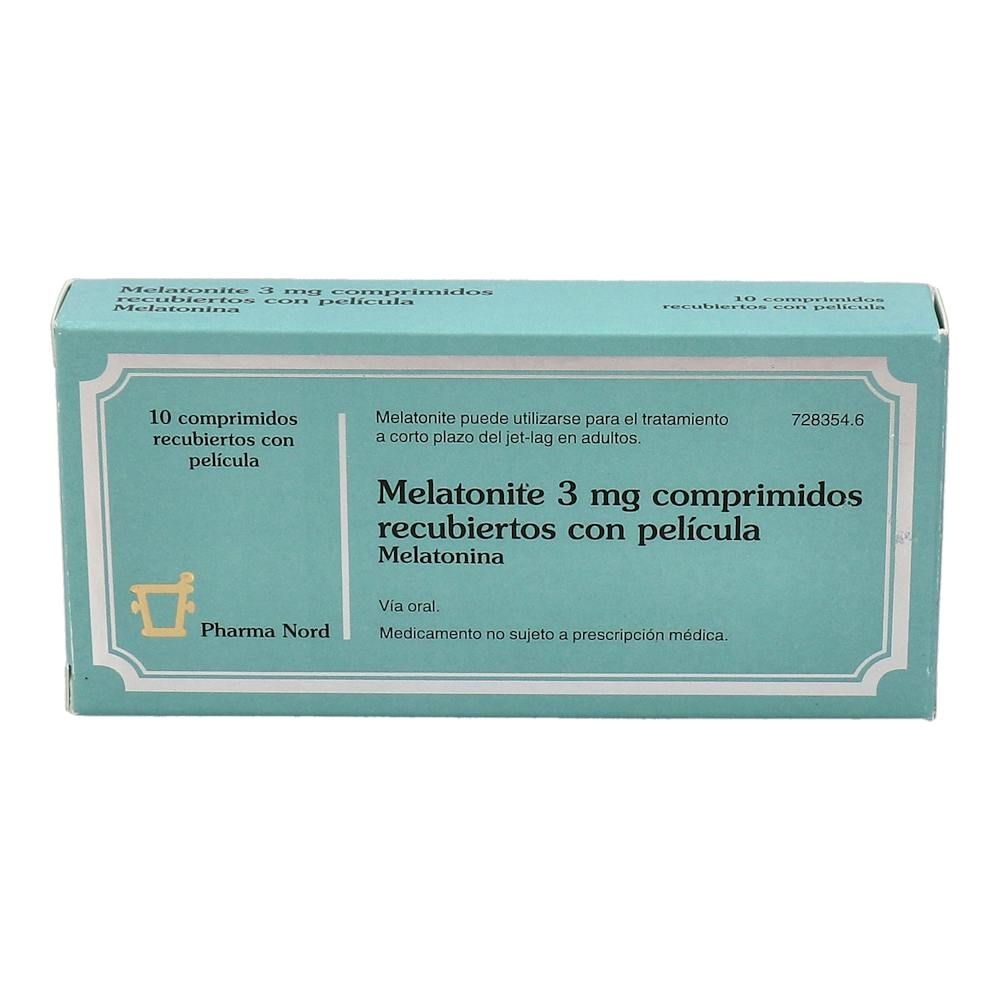
MELATONITE 3 mg Film-Coated Tablets

Prescription review online
A doctor will review your case and decide whether a prescription is medically appropriate.

Talk to a doctor about this medicine
Discuss your symptoms and possible next steps in a quick online consultation.



How to use MELATONITE 3 mg FILM-COATED TABLETS
Contents of the leaflet
- Introduction
- What is Melatonite and what is it used for
- What you need to know before taking Melatonite
- How to take Melatonite
- Possible side effects
- Storage of Melatonite
- Contents of the pack and further information
Introduction
Package Leaflet: Information for the User
Melatonite 3 mg Film-Coated Tablets
melatonin
Read all of this leaflet carefully before you start taking this medicine, because it contains important information for you.
Follow exactly the administration instructions of this medicine contained in this leaflet or as indicated by your doctor or pharmacist.
- Keep this leaflet, as you may need to read it again.
- If you need advice or more information, consult your pharmacist.
- If you experience side effects, consult your doctor or pharmacist, even if they are not listed in this leaflet. See section 4.
- You should consult a doctor if it worsens or does not improve after 5 days.
Contents of the Package Leaflet:
- What is Melatonite and what is it used for
- What you need to know before taking Melatonite
- How to take Melatonite
- Possible side effects
- Storage of Melatonite
- Contents of the pack and further information
1. What is Melatonite and what is it used for
Melatonite contains the active substance melatonin. This medicine can be used to relieve short-term symptoms of jet-lag in adults. Jet-lag can be recognized by sleep disturbances, daytime tiredness, fatigue, mild mental problems, irritability, and digestive problems experienced after flying.
How Melatonite worksMelatonin is a hormone produced by the body that synchronizes the daily and nightly biological rhythm. The biological rhythm can be disrupted if you travel across different time zones. This is known as jet-lag. The symptoms and their severity vary from person to person, but they are usually worse and last longer the more time zones you cross. This medicine can help restore the normal day and night rhythm and reduce symptoms.
You should consult a doctor if it worsens or does not improve after 5 days.

Not sure if this medicine is right for you?
Discuss your symptoms and treatment with a doctor online.
2. What you need to know before taking Melatonite
Do not take Melatonite
- if you are allergic to melatonin or any of the other ingredients of this medicine (listed in section 6).
Warnings and precautions
Consult your doctor or pharmacist before starting to take this medicine.
- if you have epilepsy. Melatonin may increase the frequency of seizures in patients with epilepsy.
- if you have an autoimmune disease (where the body is "attacked" by its own immune system).
- if you have diabetes or impaired glucose tolerance, as this medicine may increase blood glucose levels. Make sure you do not take this medicine 2 hours before a meal and wait at least 3 hours after a meal if you have diabetes.
- if you have moderate to significant liver problems or significant kidney problems.
- if you smoke. Smoking may reduce the effect of this medicine, as tobacco smoke components may increase the breakdown of melatonin in the liver.
- if you have high blood pressure and are being treated for it. Melatonin may counteract the beneficial effects of blood pressure-lowering medicines.
- This medicine may cause drowsiness. You should be careful if drowsiness affects you, as it may impair your ability to perform tasks such as driving.
Children and adolescents
Do not give this medicine to children and adolescents between 0 and 18 years of age, as its safety and efficacy in the short-term treatment of jet-lag have not been established.
Other medicines and Melatonite
Tell your doctor or pharmacist if you are taking, have recently taken, or might take any other medicines.
- Fluvoxamine (used to treat depression and obsessive-compulsive disorder), as fluvoxamine may increase the effect of melatonin.
- Psoralen (used to treat skin disorders, e.g., psoriasis), as psoralen may increase the effect of melatonin.
- Cimetidine (used to treat stomach problems such as ulcers), as cimetidine may increase the effect of melatonin.
- Estrogens (used in contraceptives or hormone replacement therapy), as estrogens may increase the effect of melatonin.
- Quinolones (used to treat bacterial infections), as quinolones may increase the effect of melatonin.
- Rifampicin (used to treat bacterial infections), as rifampicin may decrease the effect of melatonin.
- Carbamazepine (used to treat epilepsy), as carbamazepine may decrease the effect of melatonin.
- Warfarin (used as an anticoagulant), as melatonin may interfere with the effect of warfarin.
- Benzodiazepines and non-benzodiazepine hypnotics (medicines used to induce sleep, e.g., midazolam, temazepam, and zaleplon, zolpidem, zopiclone), as melatonin may increase the sedative effect of these medicines and potentiate certain side effects of zolpidem (morning somnolence, nausea, confusion).
Taking Melatonite with food and alcohol
- This medicine should not be taken with food (see section 3).
- As alcohol may alter sleep and potentially worsen certain symptoms of jet-lag (e.g., headache, morning fatigue, lack of concentration), it is recommended not to consume alcohol while taking this medicine.
- Consuming alcohol while taking this medicine may cause increased drowsiness.
Pregnancy, breastfeeding, and fertility
If you are pregnant or breastfeeding, think you may be pregnant, or are planning to have a baby, consult your doctor or pharmacist before using this medicine.
Pregnancy
This medicine is not recommended if you are pregnant. Melatonin crosses the placenta, and there is not enough information on the risk this may pose to the fetus. If you are a woman of childbearing age, you should use contraceptive methods.
Breastfeeding
Melatonin is not recommended if you are breastfeeding. Melatonin passes into breast milk, and a risk to the breastfed child cannot be excluded.
Fertility
Melatonin is not recommended in women and men planning to have a baby, as there is not enough information on the effects of melatonin on female and male fertility.
Driving and using machines
Melatonin may cause drowsiness and may decrease alertness for several hours after intake. Therefore, this medicine should not be taken before driving or using machines.
Melatonite contains sodium
This medicine contains less than 1 mmol of sodium (23 mg) per film-coated tablet; this is essentially "sodium-free".
3. How to take Melatonite
Follow exactly the administration instructions of this medicine described in this leaflet or as indicated by your doctor or pharmacist. In case of doubt, ask your doctor or pharmacist.
The recommended dose for adults and elderly patients is 1 tablet daily for a maximum of 5 days. When the effect of this medicine is inadequate, 2 tablets can be taken simultaneously the following night. The dose that sufficiently reduces symptoms should be taken for the shortest possible period.
The first dose should be taken upon arrival at the destination at the usual bedtime. Intake on subsequent days should also be at the usual bedtime. The tablets should not be taken before 8:00 PM or after 4:00 AM.
The tablets should be swallowed whole with water or another liquid (e.g., milk, fruit juice). Food should not be consumed from at least 2 hours before to at least 2 hours after taking this medicine. If you have glucose intolerance or diabetes, it is best not to take Melatonite at least 3 hours after a meal.
This medicine can be taken for a maximum of 16 treatment periods per year.
If you take more Melatonite than you should
In case of overdose or accidental ingestion, consult your doctor or pharmacist immediately or call the Toxicological Information Service, phone 915620420, indicating the medicine and the amount ingested.
The most common symptoms of overdose are drowsiness, headache, dizziness, and nausea.
If you forget to take Melatonite
If you forget to take the tablet at bedtime and wake up during the night, you can take the missed dose but no later than 4:00 AM.
Do not take a double dose to make up for missed doses.
If you stop taking Melatonite
If you stop taking this medicine, it will not have any harmful effects or withdrawal symptoms.
If you have any further questions on the use of this medicine, ask your doctor or pharmacist.

Started taking the medicine and have questions?
Discuss your symptoms and treatment with a doctor online.
4. Possible side effects
Like all medicines, this medicine can cause side effects, although not everybody gets them.
Serious side effects
If you experience any of the following serious side effects, stop taking this medicine and contact your doctor immediately:
Uncommon side effects(may affect up to 1 in 100 people)
- Chest pain.
Rare side effects(may affect up to 1 in 1,000 people)
- Decreased number of white blood cells in the blood
- Decreased number of platelets, which increases the risk of bleeding or bruising
- Disorientation
- Fainting
- Visual impairment, including blurred vision
- Palpitations
- Blood in the urine.
Frequency not known(frequency cannot be estimated from the available data)
- Severe allergic reaction causing inflammation of the tongue or mouth mucosa.
Other side effects
If you experience any of the following non-serious side effects, contact your doctor or pharmacist:
Common side effects(may affect up to 1 in 10 people)
- Headache
- Drowsiness.
Uncommon side effects(may affect up to 1 in 100 people)
- Irritability, nervousness, restlessness, abnormal dreams, anxiety
- Dizziness
- High blood pressure
- Abdominal pain, upper abdominal pain, indigestion, mouth ulceration, dry mouth, nausea
- Itching, rash, dry skin
- Glucose in the urine, excess protein in the urine
- Feeling unwell
- Weight gain.
Rare side effects(may affect up to 1 in 1,000 people)
- Elevated levels of certain fat molecules (triglycerides) in the blood
- Mood changes, aggression, increased sexual desire
- Memory impairment, restless legs syndrome, tingling sensation
- Tearing
- Hot flushes
- Vomiting, gas, excess saliva, bad breath, stomach mucosa inflammation
- Nail disorders
- Arthritis, muscle spasms
- Increased urine volume
- Prolonged erection that can be painful, prostate gland inflammation
- Thirst
- Abnormal levels of electrolytes in the blood.
Frequency not known(frequency cannot be estimated from the available data)
- Hypersensitivity reactions
- High blood glucose levels
- Milk secretion from the breasts (also in men).
Reporting of side effects
If you experience any side effects, consult your doctor or pharmacist, even if they are not listed in this leaflet. You can also report side effects directly through the Spanish Medicines and Healthcare Products Agency (AEMPS) website: www.notificaRAM.es.
By reporting side effects, you can help provide more information on the safety of this medicine.
5. Storage of Melatonite
- Keep this medicine out of the sight and reach of children.
- Do not use this medicine after the expiry date stated on the pack after EXP. The expiry date is the last day of the month indicated.
- This medicine does not require any special storage temperature.
- This medicine should be stored in the original packaging to protect it from light.
Medicines should not be disposed of via wastewater or household waste. Return any unused medicine to a pharmacy for disposal. If you have any further questions on the use of this medicine, ask your pharmacist.
6. Contents of the pack and further information
Composition of Melatonite
- The active substance is melatonin. Each tablet contains 3 mg of melatonin.
- The other ingredients are: Tablet core: magnesium stearate, anhydrous colloidal silica, maltodextrin, microcrystalline cellulose, sodium carmellose. Coating: hypromellose.
Appearance of the product and pack contents
Round, biconvex, film-coated tablet, white to off-white in color. Diameter 7.5 mm.
Packs of 10 or 30 film-coated tablets in blisters, in a cardboard box. Not all pack sizes may be marketed.
Marketing authorization holder and manufacturer
Pharma Nord Aps
Tinglykke 4-6
6500 Vojens
Denmark
This medicine is authorized in the Member States of the European Economic Area and in the United Kingdom (Northern Ireland) under the following names:
Belgium | Melatonine Pharma Nord 3 mg filmomhulde tabletten / comprimés pelliculés / Filmtabletten |
Estonia | Melatoniin Pharma Nord 3 mg õhukese polümeerikattega tabletid |
Hungary | Melatonin Pharma Nord 3 mg filmtabletta |
Ireland | Melatonin Pharma Nord 3 mg film-coated tablets |
Latvia | Melatonin Pharma Nord 3 mg apvalkotas tabletes |
Lithuania | Melatoninas Pharma Nord 3 mg plevele dengtos tabletes |
Netherlands | Melatonine Pharma Nord 3 mg filmomhulde tablet |
Poland | Melatonina Pharma Nord 3 mg tabletki powlekane |
Portugal | Melatonite |
Spain | Melatonite 3 mg comprimidos recubiertos con película |
United Kingdom (NI) | Melatonin Pharma Nord 3 mg film-coated tablets |
Date of last revision of this leaflet: May 2023.
Detailed and up-to-date information on this medicine is available on the website of the Spanish Medicines and Healthcare Products Agency (AEMPS) http://www.aemps.gob.es/
- Country of registration
- Dosage formTABLET, 3 mg
- ATC codeN05CH01
- Active substance
- Prescription requiredNo
- Manufacturer
- CompositionCARMELOSA SODICA (4 mg mg)
- This information is for reference only and does not constitute medical advice. Always consult a doctor before taking any medication. Oladoctor is not responsible for medical decisions based on this content.
- Alternatives to MELATONITE 3 mg FILM-COATED TABLETSDosage form: MODIFIED-RELEASE TABLET, 2 mgActive substance: melatoninManufacturer: Rad Neurim Pharmaceuticals Eec S.A.R.L.Prescription requiredDosage form: MODIFIED-RELEASE TABLET, 2 mgActive substance: melatoninManufacturer: Neurim Pharmaceuticals Ltd.Prescription requiredDosage form: MODIFIED-RELEASE TABLET, 2 mgActive substance: melatoninManufacturer: Arrotex Pharmaceuticals LimitedPrescription required
Online doctors for MELATONITE 3 mg FILM-COATED TABLETS
Discuss questions about MELATONITE 3 mg FILM-COATED TABLETS, including use, safety considerations and prescription review, subject to medical assessment and local regulations.









Get MELATONITE 3 mg FILM-COATED TABLETS Prescription Online
Fill in a 2-min form
Tell us your symptoms, history, and what medicine you're requesting.
Pick a doctor or let us assign
Choose a specialist or we'll match you with the next available doctor.
Doctor reviews your case
Usually within 30 minutes. They may ask follow-up questions via chat.
Collect from any pharmacy
Electronic prescription sent to your email — valid across Spain.
Frequently Asked Questions
MELATONITE 3 mg FILM-COATED TABLETS does not require a prescription in Spain. You can check with a doctor online whether this medicine may be appropriate for your situation.
The active ingredient in MELATONITE 3 mg FILM-COATED TABLETS is melatonin. This information helps identify medicines with the same composition but different brand names.
MELATONITE 3 mg FILM-COATED TABLETS is manufactured by Pharma Nord Aps. Pharmacy brands and packaging may differ depending on the distributor.
Doctors such as Family doctors, Psychiatrists, Dermatologists, Cardiologists, Endocrinologists, Gastroenterologists, Pulmonologists, Nephrologists, Rheumatologists, Hematologists, Infectious disease physicians, Allergists, Geriatricians, Paediatricians, Oncologists may assess whether MELATONITE 3 mg FILM-COATED TABLETS is appropriate, depending on your situation and local regulations. You can book an online consultation to discuss your symptoms and possible next steps.
Spain has a well-developed healthcare infrastructure across major cities such as Madrid, Barcelona, Valencia, and Seville. Pharmacies are widely available and operate under strict regulations, ensuring access to prescribed medications.
You can buy MELATONITE 3 mg FILM-COATED TABLETS in Madrid, Barcelona, Seville, or Valencia at any local pharmacy with a valid prescription.
To obtain a prescription, you can use Oladoctor:
Other medicines with the same active substance (melatonin) include CIRCADIN 2 mg PROLONGED-RELEASE TABLETS (30 tablets), CIRCADIN 2 mg PROLONGED-RELEASE TABLETS, MELATONIN ARROTEX 2 mg PROLONGED-RELEASE TABLETS. These may have different brand names or formulations but contain the same therapeutic ingredient. Always consult a doctor before switching or starting a new medicine.
