


MAXALT 10 mg COMPRIMIDOS
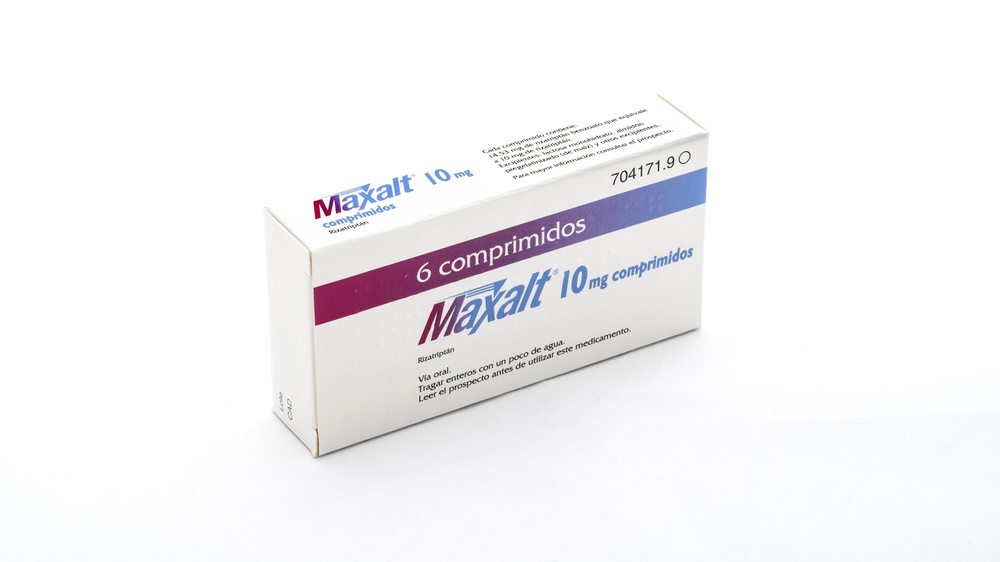



Cómo usar MAXALT 10 mg COMPRIMIDOS
Traducción generada por IA
Este contenido ha sido traducido automáticamente y se ofrece solo con fines informativos. No sustituye la consulta con un profesional sanitario.
Ver originalContenido del prospecto
Introducción
Prospecto: información para el usuario
MAXALT 10mg comprimidos
rizatriptán
Lea todo el prospecto detenidamente antes de empezar a tomar este medicamento, porque contiene información importante para usted.
- Conserve este prospecto, ya que puede tener que volver a leerlo.
- Si tiene alguna duda, consulte a su médico o farmacéutico.
- Este medicamento se le ha recetado solamente a usted, y no debe dárselo a otras personas aunque tengan los mismos síntomas que usted, ya que puede perjudicarles.
- Si experimenta efectos adversos, consulte a su médico o farmacéutico, incluso si se trata de efectos adversos que no aparecen en este prospecto. Ver sección 4.
Contenido del prospecto
- Qué es MAXALT y para qué se utiliza
- Qué necesita saber antes de empezar a tomar MAXALT
- Cómo tomar MAXALT
- Posibles efectos adversos
- Conservación de MAXALT
- Contenido del envase e información adicional
1. Qué es MAXALT y para qué se utiliza
MAXALT pertenece al grupo de medicamentos llamados agonistas selectivos de los receptores de serotonina 5‑HT1B/1D.
MAXALT se usa para tratar los dolores de cabeza de las crisis de migraña en adultos.
Tratamiento con MAXALT:
Reduce la hinchazón de los vasos sanguíneos que rodean el cerebro. Esta hinchazón provoca el dolor de cabeza de una crisis de migraña.

2. Qué necesita saber antes de empezar a tomar MAXALT
No tome MAXALT:
- si es alérgico al rizatriptán benzoato o a alguno de los demás componentes de este medicamento (incluidos en la sección 6).
- tiene presión arterial alta moderadamente grave, grave, o leve que no está controlada con la medicación.
- tiene o ha tenido alguna vez problemas de corazón, incluyendo infarto de miocardio o dolor en el pecho (angina) o ha experimentado signos relacionados con enfermedad de corazón.
- tiene problemas graves de hígado o de riñón.
- ha tenido un accidente cerebrovascular (ACV) o un accidente isquémico transitorio (AIT).
- tiene problemas de obstrucción en sus arterias (enfermedad vascular periférica).
- está tomando inhibidores de la monoaminooxidasa (MAO) como moclobemida, fenelcina, tranilcipromina o pargilina (medicamentos para la depresión), o linezolid (un antibiótico), o si han transcurrido menos de dos semanas desde que dejó de tomar un inhibidor de la MAO.
- está tomado actualmente un medicamento de tipo ergotamínico, como ergotamina o dihidroergotamina para tratar su migraña o metisergida para prevenir una crisis de migraña.
- está tomando cualquier otro medicamento de la misma clase, como sumatriptán, naratriptán, o zolmitriptán para tratar su migraña (ver más abajo Toma de MAXALT con otros medicamentos).
Si no está seguro de si alguno de los casos anteriores le afecta a usted, hable con su médico o farmacéutico antes de tomar MAXALT.
Advertencias y precauciones
Consulte a su médico o farmacéutico antes de empezar a tomar MAXALT, si:
- tiene alguno de los siguientes factores de riesgo de enfermedad cardiaca: presión arterial alta, diabetes, es fumador o está usando sustitutivos de la nicotina, su familia tiene antecedentes de enfermedad cardiaca, es hombre y tiene más de 40 años o es una mujer postmenopáusica.
- tiene problemas de riñón o de hígado.
- tiene un problema determinado con la forma en la que su corazón late (bloqueo de rama izquierda).
- tiene o ha tenido alguna alergia.
- su dolor de cabeza está asociado con mareo, dificultad al caminar, falta de coordinación o debilidad en pierna y brazo.
- toma plantas medicinales que contienen hierba de San Juan.
- ha tenido reacciones alérgicas como hinchazón de la cara, labios, lengua y/o garganta que puede causar dificultad al respirar o tragar (angioedema).
- está tomando inhibidores selectivos de la recaptación de serotonina (ISRS) como sertralina, oxalato de escitalopram y fluoxetina o inhibidores de la recaptación de serotonina y noradrenalina (IRSN) como venlafaxina y duloxetina para la depresión.
- ha tenido síntomas pasajeros incluyendo dolor y opresión en el pecho.
Si toma MAXALT con mucha frecuencia, esto puede producir que adquiera dolor de cabeza crónico. En tales casos debe contactar con su médico, ya que puede tener que dejar de tomar MAXALT.
Informe a su médico o farmacéutico de todos sus síntomas. Su médico decidirá si tiene migraña. Sólo debe tomar MAXALT para una crisis de migraña. MAXALT no debe usarse para tratar otros dolores de cabeza que puedan estar causados por otras enfermedades más graves.
Informe a su médico o farmacéutico si está utilizando, ha utilizado recientemente o pudiera tener que utilizar cualquier otro medicamento. Estos incluyen las plantas medicinales y aquellos medicamentos que tome normalmente para la migraña. Esto se debe a que MAXALT puede afectar a la forma en la que funcionan algunos medicamentos. Otros medicamentos también pueden afectar a MAXALT.
Tomade MAXALT con otros medicamentos
No tome MAXALT:
- si ya está tomando un agonista 5‑HT1B/1D (algunas veces denominados "triptanos"), como sumatriptán, naratriptán o zolmitriptán.
- si está tomando un inhibidor de la monoaminooxidasa (MAO), como moclobemida, fenelcina, tranilcipromina, linezolid o pargilina, o si han transcurrido menos de dos semanas desde que dejó de tomar un inhibidor de la MAO.
- si toma medicamentos de tipo ergotamínico, como ergotamina o dihidroergotamina para tratar su migraña.
- si toma metisergida para prevenir las crisis de migraña.
Los medicamentos arriba mencionados cuando se toman con MAXALT pueden incrementar el riesgo de efectos adversos.
Después de tomar MAXALT usted debe esperar al menos 6 horas antes de tomar medicamentos de tipo ergotamínico como ergotamina, dihidroergotamina o metisergida.
Después de tomar medicamentos de tipo ergotamínico usted debe esperar al menos 24 horas antes de tomar MAXALT.
Pida a su médico instrucciones sobre cómo tomar MAXALT e información sobre los riesgos.
- si actualmente está tomando propranolol (ver sección 3 Cómo tomar MAXALT).
- si actualmente está tomando inhibidores selectivos de la recaptación de serotonina (ISRS) como sertralina, oxalato de escitalopram y fluoxetina o inhibidores de la recaptación de serotonina y noradrenalina (IRSN) como venlafaxina y duloxetina para la depresión.
Informe a su médico o farmacéutico si está utilizando, ha utilizado recientemente o pudiera tener que utilizar cualquier otro medicamento.
Toma de MAXALT con alimentos y bebidas
MAXALT puede tardar más en hacer efecto si lo toma después de las comidas. Aunque es mejor tomarlo con el estómago vacío, usted puede tomarlo todavía aunque haya comido.
Embarazo y lactancia
Si está embarazada o en periodo de lactancia, cree que podría estar embarazada o tiene intención de quedarse embarazada, consulte a su médico o farmacéutico antes de utilizar este medicamento.
Los datos disponibles sobre la seguridad de rizatriptán cuando se usa durante los 3 primeros meses del embarazo no indican un aumento del riesgo de defectos de nacimiento. Se desconoce si MAXALT es perjudicial para el feto cuando lo toma una mujer embarazada después de los 3 primeros meses del embarazo.
Si está periodo de lactancia, puede posponer la lactancia durante 12 horas después del tratamiento para evitar la exposición del bebé.
Niños y adolescentes
No se recomienda el uso de MAXALT comprimidos en niños menores de 18 años.
Uso en pacientes mayores de 65años
No hay estudios completos que evalúen la seguridad y la eficacia de MAXALT en pacientes mayores de 65 años.
Conducción y uso de máquinas
Al tomar MAXALT puede sentir somnolencia o mareos. Si esto ocurre, no conduzca ni utilice herramientas o máquinas.
MAXALT contiene lactosa monohidrato
Este medicamento contiene lactosa. El comprimido de 10 mg contiene 60,50 mg de lactosa monohidrato. Si su médico le ha indicado que padece una intolerancia a ciertos azúcares, consulte con él antes de tomar este medicamento.
3. Cómo tomar MAXALT
MAXALT se utiliza para tratar las crisis de migraña. Tome MAXALT tan pronto como sea posible una vez comenzado su dolor de cabeza migrañoso. No lo utilice para prevenir una crisis.
Siga exactamente las instrucciones de administración de este medicamento indicadas por su médico o farmacéutico. En caso de duda, consulte de nuevo a su médico o farmacéutico.
La dosis recomendada es 10 mg.
Si actualmente está tomando propranolol o tiene problemas de riñón o de hígado, debe usar la dosis de 5 mg de MAXALT. Debe esperar por lo menos 2 horas entre la toma de propranolol y la de MAXALT hasta un máximo de 2 dosis en un periodo de 24 horas.
Los comprimidos de MAXALT deben tomarse por vía oral y tragarse enteros con un líquido.
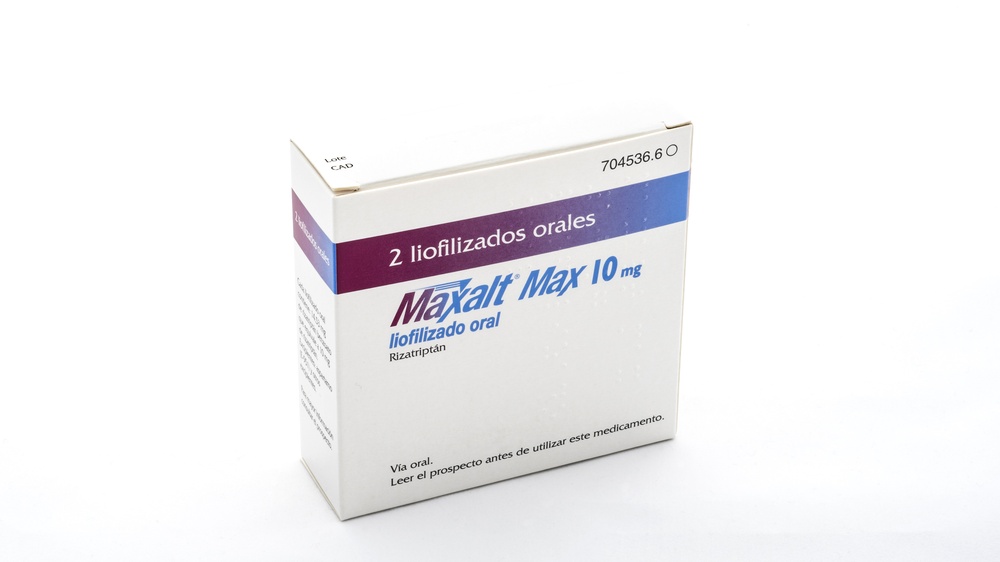
MAXALT también está disponible en liofilizado oral de 10 mg que se disuelve en la boca. El liofilizado oral puede usarse en situaciones en las que no hay líquidos disponibles, o para evitar las náuseas y los vómitos que pueden acompañar la ingestión de comprimidos con líquidos.
Si la migraña reaparece en 24horas
En algunos pacientes, los síntomas de migraña pueden reaparecer en un periodo de 24 horas. Si su migraña reaparece, puede tomar una dosis adicional de MAXALT. Debe esperar siempre por lo menos 2 horas entre las tomas.
Si después de 2horas todavía tiene migraña
Si usted no responde a la primera dosis de MAXALT durante una crisis, no debe tomar una segunda dosis de MAXALT para el tratamiento de la misma crisis. Sin embargo, todavía es probable que responda a MAXALT durante la siguiente crisis.
No tome más de 2dosis de MAXALT en un periodo de 24horas (por ejemplo, no tome más de dos comprimidos o liofilizados orales de 10mg en un periodo de 24horas). Siempre debe esperar al menos 2horas entre las tomas.
Si su estado empeora, busque atención médica.
Si toma más MAXALT del que debe
Si usted toma más MAXALT del que debiera, consulte inmediatamente a su médico o farmacéutico, o llame al Servicio de Información Toxicológica, teléfono 91 5620420, indicando el medicamento y la cantidad tomada. Se recomienda llevar el envase y el prospecto del medicamento al profesional sanitario.
Los signos de sobredosis pueden incluir mareo, adormecimiento, vómitos, desfallecimiento y ritmo cardiaco lento.
Si tiene cualquier otra duda sobre el uso de este medicamento, pregunte a su médico o farmacéutico.

4. Posibles efectos adversos
Al igual que todos los medicamentos, este medicamento puede producir efectos adversos, aunque no todas las personas los sufran. Los siguientes efectos adversos pueden producirse con este medicamento.
En los estudios en adultos, los efectos adversos comunicados con más frecuencia fueron mareos, somnolencia y cansancio.
Frecuentes (afectan entre 1 y 10 de cada 100 pacientes)
- sensación de hormigueo (parestesia), dolor de cabeza, menor sensibilidad en la piel (hipoestesia), disminución de la agudeza mental, insomnio.
- ritmo cardiaco rápido o irregular (palpitación).
- rubor (enrojecimiento de la cara que dura un breve tiempo).
- molestias de garganta.
- malestar (nauseas), boca seca, vómitos, diarrea, indigestión (dispepsia).
- pesadez en partes del cuerpo, dolor de cuello, entumecimiento.
- dolor de abdomen o de pecho.
Poco frecuentes (afectan entre 1 y 10 de cada 1.000 pacientes)
- mal sabor en la boca.
- inestabilidad al andar (ataxia), mareos (vértigo), visión borrosa, temblor, desmayos (síncope).
- confusión, nerviosismo.
- presión arterial alta (hipertensión); sed, sofocos, sudoración.
- erupción cutánea, picor y erupción con bultos (urticaria); hinchazón de la cara, labios, lengua o garganta que puede causar dificultad para respirar o para tragar (angioedema), dificultad para respirar (disnea).
- sensación de rigidez en partes del cuerpo, debilidad muscular.
- cambios en el ritmo o la frecuencia del latido cardíaco (arritmia); alteraciones del electrocardiograma (una prueba que registra la actividad eléctrica de su corazón), ritmo cardiaco muy rápido (taquicardia).
- dolor facial; dolor muscular.
Raros (afectan entre 1 y 10 de cada 10.000 pacientes)
- ruidos al respirar.
- reacción alérgica (hipersensibilidad); reacción alérgica repentina y potencialmente mortal (anafilaxis).
- accidente cerebrovascular (esto ocurre generalmente en pacientes con factores de riesgo de enfermedad cardíaca o de vasos sanguíneos (hipertensión, diabetes, fumador, utilización de sustitutivos de la nicotina, historia familiar de enfermedad cardíaca o accidente cerebrovascular, hombre mayor de 40 años, mujer postmenopáusica y un problema determinado con la forma en la que su corazón late (bloqueo de rama izquierda)).
- latido cardíaco lento (bradicardia).
Frecuencia no conocida (la frecuencia no puede estimarse a partir de los datos disponibles)
- infarto de miocardio, espasmos de los vasos sanguíneos del corazón (estos ocurren generalmente en pacientes con factores de riesgo de enfermedad cardíaca o de vasos sanguíneos (hipertensión, diabetes, fumador, utilización de sustitutivos de la nicotina, historia familiar de enfermedad cardíaca o accidente cerebrovascular, hombre mayor de 40 años, mujer postmenopáusica y un problema determinado con la forma en la que su corazón late (bloqueo de rama izquierda)).
- un síndrome llamado "síndrome serotoninérgico" que puede causar efectos adversos como coma, presión arterial inestable, fiebre extremadamente alta, falta de coordinación muscular, agitación y alucinaciones.
- descamación grave de la piel con o sin fiebre (necrólisis epidérmica tóxica).
- ataques (convulsiones/espasmos).
- contracción de los vasos sanguíneos de las extremidades incluyendo enfriamiento y adormecimiento de manos y pies.
- contracción de los vasos sanguíneos del colon (intestino grueso), lo cual puede causar dolor abdominal.
Informe inmediatamente a su médico si tiene síntomas de reacción alérgica, síndrome serotoninérgico, ataque al corazón o accidente cerebrovascular.
Además, informe a su médico si experimenta cualquier síntoma que indique una reacción alérgica (como erupción o picor) después de tomar MAXALT.
Comunicación de efectos adversos:
Si experimenta cualquier tipo de efecto adverso, consulte a su médico o farmacéutico, incluso si se trata de posibles efectos adversos que no aparecen en este prospecto. También puede comunicarlos directamente a través del Sistema Español de Farmacovigilancia de medicamentos de Uso Humano: https://www.notificaram.es. Mediante la comunicación de efectos adversos usted puede contribuir a proporcionar más información sobre la seguridad de este medicamento.
5. Conservación de MAXALT
Mantener este medicamento fuera de la vista y del alcance de los niños.
No utilice este medicamento después de la fecha de caducidad que aparece en la caja/blíster después de "CAD". La fecha de caducidad es el último día del mes que se indica.
No conservar a temperatura superior a 30ºC.
Los medicamentos no se deben tirar por los desagües ni a la basura. Deposite los envases y los medicamentos que no necesita en el Punto SIGRE de la farmacia. En caso de duda pregunte a su farmacéutico cómo deshacerse de los envases y de los medicamentos que no necesita. De esta forma, ayudará a proteger el medio ambiente.
6. Contenido del envase e información adicional
Composición de MAXALT
- El principio activo es rizatriptán. Un comprimido contiene 10 mg de rizatriptán equivalentes a 14,53 mg de rizatriptán benzoato.
- Los demás componentes son lactosa monohidrato, celulosa microcristalina (E‑460a), almidón pregelatinizado de maíz, óxido de hierro rojo (E‑172) y estearato de magnesio (E‑572).
Aspecto del producto y contenido del envase
Los comprimidos de 10 mg son de color rosa pálido, con forma de cápsula, con el código “MAXALT” en una cara y “MSD 267” en la otra.
Tamaños de envase: envases con 2, 3, 6, 12 ó 18 comprimidos.
Puede que solamente estén comercializados algunos tamaños de envases.
Titular de la autorización de comercialización y responsable de la fabricación
Titular de la autorización de comercialización
Organon Salud, S.L.
Paseo de la Castellana, 77
28046 Madrid
España
Tel.: 915911279
Responsable de la fabricación
Merck Sharp & Dohme B.V.
Waarderweg 39
2031 BN Haarlem
Países Bajos
N.V. Organon
Kloosterstraat 6
5349 AB Oss
Países Bajos
Este medicamento está autorizado en los estados miembros del Espacio Económico Europeo con los siguientes nombres:
Austria, Finlandia, Francia, Grecia, Islandia, Noruega,
Países Bajos, Portugal, Suecia y Reino Unido MAXALT
Bélgica, Luxemburgo y España MAXALT 10 mg
Alemania MAXALT 10 mg Tabletten
Dinamarca MAXALT, tabletter
Italia MAXALT 10 mg compresse
Irlanda Rizatriptan MSD 10 mg Tablets
República Checa MAXALT 10 mg, tablety
Rumania MAXALT 10 mg comprimate
Fecha de la última revisión de este prospecto:07/2024.
La información detallada y actualizada de este medicamento está disponible en la página web de la Agencia Española de Medicamentos y Productos Sanitarios (AEMPS) (http://www.aemps.gob.es/)
- País de registro
- Forma farmacéuticaCOMPRIMIDO, 10 mg
- Código ATCN02CC04
- Precio medio en farmacia26.4 EUR
- Principio activo
- Requiere recetaSí
- Fabricante
- Esta información es de carácter general y no sustituye la consulta con un profesional sanitario.
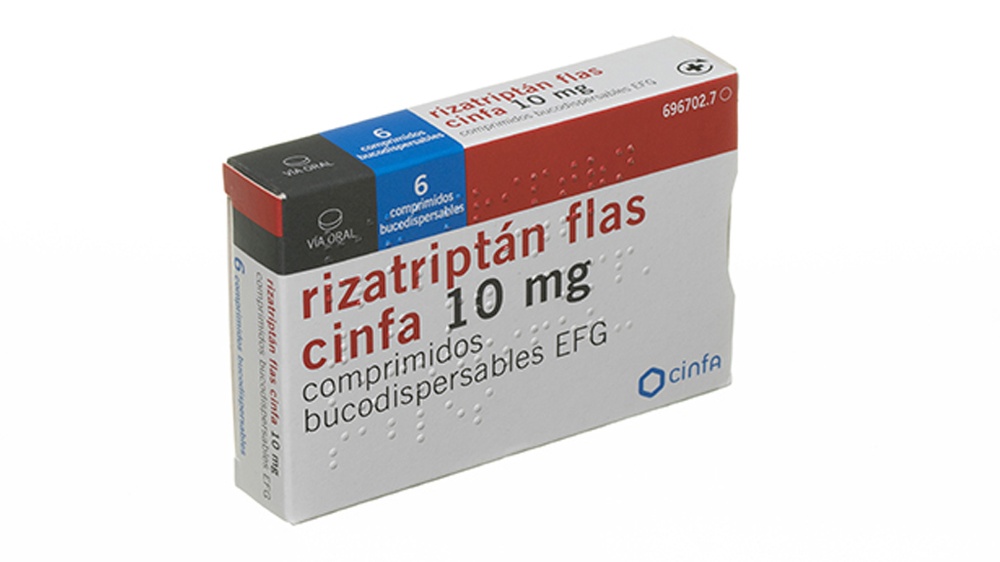
- Alternativas a MAXALT 10 mg COMPRIMIDOSForma farmacéutica: COMPRIMIDO BUCODISPERSABLE/LIOTAB, 10 mgPrincipio activo: rizatriptanFabricante: Organon Salud S.L.Requiere recetaForma farmacéutica: COMPRIMIDO BUCODISPERSABLE/LIOTAB, 10 mg / comprimidoPrincipio activo: rizatriptanFabricante: Aurovitas Spain, S.A.U.Requiere recetaForma farmacéutica: COMPRIMIDO BUCODISPERSABLE/LIOTAB, 10 MG/COMPRIMIDOPrincipio activo: rizatriptanFabricante: Laboratorios Cinfa S.A.Requiere receta

Médicos online para MAXALT 10 mg COMPRIMIDOS
Comenta la dosis, los posibles efectos secundarios, interacciones, contraindicaciones o la revisión de receta de MAXALT 10 mg COMPRIMIDOS, sujeto a valoración médica y a la normativa local.











Preguntas frecuentes
